Best crate setup for kayak fishing storage
If you've ever spent a beautiful day out on a West Virginia lake or river, kayak fishing, only to find yourself constantly fumbling for a lure, dropping your pliers overboard, or having your rods slide around, you know the frustration of a disorganized kayak. It can turn a peaceful outing into a series of mini-emergencies, stealing precious fishing time and peace of mind. This guide is all about solving that exact problem, showing you how to set up the ultimate fishing crate to keep all your essential gear secure, organized, and easily accessible, transforming your kayak into a streamlined fishing machine.
Why a Kayak Fishing Crate is an Absolute Game-Changer
When you're out on the water, whether it's the calm backwaters of Bluestone Lake or the dynamic currents of the New River, every inch of space in your kayak counts. Without a dedicated system, your gear inevitably ends up scattered, creating a chaotic environment that detracts from the fishing experience. A well-designed fishing crate isn't just about storage; it's about enhancing your efficiency, safety, and overall enjoyment on the water.
The Frustration of Disorganized Gear on the Water
Picture this: you've spotted a perfect eddy holding smallmouth bass, or a submerged log that just screams muskie. You need to quickly switch from a topwater plug to a jig, or grab your pliers to unhook a feisty fish. But wait, where are those pliers? Are they under your seat, tangled in a net, or worse, did they bounce overboard earlier when you hit that ripple? This scenario is all too common for kayak anglers. Rods might be lying across your lap, becoming a tripping hazard or getting stepped on. Tackle boxes slide around, lures spill, and small items like sunscreen or a snack disappear into the abyss of your kayak's hull. It's not just annoying; it can be downright dangerous, especially if you're in moving water or need to react quickly to a situation. This constant battle with disarray takes your focus away from what you're there to do: fish.
Bringing Order and Efficiency to Your Kayak
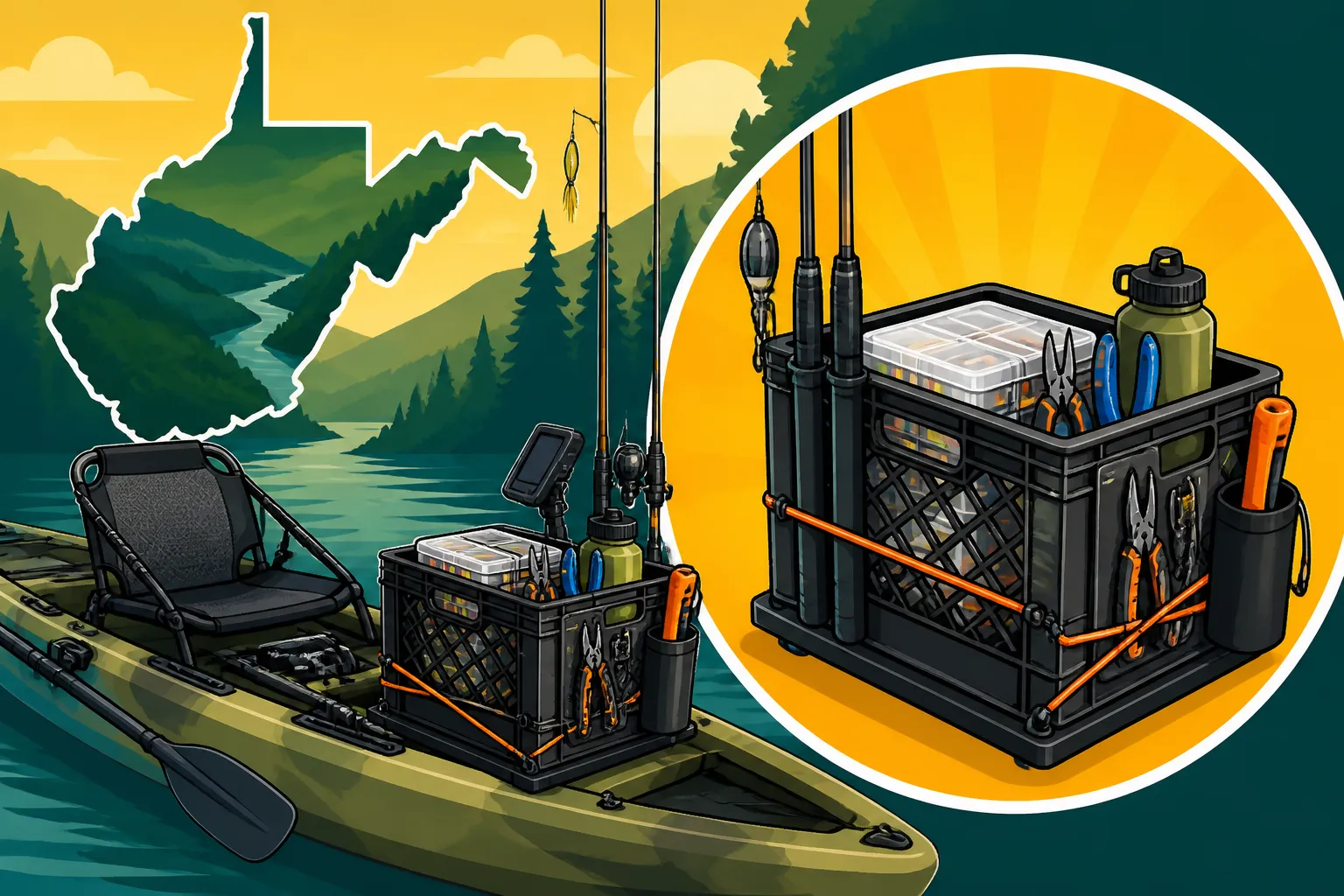
A fishing crate acts as your command center, transforming the usually underutilized stern tankwell (the open storage area behind your seat) into a highly functional workstation. By consolidating your most-used items into one easily accessible unit, you eliminate the constant rummaging and fumbling. Imagine being able to reach behind you, grab the exact lure you need from a designated compartment, or slide a rod out of a holder without a second thought. This level of organization allows for smoother transitions between techniques, quicker re-rigging, and a much more relaxing day. It provides a stable platform for your rods, prevents valuable gear from going overboard, and often offers additional attachment points for accessories like lights, flags, or even a small fish finder battery. Ultimately, it elevates your kayak fishing experience from a cluttered chore to a focused and enjoyable pursuit.
Selecting the Perfect Base: Types of Fishing Crates
Choosing the right crate is the foundational step to building an effective storage system for your kayak. You might think "a crate is a crate," but there's actually a surprising variety out there, each with its own advantages, depending on your fishing style, kayak type, and budget.
The Humble Milk Crate vs. Specialized Fishing Systems
For years, the standard plastic milk crate has been the go-to for budget-conscious kayak anglers, and for good reason. They are readily available, inexpensive, durable, and offer a decent amount of open storage space. You can often find them at local stores or even repurposed from various sources. Their square, open design makes them highly customizable with DIY additions like PVC rod holders or bungee cord lashings. They're a fantastic starting point, especially if you're just getting into kayak fishing or want to test out a crate system before investing more.
However, purpose-built fishing crates have truly evolved and offer significant advantages for the dedicated angler. Brands like YakAttack, Perception, and Hobie offer sophisticated systems designed specifically for kayak use. These often come with integrated features such as multiple rod holders, tackle box storage slots, tool holsters, and even cutting boards or anchor line management systems. They are typically made from more robust, UV-resistant plastics and are designed to integrate seamlessly with kayak accessory tracks or bungee systems. While they come at a higher price point, the convenience, durability, and specialized features can be well worth the investment for serious anglers. You can often find a great selection of these specialized crates from retailers like Bass Pro Shops or online through platforms like Amazon, offering a range of sizes and features to fit almost any kayak and fishing need. Consider what kind of fishing you do – a simple milk crate might be fine for a leisurely day panfishing, but a more robust, specialized system would shine for serious Muskie Fishing in West Virginia or Walleye Fishing in West Virginia.
Sizing Up Your Crate for Stability and Storage Needs
The size of your crate is crucial and needs to be carefully matched to both your kayak's tankwell dimensions and the amount of gear you typically carry. A crate that's too large might not fit properly, or it could make your kayak stern-heavy, affecting balance and handling, especially on smaller, narrower kayaks. Conversely, a crate that's too small might not hold all your essentials, defeating the purpose of organization.
Most sit-on-top kayaks have a dedicated tankwell area behind the seat, often with bungee cords already installed to secure gear. Measure this area carefully, paying attention to length, width, and height. You want a snug fit that prevents excessive shifting but isn't so tight it's difficult to remove. For wider, more stable kayaks designed for fishing, you might be able to accommodate a larger crate, allowing for more expansive storage and multiple rod holders. On the other hand, if you're paddling a sleeker, faster kayak or using a sit-in model with limited stern access, a smaller, more compact crate might be your only option, requiring a more minimalist approach to what you bring along. Think about the types of waters you fish – a larger crate might be fine for calm lakes like Summersville Lake, but a more compact, lower-profile setup could be better for navigating tight spots on a river like the New River Gorge Fishing Guide.
Here's a quick comparison of common crate types:
| Crate Type | Pros | Cons | Ideal Use Case |
|---|---|---|---|
| Standard Milk Crate | Inexpensive, highly customizable, widely available | Lacks built-in features, may require DIY modifications | Beginner kayakers, casual fishing, budget-conscious anglers |
| Dedicated Fishing Crate | Integrated rod holders, tackle storage, durable, UV-resistant | Higher cost, less DIY flexibility for some features | Serious anglers, frequent use, those valuing convenience and specialized design |
| Soft-Sided Cooler/Bag | Lightweight, flexible, can double as a cooler | Less rigid structure, fewer rod holder options, less protective | Minimalist anglers, cold drink storage, less gear-intensive trips |
Unlocking Maximum Potential: Essential Customizations
Once you have your base crate, whether it's a trusty milk crate or a specialized system, the real fun begins: customization. This is where you tailor your setup to your exact fishing needs, ensuring everything has its place and is ready for action.
Integrated Rod Holders: Keeping Your Rods Secure
One of the primary benefits of a fishing crate is its ability to securely hold multiple rods. Nothing is more frustrating than trying to paddle or fish while your rods are sliding around, getting tangled, or worse, falling into the water. For standard milk crates, PVC pipe is your best friend. You can easily cut sections of PVC, attach caps to the bottom, and then secure them to the outside of the crate using zip ties, bolts, or hose clamps. A good rule of thumb is to angle them slightly outwards to prevent reels from bumping into each other. Consider at least two to four holders: one for your active rod, and others for spare setups or a net.
For dedicated fishing crates, many come with integrated rod holders, often molded directly into the plastic or designed as screw-in attachments. These are typically robust and well-placed. When choosing a specialized crate, pay attention to the number and orientation of these holders. Some are vertical, others angled. Think about how you'll be using them: do you troll multiple lines, or just need a place to stash a rod while re-tying? For active river fishing, like chasing smallmouth on the Greenbrier, having your rods vertically oriented in the crate behind you keeps them out of the way of your paddle stroke and any overhanging branches.
Streamlining Tackle and Tool Access
Efficient tackle management within your crate is paramount. It’s not enough to just have your tackle boxes in there; you need to access them quickly and easily. Many anglers choose small, waterproof tackle boxes that fit snugly inside the crate's compartments or can be stacked. Some specialized crates even have dedicated slots designed to hold popular brands of tackle trays, making it simple to slide them in and out. Consider labeling your tackle boxes for quick identification, especially if you're carrying multiple for different species or lure types.
Beyond tackle, your essential tools need a home. Pliers, line cutters, and forceps are critical for quick unhooking and re-tying. Many anglers use tool lanyards clipped to the crate or attached to dedicated tool holders built into specialized crates. You can also add small mesh bags or pouches to the inside or outside of your crate (secured with carabiners or clips) to hold these items, ensuring they don't get lost but are always within reach. A small utility knife, a measuring board, and a stringer or fish gripper are also items that often get overlooked but are crucial for a successful trip, and your crate is the perfect place to keep them organized. Online retailers like Amazon offer a vast array of small storage containers and tool accessories that can be easily adapted to a crate setup.
Adding Practical Accessories for a Smoother Trip
A truly optimized fishing crate goes beyond just rods and tackle. It becomes a versatile platform for numerous practical accessories that make your time on the water more comfortable and efficient.
- Dry Storage: While the crate itself might not be waterproof, you can integrate dry bags or small waterproof boxes. A Best Dry Bag for Kayak Fishing can be clipped into the crate to hold your phone, keys, wallet, and a first-aid kit, keeping them safe from splashes and unexpected capsizes.
- Drink Holders: Many crates offer attachment points for cup holders, a simple but invaluable addition for staying hydrated on a long day.
- Anchor Management: For river anglers using a Best Anchor System for River Fishing, a small cleat or bungee system attached to the crate can help manage your anchor line, keeping it tidy and preventing tangles. Some advanced crates have built-in anchor storage.
- Lighting and Visibility: For early morning or late evening fishing, a small battery-powered light attached to your crate can illuminate your workspace. Additionally, a visibility flag pole, especially important for safety on larger waters or busy areas, can often be mounted directly to the crate.
- Cooler Integration: For shorter trips, a small soft-sided cooler that fits inside or is strapped to the side of your crate can hold drinks and snacks, keeping them easily accessible. This is especially nice during the warmer months on a lake like Summersville.
Thinking about what you use most often and what causes the most frustration will help you prioritize which accessories to add. For a deeper dive into general kayak gear, check out Best Kayaks for West Virginia Fishing and Best Kayak for Lake Fishing in West Virginia.
Securing Your Investment: Safety and Ergonomics
Having all your gear neatly organized in a crate is fantastic, but it's all for naught if the crate itself isn't properly secured or if it makes your kayak unstable. Ensuring your crate is tied down effectively and positioned ergonomically are crucial steps for safety and enjoyment.
Preventing Loss: Tying Down Your Crate
This cannot be stressed enough: always secure your fishing crate to your kayak. Even on calm water, an unexpected wake from a passing boat, a sudden paddle stroke, or an accidental tip can send your entire setup overboard. Losing a crate full of rods, tackle, and personal items is not only an expensive and heartbreaking experience but also a potential environmental hazard.
Most kayaks come with bungee cord systems in the tankwell specifically designed for securing gear. Thread these bungees over and around your crate, making sure they are tight. If your kayak doesn't have sufficient bungees, you can easily add your own or use cam straps, which offer a more rigid and secure hold. Many specialized fishing crates also feature molded handles or attachment points that are perfect for threading straps or clips through. For ultimate security, some anglers will even drill small holes in the bottom corners of their crate and use small carabiners or cord to clip it directly to padeyes or existing attachment points on the kayak deck. Taking a few extra minutes to securely lash down your crate before launching can save you a world of trouble and ensure your gear stays with you, no matter what West Virginia waters throw your way. For insights on navigating various waters, you might find Kayak Fishing Techniques for West Virginia Rivers a useful read. Remember to also consider your own safety with a proper Best Life Jacket for River Kayak Fishing.
Optimized Placement for Reach and Stability
The general rule of thumb is to place your fishing crate in the tankwell, directly behind your seat. This location keeps the weight balanced, especially on sit-on-top kayaks, and allows you relatively easy access to its contents with a simple reach and twist. However, "easy access" is subjective and depends on your kayak's design, your flexibility, and the specific items you need most often.
Experiment with the exact position within the tankwell. Sometimes, shifting the crate a few inches forward or backward can make a big difference in how comfortably you can access your rods or tackle. Pay attention to how the crate affects your kayak's stability. A heavy, fully loaded crate positioned too far back can lift the bow of your kayak, making it harder to paddle straight and more susceptible to crosswinds. If you find your kayak feeling tippy or awkward, try redistributing some weight to the front or middle of the kayak, or consider a lighter load in your crate.
Another important consideration is what you need most while actively fishing. Items like pliers, line cutters, and a measuring tape might be better placed in a small tackle pouch on your PFD or in a front-mounted tackle box for truly instant access, rather than buried deep in the crate. The crate is fantastic for rods, spare tackle, and less frequently used items, but your absolute essentials should be within a forearm's reach without needing to turn or stretch awkwardly. For those exploring different paddling options, Best Kayak for the New River offers insights that might influence your setup choices.
Ultimately, a well-thought-out and secured fishing crate setup not only keeps your gear organized but also contributes significantly to a safer, more enjoyable, and productive day on the water. It frees you from distractions and allows you to focus on the incredible fishing opportunities that West Virginia has to offer.
Disclaimer
This article is for general informational purposes only and does not constitute professional advice. Laws, prices and regulations vary by location and change over time. Consult a qualified professional for guidance on your specific situation.