Best lakes for trophy muskie in West Virginia
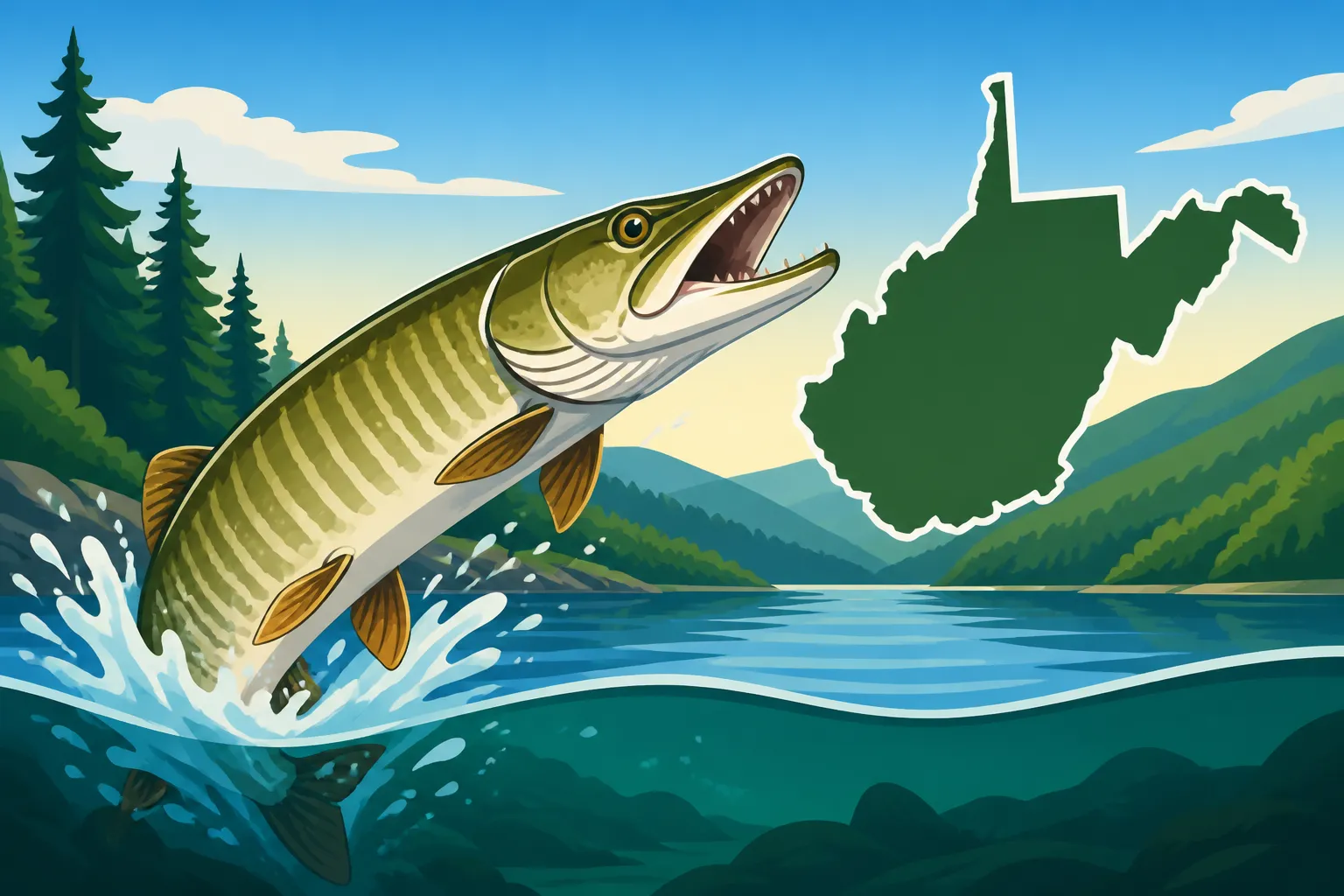
There's nothing quite like the thrill of chasing a true trophy muskie, but when you're dreaming of one of these toothy giants, knowing where to focus your efforts in West Virginia can feel like searching for a needle in a haystack. Many anglers spend countless hours on waters that just don't have the forage or habitat to grow those monster fish. This guide is here to cut through the guesswork, revealing the absolute best lakes in West Virginia where you have a genuine shot at landing that elusive, once-in-a-lifetime trophy muskie.
Understanding "Trophy Muskie" in West Virginia Waters
When we talk about a "trophy muskie" in West Virginia, we're not just talking about any muskie. We're talking about those truly impressive specimens that turn heads and make for incredible stories. For many anglers, a trophy muskie starts around the 40-inch mark, with real giants pushing well into the 50-inch range. These are fish that have survived for many years, growing to immense sizes by feasting on abundant forage and navigating the challenges of their environment.
What Makes a Muskie "Trophy-Sized"?
The definition of a "trophy" can be subjective, but for muskie, it often refers to fish over a certain length or weight. In West Virginia, where muskie fishing is a passionate pursuit, a fish measuring 40 inches or more is generally considered a fantastic catch. When you start getting into the 45 to 50-inch range, you're looking at truly exceptional fish. These fish aren't just big; they're old, wily, and have honed their hunting skills over many seasons. Their sheer size and power are what make them such a coveted prize. You can learn more about how these fish grow in our guide to Muskie Growth Rate to Trophy Size.
The Ideal Habitat for Monster Muskie
What helps a muskie grow to trophy proportions? It's all about the perfect storm of environment, food, and protection. Lakes with expansive areas of submerged timber, rocky points, deep weed lines, and clear, cool water provide ideal ambush points and comfortable living conditions. A robust forage base of gizzard shad, suckers, and even smaller game fish like bass is absolutely crucial. Without a consistent, plentiful food source, muskie simply can't pack on the pounds and reach those impressive lengths. Lakes that are managed specifically for muskie, often with stocking programs and strict regulations, also tend to produce bigger fish because they are given the chance to grow. Healthy muskie populations and their preferred environments are key ingredients for a trophy hunt.
The Patience and Persistence of Muskie Fishing
Let's be real: muskie fishing isn't for the faint of heart or the easily discouraged. It's often called the "fish of 10,000 casts" for a reason. You can spend an entire day, or even several days, without a single strike, only to have a monstrous muskie appear out of nowhere and engulf your bait. This pursuit demands immense patience, unwavering persistence, and a deep understanding of muskie behavior. It's a mental game as much as a physical one. But when that moment comes, when you feel the weight of a true trophy on your line, all those hours of casting, retrieving, and waiting instantly become worth it. The challenge is what makes the reward so incredibly satisfying.
Top West Virginia Lakes for Trophy Muskie
West Virginia might be known for its incredible smallmouth bass rivers and trout streams, but it also boasts some fantastic lake fishing for muskie, particularly for those seeking a true giant. While many waters hold muskie, a few lakes consistently produce larger fish due to their habitat, forage, and management.
Stonewall Jackson Lake: A Muskie Sanctuary
Stonewall Jackson Lake, nestled in Lewis County, is arguably West Virginia's most celebrated muskie fishery, and for good reason. This 2,650-acre reservoir is meticulously managed for muskie, and it shows. The lake features extensive standing timber, deep channels, and a rich forage base that allows muskie to thrive and grow to incredible sizes. Many of the state's largest muskie catches come from these waters.
Anglers often target the standing timber, creek channels, and submerged humps throughout the lake. Early spring and late fall are prime times, as muskie are actively feeding before and after the spawn. Look for areas with baitfish concentrations, often visible on your fish finder. Long casting big baits like bucktails, large crankbaits, and glide baits are popular, as are slower presentations with swimbaits or even live suckers. Success here often comes down to covering a lot of water and being ready for that explosive strike. For a deeper dive into this fishery, check out our guide on Stonewall Jackson Lake Fishing.
Burnsville Lake: Consistent and Challenging
Burnsville Lake, a 960-acre impoundment in Braxton County, offers another excellent opportunity for trophy muskie. While perhaps not as widely publicized as Stonewall Jackson, Burnsville has a loyal following of muskie anglers who know its potential. The lake has diverse habitat, including plenty of standing timber, rocky points, and coves with submerged vegetation.
Muskie at Burnsville are often found patrolling the edges of the timber lines, especially near deep water access. Creek arms and areas where tributaries enter the lake can also be productive, particularly after rain events. Targeting muskie here requires similar tactics to Stonewall Jackson, with large lures being the norm. The fish can be pressured, so varying your retrieve and trying different baits can be crucial. Patience is especially key on Burnsville, as the fish can be finicky, but the reward of a big muskie from this lake is truly something special. Our Burnsville Lake Fishing Guide has more details.
Tygart Lake: The Hidden Gem
Tygart Lake, located near Grafton in Taylor County, is a 1,750-acre flood control reservoir that often flies under the radar for muskie compared to its counterparts. However, Tygart consistently produces solid muskie, and occasionally, true trophy-sized fish. Its deep, clear waters and steep banks can make it challenging, but those who learn its secrets are often rewarded.
Muskie in Tygart Lake tend to relate to the deep main lake points, rocky outcroppings, and areas where creek channels meet the main lake. Unlike some other lakes, Tygart has less standing timber, so anglers often focus on structural elements. Trolling large crankbaits can be effective for covering water and locating active fish, especially during warmer months. During cooler periods, casting large swimbaits or jigs near drop-offs can entice strikes. Understanding the lake's topography and using quality electronics can give you a significant advantage here. To explore further, read our comprehensive Tygart Lake Fishing Guide.
Bluestone Lake: A River-Run Muskie Haven
Bluestone Lake, a sprawling 2,040-acre reservoir on the New River in Summers County, offers a slightly different muskie experience. While it's a lake, it maintains a strong riverine influence, which often means healthy, hard-fighting muskie. It's known for its abundant forage, including large gizzard shad and carp, which fuels the growth of its muskie population.
Muskie in Bluestone Lake are often found in the upper reaches where the New River flows in, as well as along rocky shorelines, bluff walls, and the numerous coves. The presence of the New River brings a steady flow of nutrients and baitfish, making it a dynamic environment for muskie. Trolling with large, deep-diving crankbaits is a popular method, especially when covering the main lake basin. Casting large swimbaits, bucktails, and soft plastics into coves and along structure can also be highly effective. The sheer size of Bluestone means there's a lot of water to explore, but the potential for a trophy fish here is undeniable. Check out our Bluestone Lake Fishing Guide for more information.
Here's a quick comparison of these top muskie lakes:
| Lake Name | County | Key Characteristics | Trophy Potential | Primary Tactics |
|---|---|---|---|---|
| Stonewall Jackson Lake | Lewis | Extensive standing timber, rich forage, managed fishery | Excellent; frequently produces 40"+ fish | Large bucktails, crankbaits, glide baits, live bait |
| Burnsville Lake | Braxton | Standing timber, rocky points, consistent producer | Very Good; consistent 40"+ opportunities | Large bucktails, swimbaits, jigs, slow presentations |
| Tygart Lake | Taylor | Deep, clear water, structural fishing, less timber | Good; occasional trophy fish, challenging | Trolling deep crankbaits, casting swimbaits near drop-offs |
| Bluestone Lake | Summers | Riverine influence, abundant forage, large area | Good; strong river-run muskie, potential for giants | Trolling, casting large swimbaits and bucktails |
Gear and Tactics for Trophy Muskie Hunting
Catching a trophy muskie isn't just about finding the right lake; it's also about having the right tools and knowing how to use them. These fish are powerful, aggressive, and demand robust gear and specific strategies.
Heavy-Duty Tackle is Non-Negotiable
Forget your bass rods and crappie reels; muskie demand serious equipment. You'll need heavy-action baitcasting rods, typically 8 to 9 feet long, capable of handling large lures and powerful fish. Matching these with robust baitcasting reels featuring a strong drag system and high line capacity is crucial. Many muskie anglers prefer reels with a lower gear ratio for cranking big baits and fighting heavy fish, but higher ratios can be useful for quickly retrieving line after a cast or for certain presentations.
Your line choice is equally important. Braided line, typically 65 to 100-pound test, is the standard due to its strength, lack of stretch, and abrasion resistance. A heavy fluorocarbon or wire leader (100-150 lb test) is absolutely essential to prevent those razor-sharp teeth from cutting your main line. Investing in quality gear is not just about performance, it’s about safety and ensuring you can land these magnificent creatures. You can often find a great selection of robust muskie rods, reels, and lines on platforms like Amazon. For a comprehensive breakdown of what you need, check out our guide on Best Muskie Gear for West Virginia Rivers.
Lures and Presentations That Get Attention
Muskie have a reputation for being finicky, but they also respond to a wide array of large, attention-grabbing lures. Bucktails, which are large spinnerbaits, are perennial favorites, especially when retrieved quickly. Large crankbaits that dive to different depths can be trolled or cast to cover water effectively. Glide baits and jerkbaits, which require a specific retrieve to impart an erratic action, can be deadly when muskie are hesitant. Soft plastic swimbaits, sometimes weighing several ounces, offer a more subtle presentation that can mimic natural forage. Don't forget the effectiveness of live bait, particularly large suckers, fished under a float or on a bottom rig, especially in colder water. The key is to experiment with different sizes, colors, and retrieve speeds until you find what the fish are reacting to on any given day.
The Importance of Patience, Persistence, and the Figure-Eight
We've touched on patience, but it bears repeating: muskie fishing is a marathon, not a sprint. You might make thousands of casts without a bite, but that next cast could be the one. Persistence means continuing to work your bait, even when you're tired, and staying positive.
One crucial technique for muskie fishing is the "figure-eight" at the boat. Muskie are notorious for following a lure right up to the boat without striking. By smoothly extending your rod tip into the water and tracing a large figure-eight pattern, you can often entice a following muskie to strike. This is a critical moment where many strikes occur, and being ready for it can be the difference between a frustrating follow and a hooked trophy.
Ethical Catch and Release Practices
Trophy muskie are a precious resource, and practicing proper catch and release is paramount to ensure their future. These fish are incredibly resilient, but handling them correctly is vital for their survival.
- Minimize Fight Time: Use heavy tackle to land the fish as quickly as possible, reducing stress.
- Keep Them Wet: Try to keep the fish in the water as much as possible. If you must remove it for a quick photo, do so gently and quickly.
- Proper Tools: Have long-nose pliers or jaw spreaders for hook removal, and a large, knotless rubber net to safely cradle the fish. A good quality set of release tools, readily available on Amazon, can make a huge difference.
- Support the Fish: When holding a large muskie, always support its belly to protect its internal organs. Avoid holding it horizontally by the jaw alone.
- Revive If Needed: If the fish seems sluggish, hold it gently in the water, facing into a current, until it can swim away strongly on its own.
Following these practices helps ensure that those trophy muskie can continue to grow and provide thrilling encounters for future generations of anglers. For more detailed advice, refer to our article on Muskie catch and release survival tips.
Planning Your Trophy Muskie Adventure
A successful trophy muskie trip involves more than just knowing where to go and what to throw. It's about careful planning, understanding the conditions, and being prepared for anything the wild waters of West Virginia might throw at you.
Best Seasons and Weather Conditions
Muskie can be caught year-round in West Virginia, but certain seasons offer better odds for trophy fish.
- Spring: As water temperatures begin to rise (typically late March through May), muskie become very active and hungry after the winter slump. They'll feed aggressively in pre-spawn and post-spawn periods. Focus on shallow bays and sun-warmed areas.
- Summer: Summer can be challenging as muskie often retreat to deeper, cooler water during the heat of the day. However, early mornings, late evenings, and night fishing can be very productive. Look for fish relating to main lake structure or deeper weed lines.
- Fall: This is widely considered the prime season for trophy muskie. As water temperatures drop from September through November, muskie enter their "feed bag" mode, gorging themselves to prepare for winter. They're often found shallower and are more willing to chase larger baits. This is when many of the biggest fish of the year are caught. Best months to catch muskie in West Virginia offers more specific timing.
- Winter: Ice fishing for muskie is less common in West Virginia, but open-water fishing in mild winters can still produce, albeit with slower presentations and a lot of patience.
Cloudy, overcast days, especially with a light chop on the water, are often favored by muskie anglers. Barometric pressure changes, particularly a falling barometer before a storm, can also trigger feeding frenzies.
Hiring a Guide: An Investment in Success
While you can certainly venture out on your own, hiring a local muskie guide can dramatically increase your chances of success, especially if you're new to a particular lake or to muskie fishing in general. A good guide knows the water intimately, understands muskie patterns, and has all the specialized gear necessary. They can teach you techniques, put you on fish, and provide invaluable insights that would take years to acquire on your own. For a trophy hunt, a guide is often a worthwhile investment. They can save you countless hours of unproductive casting and help you avoid common mistakes.
Navigating Regulations and Licensing
Before you even launch your boat, make sure you're fully compliant with all West Virginia fishing regulations. Muskie often have specific length limits and daily creel limits that are stricter than other species. Always consult the current West Virginia Fishing Regulations Summary, which you can usually find online through the West Virginia Division of Natural Resources (WVDNR) website. This summary will detail Muskie Regulations in West Virginia Waters, any special restrictions for certain lakes, and overall state rules.
Of course, you'll need a valid West Virginia fishing license. If you're a resident, there are various options, and non-residents also have several choices, including short-term permits for a quick trip. You can typically purchase licenses online through the WVDNR website, at authorized license agents across the state, or sometimes even at the lake's marina or bait shop. Our West Virginia Fishing License Guide for 2026 provides all the details you'll need to get squared away. Don't let a missing license or an overlooked regulation turn your trophy quest into a costly mistake.
Disclaimer
This article is for general informational purposes only and does not constitute professional advice. Laws, prices and regulations vary by location and change over time. Consult a qualified professional for guidance on your specific situation.