West Virginia walleye possession limit
One of the most common headaches for any angler in West Virginia is keeping track of all the rules and regulations, especially when it comes to how many fish you can actually take home. It's not just about what's in your livewell today, but what you already have stashed away in the freezer. This guide aims to clear up all that confusion surrounding the West Virginia walleye possession limit, so you can enjoy your time on the water without the nagging worry of breaking the law.
Understanding West Virginia's Walleye Regulations
Fishing for walleye in West Virginia can be incredibly rewarding, but it comes with its own set of rules, just like any other species. These regulations are put in place by the West Virginia Division of Natural Resources (WVDNR) to ensure healthy fish populations for everyone, now and in the future. It’s not just busywork; it’s vital for the ecosystem and your continued enjoyment of our beautiful waters.
The Current Daily and Possession Limits for Walleye
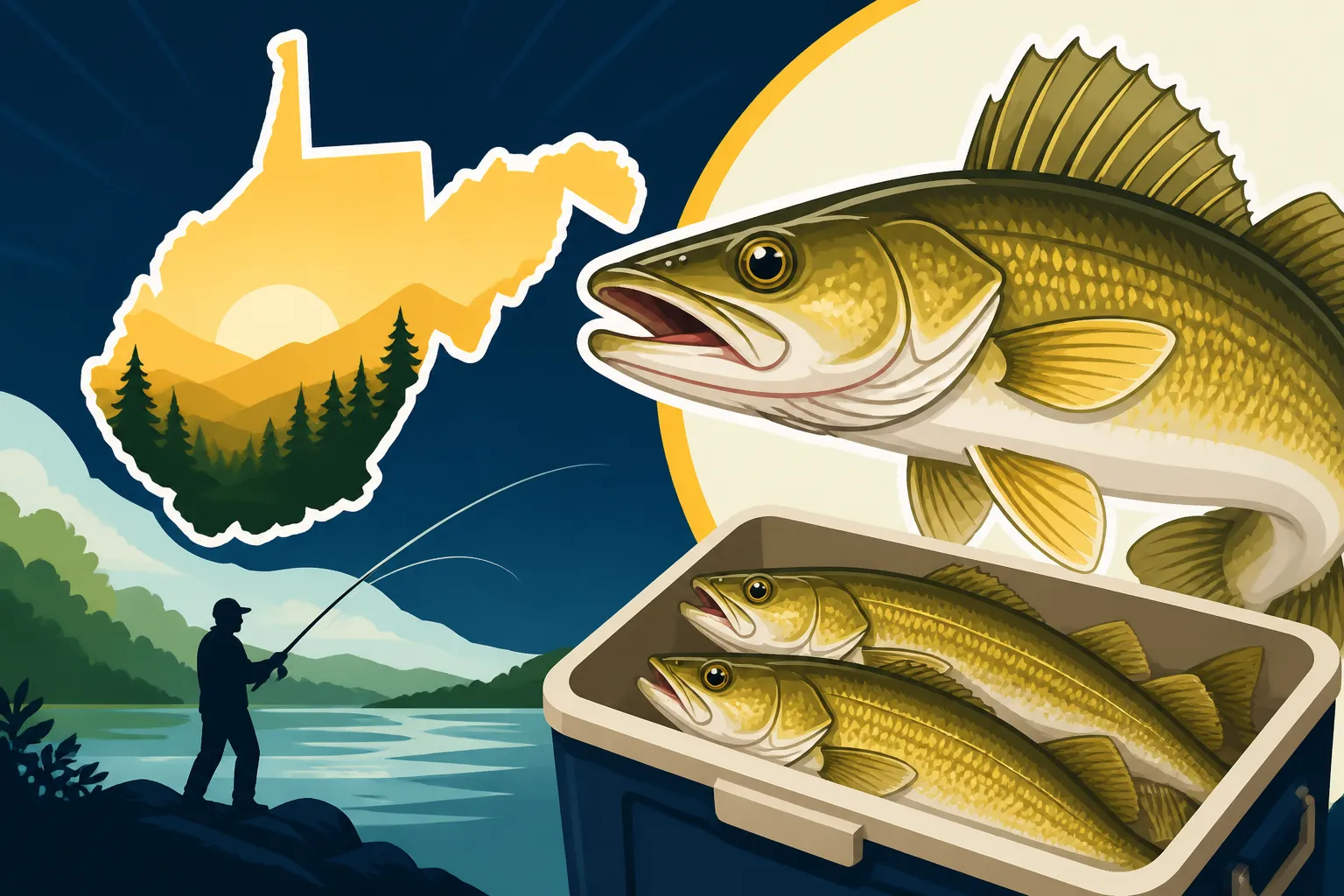
Let's get right to the heart of it. For most inland waters in West Virginia, the daily creel limit for walleye is 6 fish, and the possession limit is 12 fish. This means that on any given day, you can only harvest six walleye. However, the possession limit is where things often get a little tangled for folks. It dictates the total number of walleye you can have in your possession at any single time, whether they're in your boat, in your cooler, or already cleaned and sitting in your freezer at home. For a complete and up-to-date breakdown, always refer to the official West Virginia Walleye Daily and Possession Limits.
It's a system designed to prevent commercial-scale harvesting by individual anglers, even if they're fishing legally day after day. Imagine if there were no possession limit, and you could simply catch your daily limit, take them home, and then go out and do it again the very next day without any cumulative restriction. The walleye populations, especially in our smaller, more sensitive lakes and rivers, just couldn't sustain that level of pressure. These limits are a balancing act, ensuring that anglers can still enjoy harvesting their catch while also protecting the future of the fishery.
Differentiating Daily Limit from Possession Limit
This is where many anglers, particularly those new to the sport or visiting from states with different regulations, can get tripped up. The daily creel limit refers to the maximum number of fish of a particular species you can legally catch and keep in a single calendar day. So, if the daily limit for walleye is 6, you can't keep a seventh walleye on Monday, even if you released the first six. Once you've hit that number, any additional walleye you catch must be immediately released.
The possession limit, on the other hand, is the total number of fish you can have in your physical control, regardless of when they were caught. This includes fish that are already dressed, frozen, or stored at your home or cabin. For example, if the possession limit for walleye is 12, and you have 8 walleye fillets in your freezer from a previous trip, you can only legally harvest 4 more walleye on your current trip. If you catch 6 on your current trip, you'll be over the 12-fish possession limit, even though you stayed within the daily creel limit for that particular day. It’s a bit like a running tally, always looking at your cumulative stock. The simplest way to think about it is that your home freezer is part of your possession, not an entirely separate entity.
Why These Limits Matter for Walleye Conservation
These seemingly restrictive limits aren't arbitrary; they are the backbone of sustainable fishing practices in West Virginia. Walleye are highly sought-after game fish, known for their delicious fillets and challenging fight. Their popularity means they can easily be overfished if not properly managed. The WVDNR uses data from population surveys, angler harvest reports, and biological studies to set these limits.
When you adhere to the possession limit, you're directly contributing to the health of our walleye populations. These limits help:
- Prevent Overharvesting: Ensures that enough adult walleye remain in the system to spawn and reproduce, maintaining a healthy population cycle year after year. This is particularly important for species like walleye that can be susceptible to heavy fishing pressure.
- Distribute Harvest: Spreads the opportunity to harvest fish among more anglers, rather than allowing a few individuals to take a disproportionate share.
- Protect Spawning Stocks: By limiting the total number of fish removed, especially during critical times like the Walleye Spawning Season in West Virginia, the limits help ensure a robust future generation.
- Promote Fair Chase: It maintains the sporting aspect of fishing by requiring anglers to release fish once limits are met, encouraging responsible angling rather than sheer accumulation. It’s about the experience, not just the quantity in the cooler.
Navigating Walleye Limits on Boundary Waters, Especially the Ohio River
West Virginia is bordered by several states, and for anglers, this often means navigating complex reciprocal agreements, especially when it comes to shared waterways like the mighty Ohio River. Fishing these boundary waters can be incredibly productive for walleye, but it also means being extra diligent about understanding the specific rules.
Special Rules for the Ohio River Walleye
The Ohio River is a prime example of a boundary water with its own set of rules. For much of its length, the Ohio River forms the border between West Virginia and Ohio, and parts of it also touch Kentucky. To make fishing easier for residents of these states, reciprocal agreements are in place. These agreements often mean that if you possess a valid fishing license from either West Virginia or Ohio (or Kentucky, depending on the section), you can legally fish the entire main stem of the Ohio River, regardless of which side you're on.
However, where it gets tricky is with the specific daily and possession limits. While you might be allowed to fish with an Ohio license, you still need to be aware of the daily and possession limits of the state you are a resident of, or the state whose regulations govern that specific stretch of river. For walleye on the Ohio River, West Virginia regulations state an aggregate daily limit of 6 walleye/sauger/saugeye in combination, with a possession limit of 12. This is often consistent with Ohio's limits, but it's always critical to double-check. For more details on these specific regulations, you can read up on the Ohio River Walleye Aggregate Limit for West Virginia Anglers and a general overview in our Ohio River Fishing Rules for West Virginia Anglers guide.
These aggregate limits are important because walleye, sauger, and saugeye (a walleye-sauger hybrid) often inhabit the same waters and can be confused by anglers. By grouping them under one aggregate limit, the WVDNR simplifies compliance and protects all three species from overharvest.
Understanding Reciprocal Agreements with Neighboring States
Reciprocal agreements are incredibly convenient for anglers living near state borders. Instead of needing multiple licenses, one often suffices for shared waters. However, it's a common misconception that if you have a license from one state, all of that state's regulations apply everywhere. This is not always the case.
Typically, while a license from either state may allow you to fish the shared water, you are often bound by the daily and possession limits of the state in which you are licensed, or the state in which you are physically located if fishing from the bank. For boaters on the Ohio River, it generally defaults to the aggregate limits mentioned above, as agreed upon by the WVDNR and its counterparts. It’s a very specific dance, and ignorance isn’t an excuse in the eyes of the law. If you're unsure, the safest bet is always to consult the regulations of both states that share the water you're fishing or just adhere to the strictest limit.
Practical Tips for Anglers Fishing Border Areas
Fishing the Ohio River or other border waters can be fantastic, but a little preparation goes a long way to avoid a costly misunderstanding with a conservation officer.
- Carry Both Regulation Summaries: Even if you only need one state's license, having a copy of both West Virginia and the bordering state's fishing regulations handy is incredibly smart. You can often find these online or pick up a physical copy from a local license agent. This way, if there's any doubt about a specific rule, you have the reference right there.
- Know Your Location: Be keenly aware of where you are on the water. Are you in a bay that is solely within West Virginia, or are you on the main channel of the Ohio River? This can impact which state's specific limits or rules apply, even if you're covered by a reciprocal license for fishing in general.
- Err on the Side of Caution: If there's ever any ambiguity, always default to the stricter of the two states' regulations. It's better to be safe than sorry and risk a citation. A few less fish in the cooler is far better than a hefty fine and a ruined trip.
- Clearly Mark Your Fish: If you're fishing with multiple people and have fish from different species or if you're close to a limit, use separate stringers or coolers, or clearly label catches to avoid confusion regarding individual limits, especially if a conservation officer checks your boat. Some anglers use color-coded tags or bags for each person's catch, which can be easily found on Amazon.
How to Ensure You're Compliant and Avoid Penalties
No one wants to run afoul of fishing regulations. It's not just about the potential fines; it's also about respecting the resource and maintaining your reputation as a responsible angler. Taking a few proactive steps can make all the difference in ensuring you're compliant with West Virginia's walleye possession limits.
Checking the Official West Virginia Fishing Regulations Summary
Your absolute best resource for current and accurate information is the official West Virginia Fishing Regulations Summary. This document, published annually by the WVDNR, is a comprehensive guide to all fishing rules, limits, and special regulations across the state.
You can usually find the latest version on the WVDNR website, often available as a downloadable PDF that you can save to your phone or print out. Many local bait and tackle shops, as well as WVDNR offices, also have free printed copies available. I always make it a point to grab one every year, even if I think I know the rules by heart. Regulations, especially for popular species like walleye, can change without much fanfare, so an annual review is crucial. For a deeper dive into how to effectively use this resource, check out our guide on Reading the West Virginia Fishing Regulations Summary. It covers common sections and how to quickly find what you're looking for.
What Happens If You Exceed the Possession Limit
Ignoring or simply being unaware of the possession limit can lead to serious consequences. Getting caught with more fish than the legal possession limit is considered a violation of West Virginia fishing laws, and the penalties can range depending on the severity and frequency of the offense.
Typically, for exceeding limits, you could face:
- Fines: These can be substantial, often ranging from hundreds to thousands of dollars per violation. The amount can increase with the number of fish over the limit.
- Confiscation of Catch: Any fish exceeding the legal limit will almost certainly be confiscated by the conservation officer.
- Loss of Equipment: In more egregious cases, or repeat offenses, your fishing gear, boat, or other equipment used in the violation could be seized.
- License Suspension/Revocation: Your West Virginia fishing license could be suspended for a period of time, or even permanently revoked, preventing you from legally fishing in the state. This means all the money you spent on your West Virginia Fishing License Guide for 2026 goes right out the window.
- Court Appearances: You will likely be required to appear in court, which means time off work and additional legal fees.
It's a serious matter, and enforcement officers do not take kindly to anglers who knowingly (or even negligently) violate these rules. It's worth remembering that ignorance of the law is generally not considered a valid defense. For a broader understanding of how penalties work in West Virginia fishing, you might find our article on Fishing Without a License in West Virginia: Penalties helpful, as the enforcement mechanisms are often similar for various violations.
Best Practices for Keeping Track of Your Catch
To avoid any accidental violations, especially when fishing for highly desirable species like walleye, it's wise to implement some personal best practices for managing your catch.
- Keep a Running Tally: If you're planning to keep fish, either mentally or on a small notepad, keep track of how many walleye you've harvested. This is especially important if you're close to your daily or possession limit. Many anglers use small, clip-on clickers, which you can easily purchase on Amazon, to count their kept fish throughout the day.
- Separate Catches: If you're fishing with a group, ensure each individual's catch is clearly separated. This prevents confusion if a conservation officer performs a check, and it ensures that no single person exceeds their individual limit. Separate stringers or labeled cooler bags work well.
- Immediate Processing and Storage: Once you decide to keep a walleye, bleed and ice it down quickly to ensure the best meat quality. If you're returning to a camp or home with fish from previous days in the freezer, consider those already "in possession" and adjust your current day's harvest accordingly.
- Measure Fish Accurately: Always have a reliable measuring device on hand. While walleye in West Virginia generally don't have a minimum length limit in inland waters (always check specific regulations!), other species or special regulation waters might. An accurate measure prevents keeping an undersized fish inadvertently, which is also a violation.
Walleye Fishing Strategies Within the Limits
Adhering to the walleye possession limit isn't just about avoiding trouble; it's about being a responsible and strategic angler. Smart fishing techniques and planning can help you maximize your enjoyment while staying well within the legal boundaries.
Targeting Walleye Responsibly
When you're out there on the water, targeting walleye is a thrill. These fish are known for their subtle bites and strong fights. However, it's essential to practice responsible angling, especially when you're close to your limit or releasing fish you don't intend to keep.
- Catch-and-Release Best Practices: If you've already hit your daily creel limit or know you have enough in possession, practice careful catch and release. Use single, barbless hooks where possible, or flatten the barbs on your treble hooks. This makes hook removal much easier and reduces damage to the fish. Handle fish gently, minimize their time out of water, and revive them properly before release. A good quality, rubberized landing net (easily found on Amazon) can also help protect a fish's slime coat and fins.
- Selective Harvest: You don't have to keep every legal fish you catch. Consider keeping only the mid-sized walleye, which often taste the best, and releasing the larger "trophy" fish. The bigger, older walleye are crucial for spawning and ensuring healthy genetics in the population. It's a personal choice, but a responsible one.
- Understand What Walleye Eat in West Virginia Lakes: Knowing their diet can help you choose baits and lures that are less likely to be deeply ingested, making for easier release if needed.
Planning Your Trip Based on Limits
A little planning before your trip can prevent disappointment or violations. This is especially true for longer trips or when multiple anglers are involved.
- Group Limits: If you're fishing with friends or family, discuss the limits beforehand. Each licensed angler has their own daily and possession limit. However, the total number of fish in the boat or vehicle must not exceed the combined possession limits of all licensed anglers present. If only one person is licensed, then only their limit applies. This is crucial for avoiding issues.
- Meal Planning: Think about how many walleye you realistically need for meals during your trip or to take home. Do you truly need to hit the absolute maximum possession limit of 12 fish, or would 6 or 8 suffice? Often, taking a more modest number of fish leads to less waste and a greater appreciation for the ones you do keep.
- Focus on Other Species: Once you've reached your walleye limit, consider switching gears and targeting other species like crappie, smallmouth bass, or panfish, which might have different limits or be more plentiful. West Virginia offers fantastic fishing for a variety of species, so don't limit your enjoyment to just one! Our guide on Walleye Fishing in West Virginia can give you broader insights, while Trolling Techniques for West Virginia Lake Walleye might help you be more efficient in your catch.
Gear Considerations for Walleye Fishing
Your choice of gear can also play a role in ethical and compliant fishing. While not directly related to the number of fish, it impacts how you interact with them and ensures you're prepared.
- Appropriate Tackle: Using tackle that's suitable for walleye fishing, such as medium-light to medium-action rods with sensitive tips, allows you to detect subtle bites more effectively. This means less likelihood of deep-hooking fish you intend to release. Whether you're jigging or trolling, having the right setup is key. For winter sauger, for instance, a sensitive rod and appropriate jigs are critical, much like described in Best Jigging Spoon for Winter Sauger.
- Hook Selection: As mentioned, choosing single hooks over trebles, or at least flattening barbs, is a great practice for catch-and-release. Some specific lures come with treble hooks, but many jigs and live bait rigs can easily incorporate single hooks.
- Fish Handling Tools: Beyond a good net, consider investing in a hook remover or a pair of long-nosed pliers. These tools allow for quick and safe hook extraction, minimizing stress and injury to the fish you're letting go. You can find a wide selection of these essential fishing tools on Amazon. A fish gripper can also be useful for handling toothy walleye safely without harming the fish or your hands.
By combining an understanding of the regulations with responsible angling practices and appropriate gear, you'll ensure your walleye fishing adventures in West Virginia are both enjoyable and sustainable.
| Walleye/Sauger/Saugeye Limits in West Virginia | Inland Waters (Most Lakes & Rivers) | Ohio River (Reciprocal with OH/KY) |
|---|---|---|
| Daily Creel Limit | 6 (Walleye only) | 6 (Aggregate of Walleye/Sauger/Saugeye) |
| Possession Limit | 12 (Walleye only) | 12 (Aggregate of Walleye/Sauger/Saugeye) |
| Minimum Length Limit | None (Always check specific water rules) | None (Always check specific water rules) |
| Notable Exceptions/Special Rules | Check WVDNR Summary for specific lakes/rivers. | Reciprocal license agreements. |
Disclaimer
Please remember that fishing regulations can change. While every effort has been made to provide accurate and up-to-date information, it is your responsibility as an angler to consult the most current official West Virginia Fishing Regulations Summary provided by the West Virginia Division of Natural Resources (WVDNR) before heading out to fish. This guide is for informational purposes only and should not be considered a substitute for the official regulations.