West Virginia black bass daily limit
Trying to keep up with fishing regulations can feel like deciphering ancient scrolls, especially when you're just trying to enjoy a peaceful day on the water. The rules around black bass, specifically largemouth, smallmouth, and spotted bass, can be a real head-scratcher in West Virginia, leaving many anglers wondering exactly how many they can keep and what sizes are legal. This comprehensive guide is here to untangle all that confusion, giving you a clear picture of the daily limits and special regulations for black bass across the Mountain State.
Understanding West Virginia's Black Bass Regulations
When you're out on the beautiful waters of West Virginia, whether it's a quiet lake or a flowing river, knowing the rules for black bass isn't just about avoiding a fine; it's about being a responsible angler and helping to sustain the incredible fishing opportunities we all cherish. The West Virginia Division of Natural Resources (WVDNR) implements these regulations with the long-term health of our fish populations in mind.
Why Daily Limits Matter for Black Bass
Imagine if everyone kept every fish they caught, regardless of size or quantity. Our lakes and rivers would be depleted in no time! Daily limits for species like black bass are crucial conservation tools. They serve several vital purposes:
- Population Management: Limits prevent overharvesting, ensuring enough fish remain to spawn and reproduce, contributing to future generations of bass. This helps maintain a healthy balance in the ecosystem. Without these limits, certain year classes could be wiped out, leading to significant declines in fish numbers and size quality for years to come.
- Quality Fishing Experience: By managing the number of fish removed, limits help maintain a healthy size structure in the population. This means there are more chances for anglers to catch bigger, more mature fish, enhancing the overall fishing experience. Nobody wants to fish in a lake where all the fish are stunted or minuscule; limits help ensure you have a shot at a real fight.
- Fair Distribution: Daily limits ensure that the available fish are distributed more fairly among all anglers. It prevents a few individuals from taking an excessive number of fish, leaving less for others. It’s about sharing the resource responsibly so everyone can have a good outing.
- Ecological Balance: Black bass are often apex predators in their environments. Maintaining healthy bass populations helps control prey fish species, preventing overpopulation of certain smaller fish that could otherwise disrupt the aquatic ecosystem.
General Statewide Black Bass Daily Limits
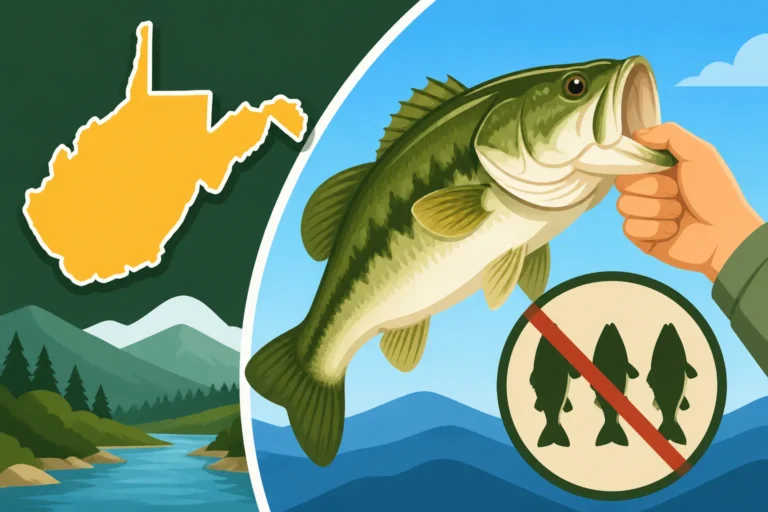
Let's get down to the nitty-gritty. For most waters across West Virginia, the regulations for black bass – that includes largemouth bass, smallmouth bass, and spotted bass – are fairly straightforward. The statewide daily creel limit is six (6) black bass in aggregate. This means you can keep a combined total of six fish from these three species per day.
For instance, you could keep:
- Six largemouth bass.
- Six smallmouth bass.
- Three largemouth and three smallmouth.
- Two of each species (largemouth, smallmouth, spotted).
- Any combination, as long as the total doesn't exceed six.
It’s important to remember that this "daily creel limit" refers to the number of fish you can legally harvest and possess on your person or in your boat during any given calendar day. Additionally, there’s a possession limit which dictates the maximum number of fish you can have in your physical possession at any time, including those stored at home. For black bass in West Virginia, the possession limit is twice the daily creel limit, meaning twelve (12) black bass in aggregate. So, if you've been on a multi-day trip, you can't accumulate more than 12 bass total unless you've properly frozen and processed older catches and are starting a new fishing day. You can find more details on this in the comprehensive guide to West Virginia Bag and Possession Limits by Species.
Most of these statewide regulations apply to all public waters unless specifically noted otherwise. However, West Virginia is known for its diverse waterways, and with that comes some very specific, localized rules that anglers absolutely must be aware of. Neglecting to check these special regulations can quickly turn a great day into a frustrating and costly one. This is why always checking the West Virginia Fishing Regulations Explained is highly recommended, ideally before you even leave home.
Navigating Special Regulation Waters for Black Bass
While the statewide limits are a good baseline, West Virginia has a number of incredible fishing spots with unique regulations designed to enhance those specific fisheries. Ignoring these can lead to trouble, so it’s vital to know before you go.
The New River Smallmouth Bass Slot Limit
One of the most famous and important special regulations in West Virginia applies to smallmouth bass on the iconic New River. This river is renowned for its world-class smallmouth fishing, and the WVDNR has implemented a slot limit to protect and promote the growth of trophy-sized bass.
A slot limit means that fish within a certain size range must be immediately released, while fish smaller or larger than that range can be kept, up to the daily creel limit. For the New River (and its tributaries, up to the first impassable barrier), the smallmouth bass regulation is:
- Daily Creel Limit: 2 smallmouth bass.
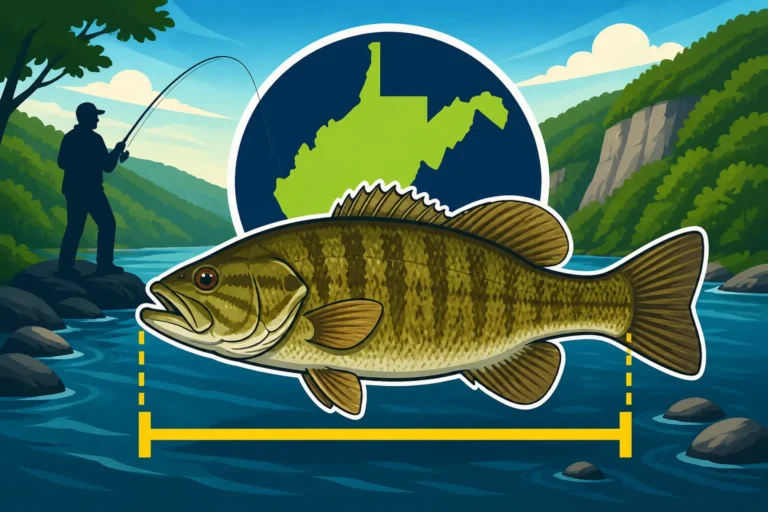
- Size Restriction: No smallmouth bass between 12 and 16 inches in length may be kept.
- This means you can keep two smallmouth bass that are under 12 inches, OR two smallmouth bass that are over 16 inches, OR one under 12 inches and one over 16 inches. The key is not to keep any fish within that 12 to 16-inch slot.
This slot limit on the New River is a fantastic example of a regulation designed for quality fishing. By protecting those mid-sized bass, it allows them to grow larger, contributing to the river's reputation for big smallmouth. It also ensures that a strong breeding population remains. Many anglers head to the New River specifically for its New River Smallmouth Bass Fishing, and understanding this regulation is paramount for a successful and legal trip. It’s a bit different than a simple minimum size limit, so make sure you’ve got a good measuring device handy. If you're looking for one, a reliable, flexible measuring tape that floats, or a dedicated bump board, can be found easily on sites like Amazon.
Other Potential Special Regulations
While the New River's slot limit is probably the most widely known for black bass, it's critical to understand that other specific water bodies or sections of rivers could have their own unique rules. These might include:
- Minimum Size Limits: Some lakes or impoundments might have a minimum length requirement that is different from the statewide rule. For example, a lake might require all largemouth bass to be at least 14 inches long before they can be kept, even if the statewide limit doesn't specify a minimum.
- Reduced Daily Limits: Certain smaller lakes or ponds, especially those managed for trophy potential or undergoing population recovery, might have a daily creel limit of fewer than six black bass.
- Catch-and-Release Only: In rare cases, specific sections or small waters might be designated as "catch-and-release only" for certain species, including black bass. This is often done in highly pressured areas or for very sensitive populations.
- Seasonal Closures: While bass fishing is generally open year-round in West Virginia, there could be very localized exceptions or specific tournament rules that impact when you can fish for or keep bass. Always consult the latest West Virginia Fishing Season Dates and Closures if you have any doubts.
The golden rule here is always, always check the current WVDNR Fishing Regulations Summary. This summary, often available as a free PDF download or physical booklet from license vendors, lists all statewide regulations and then meticulously details every special regulation for individual lakes, rivers, and streams. It's truly your best friend on the water. Taking the time to read through the Reading the West Virginia Fishing Regulations Summary before each fishing season, or whenever you plan to visit a new body of water, will save you a lot of grief. Don't assume that because a rule applies to one river, it applies to its neighbor.
What Counts as a Black Bass and How to Measure
Before you even think about putting a fish on your stringer, you need to be absolutely certain of two things: what kind of fish you've caught, and its accurate length. Misidentification or improper measurement are common mistakes that can lead to legal issues.
Identifying Largemouth, Smallmouth, and Spotted Bass
While they're all "black bass," these three species have distinct characteristics. Being able to tell them apart is crucial, especially when specific regulations (like the New River slot limit) apply only to smallmouth bass.
Let's break down the key differences:
-
Largemouth Bass (Micropterus salmoides):
- Mouth: The most obvious feature! The corner of its mouth extends beyond the rear edge of its eye when closed. Hence, "largemouth."
- Dorsal Fin: The dorsal fin (the one on its back) has a very deep, almost complete, division between the spiny and soft-rayed sections. It looks like two separate fins.
- Coloration: Typically has a pronounced horizontal dark stripe or blotchy pattern running along its sides. Its body is usually greener, often with a white belly.
- Habitat: Prefers warmer, slower-moving waters with abundant vegetation, such as lakes, ponds, and sluggish river backwaters.
-
Smallmouth Bass (Micropterus dolomieu):
- Mouth: The corner of its mouth does not extend beyond the rear edge of its eye when closed. It's noticeably smaller than a largemouth's mouth.
- Dorsal Fin: The dorsal fin is only slightly notched or appears continuous, unlike the deep division in a largemouth.
- Coloration: Generally has vertical bars or tiger stripes along its sides, often with a bronze or brown overall hue. Its eyes can often appear reddish.
- Habitat: Prefers cooler, clearer, fast-flowing waters with rocky bottoms, like rivers and large, deep lakes. The New River is a prime example of Best Bass Fishing Spots in West Virginia for smallmouth.
-
Spotted Bass (Micropterus punctulatus):
- Mouth: The corner of its mouth extends to the middle of the eye, but generally not beyond it. It's intermediate in size between a largemouth and a smallmouth.
- Dorsal Fin: Similar to a smallmouth, the dorsal fin is continuous with a slight dip.
- Coloration: Has distinct dark spots on its lower sides and belly, which can be a key identifier. Often has a lateral stripe that looks more like a series of connected blotches rather than a solid line.
- Tongue Patch: A definitive characteristic of spotted bass is a small patch of teeth on the center of its tongue. You'll need to open the fish's mouth and feel for it. Neither largemouth nor smallmouth bass have this.
- Habitat: Often found in rivers and reservoirs, sometimes overlapping with both largemouth and smallmouth habitats.
If you're still unsure, comparing photos online or in a field guide can be incredibly helpful. Websites like the WVDNR's or fishing forums often have great visual guides. For a deeper dive into differentiating these species, check out resources like Largemouth Bass vs Smallmouth Bass Identification.
Proper Measurement Techniques
Okay, you've identified your fish. Now, how do you measure it correctly? This is where many anglers make mistakes, often unintentionally, which can still lead to violations.
The official method for measuring fish in West Virginia (and generally across the country) is total length. This means:
- Place the fish on a flat surface: A measuring board, a cooler lid, or even a flexible measuring tape laid flat will work.
- Close the mouth: Gently push the fish's mouth closed.
- Position the head: Place the fish with its snout touching the zero mark or the rigid end of your measuring device.
- Compress the tail: Pinch or gently push the tail lobes together so they form a straight line.
- Read the measurement: Note the length at the tip of the compressed tail.
It's absolutely vital to compress the tail. Simply letting the tail splay out naturally can give you a shorter measurement than the fish actually is, potentially leading you to believe a fish is legal when it's actually in the protected slot or undersized. Always err on the side of caution. A quality, legal measuring device is a must-have for any angler. Many dedicated fishing measuring boards are available, or you can find robust, waterproof measuring tapes on sites like Amazon that are designed for anglers.
Remember, if a fish is close to a legal size, especially on a slot limit like the New River, it’s always best to release it to avoid any ambiguity or potential issues with a conservation officer.
Here’s a quick summary of the key black bass regulations in West Virginia:
| Species | Statewide Daily Creel Limit | Statewide Possession Limit | New River (and tributaries) Smallmouth Bass Slot Limit |
|---|---|---|---|
| Largemouth Bass | 6 (aggregate) | 12 (aggregate) | N/A (statewide limits apply) |
| Smallmouth Bass | 6 (aggregate) | 12 (aggregate) | 2 fish daily, none between 12 and 16 inches |
| Spotted Bass | 6 (aggregate) | 12 (aggregate) | N/A (statewide limits apply) |
Note: Always consult the official West Virginia Fishing Regulations Summary for the most current and specific rules for your chosen fishing location, as special regulations can change or be added. You can usually find the most up-to-date information in the document titled West Virginia Black Bass Limits and the New River Slot Limit.
Consequences of Violating Black Bass Regulations
It might seem like a small thing to keep one extra fish or a fish that's just an inch over the legal limit, but fishing regulations are enforced seriously by the WVDNR. Violations aren't just a slap on the wrist; they can carry significant penalties that can really put a damper on your passion for fishing.
Penalties for Exceeding Limits
The specific penalties for violating fishing regulations in West Virginia can vary depending on the severity of the offense, the number of fish involved, and whether it's a first-time or repeat offense. However, common repercussions include:
- Fines: This is the most common penalty. Fines can range from a few hundred dollars to well over a thousand, especially for multiple violations or taking protected species.
- Court Appearances: Many violations will require you to appear in court, which means time off work and potential legal fees, even if you represent yourself.
- Loss of Fishing Privileges: One of the toughest consequences for an avid angler is the suspension or revocation of your fishing license. This could be for a specific period or, in severe cases, permanently. If you can’t get a West Virginia Fishing License Guide for 2026, you can’t fish, plain and simple.
- Seizure of Equipment: In some cases, your fishing gear, boat, or other equipment used in the commission of the violation may be seized.
- Restitution: You might be ordered to pay restitution for the value of the fish illegally taken.
- Criminal Record: Depending on the severity, some violations could even result in a misdemeanor charge, which would go on your criminal record.
These aren't hypothetical scenarios; these are real consequences that many anglers face each year. It's far better to release a fish you're unsure about than to risk facing any of these penalties. Trust me, the momentary satisfaction of an extra fish isn't worth the headache and cost. You can learn more about the potential repercussions in detail through resources like Fishing Without a License in West Virginia: Penalties, which often covers various types of fishing violations.
The Importance of Knowing the Rules
Ultimately, as an angler, the responsibility for knowing and adhering to the current fishing regulations falls squarely on your shoulders. Ignorance of the law is generally not considered a valid excuse.
- Before You Go: Before every trip, especially to new waters, take a few minutes to review the regulations. The WVDNR website is an excellent resource, and their annual regulation booklet is indispensable. Even if you think you know the rules, they can change from year to year, or even mid-season. For instance, regulations for other species like Muskie Regulations in West Virginia Waters can be updated, so it's a good habit to check for all species you plan to target.
- While You're There: Keep a copy of the regulations with you, whether it's a printed booklet or a digital version on your phone. If you have questions, you can always refer to it or contact the WVDNR directly. Many anglers even mark their regulations summary with highlighters for easy reference on the water.
- When in Doubt, Release: This is a simple but powerful rule. If you're not 100% sure about a fish's species or its legal length, the safest and most ethical action is to gently release it back into the water. A fish swimming away strong is always a better outcome than facing a conservation officer with an illegal catch.
Being an ethical and law-abiding angler not only keeps you out of trouble but also contributes to the health and sustainability of West Virginia's incredible fisheries. We all want to enjoy these waters for years to come, and following the rules is a huge part of making that possible.
Disclaimer
Please note: Fishing regulations in West Virginia are subject to change. While every effort has been made to provide accurate and up-to-date information in this guide, it is ultimately the angler's responsibility to consult the most current official West Virginia Division of Natural Resources Fishing Regulations Summary before engaging in any fishing activity. This article is for informational purposes only and should not be considered a substitute for the official regulations.