West Virginia fishing license reciprocity on Maryland boundary waters
There’s nothing quite like planning a fishing trip, picturing yourself on the water, only to be hit with that nagging doubt: "Wait, am I even allowed to fish here with my West Virginia license?" This particular headache often crops up when you're looking at those beautiful stretches of water that form a natural border between states, like the Potomac River between West Virginia and Maryland. It’s a common source of confusion, and frankly, nobody wants a run-in with a game warden just because they misunderstood a state line. This guide is here to clear up exactly how fishing license reciprocity works between West Virginia and Maryland on those shared boundary waters, ensuring your next trip is filled with fish stories, not legal woes.
The Core Principle of Fishing License Reciprocity
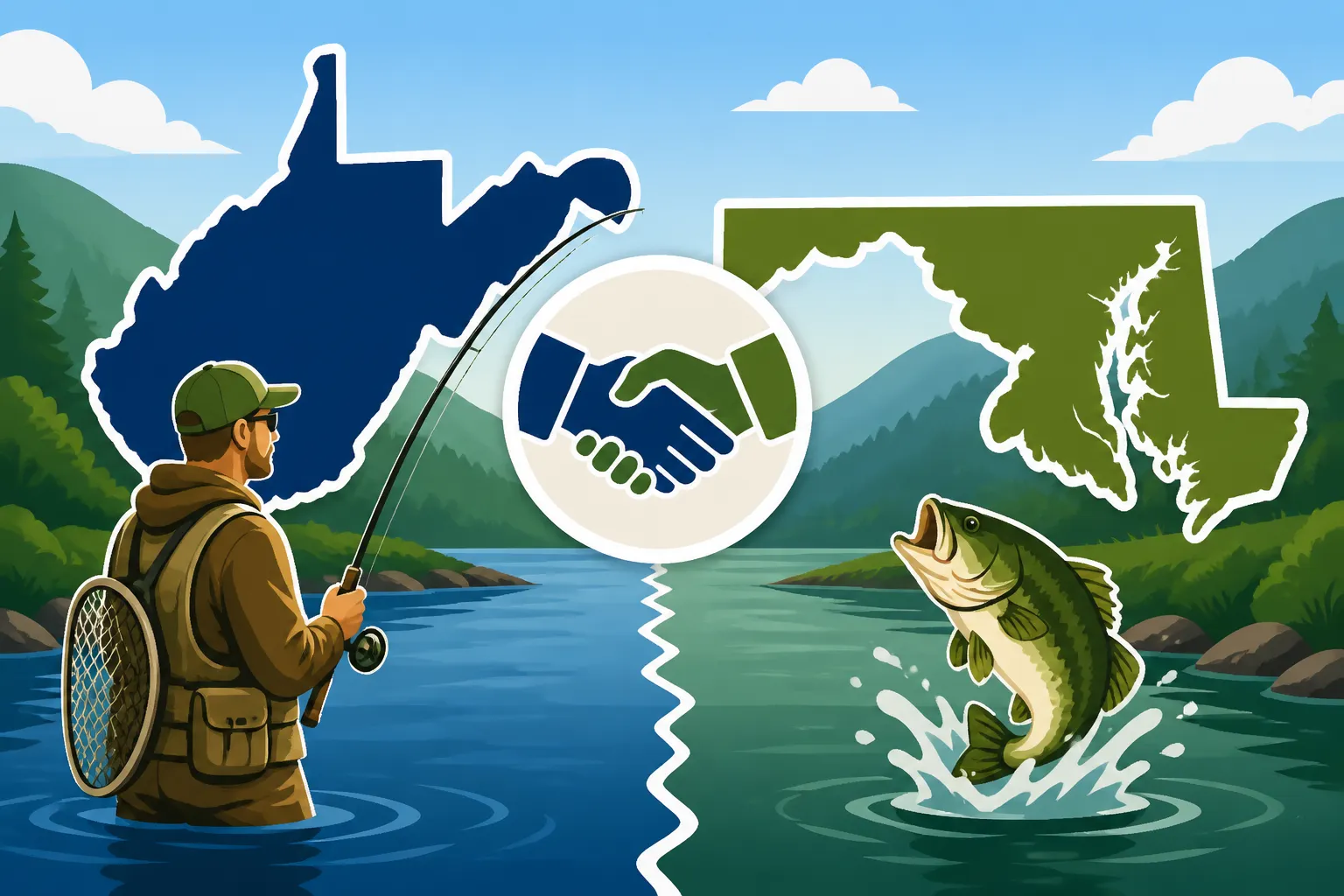
The idea of reciprocity in fishing licenses is really quite simple, but the application can sometimes feel like untangling a bird's nest of fishing line. Essentially, it's an agreement between neighboring states that allows anglers from one state to fish in specific shared waters using their home state's fishing license, or sometimes, a specific boundary water permit. This saves you from having to buy a full non-resident license for a whole other state just to cast a line in a shared river or lake.
What Reciprocity Means for Anglers
For you, the angler, reciprocity is a huge convenience. Imagine the frustration of standing on one bank of a river, watching fish rise on the other side, knowing you can't legally cast your line over there without an entirely separate license. Reciprocity eliminates that barrier, fostering a sense of shared resource and access for recreational purposes. It means more flexibility in where you can fish, especially in those prime spots that might technically fall within another state's jurisdiction. Without these agreements, fishing boundary waters would be a bureaucratic nightmare, requiring anglers to hold licenses from multiple states, which is costly and inconvenient.
Why Boundary Agreements Exist
These agreements don't just happen; they are a result of collaborative efforts between state wildlife agencies, like the West Virginia Division of Natural Resources (WV DNR) and the Maryland Department of Natural Resources (MD DNR). The primary goal is often to simplify access for anglers while still maintaining control over fishing regulations, conservation efforts, and revenue generation. It acknowledges that fish don't observe political boundaries, and neither should anglers be overly penalized for that fact. These agreements are usually forged with a deep understanding of shared ecosystems, ensuring that conservation efforts on a river like the Potomac, for example, are cohesive and effective across state lines. They also prevent scenarios where one side of a river might be overfished while the other remains untouched due to licensing hurdles. It's about pragmatic management of a common resource.
Specifics of the West Virginia and Maryland Potomac River Agreement
When it comes to the boundary between West Virginia and Maryland, the primary focus is, without a doubt, the mighty Potomac River. This river forms a significant portion of the border, and its waters are enjoyed by anglers from both states. Understanding the exact terms of the reciprocity agreement here is crucial for anyone planning a fishing excursion.
Understanding the Shared Waters
The reciprocity agreement between West Virginia and Maryland specifically applies to the mainstem of the Potomac River, and that's generally where the understanding ends for most anglers. However, it's vital to clarify that this does not extend to the tributaries of either state. If you launch your boat from a West Virginia ramp and fish the Potomac, your West Virginia license is valid. But if you decide to venture up a Maryland tributary like the Antietam Creek, even a few feet, you would then need a valid Maryland fishing license for those waters. The same applies in reverse for Maryland anglers. Always remember, the agreement covers the mainstem of the Potomac River where it forms the boundary, not every waterway that eventually feeds into it. This distinction is often overlooked and can lead to unintentional violations.
License Requirements for West Virginia Anglers on the Potomac
Good news for West Virginia residents: If you possess a valid West Virginia fishing license, you are generally permitted to fish the reciprocal waters of the mainstem Potomac River that border Maryland, without needing to purchase an additional Maryland fishing license. This includes fishing from a boat anywhere on that section of the river, or from the West Virginia bank. However, if you plan to fish from the Maryland bank, or wade into waters considered exclusively Maryland's, then a Maryland license is required. This reciprocal agreement is a fantastic benefit for folks living in the eastern panhandle of West Virginia, offering easy access to some truly productive waters. You might want to consider a West Virginia Fishing License Guide for 2026 to ensure you have the correct state license for your home waters before venturing out.
License Requirements for Maryland Anglers on the Potomac
Similarly, if you're a Maryland resident with a valid Maryland fishing license, you are allowed to fish the mainstem Potomac River where it borders West Virginia. This means you can launch your boat from a Maryland access point and fish the entire width of that section of the river, or fish from the Maryland bank, without needing a West Virginia license. Just like with West Virginia anglers, if you decide to fish from the West Virginia bank or wade into a West Virginia tributary, then a West Virginia license becomes necessary. It’s always about where your feet (or your anchor) are. For those living closer to the border, this makes fishing the Potomac incredibly accessible. If you're planning a trip, make sure you understand all the West Virginia Fishing Regulations Explained to avoid any surprises, as while the license is reciprocal, many other rules might not be.
Navigating Regulations Beyond Just the License
While license reciprocity handles the entry ticket, it's crucial to remember that it doesn't automatically mean all other fishing regulations are identical. In fact, they very rarely are. You'll still need to pay close attention to the specific rules of the state whose water you are in or whose regulations govern a particular stretch. This is where many anglers mistakenly assume that if their license is good, then all the rules must be good too. That's a trap you want to avoid.
Species-Specific Rules and Bag Limits
This is perhaps the most significant area where regulations can diverge. While you might be fishing the same body of water, West Virginia and Maryland often have different minimum size limits, daily creel limits (bag limits), and even possession limits for various species. For instance, the daily limit for smallmouth bass might be different on the West Virginia side of the river than on the Maryland side. Or, one state might have a closed season for a particular species when the other state does not.
Consider a scenario where you're fishing for walleye on the Potomac. You might catch a fish that is legal size according to West Virginia's rules, but undersized by Maryland's standards. If you are predominantly fishing on the West Virginia side, you'd adhere to West Virginia's rules. However, if you move your boat to fish a specific hole that is considered Maryland water, you'd then need to abide by Maryland's walleye regulations. It can get tricky, so the best practice is to know the regulations for both states if you plan on covering broad sections of the river. Often, the WV DNR provides a comprehensive summary of these rules, and you can find out How Much Does a West Virginia Fishing License Cost to compare with Maryland's offerings if you decided to get both for ultimate flexibility.
Boating and Access Regulations
Beyond just fishing, operating a boat on these boundary waters also comes with its own set of rules, which can vary between states. Things like personal flotation device (PFD) requirements, boat registration rules, and even speed limits in certain areas might differ. For instance, West Virginia has specific West Virginia Boating Laws for Anglers, and Maryland has its own. While the Potomac River is considered navigable, certain areas might have horsepower restrictions or "no wake" zones that need to be observed, regardless of which state's license you hold.
Access points are another consideration. While your license might be reciprocal, the rules for parking, launching a boat, or accessing the shoreline from specific parks or public lands can be dictated by the state that owns that land. Always check local signage and regulations at your chosen access point. For example, some areas along the Potomac River Fishing Access in West Virginia might have different rules than access points on the Maryland side. It’s better to be safe than sorry and check ahead of time. Don't rely solely on what you think the rules are based on your home state experience.
Practical Tips for Anglers on Maryland Boundary Waters
Fishing boundary waters successfully means being prepared, not just with your tackle box, but with knowledge and awareness. It’s a bit more involved than fishing a lake entirely within your home state, but the rewards—often diverse fisheries and stunning scenery—are well worth the extra effort.
Staying Informed with the Latest Regulations
Regulations can and do change. What was true last year might have been updated for this season. Relying on outdated information is a surefire way to run into trouble. Both the West Virginia Division of Natural Resources and the Maryland Department of Natural Resources publish their regulations annually, usually in a digestible summary format. These are typically available online as PDFs, at license vendors, or even through their respective mobile apps. Before any trip to the Potomac, make it a habit to check the most current regulations for both states. You can usually find a link to the current summary on their official websites. This could involve looking up the Reading the West Virginia Fishing Regulations Summary and its Maryland counterpart. Sometimes, a quick call to the local DNR office near your intended fishing spot can also clear up any ambiguities, especially if you have a specific question about a less common species or a unique section of the river.
Recommended Gear for Border Water Fishing
Given the varied fishing opportunities on the Potomac River, your gear selection should be versatile. You might be targeting smallmouth bass one moment and channel catfish the next, or even trying your hand at trout in certain stretches.
- Rods and Reels: A good medium-action spinning rod with 8-10 lb test line is a fantastic all-around choice for the Potomac, capable of handling bass, panfish, and even smaller catfish. If you're specifically targeting larger species like muskie (which are present in the Potomac and its tributaries, though less common closer to the MD border) or trophy catfish, you'll want heavier gear.
- Lures and Bait: Bring a selection! Crayfish imitations (jigs, soft plastics, crankbaits) are almost always a winner for smallmouth bass. Spinnerbaits, topwater lures, and various soft plastics will also serve you well. For bait fishing, worms, cut bait, and live minnows are reliable choices, especially for catfish and panfish. You can often find a great selection of these on retail sites like Amazon before your trip, saving you time at a local tackle shop.
- Safety Gear: Don't forget your PFDs (life jackets), especially if you're boating. A first-aid kit, whistle, and a way to communicate (cell phone in a waterproof bag) are also essential. Water conditions on a big river like the Potomac can change quickly.
- Navigation: A good map, whether physical or digital on a GPS device or phone app, can be invaluable for identifying state lines, understanding river features, and finding access points.
- Apparel: Depending on the season, layer your clothing. Waterproof outer layers are almost always a good idea, as are polarized sunglasses for spotting fish and protecting your eyes. A sturdy pair of wading boots or water shoes if you plan to get out of the boat are essential for navigating rocky riverbanks. You can find durable options for all this gear on Amazon.
Obtaining the Correct License
Knowing if you need a particular license is one thing, but knowing how and where to get it is just as important. Luckily, both West Virginia and Maryland have streamlined processes for purchasing fishing licenses, whether you're a resident or a non-resident.
West Virginia Residents Fishing Maryland Boundary Waters
If you are a West Virginia resident and your fishing adventures are sticking strictly to the mainstem of the Potomac River where the reciprocity agreement applies, then your valid West Virginia fishing license is all you need. You've already got your ticket to ride! However, if your plans include exploring Maryland's tributaries or any other non-reciprocal waters within Maryland, you'll need to purchase a Maryland non-resident fishing license.
You can purchase your West Virginia fishing license online through the WV DNR's electronic licensing system, at various license agents across the state (usually tackle shops, sporting goods stores, and county courthouses), or by mail. Make sure you check the specific class of license you need – for example, a Class B Resident Fishing License covers general fishing. Sometimes, people opt for a West Virginia Combination Hunting and Fishing License Options if they enjoy both sports. Remember to carry proof of your license, whether it's a printed copy or a digital version on your phone, whenever you're out on the water.
Maryland Residents Fishing West Virginia Boundary Waters
For Maryland residents who want to fish the reciprocal waters of the mainstem Potomac River, your valid Maryland fishing license is sufficient. Just like your West Virginia counterparts, you're good to go as long as you stay within the agreed-upon reciprocal waters. Should your angling aspirations take you beyond the Potomac's mainstem into West Virginia's inland waters or its tributaries, then a West Virginia non-resident fishing license would be required.
Maryland fishing licenses can also be purchased online via the Maryland DNR's COMPASS portal, through authorized license agents throughout Maryland, or by mail. It’s quick and easy, ensuring you spend less time on paperwork and more time fishing. Before you commit to a non-resident license for either state, it's always worth checking the costs and durations available. For example, some states offer short-term non-resident licenses, which can be a cost-effective option for a quick trip. If you decide to go for a West Virginia non-resident license, you can find information on Where and How to Buy a West Virginia Fishing License to make the process smoother. And while you're at it, check the local forecasts and pack some snacks; you can grab a durable cooler for your provisions on Amazon before heading out!
Disclaimer
Please note that fishing regulations and reciprocity agreements can change. Always consult the most current official regulations from the West Virginia Division of Natural Resources and the Maryland Department of Natural Resources before planning your fishing trip to ensure compliance. This article is intended for informational purposes only and should not be considered legal advice.