West Virginia fishing license reciprocity on the Ohio River
It's incredibly frustrating when you're standing on the banks of a mighty river like the Ohio, tackle box ready, and a perfect fishing spot just across the way, but you're unsure if your West Virginia fishing license actually covers you. The confusion around state lines and boundary water regulations is a common headache for many anglers. This guide aims to clear up all that uncertainty, specifically detailing West Virginia's fishing license reciprocity on the Ohio River so you can cast your line with confidence.
Understanding Boundary Water Reciprocity
Fishing across state lines, especially on large shared waterways, can feel like navigating a legal minefield. Many anglers find themselves wondering if they need a separate license for every state that borders a particular body of water, leading to unnecessary expense and anxiety. The good news is that for certain shared waters, states often enter into agreements to simplify the process, and this is exactly where the concept of reciprocity comes into play.
What is Fishing License Reciprocity?
At its heart, fishing license reciprocity is a mutual agreement between two or more states that allows a valid fishing license from one state to be recognized as valid in the waters of the other state(s) involved in the agreement. It’s designed to eliminate the need for anglers to purchase multiple licenses just to fish on a body of water that happens to be bisected by a state border. Imagine trying to fish a large lake where one side is in West Virginia and the other in Pennsylvania – without reciprocity, you'd need two licenses, even if you never stepped foot on the other state's land.
These agreements are a lifesaver for folks who live near state lines or enjoy exploring extensive waterways. Without them, the joy of fishing could easily be overshadowed by the bureaucratic hassle and additional costs. Reciprocity aims to foster cooperation and encourage outdoor recreation, acknowledging that fish don't respect invisible political boundaries.
However, it's crucial to understand that reciprocity isn't a blanket rule for all boundary waters. Each agreement is specific and has its own terms, often requiring careful reading to ensure compliance. It's not uncommon for anglers to mistakenly assume that because two states share a river, their licenses are automatically reciprocal, only to find themselves in violation of the law.
The Ohio River as a Special Case
The Ohio River is a prime example of a boundary water that often causes confusion, mainly because it borders not just one, but three different states: West Virginia, Ohio, and Kentucky. For miles upon magnificent miles, the Ohio River forms the natural boundary for West Virginia along its northwestern edge. This means that an angler launching a boat from a West Virginia ramp might fish waters directly adjacent to Ohio, or even drift downriver towards the Kentucky border.
The sheer size and interstate nature of the Ohio River make a seamless fishing experience essential. Anglers want to explore different hot spots, follow migrating fish, or simply enjoy a day on the water without constantly checking GPS coordinates against state lines. The logistics of enforcement would also be incredibly complicated if every angler had to possess multiple state licenses just to fish the main stem.
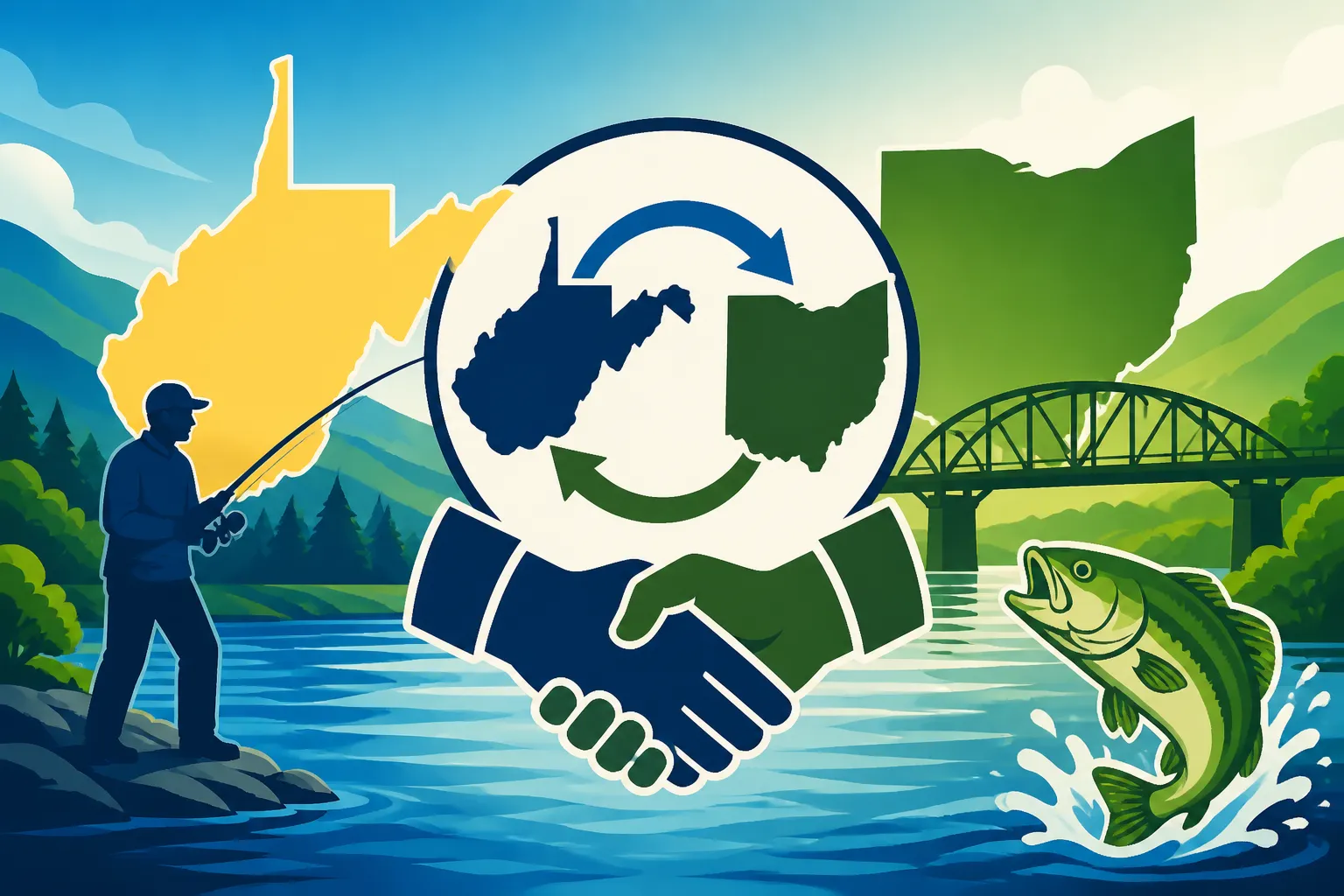
Because of this unique situation, West Virginia, Ohio, and Kentucky have indeed worked out specific reciprocity agreements for fishing licenses on the main stem of the Ohio River. This greatly simplifies the experience for countless anglers, allowing them to focus on the fish rather than the paperwork. It’s a testament to cooperation for the benefit of outdoor enthusiasts in the region.
General Reciprocity Principles
While specific rules vary, the general principle behind reciprocity is quite straightforward: if you possess a valid resident or non-resident fishing license from any of the states bordering the shared water, that license is typically honored across the entire main body of that specific water. This means, in an ideal scenario, a West Virginia resident with a West Virginia license can fish the entire width and length of their shared river, regardless of which side they're closer to, without needing to purchase an additional Ohio or Kentucky license.
These agreements are usually formalized between the respective state wildlife agencies, like the West Virginia Division of Natural Resources (WV DNR) and its counterparts in Ohio and Kentucky. The goal is always to make fishing more accessible while still ensuring that license sales contribute to conservation efforts in at least one of the participating states. The logic is that if you're contributing to conservation through your license purchase in one state, that's enough for the shared resource.
However, it's a vital point to remember that these principles generally apply only to the main stem of the river or lake. They almost never extend into tributaries, embayments, or other waters that lie entirely within one state's borders. This distinction is often where anglers run into trouble, mistakenly believing their reciprocal license covers them everywhere. Always double-check these limitations, as they are non-negotiable and strictly enforced by game wardens.
West Virginia's Agreement on the Ohio River
For anglers in the Mountain State, the Ohio River offers fantastic fishing opportunities for species like sauger, walleye, catfish, and various bass. Understanding the specific reciprocity agreements West Virginia has in place is key to enjoying these waters legally and without hassle. Thankfully, the rules are fairly straightforward for the main stem of this historic waterway.
Which States are Covered?
When it comes to the Ohio River and West Virginia, the reciprocity agreement specifically involves two other states: Ohio and Kentucky. This means that if you possess a valid fishing license from West Virginia, Ohio, or Kentucky, you are legally permitted to fish the entire main stem of the Ohio River that borders these states. For example, if you're fishing near Wheeling, West Virginia, your WV license covers you all the way to the Ohio bank. Downriver near Huntington, your WV license also covers you to the Kentucky bank.
It's important to differentiate between the river itself and the land bordering it. While the states share the river for fishing purposes, the shorelines and any land-based access points remain firmly within the jurisdiction of their respective states. You might launch your boat from an Ohio access point and still be covered by your West Virginia license to fish the river, but you'd be subject to Ohio's regulations regarding parking, ramp fees, or other land-based rules. The focus of the reciprocity agreement is purely on the act of fishing the shared water itself.
This arrangement is a huge benefit for locals and visitors alike, making the vast fishing grounds of the Ohio River much more accessible. Imagine not having to worry about accidentally drifting a few hundred yards into another state's water and suddenly being out of compliance. It truly simplifies the planning and execution of a fishing trip on such a significant interstate waterway.
The Reciprocity Rules Explained
The core rule for West Virginia, Ohio, and Kentucky on the Ohio River is simple: A valid fishing license from any of these three states allows an angler to legally fish the entire main channel of the Ohio River. This means that if you've got your West Virginia Fishing License Guide for 2026 in hand, whether it's an annual resident license or a short-term nonresident permit, you're good to go anywhere on the Ohio River main stem that borders West Virginia. You won't need to purchase an Ohio license or a Kentucky license specifically for the river itself.
This rule applies equally whether you're fishing from a boat, standing on the West Virginia bank, or casting towards the Ohio or Kentucky shoreline. As long as your line is in the main body of the Ohio River, your license from one of the three bordering states is sufficient. This eliminates the common anxiety of "am I in Ohio water right now?" or "do I need another license if I cast toward the Kentucky side?" The answer, for the main stem, is a resounding no, provided you have a license from one of the three participating states.
However, this critical point cannot be overstated: this reciprocity only applies to the main channel of the Ohio River. It does not extend into any of the tributaries, creeks, backwaters, embayments, or oxbow lakes that might be physically connected but lie entirely within the borders of Ohio or Kentucky. We'll dive into this more in the next section, as it's a common area of confusion and potential violation for unwary anglers.
Specifics for West Virginia Licensed Anglers
If you're a West Virginia licensed angler, you're in a great position to enjoy the Ohio River. Holding any valid West Virginia fishing license—be it an annual resident Class B, a Nonresident Annual Fishing License Cost in West Virginia, or even a temporary permit like the West Virginia 1-Day and 3-Day Nonresident Fishing Permits—grants you permission to fish the entire main stem of the Ohio River where it borders West Virginia, Ohio, or Kentucky. This is fantastic news for anyone looking to explore the incredible fishing opportunities the river offers.
This means you can launch your boat from a West Virginia ramp and fish all the way across to the Ohio bank, or travel downriver without concern for state lines, as long as you remain in the main flow of the Ohio River. The same applies if you're fishing from shore in West Virginia and casting out into the river. Your West Virginia license is your golden ticket for this shared waterway.
It's always a good idea to confirm your license is current and that you've purchased any necessary stamps or endorsements for West Virginia itself. For instance, while a West Virginia fishing license is reciprocal for the Ohio River, make sure you've also purchased any required conservation stamps, like the West Virginia's Conservation Stamp, Explained, if your primary fishing is within West Virginia waters. While the reciprocity agreement covers the base fishing privilege, it doesn't necessarily exempt you from your home state's other specific licensing requirements. Always ensure your West Virginia license is fully compliant with all WV DNR regulations.
Important Limitations and Exceptions
While West Virginia's reciprocity agreement on the Ohio River is incredibly convenient, it's absolutely crucial to understand its boundaries. Many anglers, unfortunately, get caught up in violations because they don't realize where the reciprocity ends and individual state jurisdiction begins. This isn't just about avoiding a fine; it's about respecting the conservation efforts of all states involved.
Tributaries and Embayments
Here's where many anglers make a critical mistake: the reciprocity agreement for the Ohio River does not extend into tributaries, embayments, creeks, or oxbow lakes that are clearly within the boundaries of Ohio or Kentucky. If you're fishing the Ohio River with your West Virginia license and decide to venture a little way up a creek on the Ohio side, you are no longer covered by your West Virginia license. At that point, you would need a valid Ohio fishing license.
Think of it this way: the Ohio River itself is the shared highway, but once you take an exit ramp into a local road, you're under local rules. For example, if you're fishing near Parkersburg, West Virginia, and cruise your boat into the mouth of the Little Muskingum River on the Ohio side, you need to have an Ohio fishing license to legally cast a line there. The same goes for venturing up the Big Sandy River on the Kentucky side near Catlettsburg or any other stream that feeds into the Ohio River.
This distinction is enforced diligently by game wardens from all states. Their jurisdiction extends from their shoreline outwards, and while they honor the reciprocal license on the main stem, they expect you to be properly licensed if you enter their internal waters. It's best practice to assume that if you leave the main channel and enter any inlet, creek, or bay clearly associated with another state's shoreline, you need that state's license.
Regulations Beyond Licensing
Another major point of potential confusion is that while your license might be reciprocal, the fishing regulations are not necessarily unified. This means that even if your West Virginia license allows you to fish anywhere on the Ohio River, you still need to be aware of the specific regulations of the state whose waters you are primarily fishing in, or at least be familiar with all applicable rules. This is particularly important for things like daily creel limits, size restrictions, closed seasons, and gear restrictions.
For instance, Ohio River Fishing Rules for West Virginia Anglers cover what WV anglers need to know. However, Ohio or Kentucky might have different minimum lengths for certain species, different daily bag limits for walleye or catfish, or even different rules about how many rods you can use. You, as the angler, are responsible for knowing and adhering to the most restrictive or appropriate regulations for the area you are actively fishing. This often means carrying or having quick access to the fishing regulations summaries for West Virginia, Ohio, and Kentucky. While this might sound like a lot, a quick search on your phone or a printed guide from each state's DNR website can save you a lot of trouble.
It's a common scenario: a West Virginia angler catches a bass near the Ohio side of the river. If Ohio has a more restrictive size limit for that bass species than West Virginia, the angler could face a citation if they keep a fish that's legal in WV but not in Ohio, even though their WV license covers them for fishing. Always err on the side of caution and follow the most stringent rule if there's any doubt. Knowing your West Virginia Fishing Regulations Explained is a good start, but understanding the differences across the river is equally vital.
Resident vs. Non-Resident Licenses
The reciprocity agreement works the same whether you hold a resident or non-resident fishing license from one of the participating states. The key is simply having a valid license from West Virginia, Ohio, or Kentucky. If you're a resident of West Virginia, your resident license covers you. If you're an out-of-state visitor who purchased a Resident vs Nonresident Fishing License Costs in West Virginia from the WV DNR, that license will also cover you on the Ohio River.
The same holds true for residents of Ohio or Kentucky who purchase their state's non-resident licenses. They too would be covered on the main stem of the Ohio River under the reciprocity agreement. This flexibility is a huge benefit for tourists or those visiting family who want to experience the river's fishing without committing to multiple non-resident licenses.
However, if you are a resident of a fourth state, say Pennsylvania or Maryland, and you want to fish the Ohio River, you would need to purchase a non-resident fishing license from one of the bordering states (West Virginia, Ohio, or Kentucky). You cannot use your Pennsylvania license, for example, to fish the Ohio River, as Pennsylvania is not part of this specific reciprocity agreement for the Ohio River. So, if you're from out of the immediate region, plan to purchase a non-resident license from one of the bordering states before you hit the water.
Navigating the Ohio River: Practical Advice
Fishing the Ohio River is an incredible experience, but it requires a bit more preparation than your typical local pond. Beyond understanding the reciprocity rules, there are practical considerations that will ensure your trip is both legal and enjoyable. From what to carry to navigating the broader boating regulations, being prepared is key.
What to Carry While Fishing
When you hit the Ohio River, think of yourself as a well-organized diplomat. First and foremost, you absolutely must have your valid fishing license with you. Whether it’s a physical card in your wallet or a digital copy on your phone, ensure it's accessible. The WV DNR, for instance, allows for Printing or Carrying a Digital Fishing License in West Virginia, which is a convenient option. This is your primary document proving your right to fish.
Beyond your license, it's highly advisable to carry copies or digital access to the current fishing regulations for West Virginia, Ohio, and Kentucky. You can usually find these as printable PDFs on the respective state DNR websites. Many local tackle shops near the Ohio River, and even larger retailers like an Amazon, might sell small, laminated versions of the regulations if you prefer a physical copy that's less prone to water damage than printouts. Having these readily available means you can quickly reference bag limits, size restrictions, or any other pertinent rules if a question arises, especially when fishing near different state banks.
Finally, always carry some form of personal identification. While not a fishing requirement, it helps confirm your identity if a conservation officer requests it, linking you to your license. Being polite and prepared will always make any interaction with law enforcement smoother.
Boating Regulations on the Ohio River
While fishing license reciprocity simplifies things for anglers, it's crucial to remember that boating regulations are a separate beast. The Ohio River is a busy waterway, and all vessels, from kayaks to large fishing boats, are subject to various safety and registration requirements. Even if your fishing license is reciprocal, your boat's registration and your boater education certification might not be.
Generally, your boat should be registered in your state of primary use. If you're a West Virginia resident and your boat is primarily used and stored in West Virginia, it needs West Virginia Boat Registration Requirements. However, when operating on the Ohio River, you must still adhere to specific safety equipment requirements that might be enforced by any of the bordering states. This includes things like having enough Life Jacket Requirements for West Virginia Boaters on board for everyone, fire extinguishers, and navigation lights.
For operators, especially younger ones, boater education requirements are also important. Check the West Virginia Boater Education Certificate Requirement to see if it applies to you. Other states on the Ohio River may have similar or even more stringent requirements. The best approach is to ensure your boat and its operation comply with the strictest safety regulations of any state that borders the stretch of river you're on. Remember, safe boating is paramount on a major river like the Ohio.
Common Scenarios and Pitfalls
Let's walk through a few common scenarios to really cement these rules:
Scenario 1: The West Virginia Resident Stays on the Main Stem
You launch your boat from a public ramp in Point Pleasant, West Virginia, and spend the day jigging for sauger near the confluence with the Kanawha River, drifting past the Ohio shoreline. Your valid West Virginia fishing license is all you need for the act of fishing on the Ohio River's main stem. However, you must adhere to all West Virginia, Ohio, and Kentucky fishing regulations regarding limits and sizes, choosing the most restrictive if there's a conflict. Your boat must be properly registered in West Virginia.
Scenario 2: The West Virginia Angler Ventures into an Ohio Tributary
You're fishing the Ohio River near Chester, West Virginia, and notice some promising structure up Little Yellow Creek, which is entirely on the Ohio side. You decide to motor up the creek for a bit. At this point, your West Virginia fishing license is no longer valid for fishing. You would need to possess a valid Ohio fishing license to legally cast a line in Little Yellow Creek. If you don't, you're fishing illegally.
Scenario 3: The Out-of-State Visitor
Imagine you're from Pennsylvania and want to fish the Ohio River near Huntington. You cannot use your Pennsylvania fishing license. You would need to purchase a non-resident fishing license from West Virginia, Ohio, or Kentucky. Once you have that non-resident license from one of the border states (say, a West Virginia non-resident annual license), you're covered for the entire main stem of the Ohio River under the reciprocity agreement, just like a resident angler.
The key takeaway is that reciprocity is a fantastic convenience, but it has defined limits. Always be conscious of whether you are in the main stem of the Ohio River or have entered a body of water that belongs exclusively to Ohio or Kentucky.
Where to Find More Information and Get Licensed
Staying informed about fishing regulations and ensuring your license is current is an ongoing responsibility for every angler. Regulations can change, and being prepared is the best way to avoid a frustrating encounter with law enforcement.
Official Sources for Regulations
The most reliable place for up-to-date fishing regulations is always the official website of the state's wildlife agency. For West Virginia, that's the West Virginia Division of Natural Resources (WV DNR). You can find their comprehensive regulations on their website, which often includes a downloadable PDF of the current year's fishing guide. This is often the same information you'd get from a printed booklet from a local vendor. You can often find the Reading the West Virginia Fishing Regulations Summary there.
Similarly, for Ohio, you'll consult the Ohio Department of Natural Resources (ODNR), and for Kentucky, the Kentucky Department of Fish and Wildlife Resources (KDFWR). Each of these agencies provides detailed information on their fishing seasons, bag limits, size limits, and any specific rules that might apply to the Ohio River. Make it a habit to check these sites annually, even if you're an experienced angler, as rules can be adjusted for conservation or management purposes. Sometimes you can even find hard copies of these guides for sale on platforms like Amazon, or at local bait and tackle shops along the river, which can be handy for on-the-water reference.
Purchasing Licenses
Obtaining your West Virginia fishing license is easier than ever. The primary method is online through the WVhunt.com portal, which is operated by the WV DNR. This platform allows you to purchase your license from the comfort of your home, print it out, or save a digital copy to your phone. It's an efficient way to get your West Virginia Fishing License Guide for 2026 without a trip to a physical vendor. Instructions like How to Buy a Fishing License on WVhunt.com are readily available.
Of course, if you prefer the traditional route or need to pick up some bait, licenses are also available at numerous authorized license agents throughout West Virginia. These agents often include sporting goods stores, bait shops, county clerks' offices, and sometimes even larger retail chains. In border towns like Wheeling, Parkersburg, or Huntington, you might even find vendors that sell licenses for both West Virginia and Ohio, or West Virginia and Kentucky, though this is less common for all three states. Always confirm what licenses a vendor is authorized to sell.
Contacting Wildlife Agencies
When in doubt, always reach out to the experts. If you have a specific question about reciprocity, a particular regulation on the Ohio River, or need clarification on any licensing issue, the best course of action is to contact the West Virginia Division of Natural Resources directly. Their regional offices and main Charleston office have knowledgeable staff who can provide accurate and up-to-date information. While I can't provide a specific phone number here (as they can change), a quick search for "West Virginia DNR customer service" will lead you to their contact information. Don't risk a fine or a missed fishing opportunity because you were hesitant to ask a question!
Ohio River Reciprocity Summary
To help clarify the situation, here’s a quick overview of how the reciprocity works on the main stem of the Ohio River for anglers with a valid fishing license from one of the bordering states:
| License Held | Permitted to Fish (Main Stem Ohio River) | Required for Tributaries/Embayments in Other States |
|---|---|---|
| West Virginia License | Entire main stem of Ohio River (WV, OH, KY border) | Ohio or Kentucky license, as applicable |
| Ohio License | Entire main stem of Ohio River (WV, OH, KY border) | West Virginia or Kentucky license, as applicable |
| Kentucky License | Entire main stem of Ohio River (WV, OH, KY border) | West Virginia or Ohio license, as applicable |
| Any Other State's License | NOT permitted | Non-resident license from WV, OH, or KY (then covered on main stem) |
This table clearly illustrates that as long as you have one valid license from a bordering state, you're good for the main river, but you need to be mindful of those tributary boundaries.
Disclaimer
The information provided in this guide is for general informational purposes only and is subject to change. While we strive to offer accurate and up-to-date content, fishing regulations, license requirements, and reciprocity agreements can be amended by state authorities. It is the angler's sole responsibility to consult the official West Virginia Division of Natural Resources, Ohio Department of Natural Resources, and Kentucky Department of Fish and Wildlife Resources websites or publications for the most current and legally binding regulations before engaging in any fishing activities. Reliance on any information in this guide is strictly at your own risk.