Printing or Carrying a Digital Fishing License in West Virginia
We've all been there: standing on the bank of a pristine West Virginia stream, sun shining, rod in hand, only to suddenly question, "Did I actually print my fishing license? Is the digital one on my phone enough if a conservation officer checks?" The uncertainty can be a real buzzkill, and nobody wants a hefty fine interrupting their peaceful day. This comprehensive guide is here to clear up all the confusion, detailing exactly what you need to know about carrying or printing your West Virginia fishing license.
The Official Stance: Digital vs. Physical Licenses in West Virginia
The world has gone digital, and West Virginia is no exception when it comes to managing your fishing and hunting licenses. The good news is that the West Virginia Division of Natural Resources (WVDNR) has embraced this, offering convenient digital options. However, like most things, there are nuances and situations where a little old-school paper still reigns supreme.
What the Law Says About Carrying Your License
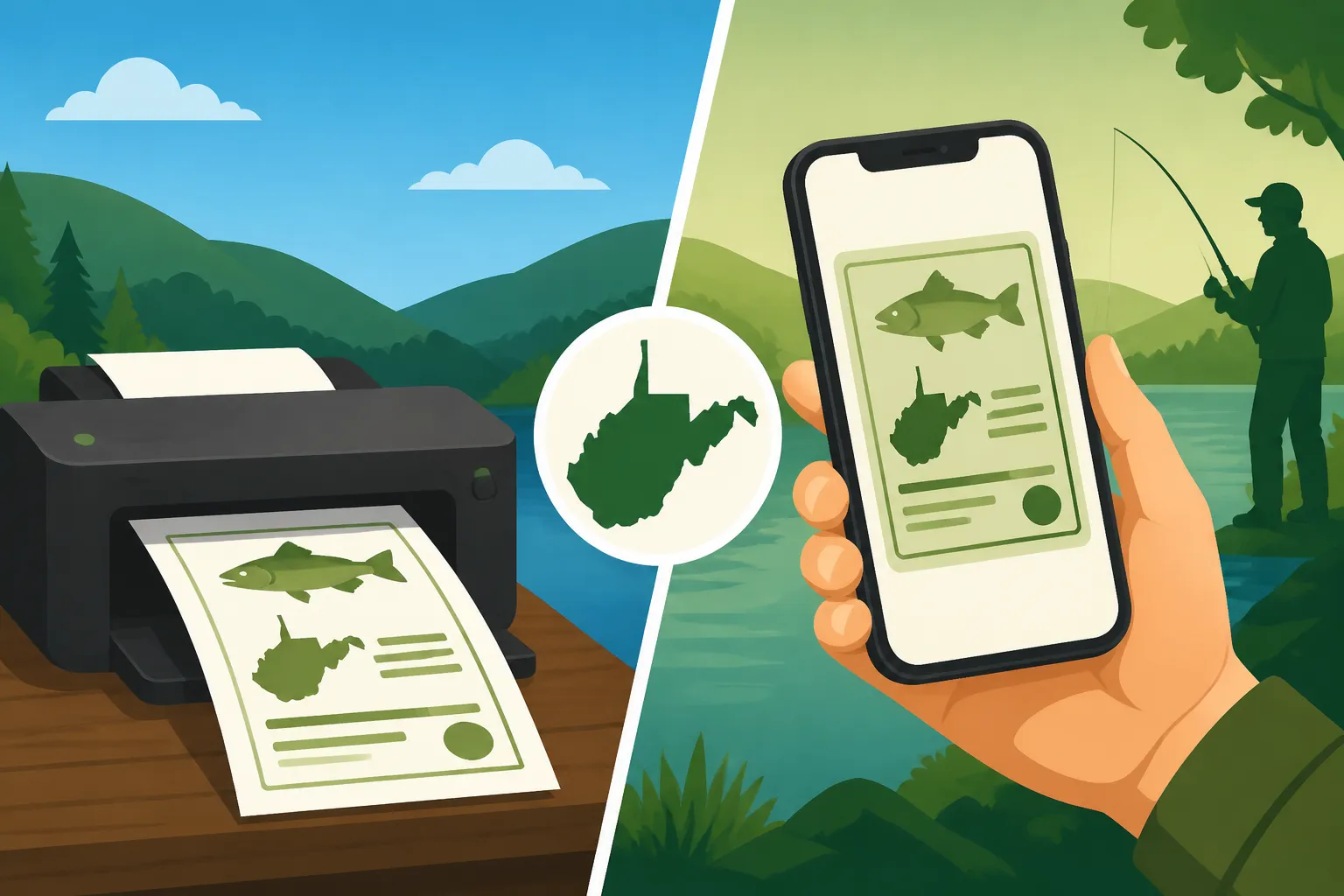
According to the West Virginia Division of Natural Resources, anglers are indeed permitted to carry their fishing license digitally on a smartphone or other electronic device. This is a huge relief for many of us who prefer to keep our wallets light and rely on our phones for everything. You don't necessarily need a physical, printed copy of your annual fishing license or any required stamps (like the trout stamp or conservation stamp) with you at all times, as long as you can present the digital version upon request.
However, the key phrase here is "upon request." A conservation officer needs to be able to verify your license information. This means your device needs to be charged, your screen needs to be functional, and you need to be able to pull up the official digital license document or the WVhunt app. If your phone is dead, broken, or you're in an area with no signal and can't access it, that digital copy suddenly becomes useless, and you could be cited for fishing without a license. It’s always better to be over-prepared than under-prepared when dealing with legal requirements on the water. For a full understanding of all requirements, it's a good idea to consult the West Virginia Fishing Regulations Explained before you head out.
The Benefits of a Digital License
Let's be honest, the convenience of a digital fishing license is a game-changer for most modern anglers. Here are some of the fantastic benefits:
- Always on Hand (Theoretically): Your phone is probably with you everywhere you go anyway. This means your license is essentially always in your pocket, eliminating the "did I remember to grab it?" anxiety. No more frantic searches through tackle boxes or wallet compartments right before you hit the water.
- No More Lost or Damaged Paper: Paper licenses can get wet, torn, or simply disappear. A digital copy, especially if saved properly, is much harder to lose permanently. If you get caught in a downpour or accidentally drop your wallet in the creek, your digital license remains safe and sound on your device, or easily re-downloadable.
- Instant Access to Information: When accessed via the official WVhunt app or website, your digital license often comes with easy access to your profile, purchase history, and even links to the latest regulations. This means you have a mini information hub right in your hand, which can be incredibly useful when you're on the go and need to quickly confirm a bag limit or season date. It really streamlines the whole process of staying compliant.
When a Physical Copy is Still a Good Idea
While digital convenience is great, there are definitely situations where having a good old-fashioned printed copy of your West Virginia fishing license is more than just a backup – it's a smart move.
Think about those perfect fishing days when you venture deep into the wilderness, far from any cell towers. Maybe you're exploring the remote stretches of the Cranberry River or some high-elevation streams in the Monongahela National Forest. In these pristine but isolated areas, cell service can be nonexistent. If a conservation officer approaches and your phone can't connect to the internet to display your license, or worse, your battery died after a long day of photo taking, you're out of luck. A physical license acts as a bulletproof plan B. It doesn't rely on technology, which, as we all know, can be fickle at the worst possible moments.
Furthermore, some anglers just prefer the tangible nature of a paper license. For older generations, or those less tech-savvy, fumbling with a smartphone on a cold, wet day can be frustrating. A laminated card tucked into a clear pouch in their vest or tackle box is straightforward and reliable. It removes one layer of potential tech headache from a day meant for relaxation and connection with nature. For details on various licenses, check out our guide on the West Virginia Fishing License Guide for 2026.
How to Access Your West Virginia Digital Fishing License
The WVDNR has made it pretty straightforward to get your license digitally. Whether you bought it online or in person, accessing it on your phone is usually just a few taps away. Understanding these methods is crucial for ensuring you're always covered when a game warden checks.
Navigating WVhunt.com for Your License
If you purchased your license through the WVDNR's online portal, WVhunt.com is your primary hub. Once you've logged in using your customer ID and password, you can typically find your license information right on your account dashboard. The site is designed to be user-friendly, allowing you to view, download, and even print your license directly from your web browser.
Here’s a general rundown of the steps you'd follow:
- Go to WVhunt.com: Open your web browser and navigate to the official WVDNR license sales website.
- Log In: Enter your credentials. If you're a new user or forgot your details, there are options to create an account or retrieve your information. This is usually linked to your date of birth and social security number for verification.
- Access Your Account: Once logged in, you'll see your customer profile. Look for a section like "My Licenses," "Purchase History," or "Print Licenses."
- View/Download: Click on the appropriate link to view your current fishing license and any associated stamps. You should see a digital rendering of your license. From there, you often have the option to save it as a PDF to your device or simply show the screen.
It's a good habit to familiarize yourself with this process after every purchase, so you're not trying to figure it out when you're already out on the water. Knowing How to buy a West Virginia fishing license online can make this whole process even smoother right from the start.
The WVhunt App: Your License in Your Pocket
For ultimate convenience, the WVhunt app is arguably the best solution. Available for both iOS and Android devices, this app consolidates your licenses, permits, and conservation stamp information right onto your smartphone. It’s essentially a mobile version of your WVhunt.com account, optimized for on-the-go access.
Once you download the app and log in with your customer ID, your active licenses should automatically populate. The beauty of the app is that it’s specifically designed for quick display to law enforcement. It often features a clear, official-looking display of your current license, making verification quick and easy. Many anglers find this far less cumbersome than trying to navigate a website on a small phone screen or pull up a PDF. It's built for exactly this purpose, ensuring compliance is just a tap away. To learn more about getting setup, take a look at our guide on the West Virginia fishing license on the WVhunt app.
Saving Your License for Offline Access
Even with the WVhunt app, there are times when cell service is unreliable, or you just want an extra layer of security. This is where saving your digital license for offline access becomes a smart play.
- Screenshots: The simplest method is often to take a screenshot of your digital license from the WVhunt app or website. Most phones allow you to easily access screenshots, and they don't require an internet connection to view. Just make sure the screenshot is clear and shows all necessary information, including your name, license type, and dates.
- PDF Downloads: When viewing your license on WVhunt.com, you'll usually find an option to "Print" or "Download PDF." Saving the PDF directly to your phone's storage or a cloud service like Google Drive or Dropbox means you have a high-quality, official document accessible offline. Many phones have built-in PDF viewers, making this a reliable method.
- Emailing to Yourself: As an additional backup, you can email the PDF of your license to your personal email address. If you lose your phone or it's completely out of commission, you can still access your license from another device or print it from a computer. This foresight can really save you a headache, especially if you're traveling.
Imagine you're fishing in a remote part of the New River Gorge National Park, where signals are notoriously spotty. Having your license saved directly to your phone's local storage means you can confidently display it to a park ranger without any connectivity worries.
Printing Your West Virginia Fishing License: The Why and How
While digital is convenient, there’s an undeniable reliability to a physical, printed fishing license. It’s a tangible piece of paper that doesn’t run out of battery or disappear into the digital ether when your signal drops. Many experienced anglers in West Virginia swear by having a physical backup, and for good reason.
Situations Where a Printed License is Essential
There are several scenarios where a printed copy isn't just a good idea, but potentially essential to avoid issues:
- Boundary Waters: West Virginia shares borders with several states, and the rules for fishing in boundary waters (like the Ohio River, Potomac River, or Big Sandy River) can get complex. Sometimes, these agreements might have specific stipulations about how licenses are presented, or it simply provides clearer proof for officers from both states. While digital is generally accepted, a physical copy provides undeniable proof without potential jurisdictional hiccups. Our guide on Ohio River Fishing Rules for West Virginia Anglers delves deeper into these specific complexities.
- Backup Plan for Technology Fails: We've all seen it happen: a phone takes an unexpected swim, the battery dies prematurely, or a software glitch makes it impossible to access apps. When you're out on the water, far from a charger or repair shop, a printed license becomes your lifeline. It's a simple, low-tech insurance policy against the unpredictable nature of electronics.
- Elderly Anglers or Less Tech-Savvy Individuals: Not everyone is comfortable navigating smartphone apps or digital files. For some, especially older anglers who just want to enjoy their hobby without digital complications, a printed and perhaps laminated license is simply easier to manage and present. It reduces stress and ensures they can always comply effortlessly. Similarly, understanding West Virginia Senior Fishing License Rules by Birth Year can provide more tailored advice for this group.
- Gift Licenses: If you're purchasing a fishing license as a gift for someone, a printed copy makes for a much more presentable and immediate gift. They can then take steps to put it on their digital device if they choose, but the initial unwrapping of a physical license is often part of the experience.
- Youth Anglers: While younger kids often don't need a license, once they hit the age requirement, having a printed copy that they can carry themselves teaches responsibility. Plus, if they don't have their own smartphone yet, it's the only way for them to carry their own proof of licensure. You can learn more about specific age requirements in our article, Do Kids Need a Fishing License in West Virginia?.
Step-by-Step Guide to Printing Your License
Printing your West Virginia fishing license from WVhunt.com is a straightforward process, but a few tips can ensure you get a clear, durable copy.
- Access WVhunt.com and Log In: As mentioned earlier, head to the official WVDNR licensing portal. Log into your account using your customer ID and password.
- Navigate to "Print Licenses": Once logged in, look for a section or link that says "My Licenses" or "Print Licenses." This is where you’ll find your active fishing license and any stamps you’ve purchased.
- Select Your License: You might have a list of past and current licenses. Make sure to select the current fishing license that you wish to print.
- Initiate Print: There will typically be a "Print" button or icon. Clicking this will usually open a print-friendly version of your license in a new tab or trigger your browser's print dialogue.
- Printer Settings:
- Orientation: Most licenses are best printed in "Portrait" orientation.
- Scale/Fit to Page: Ensure your printer is set to "Fit to page" or "Actual size" to prevent any cropping or distortion of the text.
- Quality: Choose "Best" or "High" quality print settings if available, especially if your printer defaults to draft mode. This ensures all the fine print and barcodes are legible.
- Color vs. Black & White: While color is nice, black and white is perfectly acceptable and often just as clear.
- Print! Once the settings are correct, hit print.
After printing, consider a few extra steps for durability. You can trim the license to wallet size and then laminate it. Small, personal laminators are affordable on sites like Amazon, or you can often find lamination services at local office supply stores. This waterproofs and strengthens the paper, making it resistant to rips and moisture, which is invaluable on the water.
Best Practices for Storing and Protecting Your Paper Copy
A printed license is only useful if it remains legible and accessible. Here's how to keep it safe:
- Laminate It: As mentioned, lamination is your best friend. A sealed plastic pouch protects against water, sweat, and tearing. This simple step can extend the life of your paper license indefinitely.
- Waterproof Pouch/Holder: Even if not laminated, always store your paper license in a waterproof pouch or a Ziploc bag within your wallet, tackle box, or fishing vest. There are many affordable options available, often designed specifically for licenses and permits. You can find sturdy, clear vinyl license holders on Amazon, perfect for keeping it dry and visible.
- Designated Spot: Keep it in a consistent, easily remembered spot. Whether it's a specific pocket in your fishing vest, a slot in your wallet, or a dedicated compartment in your tackle box, knowing exactly where it is prevents frantic searches when you need to present it.
- Avoid Excessive Folding: Repeated folding and unfolding can degrade the paper, crack the lamination, and eventually make important details unreadable. Try to store it as flat as possible.
- Multiple Copies (Optional): Some anglers print two copies – one for their tackle box and one for their wallet. This provides an extra layer of redundancy, ensuring you're almost always covered. Just make sure both copies are current! For those concerned about losing track, our guide on Replacing a lost West Virginia fishing license offers solutions if things go awry.
Common Concerns and Troubleshooting for Your Fishing License
Even with the best intentions and preparations, things can sometimes go sideways when you’re out fishing. Technology can fail, memory can lapse, and nature can throw curveballs. It’s important to know how to handle these common frustrations so a minor hiccup doesn’t turn into a major problem with the law.
Dealing with a Dead Phone Battery or Lost Device
This is probably the most common fear for anglers relying solely on a digital license. You've been out all day, taking photos of every catch, checking the fishing report, and maybe even using your phone for navigation. Suddenly, your battery icon goes red, then dark. What happens if a conservation officer pulls up moments later?
If your phone dies or is lost, your digital license is, for all intents and purposes, inaccessible. This is precisely why having a physical backup or at least a saved PDF on another device (like a tablet you keep in the truck) is so crucial. If you don't have any backup, you could be cited for fishing without a license.
What to do:
- Have a Plan B: Always carry a fully charged portable power bank (power bank) if you rely on your phone. These are compact and can provide multiple charges.
- Physical Backup: As discussed, a printed and laminated license is the ultimate safeguard against tech failure.
- Communicate Honestly: If you are approached by an officer and your device is dead or lost, explain the situation calmly and honestly. While it might not absolve you of a potential citation, sincerity can sometimes help. They might be able to verify your license via their own system, but this isn't guaranteed or immediate.
- Retrieve Info ASAP: As soon as you have access to power or a computer, check your license status on WVhunt.com. This can be important if you receive a citation and need to demonstrate you were indeed licensed.
No Cell Service? Understanding Remote Area Challenges
West Virginia is famous for its wild and wonderful nature, which often means remote, mountainous terrain with patchy or non-existent cell service. Fishing some of our state’s most beautiful and productive waters, like high mountain streams or secluded sections of the Elk River, often means leaving modern connectivity behind.
If you’re relying on the WVhunt app or the website for your digital license, you absolutely need cell service or Wi-Fi to load it for the first time or if it needs to refresh. If you’ve saved a screenshot or a PDF directly to your device, you’re in much better shape, as these don't require connectivity to view.
What to do:
- Save Offline: Before you leave home, ensure you have saved a screenshot or downloaded a PDF of your license directly to your phone's local storage. Do not rely on cloud storage that requires internet access.
- Print It Out: For truly remote adventures, a physical, laminated license is the most foolproof method. It eliminates any concerns about signal strength.
- Inform Others: If fishing with a group, ensure everyone understands the license requirements and has their proof of licensure readily available, especially in areas with known dead zones.
What if You Forget Your License Entirely?
This is perhaps the biggest "oops" moment for any angler. You rush out the door, excited for a day on the water, only to realize later that you left your license (digital and physical backups) at home.
The Reality: Fishing without a valid, accessible license in West Virginia is a violation. It doesn't matter if you bought it; you have to be able to present it when asked. Ignorance or forgetfulness is generally not a valid defense.
Potential Consequences: The penalties for fishing without a license in West Virginia can vary but generally involve a fine. Repeat offenses can lead to more severe penalties, including higher fines and suspension of fishing privileges. Nobody wants to deal with that, especially when it could have been easily avoided. Our article on Fishing Without a License in West Virginia: Penalties provides a detailed breakdown of what you might face.
What to do if you realize you forgot it:
- Don't Risk It: If you realize you forgot your license before you even cast a line, the absolute best course of action is to stop fishing immediately. Head back home to retrieve it, or purchase a new one if that's the only option and you're near a vendor.
- If Caught: If approached by an officer, be honest. They may or may not be lenient, but being upfront is always better than trying to evade or lie. Sometimes, if you can prove you possess a valid license shortly after the incident (e.g., a family member brings it to you, or you immediately purchase one), it might mitigate the situation, but this is at the officer's discretion.
It's clear that a little proactive thought about your license can save you a lot of hassle and potential expense down the road.
Reciprocity and Special Considerations
Fishing licenses in West Virginia, like in most states, are generally pretty straightforward for residents fishing within state lines. However, once you start venturing near state borders or participating in organized events, things can get a little more complex. It’s crucial to understand these special considerations to ensure your digital or printed license is always sufficient.
Ohio River and Other Boundary Water Rules
West Virginia shares borders and waterways with several neighboring states, including Ohio, Kentucky, Maryland, Pennsylvania, and Virginia. The Ohio River is a prime example, forming a long boundary with Ohio and Kentucky, and it's a popular fishing destination. The rules for fishing these boundary waters can sometimes differ from purely in-state regulations, especially concerning licenses.
Generally, West Virginia has reciprocity agreements with some adjacent states on specific boundary waters. This often means that if you have a valid fishing license from West Virginia, you can legally fish certain boundary waters even if part of that water technically falls within the neighboring state’s jurisdiction, and vice-versa for their residents. However, it's vital to check the specific agreements and rules for each body of water you intend to fish. These agreements can be complex and are often subject to change.
For example, on the Ohio River:
- A West Virginia fishing license might permit you to fish the entire width of the Ohio River where it borders Ohio or Kentucky, provided you abide by West Virginia’s regulations.
- However, if you dock your boat, launch from, or step onto the shore of the neighboring state, their regulations, including potentially needing their license, might come into play.
- Always verify the most current regulations from both states involved. While a West Virginia license, digital or printed, is valid under these reciprocity agreements for West Virginia residents, a conservation officer from either state might still ask to see it. A physical, laminated copy can sometimes make these cross-state interactions a bit smoother, as it provides clear, tangible proof.
For comprehensive details on one of our most popular boundary waters, be sure to read our guide on Ohio River Fishing Rules for West Virginia Anglers.
Unique Situations: Tournaments and Specific Regulations
Beyond standard recreational fishing, certain activities might have additional requirements or preferences regarding your fishing license.
- Fishing Tournaments: If you participate in organized fishing tournaments, especially those with large cash prizes or those that operate across state lines (even if just on boundary waters), tournament organizers might have specific requirements. They may prefer or even mandate that you carry a physical copy of your license for their record-keeping or for verification during weigh-ins. Always check the rules and regulations of any tournament you enter well in advance. Having a printed copy on hand can prevent any last-minute scramble or disqualification.
- Special Regulation Waters: West Virginia has numerous special regulation waters, often for trout, where rules for tackle, catch limits, or even release methods are stricter. While these usually don't dictate how you carry your license, it's a good reminder that staying informed about all rules is crucial. If an officer is checking compliance on these waters, having your license readily available, whether digital or physical, is paramount. You can find more information about these areas in our article on Special Regulation Waters in West Virginia.
- Commercial Fishing: While this guide focuses on recreational fishing, commercial fishing licenses have entirely different requirements and are almost always required to be presented in a specific, physical format.
Youth and Senior Licenses: Special Rules for Carrying
The age at which you need a fishing license, and any special provisions for seniors, are common questions. While the method of carrying (digital vs. physical) usually doesn't change based on age, the requirement to have one does.
- Youth Licenses: In West Virginia, residents under the age of 15 are generally not required to purchase a fishing license. This means they typically don't need to worry about carrying a digital or printed copy. However, if a youth is 15 or older, they do need a license and must be able to present it like any adult. If they don't have a smartphone, a printed license becomes their essential form of proof. For full details on these age rules, refer to Do Kids Need a Fishing License in West Virginia?.
- Senior Licenses: West Virginia offers discounted or sometimes free licenses for senior residents, often based on specific birth years. While these are financial benefits, the requirement to carry and present the license remains. Seniors who qualify for these special licenses still need to be able to show proof of their valid license, whether through the WVhunt app or a printed copy. Many seniors prefer a simple, laminated physical license for ease of use. Our article, West Virginia Senior Fishing License Rules by Birth Year, provides a comprehensive look at eligibility and costs for these valuable options.
It's clear that while the digital age offers incredible convenience, having a thorough understanding of the regulations and a reliable backup plan (often in the form of a good old-fashioned paper printout) is the smartest approach for any angler in the Mountain State.
Digital vs. Printed Fishing License Comparison
To help you decide which method works best for your West Virginia fishing adventures, here's a quick comparison of digital versus printed licenses:
| Feature/Consideration | Digital License (WVhunt App/PDF on Phone) | Printed License (Paper Copy) |
|---|---|---|
| Accessibility | High (if phone is charged and functional) | High (if physically carried) |
| Reliance on Technology | High (requires working phone, battery, often cell service for initial load/verification) | Low (no battery, no signal needed) |
| Durability | Excellent (unless phone is damaged, lost, or waterlogged) | Low (prone to tearing, water damage, fading) – Improved with lamination |
| Ease of Retrieval | Fast (quick tap on app/screenshot) | Varies (can be quick if in dedicated pouch, slower if buried in tackle box) |
| Backup Potential | Good (can save PDF, screenshot, email to self) | Excellent (can print multiple copies) |
| Convenience | Very High (always with phone, no extra item to remember) | Moderate (requires remembering and carrying an extra item) |
| Cost | Free (after license purchase) | Minimal (cost of paper, ink, optional lamination) |
| Best for | Everyday use, local waters with good cell service, tech-savvy anglers. | Remote fishing, boundary waters, backup for digital, non-tech-savvy anglers, gifts. |
Disclaimer
Please remember that fishing regulations and license requirements are subject to change. While we strive to provide the most accurate and up-to-date information, it is always your responsibility to consult the official West Virginia Division of Natural Resources (WVDNR) website or their current regulations handbook before engaging in any fishing activities. This guide is for informational purposes only and should not be considered legal advice.