How fast muskie grow in West Virginia waters
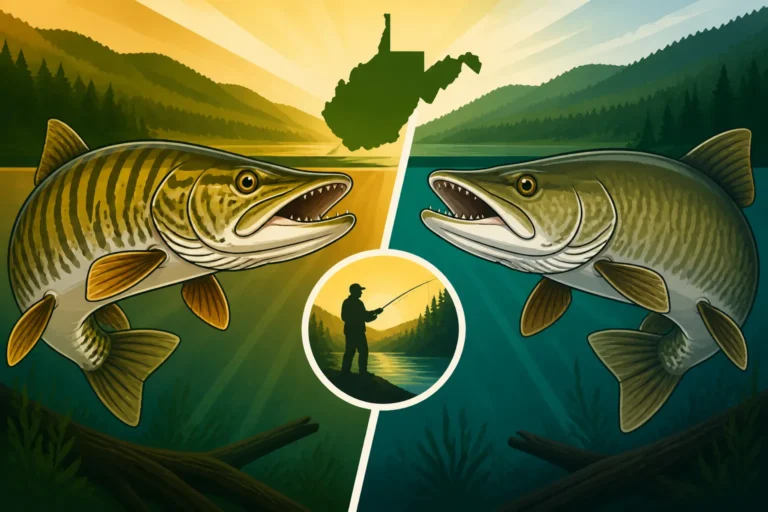
One of the most thrilling pursuits in West Virginia fishing is the hunt for muskie. These apex predators are legendary for their size and elusive nature, but a common question I hear from fellow anglers is: just how fast do these incredible fish grow in our Mountain State waters? Understanding the growth rate of Esox masquinongy is key to appreciating their life cycle, targeting them effectively, and, most importantly, ensuring we protect these magnificent creatures for future generations. This guide will dive deep into the factors that influence muskie growth, what you can expect in West Virginia's rivers and lakes, and why responsible angling truly makes a difference.
The Allure of West Virginia Muskie
There's something truly captivating about muskie. They aren't just fish; they're an obsession, a challenge, and often, a lifelong pursuit. The sheer power and striking beauty of a West Virginia muskie, with its sharp teeth and defiant demeanor, make every encounter unforgettable. Knowing how quickly (or slowly!) they attain their impressive size only adds to their mystique and our respect for them.
The "Fish of 10,000 Casts" Reputation
You've likely heard the old adage about the "fish of 10,000 casts." While it might feel like that sometimes, it really speaks to the muskie's intelligence, wariness, and often solitary nature. Unlike many other species, muskie don't grow to massive sizes by being foolish. They are apex predators that have learned to survive and thrive, often in challenging environments. This elusive quality makes every hook-up, every battle, and especially every successful catch-and-release, a monumental achievement. Their slow, steady growth contributes to this reputation; they need years, even decades, to reach true trophy dimensions, surviving countless challenges from natural predators, harsh winters, and of course, persistent anglers like us. It’s part of what makes Muskie Fishing in West Virginia such a unique experience.
Why Growth Rates Matter to Anglers
Understanding muskie growth rates isn't just a matter of curiosity; it has practical implications for us as anglers. For starters, it helps manage our expectations. Knowing that a 40-inch muskie is a significant achievement, representing many years of growth, helps us appreciate each fish we encounter. It also informs our conservation efforts. If a muskie takes, say, ten years to reach a certain size, then losing even one of those larger fish to improper handling or harvest has a much more profound impact on the overall fishery than losing a smaller, faster-growing species. We want these fish to continue growing, to become those truly immense specimens that West Virginia is famous for. This knowledge also helps us to appreciate the age and resilience of the fish we catch.
Factors Influencing Muskie Growth in West Virginia
Muskie growth isn't a simple linear progression. It's a complex dance between genetics, environment, and food availability. In West Virginia, where we have a diverse range of rivers and lakes, these factors can vary significantly from one waterbody to another, leading to different growth trajectories.
Forage Abundance and Diet
Let's be real: muskie are always hungry. They are opportunistic predators, and the availability of their preferred prey is perhaps the single biggest determinant of how fast they grow. If a muskie lives in a water system teeming with plentiful, good-sized forage fish – think various suckers, shad, or even smaller bass and panfish – it will grow faster and reach larger sizes sooner. Conversely, in waters where forage is scarcer, muskie will grow more slowly, simply because they aren't getting the consistent caloric intake needed for rapid development.
Consider a muskie living in a river system like the New River, which is incredibly rich in diverse fish species, versus one in a smaller, less productive impoundment. The New River muskie often has a smorgasbord of food available, contributing to robust growth. Many anglers targeting these areas might look on Amazon for lures that mimic these abundant baitfish, like large swimbaits or crankbaits. The more food, the better the growth. It’s a simple equation for these powerful predators.
Water Temperature and Seasonality
Just like us, muskie have an optimal temperature range where they are most active and their metabolism is highest. In West Virginia, our distinct seasons play a huge role in this. Muskie, being cold-blooded, grow fastest during the warmer months of late spring, summer, and early fall when water temperatures are conducive to high metabolic rates and active feeding. During the colder winter months, their metabolism slows down, and their growth essentially halts.
This means a muskie in West Virginia experiences a cyclical growth pattern, putting on inches during the warm season and essentially holding steady during the cold season. Waters that stay warmer for longer periods, or are naturally more productive due to temperature, can contribute to faster overall growth. This is why knowing West Virginia Fishing Seasons by Month can also help predict periods of peak muskie activity and growth.
Genetics and Strain Variation
While all muskie in West Virginia share the same species name, there can be subtle genetic differences between populations, or "strains," that might influence their inherent growth potential. Some strains might be predisposed to grow larger or faster than others, a trait passed down through generations. While this isn't something anglers typically control or even directly observe, it's a fundamental biological factor.
Additionally, some West Virginia waters receive stockings of muskie. The genetic makeup of these stocked fish, often sourced from specific broodstock programs, can play a role in the growth rates observed in those particular fisheries. While it's generally true that muskie are a native species to many of our larger river systems, stockings help maintain robust populations in certain areas.
Habitat Quality and Waterbody Size
The quality and size of the muskie's habitat are also crucial. A large river or lake with ample deep-water areas, submerged structure, current breaks, and varied cover (like fallen trees or weed beds) provides more opportunities for muskie to ambush prey and find suitable resting areas. Larger waterbodies often support larger and more diverse forage bases, which, as we discussed, directly impacts growth.
Smaller, less complex habitats might support muskie, but they might not reach the same trophy sizes as those in expansive, rich environments. Think about the sprawling waters of the Ohio River system or some of our larger reservoirs; these offer vast territories and diverse feeding grounds, allowing muskie to grow undisturbed to impressive dimensions. Understanding the habitat helps us understand Where to Find Muskie in West Virginia.
Typical Muskie Growth Rates in West Virginia Waters
So, what does this all mean for how fast muskie actually grow here in West Virginia? While it's impossible to give an exact number for every single fish, we can look at averages and general trends based on studies and observations. Muskie are known for their relatively slow growth compared to many other freshwater game fish, a key reason why patience and conservation are so important when targeting them.
Annual Growth Increments
From the time they hatch, muskie experience rapid initial growth, quickly outgrowing their vulnerability to many small predators. However, once they hit juvenile stages, their growth slows down. In West Virginia, a muskie might grow anywhere from 2 to 6 inches per year once it reaches legal size (which can vary by waterbody, so always check the Muskie Regulations in West Virginia Waters).
Here’s a general idea, but remember, this is highly variable:
| Age (Years) | Typical Length Range (Inches) | Annual Growth Increment (Inches) |
|---|---|---|
| 1 | 10-16 | Rapid (initial growth) |
| 2 | 16-22 | 4-6 |
| 3 | 22-28 | 3-5 |
| 4 | 28-33 | 3-4 |
| 5 | 33-37 | 2-4 |
| 6-10 | 37-45+ | 1-3 |
| 10+ | 45-50+ | 0.5-2 |
As you can see, the growth rate tends to decrease as the fish ages and gets larger. A muskie might put on 4-6 inches in its younger, more active feeding years, but once it's a mature, larger fish, that annual increase might drop to just an inch or two, or even less for truly massive, old fish. This is why a 50-inch muskie is such a rare and treasured catch – it represents many, many years of survival and growth. For deeper insights into their lifecycle, you might want to read Muskie Life Cycle and Growth Rate in West Virginia Waters.
Reaching "Trophy" Size
What constitutes a "trophy" muskie in West Virginia? For many, anything over 40 inches is a fantastic fish, and a 50-inch muskie is the absolute holy grail. Based on the growth rates, a muskie in West Virginia could potentially reach 40 inches in about 5 to 7 years in optimal conditions, but more commonly, it takes 8 to 12 years. To reach the coveted 50-inch mark, you're looking at a fish that's likely 12-15 years old, or even older, depending on the specific waterbody and conditions it has lived through.
These are truly old, wise fish that have evaded countless dangers. Their size is a testament to their incredible resilience. The patience required to catch one of these giants is immense, but the reward is unparalleled. Muskie Growth Rate to Trophy Size expands on this journey.
West Virginia's Prime Muskie Fisheries
West Virginia is blessed with several fantastic muskie fisheries where these fish can truly thrive and reach impressive sizes. The New River, the Kanawha River, and the Little Kanawha River are often cited as prime spots, as are some of our larger impoundments like Burnsville Lake and Stonecoal Lake. These waters generally offer abundant forage, good habitat, and suitable growing conditions that allow muskie to grow faster than they might in less ideal environments.
The continuous flow and diverse structure of our major river systems provide rich feeding grounds and plenty of ambush points. Our lakes, especially those with strong baitfish populations, also offer excellent opportunities. If you're looking for Best Muskie Waters in West Virginia, these are great places to start your research.
The Life Cycle of a West Virginia Muskie
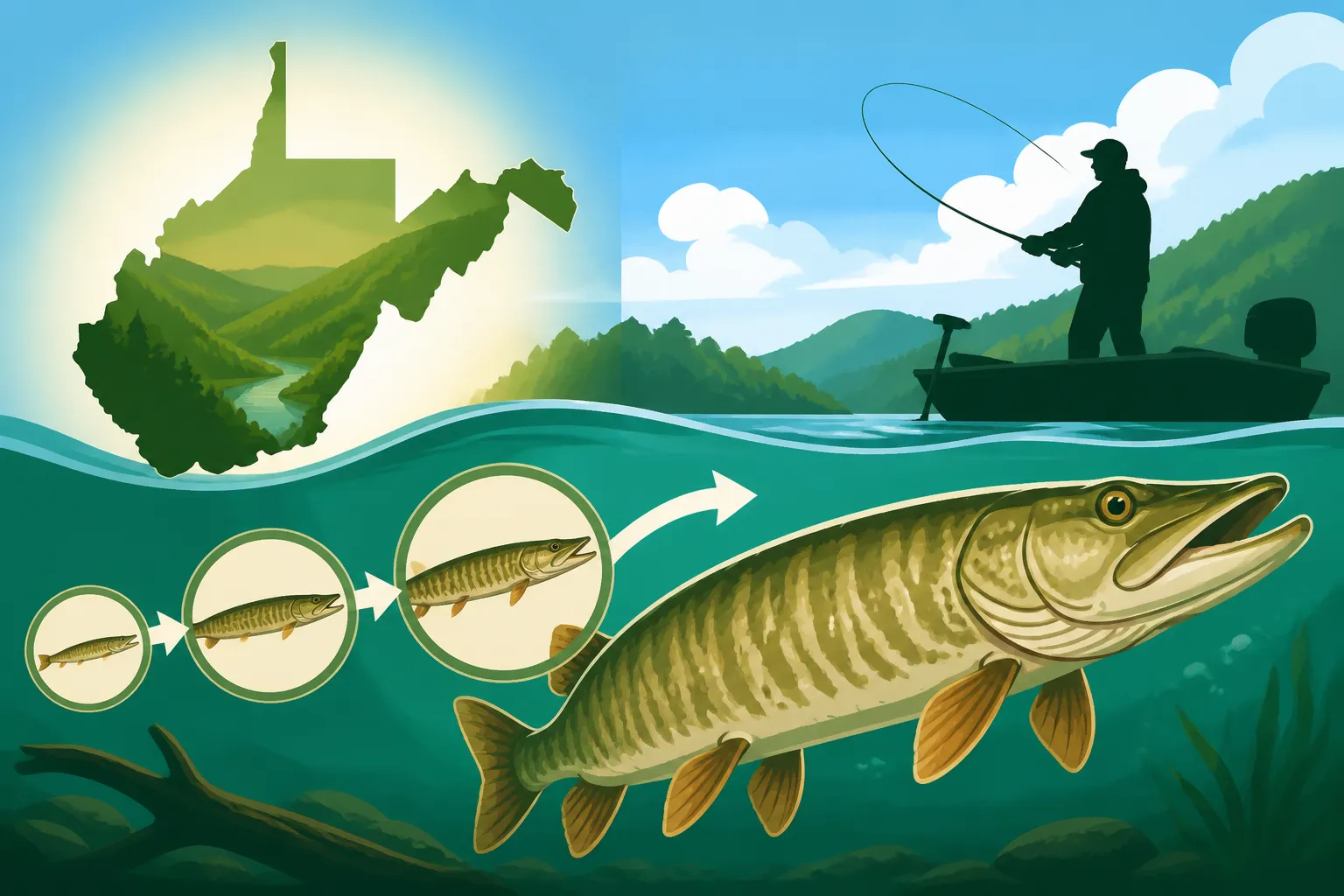
To truly grasp how fast muskie grow, it helps to understand their entire life cycle. From tiny fry to enormous adults, each stage presents different growth opportunities and challenges.
Spawning and Early Life
Muskie typically spawn in the spring, once water temperatures hit that magical mid-40s to low-50s Fahrenheit range. They seek out shallow, vegetated areas where they scatter their eggs. Once the eggs hatch, the tiny muskie fry absorb their yolk sacs and quickly become active predators, feeding on zooplankton and then small insect larvae and eventually, other fish fry. This initial period is one of very rapid growth; they need to get big fast to avoid becoming prey themselves. A muskie that is just a few inches long in early summer can be a foot long by late fall if food is abundant.
This early growth surge is critical for their survival. The more successfully they can feed and grow during their first year, the better their chances of surviving subsequent winters and reaching adulthood.
Maturation and Peak Growth
Muskie generally reach sexual maturity between 3 to 5 years of age. During this period, and for several years afterward, they enter what could be considered their "peak growth" phase. They are large enough to consume a wide variety of prey, and their bodies are efficient at converting food into mass. This is when you'll see those consistent annual gains of a few inches.
As they continue to grow, their diet shifts to larger and larger prey, making them truly formidable hunters. They are still actively growing, but the rate starts to slow down as they approach the upper end of their size potential.
Longevity and Maximum Size
Muskie are long-lived fish, especially the females, who tend to grow larger and live longer than males. It's not uncommon for muskie in West Virginia to live for 15-20 years, and some truly exceptional individuals might even exceed that age. The oldest muskie on record have approached or even surpassed the 30-year mark, although these are rare exceptions.
These ancient muskie are the giants we all dream of catching. While their growth rate might be minimal in their later years, their sheer size is a testament to their incredible survival skills and the health of the waters they inhabit. The maximum size they achieve is a balance of their genetic potential and the environmental factors we've discussed.
Conservation and Sustainable Muskie Fishing Practices
Given how long it takes for muskie to grow to impressive sizes, conservation is absolutely paramount for Muskie Fishing in West Virginia. Every large muskie caught represents many years of growth and survival. Ensuring these fish can continue to thrive requires conscious effort from every angler.
The Importance of Catch and Release
For muskie, catch and release isn't just a suggestion; it's a critical component of maintaining healthy, trophy-producing fisheries. Given their slow growth and relatively low population densities, removing even a few large muskie can have a significant impact on the overall quality of the fishery. By safely releasing muskie, we give them the chance to continue growing, to spawn, and to provide thrilling experiences for other anglers down the line. Many of the "trophy" fish caught today have likely been caught and released multiple times. This is why Muskie catch and release survival tips are so important for every muskie angler.
Handling Large Muskie Responsibly
When you do hook into a muskie, especially a big one, how you handle it post-catch can be the difference between life and death for the fish. The goal is to minimize stress, keep the fish in the water as much as possible, and get it released quickly and safely.
- Use the Right Tools: A large, rubber-coated landing net is essential. It supports the fish's body, protects its delicate slime coat, and keeps those sharp hooks away from you and the fish. You can find excellent, fish-friendly muskie nets on Amazon that are designed to safely cradle these giants. Long-nosed pliers or jaw spreaders are also crucial for quickly and safely removing hooks.
- Keep it Wet: Avoid taking the fish out of the water for prolonged periods. If you want a photo, get it ready, lift the fish briefly, snap the shot, and get it back in the water. Hold it horizontally, supporting its belly, never vertically by the head or tail.
- Revive Gently: If the muskie seems sluggish, hold it gently in the water, facing into the current, until it's strong enough to swim away on its own.
Investing in Best Muskie Gear for West Virginia Rivers means investing in the future of the fishery.
Understanding Regulations and Limits
West Virginia's fishing regulations are designed with conservation in mind. They specify minimum length limits and often low (or even zero) possession limits for muskie. These rules are put in place to allow muskie to reach sexual maturity and reproduce at least once, and ideally multiple times, before they can be harvested. Always consult the current regulations for the specific waterbody you plan to fish, as rules can vary. Ignoring these limits not only carries penalties but also actively harms the long-term health and trophy potential of our muskie fisheries. For details, refer to West Virginia Fishing Regulations Explained.
By understanding how fast muskie grow, appreciating the challenges they face, and practicing responsible angling, we can all contribute to the thriving muskie fishing tradition here in West Virginia. The next time you're out there casting for the "fish of 10,000 casts," remember the incredible journey each muskie takes to reach your net.
Disclaimer
This article is for general informational purposes only and does not constitute professional advice. Laws, prices and regulations vary by location and change over time. Consult a qualified professional for guidance on your specific situation.