Best technique for vertical jigging walleye
There's nothing quite like the thrill of feeling that subtle thump as a walleye mouths your jig, especially after you've spent hours trying to crack the code. If you've ever felt frustrated trying to pinpoint and entice these elusive fish, you're not alone. Walleye are notoriously finicky, often hugging tight to structure or lurking in specific depth zones. But don't give up! This comprehensive guide is dedicated to mastering the art of vertical jigging, a technique that can dramatically improve your success rate in West Virginia's walleye-rich waters by putting your bait right in front of their noses.
Understanding Walleye Behavior for Vertical Jigging
Before you even think about dropping a jig, you've got to get inside a walleye's head. These fish are masters of their environment, and their behavior dictates everything from where they hang out to what they'll bite. Understanding their patterns is the first step to successful vertical jigging.
Seasonal Movement and Depth
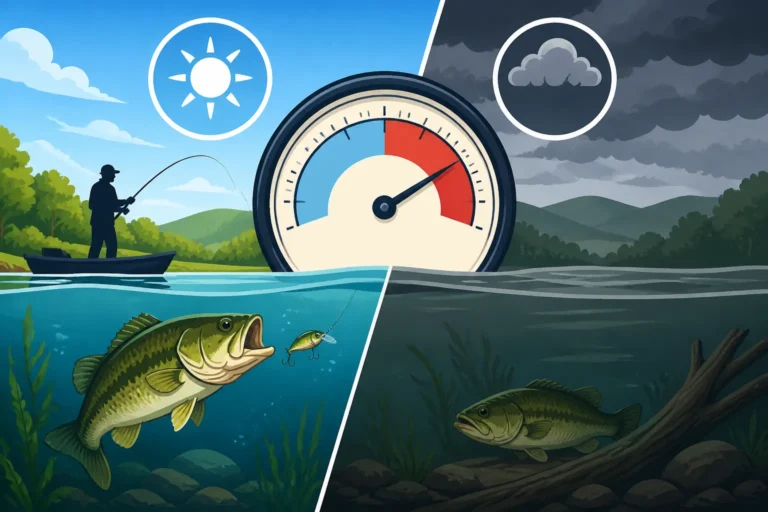
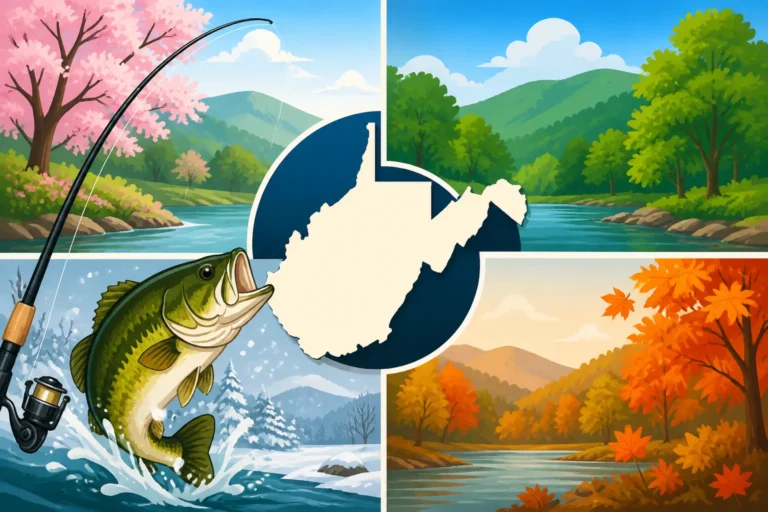
Walleye are highly migratory, and their location in a lake or river changes dramatically throughout the year based on water temperature, spawning cycles, and forage availability. In early spring, as ice retreats, they'll often be found staging in shallower areas near rocky points or tributary mouths, preparing for the spawn. This is a critical time for anglers to target them before they scatter. Once the spawn is complete, typically in late spring, they might move to slightly deeper humps or weed edges for a recovery period. As summer temperatures rise, walleye often retreat to deeper, cooler waters, seeking out the thermocline if it exists in a lake. They’ll relate to deep structure like submerged islands, creek channels, or the steepest drop-offs they can find.
Come fall, as the water cools, these fish begin to transition back towards shallower feeding grounds, often becoming more active. This is when you'll find them on main lake points, breaks, and even rocky flats as they chase schools of baitfish, fattening up for winter. And in the dead of winter, especially in our ice-fishing lakes like Summersville Lake or Tygart Lake, walleye will often concentrate in deep holes, basin areas, or along the edges of steep structures. Vertical jigging is absolutely deadly during this cold period because you can present your lure directly to them in their limited strike zones. Knowing these seasonal shifts is paramount.
Reading the Bottom and Structure
Walleye are structure-oriented fish, meaning they gravitate towards features on the bottom that offer cover, ambush points, or access to food. Vertical jigging is incredibly effective because it allows you to precisely target these specific features. Think about those sharp breaks where a flat suddenly drops into a deep channel, or a lonely rock pile surrounded by soft bottom. These are prime walleye real estate. Submerged timber, old roadbeds, bridge pilings, and even subtle changes in bottom composition from mud to gravel can all hold fish.
This is where your electronics become your best friend. A good fish finder is essential for identifying these nuances on the bottom. You're not just looking for fish arcs; you're looking for the structure that holds them. Pay close attention to contour lines on your mapping, looking for points that extend into deep water, steep ledges, or humps that rise off the bottom. In a river system like sections of the Ohio River or the Kanawha River, currents will create scour holes and sandbars that walleye love. Learning to interpret what your sonar is telling you – differentiating between a cluster of baitfish, a school of crappie, or a handful of distinct walleye hugging the bottom – is a skill that takes time but pays off immensely. The more you understand the underwater landscape, the more precisely you can vertical jig and the more fish you’ll find. For more on finding good spots, check out our guide on the Best Fishing Lakes in West Virginia.
Essential Gear for Successful Vertical Jigging
Having the right tools for the job can make all the difference, especially when you’re trying to tempt a wary walleye. Vertical jigging demands a setup that offers sensitivity, control, and the backbone to handle these hard-fighting fish.
Rod, Reel, and Line Setup
For vertical jigging, your rod is your primary sensory tool. You want something that's sensitive enough to detect the most subtle pick-ups, which often feel like nothing more than a slight "pressure" or "sponge" on the line, but also has enough backbone to drive the hook home and control a thrashing walleye. A medium-light to medium power rod, typically 6'6" to 7'6" in length, with a fast or extra-fast tip action is ideal. The fast tip allows for precise jig manipulation and telegraphs even the lightest bites, while the stronger butt section provides the power. Shorter rods are better for working directly over the boat in tight quarters, while slightly longer rods can help absorb head shakes and cast a bit if needed. When it comes to finding the perfect rod, many anglers find a great selection online, including on Amazon, allowing them to compare features and reviews.
Matching this rod with a smooth, lightweight spinning reel in the 2000-3000 size range is a solid choice. Spinning reels excel at handling lighter jigs and offer great line control for precise drops. For line, a low-stretch braided mainline is almost non-negotiable for vertical jigging. Its incredible sensitivity transmits every bump and tap directly to your hands. I typically spool up with 8-15 pound test braided line. To counter the visibility of braid and provide some shock absorption, I always tie on a fluorocarbon leader, usually 6-10 pound test, connected with a strong knot like an Albright or an FG knot. The fluorocarbon's invisibility underwater is a huge advantage for spooky walleye, and its abrasion resistance is key when fishing around rocks and timber. A quality leader material can often be found readily on Amazon. For more on rod choices, take a look at our article on Best Fishing Rods for West Virginia Rivers.
The Right Jigs and Baits
The world of jigs for walleye is vast and varied, but for vertical jigging, we're focusing on presentations designed to be worked directly below the boat. The most common types include leadhead jigs (often tipped with live bait or soft plastics), blade baits, and jigging spoons.
Leadhead jigs are probably the most versatile. Their weight allows them to sink quickly and stay vertical, while different head shapes (round, stand-up, Erie) can impart subtle differences in action. Pairing a leadhead with a soft plastic like a grub, minnow imitation, or a worm can be incredibly effective. The plastic adds bulk, scent (if impregnated), and often a tantalizing tail action on the drop. Live bait, however, is often king for walleye. Tipping your leadhead with a minnow, shiner, or even a nightcrawler can entice strikes when plastics fail. The natural scent and subtle movements are hard for a walleye to resist.
Blade baits, like the popular Heddon Sonar or Rapala Rippin' Rap, are excellent for vertical jigging. These lures have a tight, high-frequency vibration on the lift and flutter enticingly on the fall, mimicking a wounded baitfish. They're great for covering water quickly and calling in fish. Jigging spoons, such as a Northland Buck-Shot Rattle Spoon or a Johnson Silver Minnow, are also fantastic. Their erratic, wobbling fall can trigger aggressive reaction strikes, especially in deeper water. Color choices are crucial and often depend on water clarity and light conditions. In clear water, natural colors like greens, browns, and silvers tend to work well. In stained or dirty water, brighter colors like chartreuse, orange, or even glow-in-the-dark options can be more effective. Having a variety of weights is also essential to match depth and current; from 1/8 ounce for shallow, calm conditions to 1/2 ounce or heavier for deep, fast water. Don't be afraid to experiment to find what the walleye are keying on that day!
Mastering the Vertical Jigging Technique
Vertical jigging isn't just about dropping a lure over the side; it's a nuanced dance between boat control, lure presentation, and a keen sense of feel. Getting it right can turn a tough day into a memorable one.
Locating and Positioning Your Boat
The first rule of vertical jigging is precision. You need to be able to stay directly over the fish or the piece of structure you're targeting. This is where modern boat control technology shines. A GPS-enabled trolling motor with a spot-lock feature is a game-changer. It allows you to hold your boat precisely in place, even in wind or current, freeing you up to focus solely on your jig presentation. Without spot-lock, you'll need to master subtle adjustments with a foot-pedal trolling motor or even use a drift sock in windy conditions to slow your drift over productive areas.
Start by marking waypoints on your fish finder or GPS when you see fish or interesting structure. Make passes over the area to get a clear picture of the bottom contour and any fish holding tight to it. Once you identify a promising spot, position your boat upstream or upwind slightly, and then use your trolling motor to slowly move directly over the target. This ensures your jig drops straight down into the strike zone. In river environments like the Ohio River, where current is a major factor, positioning is even more critical. You'll often want to hold just upstream of a current break or scour hole, allowing your jig to flutter naturally into the feeding zone without being swept away too quickly. Having reliable electronics is key for this, and you can learn more by reading about Best Fish Finders for West Virginia Lakes.
The "Lift-Fall" and "Snapping" Retrieve
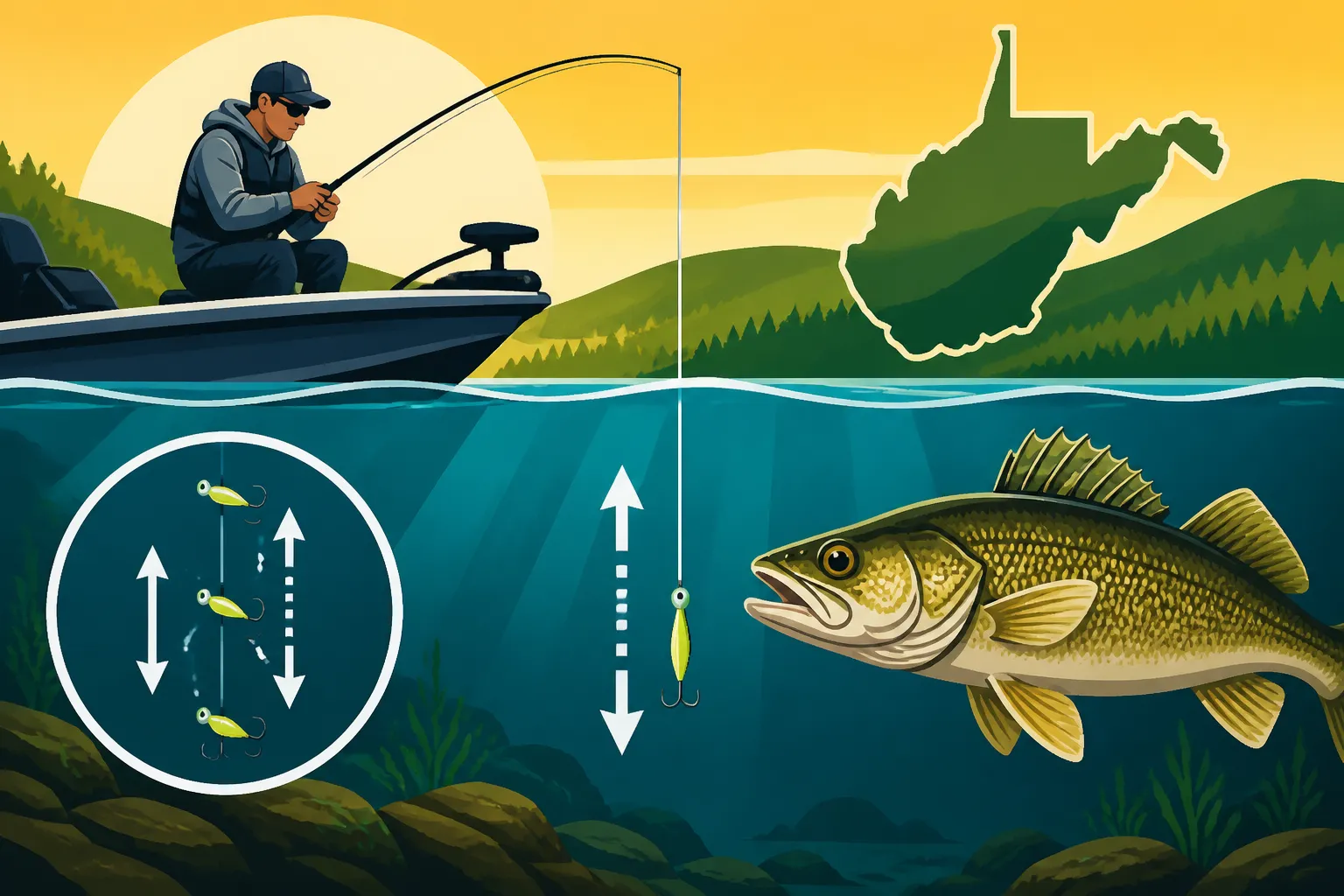
Once your boat is positioned and your jig is deployed, the real magic begins. The essence of vertical jigging is to impart action to your lure while keeping it in the walleye's strike zone. The most common retrieve is a "lift-fall" motion. Drop your jig to the bottom, then lift your rod tip a foot or two, allowing the jig to rise. Immediately lower your rod tip, allowing the jig to free-fall back down on a semi-slack line. The bite often occurs on this fall, as the lure is descending, so maintaining a connection to your lure without hindering its action is crucial. The walleye might simply inhale it as it drops, making your line go slack or feel spongy.
Another effective retrieve is the "snapping" technique. This involves a sharper, more aggressive snap of the rod tip, causing the jig to dart upwards quickly, followed by a controlled slack-line fall. This can be particularly effective with blade baits and jigging spoons, creating more flash and vibration to draw attention. Vary the height of your lifts (from subtle 6-inch bumps to aggressive 2-foot snaps) and the speed of your retrieve until you find what the walleye prefer. Sometimes a slow, methodical lift-fall is best; other times, an aggressive snap will trigger a reaction strike. The key is never to retrieve the lure back to the boat, but rather to work it directly up and down in that concentrated strike zone. Remember, walleye are often looking for an easy meal, and a fluttering, wounded baitfish presentation is incredibly enticing.
Interpreting Bites and Setting the Hook
This is arguably the most challenging and rewarding part of vertical jigging. Walleye bites are often incredibly subtle. Forget those violent tugs you might get from a largemouth bass; a walleye bite can feel like almost nothing at all. You might feel a faint "tap," a slight "tick," or a sudden sense of "weight" on your line that wasn't there a second ago. Sometimes, the most common indication is simply a lack of tension or a momentary feeling of slack when your jig should be falling. It’s as if your jig just stops moving or feels heavier than usual.
Because of this subtlety, it's crucial to be hyper-focused and ready to react instantly. If anything feels "off," set the hook! The best way to set the hook for walleye when vertical jigging is a swift, sweeping motion of the rod tip, often referred to as a "sweep-set." Don't try to rear back like you're setting the hook on a largemouth; a powerful, horizontal sweep of the rod, combined with reeling down quickly to take up any slack, is usually all it takes to bury that hook. If you miss a strike, immediately drop your jig back down. Often, the walleye is still in the vicinity and might hit again. It's a game of nerves and quick reflexes, but the reward of a solid walleye on the end of your line is absolutely worth the concentration. For general walleye tips, you can also check out How to Catch Walleye in West Virginia.
Advanced Tips for West Virginia Walleye
Taking your vertical jigging game to the next level means adapting your approach to different conditions and times of year. West Virginia's diverse waters offer unique challenges and opportunities for walleye anglers.
Jigging Through the Seasons
Just like walleye move seasonally, your vertical jigging tactics should evolve too. In spring, after the initial spawn, walleye might be found on shallower main lake points or breaklines adjacent to deeper water, often in 10-25 feet. A slightly slower, more subtle lift-fall with a minnow-tipped jig can be very effective as they recover. As summer progresses and waters warm, walleye often go deep, seeking cooler temperatures and stable oxygen levels. Look for them on deep humps, along thermoclines (if present), or in submerged river channels in lakes like Sutton Lake or Bluestone Lake. Here, heavier jigs (1/2 to 3/4 ounce) with blade baits or jigging spoons become more effective for reaching depth and creating a larger profile. Faster, more aggressive snaps can trigger these deeper fish.
Fall is a fantastic time for walleye, as they become very active, feeding heavily. They'll often move back shallower, frequenting main lake points, rocky flats, and even the mouths of major creeks where baitfish are congregating. Medium-weight jigs tipped with large minnows or soft plastics, fished with a varied retrieve, can be deadly. And in winter, for those brave enough to ice fish, vertical jigging is king. Walleye will often be concentrated in distinct deep holes or along steep breaks. Small jigging spoons or tungsten jigs tipped with wax worms or minnow heads, worked with very subtle twitches, can tempt these sluggish cold-water fish. Understanding these seasonal nuances, which we explore further in West Virginia Fishing Seasons by Month, will undoubtedly boost your catch rate.
Night Jigging and Low Light Conditions
Walleye are notorious for being creatures of low light. Their large, light-sensitive eyes give them a distinct advantage over their prey during dawn, dusk, and especially at night. This makes vertical jigging under these conditions incredibly effective, particularly during the warmer months when walleye might be dormant during bright daylight hours. When the sun dips below the horizon, walleye often move shallower, becoming more aggressive and willing to chase down a meal. This is when main lake points, shallow humps, and even shorelines that were barren during the day can come alive.
For night jigging, focus on darker jig colors that create a better silhouette against the moonlit sky, or consider jigs with glow-in-the-dark or UV-reactive finishes. Blade baits and rattling jigging spoons are excellent choices as their vibration helps walleye locate them in the dark. Safety is paramount when night fishing; always have proper navigation lights, a headlamp, and know your fishing area intimately. It’s also important to be extra careful with your boat positioning, as visibility is reduced. While it adds a layer of challenge, the rewards of a successful night walleye bite, perhaps on the Kanawha River or one of our larger reservoirs, can be truly spectacular.
West Virginia Walleye Jigs by Condition
Here's a quick reference table to help you choose the right vertical jig for different scenarios you might encounter while walleye fishing in West Virginia.
| Jig Type | Ideal Depth Range | Water Clarity | Retrieve Style | Common Trailer/Tip | Notes |
|---|---|---|---|---|---|
| Leadhead Jig | 5-40 feet | Clear to Stained | Lift-Fall, Subtle Bounces | Live Minnow, Grub, Worm | Most versatile, excellent for precise presentations. |
| Blade Bait | 10-50 feet | Stained to Clear | Aggressive Snaps, Vibrations | None (Self-contained) | High vibration, good for attracting fish from a distance, reaction bites. |
| Jigging Spoon | 15-60 feet | Clear to Stained | Erratic Flutter, Sharp Lifts | None (Self-contained) | Mimics dying baitfish, triggers reaction strikes, good for deep water. |
| Tungsten Jig | 5-30 feet (Ice Fishing) | Clear to Stained | Subtle Twitches, Dead Stick | Wax Worm, Minnow Head | Extremely sensitive, compact profile, ideal for ice fishing and light bites. |
Remember to always consult the current regulations for West Virginia Walleye Daily and Possession Limits before heading out on the water.
Disclaimer
This article is for general informational purposes only and does not constitute professional advice. Laws, prices and regulations vary by location and change over time. Consult a qualified professional for guidance on your specific situation.