How to euro nymph a mountain freestone stream
Navigating the turbulent, ever-changing currents of a West Virginia mountain freestone stream with a traditional fly fishing setup can feel like an uphill battle. Getting your nymphs deep enough, maintaining a drag-free drift, and detecting those incredibly subtle strikes from wary trout in swift water often leaves anglers frustrated and empty-handed. This comprehensive guide is designed to cut through that struggle, showing you how to master the art of Euro nymphing to effectively catch trout in the challenging yet rewarding waters of the Mountain State.
Understanding Mountain Freestone Streams in West Virginia
Before we even talk about specific techniques, it’s crucial to understand the environment we’re fishing in. West Virginia's mountain freestone streams are a world apart from the gentle, consistent flows of limestone spring creeks or the regulated releases of large tailwater fisheries. They demand a different approach, and Euro nymphing is specifically designed to meet these challenges head-on.
What Makes Freestone Streams Unique?
Freestone streams, by their very nature, are dictated by precipitation and snowmelt. Their flows can fluctuate dramatically from day to day, or even hour to hour. They often tumble down steep gradients, creating a chaotic mosaic of plunge pools, swift riffles, turbulent runs, and intricate pocket water. Think about the wild, untamed beauty of a stream flowing through the Monongahela National Forest, or the famous freestone sections of the Cranberry River. These aren't placid waters; they are dynamic, energetic ecosystems.
What defines them further is their geology. Unlike spring creeks that are fed by groundwater filtering through limestone, freestone streams receive their water directly from surface runoff, often over sandstone or shale. This typically results in slightly more acidic water and can influence insect life, though West Virginia's freestones are generally teeming with diverse aquatic invertebrates. The constant movement of water also sculpts the streambed, creating complex structures of rocks, boulders, and woody debris where trout find shelter and ambush points. Understanding these natural characteristics is your first step toward success.
Why Traditional Nymphing Can Fall Short
Many anglers start with traditional indicator nymphing, and while it certainly has its place, it often struggles in the fast, broken water of a mountain freestone stream. The primary challenge is getting your flies down to the fish's feeding lane quickly and keeping them there without drag. Indicators, even small ones, create resistance in the water, making it harder for your weighted nymphs to sink. Moreover, the turbulent currents pull on the indicator and fly line, leading to unnatural drifts and making it incredibly difficult to distinguish between a gentle take and the natural jostling of the current.
The sheer amount of split shot or weighted putty required to get a fly to depth with an indicator can also impede casting and make for a clumsy presentation. And let's be honest, in fast-moving water, trying to watch a tiny indicator bob and weave amongst bubbles and ripples can be an exercise in futility. That's where Euro nymphing shines – it strips away the inefficiencies of traditional setups to create a direct, hyper-sensitive connection to your flies.
Essential Gear for West Virginia Euro Nymphing
Euro nymphing isn't just a technique; it's a system that relies on specialized gear to achieve its unparalleled effectiveness. While you can certainly adapt existing fly rods, having the right tools makes a world of difference, especially when you're trying to fool wary trout in West Virginia's often challenging freestone environments.
Rod, Reel, and Line Setup
The heart of a Euro nymphing setup is the rod. You’ll want something longer and lighter than your typical trout rod. We're talking 10 to 11.5 feet in length, typically in a 2 to 4-weight. The extra length gives you superior reach for controlling your drift and keeping as much line as possible off the water, minimizing drag. The rod should have a sensitive, flexible tip that acts as a strike indicator, absorbing the subtle takes while still providing enough backbone to fight fish in current. Many anglers swear by specific models designed for this purpose, often found on Amazon from brands like Cortland or Tenkara USA.
Your reel, surprisingly, is less about its drag system and more about balancing the long rod. A simple click-and-pawl or a lightweight disc drag reel will suffice, as you'll primarily be fighting fish by hand-lining rather than relying on the reel's drag. The fly line itself is minimalist. Many Euro nymphing lines are incredibly thin, often just a level line or a specially tapered one that's barely thicker than heavy monofilament. The idea is to have as little mass as possible to prevent sag and maximize sensitivity.
Instead of a traditional fly line, the critical component is the sighter. This is a section of brightly colored, often bi-color or tri-color, monofilament or specialized sighter material incorporated into your leader. It acts as your visual strike indicator, signaling the slightest bump or pause in your drift. You can find pre-made sighters or bulk material online, including from retailers like Amazon.
Leader and Tippet Configuration
The leader system for Euro nymphing is quite different from what you might be used to. It's designed for direct contact and sensitivity. Generally, you’ll start with a section of heavier monofilament (e.g., 20-30 lb test) attached to your fly line, followed by a transition to lighter mono or fluorocarbon. Then comes your sighter, usually 12-24 inches of bright, contrasting color. This section is key for detecting strikes.
Below the sighter, you'll attach your tippet, often using a small tippet ring. Tippet rings, available at most fly shops or from online suppliers, are incredibly useful for making quick tippet changes without shortening your main leader. For West Virginia's mountain streams, fluorocarbon tippet is almost universally preferred due to its faster sink rate and excellent abrasion resistance against rocky bottoms. You’ll typically run two or three sections of tippet, graduating in strength, with your heaviest nymph at the bottom (the "point fly") and lighter nymphs on droppers above it. Knowing the proper "Best tippet size for stocked trout" can also guide your choices for wild fish, often going a little lighter. For example, 5x or 6x is common for smaller freestone trout, while 3x or 4x might be used for larger fish or to turn over heavier flies.
Fly Selection for Mountain Trout
The flies used for Euro nymphing are generally slender, heavily weighted, and designed to sink like a stone. Tungsten beads are a non-negotiable component for most patterns, as they get your flies into the strike zone quickly and efficiently. Forget those lightly weighted, fluffy nymphs; we're talking about high-density, streamlined designs.
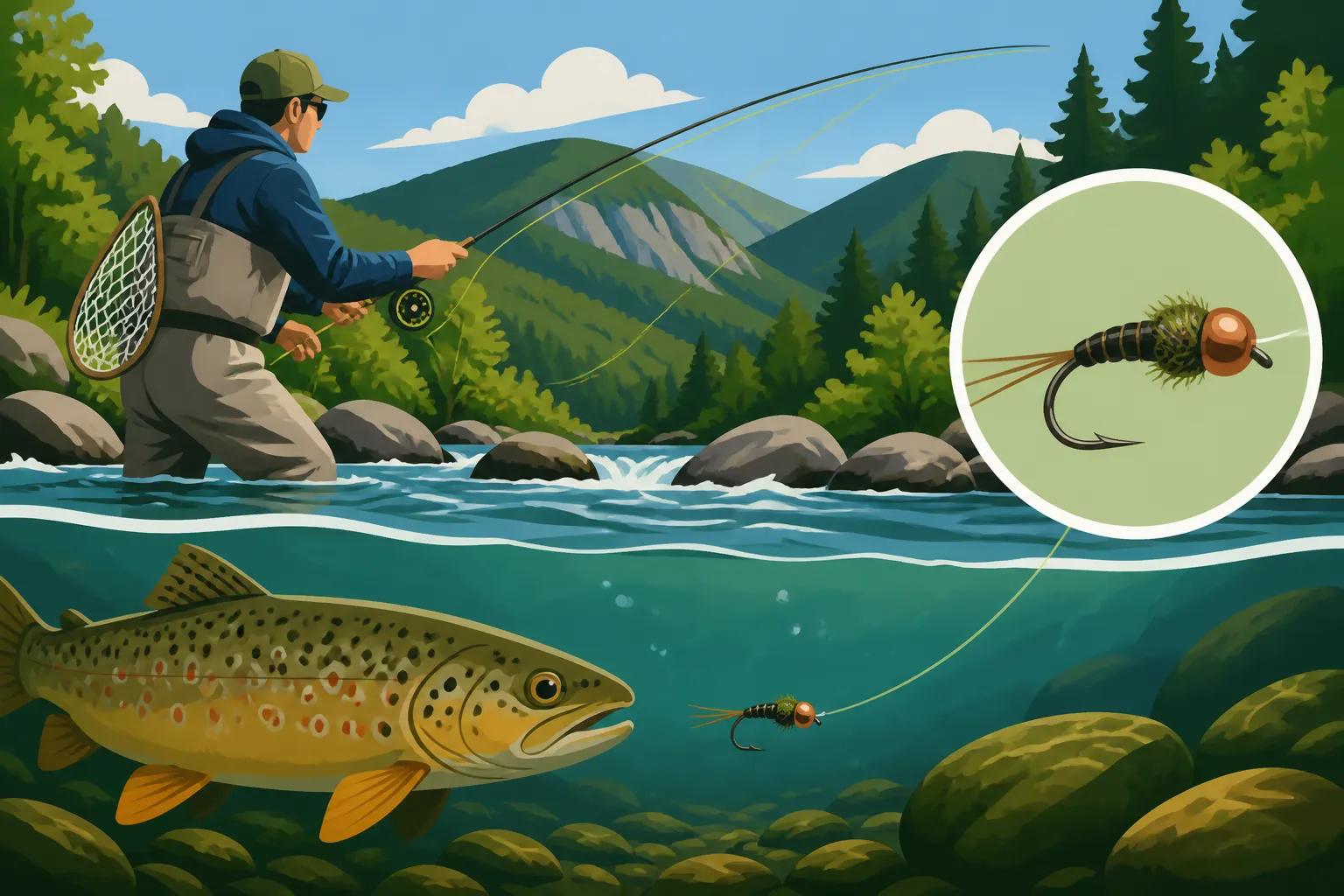
Classic Euro nymphing patterns that are deadly in West Virginia's freestone streams include Perdigons, which are thin, epoxy-coated patterns that slice through the water. Frenchies (a variation of the Pheasant Tail) and Hare's Ears are also incredibly effective, often tied with a hot spot of colored bead or thread to grab attention. Squirmy Wormies and Walts Worms, while simple, can be absolute trout magnets, especially after a rain event or in slightly off-color water. Sizes typically range from 12 down to 20, depending on the stream conditions, current insect hatches, and the size of the trout you're targeting.
It's wise to carry a variety of colors and sizes. Darker patterns (blacks, browns, olives) are good for general use, while brighter patterns (pink, orange, chartreuse hot spots) can be excellent in stained water or for aggressive fish. Don't be afraid to experiment! A well-stocked fly box with these patterns can be easily put together, and many specialty fly shops and large online retailers like Amazon offer great selections of Euro nymphs.
Mastering Euro Nymphing Techniques
Euro nymphing is much more active and engaging than passive indicator fishing. It requires constant attention, precise control, and a good understanding of how trout behave in flowing water. Once you get the hang of it, you’ll find it incredibly rewarding.
Reading the Water for Trout Lies
In a mountain freestone stream, trout are all about efficiency. They'll position themselves in spots where food delivery is abundant but the current is soft enough to conserve energy. This means looking for classic trout lies: the "seams" where fast water meets slow, behind large boulders, in the deeper sections of plunge pools, and along current breaks created by structure like submerged logs or undercut banks. The broken surface of a riffle might seem intimidating, but beneath it, the water can be surprisingly calm, offering perfect holding lies.
Consider a section of the Cranberry River special regulations; you'll find trout stacked up in the deeper pockets behind the larger rocks. Or imagine the Shavers Fork native brook trout access points – smaller, wilder fish will hug the bottom in any little current break. Learning to identify these spots quickly is crucial. Your goal is to present your flies directly into these zones, allowing them to tumble naturally, just like real insects dislodged by the current. Remember, your flies need to be where the fish are, and that’s usually near the bottom.
The Cast, Drift, and Strike Detection
The "cast" in Euro nymphing is less about distance and more about precision and control. It's often described as a "lob" cast – a simple forward movement of the rod that flips your heavy nymphs upstream, allowing them to sink quickly. There's minimal false casting, which would dry your flies out and create unnecessary air time. The goal is to drop your flies just above your target lie.
Once your flies hit the water, immediately lift your rod tip high, keeping your sighter straight and off the water. This is the essence of a drag-free drift: your flies are sinking and tumbling naturally with the current, while your sighter acts as the critical connection to your rod. You'll follow the drift with your rod tip, constantly leading your flies, maintaining a slight tension that allows you to feel everything that happens at the end of your line.
Strike detection is where the sighter truly shines. Any pause, twitch, sudden stop, or unusual movement of that bright sighter indicates a strike. Sometimes it’s a subtle hesitation; other times, the sighter will jump definitively. This direct connection, without the buffer of a buoyant indicator, gives you unparalleled sensitivity. As soon as you see or feel anything out of the ordinary, set the hook immediately with a quick, upward flick of the wrist. Don't hesitate – those mountain trout are quick to spit a fly if they detect something is amiss.
Advanced Tactics and Troubleshooting
One of the great advantages of Euro nymphing is the ability to fish multiple flies simultaneously. A common setup involves a heavier "point fly" at the very end of your tippet, designed to get deep, and one or two lighter "dropper flies" tied on tag ends above it. This allows you to present different patterns or target different depths within the same drift. It’s a fantastic way to cover water and figure out what the trout are eating.
Adjusting your weight and tippet length is a constant process. If you’re not occasionally snagging the bottom, you’re likely not getting deep enough. Conversely, if you're constantly snagging, your flies might be too heavy, or your tippet too long for the depth. It's a delicate balance that comes with practice. When you do snag, try to pull straight back on the line to release the hook from the rock. Many Euro nymphs have barbless hooks, making them easier to retrieve from snags and better for the fish.
Consider your approach when moving through a stream. Often, moving upstream is preferred in Euro nymphing as it allows you to present your flies into undisturbed water. You're constantly walking and wading, covering new water, making short, precise casts into every promising pocket and seam. For deeper, wider runs, you might need to combine Euro nymphing with techniques on How to fish a run and pool trout stream, adapting your approach to the specific features you encounter.
Euro Nymphing Specific West Virginia Streams
West Virginia is blessed with a diverse array of trout streams, and while the core principles of Euro nymphing remain the same, adapting your approach to specific water types and conditions will significantly boost your success.
Tailored Approaches for Specific Waters
Let's consider a few examples within West Virginia's rich fishing landscape. If you're targeting the delicate, native brook trout in smaller, high-gradient streams found in areas like the Shavers Fork native brook trout access, stealth becomes paramount. These fish are often smaller, easily spooked, and inhabit extremely clear water. Here, you'll want to use smaller flies (size 16-20), lighter tippet (6x or 7x), and approach with extreme caution, often on your knees, making short, precise casts. The goal is to imitate tiny aquatic insects.
Conversely, if you're on a larger, more renowned trout fishery like the Cranberry River catch and release fly water, you might be targeting larger brown or rainbow trout. Here, you can often get away with slightly larger flies (size 12-16) and stronger tippet (4x-5x), especially when targeting the deeper runs. The fish are still wild and wary, but the sheer volume of water provides more cover. Presentation accuracy in the seams and pockets will be key to tempting these bigger fish.
Even tailwater fisheries, like certain sections of the Elk River trout fishing, can benefit from Euro nymphing, especially during periods of lower flow when trout become highly selective. Here, understanding the specific insect hatches and matching your fly patterns to those insects is crucial. The constant flows can also mean more consistent feeding lanes, making precise drifts in those lanes exceptionally productive.
| Euro Nymph Pattern | Primary Imitation | Typical Size Range | Key Characteristics | Best Use Case |
|---|---|---|---|---|
| Perdigon | Caddis, Baetis, Midge | #14 – #20 | Slim profile, tungsten bead, epoxy-coated, often with hot spot | Fast, deep runs; clear water; selective trout |
| Frenchie | Pheasant Tail nymph | #12 – #18 | Tungsten bead, pheasant tail body, often with hot spot collar | General purpose; great for various mayfly imitations |
| Hare's Ear | Mayfly, Caddis, Scuds | #10 – #16 | Tungsten bead, buggy natural fur body, sometimes with ribbing | Versatile; good in slightly off-color water; larger food items |
| Walts Worm | Caddis larva, Scud, Worm | #10 – #16 | Simple chenille or dubbing body, tungsten bead, very buggy | High water, stained water, or when trout are keying on worms |
| Squirmy Wormy | Earthworm | #12 – #16 | Soft, flexible silicone body, tungsten bead | After rain events, high water, dislodged worms |
Environmental Considerations and Etiquette
When Euro nymphing in West Virginia, it’s not just about catching fish; it’s also about being a responsible angler. Many of our mountain freestone streams harbor wild trout populations, including our state fish, the brook trout. Practicing responsible catch and release, especially for these sensitive species, is paramount. Always handle fish gently with wet hands, minimize their time out of water, and use barbless hooks to ensure a quick release. You can find more details on West Virginia Catch and Release Rules for Trout in specific regulations.
Wading safety is another huge factor. The swift currents and rocky, uneven bottoms of freestone streams can be treacherous. A good wading staff is invaluable for maintaining balance, and felt-soled or aggressively cleated wading boots are a must. Always know your limits and avoid wading in water that's too deep or too fast. Additionally, be mindful of other anglers. These streams can have limited access, so give others space, avoid disturbing their water, and always follow the West Virginia Fishing Regulations Explained to ensure a pleasant experience for everyone.
Disclaimer
Please note that fishing regulations, license requirements, and local conditions can change. Always consult the most current West Virginia Division of Natural Resources fishing regulations before heading out. This guide provides general information and techniques and should not be considered a substitute for official regulations.