How barometric pressure affects West Virginia bass fishing
If you've spent any amount of time chasing bass in West Virginia, you've probably had those days where the fish just seem to vanish, or other days where they're hitting everything you throw. It’s frustrating when you're doing everything "right" but getting no bites. Many anglers overlook a critical, invisible factor influencing bass behavior: barometric pressure. This guide will demystify how atmospheric shifts impact the bass in our mountain state's lakes and rivers, helping you adjust your strategy for more consistent success.
Understanding Barometric Pressure and Its Influence on Bass
Barometric pressure is simply the weight of the air pressing down on the earth's surface, including our beautiful West Virginia waterways. We might not feel it dramatically, but fish, particularly bass, are highly attuned to these subtle changes in atmospheric pressure. Their swim bladders, which help them maintain buoyancy, are directly affected by the surrounding water pressure, which in turn is influenced by the air pressure above. When the barometric pressure changes, the pressure on their swim bladders changes, which can cause discomfort or simply signal a shift in conditions.
The Science Behind Fish Behavior and Pressure
Think of it like this: a fish's swim bladder is a gas-filled organ. When atmospheric pressure is high, it exerts more downward force on the water, which in turn compresses the gases in the fish's swim bladder. To compensate and maintain their preferred depth, bass might need to expend more energy or move shallower where the water pressure is less intense. Conversely, when pressure is low, the gases in their swim bladder expand, making them more buoyant. This could cause them to seek deeper water to equalize the pressure, or simply make them feel uncomfortable and less inclined to feed aggressively. It’s not just about comfort, though; these pressure changes are often harbingers of weather fronts, and bass have evolved to react to these environmental cues, often triggering feeding frenzies before a storm or making them lethargic afterward.
Why West Virginia Waters Magnify Pressure Effects
West Virginia's diverse topography, from the high elevations of our mountain streams to the deeper impoundments like Summersville Lake or Stonewall Jackson Lake, means that fish are constantly adapting to their specific environments. In smaller, shallower lakes or rivers, pressure changes can feel more immediate and pronounced to fish because there's less water column to buffer the effect. In deeper reservoirs, bass might have more options to move vertically to find a comfortable pressure zone, but they're still reacting. Furthermore, our state is no stranger to rapidly changing weather patterns. Fronts can move through quickly, causing dramatic swings in barometric pressure over a short period, which can either shut the bite down completely or spark an explosive feeding window if you know what to look for.
How Different Pressure Systems Impact Bass Behavior
Not all pressure changes are created equal, and understanding the nuances of rising, falling, and stable pressure is key to unlocking consistent bass fishing success. Each scenario prompts a different physiological response and behavioral pattern from the bass.
Rising Barometric Pressure: The Optimistic Outlook
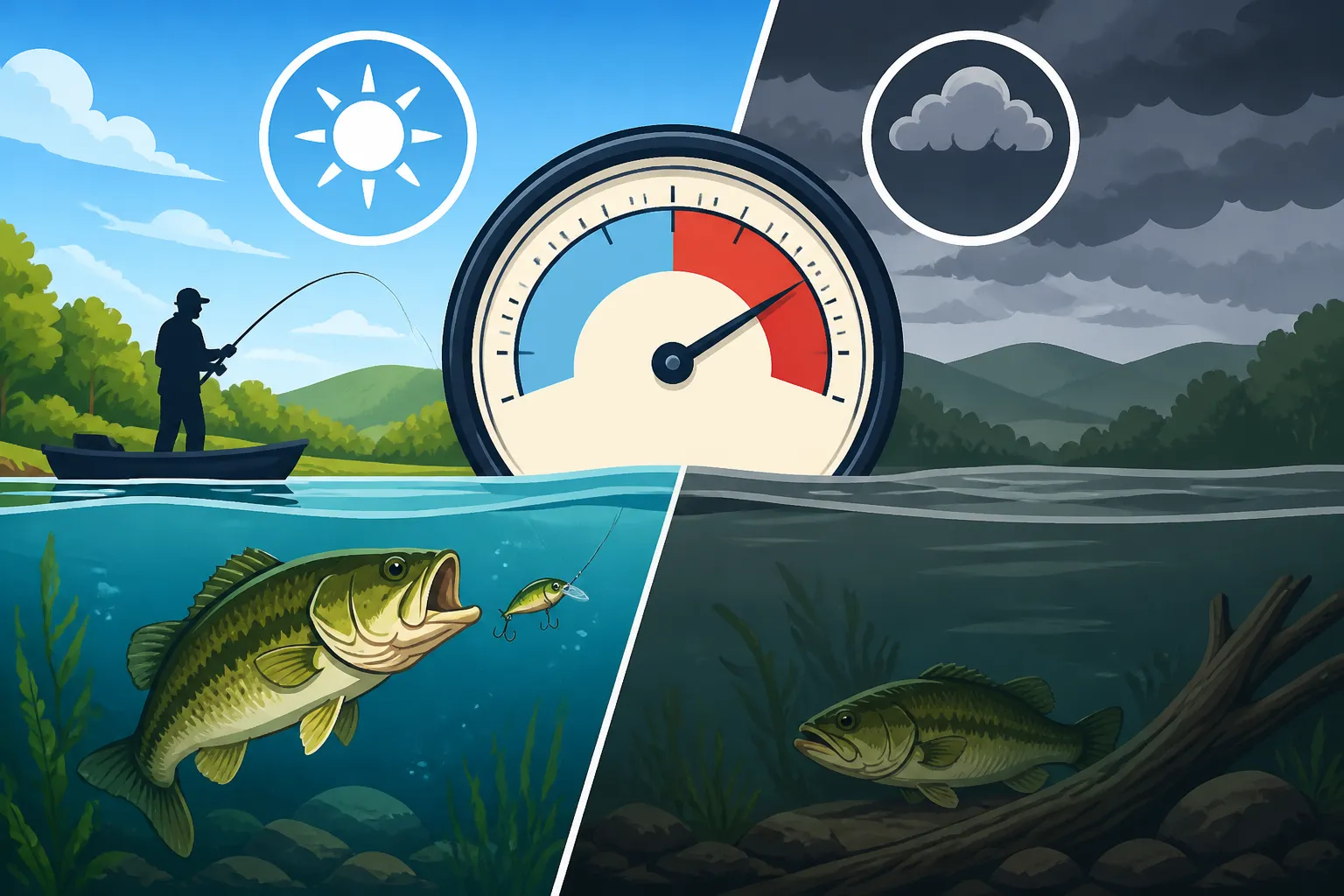
When the barometric pressure is steadily rising, it generally signals improving weather conditions, often following a cold front or storm. For bass, this typically means good news. As pressure increases, the fish feel more comfortable and their swim bladders stabilize. This often leads to increased activity and a more aggressive feeding mood. You'll often find bass moving shallower, feeling more confident, and willing to chase down baits. This is a prime time to target active fish.
During periods of rising pressure, bass are more likely to be found cruising edges, points, and shallow cover as they move up in the water column. They're feeling good, and their metabolism is often boosted, making them opportunistic feeders. If you've been struggling after a storm, a day or two of rising pressure can turn the bite back on. This is when your typical aggressive tactics, like throwing crankbaits or spinnerbaits, really shine. Don't be afraid to cover water and present your lures quickly. You might even find them eager for topwater action in the mornings and evenings. For more tips on active fish, check out our guide on how to Catch Smallmouth Bass in West Virginia Rivers.
Falling Barometric Pressure: The Pre-Front Feeding Frenzy
A falling barometric pressure system is often a precursor to unstable weather, like a rainstorm, thunderstorms, or a cold front moving in. This is perhaps one of the most interesting and often misunderstood pressure shifts for bass anglers. As the pressure begins to drop, bass can become incredibly active, sometimes exhibiting what's known as a "pre-front feeding frenzy." They instinctively sense the impending change and feed heavily, almost as if stocking up before conditions become less favorable.
However, this doesn't last forever. Once the front actually hits and the pressure drops significantly, the bite can shut down hard. So, the key here is to capitalize on that initial drop. During this phase, bass might move to slightly deeper water than usual, but they are still actively feeding. They may be less wary and more willing to strike a wide range of lures. This is often the best time to throw big moving baits, like large swimbaits or oversized spinnerbaits, to entice those aggressive, opportunistic bites. Don't waste time on finesse techniques unless the pressure has already bottomed out. If you're wondering about specific locations, understanding how these conditions impact different bodies of water can make a huge difference, so consider exploring our guide to Best Bass Fishing Spots in West Virginia.
Low Barometric Pressure: The Tough Bite
When the barometric pressure is consistently low, often during or immediately after a severe weather system or a prolonged period of overcast, rainy weather, bass can become lethargic and extremely difficult to catch. This is when their swim bladders are expanded, and they might feel uncomfortable or simply be less inclined to move and feed. Their metabolism slows down, and they might retreat to deeper, thicker cover.
During these challenging periods, aggressive tactics are usually a waste of time. Instead, you need to slow down, scale down, and focus on finesse. Think about subtle presentations, smaller baits, and slower retrieves. This is when a shaky head, a Carolina rig, or a drop shot can really come into their own. Bass will often be buried deep in cover, hugging the bottom, or suspended in the deepest parts of a lake. They aren't going to chase a lure far, so you need to put the bait right on their nose. Targeting structure like submerged timber, rock piles, or deep ledges can be productive. Remember that even in tough conditions, there are always a few bass willing to bite, but you have to work for them.
Stable Barometric Pressure: Predictable and Consistent
Stable barometric pressure, whether it's consistently high or consistently low, offers a degree of predictability. When the pressure holds steady for an extended period, bass tend to settle into a more consistent pattern. If the stable pressure is high, you can expect active, shallower fish. If it's stable but low, you'll still be looking at a tougher bite, but at least the fish won't be as volatile as they are during rapid changes.
The advantage of stable pressure is that you can build a pattern. Once you find what the bass are biting on and where they are holding, you can replicate that success across similar areas of the lake or river. This is the ideal time for experimentation within a general approach. If you're targeting Largemouth Bass Fishing in West Virginia in a stable, high-pressure system, try different colors or retrieves with your favorite topwater or crankbait. If it's stable and low, experiment with various finesse plastics or jig sizes until you crack the code. The fish are less likely to surprise you with sudden shifts in behavior, allowing you to fine-tune your approach.
Fishing Strategies for High, Low, and Stable Pressure
Understanding the theory is one thing, but putting it into practice on the water is where the real challenge lies. Adapting your techniques to the current barometric pressure can be the difference between a frustrating skunk and a memorable day of catching.
High or Rising Pressure Tactics
When the pressure is high and stable, or actively rising, the bass are generally more active and willing to chase. This is your cue to ramp up your presentation and cover a lot of water.
- Aggressive Moving Baits: Think spinnerbaits, ChatterBaits, lipless crankbaits, and medium-diving crankbaits. These lures cover water quickly and appeal to active, feeding fish. Experiment with colors that match the forage, but don't be afraid to try something brighter if the water has a bit of stain. For more ideas on effective lures, check out our guide on Best Crankbaits for West Virginia Smallmouth Bass.
- Topwater: If the conditions are right (low light, calm water, warmer temperatures), high pressure can be fantastic for topwater action. Poppers, walking baits, and buzzbaits can draw explosive strikes as bass feel confident coming to the surface.
- Targeting Structure: Look for bass on points, shallow flats, weed lines, and the edges of structure where baitfish might be congregating. Bass will often push shallower and hold tighter to visible cover like docks, laydowns, or rock outcroppings.
- Retrieval Speed: Generally, a faster retrieve will be more effective during high-pressure situations, mimicking fleeing baitfish and triggering reaction strikes. Don't be afraid to burn a spinnerbait or crankbait, then slow down briefly to see if that triggers a bite.
| Pressure Condition | Bass Behavior | Recommended Tactics | Lure Examples |
|---|---|---|---|
| Rising | Becoming active, moving shallower, aggressive | Cover water, fast retrieves, target edges/flats | Spinnerbaits, Crankbaits, Topwater, Swimbaits |
| Stable High | Active, consistent, shallow to mid-depth | Consistent patterns, aggressive or steady retrieves | Jigs, Worms, Spinnerbaits, Crankbaits |
| Falling | Pre-front feeding frenzy, moving deeper briefly | Aggressive, larger baits, target primary cover | Large Swimbaits, Big Crankbaits, Jerkbaits |
| Stable Low | Lethargic, deep, tight to cover | Slow retrieves, finesse, small baits, precise casts | Drop Shots, Shaky Heads, Carolina Rigs, Jigs |
| Post-Front Low | Very lethargic, deep, inactive | Extreme finesse, vertical jigging, patient | Tiny Jigs, Ned Rigs, Micro-plastics |
Low or Falling Pressure Tactics
When the pressure is dropping or consistently low, a complete shift in strategy is usually warranted. This is when bass become more finicky, shy, and often retreat to deeper, more secure locations.
- Slow Down and Downsize: Forget fast retrieves. Every cast needs to be worked slowly, methodically. Consider smaller baits that present less of a challenge to a lethargic fish. This is the time to really embrace finesse techniques.
- Finesse Presentations: Drop shots, Ned rigs, shaky heads, and Carolina rigs are your best friends. These allow you to present a small, subtle offering directly to the fish without spooking them. Soft plastics in natural colors are often key. For river smallmouth, a well-placed tube jig can also be deadly.
- Target Deep, Thick Cover: Bass will often relate to the deepest available cover or structure when pressure is low. Think deep brush piles, submerged timber, rock ledges, channel swings, and bridge pilings. They'll hug these areas tightly, seeking refuge and comfort. A good fish finder can be invaluable here. Consider visiting Amazon for highly-rated portable models that can help you locate these fish.
- Patience is Key: You might not get many bites, so every tap, every subtle movement of your line needs to be paid attention to. Let the bait sit longer. Work a jig or plastic painstakingly slowly. Sometimes, a "dead stick" retrieve where you let the lure sit motionless for extended periods is what it takes.
- Targeting the Pre-Front Window: If you catch the pressure falling before it gets truly low, that's your chance for a quick flurry of aggressive bites. This is the exception to the slow-down rule. Use larger, reaction baits to capitalize on their urgency before the full front hits.
Adapting to Rapid Pressure Changes
West Virginia's weather can be notoriously fickle, with blue skies turning to thunderstorms in an instant. These rapid pressure changes are often the most challenging. The key is to be flexible and constantly monitor conditions.
- Weather Apps and Portable Barometers: Keep an eye on the forecast, specifically looking at pressure trends. Many modern fish finders also have built-in barometers, or you can find dedicated portable units on sites like Amazon that give you real-time readings. Knowing the pressure is dropping fast can prompt you to switch to those pre-front aggressive tactics.
- Be Prepared to Change Tactics: Don't get stuck on one technique. If the bite suddenly dies after a strong front moves through, immediately switch from your crankbait to a finesse worm. If the sun comes out and the pressure starts to rise, gradually reintroduce more aggressive presentations.
- Observe Fish Behavior: Pay attention to what the fish are telling you. Are they rising? Are they hitting with confidence? Or are you just getting tentative taps? Their willingness to strike is often the most direct indicator of their mood, which is heavily tied to barometric pressure.
For those times when a cold front has shut everything down, reading up on Cold Front Fishing Tactics for West Virginia Bass can provide additional insights and techniques to keep you from going home empty-handed.
Tools and Tips for Tracking Barometric Pressure
While you can feel some weather changes coming, having tools to track barometric pressure explicitly gives you a significant edge in West Virginia bass fishing. These tools don't guarantee a catch, but they certainly help you understand the "why" behind the bite, or lack thereof.
Utilizing Weather Apps and Forecasts
Your smartphone is a powerful tool in your bass fishing arsenal. Most reliable weather apps, like AccuWeather or The Weather Channel, provide detailed hourly forecasts that often include barometric pressure readings or at least pressure trends (rising, falling, steady).
- Hourly Trends: Before you even head out, check the hourly pressure trend. Is it projected to fall throughout the morning? You might want to hit the water early with aggressive baits to catch that pre-front feeding window. Is it rising all day? Plan for a more consistent bite.
- Future Planning: For multi-day trips or weekend outings to spots like the New River Gorge, looking at the extended forecast's pressure trends can help you decide what kind of gear to pack and what strategies might be most effective. If a major low-pressure system is expected, you might focus more on finesse baits and deep water presentations for New River Smallmouth Bass Fishing.
- Limitations: While helpful, standard weather apps might not give you the hyper-local, real-time data that a dedicated barometer can, especially if you're in a remote area of West Virginia where weather can be highly localized.
Dedicated Portable Barometers
For the serious angler who wants precise, real-time data, a dedicated portable barometer is an excellent investment. These devices are specifically designed to measure atmospheric pressure and often track its changes over time.
- Real-time Data: Unlike a forecast, a portable barometer tells you exactly what the pressure is doing right now at your fishing location. This is incredibly valuable for on-the-water adjustments. You can see if the pressure is dropping quickly or holding steady, allowing you to react immediately. Many reputable brands offer these, and you can often find a good selection on Amazon.
- Trend History: Many advanced portable barometers will log pressure changes over the last few hours or even days, giving you a clear visual of the trend. This history is crucial for understanding whether the current pressure is part of a longer stable period, a sharp drop, or a steady rise.
- Ease of Use: Most portable barometers are compact, waterproof, and easy to use. Clip one to your tackle bag, boat console, or even your belt, and take a quick glance every hour or so.
Fish Finders with Barometric Pressure Features
Many modern fish finders, especially the higher-end models, now come equipped with built-in barometric pressure sensors. This integrates valuable weather data directly into your fishing electronics.
- Integrated Data: Having pressure data displayed alongside your sonar readings, GPS maps, and water temperature simplifies your information gathering. You can see how fish are relating to structure and depth, and simultaneously understand the atmospheric context. This can be especially useful on larger impoundments like Summersville Lake, where fish might suspend at different depths depending on pressure.
- Correlation: Over time, by observing your fish finder's pressure readings and your success rate, you'll start to build a personal understanding of how specific pressure trends affect bass in your favorite West Virginia spots. You might notice that bass consistently hold on deep ledges when pressure is low, or move to shallow brush during a sustained high-pressure system. If you're looking for an upgrade, explore the range of Best Fish Finders for West Virginia Lakes available.
- Considerations: While convenient, these built-in sensors might not always be as precise as a dedicated standalone barometer, and their readings can sometimes be affected by the boat's movement or electronics.
Keeping a Fishing Log
This might seem old-school, but combining technology with a handwritten log is a powerful way to truly master the impact of barometric pressure.
- Record Everything: Note the date, time, location, water temperature, water clarity, weather conditions, and, most importantly, the barometric pressure and its trend. Record what lures you used, where you caught fish (depth, cover type), and if you didn't catch anything, note that too.
- Identify Patterns: Over weeks, months, and even years, you'll start to see clear patterns emerge. You might discover that during a specific falling pressure scenario on the Kanawha River, a specific color of crankbait consistently works, or that during stable low pressure, the fish are always holding tight to particular rock piles.
- Personalized Insights: While general rules about pressure are helpful, every body of water and even different seasons can have unique nuances. Your fishing log will help you develop insights specific to your fishing grounds and experiences. This personalized data is invaluable and can’t be found in any guide or app. For example, you might discover that a specific tactic for Night Fishing Techniques for West Virginia Lakes performs exceptionally well during a particular pressure range.
By combining these tools and the knowledge shared here, you'll not only understand how barometric pressure affects West Virginia bass fishing but also confidently adapt your approach, leading to more rewarding days on the water.
Disclaimer
This article is for general informational purposes only and does not constitute professional advice. Laws, prices and regulations vary by location and change over time. Consult a qualified professional for guidance on your specific situation.