Best technique for fishing pocket water
There's nothing quite like the rush and challenge of fishing West Virginia's countless mountain streams, but let's be honest, those fast-moving, boulder-strewn sections known as "pocket water" can feel incredibly intimidating. You see all that turbulent water, the swirling eddies, and the hidden rocks, and it's easy to just walk on by, thinking it's too difficult to fish effectively. However, pockets are often fish magnets, and mastering the art of fishing them will unlock some of the most productive and exciting angling experiences the Mountain State has to offer. This guide will walk you through the nuances of identifying, approaching, and successfully fishing these dynamic stretches of water, turning frustration into triumph.
Understanding West Virginia's Pocket Water Environment
Before we even think about casting, it's crucial to truly understand what pocket water is and why it's so inviting for fish, particularly in the unique hydrological landscape of West Virginia.
What Exactly is Pocket Water?
Imagine a mountain stream, tumbling down a gradient, interrupted by a jumble of rocks, boulders, and fallen timber. The current crashes against these obstructions, creating small, relatively calmer areas immediately downstream or alongside them. These calmer areas, or "pockets," are where the magic happens. They're often characterized by swirling currents, slight depressions in the streambed, and a general chaos of water movement that, to an angler, can look overwhelming. But look closer. These aren't just random spots; they're microhabitats. They might be just a few square feet or extend for several yards, but they all share the common trait of offering refuge from the main current while still being part of the nutrient highway. In West Virginia, you'll encounter fantastic pocket water sections on streams like the Cranberry River, Shavers Fork, and countless smaller tributaries weaving through the Monongahela National Forest, especially in areas with significant gradient and rocky bottoms.
Fishing these areas effectively demands a different mindset and set of skills than, say, drifting a fly through a long, slow pool or covering large expanses of a broad river. It's about precision, short-game tactics, and understanding how fish utilize these chaotic-looking spots to their advantage. When you learn to decipher the subtle cues within these turbulent sections, you'll start to see them not as obstacles, but as prime fishing locations.
Why Pocket Water Holds Fish
So, why do fish love these seemingly turbulent pockets? It boils down to three primary needs: food, oxygen, and cover.
Firstly, food delivery is constant. The main current acts like a conveyor belt, constantly bringing insects, crustaceans, and other forage downstream. The pockets, being slightly calmer, allow fish to sit comfortably out of the strongest flow, expending minimal energy, while still being perfectly positioned to snatch passing meals. Imagine a buffet table moving right past your seat – that's what a pocket offers a fish. This is especially true for West Virginia's trout – your native brook trout, as well as stocked rainbow and brown trout – who are opportunists constantly looking for an easy meal without having to fight a strong current. Smallmouth bass, too, will ambush prey from the edges of these pockets, using the broken water to hide their presence.
Secondly, oxygen levels are typically high. The turbulent nature of pocket water constantly mixes air into the water, ensuring a healthy oxygen supply. This is particularly crucial during warmer months when slower, deeper pools might suffer from lower oxygen concentrations. These highly oxygenated pockets become vital refuges, keeping fish active and feeding even when conditions elsewhere in the stream might be less favorable. This makes pocket water an excellent option for Spring Trout Fishing Techniques for West Virginia Streams and even during the warmer parts of summer.
Lastly, cover and concealment are abundant. The very boulders and structures that create the pockets also provide excellent hiding spots from predators (both avian and terrestrial) and from the prying eyes of anglers. Fish can dart out from behind a rock to grab food, then quickly retreat to safety. The broken surface of the water also makes it incredibly difficult for fish to see you, the angler, giving you a significant advantage if you approach stealthily. It’s like their own little fortress, making them feel secure enough to feed aggressively.
Essential Gear for Tackling Pocket Water
Alright, now that we know why fish love pocket water, let's talk about the tools you'll need to effectively target them. You might be surprised that it's less about heavy artillery and more about finesse and maneuverability.
Rod, Reel, and Line Selection
For pocket water, less is often more, especially when it comes to rod length.
Rods: A shorter rod, typically 7 to 8.5 feet for spinning gear or 7 to 9 feet for fly fishing, is your best friend. Why? Because you'll often be fishing in tight quarters, surrounded by trees and brush, and making short, precise casts. A long rod becomes a liability, snagging on everything. For spin fishing, a light to medium-light action rod will give you the sensitivity to detect subtle bites and the backbone to handle fish in current. Check out options for Best Spinning Rods for Smallmouth Bass which can often double for trout, especially if you go with a lighter power. For fly anglers, a fast-action 3-weight or 4-weight fly rod will give you the control you need for accurate short casts and quick line pickups. Something like the ones mentioned in Best Fly Rods for West Virginia Trout Streams would be ideal.
Reels: Match your reel to your rod. For spinning, a lightweight reel in the 1000-2000 size range is perfect. It should have a smooth drag system, as even small trout can put up a surprisingly strong fight in fast currents. For fly fishing, a simple click-and-pawl or disc drag reel that balances your rod is sufficient; you'll be doing most of your fighting with the rod and line, not the reel.
Line: For spinning, 4-6 lb monofilament or fluorocarbon is usually ideal. Monofilament offers a bit of stretch and is generally more forgiving, while fluorocarbon is nearly invisible in the water and more sensitive. Some anglers prefer a thin braided line with a fluorocarbon leader for maximum sensitivity and casting distance, especially when throwing small lures. For fly fishing, a weight-forward floating line that matches your rod weight is standard. Your leader setup is crucial: a shorter, heavier leader (like 7.5 feet, 3X or 4X) turns over flies more easily in windy conditions and quickly gets your fly down in the pockets. You can buy these leader systems on Amazon or at your local fly shop. Don't forget a couple of spools of tippet (4X-6X) to adjust to different conditions.
Wading Gear and Safety
Fishing pocket water means getting in the water. Good wading gear isn't just about comfort; it's about safety, especially on slippery West Virginia stream beds.
Waders: Chest waders are almost a necessity, as you'll be crossing deeper sections and standing in currents that might go above your waist. Look for breathable waders, as you'll often be hiking to reach prime spots, and you don't want to get overheated. The material should be durable enough to withstand brush and occasional scrapes against rocks.
Wading Boots: This is perhaps the most critical piece of gear. Felt soles offer incredible grip on slick, algae-covered rocks, but they can pick up invasive species (check local regulations about felt). Rubber soles, especially those with aggressive patterns or studded with carbide, are another excellent choice for traction and are often preferred for their environmental benefits. Whatever you choose, make sure they provide excellent ankle support, as you'll be navigating uneven terrain. Best Waders for West Virginia Trout Streams provides more specific recommendations that are perfect for this type of fishing.
Wading Staff: Never, ever, underestimate the value of a good wading staff. It provides a third point of contact, drastically increasing your stability in strong currents and on uneven bottoms. It can also be used to probe the depth ahead of you and check for slippery spots. Collapsible staffs are convenient for carrying when not in use. You can find sturdy, reliable wading staffs on Amazon, making them easy to acquire. Given the swift currents and rocky bottoms typical of West Virginia's mountain streams, a wading staff is truly a non-negotiable safety item. Best Wading Staff for Fast Mountain Streams will guide you to some excellent choices.
Go-To Lures and Flies
The right presentation is crucial in pocket water, and that means having versatile, compact lures and flies.
For Spin Fishing:
- Small Inline Spinners: Think classic Mepps Aglias or Panther Martins. Sizes #0 to #2 are often perfect. The flash and vibration mimic small baitfish or insects being swept downstream, making them irresistible. Gold, silver, and black are all reliable colors.
- Small Jigs: Marabou jigs or small soft plastic grubs rigged on 1/16 oz to 1/8 oz jig heads are incredibly effective. They sink quickly into pockets and can be bounced along the bottom. Colors like white, black, olive, or natural crawfish patterns work well.
- Tiny Crankbaits/Stickbaits: Micro crankbaits that dive only a foot or two can be deadly in slightly deeper pockets or around submerged structure. Choose realistic baitfish patterns.
For Fly Fishing:
- Nymphs: This is where you'll find the most success. Heavy, bead-head nymphs like Pheasant Tails, Hare's Ears, Stoneflies (e.g., Prince Nymph), and Caddis Larva patterns are essential. Sizes #12-18 are good starting points. You need them to get down quickly in the turbulent water.
- Dry Flies: While less common for direct pocket fishing, having some attractor dries (like a Royal Wulff or an Elk Hair Caddis in sizes #12-16) can be useful for prospecting or if you see fish rising in a calmer eddy within the pocket.
- Streamers: Small woolly buggers (black, olive, white) in sizes #8-12 can imitate baitfish or leeches and are great for probing deeper pockets.
Remember to have a Best Tackle Box Setup for West Virginia Anglers or a fly box that is organized and easily accessible, as you'll likely be changing presentations frequently.
Mastering the Techniques for Pocket Water Success
Now for the fun part: actually fishing these dynamic stretches. It requires a blend of observation, precise execution, and a bit of stealth.
Reading the Water for Prime Pockets
The most successful pocket water anglers are masters of observation. They don't just cast blindly; they "read" the water, looking for the most likely holding spots.
Identify Current Breaks: Any obstruction in the current creates a break. This could be a large boulder, a log, or a shelf in the streambed. Fish will almost always sit just downstream of these breaks, where the current is slower, allowing them to rest while still being close to the food conveyor. The "head" of the pocket, where the fast water first hits the obstruction, is also a prime feeding lane.
Look for Seams and Eddies: The line where fast water meets slow water is called a "seam." These are superhighways for food and perfect ambush points. Eddies are swirling currents, often found behind large rocks or on the inside bends. Fish will sit in the calmer water of an eddy, letting the current bring food to them.
Spot Deeper Water: Even a small increase in depth within a pocket can be a major holding spot, providing both cover and thermal refuge. Look for darker patches of water or areas where the current seems to slow slightly before picking up again. In many West Virginia streams, these deeper pockets might only be a couple of feet deep, but that's enough for a good-sized fish.
Take your time to scout a section before you cast. Often, the best pockets are not obvious at first glance. Watch the current, see how it flows around obstacles, and visualize where a fish might comfortably lie in wait.
Presentation is Key: Casting and Drifting
Because of the turbulent nature of pocket water and the short distances involved, your casting and presentation techniques will differ from open water.
Short, Accurate Casts: Forget long, graceful casts. You need to be accurate and efficient. For spin fishing, short pitches and underhand casts are common. For fly fishing, roll casts, steeple casts, and even bow-and-arrow casts are invaluable for getting your fly into tight spots without snagging. The goal is to land your lure or fly just upstream of where you think a fish is holding, allowing it to drift naturally into the strike zone. You want minimal line on the water to reduce drag.
High-Sticking and Line Management (Fly Fishing): If you're fly fishing with nymphs, "high-sticking" is a critical technique. This involves holding your rod tip high, keeping as much fly line as possible off the water, and allowing only your leader and fly to drift freely. This minimizes drag (the unnatural pulling of your fly by conflicting currents) and ensures a natural presentation. Mend your line frequently to maintain a drag-free drift. You'll often be using split shot or weighted flies to get your presentation down quickly in the fast currents.
Targeting the Seams and Eddies (Spin and Fly): Cast upstream of a seam or eddy and let your lure/fly drift into it. For spin fishing, a spinner or small jig retrieved just fast enough to impart action but slow enough to stay in the strike zone is often deadly. Work all angles of the pocket: from upstream, from downstream, and from the side. Fish can be anywhere. Make sure to present your offering multiple times from different angles before moving on, as fish might not see it on the first pass or might need a little convincing.
Stealth and Approach
In small, clear mountain streams, fish are incredibly wary. Your approach is often more important than your cast.
Stay Low, Move Slow: Don't stomp along the bank or wade carelessly. Move slowly and deliberately. Wear neutral-colored clothing that blends with the environment. If you can, stay out of the water and cast from the bank, or wade carefully up the middle if the stream allows. The less you spook the fish, the better your chances.
Work Upstream: Generally, it's best to fish upstream. This allows you to approach fish from behind, as they typically face into the current looking for food. It also keeps any dislodged debris or mud from floating down into the sections you plan to fish next. Fishing upstream also allows for more natural, drag-free drifts as your line is less likely to be pulled by faster currents between you and your fly.
Fish the Water Thoroughly: Pockets can be small, but they often hold multiple fish or one surprisingly large one. Don't just make one cast and move on. Fan cast the pocket, hitting different angles and depths. Let your lure or fly drift through the heart of the pocket, along the edges, and into any little eddies you can find. It’s methodical, patient work, but it pays off.
Common Species and Seasonal Considerations
Understanding which fish you're likely to encounter and how seasons affect pocket water fishing will further refine your approach.
Target Species in West Virginia Pockets
West Virginia's pocket waters are predominantly known for two fantastic game fish: trout and smallmouth bass.
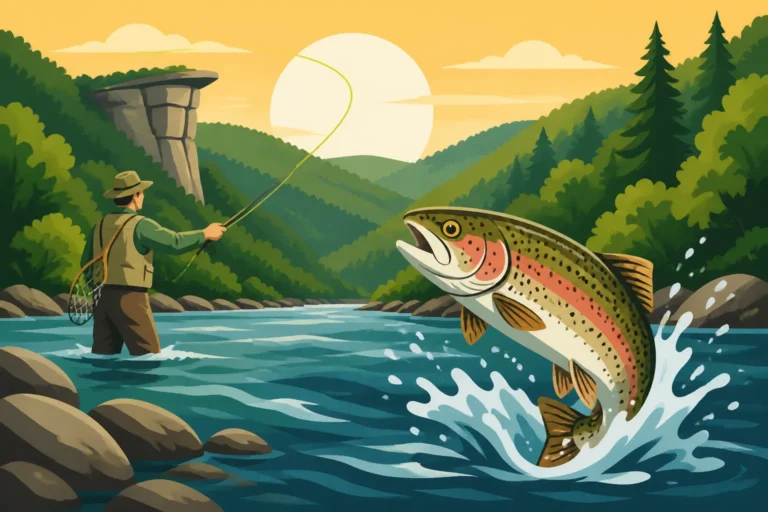
Trout (Brook, Rainbow, Brown): These are the quintessential residents of West Virginia's cold, clear mountain streams.
- Brook Trout: Our native state fish, brook trout, are often found in the smaller, higher-elevation pocket waters. They are beautiful, aggressive, and will readily strike small offerings. They tend to be smaller, but catching a wild brook trout from its natural habitat is a truly rewarding experience. Learn more about Brook Trout: West Virginia's Native and State Fish.
- Rainbow and Brown Trout: These are primarily stocked in many West Virginia trout streams, though wild populations of brown trout can exist in some areas. They're often found in the larger pocket water sections of stocked rivers and streams. They can grow to impressive sizes and offer fantastic fights, especially in fast currents. If you're looking for Best Trout Streams in West Virginia, many of them will feature excellent pocket water.
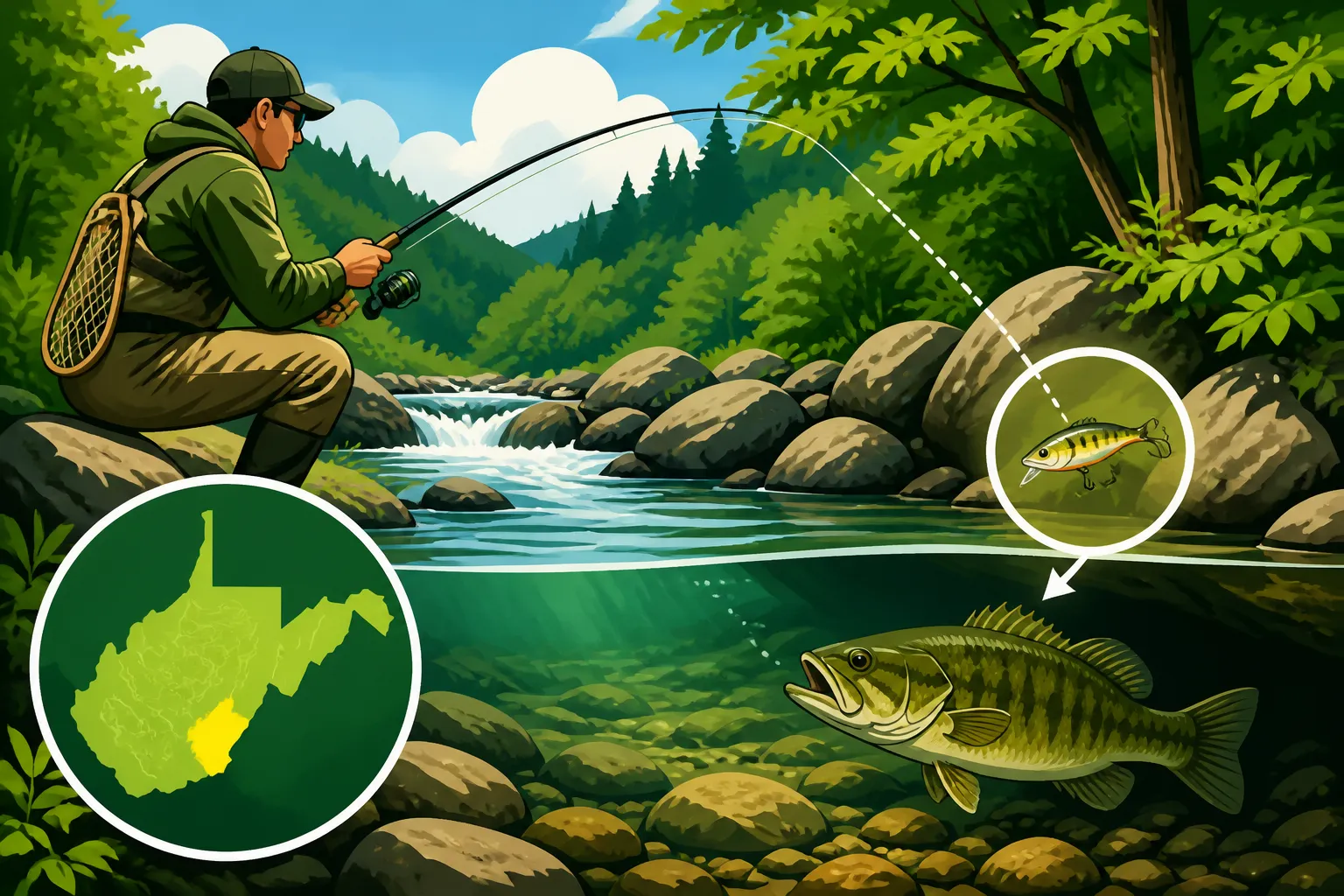
Smallmouth Bass: While trout prefer colder waters, smallmouth bass thrive in slightly warmer, rockier rivers at lower elevations. Rivers like the New River, the Greenbrier, and the South Branch Potomac are famous for their feisty smallmouth, and they absolutely love pocket water. They'll use the current breaks to ambush crayfish and baitfish. Fishing for How to Catch Smallmouth Bass in West Virginia Rivers often involves targeting these turbulent areas. Their aggressive strikes and powerful fights make them a blast to catch in these dynamic environments.
Adapting to Different Seasons
The same pocket water can fish very differently depending on the time of year.
Spring Runoff (High Water): In early spring, during snowmelt or heavy rains, streams can be high and cold. Fish will often push out of the main current and tuck into the edges of pockets, seeking slower water and refuge from the strongest flows. Deeper pockets can become prime holding spots. Use heavier weights to get your offerings down, and focus on the slower seams closest to the bank. This is also a fantastic time for Spring Trout Fishing Techniques for West Virginia Streams.
Summer Low Flows (Clear Water): As summer progresses, water levels drop, and streams become clearer and warmer. Fish become incredibly wary. Stealth is paramount. Focus on fishing early mornings or late evenings when water temperatures are cooler and light is lower. Fish will still be in pockets, but they might be tucked deeper under cover or in the shadiest spots. Use smaller lures and flies, lighter leaders, and make incredibly precise, drag-free presentations. When West Virginia trout streams get too warm to fish is a real concern, so seek out shaded, higher elevation pocket waters during the dog days of summer.
Fall Fishing (Moderate Flows): Fall often brings stable water levels and cooler temperatures, making it a fantastic time for pocket water. Fish are actively feeding to put on weight for winter. Both trout and smallmouth can be very aggressive. Look for fish in the usual current breaks and eddies, and don't be afraid to experiment with slightly larger presentations, as they'll be more willing to chase. This season provides excellent opportunities for trout, especially as they prepare for spawning.
| Pocket Water Condition | Target Species | Recommended Gear | Key Technique | Notes |
|---|---|---|---|---|
| High/Fast Water | Trout, Smallmouth | Heavier jigs (1/8-1/4 oz), weighted nymphs, 6-8lb line, Shorter rod (7-8ft) | Focus on slack water, bank eddies, use heavier weight to get down, minimize drag. | Fish hug edges and behind largest obstructions. |
| Low/Clear Water | Trout, Smallmouth | Small spinners (#0-1), unweighted nymphs, micro jigs, 4-6lb line, Longer leader/tippet (7.5-9ft, 5X-6X) | Stealth paramount, precise short casts, upstream approach, perfect drag-free drifts. | Fish are easily spooked; consider small profile lures/flies. |
| Moderate Flow | Trout, Smallmouth | Standard spinners (#1-2), bead-head nymphs, small crankbaits, 6lb line | Work all parts of the pocket, experiment with retrieve speeds/drifts, aggressive strikes. | Excellent all-around conditions, fish are active. |
| Tight Quarters/Brush | Trout, Smallmouth | Shorter rod (6-7.5ft), soft plastics, roll casts (fly), underhand pitches (spin) | Focus on accuracy, bypass overhead casting, use bow-and-arrow casts where necessary. | Patience and precise placement are more important than distance. |
Conclusion
Fishing pocket water in West Virginia isn't just a technique; it's an adventure. It challenges you to read the water, hone your casting precision, and embrace a stealthy approach. The rewards, however, are immeasurable. There’s a special satisfaction that comes from coaxing a beautiful brook trout or a feisty smallmouth bass out of a turbulent, boulder-strewn pocket. With the right gear, a thoughtful approach, and a good understanding of why fish choose these dynamic habitats, you'll transform those intimidating sections into your favorite fishing grounds. So, grab your wading staff, tie on a small jig or nymph, and go unlock the secrets of West Virginia's amazing pocket waters.
Disclaimer
This article is for general informational purposes only and does not constitute professional advice. Laws, prices and regulations vary by location and change over time. Consult a qualified professional for guidance on your specific situation.