Where to catch smallmouth bass on the New River
Trying to navigate the vast and powerful New River in West Virginia to find those elusive smallmouth bass can feel like searching for a needle in a haystack, especially when you're not familiar with its miles of complex rocky habitat. It's easy to get overwhelmed by the sheer size and diverse conditions this ancient river offers. This comprehensive guide is here to cut through the confusion, pinpointing the best locations and detailing effective strategies to help you successfully target smallmouth bass on the iconic New River.
Unlocking the New River's Smallmouth Secrets: Understanding Their Preferred Lairs
The New River is truly unique, carving its way through West Virginia with an ancient wisdom that has shaped incredible fishing opportunities. To consistently find smallmouth bass here, you need to think like one – understanding what drives them to certain spots is key. It's not just about casting aimlessly; it's about interpreting the river's language of rock, current, and structure.
The Allure of Rock, Current, and Structure
Smallmouth bass are quintessential river fish, and their lives revolve around current and structure. On the New River, this means they're intrinsically drawn to anything that breaks the flow, provides ambush points, or offers shelter from predators. Think of massive boulders, jagged rock ledges, hidden crevices, and even submerged timber that has fallen into the water. These aren't just random features; they're prime real estate for smallmouth.
The New River's geology is predominantly rocky, a testament to its age. This creates an endless maze of potential hiding spots. You'll find extensive boulder fields, bedrock shelves that drop off into deeper pools, and intricate networks of smaller rocks and gravel. Smallmouth will position themselves just out of the main current, in the "sweet spots" where they can dart out to ambush passing prey without expending too much energy fighting the flow. These current breaks might be behind a large submerged rock, in the eddy line downstream from a point, or along the subtle seams where faster water meets slower water.
The significance of these features cannot be overstated. An eddy, for example, might seem calm, but its true value lies in its proximity to fast water. Baitfish get disoriented in the current and often drift into these calmer areas, making them easy targets for a waiting smallmouth. Similarly, deep pockets carved out by years of erosion offer safety and cooler water during warmer months, while submerged logs and brush piles provide excellent cover for both predator and prey. Learning to identify these subtle transitions and prime pieces of structure is the first step in unlocking the river's potential.
Decoding Water Conditions and Seasonal Movements
Beyond static structure, the dynamic nature of the New River's water conditions plays a massive role in where smallmouth bass choose to reside. Water levels, clarity, and temperature are constantly fluctuating, and understanding their impact helps you predict fish movements and pinpoint productive areas. A spot that was hot last week might be barren today if the river conditions have drastically changed.
For instance, during periods of high water, smallmouth often move closer to the banks, seeking refuge from the strong currents in calmer shoreline eddies, flooded vegetation, or behind larger obstructions. Conversely, in low, clear water conditions, they tend to pull back into deeper pools, under shady overhangs, or into the fastest, most oxygenated riffles where they feel less exposed to aerial predators. Water temperature also dictates their activity level and location; they'll seek cooler, deeper water in the scorching summer and congregate in deeper, stable pools during the coldest parts of winter.
Seasonal patterns dictate larger movements. In early spring, smallmouth will begin to stage in slightly deeper, calmer areas adjacent to their spawning grounds, which are typically gravelly flats or rocky shoals. After the spawn, they'll spread out, recovering from their arduous task before moving into their summer patterns. As fall approaches, they engage in aggressive feeding frenzies, gorging themselves in preparation for winter, often becoming more active in shallower, current-heavy areas where baitfish are abundant. Checking the Best Time of Year to Fish in West Virginia can provide more detailed insights into these seasonal shifts, helping you plan your trips for optimal success.
Prime New River Hotspots for Trophy Smallmouth
The New River is a long and varied fishery, stretching for miles through West Virginia. While smallmouth can be found throughout, certain sections and specific access points consistently offer exceptional opportunities for both numbers and trophy-sized fish. Knowing these hotspots can significantly increase your chances of a memorable day on the water.
The Southern Stretches: Hinton to Prince
The southern portions of the New River in West Virginia, from Hinton down through the stretches leading into the upper reaches of the New River Gorge, offer fantastic smallmouth opportunities. This section often presents a more accessible fishing experience, particularly for those who prefer to wade. Here, the river still maintains a powerful flow but can be a bit less intensely rugged than the deeper gorge sections, with a good mix of long runs, productive riffles, and classic pool habitats.
One standout area in this region is the tailwaters below Bluestone Dam. The colder, oxygen-rich water released from Bluestone Lake creates an ideal environment for smallmouth, often leading to excellent fishing, especially during warmer months when upstream waters might be less productive. Anglers often find success targeting the seams and eddies just below the dam itself, or working the numerous rock piles and gravel bars that characterize this stretch. Access around Hinton is generally good, with public boat ramps and ample opportunities for shore and wade fishing, provided you exercise caution around the swift current. The sections near the town of Prince also provide excellent, varied water, with plenty of current breaks and rocky structure for smallmouth to hide in. These areas are truly some of the New River Smallmouth Bass Fishing gems.
Navigating the New River Gorge National Park and Preserve
This is perhaps the most famous and challenging stretch of the New River, offering unparalleled beauty and the chance at truly massive smallmouth bass. The New River Gorge National Park and Preserve encompasses miles of remote, wild river, characterized by dramatic cliffs, powerful rapids, and incredibly productive rocky habitat. While accessing and fishing these waters requires careful planning and often specialized gear, the rewards can be extraordinary.
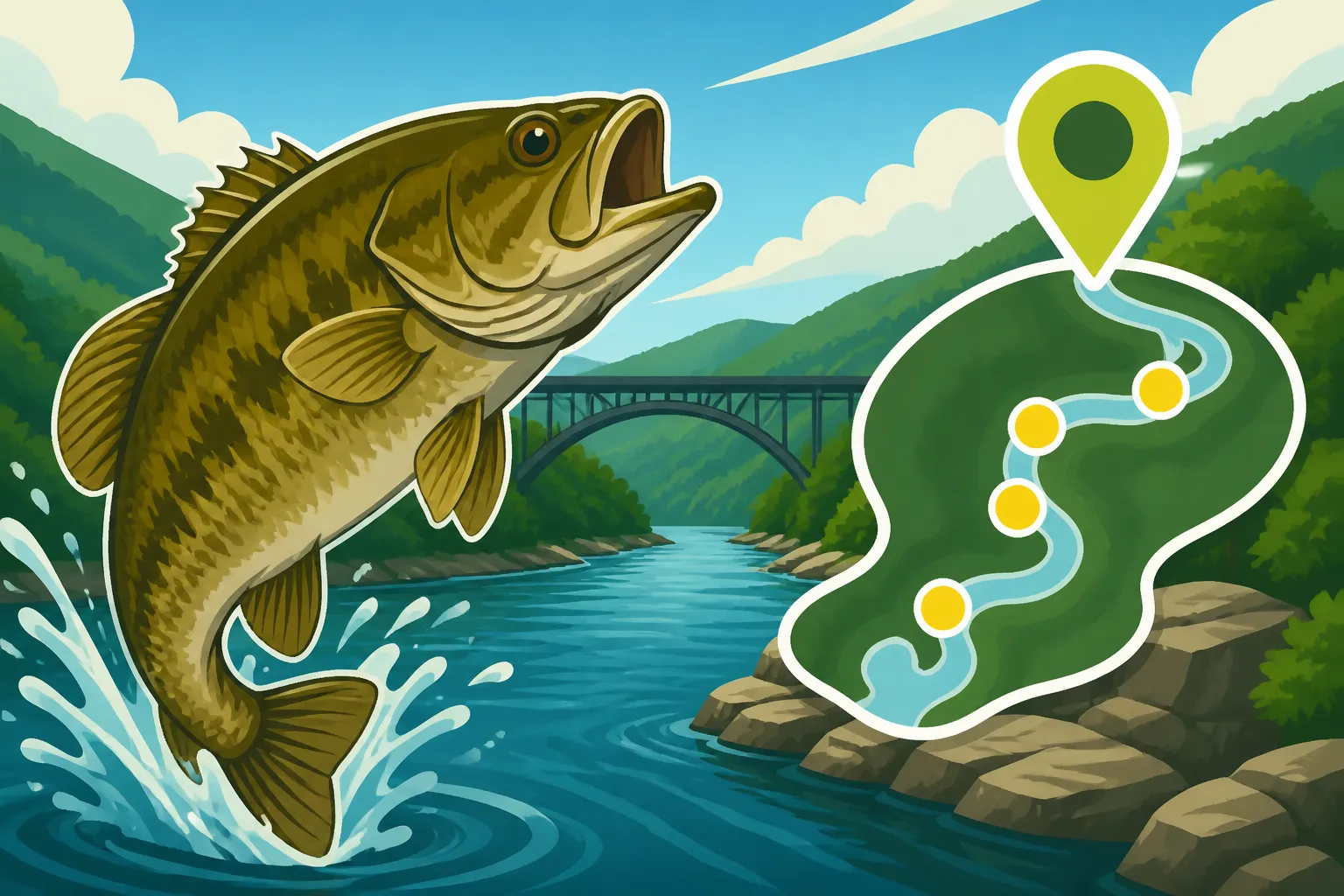
Key access points within the gorge include Fayette Station, Glade Creek, Thurmond, and Cunard. Fayette Station, with its iconic bridge and diverse water, is a popular spot, featuring both fast runs and deep pockets. Glade Creek offers access near its confluence with the New, providing varied structure where the two bodies of water meet. Thurmond, a historic coal town, also provides access to varied river conditions. For a more remote, though challenging, experience, the areas around Sandstone Falls can be incredibly productive, requiring significant effort to reach but offering stunning scenery and potentially unpressured fish. The park's regulations also include a unique New River smallmouth bass slot limit in inches for smallmouth bass in certain sections, so make sure to review those before heading out.
Given the complexities of this powerful and remote section, many anglers find it immensely beneficial to fish with a local guide. If you're looking to tackle the more challenging sections of the New River Gorge, especially with its complex whitewater and remote access, consider booking a trip through a reputable platform like FishingBooker. They connect you with experienced local guides who know these waters like the back of their hand, providing invaluable expertise and ensuring a safe, productive trip. For a deeper dive into these locations, explore the full New River Gorge Fishing Guide and check out the New River Gorge National Park Fishing Access Points to plan your adventure.
Lower River Exits: Gauley Bridge and Beyond
As the New River exits the dramatic confines of the gorge and approaches its confluence with the Gauley River at Gauley Bridge, its character begins to shift. While still retaining a strong current, this section often sees the river widen, and while still incredibly rocky, the powerful rapids of the gorge begin to give way to more manageable flows. This transition creates new types of smallmouth habitat that can be highly productive.
In these lower stretches, you'll find expansive flats, larger, slower pools interspersed with swift runs, and an increased presence of larger submerged timber and even occasional bridge pilings that break the current. Smallmouth will adapt to these conditions, often holding in deeper eddies or along the current seams created by these larger features. The influence of the Gauley River, especially after significant rainfall, can impact water clarity and temperature, which are factors to consider when fishing this area. Access points become a bit less sparse here, but a keen eye for structure and current breaks is still paramount to finding those hidden smallmouth. This section often gets less pressure than the heart of the gorge, making it a potentially rewarding area for exploration.
Essential Tactics and Gear for New River Smallmouth
Catching smallmouth bass on the New River isn't just about showing up; it's about employing the right tactics with the right gear. The river's unique environment demands a specific approach to tempt its feisty bronzebacks. From choosing the perfect lure to selecting your mode of transportation, every decision can impact your success.
Lures, Baits, and Presentations That Produce
New River smallmouth are aggressive predators, and they respond well to a variety of lures and baits that imitate their natural forage. The key is understanding when and where to use each one, adapting your presentation to the specific structure and current you're fishing. For a full breakdown of options, be sure to check out Best Baits for Smallmouth Bass on the New River.
Tube jigs, often in natural colors like green pumpkin, brown, or black, are absolute staples. Rigged on a jig head, they mimic crayfish – a primary food source for New River smallmouth – and are deadly when dragged, hopped, or drifted along the bottom through rocky areas and current seams. Grubs, either single-tailed or double-tailed, on a similar jig head, are another go-to, particularly effective in moderate current. Crankbaits, especially those designed to dive to specific depths, are excellent for covering water and triggering strikes as they deflect off submerged rocks and ledges. Chartreuse, natural crawfish patterns, and shad colors are often productive. Jerkbaits, retrieved with a "twitch-twitch-pause" cadence, can be irresistible in clearer water, mimicking wounded baitfish.
When fishing faster water and riffles, spinnerbaits and inline spinners can be highly effective, their flash and vibration attracting aggressive smallmouth. Topwater lures, such as poppers, walking baits, and buzzbaits, provide exhilarating strikes during low-light conditions (dawn, dusk) or overcast days, especially when fish are feeding actively near the surface. Finally, don't overlook live bait. Hellgrammites and live crayfish, where legal and accessible, are natural smallmouth magnets and can be presented effectively with a simple hook and split shot rig. Mastering these presentations is key to consistently catching these hard-fighting fish. Many of these techniques are detailed further in How to Catch Smallmouth Bass in West Virginia Rivers.
Choosing Your Vessel: Wade, Kayak, or Powerboat
How you choose to access and navigate the New River will significantly influence your fishing experience and the types of spots you can effectively target. Each method – wading, kayaking, or using a powerboat – has its own advantages and limitations on this challenging river.
Wading offers unmatched stealth and the ability to meticulously pick apart specific pieces of water. It allows you to get into prime positions that boats might struggle to reach, especially in shallower riffles and around complex boulder gardens. However, wading requires good physical stamina, proper safety gear like a wading staff, and is limited by water depth and current strength. Always prioritize safety and know your limits, especially in faster sections.
Kayaks, particularly those designed for river fishing, strike a fantastic balance. They are relatively stealthy, can navigate significant stretches of water, and allow anglers to access spots inaccessible to larger boats, including many areas within the New River Gorge. Pedal-drive kayaks offer hands-free propulsion, which is a huge advantage when fishing current. Sit-on-top kayaks provide stability and ample storage. When choosing your kayak, consider durability and maneuverability in current, as well as storage for gear. Check out our guide on the Best Kayak for the New River for detailed recommendations. For those new to kayak fishing on a powerful river, a guided trip can be invaluable. FishingBooker can help you find experienced guides who specialize in kayak fishing on the New River, offering safe and productive outings.
Powerboats, typically jet boats on the New River due to its shallow and rocky nature, offer the ability to cover vast distances quickly. This is ideal for exploring multiple distant spots or accessing remote sections of the gorge. However, jet boats are noisy, can be costly, require significant skill to operate safely in the New's challenging rapids, and can be limited by extreme low water conditions. They offer a unique way to experience the river's grandeur, but often require specialized knowledge.
| New River Smallmouth Spot | Key Characteristics | Best Access Method(s) | Target Lures/Baits |
|---|---|---|---|
| Bluestone Tailwaters | Cooler, oxygenated water, mixed rock/gravel, strong current | Wade, Drift Boat | Tube jigs, crankbaits, live minnows |
| Fayette Station | Rocky gorge section, moderate to fast current, deep pools | Kayak, Wade (limited) | Topwater, jerkbaits, crayfish imitations |
| Sandstone Falls | Scenic, powerful current, large boulders, remote | Kayak (portage), Jet Boat (specialized) | Heavy jigs, swimbaits, large crankbaits |
| Glade Creek | Tributary influence, mixed rock/timber, varied current | Wade, Kayak | Tube jigs, grubs, spinnerbaits |
| Thurmond | Historic area, varied structure, access for smaller boats | Kayak, Jon Boat | Crankbaits, jigs, soft plastics |
Navigating Regulations and Seasonal Opportunities
Fishing the New River, like any major waterway, isn't just about finding the fish; it's also about understanding and respecting the rules and the natural rhythms of the seasons. Adhering to regulations ensures the fishery remains healthy for generations to come, and knowing when to go can make all the difference between a good trip and a truly exceptional one.
Understanding West Virginia's Fishing Rules
Before you even wet a line in the New River, it’s absolutely crucial to familiarize yourself with West Virginia’s fishing regulations. These rules are in place to protect fish populations and ensure sustainable fishing for everyone. This includes understanding state-wide licensing requirements, general creel and length limits, and any special regulations specific to the New River itself, particularly within the New River Gorge National Park and Preserve.
You'll need a valid West Virginia fishing license, which can be purchased online through the DNR website or from various license agents. It’s always a good idea to carry a physical copy or have access to a digital version on your phone. Beyond the general state rules, the New River has specific regulations, such as the aforementioned slot limit for smallmouth bass in certain sections of the Gorge. This means fish within a particular size range must be immediately released to help promote trophy fish growth. Failing to abide by these rules can result in fines and other penalties, so always consult the most current West Virginia Fishing Regulations Explained summary before your trip. Our comprehensive West Virginia Fishing License Guide for 2026 offers all the details you’ll need to ensure you’re legally covered.
Peak Seasons and Weather Considerations
While you can catch smallmouth bass on the New River year-round, certain seasons offer peak opportunities due to the fish's behavior and environmental conditions. Understanding these patterns, along with how weather influences the river, will significantly improve your chances of success. Each season brings its own charm and challenges, dictating specific tactics and locations.
Spring, particularly from April through June, is often considered prime time. As water temperatures rise, smallmouth become increasingly active, moving into shallower areas to feed before and after the spawn. This is a period of aggressive feeding and often some of the best topwater action. Summer can be excellent, especially during morning and evening hours, or by targeting deeper pools and current breaks during the heat of the day. Fall, from September into November, provides another surge of activity as smallmouth feed heavily in preparation for winter, offering fantastic fishing, often with fewer crowds.
Beyond the seasons, daily weather and river conditions are paramount. Heavy rains can cause the river to rise quickly and become muddy, making fishing challenging. Conversely, prolonged periods of dry weather can lead to low, clear water, requiring more stealth and finesse. Always check local weather forecasts and, importantly, river gauges (such as those provided by the USGS) to monitor water levels and flow rates before heading out. A rising or falling river can dramatically change fish location and feeding behavior. Many anglers find it helpful to consult local experts, often found through services like FishingBooker, to dial in their trip timing for the best possible experience, especially when targeting trophy smallmouth during specific seasonal windows.
Disclaimer
Please remember that fishing conditions, regulations, and access points can change. Always check the latest West Virginia Division of Natural Resources (WVDNR) regulations and local advisories before planning your fishing trip to the New River. Safety should always be your top priority, especially when navigating rivers with strong currents and challenging terrain.