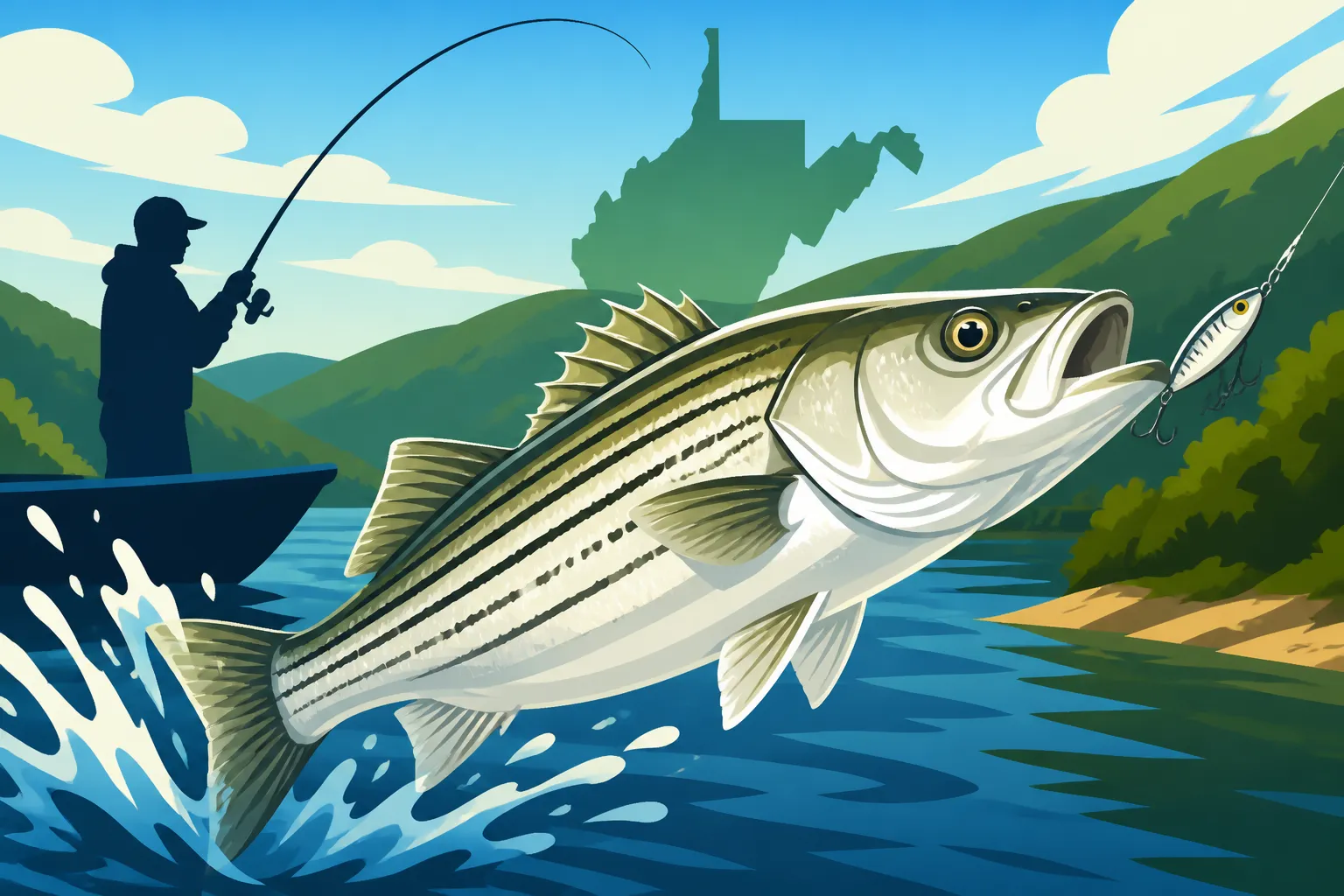
Sutton Lake striped bass hybrid fishing
Trying to dial in on a specific species like hybrid striped bass in a large, diverse lake like Sutton Lake can feel like searching for a needle in a haystack. Many anglers get frustrated trying to figure out where these hard-fighting fish hide, what they’re biting on, and when the best time to target them truly is. This comprehensive guide will cut through the guesswork, offering you an in-depth look at successfully finding and catching hybrid stripers in the beautiful waters of Sutton Lake, giving you the local insights you need to make your next trip a success.
Why Sutton Lake is a Premier Hybrid Striper Destination
Sutton Lake, nestled in Braxton County, isn't just another pretty face on the West Virginia map; it's a genuine powerhouse for anglers, especially those chasing the thrill of hybrid striped bass. These incredible fish, a cross between a striped bass and a white bass, offer an exhilarating fight and make for fantastic table fare, and Sutton Lake provides the perfect ecosystem for them to thrive. The unique characteristics of this impoundment, combined with dedicated stocking efforts, create an environment where these feisty hybrids can grow large and remain abundant.
Understanding Sutton Lake's Ideal Environment
Sutton Lake is a massive U.S. Army Corps of Engineers flood control reservoir, spanning over 1,500 acres with nearly 45 miles of shoreline. Its deep, clear waters and varied underwater structure—including old creek channels, submerged timber, rocky points, and expansive flats—mimic the diverse habitats that hybrid stripers naturally gravitate towards. Crucially, the lake boasts a robust forage base, primarily composed of schools of threadfin and gizzard shad. These baitfish are the lifeblood of the hybrid striper population, providing the fuel they need to grow to impressive sizes. When you're out on the water, seeing these schools flicker on your sonar or skip across the surface, you know the hybrids won't be far behind.
The lake’s water quality, often influenced by the Elk River which feeds into it, maintains healthy oxygen levels, even in deeper thermoclines during the warmer months, allowing hybrids to remain active throughout the entire year. This healthy environment isn't just good for the fish; it also contributes to the overall beauty and enjoyment of fishing on Sutton Lake. It truly is a gem of the Mountain State, offering not only great fishing but also stunning scenery.
West Virginia's Successful Hybrid Striper Stocking Program
Unlike their purebred striped bass cousins, hybrid striped bass are sterile and do not naturally reproduce. This means the vibrant fishery in Sutton Lake is entirely sustained by the strategic and consistent stocking efforts of the West Virginia Division of Natural Resources (WVDNR). The DNR annually stocks Sutton Lake with thousands of fingerling hybrid stripers, ensuring a healthy and consistent population for anglers to enjoy. This proactive management strategy is a testament to West Virginia's commitment to providing diverse and high-quality fishing opportunities.
The benefits of these hybrids are many: they grow quickly, fight incredibly hard – often described as pulling like a freight train – and are quite tasty. For anglers, this means a consistent chance at a trophy-sized fish that puts up an unforgettable battle. The WVDNR's careful planning of these stockings, often using data from electrofishing surveys and angler catch rates, ensures that Sutton Lake remains one of the premier destinations for these prized fish, making it a worthy trip for anyone interested in chasing powerful game fish. To learn more about how fish populations are managed, you might be interested in our guide on Striped Bass Hybrid Stocking in West Virginia.
Where and When to Find Hybrid Stripers in Sutton Lake
Locating hybrid striped bass in Sutton Lake often feels like a puzzle, but once you understand their seasonal movements and preferred structures, the pieces start to fall into place. These fish are constantly on the move, chasing baitfish, and their whereabouts can shift dramatically from one month to the next. Knowing what to look for and where to cast your line at different times of the year is absolutely crucial for consistent success.
Seasonal Movements and Key Depths
Hybrid stripers are notoriously nomadic, but their movements are largely dictated by water temperature and the availability of their primary food source: shad.
- Spring (March-May): As water temperatures rise into the 50s and 60s Fahrenheit, hybrids become very active. They'll often follow shad into shallower creek arms and coves, sometimes exhibiting pseudo-spawning runs, even though they are sterile. Look for them around submerged points, rocky banks, and the mouths of larger creeks like Saltlick Creek, often in depths ranging from 5 to 20 feet. Topwater action can be explosive during this time, especially in low light.
- Summer (June-August): When the lake warms up, hybrids will seek out cooler, oxygen-rich water. This usually means moving deeper, often suspending over the old river channel or congregating around main lake points and humps. They'll frequently be found near the thermocline (the layer where water temperature changes rapidly) during the day, which can vary in depth but is often between 20-40 feet. Early mornings, late evenings, and overcast days can bring them shallower for feeding frenzies, particularly when shad schools are pushed to the surface.
- Fall (September-November): This is often considered prime time for hybrid stripers. As the lake cools, shad schools become more concentrated and hybrids go on a major feeding binge to prepare for winter. They can be found almost anywhere – chasing bait in shallow creeks, busting bait on the surface over open water, or suspended over deep points. They're often very aggressive, and you might encounter them from the surface down to 30 feet, depending on bait location.
- Winter (December-February): During the colder months, hybrid activity slows down, but they can still be caught. They tend to school tightly in deep main lake basins or near the dam, often suspending over 40-60 feet of water. Slower, vertical presentations become more effective during this period. For a broader overview of yearly fishing patterns, take a look at our West Virginia Fishing Seasons by Month guide.
Top Locations Within Sutton Lake
While hybrids are roamers, there are specific areas in Sutton Lake that consistently hold fish due to their structure and proximity to shad populations.
- The Dam Area: The deep waters near the Sutton Lake Dam are a year-round magnet for hybrids, especially in colder months. The sheer depth and current flow (when generation is active) create excellent habitat. Look for fish suspending in the main basin here or near the rock riprap along the dam face.
- Main Lake Points and Humps: Any prominent point or submerged hump that extends into the main lake will attract baitfish and, consequently, hybrids. These structures offer ambush points and can hold large schools of fish. Scan these areas thoroughly with your fish finder, especially if they have nearby deep water access.
- Saltlick Creek Arm: This large creek arm is a significant feeder to Sutton Lake and provides extensive shallow water habitat and baitfish concentrations, particularly in spring and fall. Look for hybrids chasing shad in the shallower sections or holding on the channel bends and points within the arm. The FishingBooker platform often lists local guides who specialize in these particular hotspots and can offer real-time insights.
- Elk River Channel: The old river channel that winds through the lake provides a highway for fish movement and deepwater refuge. Hybrids will often suspend along the edges of this channel, especially when schools of shad are nearby. Using good marine electronics, such as those discussed in Best Fish Finders for West Virginia Lakes, is vital for locating these suspended schools.
Finding the fish ultimately boils down to finding the bait. Keep an eye on your sonar for dense schools of shad, and be prepared to move around until you see those tell-tale arches indicating active predators beneath them.
Proven Techniques, Baits, and Lures for Sutton Lake Hybrids
Catching hybrid stripers in Sutton Lake demands versatility. These fish can be incredibly aggressive one moment and surprisingly finicky the next. Having a diverse arsenal of techniques, baits, and lures at your disposal will significantly increase your chances of success. It's not just about what you throw, but how and when you throw it.
Live Bait Strategies for Finicky Hybrids
When hybrids are being particularly stubborn, or if you're targeting larger, less active fish, live bait can often be the most effective presentation. The natural movement and scent of a live shad or shiner are simply irresistible to a hungry hybrid.
- Catching Bait: The best live bait is often what the hybrids are already eating, which usually means shad. You'll need a good cast net to catch threadfin or gizzard shad directly from Sutton Lake, usually in shallow coves or around docks where they congregate. Shiners, minnows, or even small bluegill can also work in a pinch.
- Rigging: A simple Carolina rig (1/2 to 1 oz egg sinker, bead, barrel swivel, 18-36 inch fluorocarbon leader, and a 2/0-4/0 circle hook) is highly effective for presenting live bait on the bottom or near structure. For suspending fish, free-lining a live bait with no weight or a small split shot can allow it to swim naturally through the strike zone. Many local guides, some available through FishingBooker, will often utilize sophisticated live bait setups to maximize their success, offering invaluable experience if you're looking for an edge.
- Presentation: Drift fishing with live bait is a popular and productive method. Allow your boat to drift over points, humps, or channel edges while your baits are deployed at different depths. Keep a close eye on your rod tips for the subtle taps or sudden violent strikes that indicate a hybrid has taken the bait. Patience is key, but the reward of a powerful hybrid on live bait is well worth it.
Top Artificial Lures for Aggressive Bites
When hybrids are actively feeding and aggressive, artificial lures can cover more water and elicit more strikes, especially when you encounter schooling fish.
- Spoons: Both jigging spoons and casting spoons are deadly. For schooling fish breaking the surface, a Kastmaster, Little Cleo, or similar casting spoon in chrome or white, quickly retrieved through the school, can trigger explosive strikes. For deeper, suspended fish, a heavy jigging spoon like a War Eagle or a silver Flex-It spoon, vertically jigged beneath the boat, is incredibly effective.
- Crankbaits: Deep-diving crankbaits that can reach depths of 15-30 feet are excellent for trolling or casting along main lake points and channel edges. Colors like chrome/blue, shad patterns, or chartreuse are often top producers. Lipless crankbaits, like a Rat-L-Trap or a Bill Lewis Echo, retrieved with a yo-yo action through suspended schools, can also be very effective.
- Topwater Lures: When hybrids are "busting" shad on the surface, there's nothing more exciting than throwing a topwater lure. Poppers, walking baits (like a Heddon Super Spook Jr.), or prop baits can draw violent strikes. The key is to cast beyond the school and retrieve your lure through the commotion.
- Swimbaits and Soft Plastics: Paddle tail swimbaits, like a Keitech Swing Impact or a Zoom Swimmin' Super Fluke, rigged on a jig head (1/4 to 3/4 oz), can imitate shad perfectly. These can be cast and retrieved, trolled, or even jigged vertically. Soft jerkbaits can also be twitched through schools for a natural presentation. For more on selecting the right gear, check out our guide on Best Techniques for Striped Bass Hybrids.
Trolling and Casting for Maximum Coverage
Covering water is paramount when searching for nomadic hybrid stripers. Trolling allows you to explore vast areas and present multiple baits simultaneously, while casting is ideal for targeting visible schools or specific structures.
- Trolling: This is a highly effective method, especially for locating fish when they aren't visibly busting on the surface. You can troll with deep-diving crankbaits, umbrella rigs, or even live bait using planer boards or downriggers to control depth and spread your lines. Pay close attention to your speed (typically 2-4 mph) and adjust until you find what the fish prefer. Using electronics to identify baitfish schools and underwater structure is vital. Different boats are better suited for trolling, and our guide on Best Boats for West Virginia Rivers and Lakes can help you decide.
- Casting: When you see hybrids actively feeding on the surface, casting is the way to go. Approach quietly, cast beyond the school, and retrieve your chosen lure (spoons, topwaters, swimbaits) through the feeding frenzy. For fish holding near structure, make precise casts to points, humps, or any visible cover.
- Electronics are Your Friend: Modern fish finders are indispensable for hybrid striper fishing. Use your sonar to locate schools of shad and the arches of hybrids beneath them. Pay attention to depth, water temperature, and structure. Many anglers use side imaging or down imaging to identify these schools and structures more effectively.
Here’s a quick overview of techniques by season:
| Season | Preferred Locations | Key Depths | Primary Techniques | Recommended Baits/Lures |
|---|---|---|---|---|
| Spring | Creek arms, shallow coves, main lake points | 5-20 feet | Casting, light trolling | Live shad/shiners, topwater, lipless crankbaits, swimbaits |
| Summer | Main lake points, humps, old river channel, dam area | 20-40 feet (day) | Trolling, vertical jigging, live bait | Deep-diving crankbaits, jigging spoons, live shad |
| Fall | Main lake, creek arms, open water | Surface to 30 feet | Casting, trolling, drift fishing | Topwater, spoons, crankbaits, swimbaits, live bait |
| Winter | Deep main lake basins, near the dam | 40-60+ feet | Vertical jigging, slow trolling | Jigging spoons, live bait (shiners, minnows) |
Remember that West Virginia has specific rules and regulations for fishing, including bag and possession limits. Always consult the official West Virginia Fishing Regulations Explained and West Virginia Bag and Possession Limits by Species before heading out to ensure you're compliant. Don't forget that many excellent guides, often found on platforms like FishingBooker, have years of experience on Sutton Lake and can accelerate your learning curve dramatically.
Disclaimer
Fishing conditions and regulations in West Virginia can change. Always consult the latest official West Virginia Division of Natural Resources (WVDNR) regulations before any fishing trip. The information provided in this guide is for informational purposes only and should not be considered a substitute for official sources. Stay safe and be mindful of local laws and conservation efforts.