Bluestone Lake catfish fishing spots
Finding those prime catfish spots on a large, diverse lake like Bluestone can feel like a real treasure hunt sometimes. You know the fish are there, but pinpointing where they're actively feeding, especially the bigger flatheads and channel cats, is a whole different ballgame. This guide is going to take you through the best catfish fishing spots on Bluestone Lake, helping you understand their habits, the best times to target them, and the gear that will give you the upper hand.
Understanding Bluestone Lake's Catfish Population
Bluestone Lake, nestled in the scenic New River Gorge area, is a fantastic fishery with a healthy population of catfish. Knowing which species you're targeting and what makes them tick is crucial for a successful outing. It's not just about throwing a line in; it's about understanding their underwater world.
Species of Catfish in Bluestone Lake
When you drop a line in Bluestone Lake, you're primarily going to encounter two main species of catfish: the ubiquitous Channel Catfish and the elusive, hard-fighting Flathead Catfish. While Blue Catfish are becoming more prevalent in other parts of West Virginia, their numbers in Bluestone are generally lower, making them less of a primary target but still a possibility. Each species has its own quirks and preferences.
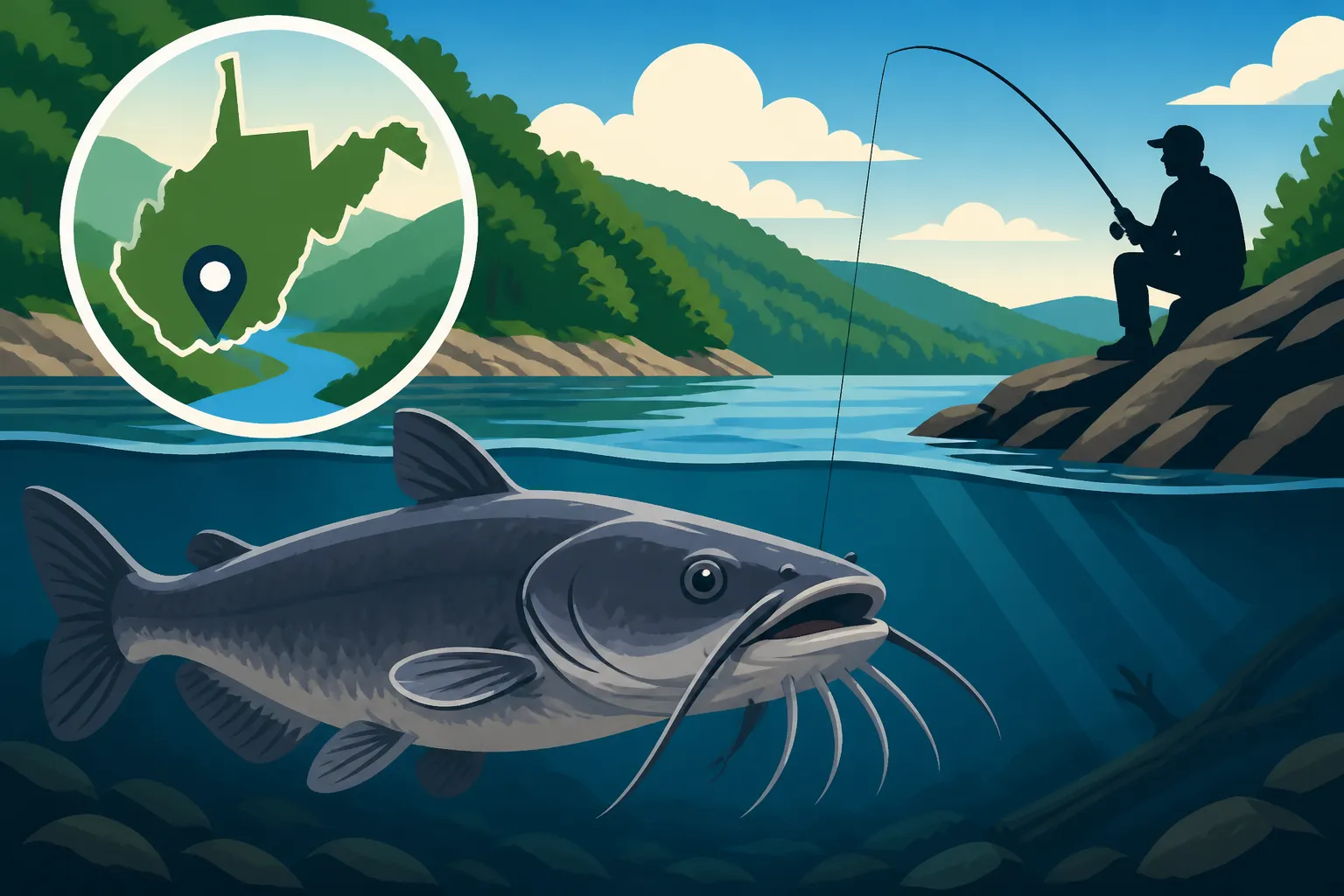
Channel catfish are often the most common catch for anglers here. They're recognized by their forked tail, spotted sides (especially when younger), and generally smaller size compared to flatheads. These guys are scavengers, always on the hunt for an easy meal, which makes them quite responsive to a variety of baits. You'll find them almost everywhere in the lake, from deeper channels to shallower flats, especially if there's decaying organic matter or ample baitfish around.
Flathead catfish, on the other hand, are the true giants of Bluestone Lake. They have a distinct flat, broad head, a square or slightly rounded tail, and a mottled brown or yellowish-brown coloration that helps them blend into rocky and woody cover. Unlike channels, flatheads are ambush predators, preferring live bait and often sticking to specific structures where they can lie in wait for unsuspecting prey. They tend to be much larger and put up an incredible fight, making them a prized catch for dedicated catfishermen. If you want to dive deeper into how these different species behave, a comprehensive guide on Catfish Species Identification Guide for West Virginia can be incredibly helpful.
Catfish Behavior and Habitat Preferences in Bluestone
Bluestone Lake's unique characteristics, formed by the impoundment of the New River, heavily influence where catfish live and feed. The constant flow of the New River into the lake, coupled with its varying depths, submerged timber, rock piles, and old river channels, creates a diverse underwater landscape that catfish absolutely love. Understanding these features is like having a secret map to their hideouts.
Channel catfish are less particular about current but thrive in areas with some flow, especially where baitfish are concentrated. They're often found along the edges of the old river channel, around submerged brush piles, and in coves where debris and food accumulate. They're also quite active during the low-light hours of dawn, dusk, and even throughout the night, moving into shallower areas to feed. For insights into their daily routines, you might find the information on Channel Catfish Habits in West Virginia Rivers really valuable.
Flathead catfish, being ambush predators, are very structure-oriented. They gravitate towards deep holes, fallen trees, large boulders, and undercut banks along the main river channel and its tributaries. They love to tuck themselves into these spots, waiting for a meal to swim by. The significant current from the New River also plays a role, as flatheads will position themselves just out of the main flow, in current breaks, where they can ambush prey without expending too much energy. They are most active during the night, especially during warmer months, when they move out from their daytime lairs to hunt. Thinking about the bigger picture of where you might find these fish can be enhanced by looking at a broader Bluestone Lake Fishing Guide.
Top Catfish Fishing Spots on Bluestone Lake
Now that we've got a handle on what makes catfish tick, let's talk about where to actually find them. Bluestone Lake offers a variety of environments, each with its own potential for a monster cat.
River Sections and Inflows
The upper reaches of Bluestone Lake, where the New River flows in, are absolute goldmines for catfish, especially flatheads. The constant current delivers fresh baitfish and creates prime habitat. Look for deeper holes and eddies where the current slows, allowing fish to rest and ambush.
One of the most productive areas is the New River section above the lake. While technically the river, this is the main inflow that feeds Bluestone. The deeper pools and runs, particularly those with significant woody debris or rock formations, are classic flathead haunts. Anglers often target these sections by boat, anchoring just out of the main current and fishing into the slack water. Another key area is the mouth of Indian Creek, where it empties into Bluestone Lake. This confluence creates current seams and deposits food, attracting both channel and flathead catfish. The transition zones where the creek meets the lake proper are excellent spots, especially during higher water flows.
The main river channel itself, as it winds through the lake, is another hotspot. This submerged channel, the original path of the New River, offers consistent depth and structure that catfish prefer. Fishing along the deep bends and drops of this channel can yield impressive results, especially for those employing techniques like bottom fishing with cut bait or live bait. If you're really looking to hone your skills for river-specific fishing, you might enjoy learning more about Bottom Fishing for Catfish in West Virginia Rivers.
Main Lake Channels and Deep Water Structure
Moving further into the main body of Bluestone Lake, the focus shifts to the deeper lake channels and significant underwater structure. These are the areas where the bigger fish hold during the day and move out from to feed at night. Think about how many times you've heard fishermen talk about "finding the structure" – it's because that's where the fish are, especially for species like catfish.
Points and Humps: Any prominent points that jut out into the main lake, particularly those with a quick drop-off into deeper water, are prime catfish territory. These act as ambush points and funnels for baitfish. Underwater humps or ledges, which might not be visible from the surface, also concentrate fish. A good fish finder is invaluable for locating these subtle changes in depth and contour. Flatheads will often stage on the deeper side of these structures, moving up to feed as light fades.
Submerged Timber and Rock Piles: Bluestone Lake, like many impoundments, has plenty of submerged timber and rock piles from its pre-dam days. These areas provide excellent cover and structure for catfish. Fallen trees along the shoreline that extend into deeper water, or old standing timber from the original river bottom, are fantastic spots. Catfish, especially flatheads, will hide within these snags. While challenging to fish due to the risk of getting snagged, these spots often hold the biggest fish. Many experienced anglers often consult local guides, some of whom you can find on platforms like FishingBooker, to pinpoint these hard-to-find honey holes.
Shallow Flats and Backwaters
While deep water and current are critical, don't overlook the shallower flats and backwater coves, especially when targeting actively feeding channel catfish, or flatheads moving in to hunt after dark. These areas often warm up faster in the spring and hold abundant baitfish.
Weedy Coves and Mud Flats: Look for coves with muddy or silty bottoms and moderate vegetation. These areas are rich in aquatic insects, crustaceans, and smaller baitfish, which attract channel catfish. During the warmer months, especially at night, these coves can be incredibly productive. The shallower water retains heat, which boosts the metabolism of both catfish and their prey, making it an excellent feeding ground.
Shoreline Access Points: For bank anglers, accessible shoreline areas near these shallow flats or coves can be fantastic. Think about areas like those around Bluestone State Park or other public access points that offer a gradual slope into the water. Fishing these spots with a good bottom rig, casting out into slightly deeper water adjacent to the flats, can yield plenty of channel cats. When considering how to tackle these areas, knowing your Best Fishing Lakes in West Virginia will help put Bluestone into perspective against other productive spots.
Best Techniques and Baits for Bluestone Lake Catfish
Having the right gear and bait can make all the difference between a frustrating day and a successful one. Catfish aren't usually picky eaters, but specific presentations work better for certain species and conditions.
Rods, Reels, and Line for Bluestone Catfish
When you're chasing catfish, particularly the big flatheads in Bluestone Lake, you need tackle that can stand up to a serious fight and handle heavy baits. This isn't the time for finesse fishing; we're talking power.
For rods, look for something stout and strong. Medium-heavy to heavy power rods, typically 7 to 9 feet in length, are ideal. The extra length helps with casting heavier weights and provides more leverage when fighting a big fish. A fast action tip is good for detecting subtle bites, but a moderate-fast action can offer more give during a powerful run. Many anglers prefer specialized catfish rods from brands like Ugly Stik or Berkley, known for their durability.
Reels should be equally robust. For channel cats, a quality spinning reel in the 4000-6000 size range will suffice. But for flatheads, a baitcasting reel designed for heavy line and big fish is often preferred. Look for models with a strong drag system and a high line capacity, capable of holding 200 yards or more of heavy line. Gear ratios around 4.0:1 to 5.0:1 are good for winching in big fish.
As for line, braided line is a top choice for its strength, lack of stretch, and sensitivity. Anywhere from 30 to 80-pound test braided line is common, depending on the target size and how much structure you're fishing. Many anglers will then tie on a 20-50 pound test monofilament or fluorocarbon leader, usually 1 to 3 feet long, for abrasion resistance and knot strength. When you're dealing with big fish and heavy current, having reliable gear is paramount, much like the considerations for Best Tackle for West Virginia Smallmouth Bass, though the scale might differ.
Effective Rigging and Baits
Catfish are drawn to scent and vibration, so your bait presentation needs to capitalize on that. The right rig will ensure your bait stays in the strike zone and signals those hungry cats.
For rigging, the tried-and-true Carolina rig or a simple slip-sinker rig is incredibly effective. This involves a slip sinker (1-4 ounces, depending on current and depth) above a swivel, followed by a leader (1-3 feet of heavy monofilament or fluorocarbon) and a strong hook. Circle hooks are highly recommended, especially for catch-and-release, as they typically hook fish in the corner of the mouth, reducing gut-hooking. Sizes from 4/0 to 8/0 are common. Another popular option is a three-way swivel rig, which allows you to present multiple baits or keep your bait suspended just off the bottom in varying currents.
When it comes to baits, variety is key, but some stand out. For channel catfish, stink baits, chicken livers, nightcrawlers, and cut bait (like shad, bluegill, or carp) are highly effective due to their strong scent. These baits attract channels from a distance. For flathead catfish, however, fresh, live bait is almost always superior. Live bluegill, shad, or even smaller suckers are irresistible to a hungry flathead. Presenting these lively baits near submerged structure or deep holes is your best bet. If you're looking for something that will really put off a scent trail, trying some of the techniques described in What Flathead Catfish Eat might spark some ideas for bait choices.
Seasonal Catfish Strategies
Catfish behavior changes throughout the year, so adapting your strategy to the seasons will increase your success on Bluestone Lake.
Spring (Pre-spawn): As water temperatures begin to rise in early spring, catfish become more active and start moving from their deeper wintering holes into shallower areas to feed heavily before spawning. Look for them in coves, creek mouths, and along gradual sloping banks where baitfish are abundant. This is an excellent time for both channel and flathead catfish.
Summer (Post-spawn/Active Feeding): During the peak of summer, especially after the spawn (which typically occurs when water temps hit the mid-70s for channels), catfish are highly active. They will often retreat to deeper, cooler waters during the day, especially in the main lake channels or around deep structure. However, they become incredibly active at night, moving into shallower flats, coves, and river bends to hunt. This is prime time for Night Fishing Techniques for West Virginia Lakes. If you're fishing during the day in summer, target deep structure with live bait for flatheads, or fish scented baits in current breaks for channels.
Fall (Feeding Frenzy): As water temperatures start to cool in the fall, catfish enter a pre-winter feeding frenzy, trying to pack on weight. They can be found in a variety of depths, often moving aggressively into shallower areas to chase baitfish. The bite can be excellent during both day and night. This is a fantastic time for targeting larger flatheads with live bait, as they are actively hunting before the colder water slows their metabolism. Understanding the broader patterns throughout the year can be aided by checking out West Virginia Fishing Seasons by Month.
Accessing Bluestone Lake Catfish Hotspots
Getting to these promising catfish spots is the next step. Bluestone Lake offers various access points, whether you're bringing a boat or planning to fish from the bank.
Public Boat Ramps and Launches
For anglers with boats, Bluestone Lake has several excellent public boat ramps that provide access to different sections of the lake. These are generally well-maintained and offer ample parking.
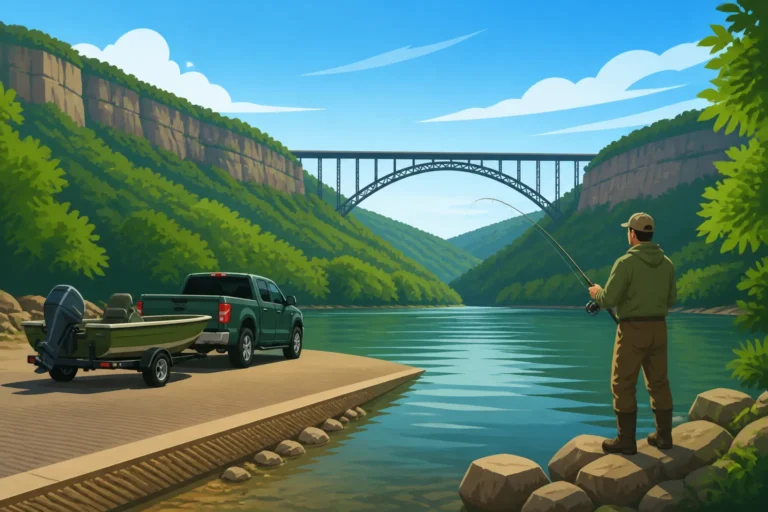
The primary access point is often the ramp located within Bluestone State Park Marina (also known as the True Blue Recreation Area). This ramp offers easy access to the main body of the lake, including the lower sections of the New River inflow and the deeper lake channels. It's a busy spot, especially on weekends, but provides excellent staging for your catfish adventure. Another popular option is the Indian Creek boat ramp, located closer to the confluence of Indian Creek and the main lake, offering direct access to those productive creek mouth areas. For those looking to explore the upper reaches, the Bull Falls access point allows launching further up the New River, though it might be more suited for smaller boats or those comfortable with river currents. Choosing the right vessel for your trip can be made easier by referring to Best Boats for West Virginia Rivers and Lakes.
Bank Fishing Access Points
Even without a boat, you can still have a successful catfish outing on Bluestone Lake. There are several areas that offer good bank fishing opportunities, particularly for channel catfish.
Bluestone State Park itself provides ample shoreline access, especially around the campgrounds and picnic areas. These spots often feature calmer waters and can be excellent for setting up multiple rods with stink baits or chicken livers. Look for areas where the bank gradually slopes, allowing you to cast into slightly deeper water. The Hinton Veterans Memorial Park area, just below the dam, also offers river access where catfish can be targeted, though this is technically the river below the lake. Fishing here can be dynamic due to fluctuating water levels from the dam releases, but it can also concentrate fish. Don't forget to check out the fishing piers or designated bank fishing areas if available, as they often place you in proximity to good fish-holding structure.
Navigating the Lake
Bluestone Lake can be deceptively large, and its ever-changing water levels can alter the landscape. Always be mindful of submerged hazards, especially timber, which can be dangerous for boaters. Pay attention to navigation markers and be aware of current, especially near the New River inflow. Weather can change quickly in the mountains, so always check the forecast before heading out. Using a reliable map or GPS is crucial, and if you're ever in doubt, consider consulting with local experts or even booking a trip with a guide, many of whom are listed on platforms like FishingBooker, to learn the ins and outs of the lake safely.
Catfish Fishing Hotspots on Bluestone Lake
Here's a quick reference for some of the best catfish spots on Bluestone Lake:
| Location Type | Specific Spot / Area | Primary Species | Key Features / Tips | Best Bait / Technique |
|---|---|---|---|---|
| River Sections / Inflows | New River Inflow (Upper Lake) | Flathead, Channel | Deep holes, current seams, woody debris, rock formations | Live bluegill/shad (Flathead), Cut bait, Chicken liver (Channel) |
| Indian Creek Mouth | Channel, Flathead | Confluence current, food deposits, transition zones | Live bait, Cut bait, Stink bait | |
| Main Lake Channels | Submerged River Channel Bends | Flathead, Channel | Deepest sections, sharp drop-offs, underwater structure | Live bait, Cut bait, Bottom rigs |
| Main Lake Points & Humps | Flathead, Channel | Quick depth changes, ambush points, baitfish funnels | Live bait, Cut bait (deeper), Nightcrawlers (shallower) | |
| Shallow Flats / Backwaters | Weedy Coves (e.g., near State Park) | Channel | Muddy bottoms, aquatic vegetation, baitfish concentrations | Stink bait, Chicken liver, Nightcrawlers (especially at night) |
| Shoreline Access (State Park) | Channel | Gradual slopes, calm water, easy bank access | Chicken liver, PowerBait for Cats, Worms |
Disclaimer
Fishing regulations, conditions, and fish populations can change. Always consult the latest West Virginia Division of Natural Resources fishing regulations before heading out. Stay safe, respect the environment, and practice ethical angling.