Tygart Lake walleye fishing spots
Trying to pinpoint those elusive walleye in a vast lake like Tygart can feel like searching for a needle in a haystack, especially if you're new to its waters or struggling to adapt to seasonal changes. These cunning predators demand a nuanced approach, and just blindly casting won't cut it. This guide is here to demystify Tygart Lake, helping you uncover the prime walleye fishing spots and the best strategies to make your next trip a success.
Understanding Tygart Lake's Walleye Habitat
Before we dive into specific locations, it's crucial to understand what makes Tygart Lake tick for walleye. Knowing their preferred environment and food sources will give you a significant edge, turning random casts into strategic presentations.
Lake Characteristics and Water Conditions
Tygart Lake, located in Grafton, West Virginia, is a large, deep impoundment created by the Tygart Valley River. Its characteristics play a huge role in where walleye reside. The lake spans roughly 1,750 acres at summer pool, with depths plunging over 100 feet in places, particularly near the dam. This depth is a major draw for walleye, which typically prefer cooler water, especially during the warmer months.
The lake’s water clarity can vary throughout the year. In spring and after heavy rains, the Tygart Valley River arm can bring in stained or muddy water, which walleye don't mind as much as some other species; in fact, they often thrive in slightly turbid conditions. However, the main lake body often remains clearer, particularly in deeper sections. Understanding these clarity fluctuations is key to choosing your lures and fishing depths. Walleye are highly sensitive to light, so clearer water often means they'll be found deeper or in low-light conditions like dawn, dusk, or even at night.
The presence of standing timber, rocky points, and ledges from its original riverbed structure provides ample ambush points for these predatory fish. Unlike some clear, open lakes, Tygart offers plenty of cover and complex bottom contours, which are essential for attracting and holding walleye throughout the year.
Forage Base and Walleye Movement
Walleye in Tygart Lake are opportunistic feeders, and their movements are primarily dictated by the availability and location of their prey. The primary forage base often includes gizzard shad, alewives, and various panfish species like bluegill and crappie. Knowing What walleye eat in West Virginia lakes is crucial to understanding their behavior. When fishing, think about where these baitfish might be congregating.
In the spring, as water temperatures rise, baitfish will move into shallower coves and creek mouths, drawing walleye with them. During the summer, these baitfish schools often suspend in open water or relate to deep structures, and the walleye will follow suit, often found at the thermocline where cooler, oxygenated water meets their food source. This means walleye can be anywhere from 20 to 60 feet deep, depending on the season and water temperature.
The walleye's nocturnal feeding habits are also directly tied to their forage. Many baitfish species become more active under the cover of darkness, making night fishing a highly effective strategy for targeting walleye, especially during the warmer months. They'll often push baitfish against structure or into open water areas where they can easily ambush them.
Prime Walleye Fishing Spots on Tygart Lake
Now that we've covered the basics, let's get down to the nitty-gritty: the best specific walleye fishing spots on Tygart Lake. Each area offers unique advantages depending on the season and conditions.
The Dam Area and Tailwaters
The area immediately surrounding the Tygart Lake Dam is a perennial hotspot for walleye, particularly during colder months. The deep water here provides a stable, cold environment that walleye prefer, especially when the rest of the lake experiences temperature fluctuations. The dam structure itself creates significant current breaks and deep ledges that walleye use as holding areas.
Fishing directly from the bank near the dam can be productive, particularly if there's any discharge from the dam, which creates current that concentrates baitfish and, in turn, walleye. Boat anglers will find success vertically jigging spoons or heavy jigs along the sheer drops and channel edges close to the dam face. The deep rocky bottom provides ideal habitat, and walleye will often stack up here, especially in late fall and winter. When considering your gear, check out Best Jigs for West Virginia Walleye for optimal choices. For those looking to maximize their time on the water, booking a local guide through platforms like FishingBooker can provide invaluable real-time insights into the dam's ever-changing conditions and the current walleye bite.
Beyond the dam, the tailwaters section below the dam on the Tygart Valley River is another excellent spot. Walleye will often congregate here, particularly during spawning runs or when conditions are right for feeding on disoriented baitfish coming through the dam gates. Wade fishing or shore fishing with jigs and crankbaits can be very effective in this flowing water.
Submerged Structures and Points
Tygart Lake is riddled with submerged structures from its past as a river valley. These underwater islands, humps, old roadbeds, and long tapering points are walleye magnets. Walleye are known to relate heavily to structure, using it for ambush points and as highways for moving between deeper holding areas and shallower feeding flats.
Locating these structures often requires good sonar. Look for sudden depth changes, rock piles, or old timber. Long points that extend out into the main lake basin are particularly productive, as walleye will often cruise these edges, especially during low light. Trolling crankbaits or snap-jigging across these points can trigger strikes. If you’re trolling, understanding How deep to troll for walleye at Tygart Lake is paramount to success. Walleye will often sit on the deep side of the structure, moving up onto the shallower top to feed before retreating.
Sometimes, these structures are visible on the surface as islands or prominent points, but the real magic often happens on their submerged extensions. For example, some of the larger points on the eastern side of the lake, particularly those with a quick drop-off into the river channel, consistently hold fish. Fan casting these areas with swimbaits or jigs can be very effective, especially when baitfish schools are present.
River Arm and Creek Mouths
The upper reaches of Tygart Lake, where the Tygart Valley River flows into the impoundment, are prime real estate for walleye, especially in the spring and fall. These areas tend to warm up faster in the spring, which draws in baitfish and provides key spawning grounds for walleye. Creek mouths entering the main lake also act as funnels, concentrating baitfish and attracting predatory walleye.
During the spring spawning season, walleye will push upstream into the river arm, seeking shallower, rocky areas with current. Casting jigs, shallow-running crankbaits, or even live minnows in these areas can be incredibly productive. As the season progresses into summer, these areas can still hold fish, particularly if there's good current flow or deeper pockets within the river channel.
In the fall, as water temperatures drop, baitfish once again move into these shallower, nutrient-rich areas, and walleye follow, staging a feeding frenzy before winter. Look for subtle changes in current, submerged timber, or rocky shorelines near creek entrances. The areas around the public boat ramps in the upper lake, such as the Pleasant Creek Public Access, often provide good starting points for exploring the river arm. This area offers excellent opportunities for both boat and shore anglers to target active walleye.
Deep Channels and Drop-offs
The original Tygart Valley River channel winds its way through the entire lake, forming a prominent deep channel that serves as a major thoroughfare and holding area for walleye throughout the year. These channels are often characterized by sharp drop-offs and varying bottom compositions, providing complex habitat that walleye relish.
In summer, when walleye go deep to escape warm surface temperatures, they will often suspend in or along the edges of these deep channels. This is where How deep walleye go in summer really comes into play. Trolling deep-diving crankbaits or using downriggers to present spoons or stickbaits at precise depths can be effective. Vertical jigging directly over known channel bends or submerged humps within the channel can also yield great results, especially with electronics that can pinpoint fish.
During winter, walleye often congregate in the deepest sections of these channels, becoming less active but still catchable with slow, methodical presentations. Ice fishing, when conditions permit, over these deep channels can be incredibly productive, with anglers using small spoons or blade baits. For anyone unsure about exploring the deeper, more complex sections of Tygart Lake, reaching out to local guides via FishingBooker can significantly enhance your chances of finding these deep-dwelling walleye.
Seasonal Strategies for Tygart Lake Walleye
Walleye fishing on Tygart Lake isn't a "one-size-fits-all" endeavor. Their behavior and locations shift dramatically with the seasons, making adaptable strategies essential for consistent success. Knowing West Virginia Fishing Seasons by Month can give you a general idea, but let's break down walleye specifics.
Spring Spawning and Post-Spawn Tactics
Spring is an exciting time for walleye anglers on Tygart Lake as these fish prepare for and complete their annual spawn. Typically, walleye spawning in West Virginia occurs when water temperatures reach the 45-50°F range, usually from late March through April. Walleye will migrate from deeper lake areas into shallower, rocky sections of the river arm or tributary mouths that offer current and suitable spawning substrate. For a deeper dive into the timing, refer to Walleye Spawning Season in West Virginia.
During the pre-spawn and spawn, target these riverine sections with jigs tipped with live minnows or soft plastics, cast slowly along current seams and rocky banks. Shallow-running crankbaits that mimic baitfish can also be incredibly effective. After the spawn, walleye, particularly the males, will often remain in these shallower areas for a period, feeding aggressively to regain energy. Females, often more lethargic immediately post-spawn, will typically retreat to slightly deeper water nearby, but will become active again as their energy levels return. Look for staging areas just outside the primary spawning grounds, such as the first deep breaklines or submerged humps leading into the main lake.
Summer Deep Water and Night Fishing
As Tygart Lake warms up through late spring and into summer, walleye generally follow the cooler, oxygenated water. This means they'll often be found in deeper sections of the lake, frequently suspending or relating to deep structures like the main river channel, submerged humps, or creek channels at depths often exceeding 20-30 feet, sometimes much deeper.
Trolling is a highly effective strategy during summer. Use deep-diving crankbaits or stickbaits, often with lead core line or downriggers, to get your lures down to the fish. Focus on contour lines and breaklines shown on your electronics. Another excellent tactic is night fishing. Walleye's large eyes are perfectly adapted for low light, giving them a significant advantage over baitfish after the sun sets. They will often move shallower at night to feed, especially on rocky points or flats adjacent to deep water. Consider fishing from dusk until a few hours after dark, using long minnows or crawler harnesses presented slowly. This is truly the Best Time of Day to Catch Walleye in West Virginia during summer.
Fall Migration and Feeding Frenzy
Fall on Tygart Lake brings a renewed burst of activity for walleye. As water temperatures begin to cool, walleye become incredibly active, instinctively feeding heavily to build up fat reserves for the upcoming winter. This period, typically from September through November, can offer some of the best walleye fishing of the year.
Walleye will often move back into shallower areas, especially rocky points, humps, and the river arm, chasing schools of baitfish that are also moving shallower. Trolling crankbaits, casting larger jigs, or slowly retrieving blade baits can all be very productive. Look for areas where baitfish are concentrating, often visible on your electronics. The cooler water means walleye are more spread out and willing to chase, so covering water is key. If you're using trolling techniques, a review of Trolling Techniques for West Virginia Lake Walleye could prove beneficial.
During this period, focus on the transition zones – where shallow flats meet deep drop-offs, or where different types of structure converge. Walleye will often stage on the deeper side, moving up to ambush prey. The upper reaches of the lake and prominent main lake points are especially productive as they offer a good mix of shallow access and deep-water retreats.
Winter Holding Patterns and Ice Fishing Potential
When Tygart Lake truly chills out in winter, walleye become more lethargic but are still catchable. They typically congregate in the deepest parts of the lake, particularly along the main river channel and in deep holes near the dam. Their movements are minimal, and they'll conserve energy, so slow, precise presentations are required.
Vertical jigging spoons, blade baits, or small jigs tipped with live minnows directly over marked fish or deep structure is the most effective method. Focus on finding schools of fish on your electronics. Patience is key, as bites can be subtle.
If the lake freezes over sufficiently, Tygart Lake offers excellent ice fishing opportunities for walleye. Anglers will target those same deep channels and holes, drilling holes and using tip-ups with live minnows or jigging small spoons and soft plastics. Be sure to check ice conditions meticulously for safety. Ice fishing for walleye can be an incredibly rewarding experience, offering unique access to these deep-water fish. Just remember to bundle up and stay warm!
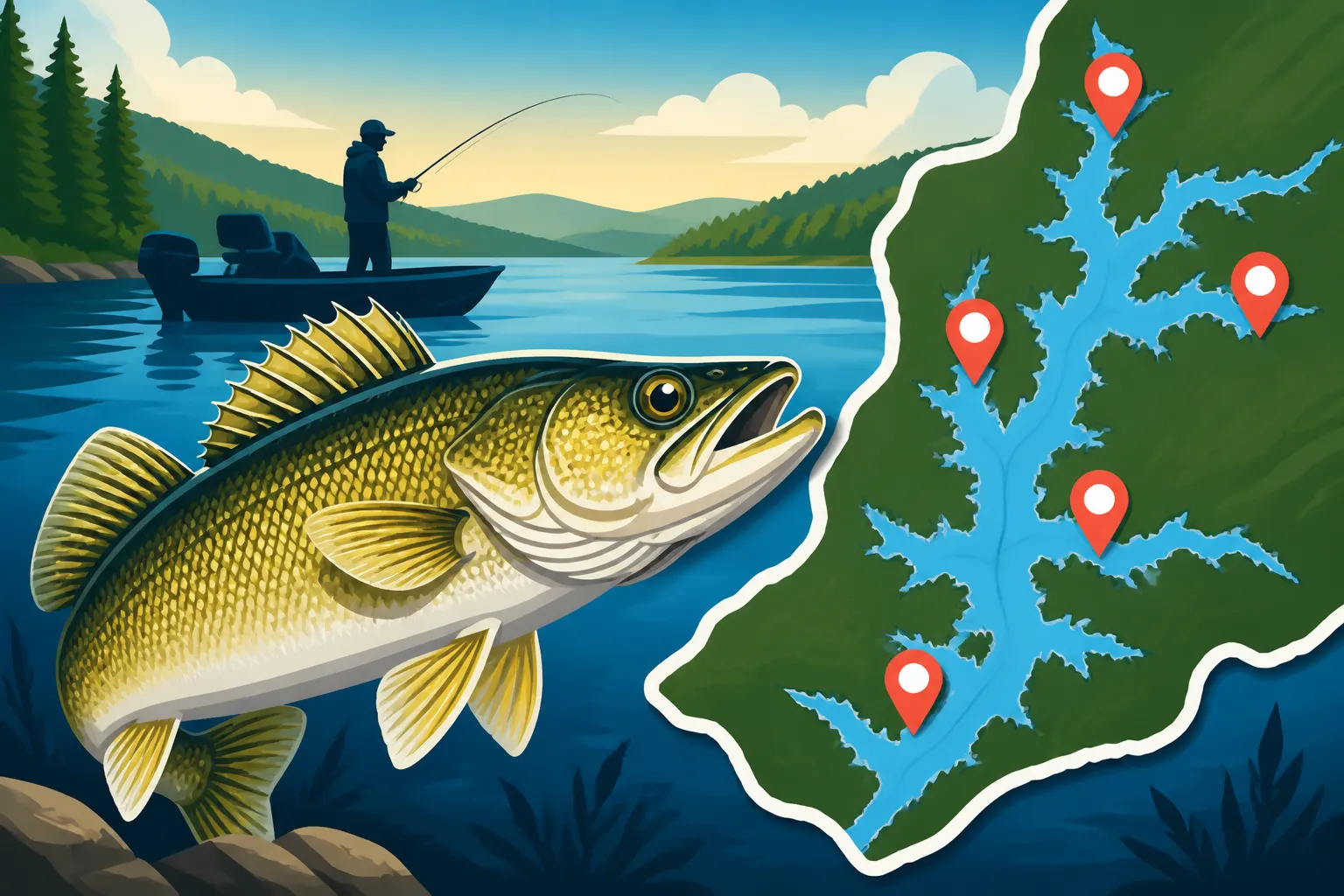
Here's a quick reference table for Tygart Lake walleye spots:
| Fishing Spot | Best Season(s) | Key Techniques | Target Depth (Approx.) |
|---|---|---|---|
| Dam Area & Tailwaters | Fall, Winter, Early Spring | Vertical Jigging, Trolling deep crankbaits, Live Bait (minnows) | 40-80+ feet |
| Submerged Humps & Points | Summer, Fall | Trolling crankbaits, Snap-jigging, Casting swimbaits | 20-60 feet |
| River Arm & Creek Mouths | Spring, Fall | Casting jigs (soft plastics/minnows), Shallow crankbaits | 5-25 feet |
| Deep Channels & Drop-offs | Summer, Winter | Deep Trolling (crankbaits/spoons), Vertical Jigging (spoons/blade baits) | 30-70+ feet |
| Shallow Rocky Flats (Night) | Summer | Casting shallow crankbaits, Slow retrieve with live bait | 5-15 feet |
Keep in mind that while this guide offers a comprehensive overview of Tygart Lake walleye fishing spots, local knowledge and current conditions are always invaluable. If you're planning a trip to one of the Best Fishing Lakes in West Virginia like Tygart, consider connecting with local resources to get the most up-to-date information.
Disclaimer
Fishing conditions and regulations can change, and it's always the angler's responsibility to check the latest rules and safety guidelines set by the West Virginia Division of Natural Resources (WVDNR) before heading out. This guide is for informational purposes only and does not guarantee fishing success. Practice safe boating and fishing habits, and always respect the environment.