Best fluorocarbon leader length for spooky trout
It's incredibly frustrating, isn't it? You spot that perfect trout holding in a clear pool, make what feels like a flawless cast, and then watch in dismay as it darts away like a ghost, spooked by what it saw, not what it felt. This often comes down to your leader setup, specifically its length and material. This guide is all about helping you understand why West Virginia's trout can be so sensitive and how to choose the best fluorocarbon leader length to fool even the wariest fish in our crystal-clear mountain streams and rivers.
Understanding Why Trout Get "Spooky"
West Virginia's trout, especially those wild ones and even the heavily-pressured stocked fish, have an uncanny ability to detect threats. They're not just looking for food; they're constantly assessing their environment for danger. When we talk about "spooky" trout, we're talking about fish that are hyper-aware and quick to flee at the slightest perceived anomaly.
The Role of Water Clarity and Pressure
Think about fishing your favorite stretch of the Cranberry River or a small, pristine feeder creek in the Monongahela National Forest after a long dry spell. The water is often crystal clear, sometimes almost impossibly so. In these conditions, visibility is extremely high, not just for us, but for the fish too. Every ripple, every shadow, and yes, every fishing line becomes much more apparent. Trout have excellent eyesight, particularly for movement and changes in light refraction. They rely on this vision for both hunting prey and avoiding predators, including us.
Moreover, many of our most accessible trout streams in West Virginia receive significant fishing pressure, especially during the spring stocking seasons. Fish that have been caught and released, or simply observed countless anglers, become incredibly wary. They learn quickly to associate unnatural objects or movements with danger. This heightened sense of caution means they'll scrutinize your presentation much more closely. A fish that might hit a sloppy cast in murkier, less pressured water will often turn its nose at a perfectly presented fly or lure if it detects a thick, visible line attached. This is where the subtleties of your gear, like leader material and length, truly make a difference. Spring Trout Fishing Techniques for West Virginia Streams often highlights how crucial stealth is.
How Trout Perceive Your Line
Trout don't see your fishing line in the same way you do. Their underwater world distorts light and shapes. When light hits your fishing line underwater, especially monofilament, it often refracts or reflects in a way that makes it stand out against the background. Imagine looking through a window at a bright scene; if the glass isn't perfectly clean, you'll see smudges and reflections that interfere with the view. For a trout, a traditional monofilament leader can look like a shimmering, unnatural barrier or a thick, obvious strand of something that doesn't belong.
The diameter of your line also plays a huge role. A thicker line creates a larger profile and displaces more water, which can create subtle vibrations that a trout's lateral line can pick up, even if it doesn't visually see the line. This is why lighter pound-test lines are almost always preferred for trout. But beyond diameter, the material itself matters. Trout are looking for consistency in their environment. An unnatural gleam or a visible "line" through the water signals danger. This keen perception means we, as anglers, need to constantly adapt our gear to be as invisible and natural as possible.
The Science Behind Fluorocarbon's Stealth
For years, monofilament was the go-to leader material, and it still has its place. But for spooky trout, especially in clear water, fluorocarbon has emerged as a superior choice. It’s not just angler hype; there’s some real science behind why it works so well.
Refractive Index and Light Transmission
The magic of fluorocarbon lies in its unique properties, particularly its refractive index. Without getting too technical, the refractive index is a measure of how much light bends, or refracts, when it passes from one medium (like water) to another (like your fishing line). Standard monofilament has a refractive index that's quite different from water. This difference causes light to bend significantly when it hits the mono, making the line highly visible underwater. It reflects and disperses light, making it glow or stand out.
Fluorocarbon, on the other hand, has a refractive index much closer to that of water itself. This means light passes through it with very little bending or distortion. To a trout, a fluorocarbon leader appears almost invisible, especially when compared to monofilament of the same diameter. It's like trying to see a perfectly clear piece of glass submerged in water versus a frosted piece. The clear glass blends in, while the frosted glass sticks out. This low visibility is paramount when targeting educated or wild trout in West Virginia's pristine waters where every little detail counts. Investing in quality fluorocarbon from reputable brands, often available at places like Bass Pro Shops or online through Amazon, makes a real difference.
Abrasion Resistance and Knot Strength
Beyond its stealth properties, fluorocarbon boasts other advantages that are crucial for trout fishing in West Virginia. Our rivers and streams are often rocky, filled with submerged timber, and have abrasive streambeds. When your leader drags over these obstacles, or when a fish takes you into structure, a material with high abrasion resistance is essential to prevent break-offs. Fluorocarbon is significantly more abrasion-resistant than monofilament, giving you an extra layer of confidence when fishing tight cover or fighting a strong fish.
Another key factor is knot strength. What good is an invisible leader if your knot slips or breaks under pressure? Modern fluorocarbon lines are designed to hold knots exceptionally well, provided you tie them correctly and lubricate them properly before cinching them down. Good knot strength ensures that the connection between your main line, leader, and fly or lure remains secure, even when battling a spirited wild brown trout in the Elk River. You'll want to experiment with a few different knots to find what works best for your specific fluorocarbon brand and diameter, but rest assured, the material itself offers a strong foundation. This combination of stealth, durability, and reliable knot strength makes fluorocarbon an indispensable tool for serious trout anglers. Best Fluorocarbon Line for Clear River Water offers more insight.
Determining the Best Leader Length for West Virginia's Trout
Now for the million-dollar question: what's the magic length? The truth is, there's no single "best" length for every situation. It's a nuanced choice that depends on several variables.
Factors Influencing Leader Length: Water Type and Conditions
When you're deciding on your leader length, you need to consider where you're fishing and what the conditions are like that day.
-
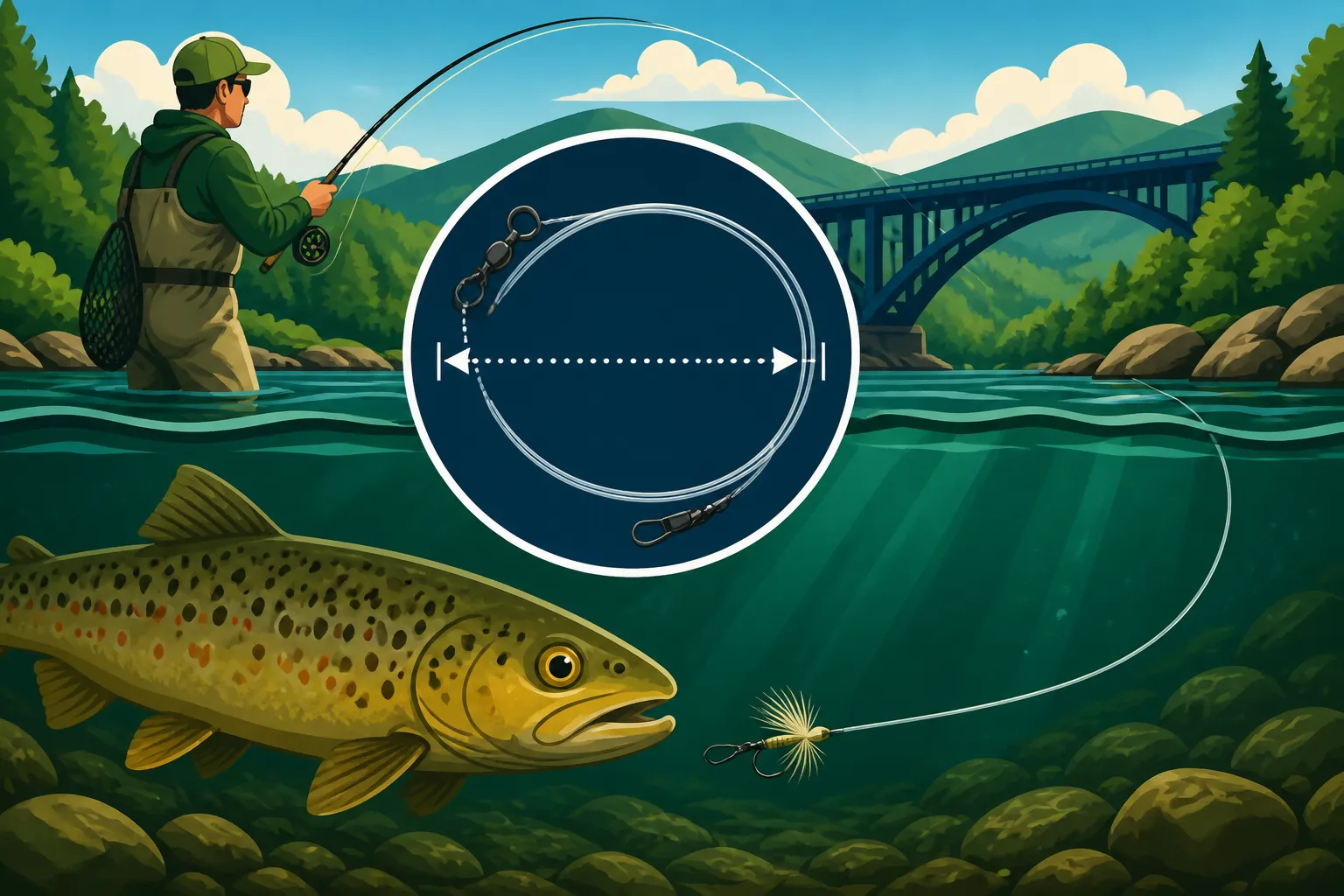
Small, Clear Mountain Streams (e.g., Seneca Creek, Shavers Fork): These waters are typically gin-clear, shallow, and often have very wary wild brook trout. Here, maximum stealth is key. A longer leader, often 9 to 12 feet, is highly beneficial. It keeps the main fly line (which is much thicker and more visible) further away from the fish, allowing your fly or lure to drift more naturally without the shadow or disturbance of the main line. The downside of a very long leader in these tight, brushy streams is that it can be harder to cast, especially if you're fly fishing in areas with limited backcasting room. You'll need to weigh stealth against castability. For spin fishing with ultralight gear in these streams, a 4-6 foot fluorocarbon leader tied to your main line (often braided) can be incredibly effective. Best Fly Line for Small Mountain Streams discusses specific needs here.
-
Medium-Sized Rivers (e.g., Elk River, Cranberry River, Williams River): These rivers can range from moderately clear to very clear, and often hold both stocked and wild trout, including larger brown and rainbow trout. While still demanding stealth, the slightly larger size and flow can sometimes allow for slightly shorter leaders than tiny creeks. For fly fishing, 7.5 to 9-foot leaders are a common starting point, often with added tippet for more length and finer diameter at the business end. For spin fishing, a 3-5 foot leader is usually sufficient, as the current and depth can help obscure the main line a bit more.
-
Large Tailwaters or Lakes (e.g., Below Summersville Dam, Cheat Lake trout stockings): In larger, deeper bodies of water or highly oxygenated tailwaters, fish can still be spooky, but the sheer volume of water and potential depth can offer more cover. While clarity is still important, you might not always need an ultra-long leader. For fly fishing, 7.5 to 9 feet is still a good standard, sometimes even 6 feet if you're fishing subsurface with heavy nymphs in fast current. Spin fishing here can often get away with 2-4 feet, especially if you're targeting deeper fish where the light penetration is reduced.
-
Turbid or Slightly Stained Water: If the water has a bit of color, perhaps after a small rain, you can often get away with a shorter leader, maybe 6-7.5 feet for fly fishing or 2-3 feet for spin fishing. The reduced visibility acts as a natural camouflage for your line. However, always err on the side of caution with trout; they still have incredible eyesight.
General Guidelines for Leader Lengths
To give you a clearer picture, here's a general table of recommended fluorocarbon leader lengths based on common West Virginia trout fishing scenarios. Remember, these are starting points, and flexibility is your best friend.
| Water Type/Condition | Fishing Method | Recommended Leader Length (Approx.) | Key Consideration |
|---|---|---|---|
| Gin-Clear Small Streams | Fly Fishing | 9-12 feet | Max stealth, natural drift; can be hard to cast in tight spots. |
| Spin Fishing | 4-6 feet | Keeps lure/bait acting naturally, main line further away. | |
| Clear Medium Rivers | Fly Fishing | 7.5-9 feet | Good balance of stealth and control for varied conditions. |
| Spin Fishing | 3-5 feet | Effective for most situations; less line to manage. | |
| Large, Deep Tailwaters/Lakes | Fly Fishing | 6-9 feet | Depth aids stealth; longer for surface/shallow, shorter for deep. |
| Spin Fishing | 2-4 feet | Often sufficient given water volume and depth. | |
| Slightly Stained/Off-Color Water | Both | 4-7.5 feet | Reduced clarity allows for slightly shorter leaders. |
| High Pressure/Selective Fish | Both | Longer end of recommended ranges | Prioritize maximum stealth, even if harder to cast. |
This table provides a good visual guide, but the real key is to learn to read the water and adjust. Sometimes, a subtle change in leader length can be the difference between a frustrating day and a successful one.
Adjusting for Specific Scenarios and Species
Beyond the general water types, other factors might compel you to adjust your leader length.
-
Trophy Trout Hunting: If you're specifically targeting larger, more experienced trout, like those elusive wild brown trout in certain stretches of the Williams or Cranberry Rivers, you'll almost always want to lean towards the longer end of the spectrum. These fish have survived multiple encounters with anglers and are incredibly discerning. A longer leader, combined with a fine tippet Best Tippet Size for Stocked Trout, offers the best chance of a natural presentation without spooking the fish.
-
Dry Fly Fishing vs. Nymphing:
- Dry Flies: When presenting a delicate dry fly on the surface, a longer leader (9-12 feet for fly fishing) is almost always preferred. It allows the fly line to land further away from the fish, minimizing disturbances, and helps create a drag-free drift, which is critical for convincing a trout to rise. The longer leader tapers down to a very fine point, allowing the dry fly to land softly and naturally.
- Nymphing: For subsurface nymphing, especially indicator nymphing, a slightly shorter leader (7.5-9 feet) can sometimes be easier to manage and turn over. When using heavier rigs with multiple flies and split shot, control and turnover become more important. However, in very clear, shallow water, even with nymphs, a longer leader can still offer an advantage by keeping the indicator and fly line further from the fish's direct line of sight.
-
Streamer Fishing: When throwing large streamers to aggressive trout or predatory fish like muskie, a shorter, heavier fluorocarbon leader (often 4-7 feet) is generally more effective. The goal with streamers is often to create an erratic, aggressive action. A shorter, stiffer leader helps transmit that action from your rod to the fly more efficiently. Stealth is still a factor, but the aggressive nature of the retrieve and the size of the fly often mean you can sacrifice a little length for better control and lure action. Best Streamer Patterns for West Virginia Brown Trout work best with proper presentation.
-
Fishing with Lures or Baits: For spin fishing with small spinners, spoons, or live bait, a fluorocarbon leader of 2-6 feet is typically ample. The leader attaches to your main line (often braided or monofilament) with a small swivel or a knot like a uni-to-uni. The goal here is to keep the more visible main line away from the lure and provide the stealth and abrasion resistance of fluorocarbon. If the water is exceptionally clear, adding a bit more length to that leader can only help. You might find a wider selection of fluorocarbon spools at your local Bass Pro Shops, where you can feel the line and talk to staff, or easily browse different brands and diameters on Amazon from the comfort of your home.
Rigging Your Fluorocarbon Leader for Success
Once you’ve chosen the right length, rigging it correctly is just as important. A perfect leader can be sabotaged by poor knots or improper connections.
Tying Strong, Low-Profile Knots
The knots you choose and how you tie them make a huge difference in the performance of your fluorocarbon leader. A bulky or improperly tied knot can negate all the advantages of using fluorocarbon by creating a visible hinge point or a weak link.
For connecting your fluorocarbon leader to your main line (whether it's braided, monofilament, or your fly line's butt section), the Blood Knot or the Double Uni Knot are excellent choices. The Blood Knot is incredibly strong and creates a very slim profile, making it pass through rod guides smoothly. It can be a bit tricky to tie at first, especially with dissimilar line diameters, but practice makes perfect. The Double Uni Knot is often easier for many anglers to tie, is very reliable, and also maintains a relatively low profile. Always make sure to lubricate your knots with saliva before cinching them down tightly; this prevents friction-induced heat from weakening the fluorocarbon, which can be less forgiving than mono in this regard.
For attaching your fly or lure to the end of your fluorocarbon leader, a Improved Clinch Knot or a Palomar Knot are fantastic. The Improved Clinch Knot is a classic for a reason – it's strong and dependable. The Palomar Knot is often considered one of the strongest knots for fluorocarbon, especially with heavier diameters, and is quite simple to tie. Again, lubricate and cinch slowly and evenly. The goal is a knot that holds tight, provides full breaking strength, and is as small and inconspicuous as possible. Remember, a smaller knot is less likely to collect debris or be noticed by a discerning trout.
Connecting to Your Main Line and Tippet
The connection points are where things can often go wrong. For fly anglers, your fluorocarbon leader will typically taper down. You'll likely connect the butt section of your leader to your fly line using a nail knot or a loop-to-loop connection. From there, your main leader tapers down to a finer point, and you might add a section of fluorocarbon tippet material to further extend its length and reduce its diameter at the fly.
When adding tippet, the standard Surgeon's Knot or Blood Knot are perfect for connecting two pieces of fluorocarbon. The Surgeon's Knot is quick and strong, while the Blood Knot offers a sleeker profile if tied well. Always ensure that the tippet material you're adding is a smaller diameter than the end of your leader, creating a smooth transition. This progressive taper is crucial for achieving accurate casts and a natural presentation. For spin anglers using braided main line, a strong FG Knot or Albright Knot can provide an incredibly smooth, strong, and low-profile connection to your fluorocarbon leader, allowing it to pass through your rod guides with minimal friction. Otherwise, a small, high-quality swivel can also serve as a connection point, providing anti-twist benefits, especially with spinning lures.
Practical Tips for Stealthy Presentations
Beyond leader length and knots, there are a few other practical tips that will significantly increase your success when targeting spooky trout in West Virginia.
- Approach with Caution: This might sound obvious, but it's often overlooked. Trout are highly sensitive to vibrations and shadows. When wading, move slowly and deliberately. Avoid stomping or scuffing your feet, which can send vibrations through the water. Stay low and use bankside vegetation or terrain to break up your silhouette. When Wading Techniques for West Virginia Trout Streams are not enough, consider getting a good pair of polarized sunglasses to spot fish without getting too close.
- Observe Before You Cast: Take a moment to watch the water before you cast. Identify holding lies, feeding lanes, and any active fish. Understand the current seams and eddies. Knowing where the fish are and how the current is moving will allow you to make a more accurate first cast, which is often your best shot at a spooky trout.
- Cast with Precision and Delicacy: Aim for soft landings. Whether you're casting a fly or a lure, try to make it land gently on the water, minimizing splash. For fly anglers, a good open loop cast helps extend your leader and lay the fly down delicately. For spin anglers, precise casting that places your lure just upstream of the target without overshooting can make all the difference. Practice your casting so you can deliver your offering accurately and subtly.
- Minimize Drag: Drag is the enemy of a natural presentation, especially in moving water. It's when your line pulls your fly or lure unnaturally through the current, giving the fish an obvious clue that something is amiss. A longer leader helps minimize drag by allowing more line to be "mended" or manipulated to achieve a drag-free drift. Understanding mending techniques in fly fishing, or properly positioning yourself when spin fishing, is crucial.
- Maintain a Clean Leader: Fluorocarbon is less prone to picking up algae and debris than mono, but it's not immune. Periodically check your leader for any nicks, kinks, or accumulated gunk. Even a small piece of leaf or a speck of algae on your leader can make it visible to a discerning trout. Replace your leader or tippet section if it becomes frayed or damaged.
By combining the right fluorocarbon leader length with strong knots and a stealthy approach, you'll be well on your way to outsmarting some of West Virginia's most challenging and rewarding trout.
Disclaimer
This article is for general informational purposes only and does not constitute professional advice. Laws, prices and regulations vary by location and change over time. Consult a qualified professional for guidance on your specific situation.