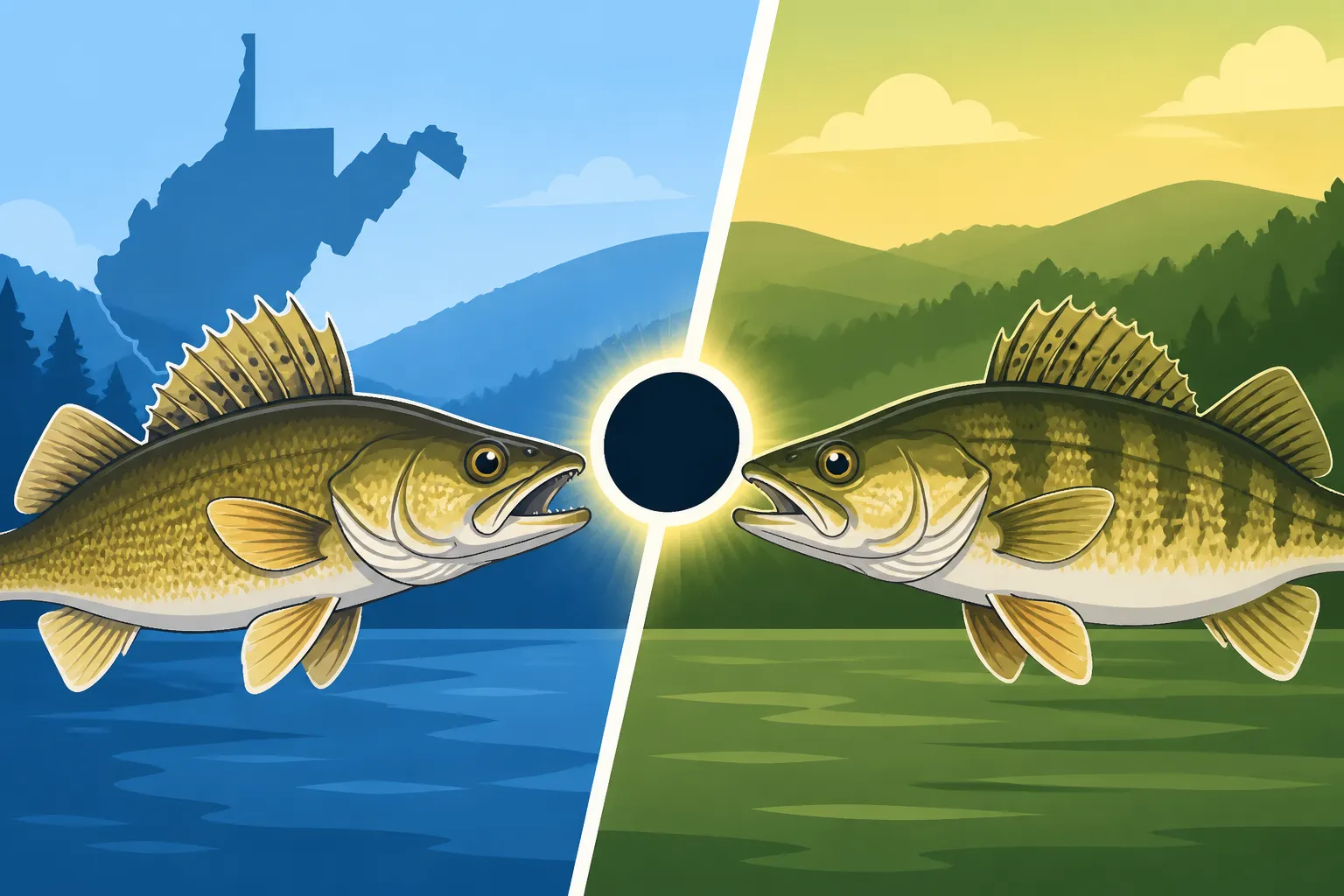
What a sauger is and how it differs from a walleye
It's a classic West Virginia fishing riddle: you reel in a beautiful, bronze-colored fish from a river, and you're almost certain it's a walleye… but then you notice some subtle differences. Is it a walleye, or is it something else entirely? Many anglers, from seasoned veterans to excited beginners, grapple with telling the difference between a sauger and a walleye, and knowing which is which is crucial not just for your ego, but for staying on the right side of fishing regulations. This guide is here to clear up that confusion once and for all, diving deep into the characteristics and habits of both these amazing fish so you can identify them with confidence.
Getting to Know the Sauger: West Virginia's Elusive River Dweller
For many years, the sauger often played second fiddle to its flashier cousin, the walleye. But in West Virginia, particularly in our larger river systems, the sauger is a celebrated game fish in its own right, offering a unique challenge and a delicious reward. They thrive in environments where walleye might struggle, making them an important part of our state's diverse fishery.
Sauger's Distinctive Look
When you pull a sauger from the water, the first thing you'll likely notice is its overall darker, more mottled appearance compared to a walleye. Sauger typically exhibit a brassy brown to olive-gray coloration along their backs, transitioning to lighter flanks and a creamy white belly. What really sets them apart are the distinct dark, saddle-like blotches or spots that run down their sides, almost like tiger stripes. These markings aren't always super clear, especially on older fish, but they're a good initial indicator.
Another key visual cue to look for is on their fins. The dorsal fin (the one on their back) of a sauger will have very clear, dark spots that are arranged in rows, almost like little beads. Their caudal fin (tail fin) lacks the prominent white tip that's characteristic of a walleye. Instead, the sauger's tail will often be dark or mottled all the way to the edge. When you run your hand along a sauger, you might also notice their scales feel a bit rougher to the touch than a walleye's. These subtle but consistent differences are your best friends in identification.
Sauger Habitat and Behavior
Sauger are true river dwellers, preferring environments with current and often more turbid (murky) water. You'll find them most commonly in the Ohio River, the Kanawha River, and sections of the New River and Monongahela River. Unlike walleye which might venture into clearer lake environments, sauger stick to the deeper channels, current breaks, and rocky structures within these flowing systems. They love areas where the current creates eddies or scour holes, offering them a place to hide and ambush prey without fighting the main flow constantly.
Their behavior is also tailored to these riverine conditions. Sauger are often more active during periods of low light, such as dawn, dusk, or even throughout the night, using their excellent eyesight in dim conditions to hunt baitfish like shad and minnows. They tend to school up, especially in deeper holes during colder months, which can make them a fantastic target for vertical jigging techniques. If you're fishing a deep seam where a river channel meets a flat, or around bridge pilings and wing dams, you're in prime sauger territory.
Understanding the Walleye: A Prized Game Fish
The walleye, with its striking golden-olive hues and legendary table fare, is often one of the most sought-after game fish in West Virginia. While they share some similarities with their sauger cousins, walleye have distinct features and preferences that make them a unique and rewarding target for anglers across the state.
Walleye's Signature Features
When you land a walleye, you'll immediately notice a more uniform, typically brighter coloration than a sauger. They usually have a beautiful olive-green to golden-yellow hue on their backs, fading into golden-bronze sides and a white belly. While they might have some faint blotches or bars, they generally lack the distinct saddle markings found on a sauger. Their bodies often appear more torpedo-shaped and slender compared to the slightly more robust build of a river sauger.
The most reliable and frequently cited distinguishing feature for a walleye is the bright white tip on the lower lobe of its caudal (tail) fin. This "white sock" is almost always present and is a dead giveaway that you've got a walleye on the line. Their dorsal fins also differ significantly; instead of distinct spots, a walleye's first dorsal fin might have a dark blotch at the base of the last few spines, but it won't have the clear, organized rows of spots seen on a sauger. If you run your hand along a walleye, you'll generally find their scales feel smoother than those of a sauger.
Walleye Habitat and Behavior
Walleye in West Virginia tend to favor different types of water than sauger. While you can find them in some of our larger, cleaner rivers, they truly shine in our big, clear reservoirs and impoundments like Summersville Lake, Tygart Lake, and Stonewall Jackson Lake. They prefer cooler, deeper water with plenty of structure, such as rock humps, submerged timber, and deep points. Unlike sauger that thrive in murky conditions, walleye often prefer clearer water, though they are still very sensitive to light and will seek deeper water or shady areas during bright daylight hours.
Their behavior reflects this habitat preference. Walleye are often found relating to structure, patrolling breaklines and drop-offs for schools of baitfish. They are opportunistic feeders, active during low light conditions – dawn, dusk, and night – but can certainly be caught throughout the day, especially in deeper water or on cloudy days. Anglers targeting walleye in lakes will often focus on these structural elements, employing techniques like trolling crankbaits over flats or jigging spoons on deep humps. Understanding these differences is key to successful How to Catch Walleye in West Virginia.
The Head-to-Head Comparison: Sauger vs. Walleye
When you're out on the water, especially after a successful fishing trip, being able to quickly and accurately tell the difference between a sauger and a walleye isn't just a party trick – it's often essential for adhering to regulations and maximizing your fishing strategy. Let's break down the most critical distinctions.
Visual Cues for Instant Identification
The easiest way to tell these two apart is by focusing on a few key visual indicators that are almost always reliable. The most important one is the tail fin. A walleye will almost always have a distinct, prominent white tip on the lower lobe of its tail. Think of it like a little white "sock." A sauger, on the other hand, will not have this white tip; its tail will be dark or mottled all the way to the edge. If you remember nothing else, remember the white tail tip for the walleye!
Next, look at the dorsal fin. A sauger's first dorsal fin (the spiny one) will have very clear, dark spots arranged in rows, almost like a leopard's spots. A walleye's dorsal fin, however, will typically be clear or may have a dark blotch at its very base, but it won't have those distinct rows of spots. Finally, consider the overall body pattern: sauger usually have very pronounced, dark saddle-like markings or blotches along their sides, giving them a more camouflaged, river-bottom appearance. Walleye will have a more uniform golden-olive color, sometimes with faint bars, but rarely the distinct blotches of a sauger. These differences become second nature with a little practice and mindful observation.
Here's a quick comparison table to keep in mind:
| Feature | Sauger | Walleye |
|---|---|---|
| Tail Fin | No white tip on lower lobe | Prominent white tip on lower lobe |
| Dorsal Fin | Distinct dark spots in rows on first dorsal | No distinct spots, sometimes a dark blotch |
| Body Coloration | Brassy brown to olive-gray, pronounced dark saddle blotches | Olive-green to golden-yellow, more uniform, faint bars sometimes |
| Body Shape | Often slightly more robust | Generally more streamlined, torpedo-shaped |
| Scales | Feel slightly rougher to the touch | Feel smoother to the touch |
Habitat and Behavioral Distinctions Affecting Your Angling
Beyond their looks, the places sauger and walleye choose to live, and how they behave, have a huge impact on how you approach fishing for them. Sauger are truly adapted to moving water, preferring turbid, current-laden rivers and deeper channels. This means if you're fishing rivers like the Ohio or Kanawha, especially in deeper, less clear sections, you're more likely to encounter sauger. They'll often be tucked into current breaks, behind wing dams, or in deep scour holes. Their preference for these spots often means they respond well to presentations that stay near the bottom, like vertical jigging or slow-drifting live bait.
Walleye, while also found in rivers, are often more dominant in our larger, clearer lakes and reservoirs. They relate more to traditional lake structure – rocky points, submerged humps, and deep flats. If you're on a vast body of water like Summersville or Tygart, you're probably chasing walleye. Their light sensitivity means they'll often be deeper during the day, or move shallower during low light. This calls for tactics like trolling crankbaits covering large areas, casting jigs to rock piles, or using bottom bouncers with crawler harnesses. Understanding these preferences helps you pick the right Best Fishing Rivers in West Virginia or Best Fishing Lakes in West Virginia to target, and then the right techniques once you're there.
Why Knowing the Difference Matters for West Virginia Anglers
It might seem like a small detail to distinguish between two fish that look so similar, but for us West Virginia anglers, it's actually pretty critical. Getting it right ensures you're a responsible conservationist and helps you become a much more effective angler.
Regulatory Compliance and Bag Limits
This is where knowing your sauger from your walleye really hits home. The West Virginia Division of Natural Resources (WVDNR) often has different size and creel (bag) limits for walleye and sauger, and sometimes even for their hybrid, the saugeye. For instance, specific rivers or lakes might have a 15-inch minimum for walleye but no minimum for sauger, or a combined limit with different possession rules. Imagine you're proudly showing off your catch, only to realize you've kept a short walleye thinking it was a legal sauger, or vice-versa. That's a mistake that can lead to a fine, and nobody wants that.
It's absolutely essential to consult the most current West Virginia Fishing Regulations Explained summary before heading out. This publication, available online or at most license vendors, will clearly outline the specific rules for West Virginia Walleye Daily and Possession Limits and sauger in various waters across the state. Taking the time to study these regulations for your chosen fishing spot can save you a lot of headache and ensure you're contributing to the sustainable management of our valuable fisheries.
Tailoring Your Fishing Strategy
Beyond regulations, distinguishing between sauger and walleye empowers you to be a much more strategic angler. Since they have different preferred habitats and behaviors, the most effective fishing techniques and baits will often vary. If you're specifically targeting sauger in a deep, murky river, you'll likely want to use tactics like vertical jigging with a heavy jig or a blade bait, or slow-trolling bottom bouncers with minnows right in the main channel or eddy lines. They often hug the bottom in strong currents, and a slower, more deliberate presentation is key.
For walleye in a clearer lake, your approach might involve covering more water by Trolling Techniques for West Virginia Lake Walleye with crankbaits over expansive flats, or casting Best Jigs for West Virginia Walleye to rock piles and submerged timber. You might also focus more on low-light periods like dusk and dawn, or even night fishing, when walleye are most actively feeding in shallower waters. Knowing the species you're after helps you select the right lures, lines, and even the best time of day for success. You can find a huge variety of specialized jigs, crankbaits, and even scent attractants on platforms like Amazon to fine-tune your approach for either species.
Frequently Asked Questions about Sauger and Walleye
It's natural to have more questions about these similar yet distinct fish, especially with the added layer of hybrids and specific fishing techniques. Let's tackle some of the common queries that come up for West Virginia anglers.
Hybrid "Saugeye" Explained
Adding another layer of intrigue to the walleye-sauger puzzle is the saugeye. This is a fertile hybrid between a female walleye and a male sauger, and it’s stocked in many waters across West Virginia, often to provide a robust game fish that thrives in a wider range of conditions than either parent. Saugeye typically grow faster than sauger but can tolerate more turbid waters than pure walleye, making them a fantastic fishery in some of our impoundments and rivers.
Visually, a saugeye can be a real head-scratcher, as it often displays a mix of features from both parents. You might see faint saddle markings like a sauger, but also a partial or faint white tip on the lower caudal fin, not as pronounced as a pure walleye's. The spots on the dorsal fin will likely be present but often appear more scattered and less defined than on a sauger. When in doubt about whether you've caught a saugeye, walleye, or sauger, always refer to the specific regulations for the body of water you're fishing, as sometimes saugeye have their own distinct limits or are included in a combined walleye/sauger limit.
Best Practices for Catching Each Species
While there's overlap, optimizing your approach for each species will significantly boost your success. For sauger, especially in our West Virginia rivers, think vertical and deep. They love current breaks and deep holes. Try vertical jigging with 1/2 oz to 1 oz jigs tipped with live minnows or soft plastics. Blade baits and heavy spoons fished directly beneath the boat can also be deadly, especially in cooler water. The Ohio River Fishing Rules for West Virginia Anglers often highlight areas where sauger congregate. Targeting them during low light or after dark can be incredibly productive.
For walleye, particularly in the large reservoirs like Summersville Lake, consider Best Time of Day to Catch Walleye in West Virginia and adjust your tactics. Early morning, late evening, and cloudy days are prime for casting crankbaits, jigging spoons, or using bottom bouncers with nightcrawlers or leeches on structural elements like humps and points. Trolling is a highly effective way to cover water and find active fish. Many anglers rely on electronics to locate schools of walleye relating to structure. Both species respond well to live bait, but presentation varies. For specific lure ideas, check out resources on Best Jigs for West Virginia Walleye and Trolling Techniques for West Virginia Lake Walleye. Don't forget, having a well-stocked tackle box from places like Amazon can make all the difference, ensuring you have the right bait and tackle for whatever the river or lake throws at you.
Disclaimer
This article is for general informational purposes only and does not constitute professional advice. Laws, prices and regulations vary by location and change over time. Consult a qualified professional for guidance on your specific situation.