West Virginia Class CS conservation stamp exemptions
Navigating the ins and outs of fishing regulations in West Virginia can feel like trying to untangle a particularly stubborn fishing knot. One common point of confusion for many anglers, especially those new to the state or those who fit into certain categories, is the requirement for the Class CS Conservation Stamp. It's easy to wonder if you truly need to add another stamp to your fishing license, or if there are specific situations where you might be exempt. This guide is here to clear up that confusion, diving deep into who needs the Class CS Conservation Stamp and, more importantly, who is completely exempt from this requirement, saving you time and potential headaches on your next fishing adventure.
Understanding the West Virginia Conservation Stamp
First things first, let's talk about what the Class CS Conservation Stamp actually is. It’s not just another piece of paper; it's a vital part of funding the conservation efforts that keep West Virginia's wild places and fish populations healthy and thriving. When you purchase this stamp, your money goes directly towards projects that benefit wildlife management, habitat restoration, law enforcement, and educational programs across the state. It’s essentially a small investment in the future of the natural resources we all love to enjoy.
Generally speaking, almost everyone who plans to hunt or fish in West Virginia, and is required to hold a license, will also need to possess a Class CS Conservation Stamp. This applies to both residents and non-residents, and it’s typically purchased alongside your annual fishing or hunting license. It's often bundled in with combination licenses, simplifying the process for many. For a more detailed breakdown of what this stamp covers and why it’s so important, you can check out our comprehensive article on West Virginia's Conservation Stamp, Explained. Without it, even if you have a valid fishing license, you could find yourself in a sticky situation with conservation officers. It’s a small, but mighty, detail that's easy to overlook if you're not fully aware of the regulations.
Who is Exempt from Needing a Class CS Conservation Stamp?
While the conservation stamp is a general requirement, the good news is that West Virginia recognizes several categories of individuals who are exempt from needing to purchase one. These exemptions are put in place to support various groups within the community or to simplify the licensing process for those who already qualify for certain benefits. Understanding these exemptions can save you money and ensure you're fishing legally.
Youth Anglers
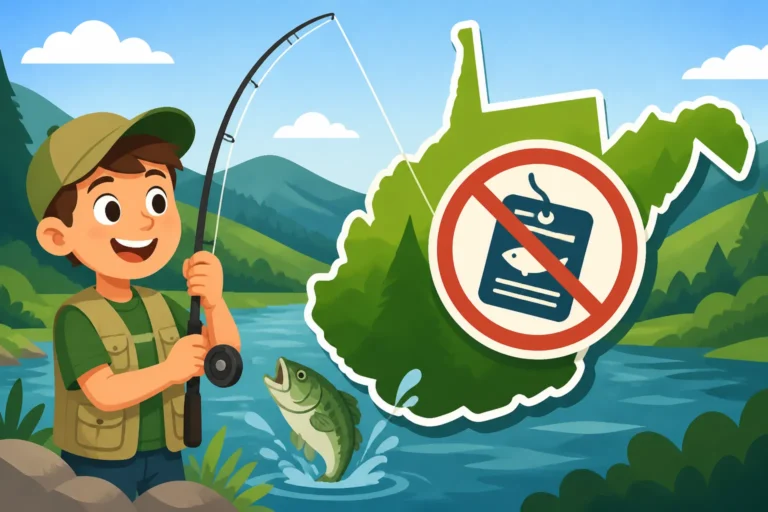
One of the most heartwarming exemptions is for our youngest anglers. In West Virginia, residents who are under the age of 15 are generally not required to purchase a fishing license. Since the Class CS Conservation Stamp is typically required in conjunction with a fishing license, this means that if you're under 15, you also do not need the conservation stamp. This makes it incredibly easy for families to get kids out on the water and spark that lifelong love for fishing without the added financial burden or paperwork. It’s important to remember that this applies to resident youth. Non-resident youth, however, generally need a license and thus a conservation stamp, unless they are fishing during a designated free fishing day. For more information on age requirements, you can refer to our guides on Do Kids Need a Fishing License in West Virginia? and West Virginia Fishing License Age Requirements.
Senior Anglers
West Virginia deeply values its senior citizens, and this appreciation extends to fishing regulations. Resident anglers who have reached a certain age often qualify for special license options that include, or exempt them from, the conservation stamp. Specifically, West Virginia residents who turn 65 on or after January 1, 2012, can purchase a Class XS Senior Lifetime Hunting/Fishing/Trapping License. This lifetime license includes the conservation stamp, so they don't need to buy it separately. For those residents who turned 65 before January 1, 2012, they are often completely exempt from needing a hunting, fishing, or trapping license and, by extension, the conservation stamp, as long as they carry proof of age and residency. This is a fantastic benefit for long-time residents. To understand the nuances of these senior exemptions, our guide on Do Seniors Need a Fishing License in West Virginia? and West Virginia Senior Fishing License Rules by Birth Year can provide specific details.
Lifetime License Holders
If you’ve invested in a West Virginia Lifetime Hunting, Fishing, and Trapping License, you can breathe a sigh of relief when it comes to the conservation stamp. The beauty of these lifetime licenses is that they are designed to cover all the fundamental requirements for recreational hunting and fishing within the state, often including the necessary stamps and privileges. Therefore, if you hold a Class A+L, B+L, or other specific lifetime license types, the Class CS Conservation Stamp is already incorporated into your license privileges, and you do not need to purchase it separately. It’s one of the major perks of securing a lifetime license, offering a one-time payment for a lifetime of access. Curious about the cost and benefits? Check out our article on West Virginia Lifetime Fishing License Cost.
Disabled Veterans and Former Prisoners of War (POWs)
West Virginia honors its veterans and former prisoners of war with significant exemptions. Resident disabled veterans who have a 100% total permanent service-connected disability, as determined by the U.S. Department of Veterans Affairs, are exempt from needing a hunting or fishing license, and therefore, the conservation stamp. Similarly, any West Virginia resident who was a former prisoner of war is also exempt. These exemptions are a small token of gratitude for their immense sacrifices. To qualify, individuals must be able to provide proper documentation of their status, which typically involves official VA paperwork. It’s always best to carry proof of this status when fishing. For more specifics, our guide on Disabled Veteran and POW Fishing License Exemptions in West Virginia offers further detail.
Blind Anglers
West Virginia law provides a specific exemption for resident anglers who are legally blind. If you are a West Virginia resident and can provide certification from a licensed ophthalmologist or optometrist stating that you are legally blind, you are not required to possess a fishing license or the Class CS Conservation Stamp. This thoughtful exemption ensures that a visual impairment does not create an additional barrier to enjoying the state's abundant fishing opportunities. Like other exemptions, carrying proof of your certified status is crucial while on the water. You can learn more about this specific exemption in our article Blind Angler Fishing License Exemption in West Virginia.
Landowners Fishing on Their Own Property
Another important exemption for residents applies to landowners. If you are a West Virginia resident and are fishing on your own land, or on the land of an immediate family member (with permission), you are generally not required to possess a fishing license or the Class CS Conservation Stamp. This applies as long as the property is truly your own or that of a direct family member (spouse, child, parent) and you are not fishing in public waters that simply border your property without owning the actual streambed or lakebed. This exemption is rooted in the traditional rights associated with property ownership. However, it’s vital to understand the specifics of what constitutes "your own land" in the eyes of the law, especially regarding public access waterways. Always confirm with the WV DNR if there's any ambiguity about your property lines and public water access.
Free Fishing Days
Periodically, West Virginia's Division of Natural Resources (DNR) designates specific "Free Fishing Days." During these special days, everyone, residents and non-residents alike, can fish in West Virginia's public waters without needing a fishing license or any stamps, including the Class CS Conservation Stamp. These days are a fantastic opportunity for new anglers to try out the sport, or for seasoned veterans to introduce friends and family to fishing without the initial cost of a license. The dates for these days usually vary year to year, so it's always a good idea to check the official WV DNR calendar. Our article on West Virginia free fishing days for 2026 will keep you updated on the next opportunities.
Here's a quick summary table of the common Class CS Conservation Stamp exemptions:
| Exemption Category | Eligibility Criteria (Resident) | License/Stamp Requirement |
|---|---|---|
| Youth Anglers | Under 15 years of age | No fishing license or conservation stamp |
| Senior Anglers (Post-2012) | Age 65+ on or after Jan 1, 2012; holds Class XS Senior Lifetime License | Conservation stamp included in lifetime license |
| Senior Anglers (Pre-2012) | Age 65+ before Jan 1, 2012; able to provide proof of age/residency | No fishing license or conservation stamp |
| Lifetime License Holders | Holds any valid West Virginia Lifetime Hunting/Fishing/Trapping License (e.g., Class A+L, B+L) | Conservation stamp included in lifetime license |
| 100% Disabled Veterans | 100% total permanent service-connected disability (VA certified) | No fishing license or conservation stamp |
| Former Prisoners of War (POWs) | Certified former Prisoner of War | No fishing license or conservation stamp |
| Blind Anglers | Certified legally blind by licensed ophthalmologist/optometrist | No fishing license or conservation stamp |
| Landowners on Own Property | Fishing on own land or immediate family's land (with permission) in private waters | No fishing license or conservation stamp |
| Free Fishing Days | Fishing on designated free fishing days (check WV DNR calendar) | No fishing license or conservation stamp (for anyone) |
Important Considerations for Conservation Stamp Exemptions
Even if you believe you qualify for an exemption, there are a few critical points to keep in mind to ensure your fishing trip goes smoothly and legally. Ignoring these can still land you in trouble, despite your best intentions.
Proving Your Eligibility on the Water
This is perhaps the most crucial aspect of any exemption. Simply being exempt isn't enough; you must be able to prove it if asked by a conservation officer. For youth, a photo ID showing age or being accompanied by an adult who can verify age might suffice. Seniors with Class XS licenses will carry their physical license or a digital copy. Those exempt due to disability, POW status, or blindness absolutely must carry official documentation verifying their status. For landowners, proof of property ownership or family relation might be required.
It's a good practice to keep any relevant documentation, whether it's your driver's license, military ID, or a copy of official VA paperwork, in a waterproof bag or wallet. Many anglers find durable, waterproof pouches perfect for this, which you can often find on platforms like Amazon. Having these documents readily accessible ensures a quick and respectful interaction with law enforcement, allowing you to get back to fishing without delay.
Non-Resident Rules and Exemptions
It's important to understand that most of the exemptions listed above primarily apply to West Virginia residents. Non-residents generally have fewer exemptions and different licensing requirements. For instance, a non-resident youth will typically need a fishing license and the associated conservation stamp if they are over the age of 15, or even younger depending on reciprocity agreements with their home state.
If you’re visiting from out of state, your best bet is usually to purchase a non-resident fishing license. These licenses often bundle the necessary stamps, so you won't need to purchase the conservation stamp separately. Be sure to check the specific non-resident license options, such as annual, 1-day, or 3-day permits. Our article on Nonresident Annual Fishing License Cost in West Virginia can provide more clarity on those options. Don't assume that an exemption in your home state automatically applies in West Virginia; always verify with the WV DNR before you cast a line.
How Combined Licenses Handle the Stamp
Many anglers opt for combination licenses that allow for both hunting and fishing. For West Virginia residents, these combined licenses, such as the Class AB (Resident Hunting/Fishing) or Class X (Resident Sportsman's), typically include the Class CS Conservation Stamp as part of the package. This is a huge convenience, as it means you purchase one license and you're covered for both activities, including the conservation stamp requirement. It simplifies your wallet and reduces the chances of forgetting a separate stamp. If you're considering a combined license, it's a great way to ensure you're fully compliant without extra hassle. Learn more about your options by reading our guide on West Virginia Combination Hunting and Fishing License Options.
Where to Verify Current Regulations
Regulations can change, albeit usually with advance notice. While this guide provides the most up-to-date information, it's always, always, always a good idea to cross-reference with the official source. The West Virginia Division of Natural Resources (WV DNR) website is your go-to for the latest regulations and any updates to exemptions. You can typically find a downloadable fishing regulations summary or use their online portal.
Sometimes it's helpful to have a physical copy of the regulations to keep with your gear, or even an e-reader to access them on the go. You can find many useful accessories for organizing your fishing documents and small gear on Amazon, from compact waterproof cases to pocket-sized regulation books that compile the rules for easy reference. Staying informed is your best defense against inadvertently breaking a rule.
What Happens If You're Not Exempt and Don't Have It?
It's easy to think of a "stamp" as a minor detail, something less important than your actual fishing license. However, in West Virginia, if you are required to have a Class CS Conservation Stamp and you do not possess one while fishing, it's considered a violation of state law. This is treated just as seriously as not having a valid fishing license itself.
The penalties for fishing without the required license or stamp can vary depending on the exact circumstances and the discretion of the conservation officer, but they are not minor. You could face fines, which can range from a couple of hundred dollars to substantially more, plus court costs. In some cases, your fishing gear could even be confiscated. More importantly, it can cast a shadow on your reputation as a responsible angler and impact your ability to obtain future licenses. Nobody wants their peaceful day on the water interrupted by a citation. It’s far better to confirm your exemption status or purchase the necessary stamp than to risk the consequences. To understand the full scope of potential issues, check out our guide on Fishing Without a License in West Virginia: Penalties.
Ultimately, understanding the Class CS Conservation Stamp and its exemptions is about being a responsible and informed angler. It ensures you’re contributing to the health of West Virginia’s fisheries and enjoying your time on the water worry-free.
Disclaimer
The information provided in this guide is intended for general informational purposes only and does not constitute legal advice. Fishing regulations can change, and interpretations may vary. It is always the angler's responsibility to consult the most current official West Virginia Division of Natural Resources (WV DNR) regulations or contact the WV DNR directly for definitive and up-to-date information before engaging in any fishing activities.