Disabled Veteran and POW Fishing License Exemptions in West Virginia
Navigating fishing license requirements can be a real headache, especially when you've honorably served our country and expect certain benefits. It often feels like a maze of paperwork and unclear rules, leaving you wondering if you truly qualify for an exemption. This comprehensive guide is here to cut through that confusion, clearly outlining the fishing license exemptions available for disabled veterans and former Prisoners of War (POWs) in West Virginia, ensuring you can enjoy the Mountain State's beautiful waters with peace of mind.
Understanding West Virginia's Fishing License Requirements for Veterans and POWs
Before we dive into the specifics of exemptions, it's really helpful to understand the general lay of the land when it comes to fishing licenses in West Virginia. Just like almost any other state, West Virginia has a system in place to manage its natural resources, and fishing licenses are a big part of that. They help fund conservation efforts, fish stocking programs, and the enforcement of regulations that keep our waters healthy and abundant.
General Fishing License Rules in West Virginia
Typically, if you're 15 years of age or older and want to fish in the public waters of West Virginia, you need to have a valid fishing license. This isn't just a suggestion; it's a legal requirement. There are different types of licenses available, depending on your residency status and how long you plan to fish. For instance, a resident of West Virginia will pay a different fee than a nonresident, and there are options for annual licenses versus shorter-term permits, like a 1-day or 3-day nonresident permit. This ensures everyone contributes a fair share to the upkeep of the state's amazing fishing opportunities.
Beyond the basic fishing license, you might also need additional stamps or permits depending on what you're targeting or where you're fishing. The most common example is a West Virginia trout stamp, which is required if you plan to fish for trout, even if you're just catching and releasing. This extra revenue specifically supports the state's robust trout stocking program, which is a huge draw for many anglers. It's really easy to overlook these add-ons, but they're just as important as the base license. If you're unsure about the age specifics, you can always check out our guide on West Virginia Fishing License Age Requirements or Do Kids Need a Fishing License in West Virginia? to get the full scoop on who needs what at what age.
The Importance of Recognizing Service and Sacrifice
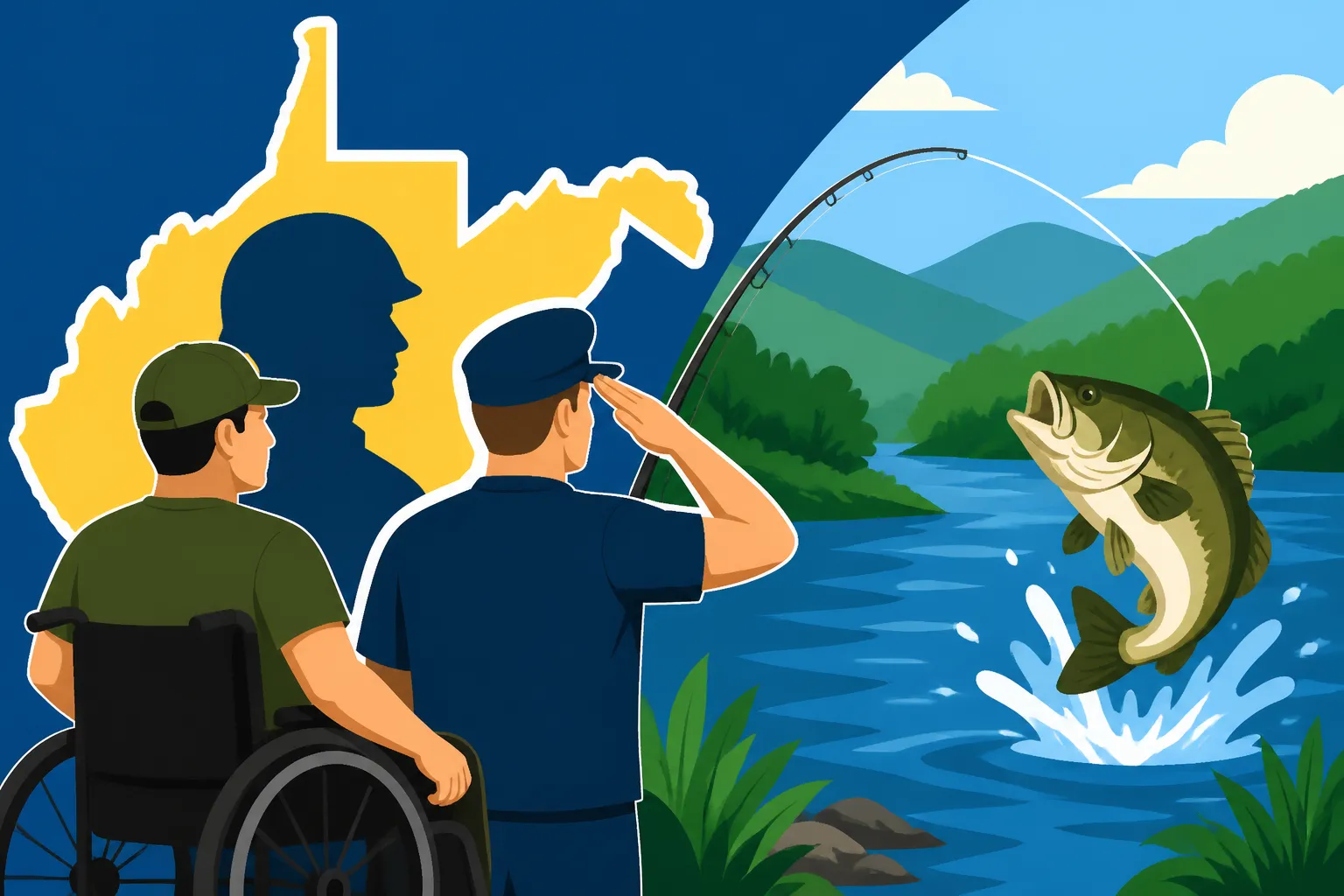
It's absolutely right that those who have served our nation, especially disabled veterans and former Prisoners of War, should receive special consideration. These exemptions aren't just a bureaucratic loophole; they're a small but meaningful way for the state of West Virginia to express profound gratitude and respect for the immense sacrifices made. We often forget the daily challenges that come with service-connected disabilities or the unimaginable hardships endured as a POW, and allowing these individuals to enjoy the tranquility and therapeutic benefits of fishing without the added financial or administrative burden of a license is a testament to that recognition.
West Virginia, like many states, understands that for many veterans, fishing isn't just a hobby; it's a vital part of their healing process, a chance to reconnect with nature, find peace, and enjoy a sense of freedom that was hard-won. The West Virginia Division of Natural Resources (WVDNR) actively works to support veterans and POWs, and these license exemptions are a cornerstone of that commitment. It's about honoring courage, resilience, and the indelible mark left by their service to our country.
Specific Exemptions for Disabled Veterans in West Virginia
For many disabled veterans, getting out on the water can be incredibly therapeutic. The last thing anyone wants is for a fishing license fee or complicated application process to stand in the way. West Virginia recognizes this and has specific provisions to ensure eligible disabled veterans can enjoy fishing without a state license.
Eligibility Criteria for Disabled Veteran Exemptions
The key to qualifying for a disabled veteran fishing license exemption in West Virginia hinges on your service-connected disability rating. To be eligible, you must be a resident of West Virginia and be able to provide satisfactory proof that you are a 100% service-connected disabled veteran of the United States armed forces. This isn't just any disability; it has to be directly attributed to your time in service and rated at the highest level by the U.S. Department of Veterans Affairs (VA). It's a precise definition, and understanding it is crucial.
If you're a veteran residing in West Virginia, you'll need official documentation to prove your 100% service-connected disability. This typically means a letter from the Department of Veterans Affairs explicitly stating your disability rating. Alongside this, you'll need proof of your veteran status, which is usually your DD-214 form or other official military discharge papers. The state wants to make sure these benefits go to those truly qualified, so having all your ducks in a row with your paperwork will make the process much smoother. Don't forget, the residency requirement is strict; you need to genuinely live in West Virginia. You can find more details on what counts as residency by looking at our guide on West Virginia residency requirements for a fishing license.
How to Apply for the Disabled Veteran Exemption
Applying for this exemption might seem daunting at first, but the WVDNR has streamlined the process to make it as straightforward as possible. You won't be buying a specific "disabled veteran license" per se; instead, you're applying for an exemption from the general license requirement. This means you’ll be issued something that serves as your official proof that you don't need to purchase a standard license.
The most common way to apply is to visit a WVDNR office in person. This allows staff to verify your documentation on the spot and answer any questions you might have. You'll need to bring your VA disability letter and your DD-214 or other proof of service. They will typically have a simple application form for you to fill out. Alternatively, you can sometimes apply by mail by sending copies of your documentation to the WVDNR headquarters. While the WVDNR has an online portal (WVhunt.com) for purchasing licenses, the exemption typically requires direct interaction to verify your sensitive documentation. Once approved, you'll be issued a card or document confirming your exempt status, which you must carry while fishing. It's not a lengthy process, but it does require that initial verification.
Exemptions for Former Prisoners of War (POWs) in West Virginia
The experiences of former Prisoners of War are beyond what most of us can imagine. Their courage and endurance deserve every recognition, and West Virginia ensures that those who suffered such profound hardship are granted relief from fishing license fees as a small token of gratitude.
Defining Eligibility for POW Exemptions
For former Prisoners of War, West Virginia also offers a full exemption from state fishing license requirements. The primary eligibility criterion here is, of course, satisfactory proof that you were a prisoner of war during a period of armed conflict. This designation is incredibly specific and deeply honored. As with disabled veterans, you must also be a bona fide resident of West Virginia to qualify for this state-specific exemption.
The documentation required to prove POW status is usually highly official, often involving military records from the Department of Defense or Veterans Affairs that specifically attest to your prisoner of war experience. This isn't something that can be self-declared; it needs to be verified through official channels. Having these documents readily available will significantly expedite your application. The state aims to make this process respectful and efficient, acknowledging the sensitivity and importance of this status.
Application Process for POW Fishing License Exemptions
The application process for former POWs is quite similar to that for 100% service-connected disabled veterans, focusing on verification of your unique service status. You will need to provide official documentation that confirms your status as a former Prisoner of War, along with proof of your West Virginia residency.
Again, the best course of action is often to visit a WVDNR office in person. This allows for direct verification of your sensitive military records and ensures that your exemption is processed correctly. Bringing original documents or certified copies is always recommended. Staff at these offices are trained to handle such applications with the respect and care they deserve. Once your documentation is verified and approved, you will receive an official document or card signifying your exemption from the general fishing license requirement. This document will serve as your proof if you're ever asked for a license while fishing. Keeping this up-to-date and understanding any renewal requirements, though often these are lifetime exemptions, is a good practice to ensure continuous, worry-free fishing.
Benefits and Limitations of These Exemptions
While these exemptions are incredibly beneficial, it's important to understand exactly what they cover and any potential limitations. Thinking that an exemption covers absolutely everything can sometimes lead to unexpected issues on the water, so let's break it down.
What the Exemptions Cover and Don't Cover
Generally, if you qualify as a 100% service-connected disabled veteran or a former POW, you are exempt from the requirement to purchase the standard annual West Virginia fishing license. This means you won't have to pay for the Class B (resident fishing) or Class F (nonresident fishing) license. This is a significant financial benefit that allows you to fish the diverse waters of West Virginia without that recurring cost.
However, there's a crucial distinction to remember: these exemptions typically cover the base fishing license, but not always specialized stamps or permits. The most common example of this is the trout stamp. In West Virginia, if you plan to fish for trout in designated trout waters, even if you are catch-and-release, you will likely still need to purchase a trout stamp. This is because the revenue from trout stamps is specifically earmarked for the extensive and popular trout stocking program, which benefits all trout anglers. It's a small fee that helps keep those streams brimming with fish. It's always a good idea to double-check the current regulations each year, but generally, the trout stamp is separate. Similarly, these exemptions apply specifically to fishing; they do not automatically cover hunting licenses. If you enjoy both activities, you'd need to explore separate exemptions for hunting or consider a West Virginia Combination Hunting and Fishing License Options if you don't qualify for hunting exemptions.
Here's a quick overview of what's typically covered:
| Exemption Type | Base Fishing License | Trout Stamp | National Forest Stamp | Hunting License |
|---|---|---|---|---|
| Disabled Veteran | Exempt | Likely required | Likely required | Separate process |
| Former POW | Exempt | Likely required | Likely required | Separate process |
Note: Always consult the current West Virginia Fishing Regulations Summary for the most up-to-date information, as rules can change.
Carrying Your Proof of Exemption
This might sound like a minor detail, but it's absolutely critical: you must carry proof of your exemption whenever you are fishing in West Virginia waters. An exemption isn't a secret handshake; it's a legal status that needs to be verifiable if a Natural Resources Police Officer approaches you. Just like someone with a paid license needs to show their license, you need to show your official exemption document.
Failing to carry this proof can lead to significant hassle, including potential fines. An officer might not immediately know you're exempt without seeing the proper paperwork, and it could result in being cited for Fishing Without a License in West Virginia: Penalties. This is a situation no one wants to be in, especially after earning the right to fish free of charge. Whether it's the official card issued by the WVDNR, a printed copy, or a digital version on your phone if supported by the WVDNR, ensure it's accessible. For more on digital versus paper, you can refer to Printing or Carrying a Digital Fishing License in West Virginia. Always keep it protected from water and damage. Think of it as your golden ticket – you wouldn't go to an event without your ticket, right? The same applies here.
Common Questions and Additional Resources
Even with the exemptions clearly laid out, some questions inevitably pop up, especially when you consider fishing across state lines or where to get the most accurate, current information. Let's tackle some of those common concerns.
Navigating Reciprocity and Boundary Waters
A frequent question, and a very valid one, revolves around fishing on boundary waters. West Virginia shares significant fishing waters with neighboring states, most notably the Ohio River, which forms a long border with Ohio. The general rule for fishing licenses is that they are state-specific. So, if you're fishing exclusively in West Virginia waters, your West Virginia exemption applies.
However, when you're on boundary waters, such as the Ohio River, specific reciprocity agreements often come into play. These agreements usually state that if you have a valid fishing license from either bordering state, you can fish the shared waters. For disabled veterans and POWs, this can get a little nuanced. Your West Virginia exemption is valid for West Virginia waters, and sometimes, by agreement, that extends to the West Virginia side of a boundary water. But it does not automatically grant you an exemption on the Ohio side of the Ohio River, for example, unless Ohio has a similar exemption and honors West Virginia's. It's crucial to understand that West Virginia's exemption only applies to West Virginia's requirements. You might still need to comply with the other state's licensing laws if you cross into their jurisdiction. Always consult specific details for Ohio River Fishing Rules for West Virginia Anglers or any other boundary water before you head out. When in doubt, it's safer to check with the authorities of both states involved.
Staying Up-to-Date with Regulations
Fishing regulations are not static; they can change from year to year, or even mid-season, due to biological needs, new research, or policy adjustments. While your exemption status is likely permanent, the specifics of what that exemption covers (like the trout stamp requirement) or other general fishing rules could be updated. This is why staying informed is paramount.
The absolute best resource for current information is the official West Virginia Fishing Regulations Summary. The WVDNR publishes this annually, and it's available online as a PDF, or you can pick up a physical copy at WVDNR offices and many license vendors. This document outlines everything from season dates and bag limits to specific rules for certain waters. We even have a guide dedicated to Reading the West Virginia Fishing Regulations Summary to help you navigate it. Beyond the summary, the WVDNR website is a treasure trove of information, often featuring news releases about regulation changes. If you ever have a specific question or a unique situation, don't hesitate to call your local WVDNR district office or their main licensing division. They are there to help, and getting clarification directly from the source is always the most reliable approach.
Table: Disabled Veteran & POW Exemptions at a Glance
| Feature | 100% Service-Connected Disabled Veteran Exemption | Former Prisoner of War (POW) Exemption |
|---|---|---|
| Eligibility | WV Resident, 100% Service-Connected VA Disability | WV Resident, Verified POW Status |
| Documentation Needed | VA Disability Letter (100% SVC), DD-214/Proof of Service | Official POW Records, Proof of Service |
| Application Method | In-person at WVDNR office, potentially by mail | In-person at WVDNR office, potentially by mail |
| Covers Base License | Yes | Yes |
| Covers Trout Stamp | Generally No (Required Separately) | Generally No (Required Separately) |
| Must Carry Proof | Absolutely Essential | Absolutely Essential |
| Applies to Hunting | No (Separate exemptions may apply) | No (Separate exemptions may apply) |
Disclaimer
The information provided in this guide is for general informational purposes only and is subject to change. While we strive to provide accurate and up-to-date information, fishing regulations and exemption requirements are determined by the West Virginia Division of Natural Resources and can be updated without prior notice. Always consult the official West Virginia Fishing Regulations Summary and the West Virginia Division of Natural Resources website or contact their offices directly for the most current and authoritative information before engaging in any fishing activities.