Best spinnerbait blade color for stained water
There are few things more frustrating than heading out to your favorite West Virginia fishing spot, full of anticipation, only to find the water looking like chocolate milk or murky tea after a heavy rain. That moment of "now what?" can really throw a wrench in your plans. But don't despair! When the waters turn stained, knowing which spinnerbait blade colors to reach for can be the difference between a frustrating day and a successful one. This guide is all about helping you cut through the murk, literally, by understanding the best spinnerbait blade colors for stained water conditions.
Understanding Stained Water in West Virginia
Before we dive into specific colors, let's take a moment to really understand what "stained water" means in the context of our beautiful West Virginia waterways. It's not just "dirty" water; it's a condition that profoundly changes how fish perceive their environment and, crucially, how they react to your lures.
What Causes Stained Water in West Virginia?
West Virginia's topography, with its rolling hills and steep mountains, means our rivers and lakes are particularly susceptible to changes in water clarity. The culprits behind stained water are varied, and each can present slightly different fishing challenges.
Firstly, rain and runoff are perhaps the most common causes. A good summer thunderstorm, or even a prolonged drizzle, can quickly turn a clear stream into a muddy torrent. This is especially true in areas with agricultural runoff or disturbed land. When rain hits the ground, it washes sediment, silt, and organic matter into creeks, which then flow into larger rivers and lakes. This creates a cloudy, often brown or tan hue, significantly reducing visibility. Places like the lower Kanawha River or sections of the Ohio River can transform overnight after a significant rain event, taking on that unmistakable coffee-with-cream look.
Secondly, algae blooms can also contribute to stained conditions, particularly during warmer months. While not always a brown murk, dense algal growth can give water a green, pea-soup appearance, effectively blocking light penetration just as much as sediment. Natural tannins from decaying leaves and organic material, especially in slower-moving waters or certain mountain streams during fall and winter, can tint the water a rich, tea-like amber. This tannic stain is common in many of our forested watersheds and has a different optical quality than muddy water, affecting how colors appear underwater.
How Stained Water Impacts Fish Behavior
When the water clarity changes, so does the entire underwater world for a fish. Their primary senses shift, and their behavior adapts to the new conditions. If you understand these changes, you can better present your lure.
Reduced visibility means that a fish's sense of sight becomes less effective. They can't see as far, and colors appear differently, often muted or completely invisible beyond a short distance. Instead, they rely much more heavily on their other senses: their lateral line system for detecting vibrations and pressure changes, and their sense of smell and taste. This is why "noisy" baits, those that create a lot of commotion or displace a good amount of water, become incredibly effective. A spinnerbait, with its rotating blades, is a prime example of such a lure, making it a stellar choice when the water is off-color.
Fish also tend to become less selective about their prey in stained water. With limited visibility, they're more likely to react instinctively to a sudden flash or strong vibration rather than carefully inspecting a potential meal. They often move shallower, seeking out cover like submerged logs, rock piles, or weed lines where they can ambush prey more effectively without being seen from above. This also brings them closer to the bank, making them more accessible to anglers. You'll often find bass or other predatory fish hugging structure in these conditions, waiting for something to swim by that they can detect through feel rather than sight.
The Science Behind Spinnerbait Blade Colors in Stained Water
Choosing the right blade color isn't just guesswork; there's a scientific basis for why certain colors perform better than others in stained water. It boils down to how light penetrates the water and how different colors are absorbed or reflected.
Light Penetration and Color Visibility
Water, especially stained water, acts like a filter for light. As light penetrates the water column, different wavelengths (which we perceive as colors) are absorbed at varying rates. Generally, red is the first color to disappear, followed by orange, yellow, green, and finally blue, which penetrates the deepest in clear water.
In stained or murky conditions, this absorption is drastically accelerated. The suspended particles in the water scatter and absorb light even more efficiently. This means that only certain wavelengths manage to penetrate much at all. What might appear as a vibrant red or blue lure in the air might look completely black or gray underwater. Therefore, the key isn't necessarily finding a color that perfectly "matches" something, but rather finding a color that either stands out by retaining some of its vibrancy or, more importantly, creates a strong, distinct silhouette or flash against the murky background. Think of it less about what color it is and more about what kind of visual disturbance it creates.
Vibration and Flash: Beyond Color
While color is important, a spinnerbait's true power in stained water comes from its vibration and flash. These elements are often more crucial than the precise shade of the blade.
Spinnerbaits are renowned for their ability to displace water and create a strong sonic signature. The rotating blades, especially larger ones like the Colorado style, create a significant "thump" that travels through the water. This vibration is picked up by a fish's lateral line, essentially providing a map of their surroundings even when they can't see it. In stained water, where visual cues are limited, this vibration becomes a primary attractant, drawing fish in from a distance and triggering reactionary strikes. The louder, the better, often.
Even in low-light conditions, flash still plays a vital role. While a metallic blade won't shimmer with the same brilliance as it would in clear water, it will still reflect any available light, creating brief, intermittent glints. These glints can mimic the flash of a fleeing baitfish or a startled crayfish. The shape of the blade also impacts this. A rounder Colorado blade creates a lot of vibration and a slower flash, making it ideal for extremely murky water. A more elongated Willowleaf blade, on the other hand, provides less vibration but a brighter, faster flash, which can be effective in slightly stained conditions. The Indiana blade sits somewhere in the middle, offering a balance of both. Understanding these nuances helps you pick the right tool for the job.
Top Spinnerbait Blade Colors for Stained Water in West Virginia
Now that we understand why certain attributes work, let's look at the specific blade colors that consistently produce in West Virginia's stained waters. These are the workhorses you'll want in your tackle box from Bass Pro Shops or ordered from Amazon.
Bright, Opaque Colors: Chartreuse and White
When the water gets murky, you need colors that scream "look at me!" These bright, opaque options do exactly that by maintaining their visibility even in challenging conditions.
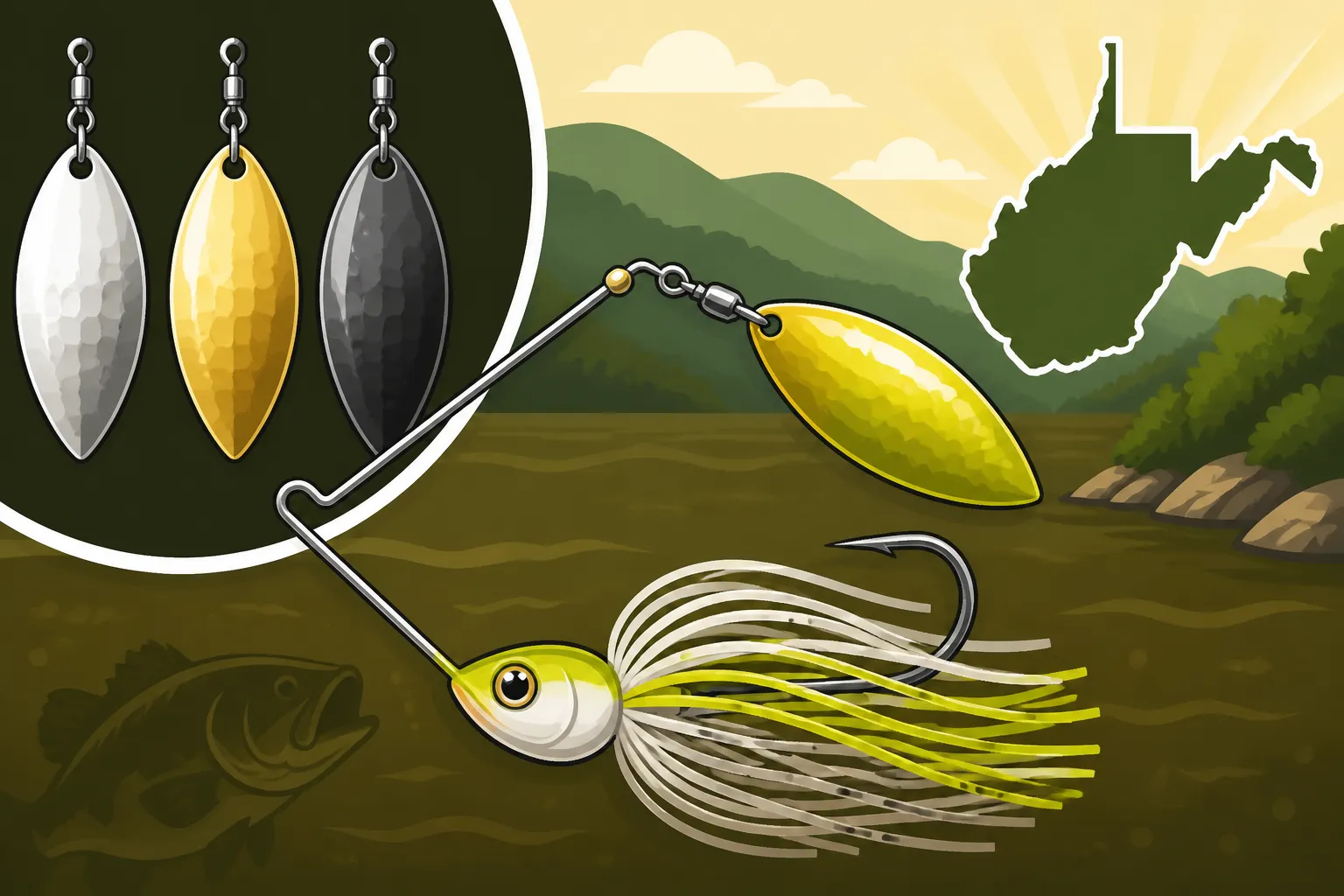
Chartreuse is arguably the king of stained water. This vibrant yellow-green hue has a unique property: it retains its brightness and visibility in low light and turbid conditions better than almost any other color. Fish seem to pick up on it with surprising clarity, making it an excellent choice for everything from muddy river sections to tannic-stained creeks. It’s a color often associated with various baitfish, and its sheer brilliance acts as a beacon in the murk. You'll find it's a go-to for bass, walleye, and even muskie when the rivers are running high and off-color.
White is another high-visibility champion. While it might seem simple, white creates an incredibly strong silhouette against a dark, stained background. It mimics common baitfish like shad or shiners, which often have light bellies. When worked through murky water, a white spinnerbait can look like a struggling, easy meal. It's especially effective when there's a little more light penetration, allowing the white to really pop. Many anglers opt for a white skirt with a white or silver blade for maximum visual impact. Pairing these bright colors with a thumping Colorado blade can be absolutely deadly.
Metallic Blades for Flash and Contrast: Gold and Silver
Sometimes, it's not about being bright but about creating the right kind of reflection and a powerful silhouette. Metallic blades excel at this.
Gold blades are exceptional in heavily stained or truly muddy water. When light penetration is minimal, a gold blade doesn't just reflect light; it creates a distinct, dark contrast against the brownish-gray backdrop. This contrast helps fish define the lure's profile. The subtle sheen of gold often mimics the scales of a natural baitfish, but in the murk, it's the silhouette and vibration that truly call fish in. If you're fishing a river like the Kanawha after a flood, or a turbid lake, a gold blade should be one of your first choices.
Silver blades perform best in slightly stained or turbid water, where there's still enough ambient light for the blade to reflect effectively. The flash created by a silver blade can be very appealing, especially if the water has a greenish tint from algae or is just a little cloudy. It's an excellent mimic for shiny baitfish like shiners or minnows. While gold excels in "chocolate milk," silver often shines when the water is more of a "cloudy coffee." Don't be afraid to experiment with tandem blade configurations, like a silver main blade and a smaller gold accent blade, to maximize both flash and contrast.
Orange and Firetiger: When Stained Water Has a Tint
These colors are specialized but can be incredibly effective when the stained water has a particular tint or when you're targeting specific species.
Orange can be a surprisingly potent color, especially in tannic-stained waters that have a reddish-brown or "tea" color. In these conditions, many of the redder wavelengths are still present, and orange can appear very natural, mimicking crawfish, which are a staple diet for many West Virginia game fish. It also presents a strong, warm contrast. It's a great choice for smallmouth bass in certain rivers after a rain or when targeting predatory fish that might be keying in on crustaceans.
Firetiger is a classic pattern that combines multiple high-visibility colors: chartreuse, orange, and black stripes. This combination creates an incredibly high-contrast lure that is visible in a wide range of stained conditions. The distinct bars prevent the lure from simply fading into the background, providing multiple visual targets for fish. It’s a fantastic all-around option for dirty water and is known to entice everything from largemouth and smallmouth bass to walleye and muskie. If you're not sure whether to go with solid chartreuse or orange, Firetiger gives you a bit of both, often triggering aggressive strikes. This pattern can be particularly effective when targeting fish like walleye, as discussed in West Virginia Walleye Daily and Possession Limits.
Pairing Blade Colors with Skirt Colors and Conditions
Choosing the right blade color is a fantastic start, but a spinnerbait is a system, and the skirt color you pair it with can significantly enhance its effectiveness in stained water. It's all about creating the right visual package for the conditions.
Matching Skirt Colors to Blades
Think of the skirt as the body of the baitfish, providing bulk and additional color, while the blades are the "flashing fins" or primary vibratory element. The goal is often to create a cohesive, high-contrast presentation.
For chartreuse or white blades, matching them with a chartreuse or white skirt is a very common and highly effective strategy. This maximizes the overall visibility of the lure, making it a bright beacon in murky water. A chartreuse blade with a chartreuse and white skirt is a classic dirty water combo. For extremely dark water, a chartreuse blade with a solid black or black-and-blue skirt can create an even stronger silhouette, leveraging the contrast rather than pure brightness. This contrast can make the lure "pop" even more against a muddy background.
When using metallic gold or silver blades, consider the overall impression you want to make. A gold blade often pairs well with darker skirts like black, black-and-blue, or even dark green pumpkin. This combination offers supreme contrast, with the gold blade providing a subtle flash against a dark, fish-like body. For silver blades, white, gray, or pearl skirts can be excellent, mimicking a silver-sided baitfish. However, don't shy away from pairing a silver blade with a chartreuse skirt in moderately stained water to add a touch of extra visibility and vibrance. Many anglers find success mixing and matching, perhaps a gold blade with a chartreuse/black skirt for maximum appeal.
Tailoring Your Approach to Stained Water Intensity
Not all stained water is created equal, and understanding the intensity of the murk can help you fine-tune your spinnerbait choice. West Virginia's waters can range from slightly turbid to outright muddy, and your presentation should adapt.
In very muddy water – that true "chocolate milk" consistency – your priority should be maximum vibration and the strongest possible contrast. This means opting for larger, rounder blades, specifically Colorado blades, which displace the most water and create the most "thump." For colors, stick to the brightest opaques like chartreuse or white, or the deepest contrasting metallics like gold. Paired with a dark skirt, such as black or junebug, you create a powerful silhouette that fish can detect through their lateral line even before they see it. Retrieval should be slower to allow fish more time to home in on the lure.
For lightly stained or turbid water, you have more versatility. The water might be a bit cloudy, but there's still some light penetration and perhaps a hint of visibility. Here, you can experiment with a wider range of blade shapes, including Willowleaf or Indiana, which offer different flash and vibration profiles. Silver blades can become more effective, reflecting the available light, alongside chartreuse and white. This is a great scenario to try tandem blade setups to get the best of both worlds. This condition is often perfect for techniques discussed in How to fish a spinnerbait for New River smallmouth, where nuanced presentations can make a difference. If you're chasing muskie, even in stained water, checking Best crankbait colors for muskie in stained water can offer complementary insights into lure visibility.
Lastly, for tannic (tea-stained) water, which often occurs in forested areas or after leaves have fallen and decomposed, the water has a distinct amber hue. Here, colors that mimic natural prey in these conditions can be very effective. Warm colors like orange, red, or even some darker greens can work surprisingly well, especially when paired with gold blades. The natural stain can enhance these colors rather than mute them. This is often the case in some of our mountain streams or smaller lakes where organic matter is abundant.
Practical Tips for Stained Water Spinnerbait Fishing
Beyond color, there are some fundamental techniques that will increase your success when fishing spinnerbaits in stained water.
First and foremost, slow down your retrieve. Fish in murky water have reduced visibility, so they need more time to locate and react to your lure. A slower retrieve also maximizes the vibration and flash of your spinnerbait, giving fish more opportunity to home in on it. Often, just barely keeping the blades turning is enough. Don't be afraid to let it tick cover or even briefly fall.
Secondly, focus on cover and structure. In stained water, fish often relate much tighter to cover. This means casting right up against submerged logs, rock piles, docks, weed lines, or current breaks. These are ambush points where fish feel secure and can easily dart out to grab passing prey. Many of the productive spots mentioned in Best fishing spots within an hour of Charleston will have excellent cover to target. Make multiple casts to the same piece of cover from different angles, as a fish might need several passes to commit.
Finally, don't be afraid to experiment. While chartreuse, white, gold, and firetiger are excellent starting points, every day and every body of water is different. If one color isn't producing, switch it up. Try a different blade size, shape, or skirt color. Sometimes a subtle change can make all the difference. Carrying a variety of spinnerbaits from a brand like Bass Pro Shops or having a good selection ordered from Amazon can ensure you're prepared for whatever West Virginia's diverse waters throw at you. Remember, the fish will tell you what they want, so pay attention to their responses! And always make sure you have your West Virginia Fishing Regulations Explained handy to ensure you're compliant with all rules and limits. If you're ever in doubt, it's always better to be safe than sorry – nobody wants a West Virginia fishing without a license penalty or issues with West Virginia Boating Laws for Anglers for not having the right gear or paperwork.
Spinnerbait Blade Color Quick Reference for Stained Water
To help you quickly decide what to tie on, here’s a handy reference guide for spinnerbait blade colors in different stained water conditions.
| Water Clarity Condition | Recommended Blade Colors | Blade Type (Primary) | Skirt Color Suggestions | Key Considerations |
|---|---|---|---|---|
| Extremely Muddy/Chocolate Milk | Gold, Chartreuse | Colorado | Black, Junebug, Dark Green, Chartreuse | Max vibration, strong silhouette, slow retrieve. |
| Heavily Stained/Turbid | Gold, Chartreuse, White, Firetiger | Colorado, Indiana | Black/Blue, Chartreuse/White, Orange | Good vibration, high contrast, moderate to slow retrieve. |
| Lightly Stained/Cloudy | Silver, Gold, White, Chartreuse | Indiana, Willowleaf | White, Pearl, Chartreuse, Shad patterns | Balance of flash & vibration, varied retrieve speeds. |
| Tannic Stained/Tea-colored | Gold, Orange, Chartreuse, Firetiger | Colorado, Indiana | Orange, Brown, Green Pumpkin, Chartreuse | Mimic natural prey (crawfish), warm tones. |
Remember, this table provides a starting point. Sometimes a combination, like a tandem gold and silver blade, can be the ticket. Experimentation is always key! You might also find some excellent Best fishing lakes in West Virginia or Best fishing rivers in West Virginia to try these techniques on. For those who frequently fish rivers, having a Best boat for shallow rocky rivers can make all the difference in accessing prime spots.
Disclaimer
This article is for general informational purposes only and does not constitute professional advice. Laws, prices and regulations vary by location and change over time. Consult a qualified professional for guidance on your specific situation.