Best drop shot rig for West Virginia smallmouth
There's nothing quite as frustrating as hitting your favorite West Virginia smallmouth river, knowing those bronzebacks are there, but just being unable to coax a bite. They're smart, they're finicky, and sometimes, standard presentations just don't cut it. This guide is all about equipping you with the ultimate finesse tactic – the drop shot rig – specifically tailored to help you land those elusive smallmouth in the Mountain State's diverse and challenging waters.
Why Drop Shotting is a Game-Changer for West Virginia Smallmouth
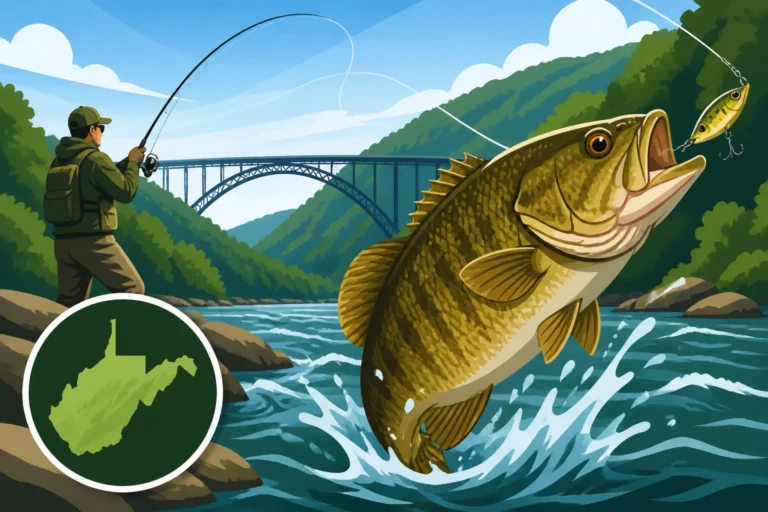
West Virginia's rivers and lakes are absolutely brimming with smallmouth bass. From the roaring currents of the New River to the clearer, rock-laden pools of the South Branch Potomac, these fish thrive in varied conditions. But here's the thing: they're not always aggressively chasing down every crankbait or spinner. Sometimes, especially when the water is clear, when pressure is high, or when they're hunkered down in deep structure, you need a presentation that's subtle, enticing, and downright irresistible. That's where the drop shot rig truly shines, offering a distinct advantage over more traditional tactics.
Targeting Finicky Fish
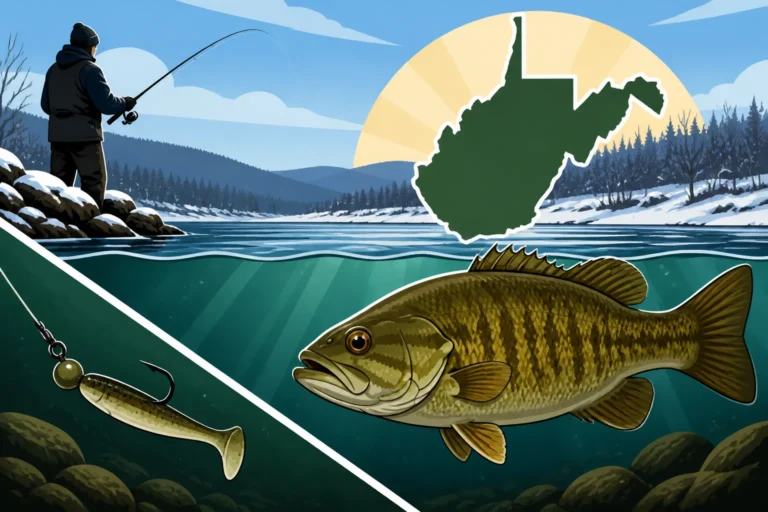
Imagine a situation many of us have faced: you're on a beautiful, clear stretch of river, maybe the Gauley, and you can practically see smallmouth holding tight to a submerged log or a rocky ledge. You throw everything at them – jigs, tubes, even a weighted worm – but they just won't commit. This is precisely the scenario where a drop shot rig can turn a frustrating day into a memorable one. The beauty of the drop shot is its ability to present a soft plastic bait horizontally, suspended off the bottom, right in the fish's strike zone, without the weight dragging it down or interfering with its natural action.
Think about it: a tube jig might flutter to the bottom and sit there, or a shaky head jig might stand up, but with a drop shot, your bait is literally "dancing" in place. A slight twitch of your rod tip can make that small plastic shimmy, twitch, and quiver in a way that mimics a wounded baitfish or an insect struggling in the current. This subtle, almost weightless presentation is often exactly what it takes to trigger a strike from a cautious smallmouth that has seen every other lure in the book. It's not about an aggressive chase; it's about a tempting, easy meal that they can't ignore. This technique is fantastic for situations where smallmouth bass are behaving like their bigger largemouth cousins, holding tight to cover but needing a more delicate offering.
Navigating Rocky Riverbeds and Deep Structure
West Virginia's rivers, especially those famous smallmouth destinations like the New River or the Greenbrier, are often characterized by rocky bottoms, ledges, boulder fields, and abundant submerged timber. While these are prime smallmouth habitats, they can also be notorious lure eaters. Trying to bounce a traditional jig or crankbait through these areas can lead to endless snags, lost tackle, and wasted fishing time. The frustration is real – you know the fish are there, but you can't get your lure to them effectively.
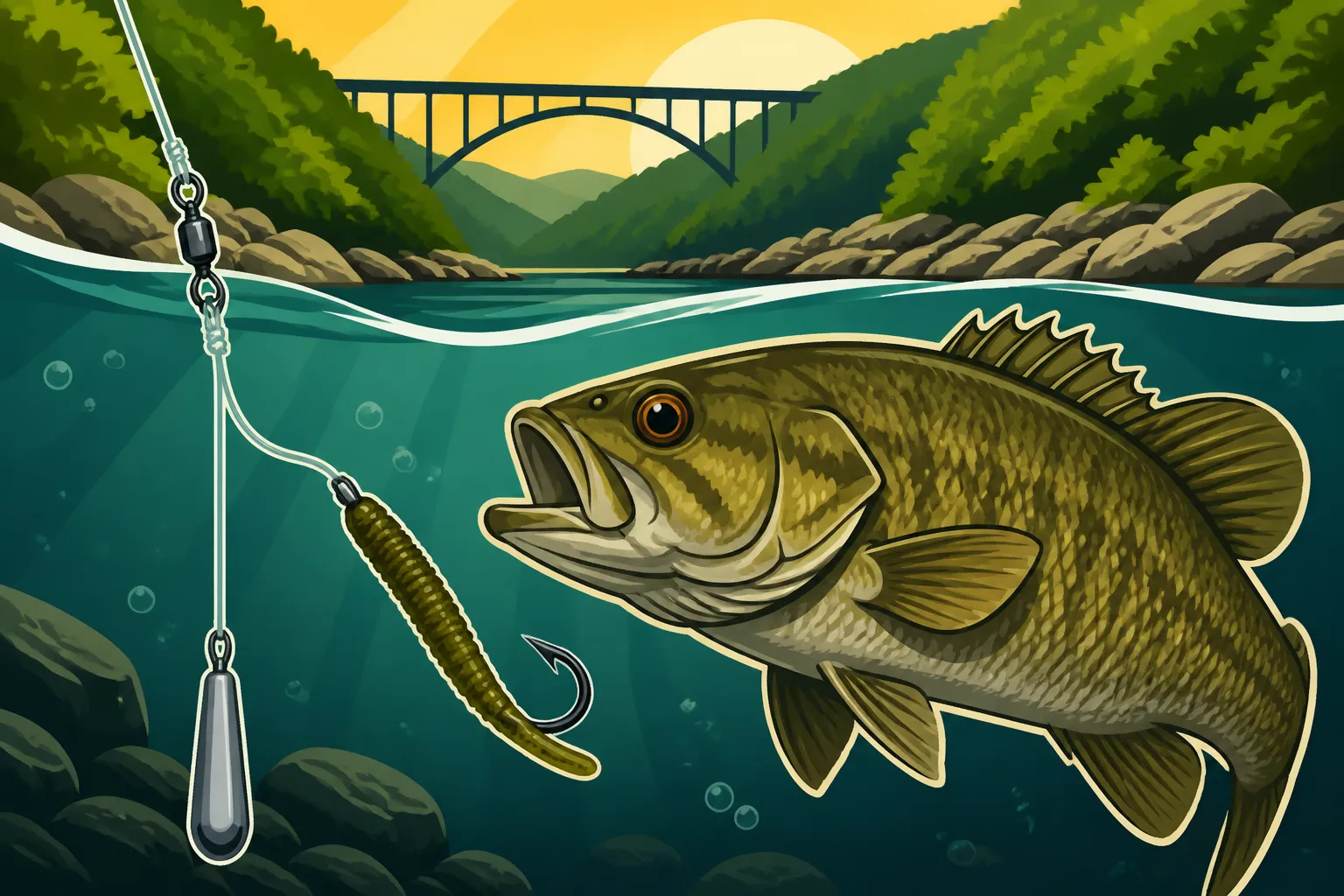
The drop shot rig offers an ingenious solution. Because the weight is at the very bottom of your line, and the hook (with your bait) is tied directly to the main line a foot or two above it, the weight acts as a "feeler." It makes contact with the bottom first, allowing you to detect changes in structure, rocks, or wood without your hook ever touching the snaggy stuff. When your weight gets hung up, a simple slackening of the line can often free it, while your hook and bait remain safely suspended above the obstacle. This allows you to present your bait in crevices, over boulders, and along ledges that would be impossible to fish with other methods, greatly increasing your chances of finding those deeper-holding fish. It’s particularly effective when targeting fish that are holding tight to current breaks behind larger rocks or in deeper pools. When you're fishing areas with complex structure, it’s also important to understand West Virginia Fishing Regulations Explained to ensure you're compliant with any specific rules for those waters.
Building Your Ideal West Virginia Smallmouth Drop Shot Rig
Alright, so you're convinced the drop shot is the way to go. Now, let's talk about putting it all together. The right components make all the difference, transforming a simple setup into a highly effective tool for tackling West Virginia's smallmouth. You don't need overly specialized gear, but attention to detail here will pay off big time on the water.
Choosing the Right Rod and Reel
For drop shotting smallmouth, sensitivity is paramount. You need to feel those subtle taps and the gentle weight of a fish inhaling your bait. This means opting for lighter, more sensitive gear than you might use for aggressive power fishing.
-
Rod: A spinning rod is almost universally preferred for drop shotting due to its superior line handling with lighter lines and weights. Look for a rod in the 6'6" to 7'2" range with a light to medium-light power and a fast or extra-fast action. The fast action tip allows for incredible sensitivity and quick hook sets, while the lighter power is forgiving enough to prevent pulling the small hook out of a softmouthed smallmouth. A high-modulus graphite rod will transmit every bump and tick from the bottom directly to your hand. Brands like St. Croix, G. Loomis, or even more affordable options you can find on Amazon like Ugly Stik or Berkley offer excellent choices that provide the necessary sensitivity without breaking the bank. Choosing the Best Spinning Rods for Smallmouth Bass is crucial here.
-
Reel: Pair your sensitive rod with a high-quality spinning reel in the 1000 to 2500 size range. This size offers a good balance of retrieve speed, line capacity, and lightweight feel. Smooth drag is absolutely essential, as you'll often be fighting feisty smallmouth on lighter lines. A good quality reel from brands like Shimano, Daiwa, or even a solid Pflueger model will ensure smooth operation and reliable performance. Look for a reel with a high retrieve ratio (around 6.0:1 or higher) to quickly take up slack line, which is vital for maintaining contact with your bait and detecting subtle bites.
Line Selection: The Unsung Hero
Your fishing line is the direct link between you and the fish, and nowhere is this more critical than in finesse techniques like drop shotting. The wrong line can negate all the sensitivity of your rod and reel.
-
Mainline (Braid): For your main line, 10-15 lb braided line is generally the best choice. Braid offers exceptional sensitivity due to its zero stretch, allowing you to feel every nuance of the bottom and every gentle pickup. It also provides excellent casting distance and incredible strength for its diameter. The lighter color of some braids can also act as a visual strike indicator, twitching when a fish inhales your bait.
-
Leader (Fluorocarbon): Because braid is visible in clear water, you'll need to tie a fluorocarbon leader to the end of your main braided line. Fluorocarbon is nearly invisible underwater, extremely abrasion-resistant (perfect for rocky West Virginia riverbeds), and has minimal stretch, offering a good balance of stealth and sensitivity. A 6-10 lb fluorocarbon leader, typically 3-6 feet long, is ideal. The specific pound test will depend on water clarity and the size of the fish you're targeting. In exceptionally clear waters like some stretches of the Cranberry River, you might drop down to 4lb for ultra-finicky fish, while on the New River where bigger bronzebacks roam, 8-10lb is a safer bet. Knowing the Best Fluorocarbon Line for Clear River Water can really make a difference.
-
Connecting Your Lines: Use a strong, reliable knot like the Double Uni Knot, FG Knot, or Alberto Knot to connect your braid to your fluorocarbon leader. Practice these knots at home until you can tie them quickly and securely, as a weak knot will be your undoing.
Hook and Weight: Small Details, Big Difference
These two small components are what give the drop shot its unique presentation. Don't overlook their importance.
-
Hook: For drop shotting smallmouth, you'll typically use a small, light-wire hook. The most common styles are:
- Offset Worm Hook (Size 1 or 1/0): These are great for Texas-rigging smaller worms or creature baits, making them weedless.
- Robo Worm Rebarb Hook (Size 1 or 2): Specifically designed for drop shotting, these have a small barb that holds the bait securely.
- Circle Hooks (Size 2 to 1): If you prefer a more subtle, automatic hookset, especially with lighter bites, a small circle hook can be effective.
The key is a sharp, light-wire hook that won't impede the action of your bait. You can find a wide variety of these specialized hooks easily on Amazon.
-
Weight: Drop shot weights are distinct. They typically have a swivel on top and a line clip, allowing you to quickly change depths without re-tying. The most common shapes are cylindrical, round, or teardrop.
- Cylindrical (Pencil) Weights: Excellent for moving through rocky cover with minimal snagging. These are often preferred for river fishing.
- Round/Teardrop Weights: Good for maintaining bottom contact in light current or on softer bottoms.
- Weight Size: The weight you choose will depend on depth and current. In West Virginia's rivers, current is a major factor.
- Light Current/Shallow Water (0-15 ft): 1/8 oz to 1/4 oz
- Moderate Current/Deeper Water (15-30 ft): 1/4 oz to 3/8 oz
- Heavy Current/Very Deep Water (30+ ft): 3/8 oz to 1/2 oz
Always err on the side of using the lightest weight possible that still allows you to maintain bottom contact and feel your bait. This improves sensitivity and makes your presentation more natural.
Markdown Table: Drop Shot Components at a Glance
| Component | Recommendation | Key Feature for WV Smallmouth |
|---|---|---|
| Rod | 6'6" – 7'2" Spinning, Light to Medium-Light Power, Fast/Extra-Fast Action | High sensitivity for subtle bites, quick hook sets |
| Reel | 1000 – 2500 Spinning Reel, Smooth Drag, High Retrieve Ratio | Fine line management, precise control, strong drag for fights |
| Mainline | 10-15 lb Braided Line | Zero stretch for maximum sensitivity, strength |
| Leader | 6-10 lb Fluorocarbon (3-6 ft length) | Near invisibility, abrasion resistance for rocky bottoms, minimal stretch |
| Hook | Size 1 or 1/0 Offset Worm Hook, Size 1 or 2 Rebarb Hook, or small Circle Hook | Light-wire, sharp point for easy penetration, secure bait holding |
| Weight | 1/8 oz – 1/2 oz Drop Shot Weight (Cylindrical preferred for rivers) | Maintains bottom contact, minimizes snags, allows quick depth adjustments |
Mastering Drop Shot Presentation on West Virginia Waters
Having the right gear is only half the battle; knowing how to effectively present your drop shot rig is what truly sets successful anglers apart. West Virginia's waterways offer diverse challenges, and adapting your presentation is key.
Reading the Water and Locating Smallmouth
Before you even make a cast, take some time to "read" the water. Smallmouth bass are creatures of current and structure, and understanding their habits can put you directly on them. Consider the following:
- Current Seams: Look for areas where fast current meets slower water, such as behind large boulders, downed trees, or along the inside bends of rivers. These current seams create natural ambush points where smallmouth can rest and wait for food to be swept by.
- Deep Pools and Ledges: Many West Virginia rivers feature deep pools, particularly below rapids or long stretches of riffles. Smallmouth will often retreat to these deeper areas, especially during bright sun or cold fronts. Ledges and sharp drop-offs also hold fish.
- Submerged Structure: Beyond rocks, look for submerged timber, brush piles, or even old bridge pilings. These provide cover, shade, and ambush opportunities. When fishing areas with a lot of wood, remember that while the drop shot is snag-resistant, it’s not completely snag-proof.
- Water Clarity and Temperature: Clearer water often means fish are more wary, making finesse techniques like the drop shot even more effective. Pay attention to water temperature as well; understanding Smallmouth Bass Habits on the New River in different conditions can tell you a lot about where they’ll be holding. Colder water typically pushes fish deeper and makes them less active. In these situations, a subtle, in-your-face presentation is critical.
Casting, Drifting, and Feeling the Bite
The beauty of the drop shot is its versatility in presentation. You can cast it, vertically jig it, or even drift it, depending on the conditions and the specific spot you're fishing.
- Casting and Dragging: This is perhaps the most common approach. Cast your drop shot rig out, let the weight sink to the bottom, and then slowly drag or hop it back towards you with your rod tip. The key is to keep a semi-slack line, just enough so that your bait has natural movement, but tight enough that you can feel the weight making contact with the bottom and detect any subtle bites. When you feel a "tick" or a sudden weightlessness, or if your line just stops moving, set the hook with a smooth, upward sweep rather than a hard jerk.
- Vertical Jigging: If you're fishing from a boat or kayak over deep structure, vertical jigging is incredibly effective. Position yourself directly over the fish or structure, drop your rig straight down, and then gently lift and drop your rod tip, allowing the bait to dance just above the bottom. This is especially good for targeting fish suspended off the bottom. If you're using a Best Kayak for the New River, this can be a very effective way to work specific holes.
- Drifting in Current: West Virginia's rivers offer fantastic opportunities for drifting a drop shot. Cast upstream and allow your rig to drift naturally downstream with the current, keeping just enough tension to maintain bottom contact with the weight. This mimics a natural piece of forage tumbling downstream. Pay close attention to your line, as strikes often come as the weight bounces over a rock or pauses in a current seam. This can be combined with Float Fishing the New River techniques, but with a different rig.
The bite on a drop shot is often very subtle. It might feel like a spongy weight, a slight tap, or simply your line going slack or moving sideways. Always assume it's a fish and sweep to set the hook.
Effective Baits for Mountain State Bronzebacks
The drop shot rig excels with smaller, softer plastic baits that have natural movement in the water. The key is to experiment and see what the fish are keying in on that day.
- Small Worms: The undisputed king of drop shot baits. Four-inch straight-tail worms in natural colors like green pumpkin, watermelon, or brown are incredibly effective. Brands like Robo Worm, Zoom, or Yamamoto offer excellent options. These worms have a subtle quiver that's irresistible to smallmouth.
- Minnow Imitations: Small soft jerkbaits or fluke-style baits, 2-4 inches long, can be deadly when rigged on a drop shot, especially in clear water where smallmouth are chasing baitfish. Silver, shad, or white colors are great choices.
- Creature Baits/Crawfish: Tiny creature baits or crawfish imitations (e.g., small tubes or Ned rig-style craws) can work wonders, especially in rocky areas where crawfish are a primary food source. Green pumpkin, brown, and black/blue are excellent colors.
- Tubes: While tubes are often jigged, a small 2.5-3 inch tube rigged on a drop shot hook can provide a bulkier, yet still subtle, profile that smallmouth often devour.
- Scented Baits: Don't underestimate the power of scent. Many soft plastics come pre-scented, or you can add your own scent to your baits. This can often make a difference with hesitant biters, particularly in colder water.
When selecting baits, think about what the smallmouth are likely feeding on in that particular body of water. For example, in a river full of crayfish, a small craw imitation will probably outperform a minnow. For more ideas on what to tie on, check out Best Baits for Smallmouth Bass on the New River.
Common Mistakes and Troubleshooting Your Drop Shot Rig
Even with the perfect setup, things can go wrong. Understanding common pitfalls and how to troubleshoot them will save you frustration and keep your bait in the water, where it belongs.
Tackle Troubles and Snag Prevention
Snags are an inevitable part of fishing, especially in West Virginia's rocky rivers. While the drop shot is designed to minimize them, they still happen.
- Weight Selection: Too heavy of a weight for the current can cause it to wedge deeper into crevices. Use the lightest weight that still allows you to feel the bottom. If you're constantly getting hung, try a lighter weight or switch to a cylindrical (pencil) shape, which tends to slide over rocks better than round weights.
- Line Quality: Frayed line, especially your fluorocarbon leader, is a recipe for disaster. Always check your leader for nicks and abrasions, especially after fishing around sharp rocks or wood. Re-tie your leader frequently if you're fishing in abrasive cover.
- Hook Exposure: While a drop shot hook is often nose-hooked, if you're consistently getting snagged on the hook itself, consider Texas-rigging your bait on an offset worm hook. This makes your bait weedless and can save you a lot of grief in heavy cover.
- Freeing a Snag: If your weight gets hung, don't just yank. Point your rod tip directly at the snag, put a little slack in the line, and then try to "pop" the weight free with a sharp snap of the rod. Sometimes, slowly raising your rod tip and then letting it fall, causing the weight to "walk" over the obstacle, can also work. If it's truly stuck, try to break off just the weight by pulling straight back on the line. This is the beauty of the drop shot – you only lose the inexpensive weight, not your hook and bait! This is also why having extra weights and hooks on hand is vital. Many anglers will purchase a bulk pack of drop shot weights on Amazon for this very reason.
Adjusting for Current and Depth Changes
West Virginia's rivers are dynamic, with currents and depths that can change dramatically within a short distance. Your drop shot presentation needs to adapt.
- Current Speed: When the current picks up, you'll need to increase your weight size to maintain bottom contact. If you're using too light a weight in strong current, your rig will be swept away too quickly, making it difficult to control and feel the bottom. Conversely, in slack water, a lighter weight will allow for a more natural fall and a subtler presentation. Knowing when to use heavier or lighter weights is also key when considering Best Techniques for High Water Conditions versus Best Techniques for Low Clear Water Conditions.
- Depth Adjustment: The distance between your hook and your weight is crucial. If fish are hugging the bottom, you might have only 6-12 inches between them. If they are suspended higher in the water column or over heavy cover, you might increase that distance to 2-3 feet. The adjustable nature of the drop shot weight allows for quick changes by simply sliding the line through the clip, rather than having to re-tie. Experiment with this distance until you find what the fish prefer.
- Boat Control: If fishing from a boat or kayak, proper boat control is essential for successful drop shotting, especially in current. Use a trolling motor to slow your drift or hold your position over key structure. This allows you to present your bait vertically or to slow down your retrieve, keeping your bait in the strike zone longer. This is a great tip for Best Kayak Fishing Techniques for West Virginia Rivers.
- Wind: Wind can make line management difficult and reduce sensitivity. Try to cast into or with the wind to minimize slack line, or use a slightly heavier weight if necessary to cut through the wind and maintain bottom contact.
The drop shot rig is an incredibly effective and versatile tool for catching West Virginia smallmouth, especially when they're playing hard to get. By understanding the components, mastering the presentation, and learning to troubleshoot common issues, you'll be well on your way to more successful and rewarding days on the water. So tie one on, get out there, and experience the thrill of those subtle bites and hard-fighting bronzebacks!
Disclaimer
This article is for general informational purposes only and does not constitute professional advice. Laws, prices and regulations vary by location and change over time. Consult a qualified professional for guidance on your specific situation.