Best Techniques for Low Clear Water Conditions
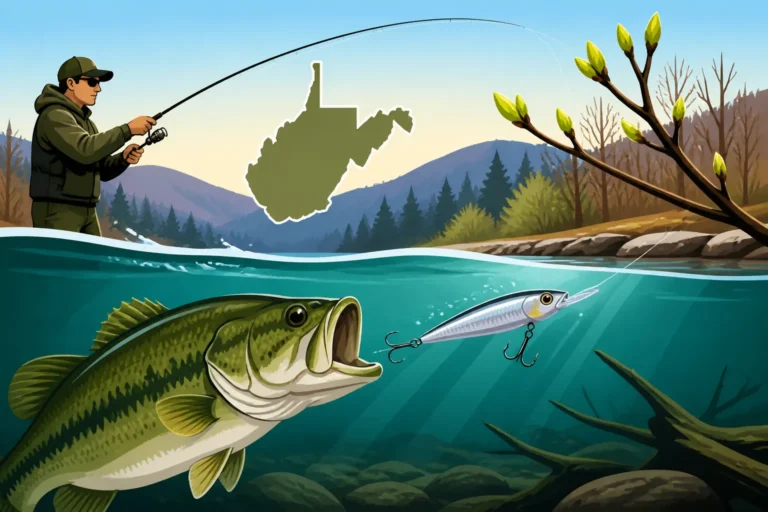
Few things are more disheartening for an angler than arriving at a favorite West Virginia fishing spot only to find the water levels drastically down and the clarity unnervingly high. That crystal-clear, low flow makes fish skittish, wary, and incredibly challenging to catch, turning what should be a relaxing day into a frustrating exercise in futility. This comprehensive guide will arm you with the specific techniques and strategies you need to overcome these tough conditions and still find success on the water.
Understanding Low, Clear Water's Impact
When West Virginia's rivers and streams experience extended dry spells or periods of low precipitation, water levels drop, and the turbidity—or cloudiness—that often provides cover for fish disappears. This creates a challenging environment that demands a significant shift in your fishing approach. Without understanding why fish react differently, it’s tough to adapt.
Why Low Water Impacts Fish Behavior
Fish are incredibly sensitive to their environment, and low water creates a heightened sense of vulnerability for them. With less depth and current, they feel more exposed to predators, both avian and terrestrial. This stress makes them naturally seek out the deepest, darkest, and most secure cover available, reducing their willingness to move out into open, shallow areas where they might typically feed. Think of it like a human being in an open field versus a dense forest – the open field feels riskier.
The reduced flow also means less dissolved oxygen in certain areas and often warmer water temperatures, further stressing fish. Their metabolism might slow down, leading to less aggressive feeding. Instead of actively hunting, they become opportunistic, only striking at offerings that are presented perfectly and with minimal perceived threat. This means your presentation needs to be incredibly subtle and convincing.
Recognizing "Gin Clear" Water
"Gin clear" water isn't just a saying; it’s a reality in many West Virginia waterways during drought conditions. This means visibility is exceptionally high, allowing fish to easily spot your line, your lure, and even your silhouette on the bank. What might normally be a subtle detail to a fish in stained water becomes a glaring red flag in clear conditions. You can literally see the bottom in places you usually couldn't.
This heightened visibility is why traditional, heavier lines, brightly colored lures, or aggressive presentations that work in murky water will often fail spectacularly. The fish have too much time to inspect your offering and see the "fakeness" of it. They're looking for any reason to refuse, and clear water gives them all the information they need to be picky.
Seasonal Considerations for Low Water
Low, clear water can occur at any time, but it's particularly prevalent during late summer and early fall in West Virginia, or during extended dry periods in spring. Each season brings its own nuances to how fish react. In summer, warm, low water can make fish lethargic and force them into deeper, cooler thermal refuges. This is when oxygen levels can be at their lowest, exacerbating the problem.
In fall, as water temperatures begin to cool, fish might become more active, but the clear water still dictates a cautious approach. They might be more willing to feed in shallower areas, but they'll still be looking for cover and subtle presentations. Understanding these seasonal changes helps you anticipate where fish might be holding and what their general mood will be before you even make your first cast.
Mastering Stealth and Presentation
When water is low and clear, your ability to remain undetected and present your bait naturally becomes paramount. It's less about the "perfect" lure and more about the "perfect" delivery. These conditions demand a hunter's patience and precision, not a brute force approach.
Approaching the Water Undetected
Imagine you're stalking a deer in an open field; you wouldn't just walk straight up to it. The same goes for fish in clear water. Fish have a wide field of vision, and any sudden movements or dark silhouettes against the sky will send them darting for cover. Always approach the water cautiously, staying low to the ground and using natural cover like trees, bushes, or bank contours to break up your outline.
Pay attention to your shadow, especially on sunny days. Casting a large shadow over a shallow run or pool is an instant alarm bell for fish. Consider your position relative to the sun and try to cast with the sun at your back, or at least from an angle that keeps your shadow off the prime fishing lies. Sometimes, taking a wider, more circuitous route to get to a good casting position is the difference between catching and spooking.
Mastering Casting Accuracy and Soft Landings
In clear water, a heavy lure splash sounds like a bomb going off to a wary fish. Your casting needs to be precise and gentle. Aim for a soft, quiet entry of your lure or fly, almost like a feather landing on the water. This often means using a sidearm cast or a roll cast to keep the trajectory low and reduce the impact.
Overcasting or casting too close to where you suspect fish are holding can spook them just as easily. Instead, aim to land your presentation a few feet upstream or upcurrent of the target zone, allowing the natural flow of the water to carry it into the strike zone. This not only provides a more natural drift but also gives the fish time to decide without the immediate shock of a splash right on their heads. This level of precision is crucial when you're fishing for wary trout or smallmouth in exposed conditions.
The Art of Subtle Lure Presentation
Once your lure is in the water, the way you retrieve it is critical. Forget aggressive jerks, fast retrieves, or flashy movements. In low, clear water, fish are scrutinizing every detail, and an unnatural movement is a dead giveaway. Focus on subtle, lifelike presentations that mimic natural forage struggling or drifting helplessly.
For lures, think slow, deliberate twitches, long pauses, and retrieves that barely move the lure. For bait fishing, ensure your bait drifts naturally with the current, as if it broke free. Fly anglers should focus on dead drifts, especially when nymphing or using dry flies. The goal is to make your offering appear as effortless and as much a part of the natural environment as possible. Sometimes, the less you do, the better, letting the current or the lure's inherent action do most of the work.
Optimizing Your Tackle for Transparency
Your everyday tackle box might not be perfectly suited for low, clear conditions. This is where fine-tuning your gear makes a tangible difference. Every component, from line to lure, needs to be considered for its visibility and how it interacts with the water.
Choosing Lighter Lines and Leaders
This is arguably the most important gear adjustment you can make. Heavy, visible lines are like neon signs in clear water, sending fish fleeing. Opt for the lightest line you can get away with while still having enough strength to land your target species. For most West Virginia smallmouth bass fishing in clear rivers, a 4-6 lb test fluorocarbon or monofilament main line is ideal. For trout, go even lighter, often 2-4 lb test.
Fluorocarbon is often preferred for leaders due to its low visibility underwater. It has a refractive index similar to water, making it virtually invisible. Even if you're using braided main line, always tie on a long fluorocarbon leader (3-6 feet or more) to provide that crucial stealth. You might want to carry a few different sizes of leaders, like those from Seaguar or Vanish, available on Amazon, to adapt to varying clarity levels or fish wariness. Remember, you're trying to fool an animal that can see your connection points, so less is more.
Selecting Finesse Lures and Baits
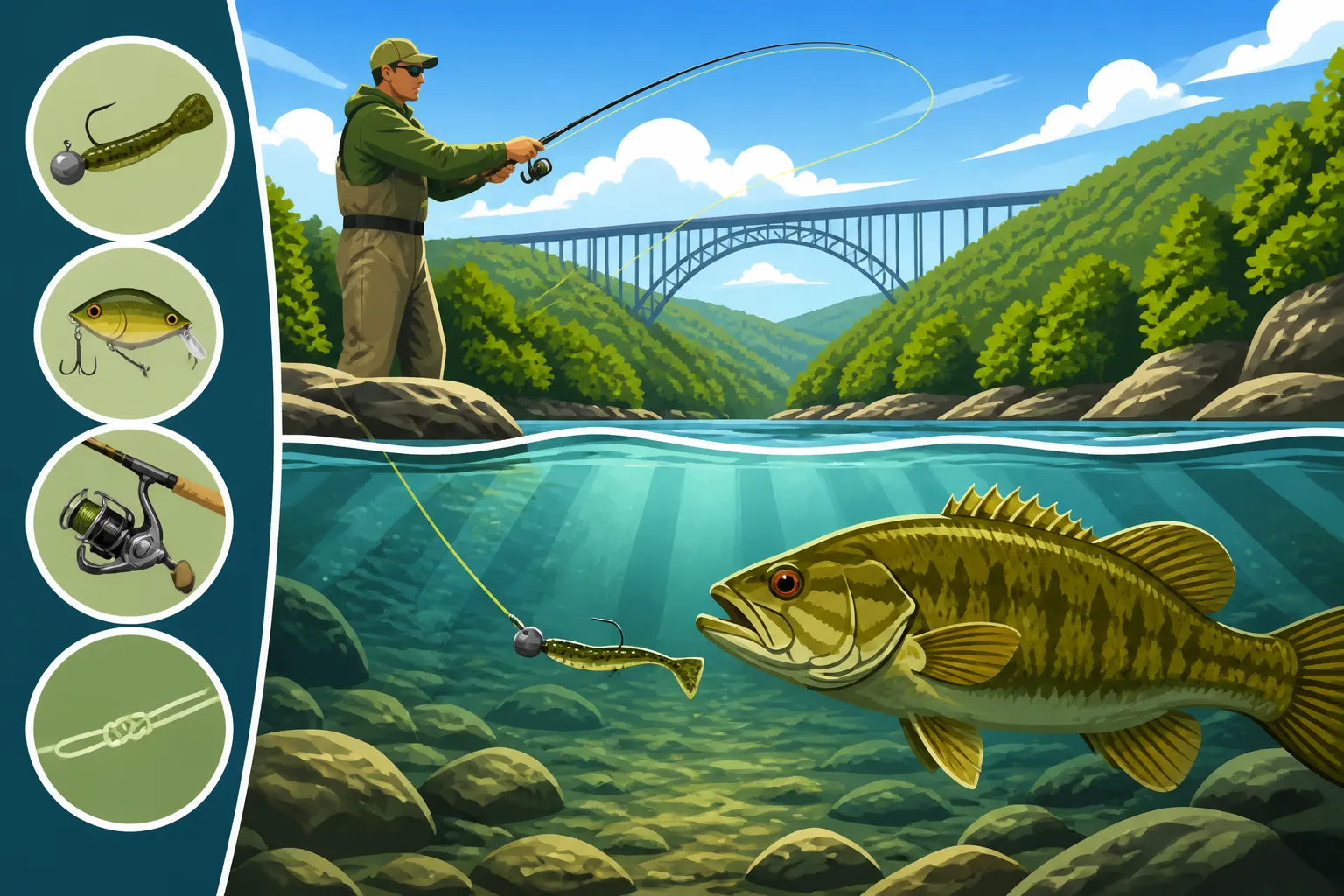
Bright, flashy, or oversized lures rarely work well in low, clear water. Fish are looking for natural, unassuming prey. Gravitate towards smaller, more natural-looking presentations. Think earth tones: greens, browns, clear, and muted pearl. For smallmouth, this might mean tiny tubes, Ned rigs, smaller jigs, or finesse worms. These are presentations that don't scream "predator!" but rather "easy meal."
Live bait, if permitted and legal, can be incredibly effective because it's naturally subtle. Worms, crickets, or small minnows presented on light wire hooks with minimal weight often outperform artificials when fish are highly pressured. For fly fishing, smaller nymph patterns, delicate dry flies, or thinly tied streamers are the way to go. Consider what the fish are actually eating in these conditions—often tiny insects or small crawfish—and try to match it.
Rod and Reel Setups for Enhanced Sensitivity
In clear water, bites are often incredibly subtle. A fish might just "mouth" a lure or gently suck in a fly, spitting it out instantly if it feels anything unnatural. This demands a rod and reel setup that offers maximum sensitivity. Lighter action rods, particularly those with fast or extra-fast tips, transmit even the faintest tap to your hands. A good quality spinning rod in the 6'6" to 7' range with a medium-light or light power is often perfect for finesse techniques.
Pair this with a smooth, lightweight spinning reel that has an excellent drag system. A smaller reel, like a 1000 or 2000 series, balances well with lighter rods and lines. This combination allows for longer, more accurate casts with lighter lures and provides the sensitivity needed to detect those ghost-like bites, especially when fishing for wary trout on a spring creek or finesse fishing for smallmouth in an unforgiving river stretch. For deeper insights into setups, check out our guide on Best Spinning Rods for Smallmouth Bass.
Species-Specific Strategies for Clear Water Success
While the general principles of stealth and finesse apply across the board, different fish species will require tailored approaches even in low, clear conditions. Knowing their habits and preferred forage can help you dial in your technique.
Smallmouth Bass Tactics
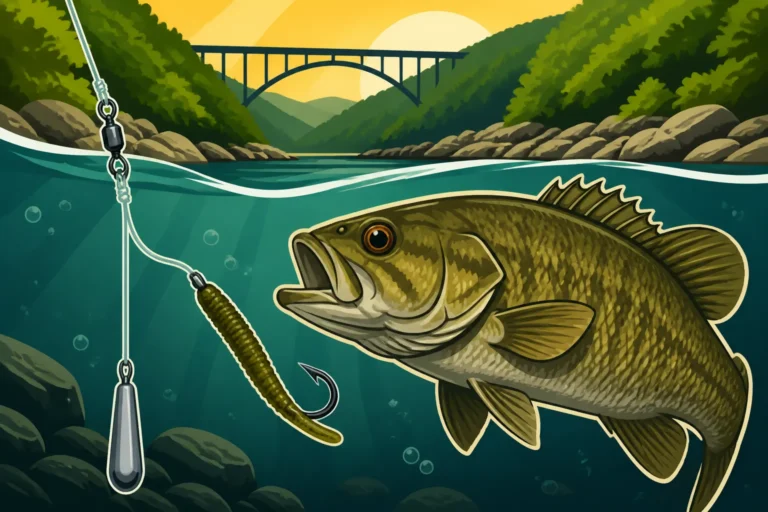
Smallmouth in low, clear West Virginia rivers become incredibly wary. They'll hug tight to cover like boulders, submerged logs, and undercut banks. The key is to get your lure into their living room without them knowing you're there. Think very small tubes (1.5-2.5 inches), Ned rigs, or tiny swimbaits. Colors like green pumpkin, clear with silver flake, or natural crawfish patterns are usually excellent.
Focus on making upstream casts and retrieving your lure downstream with the current, maintaining just enough tension to feel the bottom. When you hit a piece of structure, let the lure sit for a moment, almost pausing, then give it a tiny twitch. Oftentimes, the strike will come on the pause. Fly anglers will find success with small crayfish patterns, Woolly Buggers in black or olive, or even tiny poppers at dawn and dusk if fish are looking up. For more detailed smallmouth advice, refer to our comprehensive article on How to Catch Smallmouth Bass in West Virginia Rivers.
Trout Strategies
Trout, especially wild or holdover trout in streams like the Cranberry or Elk River, are notoriously spooky in clear water. This is where true finesse and patience come into play. Fly fishing often has an advantage because the presentation is inherently lighter. For a successful day of Fly Fishing for Trout in West Virginia, you'll want to focus on extremely fine leaders (6x, 7x, or even 8x tippet) and small fly patterns.
Nymphing with tiny emergers, midge patterns, or small caddis and mayfly nymphs is often the most productive. Use a strike indicator that's just buoyant enough to detect the subtle takes, or go indicator-less with Euro Nymphing techniques for ultimate sensitivity. Dry fly fishing can be productive during hatches, but your casts must be perfect, and your leader invisible. If spin fishing, micro-jigs, tiny inline spinners (like Panther Martins or Mepps), or scented baits (where legal) drifted naturally are your best bet. Avoid heavy hardware and fast retrieves.
Panfish and Other Species
Panfish like bluegill and crappie, while often less finicky than bass or trout, still respond well to finesse in clear water. They might not spook as easily, but they'll definitely be pickier about what they eat. For bluegill, a tiny jig (1/32 to 1/64 oz) tipped with a piece of worm or a micro-soft plastic, fished under a sensitive bobber, is deadly. For crappie, small minnows or tube jigs fished vertically around submerged timber or brush piles can be effective.
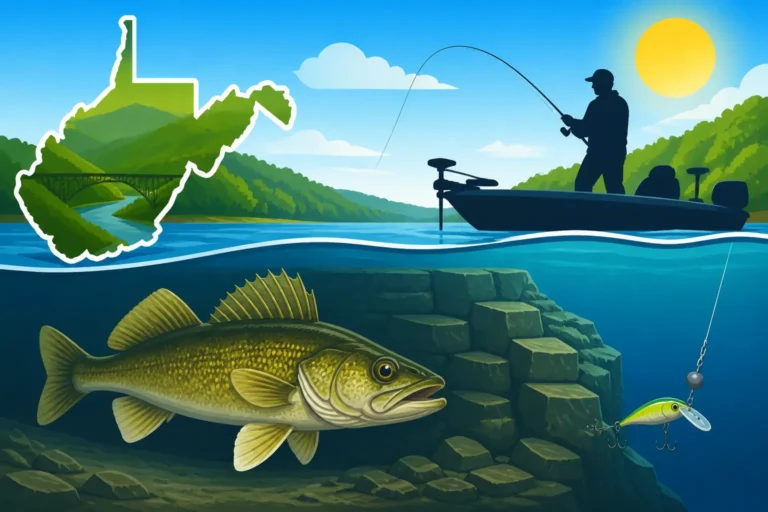
Other species like walleye or sauger, particularly on the Ohio River, can also become more challenging in clear conditions. For them, vertical jigging small jigs or blade baits, or slow-trolling small crankbaits with long fluorocarbon leaders, can elicit strikes. The common theme is always lighter, smaller, and slower. For specific insights into the best gear, our guide on Best Gear for West Virginia Trout Fishing offers many practical tips.
Reading the Water: Finding Productive Spots
In low, clear water, fish are not everywhere. They're concentrated in very specific locations that offer them security, comfort, and easy access to food without exposing themselves. Learning to identify these spots is crucial.
Identifying Deeper Pockets and Runs
When water levels drop, the deeper pockets, pools, and runs become prime real estate. Fish will congregate here because it offers more depth for cover from aerial predators and often cooler temperatures. Look for areas where the riverbed drops off abruptly, or where the main current has scoured out a deeper channel. These "holding lies" are where fish feel safe.
However, just because a spot is deep doesn't mean it's easy pickings. You still need to approach with caution and present your lure gently. Fish in these deep pockets might be suspended or hugging the bottom, requiring different retrieve depths. Using a weighted lure or jig that can get down quickly and stay in the strike zone longer is often key. You might need to make multiple casts from different angles to thoroughly work one of these productive areas.
Targeting Shaded Areas and Structure
Shade is a fish's best friend in clear water, especially on sunny days. It provides visual cover from above and often translates to slightly cooler water temperatures. Look for areas shaded by overhanging trees, steep banks, bridges, or large boulders. Fish will often hold directly in the shadow line, waiting for unsuspecting prey to drift by.
Submerged structure is also critical. Rocks, logs, root balls, and even subtle changes in bottom composition offer cover and ambush points. In clear water, you might actually be able to see these structures more clearly, allowing for more precise casting. Cast your lure so it lands just beyond the structure and then retrieve it to bump, tick, or weave through the cover. This makes it look like a natural organism navigating its environment. For example, when fishing for smallmouth, you might want to try casting close to rock gardens or current seams when you check out the Best Kayak for the New River to ensure precise placement.
Understanding Current Breaks and Eddies
Even in low water, there will be subtle current variations. Fish in clear water often seek out "current breaks"—areas where the flow slows down just enough for them to rest without expending too much energy, while still having food delivered to them by the main current. This could be behind a large boulder, in an eddy formed by an irregularity in the bank, or on the slower side of a seam where fast and slow water meet.
Eddies, in particular, are food traps where insects and small baitfish can congregate, making them attractive to predatory fish. Cast your lure into the main current upstream of the current break or eddy, letting it drift naturally into the slower water. The fish will often be positioned facing upstream, ready to ambush anything that washes into their sanctuary. Pay close attention to subtle ripples or slicks on the water's surface that indicate these changes in current.
Advanced Tips and Common Mistakes to Avoid
Beyond the basics, there are some nuanced strategies and pitfalls to sidestep that can significantly improve your odds when facing clear, low water. These often come from experience and observation, and they're what separate a good angler from a truly successful one in challenging conditions.
The Power of Natural Baits and Scents
When fish are incredibly wary, fooling their sense of sight with light lines and subtle presentations is a good start, but appealing to their other senses can seal the deal. Natural baits, like live worms, minnows, or crickets, are hard to beat because they look, smell, and move naturally. Always use the smallest hook possible, and make sure your bait is lively and presented without any unnecessary weight.
For artificial lures, consider adding scent. Many companies, including those found on Amazon, offer scent sprays, gels, or impregnated soft plastics that can add an extra layer of realism. Smear some Dr. Juice or Berkley Gulp! Alive on your finesse jigs or plastics. This can encourage a fish that's inspecting your lure to hold onto it longer, giving you more time to detect the bite and set the hook. Even a subtle scent can make a world of difference when fish are on high alert.
Avoiding Excessive Movement and Noise
We've already touched on stealth, but it bears repeating: every sound and movement you make is amplified in clear, low water. This isn't just about approaching the bank; it's about what you do once you're there. Avoid stomping on the bank, dropping tackle boxes, or loudly talking. Even the sound of a boat trolling motor can be felt and heard by fish in clear, shallow water.
If you're wading, shuffle your feet rather than lifting them high, to avoid disturbing the bottom or creating vibrations. If you're fishing from a boat or kayak, consider anchoring quietly or using a silent anchor system if possible. The goal is to be a ghost, a silent observer that presents an offering without announcing its presence. Remember, fish don't have eyelids; they're constantly processing visual and auditory information from their environment.
Don't Overlook the "Untouchable" Spots
Sometimes, the most obvious fish-holding spots in low, clear water—the deepest pool, the darkest undercut bank—can be the hardest to fish. Why? Because every other angler has already targeted them, and the fish there are incredibly educated and pressured. These fish have seen every lure and fly imaginable.
Don't be afraid to look for less obvious spots that might offer just enough cover and current. This could be a tiny current seam behind a small rock, a slight depression in an otherwise flat bottom, or even a single log far out from the bank. These "secondary" lies might hold fewer fish, but those fish are often less pressured and more willing to bite. It requires a keen eye and a willingness to explore, but finding an untouched pocket of water can yield surprising results.
Here’s a quick reference table for adjusting your gear and tactics:
| Category | Normal Conditions | Low, Clear Water Conditions |
|---|---|---|
| Line/Leader | 8-12 lb Mono/Braid | 4-6 lb Fluorocarbon (or light Mono) / Long 2-4 lb Fluorocarbon Leader |
| Lure Size | Standard (2-4 inches) | Finesse (1-2.5 inches), Micro Baits |
| Lure Color | Bright, Flashy, Diverse | Natural, Muted (Greens, Browns, Clear, Pearl), Earth Tones |
| Retrieval Speed | Moderate to Fast, Aggressive | Slow, Deliberate, Long Pauses, Natural Drift |
| Approach | Moderate Caution | Extreme Stealth, Stay Low, Avoid Shadows |
| Casting | Standard Impact | Soft, Accurate, Upstream/Upcurrent Landing |
| Bait Option | Artificials Primary | Natural Baits (if legal), Scented Artificials |
| Rod Power | Medium to Medium-Heavy | Light to Medium-Light |
Disclaimer
Fishing regulations, license requirements, and local conditions can change. Always check the latest West Virginia Fishing Regulations Explained summary from the West Virginia Division of Natural Resources before heading out. This guide is for informational purposes only and does not constitute legal advice. Adhere to all local, state, and federal laws and regulations.