Best technique for fishing a plunge pool
We've all been there: standing on the bank of a beautiful West Virginia stream, looking at that deep, dark pool at the base of a waterfall or a rapid, knowing there must be fish in there, but having no idea how to get your lure or fly to them without snagging or spooking everything. Plunge pools are magnets for fish, offering sanctuary, food, and prime ambush points, but they can be incredibly frustrating to fish effectively. This guide is dedicated to unlocking the secrets of these captivating aquatic features, giving you the tactics and confidence to consistently pull out quality fish from West Virginia's many plunge pools.
What Makes a Plunge Pool a Fish Magnet?
Before we even talk about casting, it's crucial to understand why fish, especially our beloved trout and smallmouth bass, are drawn to plunge pools. It's not just a pretty spot; it's an entire ecosystem in miniature, offering everything a fish could want or need in one concentrated area. When you grasp this, you start to see the water differently, and your approach becomes much more strategic.
Shelter from the Storm and Sun
Think about the relentless current in a river. It takes energy to fight that flow. Plunge pools, particularly their deeper sections and undercut banks, offer a natural refuge where fish can escape the main current and conserve energy. This is especially true after heavy rains when the river is roaring. The deeper water also provides protection from predators, both avian and terrestrial. On bright, sunny days, the depth of a plunge pool and any surrounding overhanging vegetation offer crucial shade, keeping water temperatures cooler and providing a dark hiding place from the watchful eyes of eagles, osprey, or even us anglers! For example, on a smaller mountain stream in the Monongahela National Forest, a deep plunge pool at the base of a small cascade might be the only place a larger brook trout feels safe enough to reside.
An All-You-Can-Eat Buffet
The turbulent water entering a plunge pool acts like a natural conveyor belt, delivering a constant supply of food. Insects, larvae, small baitfish, and even unfortunate terrestrial creatures get swept into these churning depths. This means less effort for the fish to find a meal; they can simply hold in a prime feeding lane, dart out to grab a morsel, and retreat to safety. Imagine a large brown trout holding at the very lip of the current entering a deep pool on the Elk River; it's perfectly positioned to intercept anything drifting by. This makes them incredibly efficient feeding stations, which is why they can often hold some of the biggest fish in a given stretch of water. It's a goldmine, and the fish know it.
Oxygenation and Optimal Water Conditions
The violent entry of water into a plunge pool—whether from a waterfall, a series of rapids, or even a steep riffle—creates a tremendous amount of aeration. This churn injects vital oxygen into the water, which is particularly important during warmer months when oxygen levels in slower-moving or shallower sections can drop. Fish, being cold-blooded, rely on sufficient oxygen in the water to thrive. A well-oxygenated plunge pool, even if the surrounding water is a bit stressed, will often remain a vital stronghold for fish. This constant influx of fresh, often cooler, oxygenated water makes plunge pools viable habitats year-round, even if their productivity shifts with the seasons.
Assembling Your Arsenal: Gear for Plunge Pool Success
Fishing a plunge pool effectively isn't about brute force; it's about precision, stealth, and having the right tools for the job. You're not casting across a wide lake; you're often targeting a specific pocket of water, sometimes with overhanging branches or tricky currents. Your gear choices can make or break your day.
Rods and Reels: The Right Balance of Power and Finesse
When it comes to plunge pools, especially in West Virginia's varied terrain, versatility is key.
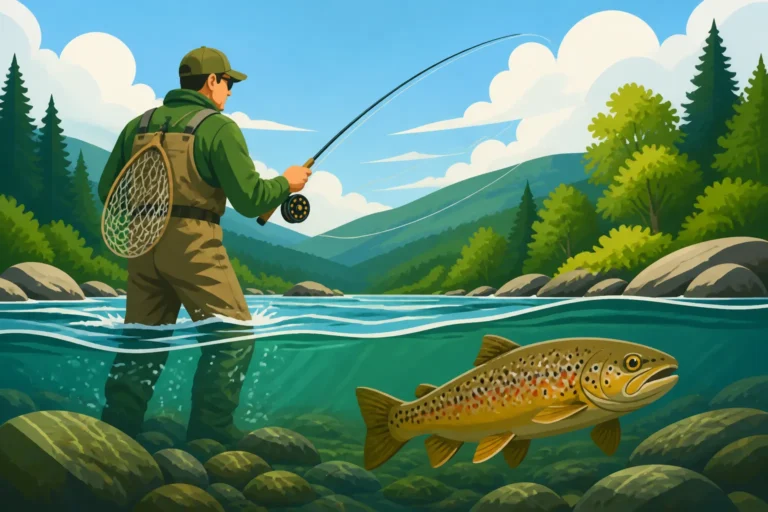
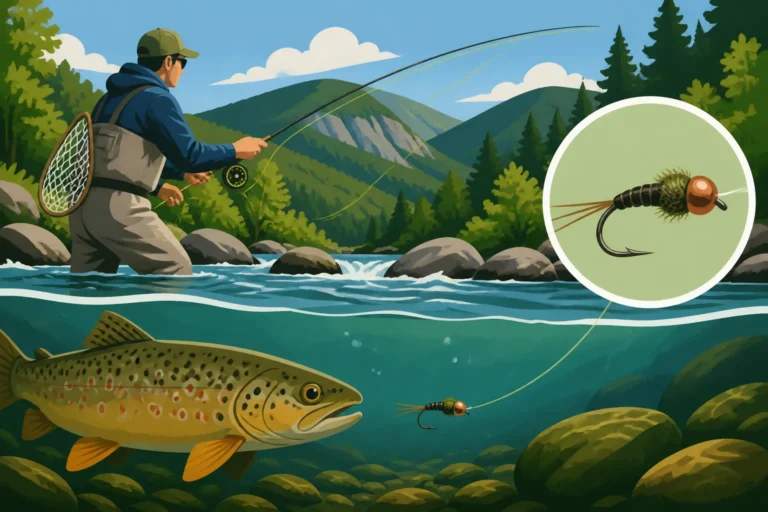
- For Trout: If you're targeting trout in smaller, brushy mountain streams like those you might find covered in a Best Fly Fishing Rivers in West Virginia guide, a lighter spinning rod (around 5'6" to 6'6" long with a light or ultralight action) paired with a 1000 or 2000 size spinning reel is ideal. This setup allows for accurate, shorter casts and still has enough backbone to handle a decent fish in current. For fly anglers, a 3-weight or 4-weight fly rod, typically 7'6" to 8'6" long, gives you the necessary control for delicate presentations. You'll often be roll casting or doing short, precise overhead casts, so a medium-fast action rod is a great all-around choice.
- For Smallmouth Bass: Larger plunge pools, especially on rivers like the New River or the South Branch of the Potomac, might hold bigger smallmouth. Here, a medium-light or medium action spinning rod (6'6" to 7' long) with a 2500 or 3000 size reel is more appropriate. For baitcasting enthusiasts, a medium action casting rod, also in the 6'6" to 7' range, offers excellent control for pitching jigs and soft plastics into tight spots. Check out our guide on Best Fishing Rods for West Virginia Rivers for more detailed recommendations. You can often find durable and high-performing spinning and baitcasting combos suitable for these conditions on Amazon.
Line Choices: The Unsung Hero
Your fishing line is the direct link to the fish, and in the often-turbulent, structure-filled environment of a plunge pool, making the right choice is paramount.
- Monofilament: A classic choice for spinning reels, monofilament offers good knot strength and stretch, which can be forgiving when a fish makes a sudden run. For trout, 4-6 lb test is usually sufficient. For smallmouth, 8-10 lb test monofilament offers a good balance of strength and castability.
- Fluorocarbon: Known for its low visibility underwater and excellent abrasion resistance, fluorocarbon is a fantastic choice, either as a main line on spinning reels or as a leader material. For clearer plunge pools or spooky fish, a 6-8 lb fluorocarbon leader (attached to braid or mono) can make a huge difference. You can find quality fluorocarbon spools on Amazon, which is convenient for keeping your tackle bag stocked.
- Braided Line: For casting reels, or as a main line on spinning reels when targeting larger smallmouth, braided line (10-20 lb test for smallmouth, 6-10 lb for trout if you're using a fluorocarbon leader) is excellent. It has no stretch, offering incredible sensitivity, and its thin diameter allows for longer casts. Just remember to always tie on a fluorocarbon or monofilament leader, as braid is highly visible.
Terminal Tackle and Lures: Matching the Hatch (or the Meal)
The types of lures and baits you use should reflect what the fish are likely feeding on in a plunge pool.
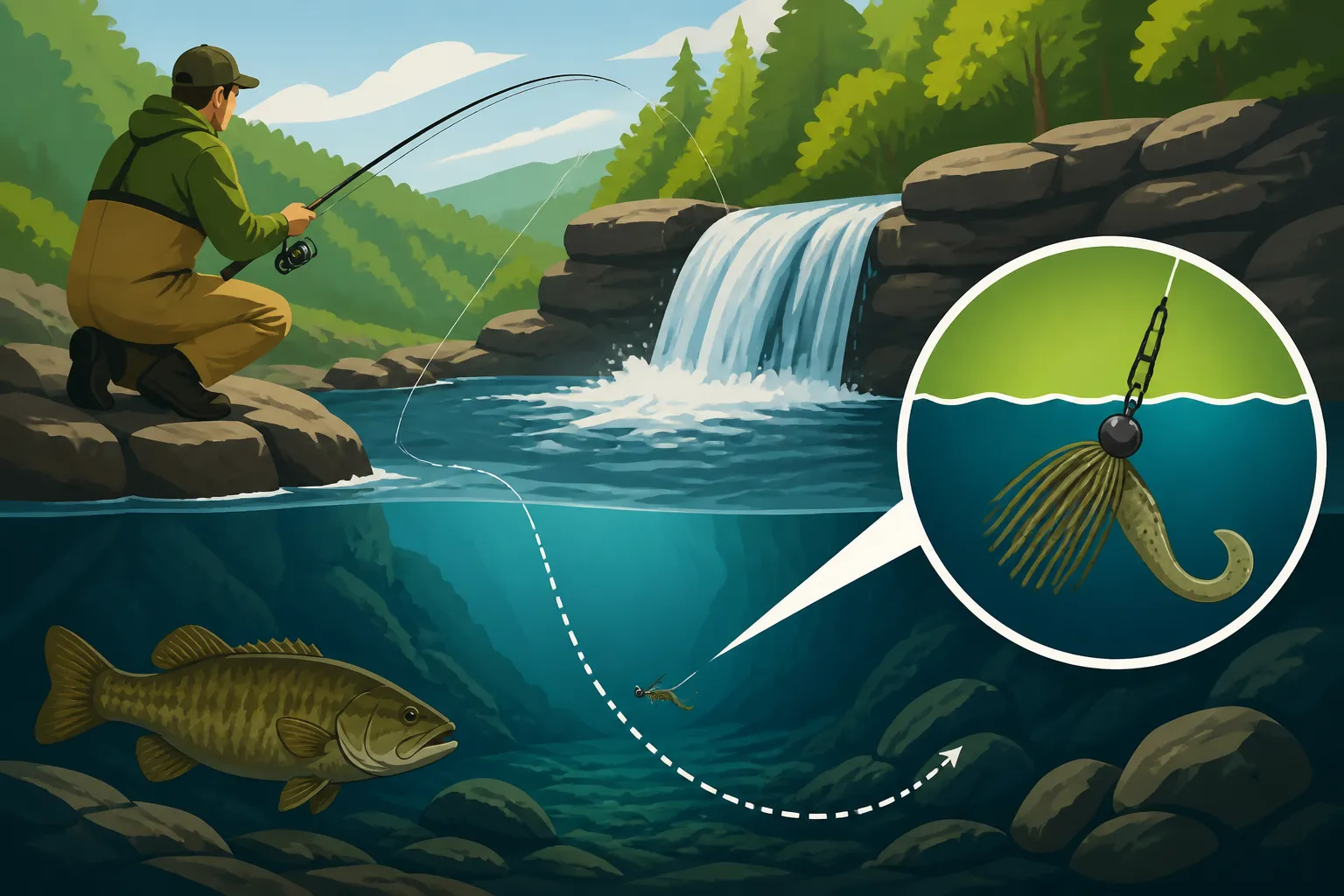
- Jigs: Small jigheads (1/16 oz to 1/8 oz for trout, 1/8 oz to 1/4 oz for smallmouth) tipped with grub bodies, small tubes, or soft plastic creature baits are incredibly effective. They sink quickly into the strike zone and can imitate anything from a crawfish to an injured baitfish.
- Spinners: Inline spinners like Mepps or Panther Martins are perennial favorites for trout. Sizes #0 to #2 work well. For smallmouth, larger spinners (size #3 or #4) or spinnerbaits can be deadly, especially when fished slower.
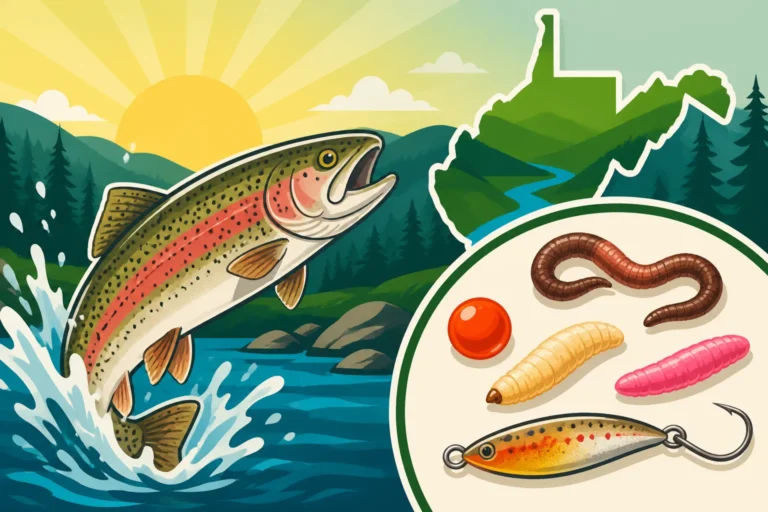
- Soft Plastics: Wacky-rigged Senkos, Ned rigs, or small paddle tail swimbaits on jigheads are excellent for bass. For trout, micro-soft plastics or even PowerBait shaped like worms can be presented on a light jighead or under a small float.
- Flies: For fly anglers, a variety of patterns will produce. Nymphs that imitate stoneflies, caddis larvae, or mayfly nymphs are often fished under an indicator or with a tight-line (Euro nymphing) technique. Streamers that mimic baitfish or crawfish are great for enticing aggressive trout and smallmouth. Don't forget terrestrial patterns like hoppers or ants for summer. Our guide on Fly Patterns for West Virginia Trout Streams can give you more specific ideas.
- Live Bait: Garden worms, minnows (where legal), or hellgrammites are extremely effective for nearly all species that inhabit plunge pools. Use a very light split shot or none at all to allow the bait to drift naturally into the pool.
Mastering the Approach: Techniques for Plunge Pool Prowess
Successfully fishing a plunge pool requires more than just the right gear; it demands a thoughtful, patient, and precise approach. Stealth, accurate casting, and understanding how to work the water are your best friends.
The Art of Stealth: Don't Spook the Prize
This is probably the most critical factor. Fish in plunge pools, especially larger ones, are often highly aware of their surroundings. They've earned their size by being cautious.
- Approach from Downstream or Away from the Sun: If possible, approach the pool from downstream, wading carefully, or from the side where the sun isn't casting your shadow directly over the water.
- Keep a Low Profile: Avoid standing tall on the bank. Kneel, crouch, or use natural cover like bushes and trees to break up your silhouette.
- First Casts are Key: The fish you're targeting are most vulnerable on your first few casts before they've been disturbed. Make them count. Aim for precision over distance. For small, clear plunge pools on streams, read our Wading Techniques for West Virginia Trout Streams to ensure you're not sending vibrations through the riverbed.
Reading the Water: Where the Fish Are Hiding
Once you're stealthily positioned, take a moment to observe the pool.
- The Inflow: The area where the water plunges into the pool is highly oxygenated and often brings food. Fish will hold just out of the strongest current, in seams or pockets, waiting for food to wash into their strike zone.
- Seams and Eddies: Look for lines where fast water meets slower water. These are prime holding spots. Eddies, where the current swirls back upstream, also collect food and offer resting spots.
- Depth and Structure: Deeper sections, especially those with boulders, logs, or undercut banks, provide cover. These are often where the largest fish reside. For example, a deep hole on the Cranberry River with a submerged log is a classic big brown trout lair.
- Current Breaks: Any irregularity that disrupts the main flow—a large rock, a change in bottom contour—will create a slack water zone where fish can hold.
Presentation Techniques: Getting Your Lure to the Fish
This is where your gear and stealth combine.
- Upstream Cast and Drift (for Trout): For fly anglers or those using light spinning gear with jigs or small baits, cast upstream of the plunge pool. Let your lure or fly drift naturally into the pool, mimicking a stunned insect or baitfish. Mend your line to prevent drag. This technique is fantastic for reaching those prime feeding lanes without alarming the fish. Our guide to Drift Fishing for Trout in West Virginia can offer more tips.
- Pitching and Flipping (for Bass): For bass in larger plunge pools with lots of cover, pitching or flipping jigs and soft plastics to specific targets (like the edge of an undercut bank or a submerged log) is highly effective. The goal is a quiet, accurate entry that doesn't create a big splash. Let the lure sink on a controlled slack line, watching for any twitch or jump in the line that indicates a strike.
- Vertical Jigging: If the plunge pool is particularly deep and the fish are holding close to the bottom, vertical jigging can be a killer technique. Drop a jig directly down, let it hit bottom, and then impart short, sharp lifts and drops. This works well for walleye too, where conditions allow.
- Swing and Retrieve (for Streamers/Spinners): Cast your streamer or spinner slightly upstream and across the head of the pool. Let it sink, then allow the current to swing it downstream through the prime holding areas. Slowly retrieve as it swings, imparting action to your lure. This can trigger aggressive strikes from fish defending their territory.
Overcoming Challenges and Maximizing Your Plunge Pool Success
Fishing plunge pools is undeniably rewarding, but it comes with its own set of unique challenges. Being prepared for these obstacles and having strategies to overcome them will dramatically improve your chances of success and enjoyment on West Virginia's waters.
The Inevitable Snag: Navigating Structure
Plunge pools are fish magnets precisely because they have ample structure—submerged boulders, fallen trees, undercut banks. This same structure, while providing cover for fish, is also a notorious snag hazard.
- Light Line vs. Strong Line: While light line helps with stealth, it can lead to more lost lures. Find a balance. For example, if you're targeting smallmouth in a rocky New River plunge pool, consider bumping up your main line to 10lb braid with an 8lb fluorocarbon leader. This gives you better abrasion resistance and a fighting chance to pull a snagged lure free.
- Lure Selection: Certain lures are more snag-resistant. Texas-rigged soft plastics with the hook point buried are excellent for fishing heavy cover. Jigheads with weed guards can also help. When using treble hook lures like spinners or crankbaits, try to work them just above the most obvious snags, or retrieve them quickly through the danger zone.
- The "Pop-Off" Technique: If you get snagged, don't just yank. Point your rod tip directly at the snag, put some slack in the line, and then give a sharp, quick pop with your wrist. Sometimes this quick release of tension can dislodge the lure. If that fails, consider wading (safely!) to try and retrieve it. Losing a prized lure can be frustrating, especially if you got it after hours of browsing on Amazon, but it's part of the plunge pool game.
Spooking Fish: The Ghostly Retreat
As mentioned, stealth is paramount. But even the most careful angler can spook fish in these often-clear, confined environments.
- Observe Before You Cast: Take a few moments before making your first cast to watch the water. Look for rises, darting movements, or shadows. Understanding where fish are actively feeding or holding can inform your first, most critical casts.
- Minimize Movement and Noise: Avoid heavy footsteps on the bank or in the water. Keep conversations low. Even the sound of a tackle box clanking can send fish scattering.
- The Power of the Pause: If you believe you've spooked fish, or if they've stopped biting, don't immediately move on. Take a break. Sit down, re-tie, enjoy the scenery. Often, after 10-15 minutes, the fish will settle back into their routine, giving you another window of opportunity. This patience often pays off, turning a potentially disappointing encounter into a successful one.
Safety First: Wading and Bank Stability
West Virginia's rivers and streams are beautiful but can also be rugged and unpredictable. Plunge pools often form in areas of steep terrain or swift current, which present safety concerns.
- Wading Staff: A good quality wading staff, which you can easily find on Amazon, is critical for navigating slippery rocks and strong currents. It provides an extra point of contact and helps you gauge water depth and bottom stability before committing your full weight. This is especially true when exploring areas like the Cranberry River or sections of the New River Gorge, which can have tricky wading conditions.
- Proper Wading Boots and Waders: Invest in wading boots with good grip (felt soles are excellent for slippery rocks, though rubber is often preferred for hiking to spots). Breathable chest waders are essential for staying dry and comfortable in colder water, as you might find on many of West Virginia's designated trout waters. Our guide to Best Waders for West Virginia Trout Streams has more recommendations.
- Bank Stability: Before stepping onto a bank overlooking a plunge pool, assess its stability. Undercut banks can be unstable and crumble unexpectedly. Always test the ground before putting your full weight on it, especially after heavy rains when erosion might have weakened the soil.
- Know Your Limits: Never wade into water that is too deep or currents that are too strong for your skill level. If a spot looks too risky, it probably is. There are always other fish to catch.
Seasonal Considerations for Plunge Pool Fishing
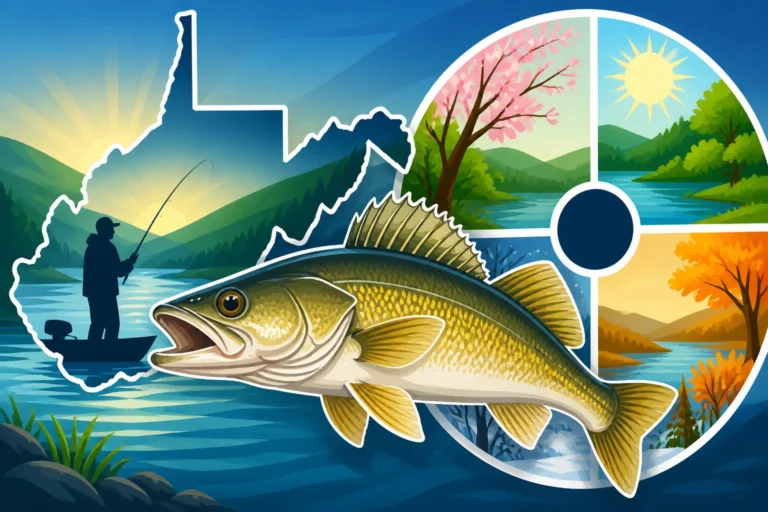
The effectiveness of plunge pool fishing can shift with the seasons, mainly due to changes in water temperature, oxygen levels, and fish behavior. Consult a resource like West Virginia Fishing Seasons by Month to get a general idea of what to expect.
- Spring: As waters warm, fish become more active. Plunge pools are excellent during high flows from snowmelt or spring rains, as they offer respite from strong currents and concentrate food. Trout fishing can be fantastic, especially in stocked streams like those detailed in a West Virginia Trout Stocking Hotline and Schedule post.
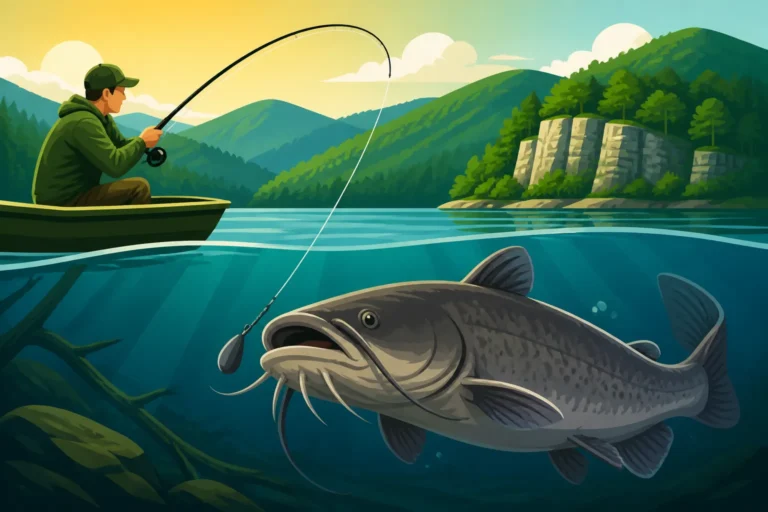
- Summer: During the heat of summer, plunge pools often retain cooler, more oxygenated water due to their depth and aeration. This makes them crucial refuges for fish seeking thermal comfort. Focus on early mornings, late evenings, or even night fishing for catfish, when temperatures are cooler. Smallmouth bass can be very active in these areas.
- Fall: As water temperatures begin to drop, fish become very aggressive, feeding heavily in preparation for winter. Plunge pools are prime spots for actively feeding trout and bass. This is often one of the best times to target larger fish with streamers or larger jigs.
- Winter: While ice fishing is popular on some lakes, open-water plunge pools in rivers can still hold fish. Trout, in particular, will often congregate in these deeper, slower-moving areas, seeking stable temperatures. Slow, subtle presentations with nymphs or small jigs are often most effective. Even on the coldest days, you might find active fish.
By understanding these challenges and having a plan to address them, you'll not only be a more effective plunge pool angler but also a safer and more confident one. The wild waters of West Virginia are full of these incredible pockets of life, and with a little preparation, you can unlock their full potential.
Disclaimer
This article is for general informational purposes only and does not constitute professional advice. Laws, prices and regulations vary by location and change over time. Consult a qualified professional for guidance on your specific situation.