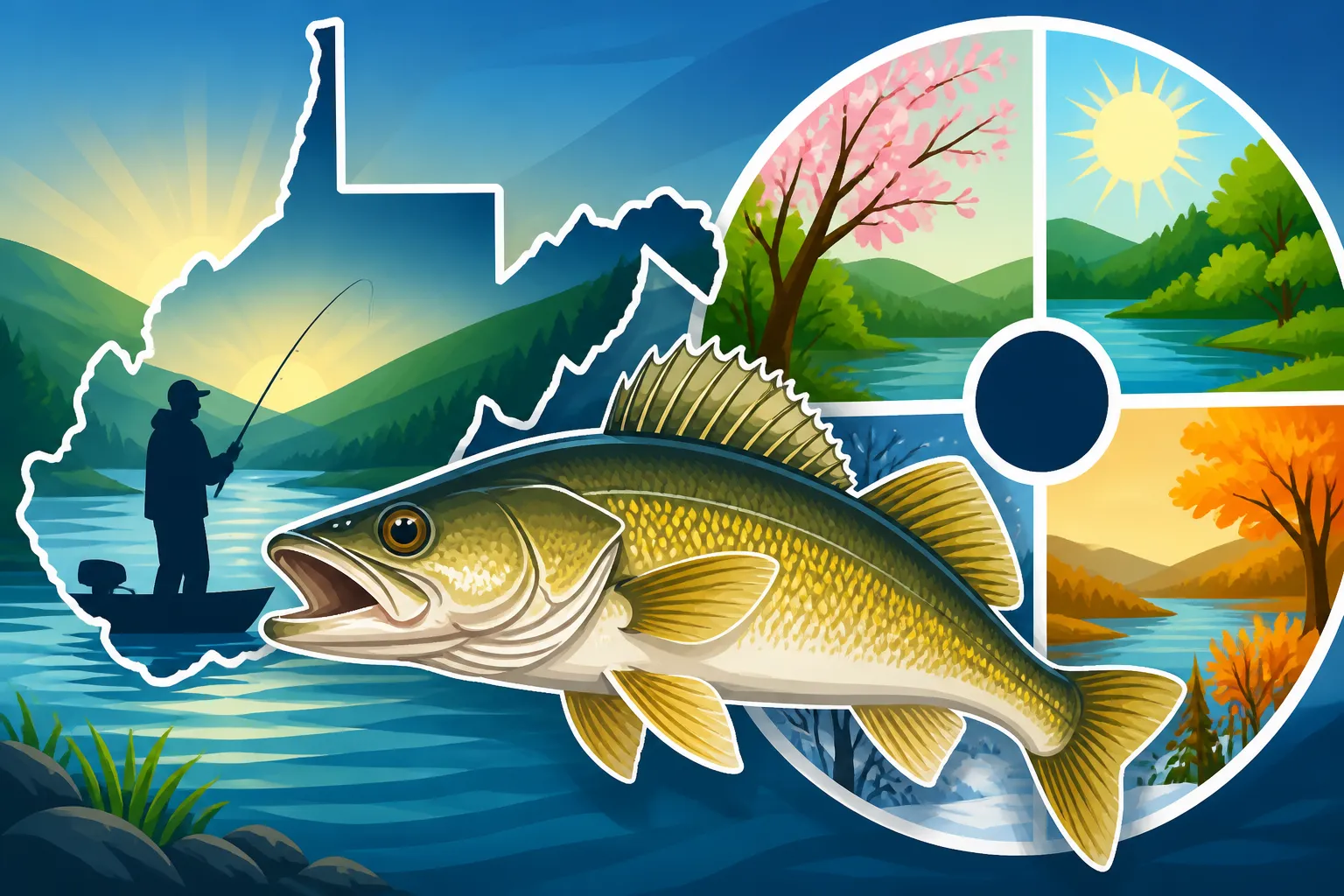
Best months to catch walleye in West Virginia
If you've ever spent a beautiful day on a West Virginia lake or river, convinced it was prime time for walleye, only to come up empty-handed, you know the frustration. It often feels like these elusive fish are just gone, leaving you wondering if you picked the wrong day, the wrong spot, or simply the wrong time of year. This guide is all about cutting through that mystery, breaking down the best months to consistently find and catch walleye in the Mountain State, backed by their seasonal behaviors and preferred habitats.
Understanding Walleye Behavior in West Virginia
Walleye are fascinating fish, and their activity levels are incredibly tied to environmental factors, especially water temperature and food availability. They're not like some other species that seem to bite year-round with little pattern. To truly unlock consistent walleye success in West Virginia, you need to think like a walleye and understand what drives their movements and feeding desires throughout the calendar.
Water Temperature and Spawning Cycles
The biggest driver for walleye behavior, by far, is water temperature. These fish are cool-water species, thriving in temperatures generally between 55 and 70 degrees Fahrenheit. As the water warms or cools outside this range, their metabolism changes, directly impacting how active they are and where they choose to hold. Their annual spawning ritual is a prime example of this temperature sensitivity, creating predictable patterns for anglers.
When spring arrives in West Virginia, usually around March and April, and water temperatures creep into the low to mid-40s, walleye begin their migration to spawning grounds. These are typically rocky shorelines, gravel beds, or the rip-rap of dams in lakes, and upstream gravel bars or riffles in rivers. They don't build nests; instead, they broadcast their eggs over these hard, clean bottoms. Understanding this annual event is crucial because while it's a closed season in some waters during the peak of the spawn, the periods before and after are absolute prime times for aggressive feeding. Once spawning is complete, and water temperatures climb further into the 50s and 60s, walleye will transition to deeper, cooler water in lakes or seek out oxygenated current breaks in rivers as summer progresses. You can learn more about the specific timing by checking out our guide on Walleye Spawning Season in West Virginia.
Forage Availability Throughout the Year
Just like any predator, walleye go where the food is. Their diet primarily consists of baitfish like shad, alewives, shiners, and perch, but they'll also readily consume crayfish, insect larvae, and even smaller game fish. The availability and location of these forage species change dramatically with the seasons, and consequently, so do the walleye.
In the spring, as water temperatures rise, baitfish become more active and move into shallower areas to feed and spawn themselves. Walleye will follow, staging in predictable locations to ambush these easy meals. As summer heat forces baitfish into deeper, cooler thermoclines or specific river sections with good current, walleye will adjust their depth and location accordingly. The fall months see another major feeding frenzy, often called the "fall turnover" period in lakes, where water temperatures equalize, and baitfish are widely distributed before winter sets in. Walleye will gorge themselves in preparation for the leaner, colder months. Even in winter, baitfish will congregate in deeper holes or under the ice, and if you know where to look, you can find walleye keying in on these concentrations.
Prime Walleye Fishing Seasons in West Virginia
Based on their biological drivers, certain times of the year offer significantly better chances for catching walleye in West Virginia. While you can technically catch a walleye any month, understanding these peak seasons will dramatically increase your success rate and make your time on the water much more productive.
Springtime Walleye Frenzy (March-May)
Without a doubt, spring is one of the absolute best times to target walleye in West Virginia. This period, roughly from March through May, encompasses the critical pre-spawn, spawn, and post-spawn phases, each offering unique opportunities.
- Pre-Spawn (Early March – Early April): As ice thaws and water temperatures begin their gradual climb into the high 30s and low 40s, walleye start to stage near their spawning grounds. They're sluggish but actively feeding to build energy for the spawn. This is a fantastic time for slow-moving baits. Think jigging vertically with blade baits, lipless crankbaits, or even a simple jig and minnow combo in staging areas like channel swings, deeper points, or breaks adjacent to spawning flats. Precision is key, so a sensitive rod and braided line will help you detect those subtle bites. Many anglers find great success targeting these fish from shore or boat near rocky points at places like Tygart Lake or along the Ohio River.
- Spawn (Mid-April – Early May): During the actual spawning window (water temps generally 42-50°F), walleye are highly concentrated. However, their focus is on reproduction, not feeding. While it's possible to catch them, it's often more challenging, and in some regulated waters, a closed season might be in effect to protect the spawning population. Check the current West Virginia Fishing Regulations Explained to ensure compliance. Focus on the pre- or post-spawn for higher success.
- Post-Spawn (Mid-May – End of May): After the spawn, female walleye, especially, are recovering and incredibly hungry. They'll drop back into slightly deeper water near the spawning areas, often congregating in groups before dispersing. This is another prime feeding window. They'll readily hit a variety of baits as their metabolism picks up. Trolling crankbaits, casting soft plastics, or drifting jigs with live bait can be incredibly effective. Look for them around points, humps, and submerged cover adjacent to their spawning flats. In rivers, they'll often be in current breaks or deeper pools, still recovering but opportunistic.
Summer Deep Water Tactics (June-August)
As the scorching West Virginia summer sun heats the surface waters into the 70s and 80s, walleye move deeper in lakes to find cooler, more oxygenated water. This is when the fish finder becomes your best friend, locating the thermocline and any structure within it.
- Mid-Summer Migration: Walleye in lakes like Summersville Lake or Stonewall Jackson Lake will often move to main lake humps, deep points, rock piles, or channel edges, usually at depths of 20-40 feet or even deeper. They tend to school up in these cooler zones. This means if you find one, you're likely to find more! In rivers like the Ohio River, they'll concentrate in deeper channels, behind wing dams, or in large pools where cooler water and current breaks provide refuge.
- Effective Summer Techniques: Trolling with deep-diving crankbaits is a go-to method for covering water and finding active fish in lakes. Colors that imitate shad or perch work well. Jigging spoons or heavy jigs with soft plastics are also effective for vertical presentations once you've located schools on your electronics. Bottom bouncing with crawler harnesses is another popular technique, especially during mid-day. Early mornings and late evenings can see walleye moving shallower to feed, but often still relating to deep water access. Make sure your tackle box is stocked with appropriate gear, which you can easily find on Amazon.
Autumn Aggression (September-November)
Fall is another fantastic time for walleye fishing, often rivaling spring in terms of productivity and the size of fish you might encounter. As air temperatures drop and the water cools, walleye begin an intense feeding binge to bulk up for winter.
- The Fall Feed: Lake turnover, when surface and deep waters mix, typically happens in early fall, distributing oxygen and baitfish throughout the water column. Walleye will scatter somewhat, but they're incredibly aggressive. They'll often move shallower than in summer, especially during low light conditions, targeting schools of baitfish. Look for them around rocky points, weed edges (if present), and main lake humps. This is when you can really dial in on active fish.
- River Walleye Revival: In rivers, the fall bite can be explosive. Walleye will move into shallower riffles and current seams, especially during evening hours, to feed on baitfish pushed by current or dislodged by cooling temperatures. Casting crankbaits, jigging hair jigs, or drifting live bait can be very productive. Areas below dams or major river bends are often hotspots.
Winter Patience and Ice Fishing (December-February)
Winter walleye fishing requires more patience, but it can be incredibly rewarding, especially if you enjoy the solitude of cold-weather angling or the unique experience of ice fishing. Walleye metabolism slows down, and they become less active, but they still need to feed.
- Open Water Winter: In unfrozen waters, walleye will hold in the deepest parts of lakes and rivers, often concentrating in large, slow-moving schools near the bottom. Vertical jigging with small spoons, blade baits, or a slow-fished jig and minnow are the most effective techniques. You’ll need to present baits directly to the fish and work them slowly. Focus on breaks, humps, and channel edges in lakes, or deep holes and scour points in rivers.
- Ice Fishing: For the adventurous angler, ice fishing for walleye in West Virginia offers a unique challenge. Lakes like Summersville Lake or Tygart Lake can offer ice fishing opportunities in colder winters. Walleye will concentrate in deep basins, along points, or over humps. Small jigs tipped with minnow heads, blade baits, or jigging spoons are popular. A good flasher or portable fish finder, readily available on Amazon, can be invaluable for locating these suspended or bottom-hugging fish. Remember to always prioritize safety when ice fishing and ensure ice thickness is adequate. You can find more specific information on Ice Fishing in West Virginia.
Key Walleye Hotspots and Techniques for Each Season
Knowing when to fish is only half the battle; knowing where and how to fish specific West Virginia waters during those prime months is what really seals the deal. The Mountain State boasts some excellent walleye fisheries, each with its own nuances.
Top Walleye Lakes and Rivers
West Virginia offers a variety of fantastic walleye destinations. Each body of water has its own character, and understanding these differences can make a big impact on your success.
- Tygart Lake: Located near Grafton, Tygart Lake is arguably West Virginia's premier walleye fishery. It's known for its consistent stockings and healthy population. In spring, focus on the rocky points and rip-rap near the dam and along the main lake channel for pre-spawn fish. During summer, walleye move to deeper humps and channel edges. Fall sees them spread out but actively feeding around structure. Vertical jigging, trolling crankbaits, and bottom bouncing with crawler harnesses are all effective here.
- Summersville Lake: This beautiful lake in Nicholas County holds a good walleye population, though they can be more challenging to locate due to the lake's clear water and deep structure. Spring walleye will relate to the major tributaries and rocky points. In summer, they'll suspend over deep water or hug deep rock piles. Fall can offer a strong bite around submerged timber and rock ledges. Trolling and vertical jigging are key. You'll want to review a comprehensive Summersville Lake Fishing Guide before heading out.
- Ohio River: The Ohio River, forming West Virginia's western border, offers diverse walleye opportunities, particularly in the pools between locks and dams. Spring and fall are fantastic for river walleye, as they congregate in current breaks, behind wing dams, and in deeper scour holes. Jigging with heavy jigs, casting suspending stickbaits, or trolling crankbaits are popular. The river's dynamics mean constant current, so understanding how walleye use current breaks is crucial. Check out the specific Ohio River Fishing Rules for West Virginia Anglers.
- Stonewall Jackson Lake: While primarily known for its bass fishing, Stonewall Jackson Lake also offers a decent walleye fishery, particularly in the northern reaches near the river channels. Spring and fall are key here, with walleye relating to the old river channel, submerged timber, and rocky points. Trolling medium-diving crankbaits or jigging spoons can produce bites. You might find some excellent fishing during the Best Time of Day to Catch Walleye in West Virginia at Stonewall.
Essential Gear and Lures for West Virginia Walleye
Having the right tools for the job can make a world of difference when targeting walleye. They are often subtle biters, especially in colder water, so sensitivity is paramount.
- Rods and Reels: For jigging and casting, a medium-light to medium power spinning rod, 6'6" to 7'6" in length, with a fast action tip is ideal. Pair it with a 2000-3000 size spinning reel spooled with 8-10 lb braided line and a fluorocarbon leader (6-10 lb test). For trolling, a medium power, moderate action casting or spinning rod, 7-9 feet long, is excellent for absorbing head shakes and keeping baits running true. You can find many high-quality options for these setups on Amazon.
- Lures and Baits:
- Jigs: Jigs are perhaps the most versatile walleye lure. You'll want a variety of weights (1/8 oz to 1 oz) and colors. Tipped with live minnows, nightcrawlers, or soft plastic paddle tails, they're deadly. For deeper water and aggressive fish, try blade baits. You can read up on the Best Jigs for West Virginia Walleye.
- Crankbaits: For trolling or casting, crankbaits that imitate shad or perch are excellent. You'll need both shallow-diving models for spring and fall, and deep-diving models for summer. Popular brands include Rapala, Berkley, and Bandit. Experiment with colors like firetiger, silver/black, chartreuse, and natural baitfish patterns.
- Live Bait Rigs: A simple jig and minnow, a Lindy Rig with a nightcrawler or leech, or a bottom bouncer with a spinner rig are all classic walleye presentations that often outperform artificials, especially when fish are finicky.
- Electronics: A good quality fish finder is almost essential for consistent walleye fishing, especially in lakes. It helps you locate baitfish, identify structure, and mark individual walleye. For river fishing, a reliable GPS can help you navigate and mark productive spots like current breaks and deep holes.
Here's a quick reference table to summarize the best months, conditions, and techniques for West Virginia walleye:
| Season | Best Months | Water Temperature (Approx.) | Typical Walleye Location | Recommended Techniques & Baits |
|---|---|---|---|---|
| Spring | March, April, May | 40-60°F | Pre-spawn: Rocky points, channel swings, rip-rap. Post-spawn: Adjacent deeper water. | Vertical jigging (jig & minnow, blade baits), lipless crankbaits, trolling shallow crankbaits |
| Summer | June, July, August | 65-75°F | Deeper humps, main lake points, channel edges, thermocline. River: Deep holes, current breaks. | Trolling deep-diving crankbaits, vertical jigging spoons, bottom bouncing crawler harnesses |
| Autumn | September, October, November | 50-65°F | Humps, points, weed edges, main lake flats (following bait). River: Riffles, current seams, deep pools. | Casting crankbaits, jigging (hair jigs, soft plastics), trolling, drifting live bait |
| Winter | December, January, February | 32-45°F | Deep basins, channel edges, suspended over deep water (under ice or open water). | Slow vertical jigging (small spoons, blade baits, jig & minnow). Ice fishing: tip-ups, jigging |
Catching walleye in West Virginia can be a truly rewarding experience, especially when you understand their seasonal patterns. By focusing your efforts during these prime months and adapting your techniques to the water temperatures and forage availability, you'll significantly increase your chances of success. Good luck out there, and tight lines!
Disclaimer
Fishing conditions, regulations, and fish behavior can change rapidly. Always consult the latest West Virginia Division of Natural Resources fishing regulations before heading out. This guide provides general information and recommendations.