How to Catch Catfish in West Virginia Lakes
There's nothing quite like the thrill of feeling that distinct, heavy throb on your line, signaling a big catfish is on the other end. But for many anglers, especially those new to West Virginia's diverse waters or folks who primarily target other species, consistently landing these whiskered giants in our lakes can feel like a mystery. This comprehensive guide is here to unravel that mystery, offering practical, in-depth strategies to help you successfully catch catfish in West Virginia's beautiful lakes.
Understanding West Virginia Catfish Species
Before you can truly master the art of lake catfishing, it's crucial to understand the stars of the show: the catfish themselves. West Virginia is home to several species, but in our lakes, you'll primarily encounter two main types, each with their own preferences and behaviors. Knowing what you're up against makes all the difference in your approach.
Channel Catfish: The Lake Mainstay
Channel catfish are hands-down the most common and widely distributed catfish species in West Virginia's lakes and reservoirs. They're recognized by their slender, somewhat torpedo-shaped bodies, deeply forked tails, and usually, a scattering of small dark spots, especially when they're younger. While they can grow quite large, most lake channels you'll encounter will be in the 1 to 5-pound range, offering fantastic table fare and spirited fights.
What makes channel cats a lake mainstay is their adaptability. They thrive in a variety of habitats, from the murky depths of larger impoundments to the clearer waters of smaller state park lakes. They're opportunistic feeders, meaning they'll eat just about anything, which is excellent news for anglers. You'll often find them cruising shorelines, lurking near submerged timber, or even suspending in the water column, especially during warmer months. Understanding their diet and preferred hangouts is key to consistently hooking them. They're definitely a species that makes West Virginia fishing a delight for many.
Flathead Catfish: The Bottom Lurker
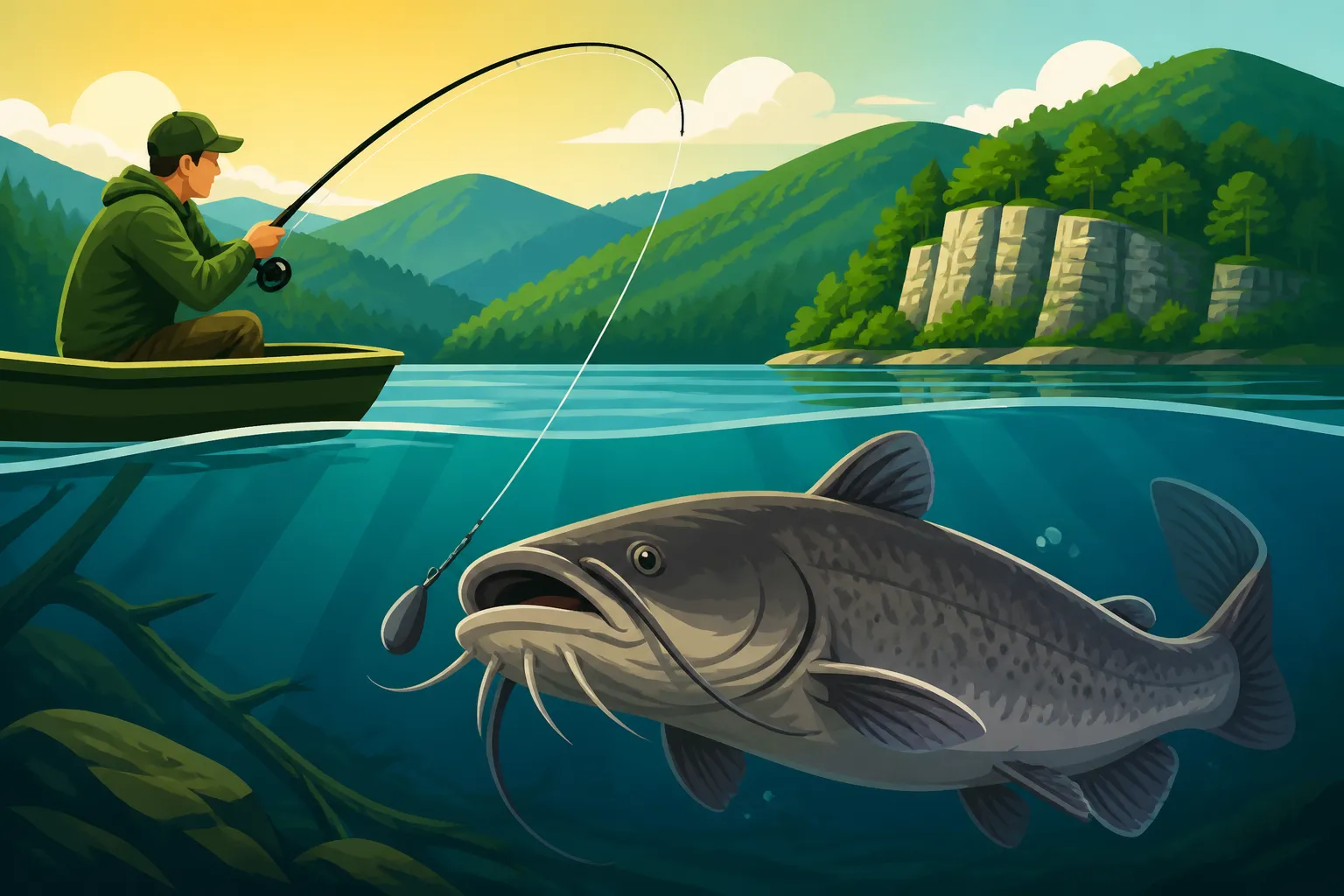
Flathead catfish are the true heavyweights of West Virginia's catfish world, and while more commonly associated with larger rivers like the Ohio River, they certainly inhabit some of our larger lake systems as well. These are the fish that demand heavy gear and even heavier patience. They are easily identified by their broad, flattened heads, small eyes, and spade-like, unforked tails. Unlike channel cats, flatheads typically have a mottled brown or yellowish-brown coloration, helping them blend in with the rocky or muddy bottoms they prefer.
Flatheads are ambush predators, favoring live bait and often sticking close to heavy cover such as log jams, rock piles, or deep ledges. They are territorial and less prone to schooling than channel catfish. Finding a flathead often means finding its specific lair. When you hook one, be prepared for a long, drawn-out battle; these fish pull with incredible power and will use every piece of structure to their advantage. Their presence in a lake signifies a healthy ecosystem capable of supporting large, apex predators.
Blue Catfish: A Rarity in Our Lakes
While blue catfish are gaining a significant foothold in some of West Virginia's larger rivers, particularly the lower Kanawha and Ohio, they are generally not a primary target in our inland lakes. Their natural range and preferred habitat tend to be large, turbid rivers with strong currents. However, you might hear whispers or occasional reports of blue cats in lakes that are directly connected to or heavily influenced by these river systems.
Distinguishing a blue cat from a channel cat can be tricky for the untrained eye. Blue cats have a distinctly humped back, a straight-edged anal fin, and a typically unspotted, silvery-blue coloration. If you do happen to catch one in a lake, it's a rare and exciting occurrence, but don't go out specifically targeting them in most West Virginia lakes. Focus your efforts on the abundant channel and flathead populations for consistent action.
Prime Catfish Seasons and Times in West Virginia Lakes
Timing is everything when it comes to fishing, and catfishing in West Virginia lakes is no exception. Understanding when these fish are most active, and when they’re in specific areas of a lake, will drastically increase your success rate. It's not just about getting on the water; it's about getting on the water at the right time.
Seasonal Patterns and Spawning Activity
Catfish activity in West Virginia lakes follows distinct seasonal patterns, largely dictated by water temperature and their reproductive cycle.
- Spring (Pre-Spawn and Spawn): As lake temperatures rise into the 60s and low 70s Fahrenheit, usually from late April through June, catfish become incredibly active. This is the pre-spawn period, and fish are aggressively feeding to build up energy for spawning. They move into shallower water, often near creek channels, submerged humps, or rocky banks. This is prime time for catching large numbers of channel catfish. Flatheads will also be active, often moving into shallower, hard-bottomed areas in search of spawning sites. Once water temperatures hit the mid-70s, catfish begin to spawn, typically in secluded, dark areas like hollow logs, undercut banks, or rock crevices. During the actual spawning phase, their feeding can slow down considerably as they guard their nests.
- Summer (Post-Spawn and High Activity): After the spawn, typically from late June through August, catfish resume heavy feeding. Water temperatures are at their warmest, driving fish to seek slightly deeper, cooler water during the day, often along drop-offs, river channels, or beneath schools of baitfish. As the sun sets, they move into shallower feeding flats, coves, and points. This period offers fantastic night fishing opportunities. Don't forget to check the West Virginia fishing season dates and closures to make sure you're always within legal limits for all species.
- Fall (Aggressive Feeding): As lake temperatures begin to cool in September and October, catfish go on a serious feeding binge. They sense winter approaching and are packing on weight. This is often an overlooked but highly productive time for big catfish, especially flatheads. They’ll be aggressive, often moving into moderate depths and feeding heavily on baitfish. Look for them concentrated in deeper holes near schooling bait.
- Winter (Slower but Still Productive): While catfish activity slows down significantly in winter as water temperatures drop into the 40s, they don't stop feeding entirely. They become much more lethargic and congregate in deep, main lake basins, often in tight schools. Anglers using sensitive gear and presenting baits directly to these deep schools can still have success. Targeting them requires patience and precise bait placement.
Night Fishing and Low Light Advantages
Catfish, especially larger specimens, are predominantly nocturnal feeders, and this is particularly true in West Virginia's lakes during the warmer months. The cover of darkness provides them with a sense of security, allowing them to move into shallower water to hunt for food.
- Twilight and Dawn: The hours around sunrise and sunset are transition periods when catfish activity often surges. As light levels dim, fish move from deeper holding areas to shallower feeding grounds, or vice versa. These periods can be incredibly productive, often offering excellent fishing before the heat and boat traffic of midday.
- Deep Night: From an hour or two after sunset until an hour or two before sunrise, night fishing can be phenomenal for catfish. The water is cooler, boat traffic is minimal, and catfish are actively prowling. Many experienced anglers exclusively fish for catfish at night in our lakes, specifically targeting big flatheads. You'll need good lighting (headlamps, boat lights), but the peaceful solitude and the potential for monster fish make it well worth it. Learn more about Night Fishing Techniques for West Virginia Lakes to maximize your success.
Weather and Water Conditions
Just like any other fish, catfish are influenced by changes in weather and water conditions. Paying attention to these factors can give you a significant edge.
- Barometric Pressure: A stable or slowly falling barometric pressure often signals good fishing, as fish tend to be more active. A rapidly falling or rising pressure can shut them down as they adjust to the change.
- Cloud Cover and Rain: Overcast days or periods of light rain can often trigger increased catfish activity, especially during daylight hours. The reduced light penetration makes them feel more comfortable moving around, and rain can wash terrestrial insects and worms into the lake, creating feeding opportunities. However, heavy rains can muddy the water significantly, which, while sometimes good for catfish, can also push them into specific areas like calmer backwaters or where clearer water enters the lake.
- Wind: A moderate chop on the water from a steady breeze can break up light penetration and create current, stirring up the bottom and making catfish more comfortable and active. It can also concentrate baitfish. However, strong winds can make boat control and bait presentation very difficult, so balance the benefits with practicality.
Top Catfish Baits and Rigs for Stillwaters
One of the most enjoyable aspects of catfishing is the sheer variety of baits and rigs you can use. Catfish aren't particularly picky, but certain presentations and aromas are undeniably more effective in West Virginia's lakes. Choosing the right combination can mean the difference between an empty cooler and a banner day.
Natural Baits: The Tried and True
When it comes to catfish, nothing quite beats the appeal of natural baits. Their strong scents and familiar textures are irresistible.
- Cut Baits: This is a top choice for both channel and flathead catfish. Oily fish like shad, herring, or even a local panfish (check regulations for using game fish as bait) cut into chunks release a powerful scent trail that catfish can detect from a distance. The fresher the better! For channel cats, smaller chunks work well, while flatheads prefer larger, even whole, live or freshly killed baitfish. You can often find pre-packaged cut baits, but fresh is usually king. Many anglers get their shad or other baitfish from local streams or bait shops.
- Worms: Good old nightcrawlers and red wigglers are staples for channel catfish, especially smaller ones. A big ball of nightcrawlers on a hook is a classic setup that rarely disappoints. The wriggling action and natural scent are highly attractive. You can buy them at virtually any bait shop, or even collect your own after a rain.
- Chicken Liver: This is a notoriously smelly and messy bait, but incredibly effective for channel catfish. The strong, bloody odor is a siren call to whiskered predators. The challenge is keeping it on the hook. Many anglers use bait holders, cheesecloth, or even pantyhose to secure chicken liver. Despite the mess, its effectiveness makes it a must-try.
- Shrimp: Both fresh and frozen shrimp can be excellent catfish baits. While it might seem odd, the natural scent of shrimp, especially when it's slightly aged, drives channel catfish wild. Peeled shrimp are generally more effective as the scent disperses better. This can be a surprisingly clean and convenient bait option.
Prepared Baits and Scent Enhancers
Beyond natural offerings, there’s a whole world of prepared baits designed specifically to attract catfish with powerful, often artificial, scents.
- Stink Baits/Dough Baits: These concoctions are legendary in the catfishing community. Made from various pungent ingredients, they come in different forms: soft dough balls, thick pastes, or dipping baits designed to coat sponges or worms. Brands like Amazon often carry a wide variety of these. They emit a potent odor that channel catfish find irresistible. The key is to find a brand and flavor that the fish in your particular lake prefer. Some anglers even make their own secret recipes!
- Hot Dogs/Cheese: Believe it or not, these common household items can be surprisingly effective. Hot dogs cut into chunks and allowed to "sour" slightly for a day or two in a sealed bag can become incredibly attractive to channel cats. Cubed cheese, especially stronger-smelling varieties, also works due to its potent aroma. These are often great budget-friendly and kid-friendly bait options.
- Scent Sprays/Dips: For times when fish are a bit finicky, or if you want to give your natural baits an extra kick, scent sprays and dips can make a difference. These are designed to enhance the natural appeal or add a specific, proven catfish attractant to your bait. You can apply them to worms, cut bait, or even artificial lures if you’re experimenting.
Effective Rigging Strategies
The way you present your bait is just as important as the bait itself. Different rigs are better suited for specific conditions and target species in lake environments.
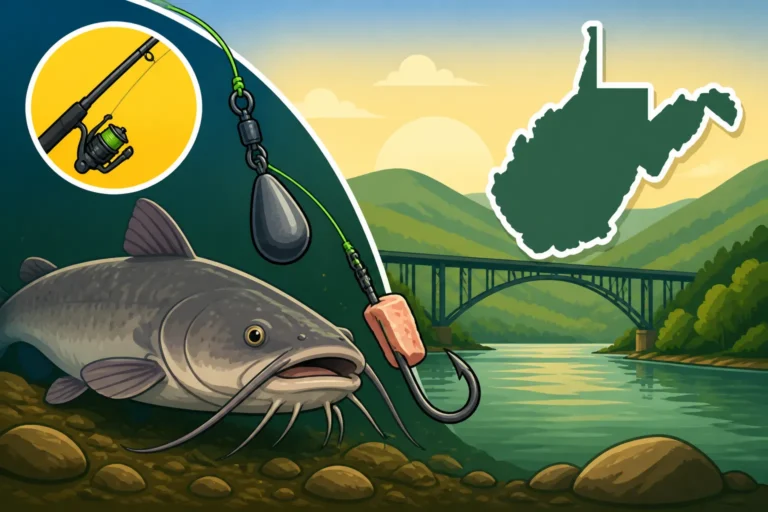
- Carolina Rig (Santee Cooper Rig): This is arguably the most versatile and popular rig for lake catfishing. It consists of a sliding egg sinker (or flat 'no-roll' sinker in current, though less common in lakes), followed by a bead to protect the knot, a barrel swivel, and then a leader (usually 1-3 feet) tied to your hook. The sliding sinker allows the fish to pick up the bait without feeling the weight, making for more confident bites. For the Santee Cooper variant, a small float is added to the leader to keep the bait suspended just off the bottom, making it more visible and keeping it out of snags. This is particularly effective for channel catfish on soft lake bottoms.
- Slip Sinker Rig (Bottom Rig): Very similar to the Carolina rig but without the float on the leader. This rig keeps your bait directly on the bottom, which is excellent for flatheads that hug the lakebed, or for channel cats when you want the bait directly in the mud or silt. Use an appropriate weight sinker to hold your bait in place, especially if there's any wave action or subtle current.
- Three-Way Swivel Rig: This rig is fantastic for suspending bait off the bottom at a specific depth or for fishing in areas with heavy snags. One eye of the three-way swivel is tied to your main line, another to a short leader (6-12 inches) with a sinker, and the third to a longer leader (1-3 feet) with your hook and bait. This keeps your bait up and away from bottom debris, making it great for fishing over submerged timber or rocky areas without getting constantly hung up.
| Rig Type | Target Species | Key Feature | Ideal Use Case |
|---|---|---|---|
| Carolina Rig | Channel Catfish | Sliding sinker, float on leader (Santee Cooper) | Soft bottom, keeping bait visible/off bottom |
| Slip Sinker Rig | Channel, Flathead | Sliding sinker, bait on bottom | Hard/soft bottom, current, bait directly on bottom |
| Three-Way Swivel Rig | Channel, Flathead | Suspends bait with weight separate | Heavy snags, specific depth presentation |
Remember that your hook size should match your bait and target species. For channel catfish, anything from a 2/0 to 6/0 circle hook is usually sufficient. For larger flatheads, you might go up to an 8/0 or even 10/0 circle hook. Circle hooks are highly recommended as they typically hook the fish in the corner of the mouth, minimizing harm and making unhooking much easier, which is especially important for catch and release.
Locating Catfish Hotspots in West Virginia Lakes
Finding catfish in a vast West Virginia lake can feel like searching for a needle in a haystack. But these fish aren't randomly distributed; they follow predictable patterns based on their feeding habits, comfort zones, and the lake's topography. Learning to "read" a lake and identify potential hotspots is a critical skill for consistent success.
Targeting Structure and Depth
Catfish, like most fish, are creatures of comfort and convenience. They relate heavily to structure, which provides cover, ambush points, and often holds baitfish.
- Submerged Timber and Brush Piles: These are absolute magnets for all catfish species. Downed trees, stump fields, and intentional brush piles (often placed by the DNR for fish habitat) offer protection from predators, shade from the sun, and a buffet of smaller fish and invertebrates. Flatheads, in particular, will often make these their primary lair. Fish these areas carefully, as snags are common. Using a Three-Way Swivel Rig can help keep your bait above the thickest part of the cover.
- Rock Piles and Ledges: Rocky areas, especially those with steep drop-offs or shelves, are prime real estate. Rocks absorb and radiate heat, attracting baitfish and in turn, catfish. Ledges provide easy access to different depths, allowing catfish to move up to feed in shallower water at night and retreat to deeper water during the day. Look for transitions where rock meets mud or sand.
- Points and Humps: Points that extend into the main lake and submerged humps or islands are classic catfish holding areas. These structures often deflect current (even subtle lake currents from wind or seiches) and act as feeding funnels, concentrating baitfish. Catfish will sit on the downcurrent side of these structures, waiting to ambush prey.
- Creek and River Channels: Many of West Virginia's larger lakes are formed by damming rivers, meaning they retain old riverbeds and creek channels. These submerged channels are critical catfish highways, offering deeper, cooler water and easy travel routes. Fish the edges, bends, and intersections of these channels, especially where they meet other structure. A good depth finder will be invaluable here.
Reading the Lakebed: From Channels to Flats
Understanding what lies beneath the surface is paramount. Catfish are often found where different bottom compositions meet, or along distinct depth contours.
- Mud Flats and Silt Bottoms: While flatheads prefer harder bottoms, channel catfish often cruise expansive mud or silt flats, especially during low-light conditions. These areas are rich in worms, insect larvae, and other invertebrates that channel cats forage on. Focus on the edges of these flats where they transition to a creek channel or a harder bottom.
- Transitions: The "edge" is almost always the key. Where a hard, rocky bottom transitions to a soft, muddy bottom, or where a shallow flat drops off into a deep channel, these are prime areas. Catfish use these transitional zones for both feeding and moving between depths. Pay close attention to your Best Fish Finders for West Virginia Lakes to identify these subtle changes in the lakebed.
- Man-Made Structures: Don't overlook the obvious! Bridges, old roadbeds, culverts, and even submerged foundations from old homes (if the lake was formed over a town) can be incredible catfish magnets. These structures provide complex cover and ambush points. Some lakes even have designated fish attractors installed by the DNR, which are essentially large brush piles or artificial structures.
Hydrographic Mapping and Fish Finders
In today's age, technology is your friend. Modern tools can give you an unparalleled view of the underwater world.
- Lake Maps/Navionics: High-quality contour maps, whether paper charts or digital versions on a GPS unit or smartphone app like Navionics, are essential for identifying potential catfish hotspots before you even launch your boat. They reveal submerged creek channels, humps, points, and sudden depth changes that you might never find otherwise. Study these maps to plan your attack, marking promising areas for further investigation.
- Sonar/Fish Finders: A good fish finder is an absolute game-changer for lake catfishing.
- 2D Sonar: Helps you identify fish arches, bait balls, and hard vs. soft bottom distinctions. Look for larger, distinct arches near the bottom or hovering near structure.
- Down Imaging/Side Imaging: These technologies provide picture-like views of the bottom, allowing you to clearly see submerged trees, brush piles, rock formations, and even individual fish relating to that structure. You can literally see a log jam and the fish holding tight to it, then cast your bait right to them.
- GPS Integration: Marking waypoints on your GPS for productive spots means you can return to them easily on future trips. This is crucial for building a knowledge base of your favorite lake. The ability to revisit specific submerged brush piles or creek channel bends can lead to consistent success.
When exploring a new lake, start by targeting high-percentage areas identified on maps, then use your fish finder to confirm the presence of structure and baitfish. Fan-cast different depths until you start getting bites, then focus your efforts.
Essential Gear for Lake Catfishing
Catching catfish, especially the bigger flatheads, requires gear that can stand up to a serious fight. While you don't need to break the bank, having the right rods, reels, line, and terminal tackle will significantly improve your chances and make the experience more enjoyable. Think robust, reliable, and ready for a battle!
Rods, Reels, and Line Selection
The backbone of your catfishing setup needs to be sturdy.
- Rods: For lake catfishing, especially if you're targeting larger channels and flatheads, you'll want a medium-heavy to heavy power rod, typically 7 to 9 feet long. A longer rod provides better casting distance, leverage for fighting big fish, and can help keep line out of shoreline snags if bank fishing. A moderate-fast to fast action is generally preferred, offering enough backbone to set a hook firmly while having a forgiving tip to detect subtle bites. Many anglers swear by specialized "catfish rods" available from brands that can be found on Amazon, which are designed specifically for the abuses of catfishing.
- Reels:
- Spinning Reels: For lighter setups or beginners targeting channel cats up to 10-15 pounds, a sturdy spinning reel in the 4000-6000 size range is adequate. Look for models with a strong drag system and good line capacity.
- Baitcasting Reels (Conventional): For serious catfishing, especially flatheads or trophy channels, a conventional baitcasting reel is the preferred choice. These reels offer superior cranking power, durability, and line capacity. Look for a reel with a smooth, powerful drag and a strong gear ratio (e.g., 4.1:1 to 5.3:1) for winching in big fish. Round-profile baitcasters are often favored for their robust build.
- Line:
- Monofilament: A good all-around choice for catfishing. It's affordable, has good abrasion resistance, and provides stretch, which can be helpful in cushioning sudden runs from big fish. Use 15-30 lb test for channel cats, and 30-50 lb test for flatheads.
- Braided Line: Becoming increasingly popular for catfishing due to its incredible strength, zero stretch, and small diameter. The lack of stretch provides excellent sensitivity, allowing you to feel even the lightest bites. Its thin diameter allows you to pack more heavy line on your reel. For braided line, 30-65 lb test is common for channels, and 50-100 lb test for flatheads. Always use a monofilament or fluorocarbon leader with braid to absorb shock and provide a less visible connection to your bait. You can find excellent quality braided lines for river fishing and lake fishing through a variety of online and local retailers.
Terminal Tackle Essentials
Don't skimp on your terminal tackle; it's the direct connection to your fish!
- Hooks: As mentioned before, circle hooks are the way to go for catfishing. They are safer for the fish and result in fewer gut hooks. Sizes 2/0 to 6/0 are good for channel cats, while 8/0 to 10/0 are better for larger flatheads and big cut bait. Ensure they are strong, sharp, and made of high-carbon steel.
- Sinkers/Weights: You'll need an assortment of weights to match conditions. Sliding egg sinkers (1/2 oz to 4 oz) are versatile. "No-roll" sinkers are good for preventing your rig from moving on a sloped bottom, and flat weights are helpful in heavier current. Choose weights heavy enough to hold your bait on the bottom but not so heavy they hinder bite detection.
- Swivels: High-quality barrel swivels or ball-bearing swivels (size 1/0 to 4/0) are crucial for preventing line twist and connecting your leader to your main line.
- Leader Material: A heavy monofilament (e.g., Berkley Trilene Big Game) or fluorocarbon leader (30-80 lb test) is important. Fluorocarbon is less visible underwater and more abrasion-resistant, which is key around sharp rocks and timber.
- Beads: Small plastic beads are placed between your sliding sinker and swivel to protect the knot from damage when the sinker slides down.
Boating and Bank Fishing Accessories
Beyond the basics, a few accessories can make your catfishing trip much more productive and comfortable.
- Rod Holders: Whether you're fishing from the bank or a boat, rod holders are essential. They allow you to set multiple lines, keep your rods secure, and prevent them from being pulled into the water by a powerful strike. For bank fishing, sturdy metal spike holders are perfect. For boat fishing, clamp-on or flush-mount rod holders are ideal.
- Landing Net: A large, sturdy landing net with rubberized mesh is a must-have for safely landing big catfish. The rubberized mesh protects the fish's slime coat and prevents hooks from getting tangled. Don't try to horse a big fish into the boat or onto the bank without one.
- Headlamp/Lantern: For night fishing, good lighting is non-negotiable. A powerful headlamp frees up your hands for baiting hooks and unhooking fish, while a lantern can provide ambient light for your fishing area.
- Pliers/Hook Removers: Catfish have tough mouths, and circle hooks can be snug. Long-nosed pliers or specialized hook removers are crucial for safely unhooking fish.
- First Aid Kit: Accidents happen, especially when handling sharp hooks and spines. Always have a basic first aid kit with you.
- Cooler: For keeping bait fresh or, if you plan to keep your catch, for storing fish on ice. This is essential, particularly during warmer months.
- Boat Anchor System: If boat fishing, a robust anchor system is vital for staying put in your chosen hotspot, especially if there's wind or subtle current. A good anchor with plenty of rope or an anchor trolley system for kayaks are wise investments. Consider a "Best Anchor System for River Fishing" as many of these principles apply to lake currents and wind.
Remember to review the West Virginia Bag and Possession Limits by Species before heading out, and always carry your West Virginia Fishing License Guide for 2026 or know how to buy a West Virginia fishing license online.
Practical Catfishing Techniques for Stillwaters
Now that you understand the fish, the timing, and the gear, let's talk about how to actually get those catfish on the line in West Virginia's lakes. These techniques cover both passive and active approaches, allowing you to adapt to various conditions and preferences.
Anchoring and Still Fishing
This is the quintessential catfishing technique for lake anglers. It's patient, effective, and allows you to cover specific high-percentage areas thoroughly.
- Finding the Spot: Based on your knowledge of structure and the lakebed, identify a promising area – a submerged point, a channel bend, a brush pile, or a rock hump. Use your fish finder to confirm the structure and look for any signs of fish or bait.
- Anchoring Up: Position your boat (or yourself if bank fishing) upwind or upcurrent from your target area. Deploy your anchor quietly and allow the boat to settle. The goal is to cast your baits into or just upstream/upwind of the hotspot, letting the scent drift into the fish's zone. If bank fishing, find a clear spot with good casting access.
- Multiple Rods: This is where rod holders shine. Set out several rods, each with a different bait or rig if you're experimenting. Stagger your casting distances to cover a wider area. For instance, one rod might be cast tight to a brush pile, another into the channel, and a third on the adjacent flat. Be sure to check state regulations regarding the number of fishing rods permitted.
- Patience and Observation: Still fishing is a game of patience. Keep your rod tips slightly elevated, lines taut but not tight, and watch for bites. Sometimes it's a slow, deliberate pull; other times, a sudden, violent strike. If you don't get a bite within 30-60 minutes, consider moving to another spot. Catfish will often move in and out of an area.
- Chumming (Where Legal): In some areas, light chumming can attract catfish. Small pieces of cut bait, stale bread, or even soured grain can be tossed into the water to create a scent trail. Always check local regulations before chumming, as it's not permitted everywhere.
Drifting and Slow Trolling
When catfish are scattered or you're unsure of their precise location, covering water is key. Drifting or slow trolling allows you to systematically search larger areas of the lake.
- Drifting with the Wind or Current: On windy days, you can use the wind to slowly drift your boat across large flats, along channel edges, or over humps. Use a drift sock or sea anchor to slow your drift speed, allowing your baits to stay on the bottom or suspended in the strike zone longer. This is particularly effective for channel catfish that are actively roaming. You can use Carolina rigs or slip sinker rigs, allowing your weight to occasionally tick the bottom.
- Controlled Slow Trolling: If there's no wind or current, or if you want more control, you can use a trolling motor to slowly pull your baits. Maintain a speed just fast enough to cover ground but slow enough to keep your baits near the bottom or at your desired depth. This technique is excellent for covering long stretches of creek channels, deep contours, or expansive flats. You can use bottom-bouncing rigs with heavier sinkers, or even suspend baits with planer boards or downriggers in deeper sections of the lake if targeting suspended fish.
- Sonar for Success: When drifting or trolling, keep a close eye on your fish finder. Look for baitfish schools, catfish arches, and changes in bottom topography. When you get a bite, mark the spot on your GPS, as there's a good chance other fish will be in the same vicinity or along the same contour.
Advanced Lake Catfishing Tactics
For the dedicated catfisherman, there are always more advanced methods to explore.
- Jug Fishing (Where Permitted): Jug fishing involves setting multiple baited lines attached to floating jugs or bottles, often weighted to hold bait at a specific depth. The jugs are then allowed to drift freely across the lake. When a fish strikes, the jug will move erratically, signaling a bite. This is an incredibly effective way to cover vast amounts of water, especially for channel catfish. However, jug fishing is subject to strict regulations in West Virginia (e.g., number of jugs, labeling requirements), and it's not permitted in all lakes. Always consult the current West Virginia Fishing Regulations Explained summary.
- Setting Up Multiple Rods (Statutory Limits): West Virginia allows anglers to use up to two fishing lines at a time, or up to four lines if fishing on the Ohio River. Make the most of this by setting up different rigs or baits on each rod to determine what the fish are keying into on a given day. For example, one rod with cut bait on a slip sinker rig, and another with chicken liver on a Carolina rig. This maximizes your chances of finding what works.
- Bait Presentation in Relation to Cover: When fishing heavy cover, try to position your bait as close as possible without getting snagged. For flatheads around log jams, a big live baitfish dropped right on the edge of the cover is often the ticket. For channel cats around brush piles, a smaller cut bait suspended just above the brush can entice a bite. Experiment with the distance your bait is from the cover until you find the sweet spot.
- Night Fishing Techniques: For those truly committed to big cats, especially flatheads, dedicating an entire night to fishing can yield incredible results. Use glow sticks on your rod tips for bite detection, and rely on your headlamp for baiting and unhooking. Catfish are much less wary in the dark, and you might encounter true trophy-sized fish. Learn more from our guide on Night Fishing Techniques for West Virginia Lakes.
Handling and Care for West Virginia Catfish
Catching a beautiful catfish is only part of the experience. How you handle it, whether you plan to release it or take it home for dinner, is crucial for both the fish's well-being and your own enjoyment. Respecting the resource ensures good fishing for years to come.
Responsible Catch and Release Practices
Not every fish needs to end up on the dinner plate. Practicing proper catch and release helps maintain healthy fish populations, especially for larger, older breeder fish.
- Minimize Fight Time: While exciting, prolonged fights exhaust fish, reducing their chances of survival after release. Use appropriately sized gear to land fish efficiently.
- Keep the Fish in Water: Whenever possible, unhook fish while they are still in the water. If you must remove them, do so quickly. Use a large, soft-mesh landing net to support the fish's body, preventing internal damage. Avoid dragging large catfish onto the bank or boat deck, as this can remove their protective slime layer.
- Handle with Care: Support the fish horizontally, especially larger ones, to avoid damaging internal organs. Avoid squeezing their belly. Use wet hands to minimize the removal of the slime coat. Catfish have sharp pectoral and dorsal spines, so be mindful when handling! Many anglers use heavy gloves for protection.
- Use Circle Hooks: As previously mentioned, circle hooks are a game-changer for catch and release. They almost always hook in the corner of the mouth, making unhooking quick and easy with pliers or a hook remover, without causing deep internal injury.
- Revival: If a fish is heavily exhausted, hold it gently in the water, facing into any current or with a slow forward motion of the boat, until it regains its strength and swims away on its own. Don't just toss it back; ensure it's ready to go.
Cleaning and Preparing Your Catch
If you decide to keep your catfish, they provide delicious table fare. Proper cleaning and preparation are key to enjoying the meal.
- Cooler and Ice: As soon as you decide to keep a fish, place it immediately on ice in a cooler. This preserves the quality of the meat and keeps it fresh until you're ready to clean it. Do not just leave them on a stringer in warm water for extended periods.
- Cleaning Tools: You'll need a sharp fillet knife, a sturdy cutting board, and possibly a pair of pliers for removing skin (especially on larger fish). Some anglers use specialized skinning pliers or tools for catfish.
- Cleaning Methods:
- Skinning: Catfish have tough, scaleless skin. The most common method involves making an incision behind the head, cutting down to the backbone, and then using pliers or your knife to peel the skin off.
- Filleting: Once skinned, you can fillet the fish, removing the meat from the bones. Many people prefer to remove the belly fat, which can sometimes have a stronger taste.
- Steaks: For very large catfish, some anglers cut them into steaks, leaving the bone in.
- Removing Dark Meat: Some catfish, particularly larger ones, might have a reddish, dark strip of meat along the lateral line. Many people prefer to trim this out, as it can have a stronger, "fishier" taste.
- Cooking: Catfish fillets are incredibly versatile. They can be fried, baked, grilled, or pan-seared. A classic West Virginia preparation is cornmeal-crusted fried catfish!
Food Safety and Consumption Advisories
While delicious, it's important to be aware of any potential health advisories for fish consumption in West Virginia waters.
- Check Advisories: The West Virginia Department of Environmental Protection (WVDEP) and the West Virginia Division of Natural Resources (WVDNR) regularly issue fish consumption advisories for specific water bodies due to contaminants like mercury or PCBs. Always check the latest advisories before consuming your catch. These advisories usually recommend limits on how much fish from certain lakes or rivers should be consumed, especially for vulnerable populations like pregnant women and young children.
- Size Matters: Larger, older fish tend to accumulate more contaminants over their lifetime. If there are advisories, they often recommend limiting consumption of bigger fish.
- Safe Handling: Always practice good food safety. Keep fish cold, clean them promptly, and cook them thoroughly to an internal temperature of 145°F (63°C).
By being mindful of these handling and care practices, you can ensure both a thriving catfish population and safe, enjoyable meals from your West Virginia fishing adventures.
Navigating Regulations for Catfish in WV Lakes
Before you even wet a line for catfish in a West Virginia lake, it's absolutely vital to understand and abide by the state's fishing regulations. These rules are in place to protect fish populations, ensure fair chase, and promote responsible angling for everyone. Ignoring them can lead to significant penalties, so it's always better to be informed.
General Statewide Rules
West Virginia has a set of overarching regulations that apply to most waters across the state. These are your foundational rules for catfishing.
- Fishing License Requirements: Every angler 15 years of age or older needs a valid West Virginia fishing license. There are different options for residents and non-residents, including annual and short-term licenses. You'll definitely want to check out the West Virginia Fishing License Guide for 2026 for detailed information, including how to buy a West Virginia fishing license online. Don't forget, even if you have a license, you might need additional stamps for specific species like trout, though this usually doesn't apply to general catfishing in lakes.
- Line Limits: As mentioned earlier, anglers are generally permitted to fish with no more than two (2) fishing lines at a time. The exception is the Ohio River, where anglers can use up to four (4) lines. This rule is crucial to avoid violations, especially if you're deploying multiple rod holders. Each line needs to be actively attended.
- Daily Creel and Possession Limits: While catfish often have generous limits, it's important to know the specific daily creel (how many you can keep in one day) and possession (how many you can have in your possession at any given time, including those at home) limits for catfish species. These can sometimes vary by species or even by water body. Always refer to the latest West Virginia Bag and Possession Limits by Species document published by the WVDNR.
- Legal Fishing Methods: Only certain methods are permitted. This typically includes hook and line (rod and reel or hand line). Methods like snagging, spearfishing (with some exceptions for non-game fish), and shocking are generally prohibited for game fish like catfish. Always verify the legality of methods like trotlining, jug fishing, or set lines, as they often have specific restrictions on location, labeling, and number of devices allowed.
Specific Lake Regulations
Beyond the general statewide rules, many West Virginia lakes, especially larger reservoirs or state park lakes, may have special regulations that supersede or add to the general rules. These are often put in place to manage specific fisheries, protect certain species, or address unique environmental factors.
- Length Limits: Some lakes might have minimum or maximum length limits for certain catfish species. For example, a lake might have a slot limit for flathead catfish, meaning fish within a certain size range must be immediately released. This is often done to protect larger breeding fish or promote growth rates.
- Reduced Creel Limits: In certain lakes, the daily creel limit for catfish might be lower than the statewide general limit. This can happen in smaller lakes or those undergoing population recovery.
- Gear Restrictions: While less common for catfish, some lakes might have restrictions on bait types (e.g., no live bait) or specific gear configurations. For instance, some state park lakes might only allow electric motors.
- Protected Waters/Areas: Certain areas within a lake or specific smaller lakes might be designated as "special regulation waters" with unique rules, sometimes for trout or other sensitive species, but it's important to be aware of them.
- Jug Line/Trotline Restrictions: As discussed earlier, the legality of jug fishing and trotlining can vary significantly by water body. Many lakes prohibit these methods entirely, while others allow them with strict limits on the number of lines, hooks per line, and mandatory labeling with your name and WVDNR ID number. Always confirm these details for the specific lake you intend to fish. For instance, regulations for Bluestone Lake Fishing Regulations may differ from those at Summersville Lake Fishing Guide.
Licensing and Conservation
Understanding your license and its role in conservation is vital for every angler.
- Conservation Stamp: In West Virginia, most adult anglers are also required to purchase a Conservation Stamp, which helps fund vital conservation efforts, fish stocking, and wildlife management. You can learn more about West Virginia's Conservation Stamp, Explained.
- Permits for Specific Areas: While rare for general catfishing, certain federal lands or private access points on lakes might require additional permits beyond your state fishing license. Always check for signs or local requirements.
- Reporting Violations: If you witness any poaching or blatant violations of fishing regulations, it's important to report them to the West Virginia Division of Natural Resources (WVDNR). This helps protect the fisheries for everyone.
Always carry a copy of the current West Virginia Fishing Regulations Summary, either in physical form or digitally on your phone. You can usually find the latest version on the WVDNR website. This document is your ultimate authority on legal fishing practices and ensures you're fishing responsibly and legally.
Disclaimer
The information provided in this guide is for general informational purposes only and is not intended as legal advice. Fishing regulations in West Virginia can change. It is the responsibility of the angler to consult the most current West Virginia Division of Natural Resources (WVDNR) fishing regulations summary or contact the WVDNR directly before engaging in any fishing activities. Always prioritize safety and environmental responsibility.