Best dry fly patterns for summer trout hatches
Summertime fishing for trout in West Virginia can sometimes feel like you're trying to outsmart a ghost. The crystal-clear, lower water levels and bright sunshine make these wary fish incredibly spooky, turning what should be a relaxing day into a test of patience and skill. If you’ve found yourself scratching your head, wondering which tiny, delicate dry fly might finally tempt a rising trout, then you're in the right place. This guide is all about equipping you with the knowledge of the best dry fly patterns to use during the challenging, yet rewarding, summer trout hatches across the Mountain State.
Understanding Summer Trout Behavior and Hatches
Summer in West Virginia brings a different kind of challenge for trout anglers. The vibrant spring hatches often dwindle, and trout become much more selective and cautious. It’s no longer about just putting something on the water; it’s about putting the right thing on the water, at the right time, with impeccable presentation.
Why Summer Trout Fishing Can Be Tricky
As the days grow longer and warmer, water temperatures in many of our beloved West Virginia trout streams can rise, sometimes pushing trout into cooler, oxygen-rich pockets. This often means they're found in deeper pools, undercut banks, or the shaded, swift runs of higher-elevation tributaries. The lower water levels that frequently accompany summer can make the fish incredibly spooky, capable of darting for cover at the slightest shadow or clumsy cast. Furthermore, the bright summer sun often makes them more light-sensitive, pushing their feeding activity to the early morning or late evening hours, or even into the depths of night.
This combination of factors means that the margin for error is significantly reduced. A heavy-handed cast, a shadow falling across the water, or a fly pattern that’s "close enough" simply won't cut it. Trout, especially those that have seen a season or two of angler pressure, become highly selective, focusing on specific insects that are abundant and easy to intercept. Your tackle needs to be lighter, your approach stealthier, and your fly choice much more precise.
The Importance of Matching the Hatch
"Matching the hatch" is a timeless mantra in fly fishing, but it takes on a whole new level of importance during the summer months. When hatches are sparse, trout can afford to be opportunists, but when a particular insect is abundant, they often "key in" on that specific food source. This means they'll ignore everything else, even if it's a perfectly presented, delicious-looking fly, if it doesn't precisely imitate the size, shape, and color of their current meal.
In West Virginia's clear summer waters, trout have ample time to inspect your offering. They can easily discern a subtle difference in wing profile, body color, or even the way your fly sits on the water. If your imitation isn't convincing, they'll simply sip the natural insects drifting by and leave your artificial untouched. Successful summer dry fly fishing often hinges on being a keen observer, identifying the prevalent insects, and then tying on a fly that mirrors them as closely as possible. It’s a detective game as much as it is a fishing trip, and the rewards are truly earned when you crack the code.
Key Summer Insect Hatches in West Virginia
While the major spring hatches of Hendricksons and March Browns fade, summer brings its own cast of characters to the aquatic insect stage. Understanding these key hatches is paramount to selecting the right dry fly.
One of the most anticipated summer events is the emergence of the Best fly for a summer trico hatch. These tiny, often overlooked mayflies hatch in enormous numbers, typically in the morning hours, sometimes so thick they look like swirling clouds above the water. The actual hatching occurs before dawn, and the females lay eggs and die, forming "spinner falls" on the water's surface as the sun hits it. These tiny insects (often size 20-24) cause incredibly selective feeding frenzies. You’ll see subtle sips and dimples on the surface, indicating trout are feasting on these minute morsels.
Sulphurs (often Ephemerella invaria and dorothea) are another important summer mayfly, typically emerging in the late afternoon and early evening. These pale yellow or cream-colored insects are slightly larger than Tricos (size 16-20) and often elicit more aggressive rises. Light Cahills (Stenonema ithaca), with their creamy yellow bodies and mottled wings, are also a significant summer hatch in many streams, often appearing around dusk. Beyond mayflies, caddisflies are ever-present, with various species hatching throughout the summer, especially in the evenings. And let's not forget the terrestrials – ants, beetles, and grasshoppers – which become incredibly important as they accidentally fall into the water from streamside vegetation. These "land-based" insects often provide a welcome, larger meal for trout when aquatic hatches are sparse.
Essential Dry Fly Patterns for Summer Trout in West Virginia
When you’re standing streamside in West Virginia, watching a trout sip tiny naturals, having the right dry fly in your box is half the battle. These are the patterns that have consistently fooled Mountain State trout during the summer months.
Mayfly Imitations for Selective Eaters
Mayflies are often the connoisseurs' choice for trout, especially during summer's low, clear conditions when fish become incredibly selective. You’ll want patterns that accurately represent the dun (newly hatched adult) and spinner (egg-laying adult) stages.
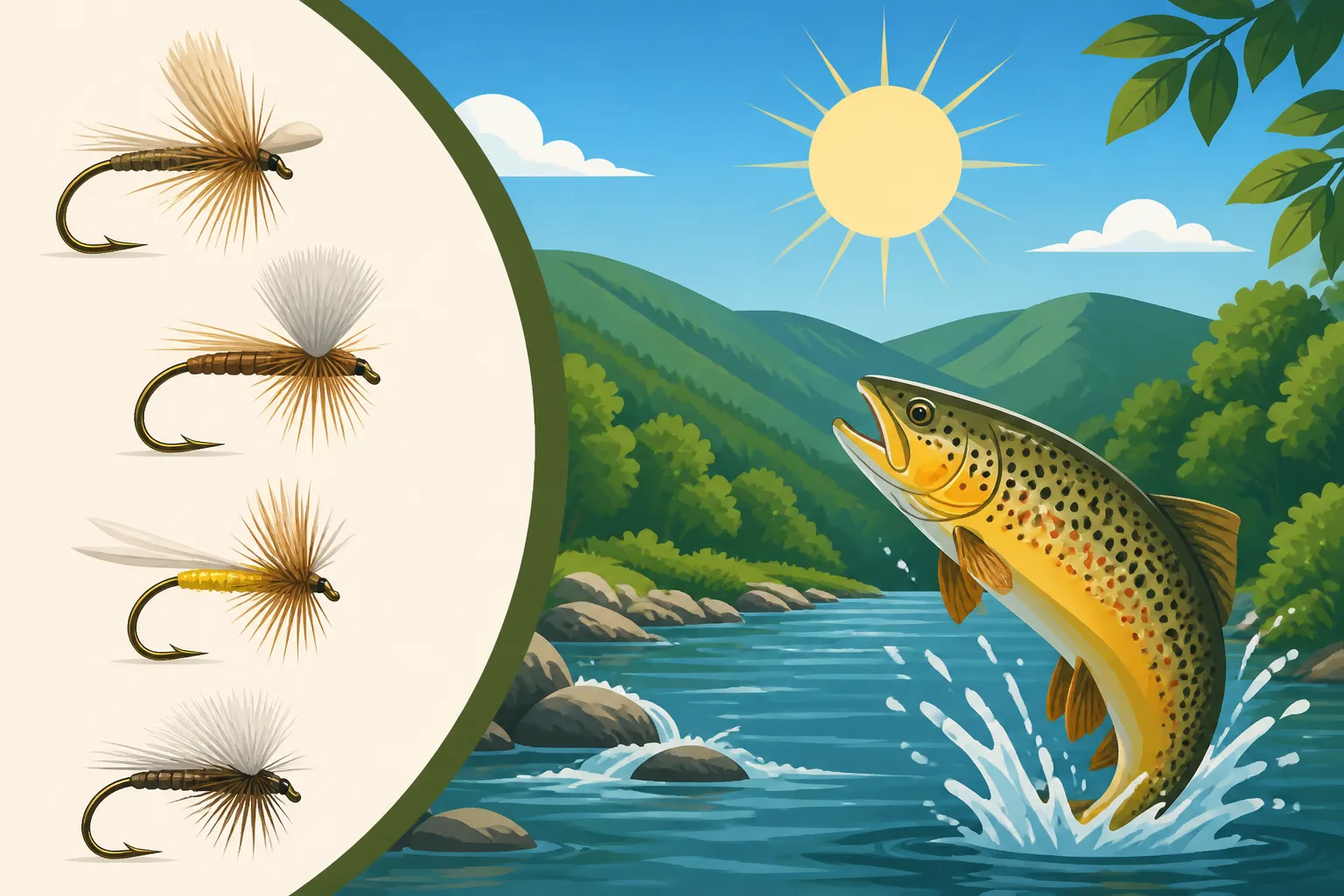
The Light Cahill is a classic for a reason. Its creamy body and distinct profile make it an excellent imitation for several different light-colored mayfly species common in West Virginia streams during summer evenings, including the Stenonema ithaca and even lighter Sulphurs. When you see trout leisurely sipping rather than aggressively slashing, especially in the twilight hours, a Light Cahill in sizes 12-16 can be deadly. Fish it with a drag-free drift over likely holding lies – the slower the presentation, the better. Consider a CDC (Cul de Canard) variation for a softer, more realistic landing on the water, which can be crucial on calm, glassy pools.
For the Sulphur hatches, which tend to be more prevalent in the late afternoon and early evening, a well-tied Sulphur Dun pattern is indispensable. These flies typically range from size 16 to 20, mimicking the pale yellow or cream-colored duns that lift off the water. If you’re seeing consistent rises and notice insects with upright wings drifting by, don't hesitate to tie on a Sulphur Dun. Its delicate profile needs a gentle cast and an absolutely perfect drift to convince wary trout. For those moments when the hatch is winding down, or if you notice trout are specifically targeting the spent adults, a Sulphur Spinner with its wings splayed flat on the water can be incredibly effective. The challenge with spinners is often tying and seeing them in smaller sizes, but they can unlock serious feeding frenzies.
And then there are the Tricos. Oh, the Tricos! These are probably the most challenging but rewarding summer hatch to fish. The Trico Spinner is the absolute king here. These incredibly tiny mayflies, often sizes 20-24, emerge and then fall back to the water's surface as spinners in massive numbers, usually from late morning into the early afternoon, especially on calm, sunny days. You’ll need keen eyesight, a light leader, and extreme patience. Look for subtle dimples and rings on the water, rather than splashy rises. A black-bodied Trico Spinner with white wings, mimicking the male, or a green-bodied version for the female, fished perfectly dead-drift in the film, will be your ticket to success. Don't be afraid to try a tippet as small as 7x or even 8x to get these tiny flies to drift naturally. If you're struggling to see your tiny Trico, sometimes a slightly larger, brighter dry fly fished as an indicator a foot or two above your Trico can help, provided it doesn't spook the fish. For purchasing these incredibly small and specific patterns, many anglers turn to online retailers like Amazon for a wide selection.
Caddisfly Patterns for Opportunistic Risers
While mayflies might cater to the selective palate, caddisflies often entice the more opportunistic trout. These insects are a staple food source, and their erratic behavior on the water can often trigger more aggressive strikes.
The Elk Hair Caddis is arguably one of the most versatile and effective dry flies ever conceived, and it shines throughout the West Virginia summer. Its buoyant elk hair wing and dubbed body make it float high and visible, even in choppy water or mixed light. This pattern can imitate a wide variety of caddisfly species, and it’s a fantastic searching pattern when you’re not sure what else is hatching. Fish it in sizes 12-18, in natural tan, olive, or even a darker brown. Beyond a dead drift, don't be afraid to add a subtle twitch or skate to an Elk Hair Caddis; the natural caddis often skitter across the surface when egg-laying, and this imitation can provoke a violent strike from an otherwise uninterested trout. It's a fantastic fly to tie on when you're exploring new water, or when you see general surface activity but no obvious hatch.
Another superb caddisfly pattern, particularly for clear water and selective fish, is the X-Caddis. This pattern features a trailing shuck made from Z-Lon or antron, mimicking a caddisfly struggling to emerge from its pupal shuck. Trout often key in on these vulnerable, partially emerged insects. The X-Caddis sits lower in the water than the Elk Hair Caddis, offering a more subtle profile that can fool wary trout. It’s effective in sizes 14-20 and often works best when fished with a delicate, drag-free drift. Its unique profile can make it stand out just enough from the naturals to grab a trout's attention without being unnatural. When you're fishing West Virginia Special Regulation Waters where trout see a lot of flies, the X-Caddis can be a real game-changer due to its realistic emergence imitation.
Terrestrial Treats for Bankside Action
As summer progresses and water levels drop, the importance of terrestrial insects increases dramatically. Trout, especially larger ones, will readily shift their focus to ants, beetles, and grasshoppers that accidentally fall into the water. These patterns represent a substantial meal and can often entice fish that ignore tiny mayfly imitations.
Ant patterns are often overlooked but can be incredibly effective, particularly on bright, sunny days when aquatic hatches are minimal. Ants are constantly falling into the water, and trout recognize them as a consistent food source. Black, cinnamon, and red ant patterns in sizes 16-20 are indispensable. Fish them tight to banks, under overhanging vegetation, and in slow eddies where ants might accumulate. A simple foam ant or a traditionally tied hackle ant fished with a very light leader and a drag-free drift can often pick off stubborn fish. The key is their omnipresence; trout never stop eating ants, making them a reliable pattern even when nothing else seems to be working.
When you're fishing larger Best Fly Fishing Rivers in West Virginia or streams with wide, grassy banks, Grasshopper and Cricket imitations become absolute must-haves. Chubby Chernobyls, Dave’s Hoppers, and Fat Albert patterns are excellent choices for their buoyancy and realistic profile. These patterns work best when cast near grassy banks, riffles, and undercut banks where a terrestrial might tumble into the water. They are particularly effective on warmer, windier days when hoppers are active. Don't be afraid to let them splat down on the water a little—that's often how a real grasshopper would land, and it can grab a trout's attention from a distance. Hoppers in sizes 8-14 can tempt some of the largest trout in a stream, making them a fantastic option for targeting bigger fish on the Elk River Trout Fishing or Shavers Fork Brook Trout Fishing. Similarly, foam beetle patterns in black or brown, sizes 12-18, are excellent when fishing tight to bank structure or shaded areas where beetles might fall from trees. Just like ants, they are a consistent food source throughout the summer.
Rigging and Presentation for Success with Summer Dry Flies
Having the right fly patterns is just one piece of the puzzle. How you rig and present those flies during the challenging summer conditions in West Virginia can make all the difference between a frustrating day and a memorable one.
Leader and Tippet Choices for Stealth
In the gin-clear, often lower water of summer, trout have an incredible ability to detect anything unnatural. This means your leader and tippet choices are paramount for stealth. A standard 9-foot tapered leader is a good starting point, but extending its length with additional tippet material can be highly beneficial. Many experienced anglers will add 2-3 feet of extra tippet, making their overall leader system 12-15 feet long. This extended length helps to separate your fly line from your fly, reducing the chances of spooking fish and allowing for longer, more delicate drifts.
For tippet, you'll almost always want to go lighter than you might in other seasons. Fluorocarbon tippet, though it sinks, can be very effective for Fly Fishing for Trout in West Virginia because of its invisibility underwater. However, for dry flies, a high-quality monofilament tippet is preferred for its buoyancy. Sizes 6x and 7x are standard for smaller dry flies, and you might even need to drop to an 8x for those minuscule Trico spinners or for truly spooky fish in flat, glassy pools. The trade-off, of course, is a higher risk of breaking off a larger fish, so play them gently. Always check your knot after every fish or snag, as the lighter material can weaken more easily. Remember, the goal is to make your fly appear as though it's drifting completely unattached, just like a natural insect.
Casting Techniques for Finesse
Heavy, sloppy casting will send West Virginia's summer trout scattering faster than you can say "Mayfly." Finesse is the name of the game. Your casts need to be delicate, accurate, and minimize drag. Focus on open loops and a smooth, unhurried casting stroke. Avoid false casting excessively over the water; once or twice to load the rod and align your cast should be plenty. The less your fly line sails over the trout's head, the better.
A Best Fly Rods for West Virginia Trout Streams with a softer action can aid in delicate presentations. When casting, aim to have your leader and tippet lay out straight, or even with a slight "reach" or "parachute" cast, which introduces slack into the leader. This slack is crucial for achieving a truly drag-free drift, especially in complex currents. Practice your upstream presentations, casting slightly above and across the fish, allowing your fly to drift naturally into their feeding lane. For downstream presentations, especially for spooky fish, try to land your fly gently well above the fish and let it drift towards them with minimal line disturbance. Remember, a drag-free drift is often more important than the exact fly pattern itself in these challenging summer conditions.
Reading the Water and Approaching Spooky Fish
Summer trout are masters of camouflage and highly attuned to their surroundings. Reading the water effectively and approaching with extreme caution are critical. Look for areas that offer cover and cooler water: deep pools, shaded runs, undercut banks, current seams behind large rocks, and anywhere there's significant overhead cover like rhododendron or hemlock branches. These are prime spots where trout will hold during the warmer parts of the day.
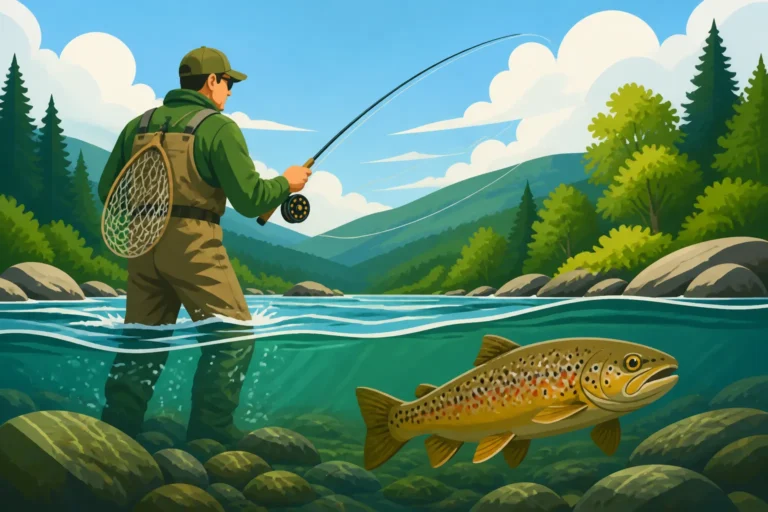
When you spot a rising fish, resist the urge to immediately cast. Take a moment to observe. What is the rhythm of the rise? Is it a gentle sip (indicating small, surface-film insects like Tricos) or a more aggressive splash (possibly a caddis or terrestrial)? What direction is the fish moving? This information will guide your fly choice and casting angle. Approach the water slowly and deliberately, staying low and using streamside vegetation as cover. Avoid wading directly upstream of a fish, as this sends vibrations through the water and can spook them. If possible, make your first cast from a kneeling or crouching position, keeping your profile low. Remember that Best water temperature for trout fishing in West Virginia is crucial for trout activity, and warmer summer temperatures often mean less active fish, requiring more patience and a softer touch. On Cranberry River Fly Fishing or the Dry Fork Fishing Access Points, which are popular during the summer, stealth and careful wading are often the keys to success.
Regional Considerations and Local Tips
West Virginia's diverse topography means trout fishing varies quite a bit from one region to another. Understanding these nuances can significantly improve your summer dry fly game.
High-Elevation Streams vs. Larger Rivers
West Virginia offers a fantastic range of trout waters, from tiny, shaded headwater brooks to larger, more open rivers. Your approach to summer dry fly fishing will need to adapt accordingly.
In the high-elevation streams of the Monongahela National Forest, like those in the Shavers Fork Brook Trout Fishing area or similar small tributaries, water temperatures tend to stay cooler, and native brook trout are often the primary target. Here, smaller, simpler patterns often excel. Think tiny Elk Hair Caddis (size 18-20), Black Gnats, and even simple Parachute Adams. The dense canopy cover means fewer large insect hatches but a consistent supply of terrestrial insects. Stealth is paramount in these smaller waters; often, a single cast can either make or break your chances in a small pool. Wading upstream carefully, keeping a low profile, and making precise casts into pocket water are the best strategies. These streams might not hold trophy fish, but the wild, colorful brook trout are a true reward.
Larger rivers, such as sections of the Elk River Trout Fishing or the Trout Fishing in West Virginia found in the Potomac drainage, present a different challenge. These rivers often have wider, more open stretches, making long casts and dealing with complex currents essential. While they might still hold good aquatic hatches like Sulphurs and Cahills, larger trout in these waters are often more wary and less forgiving of poor presentation. Terrestrial patterns like hoppers and beetles become increasingly important, especially along grassy banks and under overhanging limbs. Here, you might employ longer leaders and dry fly patterns, particularly during the specific dawn Trico spinner falls or evening caddis emergences. These rivers can hold larger, more experienced trout, so your choice of Best Gear for West Virginia Trout Fishing and strategic approach need to be on point.
Best Times of Day for Summer Dry Fly Fishing
The heat of a West Virginia summer day often means trout activity slows significantly during the midday hours. Understanding their feeding windows is crucial for maximizing your success.
Early mornings are perhaps the most productive time for summer dry fly fishing. As the sun barely kisses the water, temperatures are at their coolest, and aquatic insects like Tricos are completing their spinner falls. This is when trout, having been dormant during the hottest parts of the day, become actively engaged in a feeding frenzy. You might witness widespread, subtle rises as fish sip these tiny insects from the surface film. Being on the water before sunrise, ready to cast as the light breaks, can often lead to some of the most consistent action of the day. This is also when you're likely to see mayfly duns struggling to emerge, making smaller parachute patterns effective.
Late evenings, as the sun dips below the horizon and the air begins to cool, are another prime window. Caddisflies often emerge in earnest during this time, skittering across the water, along with larger mayflies like Sulphurs and Light Cahills. The low light offers a bit more cover for both the angler and the fish, making trout feel more secure and willing to rise. This can be a fantastic time for more aggressive dry fly takes. Fishing into true twilight, sometimes even with a headlamp to re-tie, can be highly productive. During the hot midday hours, if you must fish, focus on fast, oxygenated riffles, deep shady pools, or sections of stream with constant cold-water influx, and consider switching to nymphing techniques or simply taking a break to enjoy the scenery. Many anglers use resources found on Amazon to stock up on headlamps and other necessary gear for these early morning and late evening trips.
Staying Prepared: Fly Box Essentials and Accessories
A well-stocked fly box and the right accessories can turn a challenging day into a successful one. Don't skimp on the details when it comes to summer dry fly fishing.
First and foremost, you need a dedicated box for your summer dry flies, with enough compartments for all those tiny patterns. As we discussed, include a wide range of Trico Spinners (black and olive, sizes 20-24), Sulphur Duns and Spinners (sizes 16-20), Light Cahills (sizes 12-16), and a good assortment of Elk Hair Caddis (tan, olive, black, sizes 12-18). Don't forget your terrestrials: Foam Ants (black, cinnamon, red, sizes 16-20), small Beetle patterns (black, brown, sizes 14-18), and at least a few larger Hopper patterns (sizes 8-14) for specific conditions. It's always a good idea to have a few Parachute Adams (sizes 12-20) as a versatile searching pattern that can imitate many generalist mayflies.
Beyond the flies themselves, essential accessories include:
- Tippet spools: Multiple sizes, especially 5x, 6x, 7x, and 8x for those delicate presentations.
- Leader straightener: To remove memory from coiled leaders.
- Floatant: Both a paste/gel floatant for general flies and a desiccant powder for drying out waterlogged flies. These are absolute necessities, especially for tiny summer dries. You can find excellent options for these on Amazon, often in convenient multipacks.
- Nippers and hemostats/forceps: For cutting line and unhooking fish gently.
- Polarized sunglasses: Crucial for spotting subtle rises and seeing fish in clear water.
- Wading staff: For stability, especially in larger rivers or when crossing slick, rocky bottoms.
- Small magnifying glass or tippet threader: For tying on those minuscule Tricos, especially in low light. Trust me, your eyes will thank you.
- Thermometer: To monitor Best water temperature for trout fishing in West Virginia and ensure you're fishing when conditions are safe and productive for the trout. If the water gets too warm (typically above 68°F), it's best to give the trout a break.
Being organized and having these tools readily accessible means you can spend more time fishing and less time fumbling, which is crucial when those precious summer feeding windows open.
Key Summer Dry Fly Patterns for West Virginia Trout
To help you get organized, here's a quick reference for some of the best dry fly patterns for summer trout fishing in West Virginia:
| Pattern Name | Target Insect(s) | Common Sizes | Best Fishing Time(s) | Notes |
|---|---|---|---|---|
| Trico Spinner | Trico Mayflies (spent adults) | 20-24 | Early Morning (dawn to mid-morning) | Tiny, delicate sips; requires light tippet and perfect drift. |
| Sulphur Dun | Sulphur Mayflies (duns) | 16-20 | Late Afternoon/Early Evening | Pale yellow/cream; delicate profile for selective fish. |
| Sulphur Spinner | Sulphur Mayflies (spent adults) | 16-20 | Evening | Flat-winged, sits low in the film. |
| Light Cahill | Light Cahill Mayflies, general pale mayflies | 12-16 | Evening | Classic, creamy-bodied pattern for gentle rises. |
| Elk Hair Caddis | Various Caddisflies | 12-18 | All Day, especially Evening | Versatile, buoyant, can be twitched. |
| X-Caddis | Caddisfly (emerger/pupa) | 14-20 | All Day, especially Evening | Sits low, trailing shuck imitates emerging insect. |
| Foam Ant | Ants | 16-20 | Midday, Sunny Days | Excellent when no hatch; fish tight to banks. |
| Foam Beetle | Beetles | 14-18 | Midday, Shaded Areas | Buoyant, dark profile for a larger meal. |
| Chubby Chernobyl / Dave's Hopper | Grasshoppers, Crickets | 8-14 | Midday, Warmer Days, Wind | High-floating, good for prospecting for larger fish. |
| Parachute Adams | General Mayfly, searching pattern | 12-20 | All Day | Highly visible, effective imitation for many insects. |
Disclaimer
Fishing regulations and conditions can change rapidly. Always consult the latest West Virginia Division of Natural Resources fishing regulations before heading out. Be aware of private property boundaries and practice Leave No Trace principles to protect our beautiful waterways. Stay safe, wear appropriate gear, and respect the natural environment.