Best portable fish finder for kayak fishing
The thrill of kayak fishing in West Virginia is undeniable, but it comes with its own unique set of challenges, especially when it comes to locating those elusive fish. Traditional boat-mounted electronics just aren't practical for many paddlers, leaving you guessing about what lies beneath the surface. This comprehensive guide is dedicated to helping you navigate the world of portable fish finders, ensuring you can make an informed choice to boost your success on West Virginia's diverse lakes and rivers.
Why Every Kayak Angler Needs a Portable Fish Finder in West Virginia
Kayaks offer an incredible way to experience West Virginia's waters, from the tranquil mountain lakes to the swift currents of its famed rivers. However, that low-profile, intimate connection with the water also means you don't have the luxury of a large console-mounted sonar unit. This is where portable fish finders step in, leveling the playing field and providing invaluable subsurface intelligence.
Gaining an Edge on Diverse Waters
Imagine paddling across a vast impoundment like Summersville Lake or exploring the expansive Bluestone Lake. Without a fish finder, you're essentially blind, relying on guesswork or previous experience to find productive depths and structures. A portable unit allows you to scan for drop-offs, submerged timber, rock piles, and even schools of baitfish that might be holding the walleye, bass, or crappie you're after. Even on smaller, intimate streams, knowing the depth and seeing the bottom contour can reveal hidden pockets where trout might be holding.
For anglers targeting specific species like Muskie Fishing in West Virginia or Walleye Fishing in West Virginia, a fish finder is almost non-negotiable. These species often relate strongly to specific structures or temperature breaks that are invisible from the surface. A good portable unit can help you identify these hotspots, turning a day of aimless paddling into a focused and productive fishing trip.
Portability and Versatility for Any Kayak
One of the biggest frustrations for kayak anglers is the bulk and complexity of rigging traditional electronics. Portable fish finders solve this beautifully. They are designed to be compact, lightweight, and easy to deploy and retrieve. Whether you're launching from a remote riverbank or a busy boat ramp, you can have your fish finder up and running in minutes.
This versatility means you can use the same unit whether you're in a recreational kayak, a dedicated fishing kayak, or even if you decide to go Bank Fishing Techniques for West Virginia Lakes. Some models can even be transferred easily to a rental boat or a friend's kayak, making them a truly flexible piece of gear. When you're done for the day, simply pack it away, no complicated wiring or permanent installations needed. It’s all about getting on the water faster and focusing on the fishing.
Decoding the Tech: Essential Features for Your Portable Kayak Fish Finder
Not all portable fish finders are created equal, and understanding the key features will help you pick one that truly enhances your West Virginia fishing adventures. From how they "see" underwater to how you interact with the information, these elements are crucial.
Transducer Technology and Beam Angle
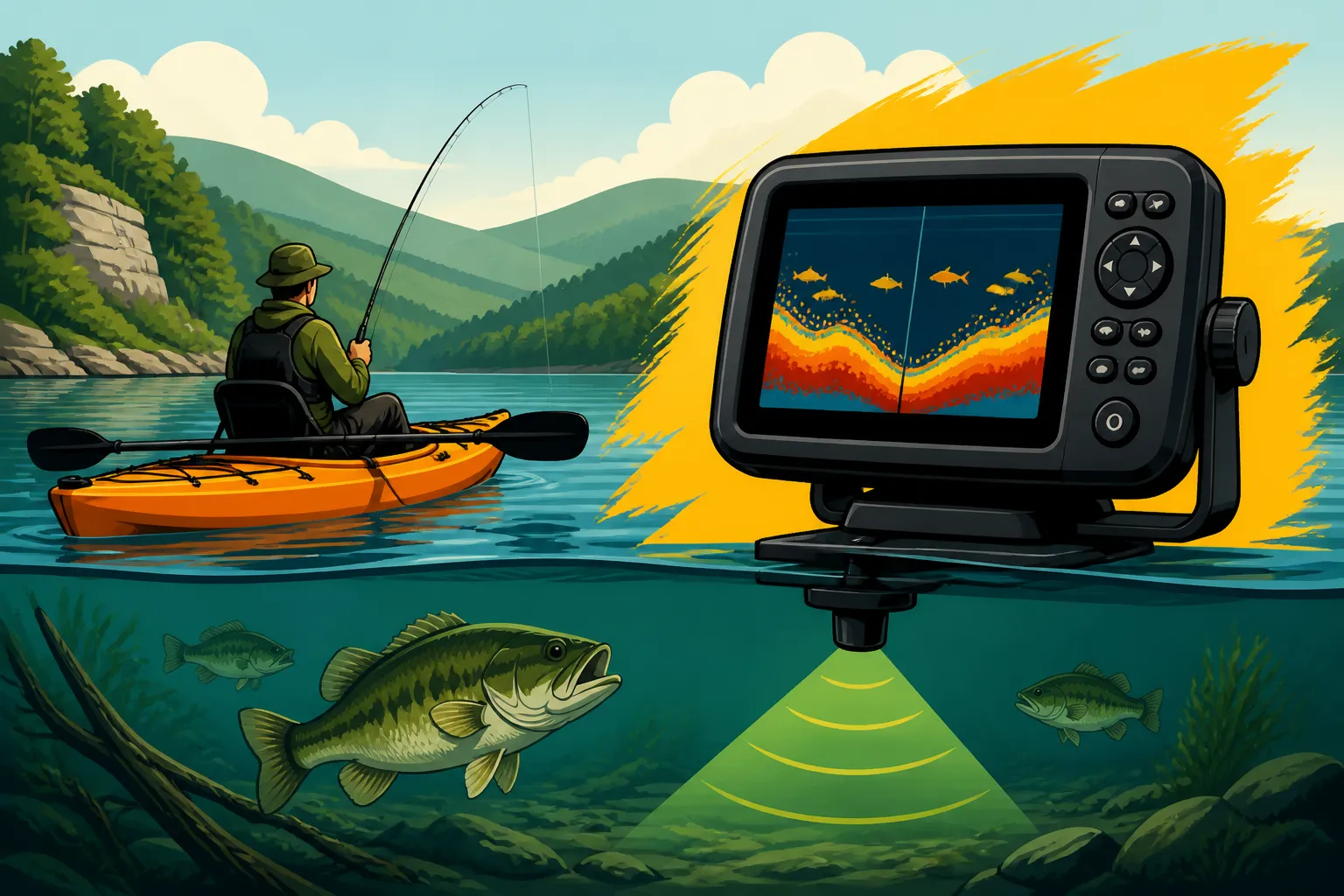
The transducer is the "eye" of your fish finder, sending out sonar waves and listening for the echoes. For kayak fishing, you'll primarily encounter traditional 2D sonar, but many portable units now offer more advanced options.
- 2D Sonar: This is the bread and butter, showing you fish arches, bottom contours, and structure directly beneath your kayak. Most portable units offer dual-beam or wide-angle options, giving you a broader view underwater. A wider beam is great for quickly scanning larger areas, while a narrower beam provides more detail directly below.
- Down Imaging/ClearVü/DownScan: These technologies offer photographic-like images of what's directly below your kayak. They are fantastic for discerning between a submerged log and a school of baitfish or identifying individual fish relating tightly to structure. This can be incredibly useful when How to Catch Smallmouth Bass in West Virginia Rivers where they often hide in rocky crevices.
- Side Imaging/SideScan: While less common in truly portable units, some high-end portable or temporarily mounted models might offer this. Side imaging extends your view out to the sides of your kayak, making it easier to cover more water and locate structure off to the left or right without having to paddle directly over it. This is a game-changer for covering flats or large areas on lakes like Stonewall Jackson Lake Fishing.
When considering transducer technology, think about the type of water you fish most. If you're primarily in shallow, clear mountain streams looking for trout, a simple 2D sonar might suffice. But if you're exploring deep reservoirs for Catfish Fishing in West Virginia or targeting structure-loving walleye, the added detail of down imaging will be a huge asset.
Display Quality, Size, and Connectivity
The display is where all that underwater information comes to life. A good display is legible in bright sunlight and offers enough detail to interpret sonar returns accurately.
- Size: Portable fish finders range from smartphone-sized castable units to small 5-inch screens. Larger screens generally offer better detail and make it easier to split the screen for different views (e.g., map and sonar). However, larger screens also mean more bulk and greater battery consumption. For kayak fishing, a balance is key; something that's easy to mount and view without obstructing your paddling.
- Resolution and Color: Higher resolution means sharper images and better distinction between fish, bait, and structure. Color screens are standard now and offer much better interpretation than old black-and-white units, with different colors often representing signal strength or depth.
- Connectivity: Many truly portable units connect wirelessly to your smartphone or tablet, turning your device into the display. This can be a cost-effective option, leveraging a screen you already own. Brands like Deeper are pioneers in this space. Other units have their own integrated display. Some even offer Wi-Fi or Bluetooth connectivity to share data or update software. Consider how well your phone screen performs in direct sunlight, and if you have a rugged, waterproof case for it, especially when navigating river rapids on the New River Gorge Fishing Guide.
Battery Life and Power Options
Power is often the Achilles' heel of portable electronics. You don't want your fish finder dying just as the bite turns on.
- Internal vs. External Battery: Castable units typically have internal, rechargeable batteries that offer several hours of use. Units with dedicated displays often use larger internal batteries or require external 12V batteries (like small sealed lead-acid or lithium batteries).
- Battery Life: Always check the estimated battery life. For a full day of fishing on West Virginia's larger lakes, you'll want at least 6-8 hours of continuous operation. If you're using your phone as a display, remember that the fish finder app will drain your phone's battery faster, so a portable power bank for your phone is a must.
- Charging: Consider how easy it is to charge the unit. USB charging is convenient for most smaller devices, while larger units might require a dedicated charger.
GPS and Mapping Integration
While not strictly "fish finding" in the sonar sense, GPS and mapping capabilities are invaluable tools that significantly enhance the utility of your portable unit.
- GPS: Built-in GPS allows you to mark waypoints for productive spots, record tracks of your paddling routes, and navigate back to specific locations. This is incredibly helpful for revisiting a successful fishing hole or finding your way back to your launch point, especially on complex bodies of water.
- Mapping: Some portable fish finders come with pre-loaded base maps, while others allow you to download or create custom maps. Detailed contour maps can show you depth changes, ledges, and channels, even before you deploy your transducer. Advanced mapping features, like C-MAP or Navionics compatibility, can give you an incredible advantage, especially on larger West Virginia impoundments. You can often purchase these map cards or subscriptions from retailers like Bass Pro Shops or through online platforms like Amazon.
Knowing where you are, where you've been, and where the most promising underwater features lie can dramatically increase your efficiency on the water. Best Sonar Settings for Finding Structure on Summersville Lake would be an example where integrated mapping could really shine.
From Castables to Mountables: Choosing the Right Portable Fish Finder Style
The term "portable fish finder" covers a few different styles, each with its own benefits and ideal use cases for the West Virginia angler. Understanding these distinctions is crucial for selecting the best fit for your kayak and fishing style.
Castable Fish Finders: Ultimate Grab-and-Go Convenience
These are the smallest and most straightforward portable fish finders. They are essentially a bobber-sized sonar unit that you cast out with your rod (or hand-toss), and they wirelessly transmit sonar data to an app on your smartphone or tablet.
- Pros:
- Extremely compact and lightweight, fitting easily into a Best Tackle Bag for Bank Fishing or a small dry bag in your kayak.
- No complicated mounting or wiring required.
- Great for exploring new water quickly or for bank fishing, especially along areas like the Ohio River or the shores of your favorite lake.
- Often feature GPS for mapping and marking spots directly on your phone's screen.
- Cons:
- Relies on your smartphone for the display, which can be prone to glare, battery drain, and water damage if not protected.
- Sonar readings can be less stable when drifting or paddling due to the unit moving freely in the water.
- Limited depth and advanced features compared to dedicated units.
- Ideal for: Anglers who value maximum portability and simplicity, casual kayak fishing, those primarily fishing smaller ponds or streams, and bank anglers. These are perfect for quick scouting missions or when you want to minimize gear. Brands like Deeper offer several models in this category.
Temporarily Mounted Units: Bridging the Gap
This category includes portable fish finders that come with their own dedicated screen but are designed for easy, non-permanent installation on a kayak. They often feature suction cup mounts, clamp-on transducers, or track-mounted systems.
- Pros:
- Dedicated, often brighter and more robust screens than a smartphone, making them easier to view in sunlight.
- More stable sonar readings because the transducer is fixed to the kayak.
- Can offer a wider range of features, including advanced sonar (down imaging), better GPS, and detailed mapping.
- Still relatively easy to remove and transport.
- Cons:
- Requires some form of mounting hardware, which can take a few extra minutes to set up.
- Typically larger and heavier than castable units.
- May require an external battery, adding to the overall bulk.
- Ideal for: Dedicated kayak anglers who spend significant time on the water and want more advanced features and a dedicated display without the commitment of a permanent installation. This type is excellent for exploring large reservoirs like Tygart Lake or focusing on precise structure in the New River. Many Garmin Striker and Lowrance Hook models offer portable kits suitable for this. You can find a good selection of these at retailers like Bass Pro Shops or online at Amazon.
Integrated Portable Systems: Semi-Permanent Performance
While still portable in the sense that they can be removed, these systems involve a slightly more involved setup, often with dedicated kayak rigging. They might feature a small, permanently wired transducer (though still quick-release for transport) and a portable head unit that clips into a mount.
- Pros:
- Offers the best performance and features, rivaling smaller traditional boat units.
- Most stable and consistent sonar readings.
- Can run all advanced sonar, GPS, and mapping features seamlessly.
- Often designed to work with Best Trolling Motor for a Fishing Kayak setups.
- Cons:
- Requires more initial setup and potentially some kayak modification for wiring and transducer placement.
- Less "grab-and-go" than truly portable or castable units.
- Generally the most expensive option in the portable category.
- Ideal for: Tournament kayak anglers, those with highly customized fishing kayaks, or anyone demanding the absolute best performance and features for serious fishing in challenging West Virginia waters. This setup could be ideal for targeting trophy Muskie Fishing in West Virginia or intricate patterns on large, deep lakes.
Here's a quick comparison of these styles:
| Feature | Castable Unit | Temporarily Mounted Unit | Integrated Portable System |
|---|---|---|---|
| Portability | Excellent (Pocket-sized) | Very Good (Quick removal) | Good (Removable head unit) |
| Display | Smartphone/Tablet (BYOD) | Dedicated Unit Screen | Dedicated Unit Screen |
| Setup Time | Seconds (Cast/toss) | Minutes (Mount clamp/suction) | Minutes (Clip in head, wire conn.) |
| Sonar Types | Basic 2D, sometimes Down Imaging | 2D, Down Imaging, some Side Imaging | All advanced sonar types |
| GPS/Mapping | Via smartphone app | Dedicated GPS, Mapping options | Full GPS, advanced mapping |
| Battery | Internal rechargeable | Internal/External (12V) | External (12V) |
| Ideal Use | Casual, bank, quick scout | Dedicated kayak, versatile | Serious kayak angler, performance |
| Price Point | Entry-level to Mid-range | Mid-range to Upper Mid-range | Upper Mid-range to High-end |
Setting Up and Using Your Portable Fish Finder on West Virginia Waters
Once you've chosen your portable fish finder, getting it set up correctly and learning to interpret its readings will significantly impact your fishing success. There's a small learning curve, but the payoff is immense.
Mounting and Transducer Deployment
Proper transducer placement is paramount for clear, accurate readings. For kayak anglers, this typically means keeping it submerged and clear of obstructions.
- Castable Units: Simply tie it to a sturdy fishing line (or the provided tether) and cast or toss it out. Make sure it's within Bluetooth or Wi-Fi range of your phone. Remember to retrieve it periodically, especially if you're drifting rapidly or if there's heavy current, as on sections of the Kanawha River.
- Temporarily Mounted Units: These often come with flexible arms or suction cup mounts.
- Over-the-side Mount: This is the most common. Attach the transducer to a scupper hole mount, a suction cup arm on the hull, or a clamp-on bracket. Ensure the transducer is vertical, fully submerged, and not catching current or interfering with your paddle stroke. It should be away from any air bubbles created by your hull.
- Hull Shoot-Through: Some kayaks allow you to mount the transducer inside the hull, shooting the sonar signal through the plastic. This keeps the transducer protected and out of the water, but it requires a very clean contact with the hull (usually with a silicone sealant or water bath) and can sometimes reduce signal strength.
- Integrated Systems: These usually involve a more permanent scupper or stern mount for the transducer, with quick-disconnects for the cables to the portable head unit. This provides the most secure and performance-oriented setup.
Regardless of your setup, always test it in calm, shallow water first to ensure you're getting clear readings before heading out to deeper, more challenging spots on West Virginia's rivers and lakes.
Understanding Your Sonar Screen
Interpreting the sonar screen takes a bit of practice, but the basic principles are universal. Your screen will typically show a scroll of data moving from right to left, representing what's beneath your kayak as you move.
- Bottom Contour: The most prominent feature will be the bottom. A hard, flat line indicates a hard bottom (rock, gravel), while a fuzzy, thick line suggests a soft bottom (mud, silt). Sharp changes in depth indicate drop-offs, ledges, or humps – prime areas for holding Smallmouth Bass Fishing in West Virginia or Crappie Fishing in West Virginia.
- Structure: Submerged trees, rock piles, brush, and other underwater features will appear as solid masses. Down Imaging is particularly good at showing the detailed shape of these structures. Fish often relate very closely to structure, using it for cover or ambush points.
- Fish Arches: Fish typically appear as arches or inverted "V" shapes. The size and thickness of the arch can indicate the size of the fish. Sometimes they'll appear as simple dots or lines, especially if they are very close to the bottom or if you're moving slowly. When you see a cluster of small arches or dots, that's often a school of baitfish, which signals predators nearby.
- Depth and Temperature: Most fish finders will display current depth and water temperature. Temperature can be a critical factor, especially for species like trout that prefer colder water or bass that become more active in certain temperature ranges.
Experiment with your unit's sensitivity and range settings. Too low, and you'll miss fish; too high, and you'll get too much clutter. Many units have an "auto" mode that's a good starting point.
Maximizing Your Catch with Strategic Use
A fish finder isn't just about seeing fish; it's about understanding the underwater environment and using that knowledge to your advantage.
- Pattern Recognition: As you paddle, pay attention to where you find fish. Are they on main lake points, in creek channels, near submerged timber, or suspended over open water? Over time, you'll start to recognize patterns on your sonar screen that consistently hold fish.
- Structure Fishing: Actively search for structure. Ledges, humps, and brush piles are fish magnets. Use your fish finder to locate these features, then position your kayak to cast to them effectively. For example, if you see a nice drop-off on Summersville Lake Fishing Guide, you can then cast your bait or lure to drift along that contour.
- Baitfish Detection: Locate schools of baitfish, and you'll often find predatory fish close behind. Your sonar can reveal these schools, giving you a target rich environment.
- Depth Control: Knowing the exact depth allows you to present your lures at the precise level where fish are holding. This is especially useful for Walleye Fishing in West Virginia where depth control is often key.
- Waypoint Marking: Don't just see a fish; mark its location with your GPS! If you catch a fish or find a particularly promising spot, drop a waypoint so you can return to it later. This is incredibly helpful for building a "milk run" of productive spots on your favorite West Virginia lake or river.
Making the Right Choice: Matching a Fish Finder to Your Kayak and Fishing Style
With so many options, choosing the "best" portable fish finder for kayak fishing really comes down to your personal needs, the type of kayak you own, and the kind of fishing you typically do in West Virginia.
Consider Your Kayak Type
The design of your kayak plays a significant role in determining which fish finder style will work best.
- Recreational Kayaks: These are often simpler, lighter, and may not have track systems or scupper holes designed for transducers. For these, a castable unit is often the easiest and most practical solution, requiring no modification to your boat. They fit nicely in a dry bag and can be deployed with minimal fuss.
- Dedicated Fishing Kayaks (Sit-on-Tops): Many modern fishing kayaks are built with anglers in mind, featuring transducer-ready scupper holes, track systems (like those from Hobie, Old Town, or Native Watercraft), and ample space for a screen. These kayaks are ideal for temporarily mounted units, giving you a stable platform for a dedicated display and more advanced sonar. Many anglers also add a Best Trolling Motor for a Fishing Kayak to these, which benefits greatly from an integrated fish finder system.
- Canoes or Small Jon Boats: While not strictly kayaks, these small craft also benefit from portable fish finders. Both castable and temporarily mounted units can work well, offering flexibility for different launches and fishing scenarios on larger rivers like the Cheat or the Greenbrier.
Assess Your Fishing Style and Target Species
Think about how you fish and what you fish for in West Virginia.
- Shoreline Hopper / Small Stream Angler: If you're frequently changing locations, casting from the bank, or exploring small, clear mountain streams for Brook Trout: West Virginia's Native and State Fish, a castable unit like the Deeper brand would be incredibly efficient. You can quickly scout a hole before wading in or casting.
- Lake Cruiser / All-Around Angler: For those who paddle larger lakes like Summersville Lake Fishing Guide or Sutton Lake, targeting a variety of species like bass, walleye, or crappie, a temporarily mounted unit with a dedicated screen and perhaps down imaging would be a fantastic investment. The ability to see structure clearly and mark waypoints will be invaluable.
- River Runner / Structure Hunter: If you're consistently floating West Virginia's bigger rivers like the New River for Smallmouth Bass Fishing in West Virginia or the Little Kanawha for muskie, and you're actively seeking out specific underwater structure, a temporarily mounted unit with GPS and mapping features will provide the detailed intelligence you need to pinpoint those productive spots. For the ultimate performance in moving water, an integrated portable system is often preferred by serious river anglers.
- Ice Fisherman: Many portable fish finders, especially castable units or compact models with ice fishing transducers, double as excellent ice fishing flasher units. If you enjoy Ice Fishing in West Virginia during the winter months, this dual-purpose functionality is a huge bonus.
Balancing Features and Budget
Portable fish finders come at a range of price points, and generally, more features mean a higher cost.
- Entry-Level: Castable units typically offer the most affordable entry point, providing basic depth and fish detection through your smartphone. These are perfect for beginners or those on a tight budget.
- Mid-Range: Temporarily mounted units with dedicated screens usually fall into the mid-range. These offer a good balance of features, performance, and portability for the dedicated kayak angler. You can often find excellent deals on these from major retailers.
- High-End: The most advanced temporarily mounted units or integrated portable systems will be at the higher end of the spectrum, offering top-tier sonar, robust GPS, and detailed mapping. These are serious tools for serious anglers.
Remember, the "best" unit isn't always the most expensive, but the one that best suits your individual needs and fishing conditions here in West Virginia. Do your research, read reviews, and consider what you truly need versus what's just a nice-to-have. Online stores like Amazon and physical retailers such as Bass Pro Shops offer a wide selection, allowing you to compare models and often see them in person before making a decision. Take your time, weigh your options, and you'll find the perfect portable fish finder to unlock a new level of fishing success on West Virginia's beautiful waters.
Disclaimer
This article is for general informational purposes only and does not constitute professional advice. Laws, prices and regulations vary by location and change over time. Consult a qualified professional for guidance on your specific situation.