Best landing net mesh for catch and release
It's happened to all of us: you battle a beautiful fish, finally get it to the boat or shore, and as you try to net it for a quick photo and release, the hooks get hopelessly tangled, or worse, the fish thrashes and rubs against the rough mesh, losing scales and its protective slime coat. This isn't just frustrating; it can seriously harm the fish you worked so hard to catch and want to release successfully. This guide is all about helping you pick the perfect landing net mesh so your West Virginia catch and release experiences are as smooth and fish-friendly as possible.
Why Your Net Mesh Matters for Catch and Release
When we talk about catch and release fishing, often the focus is on proper hook removal or how long the fish is out of water. But the material and design of your landing net's mesh play an equally critical, though sometimes overlooked, role in ensuring the fish swims away healthy and strong. It’s not just about getting the fish in; it’s about how you get it in and out.
The Delicate Nature of Fish Slime Coat
Every fish in West Virginia, from the feisty smallmouth bass in the New River to the colorful trout in our mountain streams, is covered in a vital protective layer called the slime coat. Think of it as their first line of defense against parasites, bacteria, and fungal infections. It’s literally what keeps them healthy in their watery world. When a fish comes into contact with abrasive surfaces, like coarse net mesh, this slime coat can be rubbed off.
Imagine losing your skin's protective layer; you'd be more vulnerable to everything. It's the same for fish. Stripping away that slime makes them susceptible to diseases once they're back in the water. We've all seen fish with red spots or fuzzy patches after being handled improperly, and rough net mesh is often a major culprit. Beyond the slime, stiff, knotted mesh can also cause physical damage—ripping fins, dislodging scales, or even scraping eyes if the fish struggles. For our precious native Brook Trout: West Virginia's Native and State Fish, or any species we cherish, minimizing this kind of harm is paramount.
Minimizing Stress and Maximizing Survival
A protracted fight, rough handling, and prolonged time out of the water all contribute to stress in fish, which can severely impact their post-release survival. Your net can either exacerbate this stress or help reduce it significantly. A well-designed, fish-friendly net allows you to quickly and safely secure the fish, minimizing the struggle both in the water and during handling.
When a fish fights hard, its body builds up lactic acid, similar to how our muscles feel after intense exercise. If it's then subjected to a rough net and excessive handling, this stress can become lethal, even if the fish swims away seemingly fine. A soft, forgiving net cradles the fish, keeping it calm and contained while you get ready for hook removal and a photo. It helps reduce the fight time once the fish is in the net, and crucially, allows you to keep the fish submerged in the water for as long as possible. This is particularly important for larger, more powerful fish in places like the New River Gorge, where every second out of the water counts. Knowing how to choose the right gear is a big part of the overall strategy for West Virginia Fishing Regulations Explained and promoting healthy fish populations.
Understanding the Different Types of Net Mesh
Not all net meshes are created equal, especially when catch and release is your primary goal. Let's break down the most common types you'll encounter and how they stack up for fish welfare.
Rubberized and Silicone Mesh
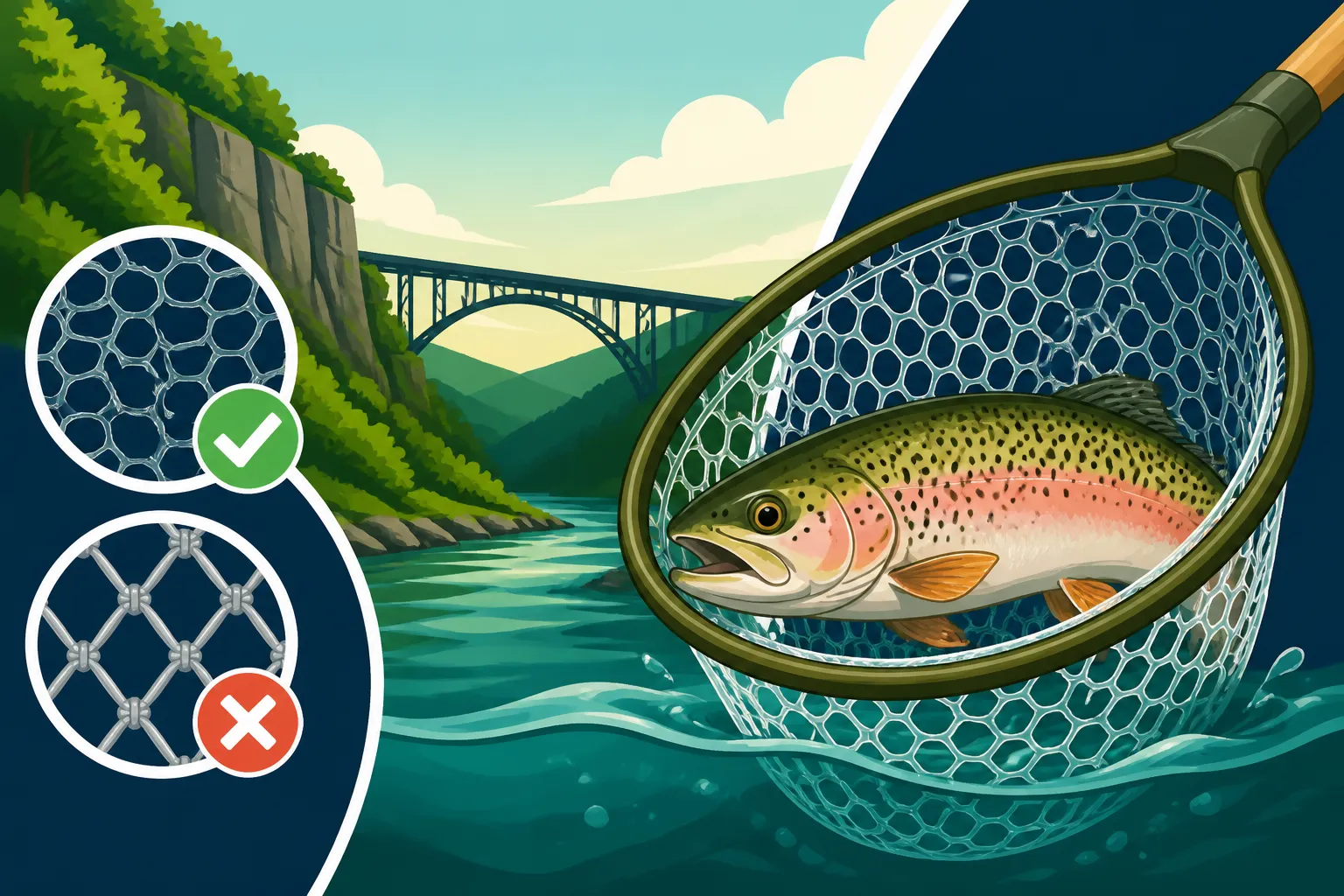
This is truly the gold standard for catch and release fishing, and for good reason. Rubberized or silicone mesh nets are designed with the fish's well-being squarely in mind.
Pros:
- Fish-Friendly: The smooth, soft texture of rubber or silicone is incredibly gentle on a fish's delicate slime coat, significantly reducing the risk of abrasion and scale loss.
- Hook-Friendly: This is a huge one! Hooks, especially trebles, notoriously get tangled in traditional nylon mesh, often leading to frantic, damaging struggles to free the fish. With rubber or silicone, hooks simply don't stick. They either fall out or are easily removed with a quick shake. This makes hook removal much faster and safer for both you and the fish.
- Easy to Clean: Blood, bait, and fish slime rinse off these nets effortlessly. This prevents the buildup of bacteria and odors, which can be transferred to other fish or just make for a less pleasant experience.
- Less Odor: Because they don't absorb water and organic matter like traditional mesh, rubber nets tend to smell much less over time.
- Durable: While they might feel a bit heavier, rubber meshes are often very durable and long-lasting.
Cons:
- Can Be Heavier and Bulkier: Depending on the frame and mesh depth, rubber nets can be a bit heavier and bulkier than their nylon counterparts, which might be a consideration for backpackers or those wading long distances.
- More Expensive: Generally, nets with rubberized or silicone mesh come with a higher price tag. However, consider it an investment in the health of the fish and your fishing enjoyment. You can often find a good selection from reputable retailers like Bass Pro Shops or online at Amazon.
- More Water Resistance: When sweeping the net through the water, the solid material can create more drag than open nylon mesh.
For West Virginia anglers targeting everything from small wild trout in a remote stream to trophy smallmouth bass in the Best Fishing Rivers in West Virginia, a rubberized net is an invaluable tool.
Knotless Nylon Mesh
Knotless nylon mesh is a significant improvement over traditional knotted mesh for catch and release, offering a good middle ground if a full rubber net isn't feasible for your budget or specific fishing style.
Pros:
- Better than Knotted: The absence of knots means there are fewer abrasive points to strip a fish's slime coat or snag hooks. While not as gentle as rubber, it's a definite step up.
- Lighter and Less Bulky: Nylon nets are typically lighter and can fold down more compactly than rubber nets, making them easier to carry for mobile anglers or those with limited storage space.
- More Affordable: They are generally more economical than rubberized nets, making them accessible to a wider range of anglers.
- Less Water Resistance: The open weave of nylon mesh moves through the water with less drag, which can be helpful for quick netting.
Cons:
- Still Can Abraid Slime Coat: While better than knotted, fine knotless nylon mesh can still cause some friction and slime coat damage, especially with larger, thrashing fish.
- Hooks Can Still Tangle: Though less prone than knotted mesh, hooks can still get caught in the weave of knotless nylon, especially if the mesh is finer or if the fish is actively struggling. This can prolong handling time.
- Odor and Bacterial Growth: Nylon is absorbent and can retain fish slime, blood, and odors. If not thoroughly cleaned and dried after each use, it can become a breeding ground for bacteria and develop an unpleasant smell.
Knotless nylon is a decent option for many species, particularly if you are fishing for hardier panfish or bass where quick handling can mitigate some of the mesh's drawbacks. Always prioritize keeping the fish submerged as much as possible, even with a knotless net.
Knotted Nylon and Cotton Mesh (Why to Avoid Them for C&R)
Let's be blunt: for dedicated catch and release angling, knotted nylon and cotton mesh nets should generally be avoided. While they might be inexpensive and readily available, their design is simply not compatible with the health and welfare of released fish.
Why to Avoid Them for Catch and Release:
- Severe Slime Coat Damage: The prominent knots and coarse texture of these meshes act like sandpaper on a fish's body, stripping away its protective slime coat with alarming efficiency. This leaves the fish highly vulnerable to infection.
- Major Hook Tangle Hazard: The numerous knots and tight weave create endless opportunities for hooks to embed themselves deeply. This often leads to frustrating and prolonged tangles, forcing you to use pliers or even cut your line to free the fish, further stressing it and potentially causing more damage.
- Fin and Scale Damage: The rigid knots can catch and damage fins, and easily dislodge scales, creating open wounds.
- Odor and Hygiene Issues: These materials are highly absorbent, quickly retaining fish slime, blood, and odors. They are difficult to clean thoroughly and can become quite unsanitary, harboring bacteria that can be transferred to subsequent catches.
Historically, these nets were common, and for harvest fishing where the fish's post-release health isn't a concern, they might still see some use. However, if you are practicing catch and release, especially for sensitive species like trout, invest in a better net. The minor cost saving isn't worth the harm to the fish.
Choosing the Right Mesh for West Virginia's Diverse Fisheries
West Virginia offers an incredible array of fishing opportunities, from small mountain brook trout streams to vast reservoirs teeming with bass and walleye. The "best" net mesh can vary depending on what you're targeting and where you're fishing.
Trout and Other Sensitive Stream Species
For our beloved West Virginia trout—rainbows, browns, and especially our native brookies—a high-quality, fine rubberized mesh net is almost non-negotiable for proper catch and release. These fish are incredibly delicate, and their pristine stream environments are often low in nutrients, making recovery from injury more challenging.
Why Rubberized Mesh is Key:
- Maximum Slime Coat Protection: Trout rely heavily on their slime coat for survival. The smooth, non-abrasive surface of rubberized mesh ensures minimal disturbance, crucial for their health.
- Reduced Hook Tangles: Trout often have small mouths and can take flies or lures deeply. A rubber net allows for quick and gentle hook removal, often while the fish is still in the water, which is paramount for these coldwater species. For those who enjoy Fly Fishing for Trout in West Virginia, tangle-free netting means less time fumbling with delicate leaders and tiny flies.
- Safe Handling: The flexible nature of the rubber cradles the fish, preventing it from flopping or injuring itself against the net.
Consider a net with a slightly shallower basket depth for wading small streams like those found within Monongahela National Forest or specific stretches of the Cranberry River. A longer handle can be useful for reaching out to net fish from a slightly elevated bank or when navigating tricky currents. Pairing this with knowledge of Trout Stamps and Trout Fishing Rules in West Virginia ensures you're a responsible angler.
Bass, Walleye, and Hybrid Stripers in Lakes and Rivers
When targeting larger, often more robust species like smallmouth and largemouth bass, walleye, and hybrid stripers in West Virginia's lakes and larger rivers, you have a bit more flexibility, but fish welfare should still guide your choice.
Recommended Mesh Types:
- Rubberized/Silicone Mesh (Highly Recommended): Still the top choice. For places like Summersville Lake where you might be chasing Walleye Fishing in West Virginia or big smallmouth, a large rubberized net is fantastic. It prevents scale loss and keeps treble hooks from getting tangled, which is a common frustration with crankbaits and jerkbaits.
- Robust Knotless Nylon Mesh (Good Alternative): If a rubber net is out of your budget or you prefer a lighter option, a high-quality knotless nylon net with a relatively wide, soft mesh can work. Look for models with a coating that provides a bit more smoothness. Ensure the mesh isn't too fine, as this increases the chance of hooks getting stuck and friction on the fish.
For these species, particularly Smallmouth Bass Fishing in West Virginia on the New River or targeting walleye on the Ohio River, a net with a good depth is beneficial. These fish can be quite energetic, and a deep net helps contain them without them trying to jump out. A sturdy frame and a comfortable handle are also important for managing larger, heavier catches. Remember to check West Virginia Fishing Regulations Explained for species-specific limits and rules in these productive waters.
Muskie and Other Trophy Fish
West Virginia is a renowned destination for muskie, especially on rivers like the New and the Little Kanawha. Handling these "fish of 10,000 casts" properly is absolutely critical for their survival, given their size, power, and often long lifespans. For Muskie Fishing in West Virginia, your net choice is paramount.
Essential Net Specifications:
- Extra Large, Deep, Rubberized Mesh: This is the only acceptable mesh type for muskie if you intend to release them. The mesh must be incredibly large and deep to fully envelop the fish without bending or injuring it. A full rubber or heavy-duty coated nylon (often referred to as "conservation mesh") is vital.
- Wide Opening and Long Handle: Muskie are long, powerful fish. You need a net with a very wide opening to scoop them effectively, and a long, strong handle to reach them from a boat and maintain control.
- Heavy-Duty Frame: The entire net system, from the hoop to the handle, needs to be robust enough to withstand the weight and power of a large muskie.
The goal with muskie is to get them into the net, keep them in the water, remove hooks quickly with specialized tools, snap a quick photo (often in the water), and get them revived and released immediately. The right net mesh facilitates this entire process by minimizing tangles and maximizing fish comfort. Proper handling, even with the best net, is key for muskie, so be sure to review Muskie catch and release survival tips.
| Mesh Type | Material | Hook Snagging | Slime Coat Protection | Weight/Bulk | Cost | Ideal WV Species & Conditions |
|---|---|---|---|---|---|---|
| Rubberized/Silicone | Rubber/Silicone | Very Low | Excellent | Medium to High | Medium to High | All C&R, especially Trout, Muskie, Trophy Bass, Walleye; less tangles |
| Knotless Nylon | Nylon | Medium | Good | Low to Medium | Low to Medium | General C&R for hardier fish (Bass, Panfish, Walleye); lighter carry |
| Knotted Nylon/Cotton | Nylon/Cotton | High | Poor | Low | Low | AVOID for C&R – only for harvest fishing. |
Best Practices for Using Your Catch and Release Net
Having the right net is only half the battle. Knowing how to use it effectively and safely ensures that your catch and release efforts truly succeed.
Proper Netting Technique
It's not just a scoop-and-lift motion; there's an art to netting a fish cleanly and safely.
- Lead the Fish In: Instead of chasing a fish with the net, try to lead it into the net headfirst. Guide the fish over the submerged net, allowing it to swim into the mesh, rather than trying to scoop it from behind. This reduces stress and the chance of missed nets.
- Use Water as a Cushion: Whenever possible, keep the net and the fish submerged in the water. The water acts as a natural cushion, supporting the fish's weight and preventing flopping, which can cause internal damage, especially to larger fish. If you're wading in a Best Trout Streams in West Virginia stream, angle the net downstream into the current to help the fish settle.
- Keep it Quick and Calm: Once the fish is in the net, try to keep it calm. Avoid excessive thrashing by keeping the net submerged. If the fish is on the smaller side, you can often remove the hook while it's still in the water, minimizing its time out of its natural element.
Handling and Release
This is the critical moment for fish survival, even with the best net.
- Minimal Handling, Wet Hands: If you must handle the fish for a quick photo, ensure your hands are thoroughly wet. Dry hands can remove the slime coat just as effectively as rough net mesh. Avoid squeezing the fish, especially around its belly or gills.
- Quick Hook Removal: Have your hook removal tools (pliers, forceps) ready. Barbless hooks are a huge advantage here, making removal almost instantaneous. The less time the fish is struggling with a hook, the better.
- Allow for Recovery: Before releasing, allow the fish to recover in the net, still submerged in the water. Support its body gently until it can swim strongly on its own. For larger fish, like those found in Best Fishing Lakes in West Virginia, this might mean holding it upright, facing into a gentle current, until it kicks its tail and darts away. This recovery time is especially important for fish that put up a long, hard fight.
Net Care and Maintenance
Taking care of your net ensures it performs optimally and remains fish-friendly for years to come.
- Rinse Thoroughly: After each use, rinse your net thoroughly with fresh water. This removes fish slime, scales, and any debris. Pay extra attention to the mesh itself.
- Air Dry Completely: Always allow your net to air dry completely before storing it. Hanging it up in a well-ventilated area prevents mildew, rot, and the unpleasant odors that can develop from dampness. This is particularly important for nylon nets, but even rubber nets benefit from a good dry.
- Inspect for Damage: Regularly check your net for tears, holes, or fraying. Damaged mesh can injure fish and is more prone to tangling. Small repairs can often extend the life of your net.
- Disinfect (Occasionally): If you're fishing in multiple bodies of water, or if you notice any persistent odors or slime, consider a light disinfectant rinse. A dilute bleach solution or a commercial net cleaner can help, but always rinse thoroughly afterwards to ensure no residues are left to harm fish. Just like you need to keep up with West Virginia Fishing License Guide for 2026, consistent net care is part of responsible angling.
By combining the right net mesh with careful technique and maintenance, you'll be doing your part to ensure that West Virginia's incredible fisheries remain healthy and vibrant for generations of anglers to enjoy.
Disclaimer
This article is for general informational purposes only and does not constitute professional advice. Laws, prices and regulations vary by location and change over time. Consult a qualified professional for guidance on your specific situation.