Best inflatable kayak for river fishing
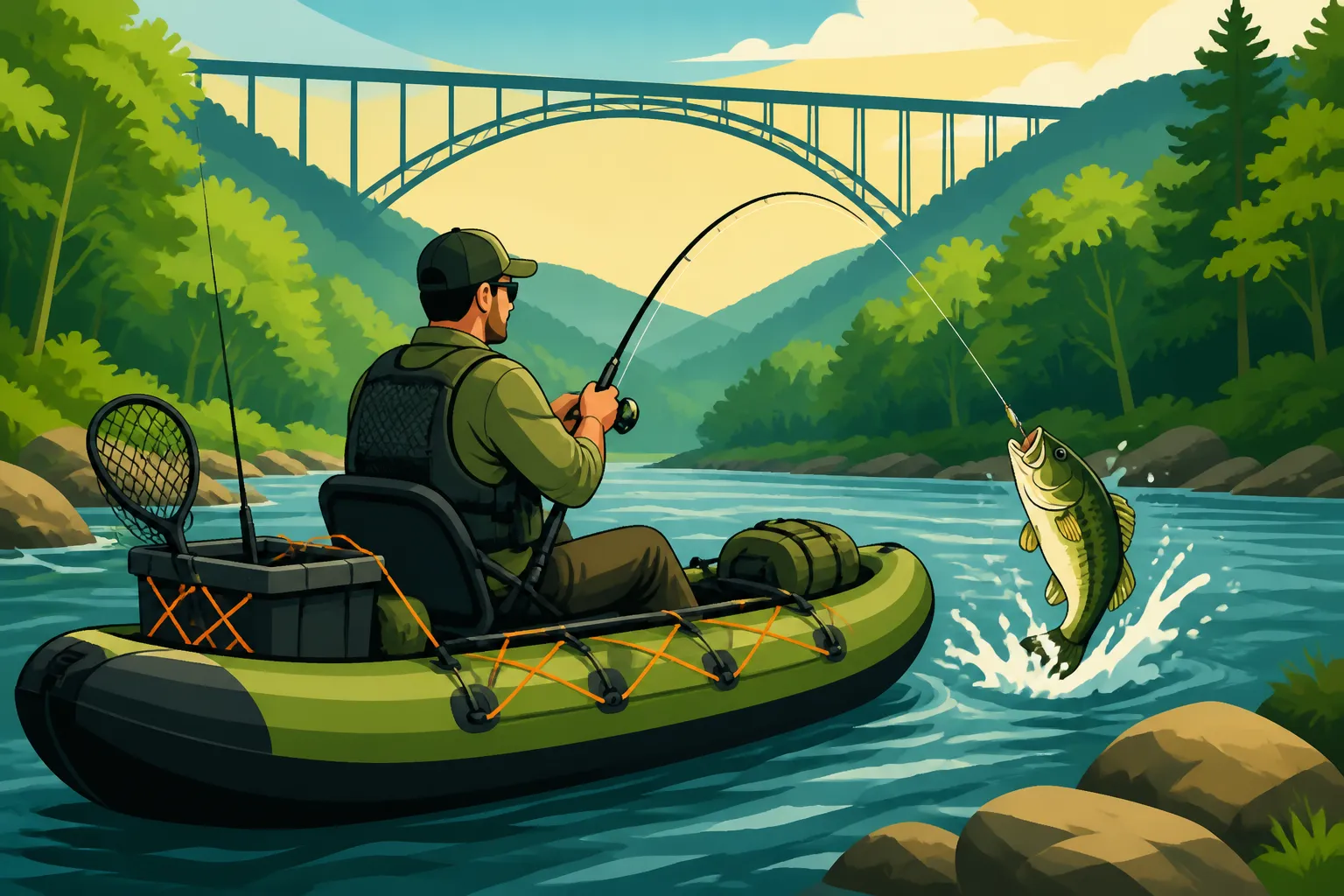
Ah, the dream of slipping into those tucked-away eddies or quietly floating down a river bend that no motorboat could ever reach. Many of us know the frustration of seeing a prime fishing spot, only to realize it's inaccessible without hauling a heavy boat or risking a less-than-stable vessel. This guide is all about embracing the freedom of inflatable kayaks for river fishing, helping you discover the perfect one to unlock those hidden gems and navigate West Virginia's incredible waterways with ease and confidence.
Why Inflatable Kayaks Are a Game Changer for West Virginia River Anglers
Let's be honest, when most folks think of kayaks, they picture those hard-shell plastic boats. But for river fishing, especially on our dynamic West Virginia rivers, inflatable kayaks offer a surprising amount of advantages that often get overlooked. They've come a long, long way from those flimsy pool toys of yesteryear.
Portability and Access to Remote Waters
One of the biggest headaches for any angler who loves river fishing is access. We’ve all been there: driving past a perfect stretch of water, seeing promising structure or a quiet bend, but there’s no official boat ramp for miles, or the only access is a steep, rocky path. Traditional rigid kayaks are great, but even they can be a pain to transport and launch in tight spots. You might have a great spot in mind on the New River Gorge Fishing Guide, but the thought of hauling a big boat often puts you off.
This is where inflatable kayaks truly shine. Imagine packing your entire fishing vessel into a duffel bag or backpack that fits easily into the trunk of your car. No roof racks, no trailer, no special vehicle needed. This portability means you can access incredibly remote stretches of rivers like the Greenbrier or the Elk, places where only the most determined anglers usually go. You can easily hike a short distance to a quiet put-in, inflate your kayak in minutes with a good pump, and be on the water while others are still looking for a paved ramp. This flexibility is a game-changer for exploring new waters and escaping crowded areas.
Durability and River-Ready Construction
There's a common misconception that inflatable means fragile. And while you certainly wouldn't want to take an old pool float down a rocky West Virginia river, modern inflatable fishing kayaks are built tough. They're designed to take a beating, often outperforming rigid kayaks in certain river conditions. When a hard-shell boat scrapes a rock, you hear that awful grinding sound, and you know you're likely putting a gouge in the hull that needs repair.
In contrast, a high-quality inflatable kayak, made from robust materials, tends to bounce and slide over rocks rather than getting hung up or damaged. This flexibility means less impact stress and fewer worries about costly repairs. Many feature multiple air chambers, so even if one chamber were to be compromised (which is rare with good quality boats), you'd still stay afloat and be able to paddle to shore. This peace of mind is invaluable when you’re navigating unfamiliar rapids or shallow riffles on rivers where hidden dangers lurk just beneath the surface. You can focus on your fishing, not on the integrity of your boat.
Stability for Fishing
Another critical factor for river anglers is stability. It's tough to cast accurately, fight a powerful fish like a muskie, or even just stand up to stretch your legs if your boat feels like it's going to tip with every slight movement. Traditional kayaks can be notoriously tippy, especially for those new to the sport or those who prefer to fish with a bit more freedom of movement.
Many inflatable fishing kayaks are specifically designed with a wider beam and often feature flat, high-pressure drop-stitch floors, similar to what you'd find in a stand-up paddleboard. This design creates an incredibly stable platform. You'll find yourself able to cast with confidence, retrieve lures without fear of capsizing, and in many models, even stand up to sight fish or get a better vantage point. This kind of stability is essential when you're trying to land a trophy fish or navigate tricky currents. It allows you to concentrate on How to Catch Muskie in West Virginia or finesse a lure into a tight spot, rather than constantly worrying about your balance.
Key Features to Look for in a River Fishing Inflatable Kayak
Choosing the right inflatable kayak isn't just about grabbing the first one you see. There are specific features that make some models far better suited for the rigors and demands of river fishing in West Virginia. Understanding these will help you make a smart investment that enhances your time on the water.
Material and Construction Quality
The guts of an inflatable kayak lie in its materials. This is where durability and performance really come into play.
- PVC (Polyvinyl Chloride): This is the most common material. Good quality PVC is multi-layered, reinforced with fabric, and often has a protective outer coating. It's generally more affordable and widely available. When buying PVC, look for higher denier fabrics (e.g., 1000D or more) and welded seams, which are stronger and more reliable than glued seams. PVC is quite durable against punctures but can degrade over time with prolonged UV exposure if not cared for.
- Hypalon (CSM – Chlorosulfonated Polyethylene): Considered the gold standard for inflatable boats, Hypalon is exceptionally durable, highly resistant to UV rays, abrasion, and chemicals. Boats made with Hypalon are typically more expensive and heavier but offer superior longevity and performance in harsh conditions. If you're planning on serious, frequent river use, Hypalon is a top-tier choice.
- Drop-Stitch Floors: This is a feature you absolutely want for fishing. Drop-stitch material involves thousands of internal threads connecting the top and bottom layers of the floor. When inflated to high pressure (often 10-15 PSI), these threads pull taut, creating a rigid, board-like surface. This gives you the solid footing you need for standing, casting, and overall stability, transforming the kayak from a "squishy" inflatable to a firm platform that rivals a hard-shell boat.
Size, Capacity, and Seating
Your inflatable kayak needs to fit your fishing style and your gear.
- Single vs. Tandem: If you primarily fish alone, a single-person kayak is lighter, easier to maneuver, and more compact. However, if you often bring a fishing buddy, a child, or a lot of gear for an overnight trip, a tandem (two-person) model, which can often be configured for solo paddling by moving the seat to the center, offers fantastic versatility. Just remember, a tandem will be heavier and require more effort to paddle solo.
- Weight Capacity: Don't underestimate this. You need to account for your own weight, plus all your gear: tackle boxes, rods, a cooler, perhaps a Best Trolling Motor for a Fishing Kayak battery, and anything else you might bring. Always err on the side of caution and choose a kayak with a generous weight capacity to ensure stability and safety.
- Seating: A comfortable seat can make or break a long day on the water. Look for elevated, adjustable seats with good back support. Some inflatables feature stadium-style seats, which are much more comfortable than sitting directly on the floor. Being elevated helps with visibility for sight fishing and makes casting much easier. This is especially true when spending hours exploring Best Kayak Fishing Spots in West Virginia.
Fishing-Specific Features
Modern inflatable fishing kayaks aren't just bare-bones boats; they come with thoughtful features designed specifically for anglers.
- Rod Holders: Integrated flush-mount rod holders or adjustable rod holder mounts are a huge plus. They keep your rods secure while paddling or when you're busy landing a fish.
- Gear Tracks (Accessory Mounts): These versatile rails allow you to attach various accessories like fish finders, GPS units, camera mounts, or additional rod holders without drilling into the boat. Brands like Scotty and YakAttack make excellent track-mounted accessories.
- Storage Options: D-rings, bungee cords on the bow and stern, and sometimes even dry storage compartments are essential for securing your tackle bag, dry bags, and other essentials. You don't want your gear bouncing around or, worse, falling overboard.
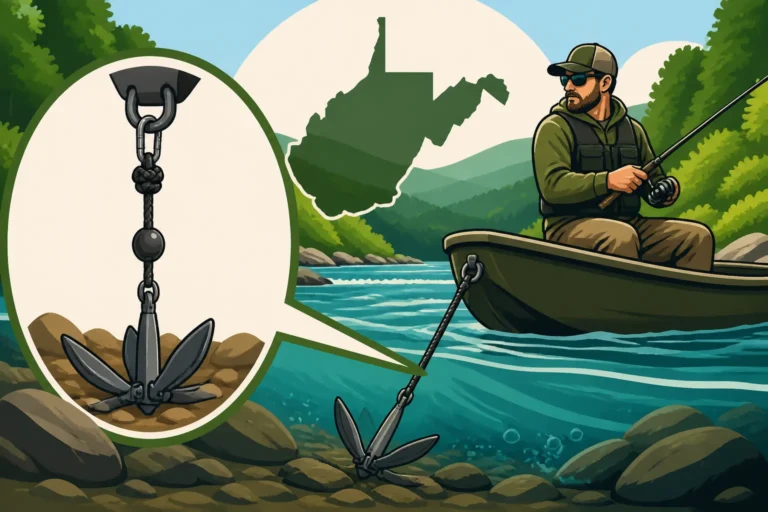
- Anchor Points/Trolley Systems: An anchor point or, even better, an anchor trolley system, allows you to deploy a small anchor from either the bow or stern, letting you hold position in current or wind. This is crucial for working a specific riffle or structure. Check out options for a Best Anchor System for River Fishing.
- Removable Skegs: Skegs are fins that attach to the bottom of the kayak, significantly improving its tracking (ability to paddle in a straight line) in open water. For river fishing, especially in shallow or rocky areas, having removable skegs is vital. You can keep them on for long flatwater paddles and take them off when navigating shallow, rocky sections where they might get hung up.
| Feature / Material | Description | Benefits for River Fishing |
|---|---|---|
| PVC (Reinforced) | Multi-layered, fabric-reinforced polyvinyl chloride. Common and affordable. | Good balance of durability and cost. Fairly resistant to punctures. Easily repaired. Sufficient for moderate river use, especially if seeking a budget-friendly option. Requires care with UV exposure. |
| Hypalon (CSM) | High-performance synthetic rubber. Less common, higher cost. | Exceptional durability, superior abrasion, UV, and chemical resistance. Ideal for heavy, frequent river use and longevity in harsh conditions. "Bomb-proof" reputation for serious anglers tackling tough rivers. |
| Drop-Stitch Floor | High-pressure floor with internal threads for rigidity. | Transforms the kayak into a solid platform, allowing standing for better visibility and casting. Enhances overall stability, making it feel more like a hard-shell boat. Crucial for comfortable, active fishing, especially when trying to spot fish or make precise casts. |
| Multiple Air Chambers | Kayak divided into separate inflatable sections. | Key safety feature. If one chamber is punctured, the others remain inflated, keeping you afloat and allowing you to paddle to shore. Provides added rigidity and structural integrity to the boat. |
| Self-Bailing Ports | Drain holes in the floor to let water out. | Essential for river fishing, especially in rapids or during heavy rain. Water that splashes into the kayak drains out, keeping your feet dry and the boat lighter. Some models have plugs for these ports, allowing you to close them in calm water for maximum dryness. |
| Reinforced Bow/Stern | Extra layers of material or abrasion patches on ends. | Protects the most vulnerable parts of the kayak from wear and tear when dragging over banks or bumping into obstacles. Extends the life of the boat in rough river environments. |
Top Considerations for West Virginia's Diverse Rivers
West Virginia's rivers are a magnificent, varied tapestry. From the broad, powerful Ohio River to the wild, rocky stretches of the New and Gauley, and the tranquil flows of the Greenbrier or South Branch of the Potomac, each offers a unique challenge and opportunity. Your inflatable kayak needs to be ready for whatever the Mountain State throws at it.
Navigating Shallow Riffles and Rocky Sections
Many of West Virginia's best fishing rivers, especially our trout streams and smallmouth bass waters, feature significant shallow riffles and rocky stretches. These are the places where fish often hold, and they can be a nightmare for traditional boats. The beauty of an inflatable kayak is its minimal draft. You can often glide right over rocks and through water just a few inches deep where a prop or a hard hull would get stuck.
However, even inflatables have their limits. When choosing a model, consider how its design might handle these conditions. A kayak with a slightly rockered (curved up) bow can ride over waves and small obstacles more easily. Furthermore, the inherent flexibility of the inflatable material means it can absorb impacts from rocks without the jarring force a rigid boat would experience. This is particularly advantageous on rivers like the Elk River Trout Fishing or the fast-flowing sections of the New River, where unseen rocks are part of the game. Having a good, sturdy paddle is key here, and sometimes a Best Wading Staff for Fast Current can be a real help for pushing off rocks or stabilizing yourself in faster currents if you need to hop out for a moment.
Handling Current and Eddies
Our rivers are rarely static. Strong currents, swirling eddies, and unexpected rapids are all part of the experience. An inflatable kayak needs to be able to handle these dynamics safely and efficiently. Generally, longer and narrower inflatable kayaks will track better (go straighter) in current, requiring less effort to paddle. Wider, shorter boats offer supreme stability but might require more effort to keep on course in strong flows.
For anglers, the ability to maneuver in and out of eddies is crucial. Eddies are often prime holding spots for fish, providing a break from the main current. Look for an inflatable kayak that responds well to paddle strokes and, ideally, has a removable skeg to help with tracking in open water, but which can be removed for improved maneuverability in tight, turbulent spots. Above all, never underestimate the power of river current. Always wear a PFD, and make sure it's a comfortable one that meets Life Jacket Requirements for West Virginia Boaters. Knowing how to read the water, identify current seams, and safely navigate eddies will become second nature with practice.
Transport and Storage Logistics
While the portability of an inflatable kayak is a huge selling point, it's worth thinking about the practicalities of its entire lifecycle.
- Inflation/Deflation: How quickly and easily can you get it inflated and deflated? While hand pumps work, an electric pump that plugs into your car's 12V outlet can save a lot of time and effort, especially after a long day of fishing. Consider how long this process takes, as it can impact your "on-water" time.
- Cleaning and Drying: After a day on the river, especially a muddy one, your inflatable will need to be cleaned and thoroughly dried before storage to prevent mildew and prolong its life. How easy is it to rinse out, and does it have good drainage?
- Winter Storage: Inflatable kayaks should be stored in a cool, dry place, away from extreme temperatures and direct sunlight, during the off-season. Make sure you have adequate space. The beauty is that it packs down small, so it won't take up an entire garage bay like a full-size boat. Both Bass Pro Shops and Amazon offer a variety of kayak storage bags and solutions, from simple carry bags to larger, wheeled duffels, that can help protect your investment during transport and storage.
Essential Accessories for Inflatable Kayak River Fishing
Having the right inflatable kayak is just the beginning. To truly optimize your river fishing experience in West Virginia, you'll want a few key accessories that enhance safety, comfort, and fishing efficiency. Think of it as rigging your vessel for peak performance in our unique aquatic environment.
Paddles and Propulsion
Your paddle is your primary engine, and a good one can make a huge difference in your endurance and control, especially when navigating current or covering long distances on a river like the Greenbrier River Fishing Guide.
- Paddle Material: Carbon fiber paddles are lightest and most efficient, reducing fatigue over long days. Fiberglass is a good middle-ground, offering a balance of weight and durability. Aluminum is the most budget-friendly but heavier. For river fishing, a durable blade material like fiberglass or reinforced plastic is often preferred, as you might occasionally push off rocks or river bottom.
- Paddle Length: The correct paddle length depends on your height and the width of your kayak. A longer paddle is generally needed for wider kayaks (like many inflatables) to ensure the blade fully enters the water without constantly hitting the sides.
- Alternative Propulsion: For those times when you want to cover more water or simply take a break from paddling against a strong current, a small electric trolling motor can be a fantastic addition. Many inflatable fishing kayaks have transom mounts or accessory rails that can accommodate a lightweight motor. This can be a game-changer on larger rivers or reservoir-like sections of rivers, allowing you to focus more on fishing and less on paddling. Finding the Best Trolling Motor for a Fishing Kayak means considering battery life and thrust appropriate for your boat size and typical river conditions.
Safety and Comfort Gear
Safety should always be your top priority on the water, especially on moving rivers. Comfort ensures you enjoy your time, rather than enduring it.
- Personal Flotation Devices (PFDs): Absolutely non-negotiable. Always wear a properly fitted PFD. Inflatable PFDs are popular for anglers as they offer full range of motion until inflated, but a traditional vest-style PFD can also serve as extra padding in a rocky spill. Regardless of type, ensure it's Coast Guard approved and suitable for paddling. Check out the current Life Jacket Requirements for West Virginia Boaters to ensure compliance.
- Dry Bags: Keep your phone, wallet, keys, and any electronics bone dry in a good quality dry bag or two. Even on calm water, splashes happen, and rivers can be unpredictable. A Best Dry Bag for Kayak Fishing is an investment in protecting your valuables.
- First-Aid Kit: A compact, waterproof first-aid kit is essential for minor cuts, scrapes, or insect bites.
- Sun Protection: Sunscreen, a wide-brimmed hat, and polarized sunglasses are crucial. Polarized sunglasses don't just protect your eyes; they cut glare on the water, allowing you to see submerged structure and even fish, which is invaluable for sight fishing in clearer streams.
- Hydration and Snacks: A well-insulated Best Cooler for a Fishing Boat packed with water and snacks will keep your energy levels up for a full day of fishing. Staying hydrated is key to staying sharp.
Rigging for Success
These accessories help you fish more effectively and make the whole experience smoother.
- Kayak Cart: If your put-in involves a bit of a walk from your car, a kayak cart makes transporting your inflated (or deflated) kayak and gear much easier. Some inflatables are light enough to carry, but a loaded boat can get heavy.
- Rod Leashes: Simple yet effective, a rod leash attaches your rod to your kayak. If you drop a rod, it won't sink to the bottom of the river, which can be a real heartbreaker.
- Anchor System: Even a small drag chain or folding grapnel anchor can be incredibly useful for holding your position in current, especially when you want to thoroughly fish a particular eddy or seam. Pair it with an anchor trolley for maximum versatility.
- Fish Finder: Portable fish finders have come a long way and can be easily mounted on most inflatable kayaks. They can help you identify depth, water temperature, and crucial underwater structure where fish might be hiding. The Best Portable Fish Finder for Kayak Fishing can show you ledges, submerged timber, and drop-offs that are invisible from the surface, giving you a huge advantage.
Disclaimer
This article is for general informational purposes only and does not constitute professional advice. Laws, prices and regulations vary by location and change over time. Consult a qualified professional for guidance on your specific situation.