Best Dry Bag for Kayak Fishing
There's nothing quite like the feeling of being out on a West Virginia waterway in your kayak, silently gliding through a misty morning or navigating a lively current, rod in hand. But let's be real: that serene experience can turn into a nightmare in a heartbeat if your phone, car keys, or emergency snacks get soaked from a rogue wave, an unexpected downpour, or, heaven forbid, a full-on capsize. That's why having a reliable dry bag isn't just a good idea for kayak fishing; it's absolutely essential. This guide will walk you through everything you need to know to choose the best dry bag to keep your precious gear safe and bone-dry on all your paddling adventures, ensuring peace of mind even when the unexpected happens.
Why a Dry Bag is Non-Negotiable for Kayak Fishing in West Virginia
When you're out on the water, whether it's a calm lake like Summersville or a feisty river like the New, you're constantly exposed to the elements. Water isn't just a possibility; it's a certainty. From paddle drips and splash-overs to rain showers that appear out of nowhere, your gear is under constant threat of getting wet. A dry bag acts as a crucial barrier, offering peace of mind and protecting your investment in electronics and other essentials. Without one, you're essentially gambling with your most important items, and that's a risk no serious angler should take.
Protecting Electronics and Valuables from Unexpected Swims
Imagine you’re out on the New River Gorge Fishing Guide, having an incredible day chasing smallmouth. You’ve got your phone to snap photos of your catches, your GPS to mark those hidden honey holes, and maybe even a small camera to record the action. All these devices are expensive and utterly essential for many of us. Now, picture this: you hit an unexpected eddy, your kayak tips, and suddenly, everything that wasn't secured or waterproof is taking an unplanned swim. That sick feeling in your stomach as you watch your expensive electronics sink or get waterlogged is something no one wants to experience. A good dry bag seals these items away completely, making them impervious to splashes, rain, or even full submersion. It's an investment far smaller than replacing a water-damaged smartphone or a lost car key fob. Even a sturdy tackle box won't provide the same level of waterproof security for sensitive items.
Think about vital items beyond electronics, too. Your car keys, wallet, fishing license – all things that become a massive headache if they get wet or lost. A dry bag ensures these essentials are tucked away safely, allowing you to focus on the fishing, the scenery, and enjoying your time on the water, rather than constantly worrying about protecting your valuables from an errant splash or an unexpected tip.
Keeping Essentials Dry in Inclement Weather
West Virginia weather can be wonderfully unpredictable. One moment it's clear and sunny, the next you're caught in a sudden downpour. You could be fishing on the Elk River Trout Fishing under blue skies, and an hour later, a thunderstorm rolls in over the mountains. These sudden changes are just part of fishing in the Mountain State. While your rain jacket might keep you dry, what about your spare change of clothes, your sandwich, or that book you brought for a quiet lunch break? A standard backpack or flimsy waterproof pouch often isn't enough to withstand a persistent rain or heavy spray.
A quality dry bag is designed with robust materials and secure closures to keep moisture out, no matter how long the rain lasts or how choppy the water gets. This means you can confidently pack a warm hat and gloves for a chilly morning start, knowing they'll be dry when you need them, or bring along a fresh shirt to change into after a long, sweaty paddle. It extends your comfort and preparedness, letting you stay out longer and enjoy the elements without fear of soggy consequences.
Buoyancy and Retrieval in Case of a Capsize
Let’s face it, capsizing is always a possibility when kayak fishing, especially on dynamic rivers like the Gauley or even when navigating boat wakes on larger lakes. While hopefully, it never happens, being prepared is crucial. One often-overlooked benefit of a dry bag is its inherent buoyancy when properly sealed with air inside. If your kayak does flip, a well-sealed dry bag, especially one with some air trapped, will float. This means your critical gear won't sink to the bottom of the lake or get swept away downstream.
Having a floating dry bag makes retrieval much easier and less stressful. You'll be able to spot it on the surface and grab it, securing your essentials even if your kayak drifts further away. Many dry bags also come with D-rings or attachment points, allowing you to secure them directly to your kayak with a bungee or carabiner. This combination of buoyancy and secure attachment drastically improves your chances of recovering your valuable items after an unexpected dip. Remember, while a Best Life Jacket for River Kayak Fishing keeps you safe, a dry bag keeps your gear safe.
Types of Dry Bags: Finding Your Perfect Match
Just like there are different types of kayaks for different waters and fishing styles, there are various dry bag designs, each with its own advantages and ideal uses. Understanding these differences will help you choose the best options to suit your specific kayak fishing needs in West Virginia.
Roll-Top Dry Bags: The Classic and Most Common Choice
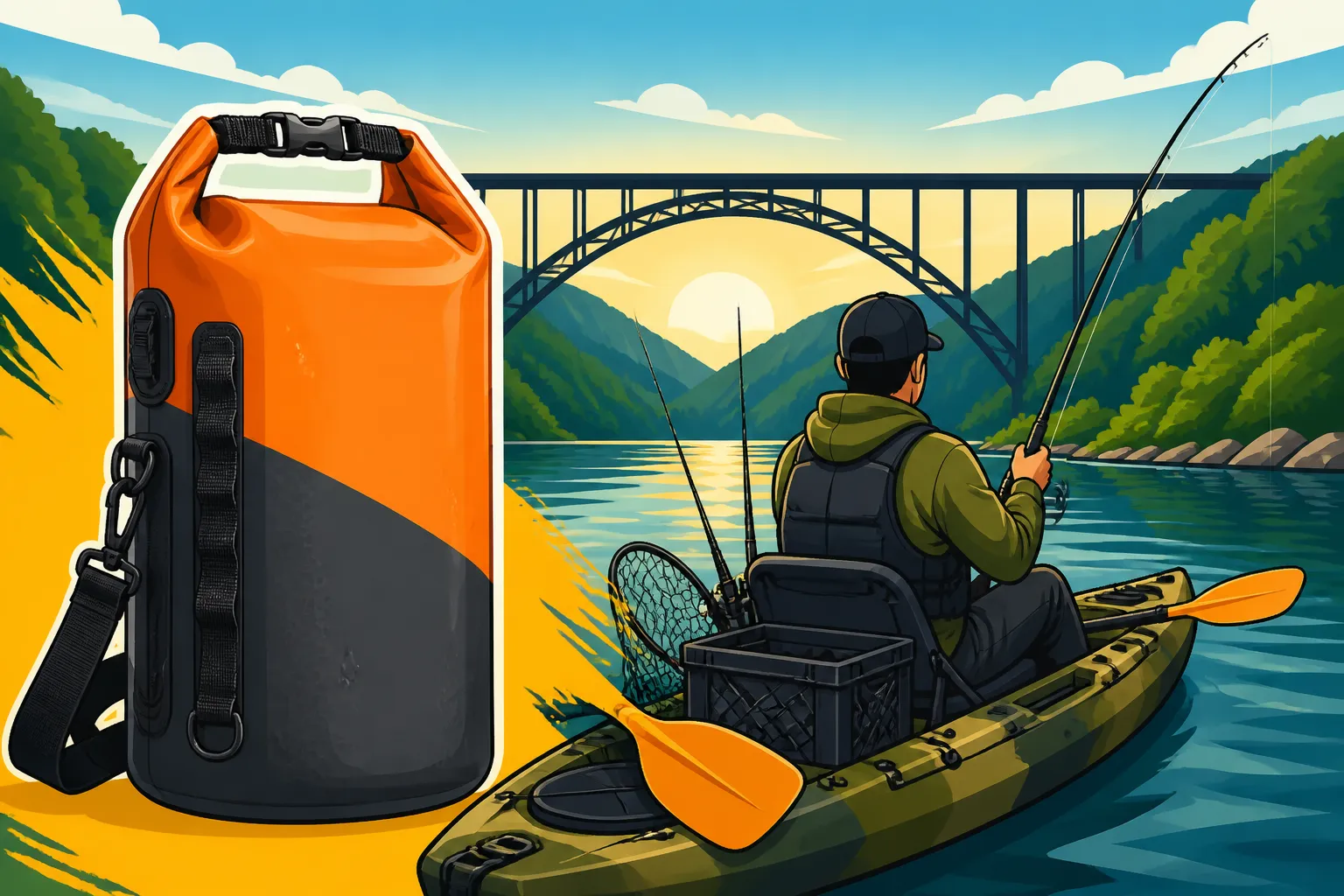
When most people think of a dry bag, they picture the classic roll-top design, and for good reason. These bags are the workhorses of the waterproof world, renowned for their simplicity and reliability. They typically feature a wide opening at the top that you roll down several times, then clip the ends together, often forming a convenient handle. This creates a secure, watertight seal that's incredibly effective against splashes, rain, and even temporary submersion.
Roll-top dry bags come in a vast array of sizes, from small 5-liter bags perfect for a phone and keys, to massive 60-liter duffels that can hold a sleeping bag and a weekend's worth of clothes. They are generally made from durable PVC or TPU-coated fabric, making them resistant to punctures and abrasion – vital when you're dragging them in and out of a kayak or bumping against rocks on a riverbank. You'll find these aplenty from brands available at Bass Pro Shops and other outdoor retailers, offering a versatile solution for nearly all your kayak fishing storage needs. Their straightforward design means fewer points of failure, making them incredibly dependable for those inevitable wet conditions.
Dry Backpacks: Comfort and Convenience for Portages
Sometimes, your fishing adventure isn't just about paddling; it involves a bit of hiking to access those secluded spots, or portaging your kayak around rapids or dams. That’s where dry backpacks shine. These are essentially roll-top dry bags equipped with comfortable shoulder straps, and sometimes even hip belts, allowing you to easily carry your gear on your back. They offer the same excellent waterproof protection as standard roll-top dry bags but add the crucial element of portability.
Imagine you're targeting brook trout in a remote Monongahela National Forest stream, requiring you to paddle across a lake and then hike a trail to reach your desired fishing location. A dry backpack ensures your lunch, extra layers, and camera stay perfectly dry during the paddle, and then provides a comfortable way to transport them overland. Brands like Sea to Summit and Watershed offer excellent dry backpacks, and you can often find a good selection on Amazon. They're a fantastic choice for anglers who mix paddling with trekking, or for those who simply prefer the hands-free convenience of a backpack when loading and unloading their kayak.
Dry Duffles and Cases: For Larger Gear or Specialized Protection
For anglers with larger gear or those who need an even higher level of protection for very sensitive items, dry duffles and hard cases offer specialized solutions. Dry duffles often feature roll-top closures similar to dry bags, but with a more traditional duffel bag shape, sometimes including external pockets (which may or may not be waterproof). They are excellent for holding bulkier items like sleeping bags, tents for multi-day trips, or a large amount of clothing.
Hard cases, on the other hand, offer the ultimate in crush-proof, dust-proof, and fully submersible protection. These are typically made from rigid, impact-resistant plastic with O-ring seals and strong latches. They are perfect for protecting very delicate electronics like high-end cameras, drones, or specialized fishing instruments. While they are bulkier and heavier than soft dry bags, their ruggedness is unparalleled. If you're carrying expensive camera equipment to capture the beauty of the West Virginia Trout Season and Stocking Rules or a sensitive fish finder that needs extra care, a hard case might be the ideal choice. Brands like Pelican or Nanuk are well-known for their robust hard cases. These options bridge the gap between simple waterproofing and extreme environmental protection, allowing you to tailor your gear storage precisely to your needs.
Key Features to Look for in a Kayak Fishing Dry Bag
Choosing the right dry bag isn't just about picking a type; it's about delving into the details that make some bags outperform others, especially in the demanding environment of West Virginia's rivers and lakes. The materials, closure systems, capacity, and extra features all play a crucial role in the bag's effectiveness and your overall experience.
Material and Durability: Withstanding West Virginia's Elements
The material a dry bag is made from directly impacts its durability, weight, and overall performance. The two most common materials you'll encounter are PVC and TPU, often described with a 'denier' rating, which indicates the fabric's thickness and strength.
- PVC (Polyvinyl Chloride): This is a very common and often more affordable material for dry bags. PVC is known for its excellent waterproofing, durability, and resistance to abrasion. It tends to be thicker and heavier, which can be an advantage for rugged use, like when your bag might scrape against rocks on the Cheat River Fishing Guide or get tossed around in the back of a truck. The trade-off is that it can be stiffer, especially in cold weather, and not as environmentally friendly as other options. Look for higher denier ratings (e.g., 500D or 700D) for maximum toughness.
- TPU (Thermoplastic Polyurethane): TPU-coated fabrics are often lighter, more flexible, and more resistant to UV degradation and extreme temperatures than PVC. They are also generally considered more environmentally friendly. While typically more expensive, TPU bags offer a fantastic balance of durability, flexibility, and reduced weight, making them excellent for all-around kayak fishing where you might be carrying the bag longer distances or prefer a more supple feel. Many higher-end dry bags, some available on Amazon, utilize TPU for its superior performance characteristics.
Regardless of material, inspect the seams. High-quality dry bags will have welded seams (heat-sealed) rather than stitched seams, as stitching creates tiny holes that can compromise waterproofing over time. Welded seams create a continuous, impenetrable barrier, which is absolutely critical for keeping your gear dry.
Closure Systems: Roll-Top, Zipper, and Their Reliability
The closure system is the heart of a dry bag's waterproof integrity. Each type has its pros and cons regarding ease of use and ultimate protection.
- Roll-Top Closure: As discussed, this is the most prevalent and reliable system. You fold the top edge down at least three times, then clip the buckles together. This creates a secure, labyrinthine seal that's highly effective against water intrusion. The key to its reliability is ensuring you roll it down enough times to create a tight seal and that there's some air trapped inside to create internal pressure, which helps maintain the seal and provides buoyancy. For most kayak fishing scenarios, a well-executed roll-top closure offers more than enough protection.
- Zipper Closure (TIZIP or YKK Aquaseal): Some dry duffles and cases feature heavy-duty waterproof zippers, often referred to as TIZIP or YKK Aquaseal. These zippers are incredibly robust and create a completely watertight seal, similar to those found on dry suits. The main advantage is quick and easy access to your gear without having to unroll and reroll the top. However, they are more expensive, can be stiff and require lubrication for smooth operation, and are a potential point of failure if not meticulously maintained. For maximum protection and quick access for specific gear, these are excellent, but they do add to the cost and complexity.
- Compression Straps and Valve: Beyond the main closure, some dry bags feature external compression straps that help cinch down the bag once it's rolled or zipped. This reduces bulk and keeps your gear from shifting. Some bags also include a one-way air purge valve, allowing you to squeeze out excess air after sealing, making the bag more compact. This is especially useful for packing into tight spaces within your kayak or for reducing drag if the bag is strapped to the deck.
Capacity and Sizing: What Fits Your Kayak and Your Gear
Choosing the right size dry bag is a balance between carrying enough gear and not overloading your kayak or making the bag too cumbersome. Dry bags typically range from a tiny 1-liter pouch to massive 100-liter duffels.
- Small Bags (1-10 liters): These are perfect for essential personal items like your phone, wallet, keys, and a small first-aid kit. You might use several small bags to organize different categories of items, which can then be placed inside a larger dry bag or kept readily accessible in a cockpit storage area. For example, a 5-liter bag is ideal for keeping your Best portable fish finder for kayak fishing head unit dry when not in use.
- Medium Bags (10-30 liters): This range is versatile for day trips. A 10-20 liter bag can hold a change of clothes, lunch, a small tackle box, and other daily essentials. A 30-liter bag might accommodate gear for a longer day or an overnight trip, including a compact sleeping bag or camp cooking supplies.
- Large Bags (30+ liters): If you're embarking on multi-day kayak camping trips, you'll need larger bags, perhaps 40-60 liters or more, to carry sleeping gear, tents, cooking equipment, and multiple changes of clothing. These often function like dry duffles or large dry backpacks.
Consider the dimensions of your kayak's storage hatches or available deck space. A long, skinny dry bag might fit better in a hull hatch, while a shorter, fatter one might be easier to strap to the deck. Think about what you truly need for an outing – resisting the urge to overpack will keep your kayak lighter and more maneuverable.
Attachment Points and External Features
Beyond core waterproofing, extra features can significantly enhance a dry bag's functionality for kayak fishing.
- D-rings and Daisy Chains: These are small loops or webbing strips sewn onto the exterior of the dry bag. They are incredibly useful for securing the bag to your kayak using bungee cords, carabiners, or other lashing straps. This prevents the bag from shifting during paddling or, more critically, from floating away if you capsize.
- External Pockets: While many dry bags prioritize pure waterproofness and thus have no external pockets, some dry backpacks or duffles might offer water-resistant or even fully waterproof exterior pockets. These are handy for items you need quick access to, like a map, a snack, or sunscreen. Always verify the waterproof rating of any external pockets, as they are often less secure than the main compartment.
- Carry Handles and Shoulder Straps: Even basic roll-top dry bags often include a top handle formed by the clipped closure. Dry duffles will have more robust carry handles, and dry backpacks, of course, feature full shoulder strap systems. Consider how you'll be transporting the bag off the water when evaluating these features. If you frequently portage or walk a distance to your launch, comfortable straps are a must.
- Light Colors: While black looks sleek, a brightly colored dry bag (like yellow, orange, or lime green) can be a real asset. If it goes overboard, it will be much easier to spot against the water or riverbank, especially in low light conditions or murky water. This is a small detail that can make a big difference in a recovery situation.
Choosing the Right Size and Placement in Your Kayak
Once you understand the different types and features, the next step is to tailor your choice to your specific trips and how you'll use your dry bag within your kayak. Thoughtful sizing and strategic placement can make a huge difference in convenience, accessibility, and overall stability on the water.
Matching Bag Size to Trip Length and Gear Volume
The ideal dry bag capacity largely depends on the duration and nature of your kayak fishing excursions. A single, multi-purpose dry bag might not be the best solution for all your needs; often, a combination of different sizes works best.
For a quick half-day trip to a local pond or quiet section of the Greenbrier River Fishing Guide, a smaller 10-20 liter dry bag might be all you need for your phone, keys, wallet, a small first-aid kit, and a few snacks. You don't want a massive bag taking up valuable cockpit space for just a few essentials.
If you're planning a full day on a larger lake like Stonewall Jackson or an all-day river float, stepping up to a 20-30 liter bag gives you more room for lunch, a lightweight rain jacket, a spare shirt, and maybe a compact camera or a book. This size strikes a good balance between capacity and manageability.
For overnight or multi-day kayak camping and fishing trips, you'll likely need multiple dry bags or one very large dry duffel (40-60+ liters) for bulkier items like a sleeping bag, tent, cooking gear, and several changes of clothes. In these scenarios, it's common to use smaller dry bags inside the larger one to keep items organized and provide an extra layer of protection for super sensitive items. For instance, a small 5-liter bag for electronics could be nested within a larger 40-liter dry duffel. This modular approach is highly effective.
Optimal Placement for Access and Stability
Where you put your dry bags in your kayak is just as important as what kind you choose. Strategic placement affects everything from your center of gravity to how quickly you can grab a needed item.
- Inside Hatches (Bow/Stern): Many fishing kayaks have waterproof storage hatches in the bow and stern. These are ideal places for larger dry bags containing items you don't need immediate access to, such as extra clothing, camping gear, or spare tackle boxes. Stowing weight low and centrally within the hull improves your kayak's stability. Just make sure the dry bag fits through the hatch opening and can be retrieved easily. If you're going for a day of Muskie Fishing in West Virginia on the Little Kanawha, having a spare set of clothes stowed securely in a hatch, protected by a dry bag, is a smart move.
- On Deck (Front/Rear): For items you might need during your paddle, placing a dry bag on the deck (usually secured with bungee cords or a cargo net) offers easy access. This could be a smaller bag with snacks, a water bottle, or a light jacket. Be mindful of weight distribution, especially for larger bags, as too much weight high on the deck can make your kayak feel tippy. Also, ensure anything on deck is securely lashed down, as a rogue wave or sudden maneuver could send it overboard.
- Within the Cockpit: Very small dry bags or pouches containing your phone, keys, and wallet might be kept within arm's reach in a dedicated cockpit storage area, a console, or even clipped to your PFD. For these crucial items, immediate access can be important, but they must still be secured to prevent loss if the kayak flips. Many anglers use a small, clear dry bag or phone case on a lanyard around their neck for their phone.
Always aim to distribute weight evenly, especially from side to side, to maintain the kayak's balance. A Best Kayak for the New River or other moving water needs to feel stable, and poorly placed gear can compromise that.
Organizing Your Dry Bag for Efficiency
A dry bag is only as useful as its contents are accessible. Just cramming everything in haphazardly defeats the purpose of keeping things dry and organized. Efficient packing is key.
- Use Smaller Dry Bags/Stuff Sacks: For better organization, consider using smaller, color-coded dry bags or basic stuff sacks inside your main dry bag. One small bag for electronics, another for food, one for medical supplies, and so on. This makes it incredibly easy to pull out just what you need without rummaging through everything. For instance, you could have a small waterproof pouch for your wallet and keys, a slightly larger dry bag for your first aid kit, and then place both into a medium-sized dry bag that holds your lunch and extra layers.
- Pack in Order of Need: Place items you'll need first or most frequently at the top of the dry bag. Your rain gear might go near the top, while your spare socks can be at the bottom.
- Maximize Space with Air Purge: If your dry bag has an air purge valve, use it. Once you've sealed the bag, open the valve and press out as much excess air as possible. This makes the bag more compact and easier to fit into tight spaces, especially if you're trying to pack a lot of gear into a small kayak hull.
- Test Your System: Before a big trip, do a "dry run" (pun intended!). Pack your dry bags, load them into your kayak, and practice accessing items. This will quickly reveal any packing inefficiencies or accessibility issues. You might find that a Best Tackle Organizer for a Small Boat might even fit perfectly into one of your larger dry bags.
Maintenance and Care for Longevity
A good dry bag is an investment in protecting your gear and peace of mind on the water. Like any piece of essential outdoor equipment, proper maintenance and care will ensure it performs flawlessly for many seasons, safeguarding your items from West Virginia's varied fishing conditions. Neglecting these simple steps can lead to premature wear, leaks, and ultimately, a very wet disappointment.
Cleaning and Drying Your Dry Bag
After a long day of fishing on the Ohio River Fishing Guide for West Virginia Anglers or any other waterway, your dry bag is likely to have picked up some dirt, fish slime, or perhaps even a bit of bait residue. Proper cleaning and drying are crucial to prevent mildew, unpleasant odors, and material degradation.
- Rinse Thoroughly: As soon as you get home, empty your dry bag completely. Rinse the inside and outside with fresh, clean water. A mild soap can be used for any stubborn grime or odors. Pay special attention to the rolled top or zippered closure, as grit and salt can accumulate here and affect the seal's integrity over time. Use a soft brush if needed, but avoid anything abrasive that could scratch or damage the material.
- Air Dry Completely: This is perhaps the most critical step. After rinsing, wipe down as much excess water as possible with a towel. Then, invert the bag or prop it open so that air can circulate freely inside. Hang it in a well-ventilated area, out of direct sunlight if possible, until it is completely dry, both inside and out. Hanging it upside down can help drain any residual water. Packing away a damp dry bag is a sure way to encourage mold and mildew growth, which can not only smell terrible but also weaken the fabric and seams over time.
Patching and Repairing Minor Damage
Even the most durable dry bags can experience minor punctures or tears from sharp hooks, rough surfaces, or accidental scrapes. Don't despair; many small damages are easily repairable, extending the life of your bag significantly.
- Repair Kits: Most reputable dry bag manufacturers offer repair kits, and general outdoor gear repair patches (like those used for tents or inflatables) often work well. These typically include adhesive patches made from the same material as your bag (PVC or TPU) and a strong, flexible adhesive. You can often find generic repair kits on Amazon or at outdoor specialty stores like Bass Pro Shops.
- The Repair Process: For a small puncture, clean the area thoroughly with rubbing alcohol and ensure it's completely dry. Apply the adhesive to the patch and firmly press it over the hole, ensuring good adhesion around the edges. For larger tears, you might need a patch on both the inside and outside of the bag for maximum durability. Always follow the specific instructions of your repair kit for the best results, paying attention to cure times before using the bag again. Learning how to make these minor repairs can save you from having to buy a new bag prematurely and ensure your gear stays protected.
Proper Storage for Off-Season Protection
When the fishing season winds down or you anticipate a long break from kayaking, storing your dry bag properly is essential for its long-term health.
- Clean and Dry First: Reiterate: absolutely ensure your bag is spotless and bone-dry before storing. This cannot be stressed enough to prevent mildew and odors.
- Loosely Roll or Fold: Avoid tightly compressing or folding your dry bag for extended periods, especially if it's made from PVC, which can develop creases or cracks over time. Instead, loosely roll it or gently fold it, or even store it somewhat expanded. This helps maintain the integrity of the material and welded seams.
- Cool, Dry Place: Store your dry bag in a cool, dry place away from direct sunlight and extreme temperature fluctuations. A garage, basement, or closet that isn't prone to dampness is ideal. Exposure to excessive heat or cold can degrade the material and adhesives over time, potentially leading to leaks.
- Avoid Heavy Objects: Don't store heavy items on top of your dry bag, as prolonged pressure can create permanent creases or stress points that may lead to future leaks. Treat it with care, and it will serve you well for many seasons of West Virginia fishing adventures.
Remember, a well-maintained dry bag is a reliable partner on every kayak fishing trip, letting you focus on the fish and the beauty of West Virginia's waterways.
Dry Bag Comparison for Kayak Anglers
To help you decide which type of dry bag might be best for your West Virginia kayak fishing adventures, here's a quick comparison of the common types. Keep in mind that specific features, materials, and price points will vary significantly by brand and model.
| Feature | Roll-Top Dry Bag (Standard) | Dry Backpack | Dry Duffel (Roll-Top) | Hard Case |
|---|---|---|---|---|
| Primary Use | General gear protection | Gear protection + comfortable carry | Bulk gear, multi-day trips | Extreme protection for sensitive items |
| Waterproofing | Excellent (submersible if sealed well) | Excellent (submersible if sealed well) | Excellent (submersible if sealed well) | Superior (fully submersible, crushproof) |
| Access Speed | Moderate (roll/unroll) | Moderate (roll/unroll) | Moderate (roll/unroll) | Quick (latches), but often stiff zipper |
| Portability | Good (often has shoulder strap) | Excellent (comfortable backpack straps) | Good (carry handles, shoulder strap) | Poor (bulky, heavy, awkward to carry) |
| Capacity Range | 5L – 60L+ | 15L – 40L+ | 40L – 100L+ | 1L – 50L+ |
| Material | PVC, TPU | PVC, TPU | PVC, TPU | Rigid Plastic (e.g., Polypropylene) |
| Durability | High (abrasion resistant) | High (abrasion resistant) | High (abrasion resistant) | Extremely High (impact, crush resistant) |
| Buoyancy (sealed) | Very Good | Very Good | Very Good | Good (often floats, but less "air" space) |
| Cost | Affordable to Mid-Range | Mid-Range to High | Mid-Range to High | High |
| Best For | Everyday fishing, storing essentials | Combined paddling & hiking, portages | Longer trips, bulky items | Cameras, electronics, critical safety gear |
No matter which type you choose, prioritize quality materials and a reliable closure system. You can find excellent options across all categories through retailers like Bass Pro Shops or by exploring the vast selection on Amazon. Investing in the right dry bag means your West Virginia kayak fishing experiences will be worry-free, no matter what surprises the water throws your way.
Disclaimer
This article is for general informational purposes only and does not constitute professional advice. Laws, prices and regulations vary by location and change over time. Consult a qualified professional for guidance on your specific situation.