Best Kayak for the New River
Trying to figure out which kayak will truly handle the New River's unique personality can feel like a real puzzle. It's not just any old lake; this river has sections that are gentle and flowing, then quickly transition into challenging whitewater and rocky stretches that can humble even experienced paddlers. You need a kayak that's as adaptable and tough as the river itself, something that won't leave you stranded or, worse, capsize your precious gear when things get dicey. This guide is going to walk you through everything you need to know to choose the absolute best kayak for fishing the legendary New River, ensuring your adventures are filled with tight lines and unforgettable moments, not unnecessary stress.
Understanding the New River's Unique Demands on a Kayak
The New River isn't your average lazy float trip, especially when you factor in fishing. It's an ancient, powerful waterway carving its way through the Appalachian Mountains, offering incredible fishing but also presenting significant challenges. Before you even think about specific kayak models, you need to understand what you're up against. What works perfectly on a calm reservoir or a gentle, deep river might be a recipe for disaster here.
Navigating Whitewater and Currents
One of the most striking characteristics of the New River, particularly in and around the New River Gorge, is its mix of tranquil pools and exhilarating whitewater rapids. These aren't just ripples; we're talking Class I to Class IV rapids in many sections, especially during higher water flows. Even what seems like a "calm" stretch can have surprisingly strong currents that require constant attention. A kayak for this environment needs to be more than just stable; it needs to be responsive. You'll be making quick turns to avoid rocks, paddling hard to punch through eddy lines, and maintaining control in turbulent water, all while potentially trying to cast a line or manage a fish. A long, narrow touring kayak designed for speed on flat water simply won't cut it. You need something shorter, wider, and built to take a beating from the river's relentless power.
Beyond the named rapids, even the "flat" stretches of the New River often feature swift, powerful currents that demand respect. When you're fishing, you're not just trying to get from point A to point B; you're often trying to hold a position, drift slowly, or paddle upstream to hit a prime spot. A kayak that's easily pushed around by the current will make your fishing day incredibly frustrating. The design needs to be such that you can maintain control and direction without constantly fighting the river, allowing you to focus on the fish, not just staying upright. This means looking at features that aid in tracking and maneuverability even in strong flows.
Rocky Bottoms and Shallow Runs
The New River is absolutely littered with rocks – from massive boulders that create formidable rapids to smaller, submerged rocks that can ding or even puncture a lesser kayak. Many prime fishing spots involve navigating shallow runs or pulling up to rocky banks. This environment demands a kayak made from extremely durable material. Thin plastic or fragile composite materials are simply asking for trouble. You'll scrape, bump, and grind your way over rocks, and your kayak needs to be able to handle it without springing a leak.
Think about those moments when you misjudge a line through a riffle, or when the water level drops unexpectedly, exposing a jagged rock bed. A durable kayak can slide over these obstacles with minimal damage, allowing you to continue your adventure. A less robust boat could mean a costly repair, or worse, an unplanned swim and lost gear. The ability to endure these scrapes also means you can be more adventurous in your fishing, pushing into areas where others might hesitate, giving you access to untouched pockets of fish. This also extends to portability, as you might need to drag your kayak short distances over rocks to access certain areas or portage around impassable rapids.
Size and Accessibility Challenges
While larger kayaks offer incredible stability and storage, the New River's unique access points and often narrow channels can make bigger boats a logistical nightmare. Many of the best fishing spots are accessed via smaller, often primitive, launch points. You might be dragging your kayak down a steep bank, navigating tight turns, or even needing to portage around waterfalls or particularly dangerous rapids. A 14-foot, 100-pound behemoth might be great on a wide-open lake, but it will quickly become a burden on a dynamic river.
Consider the practicalities of getting your kayak to and from the water. Do you have a truck or a smaller vehicle? Will you be fishing alone or with a partner? These factors heavily influence the ideal length and weight of your kayak. While stability is crucial, an overly large kayak sacrifices maneuverability in tight spots and makes solo loading and unloading a miserable chore. Finding that sweet spot between stability, storage, and manageable size is critical for a truly enjoyable New River fishing experience. For more on navigating this amazing waterway, check out our New River Gorge Fishing Guide.
Essential Kayak Design Elements for New River Fishing
When you're choosing a kayak for the New River, you're not just picking a boat; you're investing in a tool for adventure. Certain design elements are non-negotiable if you want to fish effectively and safely in this challenging environment. It's about blending stability for casting with the resilience to handle what the river throws at you.
Stability: Standing, Casting, and Reeling
On the New River, stability is paramount. The current can be strong, the bottom rocky and uneven, and you'll often encounter unexpected waves or eddies. A stable platform allows you to do more than just sit and paddle; it allows you to stand up to spot fish in clear water, make accurate casts, and fight larger fish with confidence. Imagine hooking into a big smallmouth or muskie, only to feel your kayak wobble uncontrollably. It’s a frustrating scenario many anglers know all too well.
Look for kayaks that prioritize a wide, flat hull design. This "pontoon" or "cathedral" style hull creates a very stable platform, minimizing rocking and reducing the chance of capsizing. Many modern fishing kayaks are designed specifically for stand-up fishing, incorporating features like wide decks and even stand-assist straps. While a super stable kayak might sacrifice a bit of top-end speed, that trade-off is almost always worth it on a river like the New River, where control and confidence are far more valuable than shaving a few minutes off your paddle time. A good, stable kayak lets you focus on the fishing, not on staying upright.
Durability: Built to Withstand the Wild
The New River is beautiful, but it's also rugged. As we mentioned, rocks are everywhere, and you will inevitably make contact with them. This isn't a place for delicate, lightweight composite kayaks unless you're prepared for constant repairs. The vast majority of fishing kayaks suitable for the New River are made from rotomolded polyethylene plastic. This material is incredibly tough, impact-resistant, and relatively easy to repair if you do sustain a significant gouge.
When evaluating durability, consider the thickness of the plastic and the overall construction. Some kayaks use thinner plastic to reduce weight, but this can compromise their ability to withstand repeated abuse from rocks and abrasions. Look for kayaks with reinforced keels or skid plates, especially at the bow and stern, as these are the areas most likely to take a hit when dragging or bumping into obstacles. A good kayak for the New River should feel solid and substantial, not flimsy. It's an investment that needs to stand up to the rigors of real-world river fishing, ensuring it lasts for countless trips down the river. Brands available at Bass Pro Shops or on Amazon will often list their material composition and highlight features designed for durability.
Maneuverability and Tracking
While stability and durability are critical, you also need a kayak that can be easily maneuvered. The New River isn't a straight shot; it has twists, turns, rapids, and eddy lines that require precise control. A shorter kayak (typically 10-12 feet for river fishing) will be much more agile and easier to turn quickly than a longer boat. This agility is vital for navigating technical sections of the river, avoiding obstacles, and positioning yourself exactly where you want to cast.
However, too much maneuverability without good tracking can also be a problem. "Tracking" refers to a kayak's ability to hold a straight line without constantly correcting your paddle strokes. In strong currents, a boat that spins easily will wear you out trying to keep it pointed in the right direction. Look for features like a modest keel line or a skeg (a retractable fin) that can be deployed in open, flowing water to help with tracking, then retracted in shallow or technical areas to maximize maneuverability. Some kayaks also incorporate subtle hull designs that balance these two opposing needs. The ideal New River kayak offers a responsive feel, allowing you to make quick adjustments, but also has enough inherent stability and tracking to prevent you from being constantly at the mercy of the current.
Top Kayak Types for the Mountain State's Rivers
The world of fishing kayaks has exploded, offering specialized designs for nearly every type of water. For the New River, some types clearly shine above the rest, while others are better left for calmer pursuits. Understanding the pros and cons of each will help you narrow down your choices considerably.
Sit-on-Top (SOT) Kayaks: The Angler's Favorite
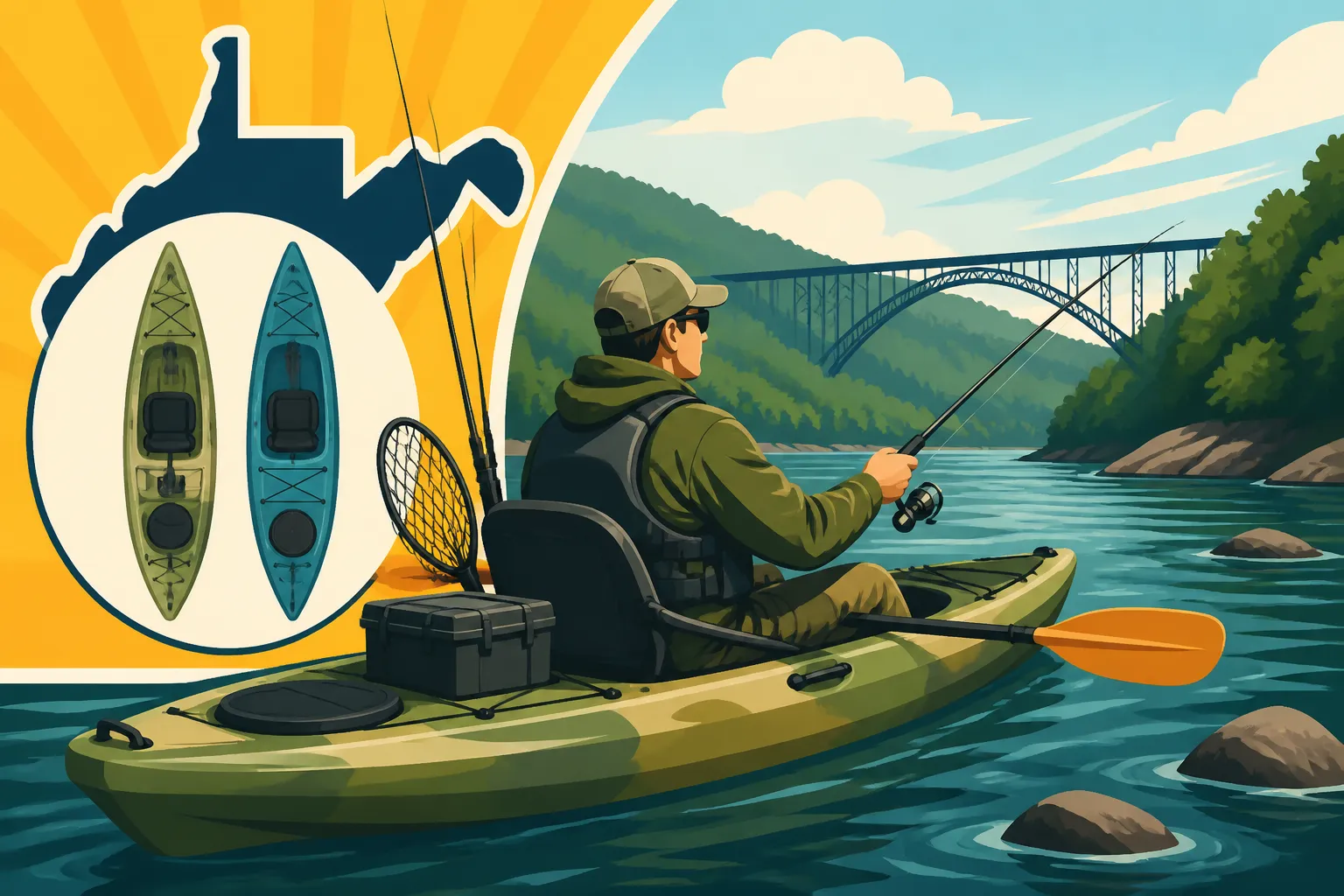
For river fishing, especially on a dynamic waterway like the New River, sit-on-top (SOT) kayaks are overwhelmingly the most popular choice for anglers, and for good reason. They offer superior stability, an open deck for easy access to gear, and perhaps most importantly, excellent safety in moving water. If you capsize in an SOT, you simply fall off, and getting back on is usually much easier than bailing out and re-entering a sit-inside kayak. The self-bailing scupper holes drain any water that comes over the deck, so you're not sitting in a puddle.
SOTs come in a vast array of designs, from basic recreational models to highly specialized fishing platforms. For the New River, you'll want to focus on models with a wide beam (width) and a hull designed for stability. Many feature elevated seating, which makes casting, sight fishing, and paddling much more comfortable. They also tend to have ample flat deck space, which is perfect for mounting accessories like fish finders, rod holders, and tackle management systems. The open nature of an SOT makes them incredibly versatile for fishing, allowing you to easily reach bait, tackle, and even a cooler. While they might be a bit slower than a sit-inside kayak, their advantages in safety, comfort, and fishability on a river environment are hard to beat. If you're looking for a dedicated fishing machine for rivers, an SOT should be at the top of your list. Learn more about general options in Best Kayaks for West Virginia Fishing.
Sit-Inside (SI) Kayaks: Traditionalists and Cold Water
While SOTs dominate the fishing kayak market, traditional sit-inside (SI) kayaks still have their place, particularly for those who prioritize protection from the elements or prefer a more enclosed feel. The main advantage of an SI kayak is that your lower body is protected from spray, wind, and cold water, which can be a significant benefit during cooler months or if you're venturing out in less-than-ideal weather. The enclosed cockpit also keeps your gear contained and protected.
However, for active fishing on a river like the New River, SI kayaks present some challenges. Their enclosed nature can make it harder to access gear, and standing up to fish is generally impossible or extremely risky. If you capsize in an SI kayak, it fills with water, making re-entry much more difficult and requiring you to paddle to shore to drain it. For this reason, many experienced river anglers shy away from SI kayaks on fast-moving water. If you do opt for an SI, look for wider, more stable recreational models rather than narrow touring kayaks. These will offer better initial stability, but still won't provide the same fishing-specific benefits as a well-designed SOT. They might be suitable for more casual floats on calmer sections or if your primary goal isn't actively fishing but rather paddling with a rod.
Inflatable and Hybrid Kayaks: Portable Powerhouses
Inflatable kayaks have come a long way from flimsy pool toys. Modern fishing inflatables are incredibly rugged, made from multi-layer PVC or similar durable materials, often featuring drop-stitch technology that allows for high-pressure inflation, creating a rigid, stable platform. Their primary advantage, especially for the New River, is portability and ease of storage. If you have limited storage space at home or a smaller vehicle, an inflatable can be a game-changer. You can literally throw it in your trunk and be ready to go.
Many inflatables designed for fishing offer excellent stability, open deck space similar to SOTs, and some even allow for standing. They tend to be very forgiving when bumping into rocks due to their flexible nature. However, they are generally slower to paddle and can be more susceptible to strong winds due to their higher profile. Punctures, while rare with good quality models, are still a concern, though repair kits are usually included. Best Inflatable Kayak for River Fishing delves deeper into these specific models.
Hybrid kayaks, often called "crossover" kayaks, attempt to blend the best features of SOTs and SIs. They might have a larger, more open cockpit than a traditional SI, or a lower profile than some SOTs, aiming for a balance of protection, stability, and maneuverability. Some stand-up paddleboard (SUP) hybrids also exist, offering a full stand-up experience with kayak-like features. These can be interesting options for the New River, but always evaluate their specific design against the river's demands: stability in current, durability against rocks, and ease of re-entry if things go wrong.
| Kayak Type | Pros | Cons | Best For New River Fishing |
|---|---|---|---|
| Sit-on-Top | High stability, easy re-entry, self-bailing, open deck for gear. | Slower, less protection from elements, heavier. | Excellent |
| Sit-Inside | Protection from elements, good tracking, lighter. | Hard to re-enter if capsized, limited gear access, no standing. | Fair (calmer sections) |
| Inflatable | Highly portable, very durable against impacts, stable. | Slower, susceptible to wind, potential for punctures, set-up time. | Good |
| Hybrid/Crossover | Blends features, can offer unique balances of pros. | Specific design varies, may not excel in any single area. | Variable |
Key Features That Make a Difference on the Water
Once you've settled on a general kayak type, it's time to dive into the specific features that will truly enhance your fishing experience on the New River. These aren't just bells and whistles; they are design elements that contribute directly to comfort, efficiency, and success on the water.
Seating Systems for All-Day Comfort
River fishing often means long hours on the water, battling currents, making hundreds of casts, and waiting for that big bite. A comfortable seat isn't a luxury; it's a necessity. Traditional molded-in kayak seats can become incredibly uncomfortable after just an hour or two, leading to back pain and fatigue that cuts your fishing day short.
Look for kayaks that feature adjustable, elevated frame seats. These are often similar to a comfortable lawn chair, providing excellent back support and allowing for better blood circulation in your legs. The elevated position also gives you a better vantage point for spotting fish, casting, and paddling efficiently. Many of these seats are removable, which can be a huge bonus for transport or simply relaxing on the bank during a lunch break. The ability to adjust the seat forward or backward can also help with trim, especially if you're carrying a lot of gear. Don't underestimate the importance of a good seat; it can be the difference between an epic day and one spent squirming in discomfort.
Storage and Rigging for Gear
Anglers, by nature, carry a lot of gear. On the New River, you'll want multiple rods, tackle boxes, a cooler for drinks and snacks, safety equipment, and potentially a dry bag for electronics and personal items. Your kayak needs ample, accessible storage options.
Look for:
- Rod Holders: Both flush-mount (for transport) and adjustable-mount (for trolling or holding a spare rod while casting) are invaluable.
- Tankwell or Stern Storage: An open, bungee-secured area in the stern is perfect for a cooler, tackle crate, or dry bag.
- Hatches: Watertight hatches, typically in the bow or stern, provide secure storage for items you absolutely need to keep dry and protected, like a change of clothes or your wallet.
- Gear Tracks: These rails allow you to easily mount and adjust accessories like fish finders, camera mounts, extra rod holders, and cup holders without drilling permanent holes in your kayak. Brands like YakAttack and Railblaza make excellent track-mounted accessories.
- Deck Space: Sufficient flat deck space in front of the seat is crucial for having frequently used items like pliers, bait, or a small tackle tray within easy reach.
Thoughtful storage and rigging options will keep your gear organized, secure, and accessible, allowing you to focus on the fishing rather than fumbling for what you need. Remember, on a river with current, anything not secured is likely to end up downstream. A good Best Dry Bag for Kayak Fishing is an absolute must-have.
Propulsion: Paddle, Pedal, or Motor
The traditional paddle is the most common form of propulsion for kayaks, and for many, it's all you need. However, for fishing, having hands-free propulsion can be a game-changer, especially on a river where you might be holding a rod, fighting a fish, or needing to quickly adjust your position.
- Paddles: Good quality paddles are still essential, even with other propulsion methods. Look for lightweight, durable paddles that are appropriately sized for your kayak width and your height. A comfortable grip and efficient blade design will reduce fatigue.
- Pedal Drives: Kayaks equipped with pedal drives (like those from Hobie, Old Town, or Native Watercraft) allow you to propel yourself using your legs, leaving your hands free for fishing. This is incredibly beneficial for trolling, maintaining position in a current, or casting continuously. The drawback is that pedal drives add weight, complexity, and usually cost a fair bit more than paddle-only kayaks. They also have moving parts that can get fouled by weeds or submerged debris, which is something to consider on a rocky river. However, for serious anglers, the hands-free advantage is often worth the investment. Explore options like the Best Pedal Kayak for Hands-Free Fishing.
- Motor Mounts: Some fishing kayaks are designed with transom mounts or scupper holes that can accommodate a small electric trolling motor. This provides easy, silent propulsion with minimal effort. While not strictly hands-free, a motor can make covering long distances or fighting strong currents much easier. Just remember to check West Virginia's boating regulations regarding motors on certain waterways and ensure you have the necessary battery power for your trip.
Consider your fishing style, the sections of the New River you plan to frequent, and your budget when deciding on the best propulsion method for you. Many anglers find a combination of paddle and pedal/motor offers the most versatility.
Equipping Your Kayak for New River Adventures
Getting the right kayak is a huge first step, but it's just the beginning. To truly be prepared for fishing the New River, you need to equip your vessel with the right accessories, focusing on both safety and efficiency. This is where your kayak transitions from a simple boat to a fully functional fishing platform.
Safety Gear: Non-Negotiables for River Running
The New River, with its rapids and currents, demands respect and proper safety precautions. This isn't optional; it's absolutely essential for every trip, no matter how calm the forecast.
- Personal Flotation Device (PFD): This is non-negotiable. You must wear a properly fitted PFD (life jacket) at all times when on the water. A fishing-specific PFD with extra pockets for tackle, pliers, and a whistle is ideal. Look for a comfortable fit that doesn't restrict your casting motion. Remember to check out Best Life Jacket for River Kayak Fishing for specific recommendations tailored to river use.
- Whistle: A simple, reliable whistle attached to your PFD is crucial for signaling other boaters or rescuers.
- Knife: A sharp, easily accessible rescue knife (one that can be operated with one hand) is important for cutting tangled lines, ropes, or even getting free from a snagged anchor.
- Throw Bag: If you're tackling any whitewater, a throw bag with a length of floating rope can be a lifesaver for rescuing a friend or retrieving a wayward kayak.
- First-Aid Kit: A compact, waterproof first-aid kit is essential for dealing with minor cuts, scrapes, or other injuries that can happen on the river.
- Communication Device: A fully charged cell phone in a waterproof case, or a marine VHF radio, is crucial for emergencies. While cell service can be spotty in the Gorge, it's better to have it than not.
- Navigation: While you might know the river, a waterproof map or a GPS device with pre-loaded river maps can be invaluable, especially if conditions change or you venture into unfamiliar territory.
Always check the weather forecast and river levels before heading out. Don't take unnecessary risks, and know your limits and the limits of your gear.
Fishing Accessories to Enhance Your Experience
Once the safety essentials are covered, you can add accessories that make your fishing more productive and enjoyable. This is where you can truly customize your kayak to your specific angling style.
- Fish Finder: A compact, portable fish finder can dramatically improve your success, helping you locate structure, drop-offs, and schools of fish. Many models are designed specifically for kayak use and can be mounted on gear tracks. For more insights, check out Best Portable Fish Finder for Kayak Fishing.
- Anchor System: An anchor is incredibly useful for holding your position in a current, whether you're working a prime eddy, fishing a deep hole, or taking a break. A proper anchor trolley system allows you to deploy and retrieve your anchor from the bow or stern without having to reach outside the kayak, which is a huge safety and convenience factor on a river. A small grapple anchor or a drag chain is often preferred for river bottoms. See Best Anchor System for River Fishing for more details.
- Rod Holders: Beyond the built-in ones, adding adjustable rod holders (like Scotty or Ram Mounts) allows you to position your rods perfectly for trolling or keeping them out of the way while paddling or landing a fish.
- Tackle Management: A milk crate, specialized tackle storage system, or dry box in the stern tankwell keeps your tackle organized and easily accessible.
- Net: A good landing net, especially a rubberized catch-and-release friendly net, is crucial for safely landing larger fish like smallmouth bass or muskie. Having it within easy reach on your deck or side is key.
- Cooler: A small, insulated cooler for drinks, snacks, or even keeping your catch fresh (if you plan to harvest) is a great addition.
Transport and Launching Solutions
The challenges of the New River extend beyond the water itself. Getting your kayak to and from the water can be half the battle, especially if you're exploring less-developed access points.
- Kayak Cart/Trolley: This accessory is a lifesaver for moving your kayak from your vehicle to the launch point, especially if there's a bit of a walk or uneven terrain. It saves your back and makes solo trips much more manageable.
- Roof Rack/Truck Bed Extender: Securely transporting your kayak is crucial. A dedicated roof rack system or a truck bed extender for longer kayaks ensures safe travel. Always use good quality straps and know how to secure your kayak properly to prevent shifting or damage.
- Assisted Loading Systems: If you have a heavier kayak or struggle with lifting, consider a loading assist system for your roof rack. These can greatly reduce the physical strain of getting your kayak on top of your vehicle.
- Awareness of Access Points: Not all access points on the New River are created equal. Some are improved boat ramps, while others are little more than dirt paths. Knowing your launch and take-out points in advance, and having the right equipment to handle them, can prevent a lot of frustration. For specific details on access, consult resources like Where to park for river access inside New River Gorge National Park.
Investing in quality transport and launching solutions will make your entire New River fishing experience smoother, more enjoyable, and less physically demanding.
Making Your Final Kayak Decision
Choosing the "best" kayak for the New River isn't about finding a single perfect model; it's about finding the best fit for you and your fishing style. It's a combination of research, hands-on experience, and honest self-assessment. Don't rush into a purchase, as this is a significant investment.
Test Paddling and Researching Options
Reading reviews and watching videos can only tell you so much. The absolute best way to decide on a kayak is to test paddle it. If possible, find a local dealer or outfitter that offers demo days or rentals. Getting a feel for how a kayak handles on the water, how stable it feels when you stand, and how comfortable the seat is will give you invaluable insight. Even a short paddle on a calm lake can reveal a lot about a kayak's ergonomics and fit.
When you're researching, pay close attention to reviews from other river anglers. They often highlight specific features or shortcomings that might not be apparent to someone who only paddles lakes. Join online forums or local fishing groups; these communities are a treasure trove of real-world experience and advice. You might even find opportunities to try out a friend's kayak or get recommendations on specific models that excel on similar river conditions. Don't forget to check out what's available at major retailers like Bass Pro Shops or browse the extensive selections and customer reviews on Amazon. Look for brands known for their durability and river-specific designs.
Budgeting for Your Investment
Kayak fishing can be an expensive hobby, but it doesn't have to break the bank. Kayaks themselves range from a few hundred dollars for basic recreational models to several thousand for fully rigged, pedal-driven fishing machines. On top of the kayak, you'll need to factor in the cost of a good paddle, a PFD, an anchor, a fish finder, and all the various accessories.
It's helpful to set a realistic budget from the outset. While it might be tempting to go for the cheapest option, remember that on a river like the New, quality and durability are often worth the extra investment. A slightly more expensive, well-built kayak that lasts for years and handles the river safely is a far better value than a cheap one that constantly needs repairs or, worse, puts your safety at risk. Consider buying used if your budget is tight, but be sure to thoroughly inspect any pre-owned kayak for damage, especially cracks or deep gouges in the hull. Look at the total cost of ownership, not just the initial purchase price.
Maintenance and Care for Longevity
Once you've made your decision and brought your new (or new-to-you) kayak home, proper maintenance is key to ensuring it provides years of reliable service on the New River. This isn't just about keeping it clean; it's about protecting your investment.
- Cleaning: After every trip, especially on a river, rinse your kayak thoroughly with fresh water to remove mud, sand, and any aquatic invasives you might have picked up. This prevents abrasive particles from damaging the hull and helps stop the spread of non-native species.
- Storage: Store your kayak out of direct sunlight to prevent UV degradation of the plastic, which can make it brittle over time. If storing outdoors, cover it. Ideally, store it indoors or in a shady spot. Store it on its side or upside down, or on a specialized storage rack, to prevent flat spots on the hull.
- Inspections: Regularly inspect your kayak for cracks, deep gouges, or any loose hardware. Address minor issues promptly before they become bigger problems. Pay special attention to scupper holes, drain plugs, and any mounting points.
- Hardware: Periodically check and tighten any bolts or screws on seats, rod holders, or other accessories. Saltwater anglers often apply a protectant to metal parts, which can also be beneficial in freshwater to prevent corrosion.
- Pedal Drives/Motors: If your kayak has a pedal drive or trolling motor, follow the manufacturer's maintenance instructions carefully, including rinsing after use and lubricating moving parts.
By giving your kayak a little TLC, it will be ready for countless more adventures on the challenging and rewarding waters of the New River.
Disclaimer
This article is for general informational purposes only and does not constitute professional advice. Laws, prices and regulations vary by location and change over time. Consult a qualified professional for guidance on your specific situation.