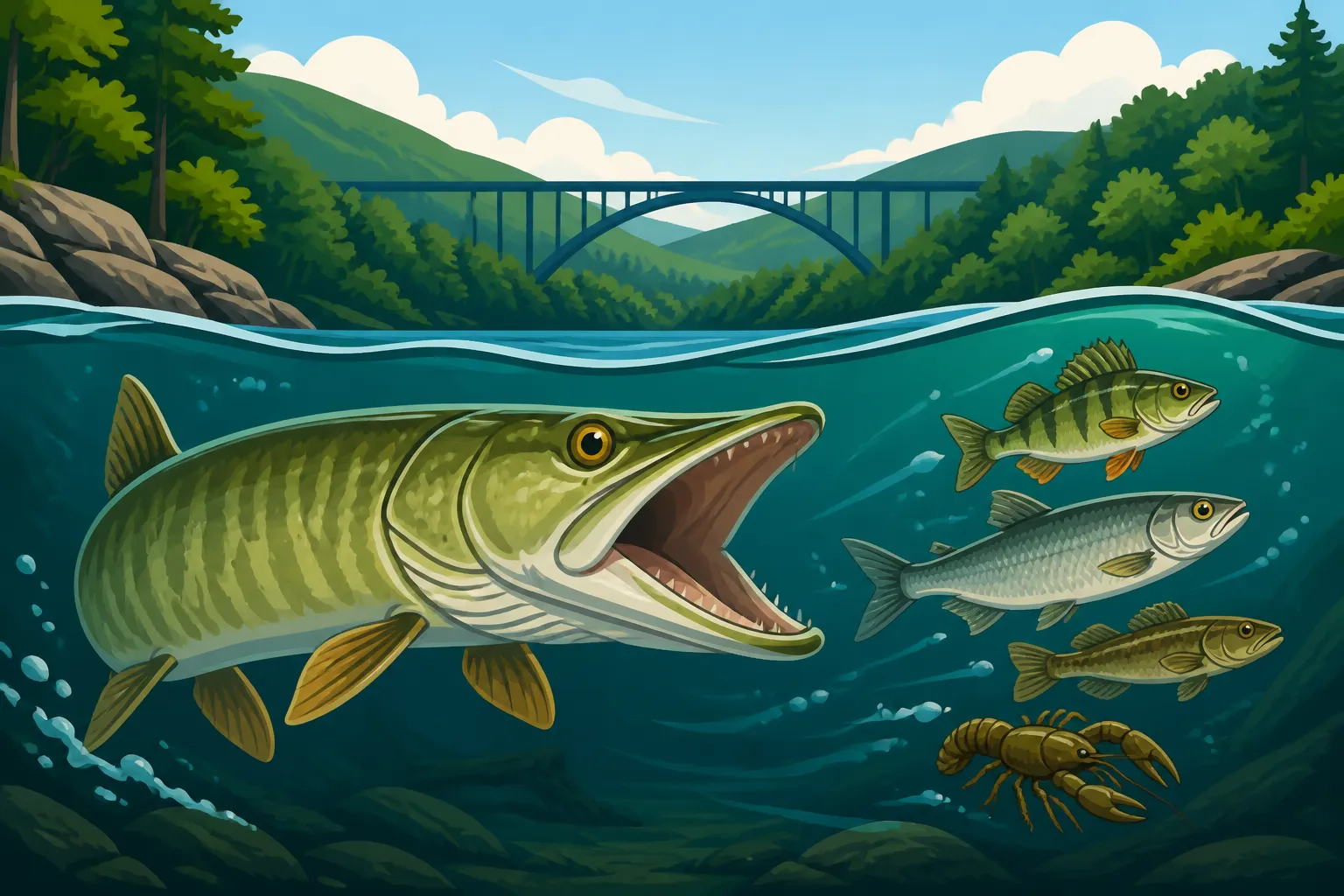
What muskie eat in West Virginia rivers
It's a common frustration among West Virginia anglers: the elusive muskie, often dubbed "the fish of 10,000 casts." You spend hours on the water, meticulously casting, hoping for that one explosive strike, only to come up empty. A big part of solving this puzzle, and indeed, increasing your chances, lies in truly understanding what these apex predators are hunting. This comprehensive guide will dive deep into the diverse diet of muskie in West Virginia rivers, helping you understand their predatory habits and, ultimately, how to "match the hatch" for your next trophy catch.
The Muskie's Insatiable Appetite: A Predatory Profile
Muskie are top-tier predators in the aquatic food chain, built for ambush and powerful strikes. They don't have a delicate palate; if it moves, fits in their enormous mouth, and presents an opportunity, they're likely to try and eat it. Their diet is primarily carnivorous, focusing almost exclusively on other fish, but they are incredibly opportunistic. This means their menu can change based on what's most abundant and easiest to catch in their specific environment. The key to targeting them successfully is to think like a muskie: what would you eat if you were a large, torpedo-shaped predator lurking in the currents of a West Virginia river?
Muskie possess a unique jaw structure, full of razor-sharp teeth, that allows them to grip and hold onto struggling prey. They are not gentle feeders; their attacks are violent and often aimed at stunning or incapacitating their meal before swallowing it whole. This aggressive feeding strategy means they often prefer larger meals that offer a significant caloric payoff, rather than expending energy chasing down tiny morsels. Understanding this fundamental approach to feeding is crucial because it directly influences the size and type of lures that tend to be most effective. When you consider the sheer energy expenditure required for a muskie to launch an attack, especially in moving water, you realize they're looking for substantial rewards.
Opportunistic Feeding and Environmental Factors
While muskie certainly have their preferred prey, they are highly adaptable. What they eat can fluctuate dramatically based on the time of year, water temperature, water clarity, and the specific ecosystem they inhabit. A muskie in a smaller tributary might primarily feed on local minnows and small suckers, whereas a muskie in a vast river system like the New River or the Kanawha River might target larger baitfish, or even other game fish. Their keen eyesight and lateral line system allow them to detect vibrations and movement even in murky conditions or low light, further enhancing their predatory efficiency. This adaptability is what makes muskie fishing both challenging and incredibly rewarding; you have to be ready to adjust your approach based on the prevailing conditions. It’s never a one-size-fits-all situation, and what worked last week might not work today.
When rivers experience significant rainfall, increasing current and turbidity, muskie might retreat to calmer eddies or slack water areas, waiting for confused baitfish to drift by. Conversely, during periods of low, clear water, they might become more ambush-oriented, hiding in submerged cover or along sharp current breaks. These environmental shifts dictate not just where muskie will hold, but also what their potential food sources are doing, which in turn influences what the muskie will eat. Being observant of these conditions and considering their impact on the food chain is a real game-changer.
The Main Course: Key Forage Fish in West Virginia Rivers
When we talk about what muskie eat in West Virginia rivers, we're primarily talking about a variety of robust, often large, baitfish species. These are the fish that form the backbone of the muskie's diet, providing the necessary bulk and nutrition for these powerful fish to grow to trophy sizes. Identifying these primary forage species is the first step in selecting effective lures and understanding muskie behavior. It’s like knowing what deer eat before you go hunting – you wouldn’t use a lure meant for bass if your target prefers something entirely different.
Across West Virginia's renowned muskie waters, such as the New River, the Kanawha River, and the Little Kanawha River, certain species consistently appear on the muskie's menu. These fish are generally abundant, relatively easy for a muskie to ambush, and provide a good caloric return for the effort. Muskie are not typically chasing down small, nimble trout in open water, for instance, but rather targeting slower, more substantial prey. Understanding the habits and appearance of these prey fish will make you a much more successful muskie angler.
Common Prey Species
Let's break down some of the most common and important forage fish for muskie in West Virginia's rivers:
- Suckers (e.g., White Sucker, River Redhorse): These bottom-dwelling fish are often slow-moving and represent a significant meal for a muskie. They are incredibly common in many West Virginia river systems and can grow to a considerable size, making them a prime target. Muskie will often ambush suckers as they feed along the river bottom or move through deeper pools.
- Chub (e.g., Creek Chub, Fallfish): While not as large as suckers, chub are robust, abundant baitfish that muskie readily consume. They are typically found in rocky areas and current seams, making them accessible prey for muskie lurking in similar habitats. The sheer numbers of these fish make them a reliable food source.
- Shiners (e.g., Common Shiner, Golden Shiner): Various species of shiners are ubiquitous in West Virginia rivers. While individually smaller, muskie will often target schools of shiners, picking off the easiest targets. They are a constant presence in many river sections and contribute significantly to a muskie's diet, especially for younger or smaller muskie.
- Smaller Game Fish (e.g., Smallmouth Bass, Panfish): It might sound ruthless, but muskie are not above eating smaller versions of other game fish. Young smallmouth bass, particularly in areas where both species coexist like the New River, can become muskie prey. Crappie, bluegill, and other panfish are also on the menu if the opportunity presents itself. This highlights the muskie's opportunistic nature and their willingness to consume anything that represents an easy meal.
- Drum (Sheepshead): In larger river systems, especially those with slower, deeper pools, freshwater drum can be a significant forage species. These fish can grow quite large and are relatively slow, making them a good target for muskie. They provide a substantial, meaty meal that can sustain a muskie for a while.
- Carp (Common Carp, Grass Carp): While not always a primary target, smaller carp can certainly end up in a muskie's stomach. Young carp, especially in areas where they are abundant, can be an easy meal. However, adult carp are often too large and powerful for most muskie to tackle effectively.
Understanding these prey species allows you to better understand muskie behavior. If you know suckers congregate in certain deep holes or chubs hold near rocky outcroppings, you can bet muskie will be lurking nearby, waiting for an easy meal. This knowledge helps you not just choose the right lure but also to predict where muskie might be holding. Check out Muskie Life Cycle and Growth Rate in West Virginia Waters for more on how diet affects their development.
Seasonal Shifts and Feeding Behavior
Just like humans crave different foods throughout the year, a muskie's diet isn't static. It shifts with the seasons, responding to changes in water temperature, light conditions, and the availability and behavior of their prey. Being aware of these seasonal diet adjustments is vital for any serious muskie angler. It means you can adapt your presentation to what the muskie are most likely looking for, rather than just blindly throwing the same lure all year long.
The metabolism of a muskie is highly influenced by water temperature. In colder water, their metabolism slows down, making them less inclined to chase fast-moving prey over long distances. As the water warms, their metabolism ramps up, and they become much more active hunters, willing to expend more energy for a meal. This metabolic shift is perhaps the single most important factor influencing their feeding behavior throughout the year.
Spring and Early Summer: The Post-Spawn Feast
After the rigors of spawning in late spring, muskie are often hungry and looking to replenish their energy reserves. Water temperatures are typically rising, and many baitfish species are also spawning or becoming more active in shallower waters. This is a prime time for muskie to feed aggressively. They'll often target a wide variety of prey, taking advantage of whatever is most readily available.
During this period, muskie can be found in shallower bays, along weed lines, and near structure where baitfish are abundant. They're often less picky and more willing to chase. This can be a fantastic time to use larger crankbaits or bucktails that imitate the larger baitfish moving into these areas. They're trying to put on weight, so a substantial meal is very appealing. Remember, muskie are built for powerful strikes, and after spawning, they're looking to recover quickly.
Mid-Summer: Deep Water and Opportunistic Meals
As summer progresses and water temperatures peak, muskie may retreat to deeper, cooler water, especially during the brightest parts of the day. They'll often hold near thermoclines or deep structure, waiting for prey to pass by. Their feeding might become more nocturnal or crepuscular (dawn and dusk) as they take advantage of lower light conditions. While they are still active, they might be less willing to make long, energy-intensive chases in the warmest water.
During this time, understanding the location of baitfish is paramount. If baitfish are schooling in deep water, muskie will be nearby. Vertical jigging or slow-trolling larger baits in these deeper zones can be effective. They'll still eat, but their strikes might be more ambush-oriented rather than long pursuits. Keep an eye on cooler sections of rivers, like those below dams or where cooler tributaries enter, as these can be muskie magnets. You can find more specific advice in Best Time of Year to Fish in West Virginia.
Fall and Early Winter: The Pre-Winter Binge
This is often considered the peak season for trophy muskie fishing, and for good reason. As water temperatures begin to drop in fall, muskie enter a "feeding frenzy" phase. They are instinctively trying to pack on as much weight as possible before the cold, lean months of winter arrive. Their metabolism is still high enough to be active, but the urgency to feed is intense.
During the fall, muskie will actively hunt down large prey. This is when big jerkbaits, glide baits, and massive bucktails really shine. They'll follow schools of suckers, chub, and shiners into shallower feeding flats or position themselves at key ambush points along river channels. They're looking for substantial, calorie-rich meals to sustain them through winter. As the water continues to cool into early winter, their activity might slow down slightly, but the desire for large meals remains. Anglers targeting muskie during this time often focus on slower, larger presentations to mimic sluggish, but still significant, prey. Best Techniques for Fall Muskie Fishing offers more insights into this prime season.
| Season | Water Temperature Range (Approx.) | Typical Muskie Behavior | Primary Prey Focus | Lure Characteristics |
|---|---|---|---|---|
| Spring | 50-65°F (10-18°C) | Post-spawn recovery, aggressive feeding in shallows | Newly active baitfish, smaller game fish | Medium to large crankbaits, bucktails, soft plastics |
| Early Summer | 65-75°F (18-24°C) | Active hunting, moving into deeper structure | Abundant baitfish schools, suckers, chub | Large bucktails, deep-diving crankbaits, topwater (early/late) |
| Mid-Summer | 75°F+ (24°C+) | Deeper water, ambush-oriented, nocturnal feeding | Larger baitfish, suckers, drum | Slow-moving glide baits, vertical jigs, large soft plastics |
| Fall | 45-60°F (7-15°C) | Pre-winter binge, highly aggressive, trophy season | Large suckers, robust chub, smaller game fish | Extra-large bucktails, jerkbaits, glide baits, swimbaits |
| Early Winter | 35-45°F (2-7°C) | Slower metabolism, still seeking large meals | Less active large baitfish, bottom dwellers | Slow, deliberate glides, large rubber baits, heavy jigs |
Mimicking Muskie Prey: Lures and Baits
Now that we understand what muskie eat and when, the next logical step is to translate that knowledge into effective fishing strategies. This means selecting lures and baits that accurately imitate their natural prey in terms of size, profile, action, and sometimes even color. You're trying to fool a smart, powerful predator, so realism and proper presentation are key. When you're outfitting yourself, think about the muskie's perspective. Would this look like an easy meal worth the effort?
Muskie anglers tend to use much larger gear than typical bass or trout fishermen. This is not just because muskie are big, but because their preferred prey is also substantial. A small, subtle lure might not even register as a potential meal to a muskie looking for something to fill its belly. So, don't be shy about going big. You can browse a huge selection of specialized muskie lures on platforms like Amazon, but remember to always verify sizing and action descriptions before you buy.
Lure Selection: Matching the Hatch
Selecting the right lure isn't just about throwing the biggest thing in your tackle box. It's about understanding which lure best mimics the size, shape, and movement of the prevalent prey species at that particular time and location.
- Bucktails: These are perhaps the most iconic muskie lures, and for good reason. Their flashing blades and pulsing skirts effectively imitate a fleeing baitfish, triggering the muskie's predatory instincts. Varying sizes and blade configurations (single, double, tandem) allow you to mimic different baitfish profiles and adjust for water conditions. Larger bucktails with big blades are fantastic in the fall when muskie are focused on big meals. Many anglers stock up on a variety of colors and sizes on Amazon to be prepared for any situation.
- Crankbaits: Deep-diving crankbaits are excellent for imitating larger baitfish like suckers or drum that inhabit deeper parts of the river or suspended baitfish schools. Their wobbling action and strong vibrations can call in muskie from a distance, even in murky water. Medium-running crankbaits are great for shallower flats or along weed edges. Choose colors that mimic common prey like silver, chartreuse, or even a dark brown for suckers.
- Jerkbaits and Glide Baits: These lures require angler input to create their enticing side-to-side, erratic action. They are fantastic for imitating injured or struggling baitfish, a prime target for opportunistic muskie. The slower, more deliberate action can be deadly in colder water when muskie aren't willing to chase fast. Wooden jerkbaits, in particular, have a unique action that muskie find irresistible. Brands like Musky Mania's Jake or Chaos Tackle's Medusa are popular choices often found through retailers like Amazon.
- Swimbaits and Soft Plastics: Large, soft plastic swimbaits, often weighted, can mimic a wide range of baitfish and offer a very natural presentation. They can be retrieved slowly near the bottom or worked through cover. Their realistic appearance and subtle action can be incredibly effective when muskie are pressured or acting finicky. Paddle-tail swimbaits provide a strong thumping action, while straight-tail versions offer a more subtle glide.
- Topwater Lures: While not always the primary choice, topwater lures can be explosive when muskie are actively feeding in shallow water, especially during low-light conditions or over dense cover. Walk-the-dog baits, prop baits, and noisy plopper-style lures imitate struggling surface prey or even small mammals/birds, which muskie are known to occasionally strike. The sheer thrill of a muskie exploding on a topwater is unmatched!
When you're equipping yourself, consider not just the lure, but also the best gear for West Virginia muskie fishing and ensure you have strong lines, leaders, and rods capable of handling these powerful fish and their massive lures. Investing in quality gear, much of which you can research and purchase conveniently from Amazon, will pay dividends when that trophy muskie finally strikes. Remember, lure size is critical – don't be afraid to throw something that looks enormous to you; it's just a hearty meal for a muskie.
Disclaimer
This article is for general informational purposes only and does not constitute professional advice. Laws, prices and regulations vary by location and change over time. Consult a qualified professional for guidance on your specific situation.