Where brook trout still live wild in West Virginia
It’s a feeling many of us chase: the thrill of finding a truly wild fish, especially West Virginia’s native brook trout, those iridescent jewels of our mountain streams. But let's be honest, in a state celebrated for its fantastic trout stocking programs, it can sometimes feel overwhelming to distinguish where the wild populations genuinely thrive versus where the fish are just passing through after a hatchery release. This guide is here to cut through the confusion and show you exactly where these elusive, vibrant beauties still hold their ground in the Mountain State.
Understanding What "Wild" Truly Means for Brook Trout
When we talk about "wild" brook trout in West Virginia, we're not just talking about any fish that's been in the stream for a while. We're talking about native populations that have existed in those waters for centuries, reproducing naturally without human intervention. These aren't the trout that grew up in a concrete raceway; they're the resilient, perfectly camouflaged descendants of fish that have adapted to the unique, often harsh, conditions of our Appalachian headwaters.
The Pristine Conditions They Demand
Wild brook trout are incredibly finicky about their environment. They absolutely require cold, clean, highly oxygenated water year-round. This is why you'll primarily find them in the very headwaters and small tributaries of larger river systems, often at higher elevations. Think about those tiny, crystal-clear rivulets that tumble down mountainides – that’s their domain. These streams typically boast dense forest canopy, providing crucial shade that keeps water temperatures consistently low, even during our sometimes-sizzling West Virginia summers. A good canopy also means less runoff and siltation, which can smother eggs and impact aquatic insect life.
They also need specific substrate for spawning. These little fish prefer gravel beds where water percolates through, bringing oxygen to their eggs. Deep pools, undercut banks, and plenty of fallen timber offer critical refuge from predators and high water events. If you're wading through a stream and it feels like walking on a sandy beach, chances are you're not in prime brook trout territory. They need that natural, rugged stream structure to survive and thrive. It’s a delicate ecosystem, and any disruption can have a significant impact on these sensitive populations.
Distinguishing Wild from Stocked Trout Waters
It can be a bit tricky to tell the difference at times, especially in streams that might see both wild and stocked fish, or "holdovers" from previous stockings. However, if you're specifically targeting wild brookies, you're usually looking for streams that are remote, often harder to access, and typically smaller. These waters aren't stocked precisely because they can sustain wild populations, or because they're too small or challenging to stock efficiently.
A good rule of thumb is to look for waters not listed on the state's regular stocking schedules. While larger, more accessible rivers and lakes are fantastic for catching freshly stocked rainbow or golden rainbow trout, the wild brookies are upstream, often in places you need to hike a bit to reach. The fish themselves often look different too – wild brookies tend to be smaller, more vibrantly colored, and have perfect fins, unlike some hatchery-raised fish that might show signs of fin wear. For more on how our state manages its trout, check out West Virginia Trout Season and Stocking Rules.
Key Regions and Waters Where Wild Brook Trout Still Thrive
When you're searching for wild brook trout in West Virginia, you're generally going to be heading into the higher elevations and more rugged, protected areas of the state. The Monongahela National Forest, often affectionately called "The Mon," is without a doubt the epicenter of native brook trout fishing in our state. This sprawling forest provides the vast majority of the cold-water habitat these fish need.
Monongahela National Forest: The Brook Trout Stronghold
Within the Monongahela National Forest, you’ll find numerous streams and tributaries that hold thriving populations of wild brook trout. These areas often require a bit more effort to access, which is part of their charm and what helps protect these delicate ecosystems. Think of streams flowing off iconic peaks and wilderness areas – places where the elevation stays consistently high and the surrounding forest is largely undisturbed.
- Dolly Sods Wilderness Area: This is a truly unique, high-altitude plateau with conditions that almost resemble a Canadian taiga. The streams here, though small, are incredibly cold and pristine, ideal for brook trout. Access can be challenging, requiring hiking through rough terrain, but the reward of catching a Dolly Sods brookie is unparalleled. You'll want good, grippy wading boots (I found a fantastic pair on Amazon that handles slippery rocks like a dream) for these types of excursions.
- Spruce Knob-Seneca Rocks National Recreation Area: As the highest point in West Virginia, Spruce Knob drains numerous headwater streams that are perfect brook trout habitat. The steep gradients and dense forest cover ensure the water stays cold and oxygenated. Look for the tiny tributaries feeding into larger systems here.
- Cranberry Wilderness Area: The Cranberry River itself is famous for its special regulations and trophy trout, but it's the tiny feeder streams within the Cranberry Wilderness that hold some of the Mon's most robust wild brook trout populations. These are often small, brushy waters that demand stealth and precise casting. Exploring Cranberry River Fly Fishing can give you an idea of the main river, but remember, the wild fish are often further upstream.
- Shavers Fork Headwaters: The upper reaches and tiny feeder creeks of Shavers Fork are another prime location. Shavers Fork Native Brook Trout Access will point you to areas where these fish can be found. This area is known for its incredible natural beauty and the opportunity to truly get away from it all while pursuing native trout.
Other Notable High-Elevation Areas
While the Monongahela National Forest gets most of the attention, other high-elevation areas and wilderness tracts can also harbor wild brook trout. These are often more localized pockets, but just as rewarding to discover.
- Dry Fork Drainage: Similar to Shavers Fork, the Dry Fork and its upper tributaries offer excellent opportunities. These streams are often subject to special regulations to protect their wild fish. If you’re looking for a challenge and a true wilderness experience, this is a prime location. Dry Fork Trophy Trout Access Points will provide some insight into the larger trout in the area, but remember to seek out those small, wild headwaters for the brookies.
- Small, Unnamed Mountain Tribs: Don't overlook the seemingly insignificant streams that crisscross the Appalachian Mountains. Often, if you look at a detailed map and see blue lines tracing down steep, undeveloped slopes, especially above 2,500-3,000 feet in elevation, those are potential brook trout strongholds. These are the places where a small, ultralight rod and a handful of dry flies are all you need for an unforgettable day. A compact tackle bag, easily carried on Amazon, is perfect for these minimalist trips.
The key across all these locations is elevation and remoteness. The higher you go, and the harder it is to get there, the better your chances of finding healthy, reproducing populations of our native state fish. High-elevation trout streams in the Monongahela National Forest provides further specific details about these pristine locations.
How to Identify and Ethically Fish for Wild Brook Trout
Successfully finding and catching wild brook trout isn't just about knowing where they live; it's also about understanding their behavior and practicing responsible angling to ensure these precious populations thrive for generations to come.
Characteristics of Wild Brook Trout
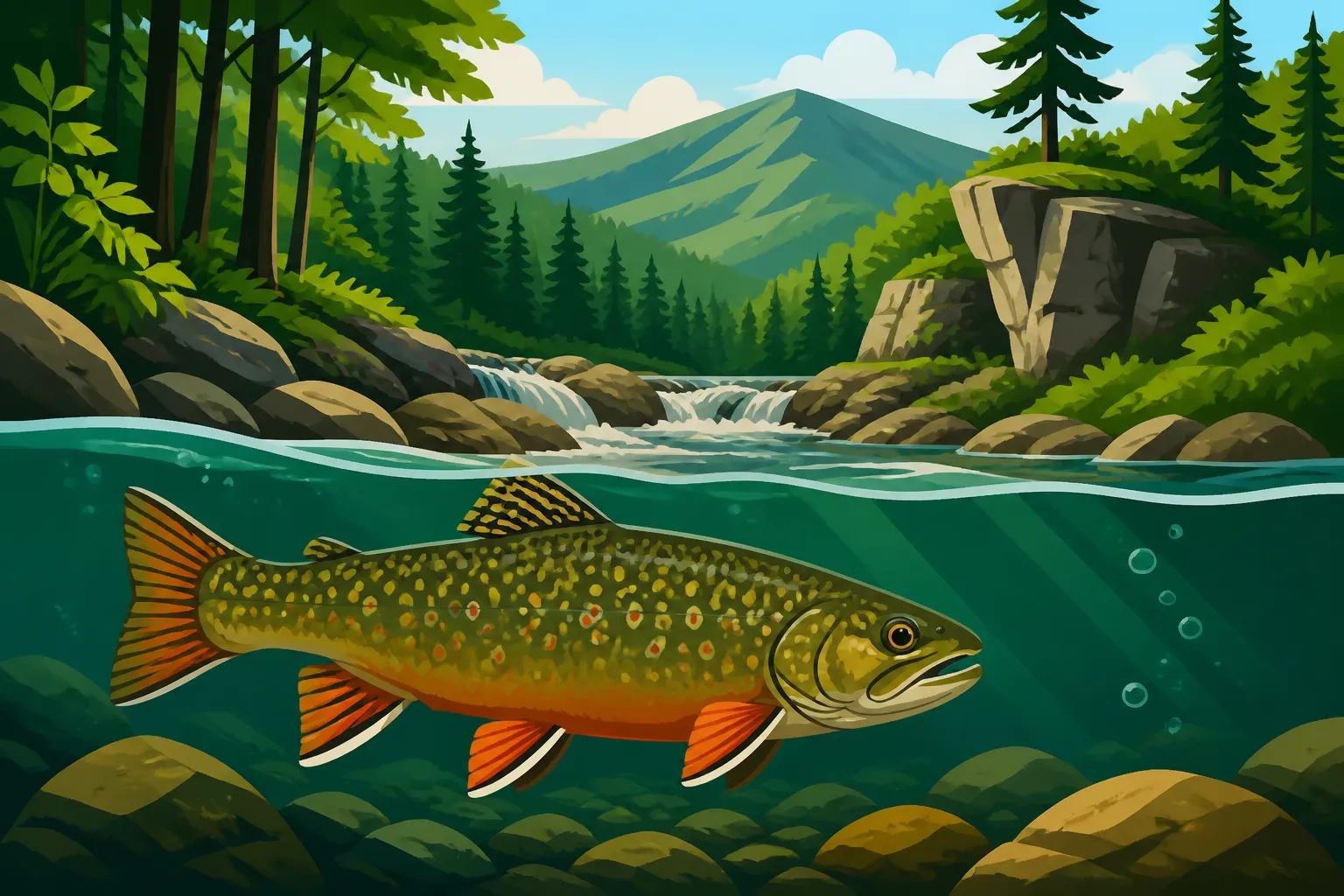
Wild brook trout are truly stunning fish. They are typically smaller than their hatchery-raised counterparts, often in the 6-10 inch range, though larger specimens can be found in more fertile waters. Their colors are a vibrant mosaic: olive green backs mottled with worm-like patterns (vermiculations), crimson spots (often with blue halos) along their sides, and striking white leading edges on their lower fins, often followed by black and then brilliant orange.
| Feature | Wild Brook Trout | Stocked Trout (Rainbow/Brown) |
|---|---|---|
| Size | Generally smaller (6-10 inches typical) | Often larger, especially on initial stocking |
| Coloration | Deep, vibrant, intricate patterns; red spots w/ blue halos; white fin edges | Can be duller; fewer distinct spots; fins sometimes worn |
| Fin Condition | Perfect, undamaged fins | Can show signs of wear or damage from hatchery life |
| Body Shape | Sleek, torpedo-like, well-proportioned | Can sometimes appear heavier-bodied or less defined |
| Behavior | Skittish, aggressive, quick to strike and hide | Can be more lethargic, less wary initially |
| Habitat Preference | Cold, high-elevation, clear, small streams | Adapt to wider range, often larger rivers/lakes |
Their small size and aggressive nature make them an absolute blast to catch on appropriate ultralight gear or a light fly rod. The fight might not be a long-distance drag burner, but their quick, darting movements in tight quarters are exhilarating.
Essential Gear for Wild Brookie Pursuits
When chasing wild brook trout, less is often more. You're typically hiking into these spots, so lightweight, functional gear is key.
- Rod and Reel: An ultralight spinning rod (4.5-6 feet) with a small spinning reel, spooled with 2-4 lb test monofilament or fluorocarbon, is perfect. For fly anglers, a 2-weight or 3-weight fly rod (6-8 feet) with a matching reel is ideal. A good quality fly line from a brand like Rio or Scientific Anglers, which you can easily purchase on Amazon, will make your casting smoother in tight spots. Check out Best Fly Rods for West Virginia Trout Streams for more specific recommendations.
- Lures/Flies: Small spinners (size 0-1), tiny spoons, or micro-jigs work wonders for spin fishing. For fly fishing, small dry flies (like Elk Hair Caddis, Adams, or Parachute Adams in sizes 14-20) are incredibly effective, especially in summer. Terrestrial patterns (ants, beetles, hoppers) are also fantastic, as are small nymphs (Pheasant Tail, Hare's Ear in sizes 16-20). Learn more about Fly Patterns for West Virginia Trout Streams.
- Waders and Boots: You'll be wading, often in slippery conditions. Breathable chest waders are essential for comfort, and felt-soled wading boots offer superior grip on mossy rocks. Some anglers prefer rubber soles with studs for durability. Best Waders for West Virginia Trout Streams offers a comprehensive breakdown. Remember to choose comfortable boots that support your ankles, as you'll be doing a lot of walking over uneven terrain.
- Essentials: A small backpack (mine from Amazon is perfect for this), water, snacks, bug spray, a small first-aid kit, a net with a rubber bag (kinder to fish), and polarized sunglasses are non-negotiable. Don't forget a pair of pliers or forceps for easy hook removal.
Catch and Release: Protecting the Resource
Given the fragile nature of wild brook trout populations, catch and release is highly encouraged, and often legally mandated in many wild trout waters. These fish reproduce slowly, and every adult fish is vital for the health of the population.
- Minimize Handling: Try to keep the fish in the water as much as possible. Wet your hands before touching them to protect their protective slime coat.
- Barbless Hooks: Crimp down the barbs on your hooks to make removal quicker and less damaging. This simple act drastically improves the fish's chances of survival.
- Quick Release: Unhook the fish gently and quickly. If it seems lethargic, hold it upright in the current until it swims away on its own.
- Awareness: Be mindful of your surroundings. Avoid disturbing spawning beds, and pack out everything you pack in. These pristine environments are part of the magic, and it’s up to us to keep them that way. Understanding West Virginia Catch and Release Rules for Trout is crucial before you head out.
By adhering to these ethical practices, we can ensure that these beautiful, wild brook trout continue to grace our West Virginia streams for generations of anglers to come.
Accessing Remote Brook Trout Streams
Getting to these pristine brook trout havens often requires a bit more effort than simply pulling off a paved road. This challenge is precisely what keeps many of these streams wild and untouched, but it also means you need to be prepared.
Hiking and Bushwhacking for Hidden Gems
Many of the best wild brook trout streams are found deep within wilderness areas, national forests, or state wildlife management areas. This means you'll likely be hiking on designated trails, or sometimes even "bushwhacking" through dense rhododendron thickets and over uneven terrain to reach the most secluded stretches of water.
- Trail Maps and GPS: Before you go, study detailed topographical maps of the area. Look for contour lines that indicate steep valleys and small blue lines representing creeks. A reliable GPS device or a smartphone app with offline maps (like Gaia GPS or AllTrails) is absolutely essential. Cell service is often non-existent in these remote areas, so don't rely on it. Marking your parking spot and intended route beforehand is always a good idea.
- Physical Preparedness: These hikes can be strenuous. Make sure you're in decent physical condition and wear appropriate hiking boots. It's not uncommon to gain and lose significant elevation in pursuit of these fish. Carrying a walking stick or wading staff can significantly aid stability on steep, uneven slopes, especially when crossing smaller creeks or navigating slippery banks. Best Wading Staff for Fast Current has some great advice on choosing the right one.
- Safety First: Always tell someone where you're going and when you expect to return. Carry enough water, snacks, and extra layers of clothing, even on sunny days, as mountain weather can change rapidly. A basic first-aid kit is a must, and a whistle can be a lifesaver if you get lost or need to signal for help.
Understanding Land Access and Regulations
While most of the prime brook trout waters are on public land, it's always important to know the specific regulations for the area you're fishing. Different sections of national forests or wilderness areas might have unique rules, especially concerning bait restrictions, bag limits, or even access points.
- National Forest vs. State Land: While much of the Monongahela National Forest is open to fishing, some areas might be designated as "special regulation waters" with unique rules to protect wild trout. Always check the latest West Virginia Fishing Regulations Summary (often available as a PDF online) before your trip. Reading the West Virginia Fishing Regulations Summary is a good resource to help you navigate this document.
- Wilderness Area Rules: Within federally designated wilderness areas, there might be additional restrictions on mechanized transport (no bikes, ATVs, or even wheeled carts), group sizes, and camping. These rules are in place to preserve the pristine nature of these areas.
- Private Property: Be extremely mindful of private property boundaries. Always know where you are and secure permission if you suspect you might be crossing private land. Trespassing is not only illegal but can also lead to access issues for all anglers in the future. Respecting private landowners is paramount to maintaining good relationships and access.
Reaching these wild brook trout streams is part of the adventure. It’s an opportunity to immerse yourself in the untouched beauty of West Virginia's mountains, to challenge yourself, and to earn the reward of connecting with a truly wild, native fish. Pack smart, plan well, and embrace the journey.
Conservation and the Future of West Virginia's Wild Brook Trout
The pursuit of wild brook trout isn't just a fishing trip; it's an experience rooted in conservation. These small, resilient fish are indicators of healthy ecosystems, and their continued presence in our streams is a testament to the efforts made to protect their unique habitats.
Threats to Wild Brook Trout Populations
Despite their resilience, wild brook trout face numerous threats that impact their ability to thrive. Understanding these challenges helps us appreciate their existence and reinforces the need for ongoing conservation efforts.
- Habitat Degradation: This is arguably the biggest threat. Logging, mining, road construction, and unchecked development can lead to increased siltation, erosion, and warming of stream temperatures. Even small changes in canopy cover can be detrimental to these cold-water dependent species. Runoff from agricultural areas or residential development can introduce pollutants that further harm aquatic life and water quality.
- Climate Change: Rising global temperatures directly impact the cold-water streams that brook trout depend on. As stream temperatures creep up, suitable habitat shrinks, pushing these fish into ever-smaller, higher-elevation refugia. Prolonged droughts can also reduce stream flow, concentrating fish and making them more vulnerable.
- Invasive Species and Competition: While not as prevalent in the highest headwaters, the introduction of non-native trout species (like brown or rainbow trout) into wild brook trout waters can lead to competition for food and habitat, and even hybridization, weakening the genetic purity of native brookies. In some cases, these larger, more aggressive species can simply outcompete the smaller brook trout.
How Anglers Can Help Protect These Native Fish
As anglers, we have a vital role to play in the conservation of West Virginia's wild brook trout. Our actions on and off the water directly contribute to their survival.
- Support Conservation Organizations: Join or donate to local and national conservation groups focused on cold-water fisheries, like Trout Unlimited. These organizations often lead stream restoration projects, advocate for protective legislation, and educate the public.
- Practice Leave No Trace Principles: Always pack out everything you pack in, and perhaps even a little extra trash you find. Stay on existing trails, avoid disturbing stream banks, and minimize your impact on the delicate ecosystems you're visiting.
- Advocate for Protection: Speak up for clean water and healthy forests. Contact your local representatives about issues affecting West Virginia's natural resources. Attend public meetings regarding land use decisions that could impact critical brook trout habitat.
- Educate Others: Share your knowledge about wild brook trout and the importance of catch and release, especially with new anglers. Inspire a love for these beautiful fish and the wild places they inhabit. By fostering a sense of stewardship, we ensure that more people understand the value of protecting these unique resources.
The native brook trout is West Virginia's state fish for a reason; it embodies the wild, untamed spirit of our mountains. Its continued presence is a barometer of environmental health. By being responsible anglers and informed conservationists, we can help safeguard these precious populations, ensuring that future generations can also experience the profound joy of catching a wild brookie in its ancestral home.
Disclaimer
This article is for general informational purposes only and does not constitute professional advice. Laws, prices and regulations vary by location and change over time. Consult a qualified professional for guidance on your specific situation.