West Virginia state record muskie weight and length
For many West Virginia anglers, the pursuit of a muskie isn't just about catching a fish; it's about chasing a legend, a true apex predator that embodies the wild spirit of our mountain state. The dream of landing a state record muskie burns bright for many, but the actual details of that monumental catch often get lost in angler folklore. This guide will reveal the specifics of West Virginia's state record muskie, delve into what makes these giants so exceptional, and share insights for those hoping to etch their own names into the record books.
The Legendary West Virginia State Record Muskie: A True River Monster
There's a certain mystique around muskie fishing in West Virginia, and for good reason. These "fish of 10,000 casts" are notoriously elusive, incredibly powerful, and possess a predatory gaze that can send shivers down an angler's spine. To actually land one, let alone one of record-breaking size, is a monumental achievement that defines an angler's career. When we talk about the state record, we're discussing a fish that represents the pinnacle of that challenge, a true river monster that pushed the limits of both angler and tackle.
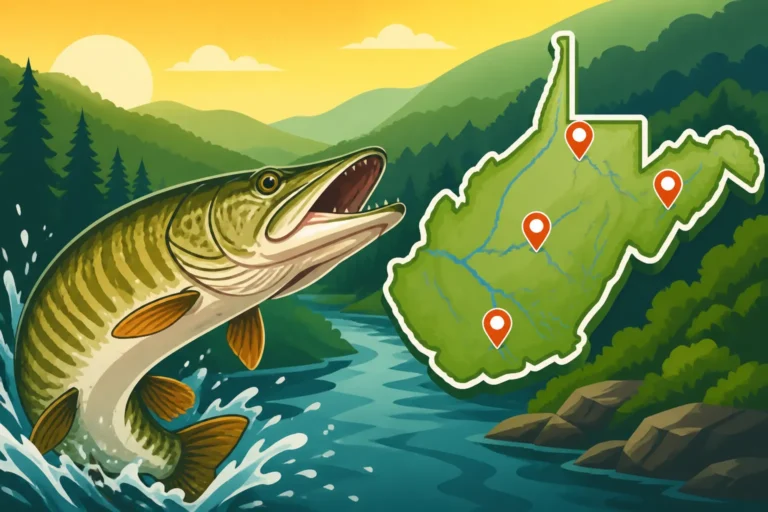
The current West Virginia state record muskie, a fish of truly astonishing proportions, was caught by an angler named Kyle Spangler. This incredible specimen weighed in at a whopping 52 pounds, 10 ounces. Can you imagine the fight? The sheer size and power of a fish like that are almost incomprehensible until you see one up close. Not only was it a behemoth in terms of weight, but its length was equally impressive, stretching to 54.06 inches. That's over four and a half feet of pure muscle and teeth!
This legendary catch didn't come from some remote, unnamed lake, but from a river that is well-known for its muskie population: the Little Kanawha River. This river, snaking through the heart of West Virginia, has a reputation for producing big fish, and Kyle's catch solidified its status as a premier muskie destination. It’s a testament to the health of our river systems and the dedication of anglers like Kyle who put in the time and effort. The story of that day, the battle, and the eventual landing of such an enormous fish, is undoubtedly a tale that Kyle will be telling for the rest of his life, inspiring countless others to cast their lines in search of their own giants.
The Numbers Behind the Legend: Weight, Length, and Location
Let's break down those impressive figures again, because they are truly worth a second look. When you're talking about a state record, precision is key.
| Category | West Virginia State Record Muskie |
|---|---|
| Weight | 52 pounds, 10 ounces |
| Length | 54.06 inches |
| Location Caught | Little Kanawha River |
| Angler | Kyle Spangler |
These numbers aren't just statistics; they tell a story of a fish that has grown to an extraordinary size, a testament to its longevity and the rich ecosystem of the Little Kanawha River. Muskie growth rates can be quite varied, but reaching over 50 pounds usually means this fish had seen many seasons and successfully navigated countless challenges. The Little Kanawha River, with its diverse habitat, ample forage, and current, provided the perfect environment for this fish to thrive. It’s not an overnight achievement; these fish take years, even decades, to reach such colossal dimensions. Muskie Life Cycle and Growth Rate in West Virginia Waters delves deeper into how these fish mature.
The Angler's Perseverance: The Story Behind the Catch
While the exact details of Kyle Spangler's specific record-setting day might vary in retelling, the core truth for any muskie angler is perseverance. Muskie fishing is not for the faint of heart. It demands patience, dedication, and an unshakeable belief that the next cast could be the cast. For many who chase these toothy critters, hours can turn into days, and days into weeks, without a single strike. Yet, the allure remains, driven by the chance encounter with a fish of a lifetime.
Kyle's record catch on the Little Kanawha River is a shining example of this dedication paying off. Imagine the moment that fish hit, the immediate realization of its power, the adrenaline surge as the battle began. Muskie fights are known for their explosive runs, head shakes, and sometimes aerial displays. Landing a fish over 50 pounds on a river current takes skill, the right gear, and a bit of luck. It's a moment etched into memory, a culmination of all the time spent on the water, honing techniques, and understanding the behavior of these formidable predators. How to Catch Muskie in West Virginia shares more about the techniques needed for such pursuits.
The Significance of Muskie Records in West Virginia
Why do we care so much about these records? It's more than just bragging rights, though those are certainly sweet. State records serve as benchmarks, celebrating exceptional fish and the anglers who catch them. They inspire others, contribute to our understanding of fish populations, and highlight the quality of our local fisheries. For West Virginia, a state known for its rugged beauty and excellent fishing opportunities, a record-setting muskie really puts us on the map for anglers worldwide.
Beyond the sheer excitement, these records also play a subtle but important role in conservation. They draw attention to specific water bodies, encouraging careful management and preservation efforts. When a river produces a fish of this caliber, it reinforces the need to protect its habitat and ensure future generations can experience the same thrill. It's a delicate balance between celebrating the catch and protecting the resource that allowed such a magnificent creature to thrive.
Inspiring the Next Generation of Trophy Hunters
Every time a new state record is set, or an existing one is celebrated, it ignites a spark in other anglers. For many, the dream shifts from simply catching a muskie to catching the biggest muskie. This pursuit, while challenging, is incredibly rewarding. It pushes anglers to learn more about the species, to study various techniques, and to explore different Best Muskie Waters in West Virginia. It fosters a deeper appreciation for the fish and the natural environment it inhabits.
Young anglers, especially, are captivated by these stories of giants. It encourages them to pick up a rod, spend time outdoors, and develop the patience and persistence that muskie fishing demands. The idea that such a monster could be lurking in their local waters is a powerful motivator. Of course, it’s not just about the size; it's about the entire experience—the solitude, the challenge, and the connection with nature.
Conservation Through Recognition
The existence of a healthy population of trophy-sized muskie, as evidenced by record catches, is a strong indicator of a robust and well-managed fishery. Muskie Regulations in West Virginia Waters are in place for a reason: to ensure that these populations remain sustainable for years to come. When anglers actively pursue these species, they often become advocates for the rivers and lakes they fish, contributing to clean-up efforts, reporting poaching, and supporting wildlife agencies.
A record-breaking fish reminds us of the incredible potential within our state's waters. It shows that with proper care, habitat preservation, and sensible angling practices, our rivers can continue to produce world-class fish. This recognition can also help secure funding and resources for continued stocking programs, habitat restoration projects, and research into muskie populations, all of which benefit the species in the long run.
Gear and Strategy for Chasing West Virginia's Giant Muskie
So, you've heard the legend, and now you're feeling the call to chase your own trophy muskie. This isn't light tackle fishing; muskie demand specialized gear and a methodical approach. From the rod in your hand to the lures you cast, everything needs to be robust and reliable. Investing in quality equipment is not just about convenience; it's about increasing your odds and ensuring the safety of both you and the fish.
When it comes to gear, thinking heavy-duty is key. Your rod and reel need to be capable of handling large lures, powerful casts, and the explosive fight of a muskie that could potentially be over 50 inches long. Don't skimp on your line or leaders either, as a snapped line means a lost fish and potentially leaving tackle in the water. Beyond the basic setup, specific lures, a proper net, and other accessories are vital for a successful and ethical muskie hunt. Many anglers find great deals and a wide selection of specialized muskie tackle on Amazon, where reviews can help guide their choices for high-performance equipment.
The Essential Muskie Arsenal: Rods, Reels, and Line
Let's talk specifics. For muskie, you're looking at heavy-action rods, typically in the 8 to 9-foot range. This length provides the leverage needed to cast large baits and control a powerful fish. Paired with a robust baitcasting reel designed for heavy line and big fish, you'll have the backbone required for the job. A good quality muskie reel will have a strong drag system and be able to handle repeated casts of heavy lures without fatiguing the angler.
Line choice is critical. Most muskie anglers opt for braided line, often in the 80 to 100-pound test range. This provides incredible strength and sensitivity, allowing you to feel subtle bumps and detect strikes from cautious fish. However, braid can fray on muskie teeth, so a heavy fluorocarbon or wire leader (at least 80-130 lb test) is absolutely non-negotiable. This leader acts as a shock absorber and, more importantly, provides bite protection from those razor-sharp teeth. Don't go out on the water without a solid leader system. If you're looking for high-strength braided line or robust fluorocarbon leader material, you can often find a good variety on Amazon. Best Muskie Gear for West Virginia Rivers offers more in-depth advice on equipment.
Lures and Presentation: What Muskie Are Looking For
Muskie are opportunistic predators, but they can also be incredibly selective. Their diet consists primarily of other fish, so large baits that mimic prey species are typically your best bet. Think about the size of the muskie we're discussing – they're not interested in tiny minnows!
Popular muskie lures include:
- Large Bucktail Spinners: These create a lot of flash and vibration, triggering aggressive strikes.
- Jerkbaits and Glide Baits: Mimicking injured baitfish, these lures can be incredibly effective when worked with erratic movements.
- Crankbaits: Deep-diving or shallow-running crankbaits can cover a lot of water and imitate larger forage.
- Soft Plastics and Swimbaits: Large soft plastics, often rigged with heavy jig heads, can be fished slowly and deliberately in deeper water or around structure.
The key to presentation is often erratic movement and varying retrieve speeds. Muskie are highly curious and often follow lures before striking. The "figure eight" at the side of the boat (making your lure swim in a figure-eight pattern as it approaches the boat) is a legendary technique that often coaxes follows into aggressive strikes. When it comes to finding a wide array of specialized muskie lures, from bucktails to glide baits, many anglers turn to online marketplaces like Amazon for their diverse selection. Best Lures for Muskie Fishing in West Virginia provides a comprehensive look at what to tie on.
The Importance of a Quality Net and Handling Practices
Landing a muskie, especially a large one, can be tricky. They have sharp teeth, strong bodies, and can inflict serious injury if not handled properly. A large, rubberized landing net is absolutely essential. The net should be big enough to fully encompass the fish without bending or breaking, and the rubberized mesh is crucial for protecting the fish's slime coat and fins.
Once netted, proper handling is paramount. Muskie are highly susceptible to stress and injury, particularly out of the water. If you're planning to release the fish (which is highly encouraged, especially for trophy-sized specimens that are vital for future generations), minimize its time out of the water. Use long-nosed pliers or jaw spreaders to safely remove hooks. Take photos quickly, supporting the fish horizontally with both hands (one under the belly, one under the head), and get it back into the water as soon as possible. Muskie catch and release survival tips offers more detailed guidance on how to ensure these magnificent fish swim away healthy.
Documenting and Celebrating Your Own Potential Record
Catching a truly massive muskie is a rare event, and if you believe you've landed a potential state record, there's a specific process to follow to ensure your catch can be properly recognized. This isn't just about personal glory; it contributes to the official records that West Virginia keeps and helps document the health of our fisheries. The West Virginia Division of Natural Resources (WVDNR) has clear guidelines that must be adhered to, so it’s wise to be familiar with them before you even cast a line.
The thrill of a potential record also comes with a significant responsibility. Ethical angling practices, especially for such an important fish, are critical. While the desire to hold a record is powerful, the long-term health of the muskie population should always be a top priority. Releasing trophy fish, when possible and appropriate, helps ensure these genes continue to contribute to the fishery.
Official Procedures for State Record Certification
If you've caught a muskie that you suspect might be a state record, here's a general outline of what you need to do:
- Be Prepared with a Certified Scale: This is non-negotiable. The fish must be weighed on a certified scale, usually found at local grocery stores, meat markets, or post offices. The scale needs to be inspected and certified for accuracy.
- Get It Measured: Accurate length measurements are also crucial. Measure from the tip of the jaw to the tip of the tail, taking photographs that clearly show the measurement.
- Witnesses are Key: Have at least two credible witnesses present during the weighing and measuring process. Their testimony will be important for verifying the catch.
- Contact the WVDNR Immediately: As soon as possible after the catch, contact the West Virginia Division of Natural Resources. They will guide you through the official documentation process, which will include specific forms, photographs, and potentially an examination of the fish by a biologist.
- Photography is Paramount: Clear, high-quality photos of the fish, the angler, the scale readout, and the measurement are essential. These provide visual evidence and help authenticate the claim.
Remember, time is often of the essence, especially if you plan to release the fish or if you want to preserve its condition for official inspection. Having a plan in place before you catch the fish can make all the difference.
The Ethos of Catch and Release for Trophy Muskie
While the thought of holding a state record is exciting, many muskie anglers, especially those targeting trophy fish, practice catch and release. Muskie are slow-growing, long-lived fish, and the largest specimens are often the most important breeders in the population. Releasing these giants allows them to continue their ecological role and provides future generations of anglers the chance to pursue them.
For those considering a record, sometimes a replica mount is a fantastic option. You get the everlasting memory and a stunning piece of art without having to keep the actual fish. This allows the living legend to swim on, contributing to the health and vitality of West Virginia's muskie fisheries. It’s a choice that reflects a deep respect for the resource and a commitment to sustainable angling. The challenge of Muskie Fishing in West Virginia is immense, and part of that challenge is ensuring these incredible fish remain a vibrant part of our natural heritage.
Disclaimer
This article is for general informational purposes only and does not constitute professional advice. Laws, prices and regulations vary by location and change over time. Consult a qualified professional for guidance on your specific situation.