Best technique for bank fishing a stocked trout stream
Stepping up to a stocked trout stream with your spinning rod, looking at that inviting water, only to realize those freshly planted fish aren't biting can be incredibly frustrating. It feels like you've done everything right – got your license, found a good spot – but the trout are just ignoring your offerings. This guide is here to cut through that confusion, giving you detailed, proven techniques for successfully bank fishing West Virginia's stocked trout waters.
Understanding the Unique Behavior of Stocked Trout
It's easy to assume all trout are the same, but stocked trout often behave quite differently from their wild counterparts. These fish have spent their lives in hatcheries, accustomed to a specific diet and environment. When they're released into a stream, they undergo a significant transition that impacts where they go and what they're willing to eat.
The "Stocking Truck Syndrome"
Right after stocking, trout are often disoriented and tend to congregate near the release points. They're like kids let out of school – a bit scattered, but generally sticking close to the exit. This initial phase is sometimes referred to as "stocking truck syndrome." They're not yet thinking like wild fish; instead, they're reacting to a new, unfamiliar world.
During this time, you'll often find them in slower, deeper pools directly adjacent to bridges, culverts, or easy access points where the stocking trucks can get close to the water. They haven't had time to disperse or find natural holding lies. This is where understanding the West Virginia Trout Stocking Hotline and Schedule can really give you an edge, letting you know when and where fish are going in, so you can target these initial hot zones before they spread out. It's not uncommon to see anglers lining the banks in these areas for the first few days post-stocking, and for good reason.
Transitioning to Natural Instincts
While they might stick close initially, stocked trout do begin to adapt. Over a few days or weeks, they start to disperse, seek out cover, and become more wary. They'll move into eddies, under submerged logs, behind large rocks, and into riffle sections that offer both food and protection. The longer they've been in the stream, the more they behave like wild trout, becoming pickier and more difficult to catch. This transition is why a technique that worked wonders on opening day might fail completely a week later.
Their diet also shifts. While they're accustomed to pellets, they'll gradually start to key in on natural food sources like nymphs, worms, and small baitfish. This adaptability is what makes them a fun challenge as the season progresses. You might also notice differences in behavior based on the specific trout species. For instance, brown trout, even when stocked, tend to acclimate quicker and become more elusive than rainbow trout.
Essential Gear for Successful Bank Fishing
You don't need a boatload of fancy equipment to effectively bank fish for stocked trout, but having the right essentials can make a world of difference. Think "mobile and efficient," because you'll likely be moving along the bank to find fish and cover water.
Rod, Reel, and Line Setup
For bank fishing stocked trout, a medium-light to light action spinning rod, typically in the 6 to 7-foot range, is your best friend. This length offers a good balance between casting distance and maneuverability on crowded banks or around vegetation. The light action is crucial for feeling those subtle trout bites and protecting lighter lines. A good quality spinning reel in a 1000 to 2500 size class, spooled with 4 to 6-pound test monofilament or fluorocarbon line, is ideal. Monofilament is forgiving, with good stretch, while fluorocarbon offers less stretch and is virtually invisible underwater, which can be a huge advantage in clear water conditions often found in West Virginia streams.
Consider a simple, reliable combo. Many anglers find excellent options for a Best Rod and Reel Combo for Beginners on Amazon, which can handle everything from PowerBait to small spinners. Pair this with a 2 to 4-pound test fluorocarbon leader, about 2-3 feet long, tied to your main line with a small swivel or a double uni knot. The lighter leader material is key because stocked trout, especially after the initial stocking frenzy, can be line-shy.
Terminal Tackle and Accessories
When it comes to terminal tackle, simplicity and versatility are key. Here’s a rundown of what you’ll want in your tackle box:
- Hooks: A selection of small, sharp hooks is paramount. Size 10 to 14 bait holder hooks are great for natural baits, while small treble hooks (size 12-16) are perfect for molded baits like PowerBait. If you're practicing West Virginia Catch and Release Rules for Trout, consider using barbless hooks or pinching down the barbs on standard hooks to minimize harm to the fish.
- Weights: An assortment of split shot weights (from BB size to 3/0) and pencil sinkers will allow you to adjust to different currents and depths. You'll want enough weight to get your bait down but not so much that it becomes snag-prone or unnatural looking.
- Bobbers: Small, sensitive slip bobbers or fixed bobbers are invaluable, especially when targeting fish suspended in the water column or in slower pools. They help detect light bites and keep your bait at a consistent depth.
- Net: A small, rubber-mesh landing net is highly recommended. It makes landing fish easier, reduces stress on the fish, and prevents tangles with your line. For specific recommendations, check out options like the Best Landing Net for Trout.
- Pliers/Forceps: Essential for removing hooks, especially if fish swallow the bait or you're using treble hooks.
- Small Tackle Bag/Vest: A compact bag or fishing vest allows you to carry your essentials comfortably while remaining mobile. You can find many practical options for bank fishing on Amazon.
- Valid Fishing License and Trout Stamp: Don't forget these! Make sure you know Where and How to Buy a West Virginia Fishing License and have your Trout Stamps and Trout Fishing Rules in West Virginia covered, whether it's a physical copy or stored digitally on your phone via the WVhunt app.
Mastering Bait and Lure Presentations from Shore
The beauty of bank fishing for stocked trout is the variety of effective presentations you can use. The key is to experiment and adapt to what the fish are telling you on any given day.
PowerBait and Dough Baits: The Hatchery Comfort Food
For freshly stocked trout, PowerBait (or similar dough baits from brands like Berkley) is often the absolute killer. These fish were raised on pellets, and PowerBait's scent, texture, and bright colors mimic that familiar food source.
- Floating PowerBait (The Blob): This is arguably the most popular and effective method. Pinch off a small piece of PowerBait (about the size of a pea or a garbanzo bean) and mold it onto a small treble hook (size 12 or 14) or a bait holder hook, ensuring the hook point is covered. The goal is to make a little floating "blob." Attach a small split shot or two about 12-18 inches above the hook. Cast this out into a slow pool or current. The PowerBait floats, lifting your hook off the bottom and into the strike zone, while the weight keeps it in place or drifts it slowly. This technique is especially potent for newly stocked fish that are still acclimating and often hold close to the bottom.
- Dough Bait with a Worm Blower (Natural Drift): Some specialized dough baits are designed to float even better. Combine these with a small worm blower or air injector to make a small natural bait (like a worm) float, offering a subtle presentation.
- Bottom Bouncing: For slightly deeper, slower water, you can also use PowerBait with a slightly heavier weight (like a small egg sinker) to keep it near the bottom. This is great when the fish are hugging the streambed.
Natural Baits: Worms, Corn, and Insects
While PowerBait is hatchery comfort food, natural baits often appeal to trout that have been in the stream for a bit longer and are starting to forage naturally.
- Worms (Nightcrawlers, Red Wigglers): A classic for a reason. Worms are irresistible to trout. You can fish them in several ways:
- Bottom Rig: Thread a small piece of nightcrawler or a full red wiggler onto a size 8-12 bait holder hook. Use a small split shot or two 6-12 inches above the hook to get it down. Cast into deeper pools or slower runs and let it drift naturally. The movement and scent of the worm are often too much for a trout to resist. This is a fantastic option when you're not seeing bites on PowerBait.
- Under a Bobber: Use a small piece of worm suspended under a sensitive bobber, especially in slack water or eddies. This keeps the worm at a consistent depth and allows you to detect even the lightest nibbles.
- Corn: Believe it or not, canned corn can be surprisingly effective for stocked trout. Its bright yellow color and soft texture often mimic hatchery pellets. Just thread a few kernels onto a small hook and fish it like PowerBait, either floating or on the bottom.
- Mealworms/Waxworms: These are smaller, live baits that can be deadly, especially when fish are being finicky. They are excellent when fished on a small hook (size 12-16) under a bobber or on a very light bottom rig.
Artificial Lures: Spinners, Spoons, and Jigs
When trout are more active and aggressive, or have spread out and started feeding more naturally, artificial lures can be highly effective for bank anglers. These require active retrieval and cover more water, making them great for searching out fish.
- Inline Spinners: Brands like Mepps, Panther Martin, and Roostertail are legends for a reason. A small (1/16 oz to 1/8 oz) inline spinner in silver, gold, or brass with a white, black, or yellow dressing can be incredibly effective. Cast across or slightly upstream, and retrieve slowly, just fast enough to get the blade spinning. The flash and vibration are often irresistible. This is a great choice for Spring Trout Fishing Techniques for West Virginia Streams.
- Small Spoons: Tiny spoons like the Kastmaster or Little Cleo, typically 1/8 oz, can also be fantastic. Cast them out and retrieve with a slow, erratic wobble, or even jig them vertically in deeper pools.
- Jigs and Soft Plastics: Small marabou jigs (1/32 oz to 1/16 oz) or tiny soft plastic grubs (like a Berkley Gulp! Trout Worm) on a lightweight jig head can be deadly. Fish these with a slow, twitch-and-pause retrieve. They imitate small baitfish or aquatic insects, appealing to more naturally feeding trout.
- Ultralight Crankbaits: Occasionally, very small crankbaits designed for trout (e.g., Rapala Ultralight Minnow) can entice a strike, especially in larger, deeper pools where trout might be more aggressive.
| Bait/Lure Type | Best Rigging from Bank | Pros | Cons |
|---|---|---|---|
| PowerBait (Floating) | Small treble hook, 12-18" above a split shot | Mimics hatchery food, highly attractive to fresh stock | Can be less effective after trout acclimate, messy to handle |
| Worms (Live) | Size 8-12 bait holder, split shot or bobber | Natural scent & movement, effective for all trout | Can attract smaller fish, requires careful hooking to stay on |
| Inline Spinners | Direct tie to leader, cast & retrieve | Covers water, appeals to aggressive fish, reusable | Requires active fishing, less effective for lethargic trout |
| Small Jigs/Grubs | Light jig head, slow twitch retrieve | Mimics insects/baitfish, good for finicky trout | Requires a delicate touch to present naturally |
| Corn (Canned) | Small hook (size 12-14), split shot or bobber | Inexpensive, bright color, mimics pellets | Less scent than worms, can be less durable on the hook |
Reading the Water and Overcoming Bank Fishing Challenges
Bank fishing isn't just about throwing a line in; it's about understanding the environment and adapting your approach. West Virginia's diverse streams offer unique challenges and opportunities.
Identifying Prime Holding Water
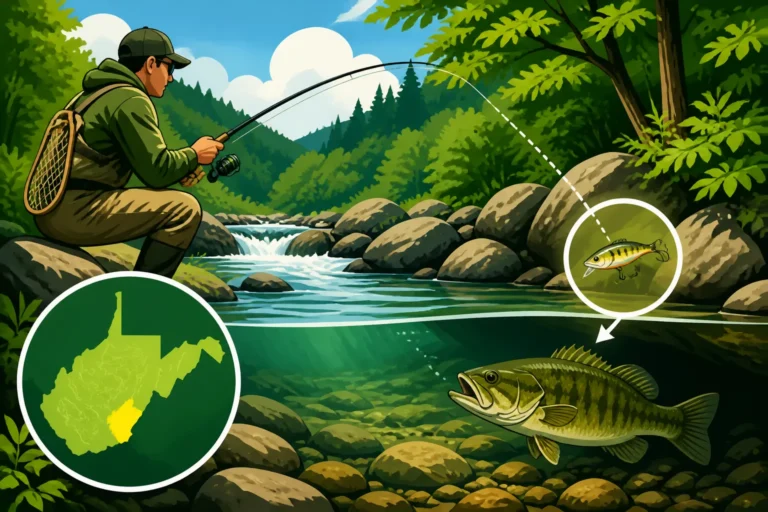
From the bank, you need to learn to "read" the water to identify where trout are most likely to hold. Remember, stocked trout, even after acclimating, will seek out areas that provide three things: food, cover, and a comfortable current.
- Deep Pools: These are classic trout hangouts. The deeper water provides security from predators and often holds cooler temperatures. Cast to the head (upstream end) of the pool and let your bait drift through, or cast to the tail (downstream end) and retrieve a spinner.
- Current Breaks and Eddies: Any obstruction in the current – a large rock, a log jam, a bend in the river – creates a seam of slower water where trout can rest without expending too much energy, while still having access to food drifting by. Target these "soft water" areas diligently.
- Undercut Banks and Overhanging Vegetation: These spots provide excellent overhead cover from predators like osprey and herons. Trout will often sit close to the bank here, especially if the water is clear. Approach quietly and cast close to the bank without spooking them.
- Riffles and Runs: While trout might not hold directly in the fastest part of a riffle, the transition zones where the riffle meets a deeper run are prime feeding grounds. Food is dislodged from the bottom in the riffles and washes into the runs, making it an easy meal for waiting trout. Try drifting worms or small jigs through these areas. Many List of West Virginia stocked trout waters will have a good mix of these features.
Strategic Casting and Retrieval
Simply casting straight out from the bank and letting your bait sit often isn't the most effective method. Think about how the current flows and how fish are positioned.
- Fan Casting: Instead of repeated casts to the same spot, "fan cast" by making a series of casts to cover a wide arc of water in front of you. Start by casting slightly upstream, then directly across, then slightly downstream, slowly retrieving your lure or drifting your bait through each lane. This ensures you're presenting your offering to any fish holding in different parts of the water column.
- Upstream vs. Downstream: When fishing lures, casting upstream and retrieving downstream with the current often provides a more natural presentation, especially with spinners. For bait, casting slightly upstream and letting your offering drift naturally downstream, using the current to your advantage, is usually best. This simulates a natural food item drifting with the flow.
- Vary Your Retrieve: Don't just reel in at a constant speed. For spinners and spoons, try pauses, twitches, or speed changes. For jigs and soft plastics, a subtle "lift and drop" or "drag and pause" can be deadly. Trout are curious, and erratic movements can trigger a strike.
Overcoming Common Bank Fishing Hurdles
Bank fishing, while accessible, comes with its own set of challenges.
- Crowds: Especially right after stockings, popular streams can be packed. Patience is key. If your spot is crowded, look for less-pressured areas up or downstream. Even a short walk away from a bridge or popular access point can yield solitude and more bites. Or, consider fishing on weekdays if your schedule allows.
- Snags: Rivers and streams are full of structure – rocks, logs, submerged branches. These are also where fish hide. To minimize snags, use lighter weights, especially in rocky areas. When you feel your line snag, try shaking your rod tip or giving the line a little slack, sometimes the current will dislodge it. If not, a strong, steady pull might bend out a light hook or break off at the knot, saving your main line.
- Spooking Fish: Trout have excellent vision and can be easily spooked by shadows, sudden movements, or loud noises. Approach the bank slowly and quietly, especially in clear, shallow water. Try to stay low and use any natural cover (bushes, trees) to break up your silhouette. Wear neutral-colored clothing, not bright, flashy attire. This is even more important in special regulation waters or during a later West Virginia Trout Season and Stocking Rules period when fish are more educated.
Remember, the goal is to enjoy your time on the water, learn from each outing, and maybe even catch a few beautiful West Virginia trout along the way!
Disclaimer
Fishing regulations and conditions can change. Always consult the latest official West Virginia Division of Natural Resources fishing regulations before heading out. This guide is for informational purposes only and does not supersede state laws.