Walleye Fishing in West Virginia
Trying to hook into a West Virginia walleye can sometimes feel like chasing a ghost. These finicky, light-sensitive predators are legendary for their elusive nature, leading many anglers to throw up their hands in frustration after a day with an empty livewell. But don't you dare give up on chasing those golden-eyed beauties! This comprehensive guide is here to unravel the mysteries of walleye fishing in the Mountain State, equipping you with the knowledge, spots, and techniques you need to start bringing home some of the most delicious freshwater fish around.
Understanding West Virginia Walleye
Before you can hope to catch a walleye, you really need to get inside its head – or at least understand its basic biology and preferences. These fish are unique, and knowing what makes them tick is the first step toward consistent success on the water.
Walleye Identification and Characteristics
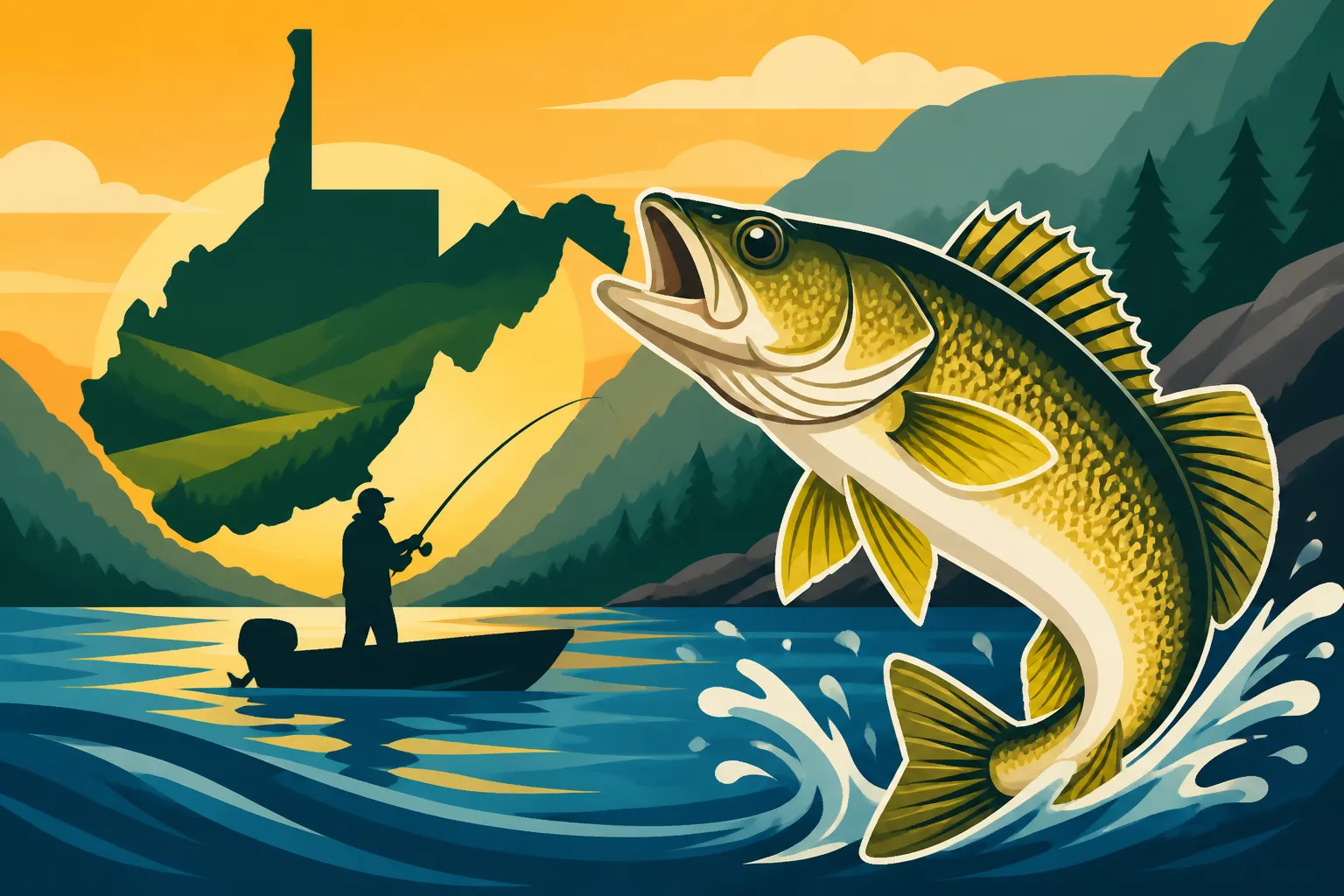
Walleye are instantly recognizable once you know what to look for. They get their name from their large, glassy, opaque eyes, which are specially adapted to see in low light conditions. This adaptation is a huge clue to their behavior and where you'll find them. Their bodies are typically long and slender, sporting a beautiful olive-green to golden-brown color, often with darker mottling or bars that help them camouflage perfectly against rocky bottoms or submerged timber. One of their most distinctive features is a white tip on the lower lobe of their caudal (tail) fin, which is a dead giveaway.
These fish are members of the perch family, and like their smaller cousins, they have two dorsal fins. The front dorsal fin is spiny, capable of delivering a sharp prick if you're not careful, while the rear dorsal is soft-rayed. Anglers often confuse them with sauger, a close relative. While sauger share many similarities, they typically have distinct black spots on their dorsal fins, lack the prominent white tail tip, and generally don't grow as large. Understanding these subtle differences is crucial, especially since West Virginia Walleye Daily and Possession Limits might differ from those for sauger in some waters.
Walleye Habitat Preferences in West Virginia
Walleye are true opportunists when it comes to their living arrangements, but they consistently gravitate towards certain types of environments in West Virginia's lakes and rivers. Deep, cool, clear water is usually their primary preference, especially during daylight hours. They are incredibly sensitive to bright light, which is why you'll often find them tucked away in the shadows, under ledges, near drop-offs, or around dense cover. Think about deep rock piles, submerged creek channels, extensive weed beds, or large areas of standing timber – these are prime walleye real estate.
In rivers, they seek out areas where current creates distinct breaks or scour holes. The downstream side of islands, bridge pilings, wing dams, or even subtle changes in bottom composition can concentrate walleye. They love to ambush prey from these current seams, expending minimal energy while waiting for an easy meal to float by. Lakes like Summersville Lake, Tygart Lake, and Stonewall Jackson Lake all offer fantastic walleye habitat with varying depths, structures, and forage bases. Learning to read sonar and identify these structures is invaluable for successful walleye fishing.
Walleye Life Cycle and Spawning Habits
The walleye life cycle is fascinating and heavily influences their behavior throughout the year. Most walleye in West Virginia will reach maturity around three to five years of age. Their most critical annual event is spawning, which typically occurs in early spring, usually when water temperatures range from about 40 to 50 degrees Fahrenheit. This is when the ice has just come off the lakes, or river levels are stable after spring thaws.
Walleye are broadcast spawners, meaning they don't build nests like bass. Instead, females release their eggs over rocky shoals, gravel bars, or rip-rap areas in shallow water, where males then fertilize them. These areas often have some current or wave action to help oxygenate the eggs and keep them clean. During this period, walleye are often concentrated and more accessible, though regulations may vary to protect them. After spawning, the fish are typically exhausted and may disperse, moving to deeper water to recover before resuming active feeding. Understanding Walleye Spawning Season in West Virginia is key to planning your spring fishing trips, as the regulations might reflect efforts to protect these vulnerable fish.
Top Walleye Fishing Lakes and Rivers
West Virginia might not be the first state that comes to mind for walleye, but we've got some fantastic waters that hold healthy populations of these coveted game fish. Knowing where to go is half the battle, and some spots definitely stand out.
Major Lake Destinations for Walleye
When you're dreaming of big walleye, West Virginia's larger reservoirs are generally your best bet. These lakes offer the depth, forage, and habitat that walleye thrive in, allowing them to grow to impressive sizes.
- Summersville Lake: Often called the "Little Bahamas of the East" for its clear, deep water, Summersville Lake is arguably West Virginia's premier walleye destination. The lake's steep rocky banks, submerged timber, and deep points provide excellent cover. Walleye here often relate to the thermocline in summer, suspended over deep water, or hold tight to structure. Anglers frequently have success trolling deep-diving crankbaits or vertical jigging spoons and blade baits around main lake points and humps. Summersville Lake Walleye Fishing can be phenomenal, especially in the spring and fall.
- Tygart Lake: Located near Grafton, Tygart Lake is another fantastic walleye fishery. It's a deep, oligotrophic (nutrient-poor) lake, which means clear water and plenty of oxygen even in its depths. Walleye here are often found relating to submerged points, old creek channels, and the steep breaks along the shoreline. Trolling open water with planer boards or downriggers is a popular tactic, as is jigging vertically over structure.
- Stonewall Jackson Lake: While renowned for its bass fishing, Stonewall Jackson Lake also holds a respectable population of walleye. This lake features extensive standing timber, which can be both a blessing and a curse. Walleye hide deep within these timber jungles, making them challenging to pinpoint but offering excellent ambush points. Look for them around the edges of timber, especially where it meets a channel or drop-off. Stonewall Jackson Lake Fishing for walleye often involves slow-trolling crankbaits or pitching jigs into the timber.
- Beech Fork Lake: While perhaps not as famous for walleye as Summersville or Tygart, Beech Fork Lake near Huntington offers consistent action for those who know how to target them. It's a shallower, more turbid lake compared to the others, meaning walleye might be found in different types of cover and at different depths. Look for them in areas with woody debris, channel swings, and deeper flats.
River Systems with Walleye Populations
Don't overlook West Virginia's expansive river systems for excellent walleye opportunities. Rivers present a different challenge than lakes but can be incredibly rewarding.
- Ohio River: The Ohio River, forming West Virginia's western border, is a true walleye factory. The series of locks and dams along the river create prime current breaks and deep pools where walleye thrive. Fishing below the dams during periods of power generation or changing water levels can be particularly productive. Ohio River Fishing Guide for West Virginia Anglers will tell you that walleye here often relate to rip-rap banks, scour holes, and the current seams created by inflows. Trolling deep-diving crankbaits, jigging current breaks, or using live bait rigs are all effective.
- Kanawha River: While often known for its hybrid striped bass and catfish, the lower Kanawha River also holds a surprisingly good population of walleye. These fish primarily inhabit the deeper pools and slow stretches, especially where tributaries enter or where there are significant current breaks. Similar to the Ohio, targeting the areas below dams can yield excellent results, particularly during low light.
- New River: The legendary New River, known for its smallmouth bass and muskie, also has a smaller, often overlooked population of walleye in its deeper, slower pools. They are less common here than in the Ohio, but finding one is a true trophy. Target the deepest holes and eddies, particularly those with rocky bottoms.
Lesser-Known Walleye Hotspots
Beyond the major players, West Virginia has a few other waters that might surprise you with their walleye potential, especially if you're looking for a quieter experience or a new challenge.
- East Lynn Lake: Tucked away in Wayne County, East Lynn Lake is primarily known for bass and muskie, but it consistently produces walleye for those who target them. The lake features extensive standing timber, similar to Stonewall Jackson, and its deeper sections hold good numbers of walleye. Focus on trolling the main lake basin or jigging around underwater humps and points.
- Bluestone Lake: Situated on the New River, Bluestone Lake offers a diverse fishery. While catfish and bass are popular, walleye can be found, particularly in the deeper, lower sections of the lake near the dam. Early spring and late fall tend to be the most productive times here for walleye.
- Burnsville Lake: This north-central West Virginia lake is a multi-species gem. While crappie and bass are popular, walleye are present and can offer good action, particularly around the deep creek channels and points. Similar to other reservoirs, a good sonar unit will be your best friend for locating structure and baitfish schools that attract walleye.
Best Time to Fish for Walleye
Timing is everything when it comes to walleye fishing. These fish are highly responsive to environmental factors like water temperature, light levels, and seasonal changes. Knowing when to hit the water can dramatically increase your chances of success.
Seasonal Strategies for Walleye
Each season brings unique opportunities and challenges for walleye anglers in West Virginia. Adapting your approach with the changing seasons is crucial.
- Spring (Pre-spawn & Spawn): This is arguably one of the best times to target walleye. As soon as the ice melts and water temperatures creep into the 40s, walleye begin to stage for spawning. They'll move into shallower, rocky areas in lakes and into river channels with suitable spawning gravel. Focus on these areas, especially during low light or cloudy days. After the spawn, they'll often move to slightly deeper recovery areas before resuming aggressive feeding. This is also when many anglers begin checking their West Virginia Fishing License Guide for 2026 to make sure they're ready for the season.
- Summer: As water temperatures rise, walleye generally move deeper to find cooler, more oxygenated water. In larger reservoirs like Summersville, they often suspend over deep water, following baitfish around the thermocline. In rivers, they'll tuck into deep scour holes and current breaks, becoming more nocturnal. Early mornings, late evenings, and night fishing can be incredibly productive during the summer months, especially during a full moon. Trolling deep-diving crankbaits or using live bait rigs is very effective.
- Fall: Fall is another fantastic time for walleye fishing, often overlooked by anglers focused on other species. As water temperatures cool down, walleye become very active feeders, gorging themselves to build up fat reserves for the winter. They'll often move shallower than in summer, but still relating to deep structure like points, humps, and channel edges. Trolling and vertical jigging remain popular methods.
- Winter (Ice Fishing): For dedicated anglers, ice fishing for walleye in West Virginia can be a thrilling experience, though opportunities are more limited to certain lakes. If ice conditions are safe, walleye can be caught by jigging spoons or small minnow-imitating lures through the ice, often near the bottom in deeper basins or along drop-offs. Always prioritize safety and check ice thickness before venturing out. Ice Fishing in West Virginia offers specific advice for the season.
Time of Day and Weather Considerations
Because of their light-sensitive eyes, walleye are particularly active during low-light conditions. This means dawn, dusk, and nighttime are often prime times.
- Dawn and Dusk: These transitional periods are when walleye are most likely to move from their deeper daytime haunts into shallower feeding areas. They have a distinct advantage over their prey in dim light, making these hours incredibly productive.
- Night Fishing: Don't be afraid of the dark! Night fishing for walleye, especially in summer, can be exceptionally rewarding. They will often move into very shallow water, even over flats, to chase baitfish under the cover of darkness. Glow-in-the-dark jigs and noisier crankbaits can be very effective.
- Overcast or Rainy Days: Cloudy, overcast days are a walleye angler's best friend. The reduced light penetration allows walleye to stay shallower and remain active throughout the day, offering a fantastic opportunity for consistent bites. Rainy days, especially a steady drizzle, can also stir up baitfish and encourage walleye to feed.
- Cold Fronts: Walleye can be incredibly sensitive to abrupt weather changes, particularly cold fronts. After a strong front passes, the fish often become lethargic and tight-lipped, retreating to deeper cover. During these times, slowing down your presentation and using live bait or subtle jigs can be your best bet.
Walleye Spawning Season Opportunities
As mentioned earlier, the pre-spawn and spawning periods offer unique chances to target concentrated walleye. While actual spawning fish may be focused on procreation, the staging fish leading up to the spawn are often aggressive feeders.
- Pre-Spawn Staging: Look for walleye congregated in areas adjacent to their spawning grounds, such as the mouths of creeks, deeper holes in river channels near gravel bars, or the first major breaklines leading to shallow rocky shoals in lakes. These fish are often feeding heavily to build energy for the spawn.
- Post-Spawn Recovery: Immediately after spawning, walleye are often exhausted. They'll move to nearby deeper water to rest and recover before starting to feed aggressively again. Targeting these recovery areas with slower presentations can yield results. Always be mindful of local regulations during this sensitive period; some areas may have specific closures or catch-and-release rules to protect spawning fish. Consulting the West Virginia Fishing Regulations Explained is always a good idea before hitting the water.
Effective Walleye Fishing Techniques
Walleye fishing demands a versatile angler. What works one day might not work the next, and different conditions or waters call for different tactics. Having a diverse arsenal of techniques is key to consistently catching these smart predators.
Trolling for Deepwater Walleye
Trolling is perhaps one of the most popular and effective methods for covering vast amounts of water and locating walleye, especially in West Virginia's larger reservoirs. It allows you to present baits at a consistent depth and speed, mimicking swimming baitfish.
- Crankbaits and Planer Boards: This is a go-to setup for open water trolling. Deep-diving crankbaits are ideal for reaching suspended walleye or those holding along deep structure. Using planer boards allows you to spread out multiple lines, covering a wider swath of water and keeping lures away from the boat, which can spook wary fish. Different colors and sizes of crankbaits will work depending on water clarity and light conditions. For a wide variety and competitive prices, you can often find excellent crankbait selections on Amazon.
- Bottom Bouncers and Crawler Harnesses: When walleye are holding tight to the bottom, especially over irregular terrain, bottom bouncers are indispensable. These weighted wires drag along the bottom, keeping your bait in the strike zone while minimizing snags. A crawler harness, typically rigged with a live nightcrawler, is then trailed behind the bouncer. The spinning blades on the harness add flash and vibration, irresistible to walleye. This method is incredibly effective for finding fish along humps, ledges, and channel edges.
- Downriggers and Lead Core: For truly deep walleye, especially those suspended far below the surface in clearer lakes like Summersville, downriggers or lead core line become essential. Downriggers use a heavy ball to take your lure down to a precise depth, while lead core line's weight per foot allows you to calculate and achieve specific depths through trolling speed and line length. This precise depth control is crucial when walleye are holding in a narrow temperature band. For in-depth instruction, check out Trolling Techniques for West Virginia Lake Walleye.
Jigging and Vertical Presentation
Jigging is a more active, hands-on technique that can be incredibly effective when you've pinpointed walleye on your electronics, or when they are concentrated in specific areas like below dams or around deep structure.
- Vertical Jigging: This involves dropping a jig or spoon directly below your boat to target fish you see on your fish finder. The key is to impart a subtle lift-and-drop action, enticing the walleye to strike. Spoons, blade baits, and soft plastic swimbaits rigged on jig heads are excellent choices. This method shines in deep water or strong current, allowing you to stay precisely in the strike zone. You'll find a wide array of Best Jigs for West Virginia Walleye readily available online, including many options on Amazon.
- Pitching Jigs: When fishing shallower flats, weed lines, or rocky shorelines, pitching jigs allows you to cover water and retrieve the bait with a hopping or dragging motion. This can be very effective in spring and fall when walleye are shallower. Small bucktail jigs, hair jigs, or soft plastic grubs and worms on jig heads work well.
Live Bait Rigs for Finicky Walleye
When walleye are particularly finicky, it's often hard to beat the real thing. Live bait presentations are a classic walleye tactic for a reason: they work.
- Minnow Rigs: A simple hook-and-minnow rig can be deadly. Hook minnows through the lips or dorsal fin and present them under a bobber in shallower water, or on a slip-sinker rig near the bottom in deeper areas. Fathead minnows, shiners, or suckers are all excellent choices.
- Nightcrawler Rigs: Nightcrawlers are a walleye staple. They can be used on a simple hook, often with a walking sinker, or more commonly on a crawler harness as described in the trolling section. The scent and natural movement of a live nightcrawler can trigger bites from even the most hesitant walleye.
- Leech Rigs: Leeches, especially jumbo leeches, are another fantastic live bait, particularly in clearer waters. They are incredibly hardy and active in the water, providing constant enticing motion. Rig them through the suction cup end on a plain hook or a small jig.
Casting Lures from Shore or Boat
While trolling and jigging often steal the spotlight, casting can be highly effective, especially during low light or when fish are feeding in shallower areas.
- Crankbaits and Jerkbaits: Casting crankbaits or jerkbaits can cover water efficiently from shore or a drifting boat. Work them over points, along weed lines, or through current breaks. The erratic action of a jerkbait can trigger aggressive reaction strikes, while a slow, steady retrieve of a crankbait can imitate a cruising baitfish.
- Spinners and Spinnerbaits: Inline spinners and spinnerbaits, while more commonly associated with bass, can be very effective for walleye, especially in stained water or around weed edges. The flash and vibration can draw fish in, and they're relatively easy to cast and retrieve.
- Soft Plastics: Rigging soft plastic grubs, worms, or paddle tail swimbaits on jig heads allows for incredible versatility. You can cast them out, let them sink, and work them back with a variety of retrieves, from a steady swim to a hop-and-drop. The natural look and feel can be irresistible.
Essential Walleye Fishing Gear
Having the right tools for the job can make all the difference in walleye fishing. You don't need to break the bank, but investing in quality gear suited for this species will certainly improve your experience and success rate.
Rods, Reels, and Line for Walleye
The specific setup you choose will depend on your preferred technique, but there are some general guidelines for walleye gear.
- Rods: For most walleye applications, a medium-light to medium power spinning rod, typically 6'6" to 7'6" in length, is a great all-around choice. This provides enough backbone to fight a good walleye but retains sensitivity for detecting subtle bites. For heavy jigging or trolling with larger baits, a medium-heavy baitcasting setup might be more appropriate. Sensitivity is paramount when walleye are "light biters," so look for a rod with a fast or extra-fast action tip.
- Reels: A quality spinning reel in the 2000-3000 series size is perfect for most walleye fishing. Ensure it has a smooth drag system, as walleye can make powerful runs. For baitcasting setups, a reel with a good line capacity and a reliable gearing system is important. When searching for reels, Amazon offers a vast selection, and checking user reviews can help you find a durable and effective option.
- Line:
- Monofilament: A good all-around choice for many walleye techniques, especially for trolling crankbaits, due to its stretch (which acts as a shock absorber) and buoyancy. 6-10 pound test is typical.
- Fluorocarbon: Excellent for clear water and light bites due to its near invisibility underwater and low stretch, which enhances sensitivity. It also sinks, which can be an advantage for certain jigging presentations. Use 6-10 pound test as a main line or as a leader with braided line.
- Braided Line: Offers incredible strength, zero stretch, and excellent sensitivity, making it ideal for jigging or when fishing around heavy cover. Because it's visible, it's often paired with a fluorocarbon leader (4-8 feet long) to keep your bait stealthy. 10-20 pound test braid is common.
Lure Selection: Baits That Get Bites
Building a diverse tackle box is key to adapting to different walleye moods and conditions.
- Crankbaits: Invest in a range of sizes, diving depths, and colors. Shallow runners, medium divers, and deep divers are all essential. Colors like firetiger, perch, shad, blue/silver, and chartreuse are perennial walleye favorites. Look for brands known for their consistent action.
- Jigs: From basic lead-head jigs to specialized blade baits and soft plastic swimbaits, jigs are indispensable. Have a variety of weights (1/8 oz to 1/2 oz or more for deep water/current) and colors (white, chartreuse, black, natural baitfish colors).
- Spoons: Casting spoons and vertical jigging spoons are highly effective. Silver, gold, and copper spoons can imitate baitfish, while brightly colored spoons can trigger reaction strikes.
- Live Bait Rigs: Always carry an assortment of hooks (Aberdeen or Kahle hooks in sizes #4 to #1 are common), swivels, and sinkers (walking sinkers, split shots, egg sinkers) for various live bait presentations.
Electronics and Accessories for Walleye Success
Modern technology has revolutionized walleye fishing, making it easier than ever to locate fish and structure.
- Fish Finder/Sonar: A quality fish finder is almost mandatory for serious walleye anglers. It allows you to see depth, bottom contour, structure, and most importantly, fish. Look for units with down imaging, side imaging, and good traditional sonar. Learning to interpret what you see on the screen is a skill that comes with practice. Best Fish Finders for West Virginia Lakes provides specific recommendations.
- GPS/Chartplotter: Many modern fish finders integrate GPS, which is invaluable for marking productive spots, navigating large lakes, and returning to exact locations where you caught fish.
- Drift Sock/Drogue: For boat anglers, a drift sock helps slow your boat's drift in windy conditions, allowing for more controlled presentations, especially when jigging or working subtle structure.
- Landing Net: Walleye have sharp teeth and can be surprisingly feisty boat-side. A wide, deep landing net with rubberized mesh (to protect the fish's slime coat if you plan to release it) is essential for safely landing and handling them.
- Pliers/Forceps: To safely remove hooks from a walleye's mouth, especially if it's deeply hooked, a good pair of long-nosed pliers or fishing forceps is a must-have.
Walleye Regulations and Conservation
As responsible anglers, it's our duty to understand and adhere to West Virginia's fishing regulations. These rules are put in place to ensure healthy fish populations for future generations and to provide fair chase opportunities for everyone.
West Virginia Walleye Daily and Possession Limits
Regulations for walleye, like many species, are in place to manage the fishery sustainably. Daily limits restrict the number of fish you can keep in a 24-hour period, while possession limits dictate the maximum number of fish you can have in your possession at any given time (including at home). These limits can vary by specific body of water, so never assume.
For example, there may be a statewide daily creel limit for walleye, but certain lakes or river stretches might have more restrictive rules, such as a slot limit (where fish within a certain size range must be released) or a lower daily limit. It's critical to know the exact rules for the water body you are fishing. Always consult the current West Virginia Fishing Regulations Explained booklet or the WVDNR website before you head out. Failing to do so can result in fines and penalties, which nobody wants after a great day on the water.
Special Regulations for Specific Waters
West Virginia's diverse aquatic environments often necessitate specific regulations tailored to individual lakes or river sections. These "special regulations" are put in place to protect unique fisheries, allow certain species to grow to trophy size, or manage populations facing specific pressures.
For walleye, this might mean:
- Minimum Size Limits: A walleye must be a certain length (e.g., 15 inches) to be legally kept. This allows younger fish to mature and spawn at least once.
- Slot Limits: This is a fantastic tool for managing trophy fisheries. For example, a regulation might state that all walleye between 18 and 22 inches must be released, while you can keep fish under 18 inches and perhaps one fish over 22 inches. This protects the prime breeding stock and allows larger fish to exist.
- Reduced Daily Limits: Some highly productive or sensitive walleye waters might have a lower daily creel limit than the statewide general regulation.
- Gear Restrictions: While less common for walleye, some special regulation waters might restrict certain types of bait or tackle during specific seasons.
It's absolutely paramount to check the regulations for your specific body of water every time you fish, as these rules can change annually. The WVDNR provides detailed summaries that are easy to access.
Catch and Release Best Practices
While walleye are delicious table fare, practicing catch and release, especially for larger breeding-size fish, is vital for maintaining healthy populations. Releasing even a few fish can make a significant difference over time.
- Minimize Handling: The less you handle a fish, the better its chances of survival. Try to keep the fish in the water as much as possible.
- Wet Hands: Always wet your hands before touching a fish. Dry hands can remove the protective slime coat, leaving the fish vulnerable to disease.
- Proper Hook Removal: Use pliers or forceps to quickly and gently remove hooks. If a fish is deeply hooked, especially in the gills, it's often best to cut the line as close to the hook as possible rather than tearing the fish apart trying to extract it. Barbless hooks can also make removal much easier.
- Support the Fish: When holding a walleye for a quick photo, support its body horizontally. Never hold a large fish vertically by the jaw alone, as this can damage its internal organs and spine.
- Revive the Fish: If a fish looks stressed, hold it gently in the water, facing into a mild current, allowing water to flow over its gills. Don't pump it back and forth; just hold it steady until it swims away under its own power.
- Know When to Keep: If a fish is bleeding heavily or appears severely injured, it's often more humane to keep it within your legal limit rather than releasing it to die slowly.
By following these practices, you contribute to a sustainable walleye fishery and ensure that future generations of anglers can experience the thrill of catching these fantastic fish in West Virginia.
Disclaimer
This article is for general informational purposes only and does not constitute professional advice. Laws, prices and regulations vary by location and change over time. Consult a qualified professional for guidance on your specific situation.