Best technique for post-spawn smallmouth bass
Oh, the post-spawn period for smallmouth bass. If you've ever found yourself scratching your head, wondering why those aggressive New River bronzebacks suddenly act like they've seen a ghost, you're not alone. After the exhausting ritual of spawning, smallmouth can become incredibly finicky and spread out, making them a real challenge to locate and tempt. This guide is all about helping you crack the code, offering up the best techniques to coax strikes from West Virginia's post-spawn smallmouth bass.
Understanding the Post-Spawn Smallmouth Mindset
Before we dive into the tackle box, it’s crucial to understand what’s going on in the mind (and body) of a smallmouth bass after they've finished spawning. It's not just a switch that flips; it's a gradual recovery, and their behavior shifts dramatically from their pre-spawn and spawning aggression.
The Post-Spawn Funk: Why They're Finicky
Imagine running a marathon, then immediately trying to put on a five-star meal. That's essentially what smallmouth bass go through during the spawn. They invest immense energy in building nests, defending eggs, and protecting fry. This entire process takes a massive toll on their bodies, leaving them physically drained and often a bit beat up. They're not actively feeding much during this time, driven more by instinct and territorial defense than hunger.
Once the fry disperse or the nesting duties are largely complete, a period of recovery begins. Their metabolism might slow a bit, and they’re not looking to chase down every meal with reckless abandon. Instead, they seek out comfort, security, and easy calories. This is why techniques that worked wonders just weeks ago might suddenly feel like you’re casting into a bathtub. They're not necessarily "off" the bite entirely, but they're certainly more discerning and often require a more subtle approach. Their focus shifts from reproduction to recuperation, and that means often holding tight to cover, conserving energy, and waiting for an opportune, low-effort meal.
Where to Find Them During Recovery
Finding post-spawn smallmouth often means looking for transition areas. They're typically done with the shallow, gravelly spawning flats, but they haven't always moved to their full summer haunts yet. Think of them as being in limbo, looking for refuge that offers both safety and proximity to potential food. In our West Virginia rivers and lakes, this often translates to several key locations.
You'll want to target the deeper edges of spawning flats, where the shallow water drops off into more substantial depths. Current breaks, whether behind large boulders, submerged logs, or ledges, become prime real estate. These spots offer a respite from the main current, allowing the bass to expend less energy while still being in a position to ambush unsuspecting baitfish or crayfish drifting by. Shady areas, especially along undercut banks or beneath dense overhanging cover, can also hold recovering fish seeking cooler water temperatures and darker conditions. Rock piles, even those that seem featureless during other times of the year, can provide the perfect ambush points for a sluggish smallmouth. The trick is to think about comfort and efficiency from the fish's perspective: where can they recover without having to work too hard, and where can they grab a meal if it presents itself easily?
Finesse Reigns Supreme: Subtle Approaches for Shy Biters
When smallmouth are in their post-spawn recovery mode, their aggressive tendencies often take a backseat. This is where finesse techniques truly shine, allowing you to present a bait in a natural, non-threatening way that's hard for even the most lethargic bass to resist. Forget the big, noisy topwaters for a moment – it's time to get delicate.
Drop Shotting: The Art of Suspended Presentation
The drop shot rig is an absolute game-changer for finicky fish, and it’s arguably one of the best techniques for post-spawn smallmouth bass in West Virginia. What makes it so effective? It allows your bait to be presented horizontally, suspended exactly in the strike zone, off the bottom, without needing to retrieve it constantly. This is key for fish that might be holding tight to structure or aren't willing to chase.
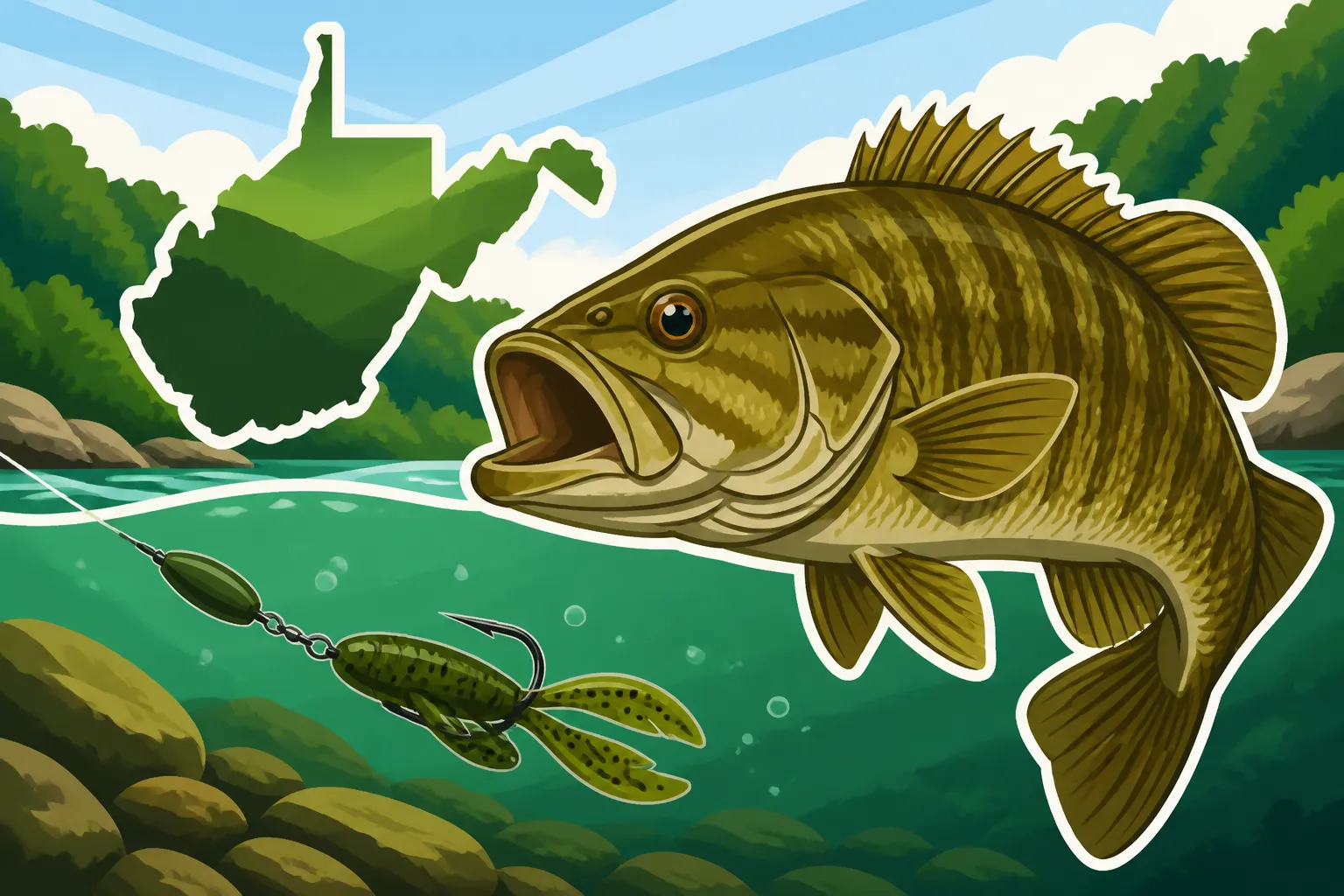
To set it up, you tie a hook directly to your main line (or a leader), leaving a tag end that you then attach a weight to. This means your bait dangles above the weight, giving it a natural, lifelike presentation even when completely still. You can simply shake your rod tip to impart subtle action to the bait, making it quiver and dance in place, mimicking a dying baitfish or a crayfish trying to escape. This minimal movement is often exactly what a post-spawn smallmouth needs to commit. For baits, think small worms, creature baits, or minnow imitations. Clear water calls for a nearly invisible line, so consider using a Best fluorocarbon leader for clear water bass to reduce visibility. On a 7-foot medium-light spinning rod, paired with a small spinning reel, you can easily work this rig with precision, allowing for long casts and incredible feel for those light bites. Many anglers swear by this setup, especially when fishing deeper ledges or tight to submerged rock piles where smallmouth might be hunkering down.
Ned Rig: A Small Meal for Picky Eaters
If the drop shot is subtle, the Ned Rig is its even more understated cousin. This technique has taken the bass fishing world by storm, and for good reason: it’s incredibly effective on reluctant fish, including post-spawn smallmouth. The beauty of the Ned Rig lies in its simplicity and its ability to offer a small, easy meal.
The rig consists of a small, mushroom-shaped jig head (typically 1/16 to 1/8 ounce) paired with a short, buoyant soft plastic worm or creature bait. The buoyancy of the plastic, combined with the jig head, allows the bait to stand straight up on the bottom, mimicking a foraging critter or an injured baitfish. The retrieve is key here: it’s all about doing nothing. Cast it out, let it sink to the bottom, and then simply drag it slowly, occasionally pausing. The bait’s natural action, standing upright and quivering with minimal movement, often triggers strikes from bass that are otherwise uninterested. It’s perfect for exploring those gravel flats, rocky transitions, or even deeper pools in our West Virginia rivers. Many anglers grab a variety of small, soft plastics for their Ned rigs – anything from short stick baits to tiny creature baits – and find that even on the toughest days, this little presentation can tempt a bite. If you're looking for a setup to get started with this, a sensitive medium-light spinning rod is ideal for detecting those incredibly soft takes.
Moving Baits for the More Active Post-Spawners
While finesse is often the key, not all post-spawn smallmouth are completely shut down. Some fish recover quicker, or perhaps a warm front moves in, sparking a bit more activity. For these slightly more aggressive fish, or when you need to cover more water, incorporating subtle moving baits can be incredibly productive.
Small Crankbaits and Jerkbaits: Mimicking Forage
When post-spawn smallmouth start to feel a bit better and are willing to chase a meal, but aren't quite ready for a full-on power fishing attack, small crankbaits and jerkbaits fit the bill perfectly. These baits excel at imitating the baitfish that smallmouth love to feed on, offering an easy target for fish that are regaining their energy.
For crankbaits, look for models that dive to the depth where you expect the fish to be holding, typically 4 to 8 feet in the post-spawn period in many West Virginia lakes and rivers. Natural baitfish patterns, like shad, minnow, or crawfish colors, are often the most effective. Instead of a fast, erratic retrieve, try a slow, steady retrieve with occasional pauses, or a stop-and-go action that mimics a struggling baitfish. For jerkbaits, the key is the "twitch, twitch, pause" retrieve. The longer the pause, especially in cooler post-spawn water, the better. This erratic action combined with long pauses can entice reluctant smallmouth to strike out of instinct. Both types of lures allow you to cover water efficiently and target those active pockets of fish without overwhelming them with an overly aggressive presentation. If you're fishing in slightly stained water that's common after spring rains, experimenting with a Best crankbait for stained river water can make a huge difference in visibility and drawing strikes. You can find a fantastic selection of these smaller, subtler crankbaits and jerkbaits on platforms like Amazon, offering a wide array of colors and diving depths to match any condition.
Swimbaiting for the Opportunistic Eater
Swim baits aren't just for big bass on giant reservoirs. In the post-spawn period, smaller, more subtle swimbaits can be incredibly effective for West Virginia smallmouth, particularly when they’re suspending off points or cruising along deeper current seams. These lures offer a realistic profile and natural swimming action that can tempt even a watchful smallmouth.
The key here is choosing the right size and presentation. We’re talking about 2.5-inch to 4-inch soft plastic swimbaits, not the massive ones used for trophy largemouth. Rig them on a lightweight jig head (1/8 to 1/4 ounce) for an unweighted, natural fall, or with a weedless hook for navigating submerged cover. A slow, steady "slow roll" retrieve is often the most productive. The goal is to mimic a single, vulnerable baitfish swimming lazily through the water. This presents an easy target for a smallmouth that might not want to expend too much energy chasing a faster-moving lure. Experiment with different colors—natural baitfish patterns like pearl, shad, or subtle greens and browns are always a good starting point. You can also vary your retrieve speed, adding an occasional twitch or pause, to see what triggers a reaction bite. This technique is particularly potent when fish are relating to slightly deeper structure or have moved off the immediate spawning areas into nearby open water.
River-Specific Considerations for West Virginia
West Virginia's rivers are iconic for their smallmouth bass fishing, from the mighty New River to the scenic South Branch Potomac. While the general post-spawn techniques hold true, understanding how these fish behave in a river environment is crucial for consistent success.
Reading the Water for Post-Spawn Smallmouth in West Virginia Rivers
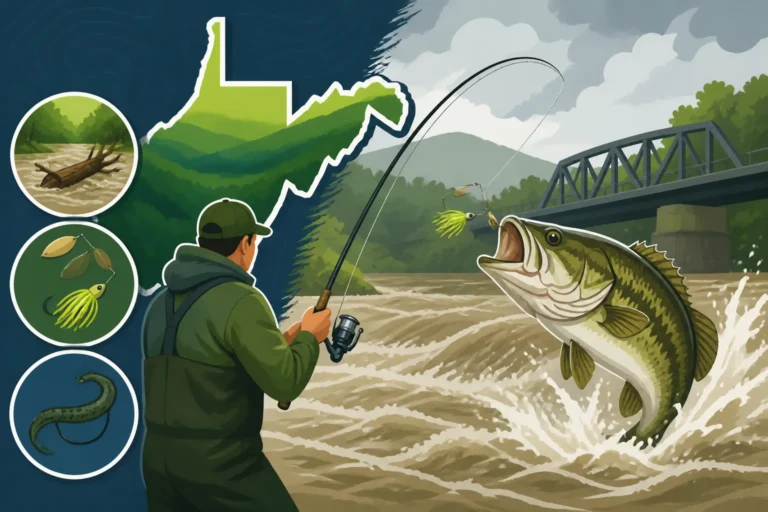
Fishing for smallmouth in rivers like the New River and the Greenbrier River after the spawn is a nuanced game that requires a keen eye for subtle features. Smallmouth in rivers are inherently current-oriented, but during post-spawn, they often seek out spots where they can rest and recover without fighting strong flows. This means focusing your efforts on current seams, which are the boundaries where fast water meets slower water. Bass will sit in the slower water, waiting to ambush anything that drifts past in the faster current. Look for these seams behind large boulders, submerged log jams, or bedrock ledges.
Deeper pools adjacent to spawning flats are also prime targets. After finishing their duties in the shallower, gravelly areas, smallmouth will often drop into the nearest deep water to recuperate. These pools provide cooler temperatures and a sense of security. Don't overlook shaded banks and undercut banks, especially on sunny days. The shade offers a respite from direct sunlight, and undercut banks provide overhead cover and often create a small pocket of slower water. Understanding Smallmouth Bass Habits on the New River can give you an edge, as specific river features often hold fish year after year. The goal is to identify areas where fish can comfortably recover while still having easy access to passing food sources.
Timing and Conditions for Success
Just like any fishing, timing and conditions play a huge role in post-spawn smallmouth success in West Virginia. The fish are often more light-sensitive during this period and prefer more subdued conditions. Early morning and late evening hours, when the sun is lower and light penetration is reduced, are often the most productive. These low-light periods can encourage fish to move out of their deeper cover and feed more actively. Overcast days are also fantastic, as the diffused light keeps the smallmouth from hunkering down too tightly.
Water temperature and clarity are also critical factors. Smallmouth prefer specific water temperatures, so understanding What water temperature smallmouth bass prefer can help you pinpoint when and where they'll be most active. After a heavy spring rain, rivers might be stained or muddy, requiring you to adjust your lure colors (think brighter or more contrasting) and slow down your retrieve even further. On the flip side, extremely clear, low-water conditions might necessitate even more stealth and finesse, as the fish will be warier. Pay attention to sudden weather changes; a cold front, for instance, can often shut down an already finicky bite, making it even more important to employ those subtle, slow presentations. Knowing Best time to fish before a cold front can give you a heads up, allowing you to hit the water when the fish are more likely to be feeding actively before the weather shifts.
Post-Spawn Smallmouth Techniques Comparison
To help you decide which technique might be best for your specific conditions, here's a quick comparison of the approaches we've discussed:
| Technique | Best for Conditions | Ideal Retrieve | Target Depth | Pros | Cons |
|---|---|---|---|---|---|
| Drop Shot | Finicky, suspended fish; clear, deep water; current | Subtle shakes, minimal movement | Mid-column to bottom | Highly natural, keeps bait in strike zone, great for light bites | Can be slow to cover water, requires sensitive gear |
| Ned Rig | Extremely finicky fish; shallow to mid-depth; rocky | Slow drag, "do nothing" pauses | Bottom | Simple, incredibly effective on tough bites, small profile | Light tackle can limit casting distance, not for covering large areas |
| Small Crankbaits | Slightly active fish; moderate cover; stained water | Slow roll, stop-and-go; erratic short bursts | 4-10 feet | Covers water, can draw reaction strikes, imitates baitfish | Less effective on truly shut-down fish, depth specific |
| Jerkbaits | Active to moderately active fish; clear to stained | Twitch-twitch-pause; longer pauses in cool water | 2-8 feet | Erratic action triggers strikes, allows for long pauses | Requires active rod work, can be snagged in heavy cover |
| Small Swimbaits | Moderately active fish; deeper edges, current seams | Slow roll; steady retrieve with occasional twitch | Mid-column to bottom | Natural profile, appeals to opportunistic feeders, covers water slowly | Less action-oriented, may be ignored by completely lethargic fish |
This table should give you a good starting point for choosing your next post-spawn smallmouth strategy. Remember to always adjust based on how the fish are reacting! You'll often find a combination of these tactics, perhaps starting with a moving bait to locate active fish and then slowing down with finesse options once you pinpoint them, will lead to the most productive days on the water.
Disclaimer
This article is for general informational purposes only and does not constitute professional advice. Laws, prices and regulations vary by location and change over time. Consult a qualified professional for guidance on your specific situation.