How to Catch Smallmouth Bass in West Virginia Rivers
There's nothing quite like the thrill of a smallmouth bass in a fast-flowing river, a true fighter that will test your skill and your gear. But let's be honest, trying to figure out the best ways to consistently hook into these bronze beauties in West Virginia's diverse waterways can feel like a guessing game. From reading the water to choosing the right lure for the season, it’s a lot to learn. This comprehensive guide will break down everything you need to know to become a more effective smallmouth angler in our mountain state's incredible rivers.
Why West Virginia Rivers are Smallmouth Heaven
West Virginia is truly blessed with an abundance of incredible waterways, and many of them are prime territory for smallmouth bass. For those of us who live and breathe river fishing, it's not just a pastime; it's a way of life. The challenge, the scenery, and the sheer fight of a smallmouth are unparalleled. Yet, it can be daunting to know where to start or how to improve your success, especially when you hear tales of others landing monster fish from spots you thought were barren.
The Unique Ecology of Our Waterways
Our West Virginia rivers aren't just pretty backdrops; they're dynamic ecosystems that smallmouth bass absolutely thrive in. Unlike their largemouth cousins who prefer murky, still water with lots of weeds, smallmouth bass are perfectly adapted to the rocky, current-swept environments of our mountain rivers. These fish crave clear, cool, oxygen-rich water, and a diverse riverbed full of boulders, ledges, and gravel provides them with everything they need – ambush points, spawning grounds, and a steady supply of their favorite prey. The constant flow of water brings food right to them, making these rivers incredibly productive fisheries. This unique ecology means that while the fishing can be challenging, the rewards are often spectacular, drawing anglers from all over who want to experience the thrill of a powerful river smallmouth.
Prime Smallmouth Rivers in West Virginia
When it comes to smallmouth bass, West Virginia boasts some truly legendary waters that every angler should explore. Each river offers its own unique character and challenges, but all hold the potential for incredible catches.
- The New River: Often considered the crown jewel of West Virginia smallmouth fishing, the New River is ancient and powerful. Its rocky bottom, deep pools, fast rapids, and abundant ledges create perfect smallmouth habitat. Anglers on the New River often target the areas around New River Gorge National Park, where the scenery is as breathtaking as the fishing. This river is famous for producing not just numbers, but also genuinely large, trophy-sized smallmouth that fight like demons in the strong current. You can learn more about specific tactics in our guide to New River Smallmouth Bass Fishing.
- South Branch Potomac River: Flowing through the eastern panhandle, the South Branch is another phenomenal smallmouth fishery, known for its clearer waters and picturesque setting. It offers a mix of wading opportunities and float trips, with plenty of riffles, runs, and deep bends where smallmouth lurk. This river provides a different experience than the New River, often favoring a more finesse approach or smaller presentations, but it can be incredibly rewarding. Our guide on South Branch Potomac Smallmouth Fishing offers more specific details.
- Greenbrier River: A beautiful, free-flowing river with a gentler current in many sections, the Greenbrier is another excellent choice. It's often more accessible for wading and kayaking, with a good mix of shallow runs and deeper pockets. While perhaps not as famous for trophy fish as the New River, the Greenbrier consistently produces good numbers of healthy smallmouth, making it a fantastic destination for a fun day on the water. Check out our comprehensive Greenbrier River Fishing Guide for more insights.
- Cheat River: In the northern part of the state, the Cheat River offers incredible, wild smallmouth fishing, especially in its upper reaches and through the Cheat Canyon. It's a more rugged experience, often requiring a bit more effort to access, but the pristine nature of the river and the feisty smallmouth make it well worth the adventure.
- Elk River: While perhaps best known for its trout in certain sections, the Elk River also boasts a healthy smallmouth population, particularly in its middle and lower stretches where the water warms and the habitat shifts. Anglers looking for a mixed bag can find both species here, depending on the section they target.
These are just a few of the fantastic smallmouth waters West Virginia has to offer. Many other rivers and streams hold excellent populations, waiting for you to discover your own favorite honey hole. You can find a broader overview of opportunities in our article on the Best Fishing Rivers in West Virginia.
Understanding Smallmouth Bass Behavior and Habitat
To consistently catch smallmouth bass in West Virginia's rivers, you need to think like a smallmouth. Understanding their seasonal movements, preferred habitats, and what they eat will give you a significant advantage, turning those frustrating slow days into productive fishing excursions.
Seasonal Movements and Spawning
Smallmouth bass are incredibly sensitive to water temperature, and their behavior changes dramatically throughout the year. Knowing these patterns is key to being in the right place at the right time.
- Pre-Spawn (Early Spring, 50-60°F): As river temperatures begin to climb in early spring, usually March and April, smallmouth move out of their deeper wintering holes and start staging for the spawn. They'll gravitate towards shallower flats, gravel bars, and slower current areas adjacent to deeper water, actively feeding to build energy for the strenuous spawning process. This can be one of the best times to catch big smallmouth, as they're aggressive and hungry. They're often found in slightly slower water, soaking up the sun's warmth.
- Spawn (Late Spring, 60-65°F): The magic temperature for smallmouth to spawn in West Virginia rivers typically falls between 60 and 65 degrees Fahrenheit, usually occurring from late April through May. During this time, male smallmouth will move into very shallow water, often less than 5 feet deep, and fan out circular nests on gravel or sand bottoms. Females will visit to lay eggs, and then the males guard the nests ferociously. While it's tempting to target these guarding fish, many anglers advocate for leaving them alone during the spawn to ensure a healthy next generation. Disturbing them can lead to nest abandonment and predation on eggs.
- Post-Spawn (Late Spring/Early Summer, 65-70°F): After the spawn, both male and female smallmouth can be lethargic and slow to recover, making them a bit tougher to catch. Males continue to guard fry for a period, and once they disperse, both sexes start to recuperate. They'll slowly move back to traditional feeding grounds, though often still in somewhat shallower, less turbulent water as they regain strength. This period can last a couple of weeks, and patience is key.
- Summer (Late Spring/Summer, 70°F+): Once the water really warms up, smallmouth shift into their summer patterns. They become incredibly active and aggressive, feeding heavily. They’ll often seek out oxygenated water and ambush points in and around faster currents, riffles, and deeper rock structures. Early mornings and late evenings become prime fishing times, as the fish move into shallower feeding lanes when the sun isn't as intense. During the heat of the day, look for them in deeper pools, under shady overhangs, or tucked behind large boulders where the current provides cooler, oxygenated water. Our guide on West Virginia Fishing Seasons by Month provides more detail on yearly patterns.
- Fall (Late Summer/Fall, 60-50°F): As water temperatures drop in the fall, smallmouth enter a "feeding frenzy" phase, actively bulking up for winter. This is another fantastic time to catch large, aggressive fish. They'll be found in many of the same places as summer, but often for longer periods throughout the day as surface temperatures cool. They'll push baitfish into tighter areas, making them easier to target.
- Winter (Late Fall/Winter, Below 50°F): Once water temperatures dip below 50 degrees, smallmouth become much less active. They'll retreat to deep, slow-moving pools, often congregating in large numbers in specific "wintering holes." While challenging, they can still be caught by anglers employing slow, finesse tactics. Patience and precise presentations are critical.
Understanding these broad patterns and checking real-time river temperatures are crucial steps to planning a successful smallmouth trip. You can also dive deeper into their specific behaviors with our article on Smallmouth Bass Habits on the New River.
Preferred Structure and Cover
Smallmouth bass are structure-oriented fish, meaning they relate strongly to objects and features in the riverbed. Knowing what to look for will tell you exactly where to cast your lure.
- Rock Piles and Boulders: These are smallmouth magnets. The irregular surfaces create current breaks, eddies, and ambush points where bass can hide from the main flow, conserving energy, and dart out to snatch passing prey. Look for large boulders, submerged rock gardens, and rocky ledges. Smallmouth will often sit on the downstream side of a rock, waiting for food to drift by.
- Current Seams and Eddies: Where fast current meets slow current, you'll find a "seam." Smallmouth love to patrol these lines, enjoying the slightly slower water while having immediate access to food being swept down the faster current. Eddies, which are pockets of reverse or swirling current, are also prime spots, offering a calm sanctuary with a conveyor belt of food. Look for them behind large obstacles or at river bends.
- Riffles and Runs: These are the shallower, faster-moving sections of the river, characterized by broken water. While smallmouth might not hold directly in the fastest part, they'll often be found in the deeper pockets, current breaks, and rocky sections within or immediately adjacent to riffles. The churning water provides high oxygen levels and dislodges food.
- Deep Pools: Every river has its deep pools, and these are critical, especially during hot summer days or cold winter months. Smallmouth will descend into these cooler, more stable environments to escape temperature extremes. Don't overlook the edges of these pools, where they transition to shallower, faster water, as bass will move up to feed.
- Woody Debris (Laydowns, Logjams): While not as common in the rock-heavy mountain rivers as in some other waterways, any submerged logs, fallen trees, or brush piles offer excellent cover and ambush points. Exercise caution around these, as snags are frequent, but the reward can be big fish.
- Undercut Banks: These natural overhangs provide shade and cover, allowing smallmouth to hide and ambush prey from above. Look for them along the outside bends of rivers where the current has eroded the bank.
Mastering the art of "reading the river" and identifying these key structures will dramatically increase your hook-up rates. It's all about understanding where a smallmouth would feel safe, comfortable, and have easy access to food.
What Smallmouth Eat
Smallmouth bass are opportunistic predators with a diverse diet. Understanding their primary food sources will help you select the right lures and presentations.
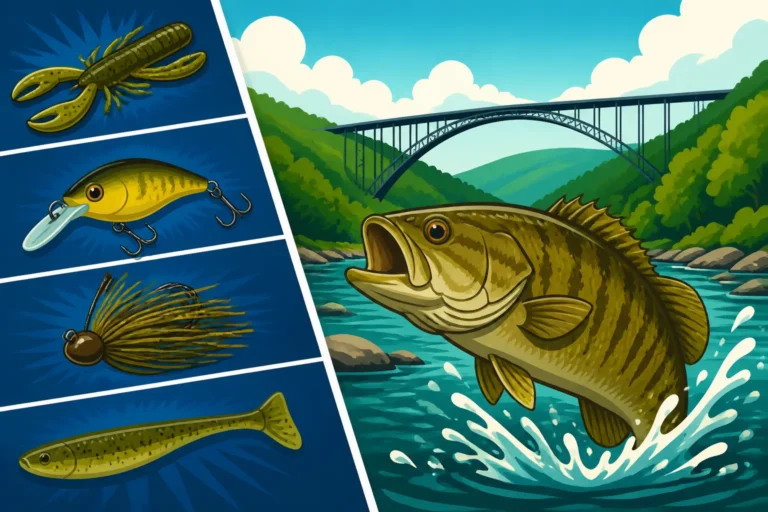
- Crayfish (Crawfish): Hands down, crayfish are often the number one food source for river smallmouth. These crustaceans are abundant in West Virginia's rocky rivers, providing a high-protein meal. Smallmouth will root them out from under rocks or ambush them as they scuttle across the bottom. If you want to mimic a crayfish, think brown, green, and black lures with a natural, bottom-bouncing action.
- Minnows and Baitfish: Shiners, chubs, darters, and other small forage fish are a staple in a smallmouth's diet. These fish are constantly present in the current, making them easy targets. Lures that imitate baitfish, like swimbaits, jerkbaits, and spinnerbaits, are incredibly effective.
- Insects: Aquatic insects, particularly stoneflies, caddisflies, and mayflies, form a significant part of the smallmouth diet, especially for smaller fish, but even larger bass will slurp them off the surface. Hellgrammites (the larval form of the dobsonfly) are a particularly juicy treat and are highly sought after. Fly anglers often have great success with streamers and nymphs mimicking these insects.
- Frogs and Toads: While less frequent, frogs and toads that fall into the water or swim across the surface can become a meal, especially in shallower, slower sections. Topwater lures that imitate these creatures can trigger explosive strikes.
- Worms and Larvae: Terrestrial worms washed into the river after rain, or various aquatic larvae, also get eaten. Natural baits like nightcrawlers can be effective, especially on slower days.
The key takeaway here is to "match the hatch" or, in this case, "match the forage." If you know crayfish are abundant, throw a crayfish imitation. If you see schools of baitfish, use a baitfish-mimicking lure. Varying your presentation and understanding what's naturally available in the river will make you a much more successful smallmouth angler. Our guide to Best Baits for Smallmouth Bass on the New River offers more specific lure suggestions.
Essential Gear for River Smallmouth Fishing
Having the right gear isn't about owning the most expensive items; it's about having reliable, appropriate tools for the job. River smallmouth fishing demands a specific setup to handle the powerful fish and the often-rugged environment. Don't let inadequate gear turn a promising day into a frustrating one.
Rods, Reels, and Line Choices
Your rod, reel, and line are the direct connection to the fish, so choosing wisely is crucial.
- Rods: For most West Virginia river smallmouth fishing, a medium-light to medium power spinning rod, typically 6'6" to 7'6" in length, is a versatile choice.
- Length: A longer rod (7' to 7'6") provides better casting distance, especially when wading or needing to reach across currents, and also offers better line control for mending. Shorter rods (6'6" to 7') are great for tight quarters, kayak fishing, or making accurate casts under overhanging branches.
- Power: Medium-light action is excellent for throwing lighter jigs, smaller topwaters, and finesse baits, providing great feel. Medium action offers more backbone for bigger crankbaits, spinnerbaits, and fighting larger fish in strong currents. The ideal rod will have a fast or extra-fast action, meaning the tip bends easily but the backbone is stiff, allowing for powerful hooksets and accurate casting. Brands like St. Croix and Fenwick offer excellent river-specific rods. If you're looking for recommendations, our guide on Best Spinning Rods for Smallmouth Bass is a great place to start.
- Reels: A quality spinning reel in the 2000-3000 series size is perfect. You want something smooth, with a reliable drag system that can handle the sudden surges of a river smallmouth. Look for reels with a good retrieve ratio (around 6.0:1 is a good all-around choice) to quickly pick up slack and keep pace with a fighting fish. Durability is key, as these reels will likely get splashed and bumped around. Shimano and Daiwa are often go-to brands for their consistent quality.
- Line: Your line choice depends on your preference and the conditions.
- Braided Line (Main Line): Many anglers prefer 10-20 lb braided line as their main line. It offers incredible sensitivity, zero stretch for powerful hooksets, and excellent casting distance. Its thin diameter also helps cut through current better than mono. The downside is its visibility and lack of abrasion resistance against sharp rocks.
- Fluorocarbon Leader: To combat the visibility issue of braid and add abrasion resistance, it's highly recommended to tie on a 6-10 lb fluorocarbon leader. Fluorocarbon is nearly invisible underwater and holds up much better against rocks and submerged structure. The length of your leader can vary, but 3-5 feet is a good starting point.
- Monofilament: Some anglers still prefer monofilament for its stretch (which can be forgiving) and knot-tying ease. A 6-10 lb test monofilament can work well, especially if you're fishing in less abrasive environments or with topwater lures where the slight stretch can prevent tearing hooks out of a fish's mouth.
Experiment with combinations to find what works best for you and your chosen river.
Lures and Baits for Different Conditions
The sheer variety of lures available can be overwhelming, but a few key categories will cover most smallmouth fishing scenarios in West Virginia rivers. Having a well-stocked tackle box from reputable retailers like those found on Amazon can make a huge difference.
- Soft Plastics: These are arguably the most versatile and effective lures for river smallmouth.
- Tubes: Tube jigs, often 3-4 inches long, are deadly. Rigged on an internal jig head, they mimic crayfish incredibly well as they dart and fall. Colors like green pumpkin, watermelon, and brown are staples.
- Grubs: Single-tail or double-tail grubs on a small jig head are fantastic for swimming through current or bouncing on the bottom.
- Creature Baits/Crawfish Imitations: Soft plastic baits specifically designed to look like crayfish, often rigged Texas-style or on a jig head, are irresistible.
- Senkos/Stick Baits: While often associated with largemouth, smaller stick baits can be effective wacky-rigged or Texas-rigged in slower pools or eddies.
- Hard Baits:
- Crankbaits: Small, shallow-diving crankbaits (1.5 to 3 inches) in crayfish patterns, natural baitfish colors (silver/black, gold/black), or even chartreuse can be incredibly effective, especially when bumped off rocks.
- Jerkbaits/Minnow Baits: Suspending or floating jerkbaits can be deadly for mimicking wounded baitfish. Work them with a "twitch, twitch, pause" retrieve, letting them suspend in the current.
- Topwater Lures: Poppers, walk-the-dog baits (like Heddon Super Spook Jr.), and prop baits can provide some of the most exciting bites when smallmouth are looking up, especially in low light conditions or over shallow riffles.
- Spinnerbaits and Chatterbaits: These lures create a lot of flash and vibration, making them excellent search baits in stained water or when fish are aggressive. Small, compact versions (1/4 to 3/8 oz) work best in rivers.
- Jigs:
- Hair Jigs: Small marabou or bucktail jigs (1/8 to 1/4 oz) are incredibly effective, especially in cold water. They offer a subtle, lifelike action.
- Football Jigs/Finesse Jigs: Paired with a small soft plastic trailer, these can be worked along the bottom, mimicking crayfish or bottom-feeding baitfish.
- Live Bait: While artificials are often preferred, live bait can be deadly.
- Crayfish: If you can catch them, a live crayfish hooked through the tail is perhaps the best smallmouth bait you can use.
- Minnows: Live shiners or chubs fished on a small hook with a split shot can be very effective, especially in deeper pools.
- Worms: A simple nightcrawler or redworm can always catch a smallmouth, particularly smaller ones.
Don't be afraid to experiment, but having a core selection of these proven baits in various colors will prepare you for almost any situation.
Wading and Safety Equipment
River fishing, especially wading, comes with inherent risks. Being prepared with the right safety gear is non-negotiable.
- Waders: Chest waders (neoprene for cold water, breathable for warm water) are essential for getting into prime river positions. Make sure they fit well and are comfortable for movement. Quality waders can be found from brands like Orvis, Simms, and Frogg Toggs.
- Wading Boots: Crucial for traction on slippery river rocks. Choose boots with felt soles for superior grip on slimy rocks, or rubber soles with studs for a balance of grip and off-water durability. Your boots should be comfortable and provide good ankle support.
- Wading Belt: Always wear a wading belt! In case of a fall, it helps prevent water from rapidly filling your waders, which can be extremely dangerous.
- Wading Staff: This is your third leg in the river. A sturdy wading staff provides stability, helps you gauge depth, and tests for slippery spots or holes before you step. Many are collapsible for easy carrying.
- PFD (Personal Flotation Device): If you're fishing from a kayak or canoe, or if you're wading in deep, swift, or unknown waters, a PFD is a must. Modern fishing PFDs are comfortable and designed with pockets for tackle. This is particularly important on rivers like the New, where currents can be strong and unpredictable, as highlighted in our guide to Best Kayaks for West Virginia Fishing.
- Polarized Sunglasses: Not just for comfort, polarized sunglasses cut glare off the water, allowing you to see submerged rocks, structure, and even fish. This is a game-changer for reading the river.
- Sun Protection: Sunscreen, a wide-brimmed hat, and long-sleeved shirts are crucial for protecting yourself from the sun, especially during long days on open water.
- First-Aid Kit: A small, waterproof first-aid kit with essentials for minor cuts, scrapes, and insect bites is always a good idea.
- Navigation/Communication: A fully charged cell phone (in a waterproof case) or a small GPS device can be vital for navigation and emergencies, especially if you're exploring new areas. Tell someone where you're going and when you expect to return.
- Pliers/Forceps: Essential for safely removing hooks from fish (and occasionally yourself) and cutting line. Look for a pair that can be easily attached to your wading belt. You can find many of these essential items readily available on Amazon.
Never underestimate the power of river currents, even in seemingly calm water. Safety should always be your top priority.
Top Techniques for West Virginia River Smallmouth
Smallmouth bass fishing in rivers isn't just about casting; it's about technique, presentation, and understanding how the current affects your lure. Mastering these methods will make you a more versatile and successful angler.
Casting and Retrieving Lures Effectively
The way you cast and retrieve your lure is often more important than the lure itself. River smallmouth can be finicky, and a natural presentation is key.
- Upstream Cast and Drift: This is a classic and highly effective river technique. Cast your lure (especially a jig or soft plastic) slightly upstream and across the current. Allow the lure to drift naturally downstream with the current, retrieving just enough slack to maintain contact. The goal is to imitate a natural food item tumbling downstream. As it passes prime holding lies (behind rocks, current seams), it should be at the right depth and look completely natural. This is particularly deadly for tubes, grubs, and small swimbaits.
- Downstream Cast and Retrieve (Swing): Casting directly downstream or slightly down-and-across can also be effective, especially for spinnerbaits, crankbaits, or even larger jigs. Let the current "swing" your lure across the river, bringing it into contact with structure. Retrieve slowly enough to maintain depth and feel for strikes, which often occur as the lure comes to the end of its swing or bumps into something. This presentation can be particularly aggressive and effective when fish are active.
- Fan Casting: When you approach a new stretch of water, don't just cast in one direction. Fan cast, making casts to your left, straight ahead, and to your right, covering the entire water column systematically. This helps you pinpoint exactly where the fish are holding on that particular day. Pay close attention to where you get bites, as this will reveal patterns.
- Reading the Retrieve: The most crucial aspect is to feel what your lure is doing. Is it bouncing off rocks naturally? Is it getting hung up too often? Is it swimming too high in the water column? Adjust your retrieve speed, line angle, and jig head weight until your lure is working effectively at the fish's level. Smallmouth often hit on the pause or as the lure deflects off a rock, so pay attention to any unnatural sensations.
Float Fishing and Drift Fishing Tactics
Floating a river in a kayak, canoe, or drift boat is an incredible way to cover water and access remote smallmouth habitat. It also allows for unique presentations.
- Float Fishing: This involves actively paddling or rowing downstream, making casts to likely holding water as you go. It’s a dynamic way to fish, allowing you to hit multiple spots that might be inaccessible by wading.
- Strategic Drifting: Don't just float aimlessly. Actively steer your craft to position yourself for the best casts to current seams, eddies, rock gardens, and undercut banks. Think of it as a moving platform for precise casting.
- Multiple Anglers: If you have multiple anglers in the boat, coordinate your casts to cover different angles and depths, avoiding tangles while maximizing coverage. One angler might focus on the right bank, another on the left, and a third on the middle current breaks.
- Anchoring/Spot-Locking: For especially productive stretches, consider briefly anchoring or using a trolling motor with a spot-lock feature to thoroughly work an area before moving on. This is where a good Anchor System for River Fishing comes in handy.
- Drift Fishing: This is a more passive technique, often used with live bait or simple artificials. You allow your bait or lure to drift naturally with the current, often under a bobber or with just enough weight to keep it near the bottom.
- Live Bait Drifting: For live minnows or crayfish, a simple hook, split shot, and sometimes a bobber is all you need. Cast upstream and let the current carry the bait naturally through prime smallmouth lies. This can be incredibly effective when fish are less aggressive.
- Power Drifting: With artificials like tubes or grubs, you can "power drift" by adding a heavier jig head and letting the current bounce your lure along the bottom, mimicking a crayfish fleeing or tumbling. Maintain constant contact to feel for subtle bites.
Both float fishing and drift fishing require good boat control and an understanding of river currents.
Kayak Fishing Strategies
Kayak fishing for smallmouth in West Virginia rivers has exploded in popularity, and for good reason. It offers unparalleled access to remote stretches and a stealthy approach.
- Stealth is Key: Kayaks are incredibly quiet, allowing you to approach prime fishing spots without spooking fish. Use this to your advantage by paddling softly and making precise casts.
- Positioning: Mastering kayak control is vital. Learn to use the current to your advantage, holding your position in eddies or against slower currents while you work a seam or rock pile. A foot-pedal drive kayak offers hands-free propulsion, which is a huge advantage for river fishing, allowing you to cast and fish while maintaining control. Our guide on the Best Kayaks for West Virginia Fishing can help you choose the right vessel.
- Targeting Structure: From a kayak, you have an elevated view that helps spot submerged rocks, logs, and current breaks. Position your kayak slightly upstream and cast to these structures, letting your lure drift past them naturally.
- Safety First: Always wear your PFD when kayak fishing. West Virginia rivers can have unpredictable currents and hidden obstacles. Know your limits and scout rapids before running them. Carry a dry bag for electronics and essentials, and consider a kayak anchor trolley system to precisely position yourself.
- Gear Organization: Space is limited in a kayak, so thoughtful gear organization is crucial. Use a tackle crate or bag designed for kayaks to keep your lures, tools, and water easily accessible and secure.
Kayak fishing offers a truly immersive and rewarding smallmouth experience, allowing you to connect with the river in a unique way.
Mastering Seasonal Approaches
As we discussed earlier, smallmouth bass behavior changes with the seasons. Adapting your approach to these shifts is paramount to consistent success on West Virginia rivers. Fishing the same way year-round will lead to frustration; learning to adjust will lead to more fish.
Spring: Pre-Spawn and Spawn Tactics
Spring is a time of awakening, and for smallmouth, it means moving and feeding aggressively before the rigors of spawning.
- Pre-Spawn (Early Spring): This is often considered one of the best times to catch large smallmouth.
- Location: Look for fish moving into shallower, slower areas adjacent to deeper wintering holes. Gravel bars, protected coves, and the insides of bends where the sun can warm the water are prime. They'll also stage at the mouths of feeder creeks.
- Lures: Crayfish imitations are king. Slowly dragging or hopping tubes (green pumpkin, brown, black) and creature baits on 1/4 to 3/8 oz jig heads are deadly. Small crankbaits that deflect off rocks can also trigger reaction strikes. Don't be afraid to try suspending jerkbaits with long pauses.
- Presentation: Slow and deliberate is usually the name of the game. Let your baits sit for a few seconds on the bottom. The fish are still somewhat lethargic from winter but are actively looking for a substantial meal.
- Spawn (Late Spring): As water temperatures reach the 60-65°F range, smallmouth move to build nests.
- Location: Males will be on shallow gravel or sand flats, typically 2-5 feet deep, often in areas with slight current to keep the nest clean. They are visible if the water is clear.
- Tactics: While tempting, consider leaving spawning bass alone. If you must target them, a quick presentation with a tube or small jig cast well beyond the nest and worked quickly through it might draw a strike. However, ethical angling suggests moving on to pre- or post-spawn fish. If you do catch one, release it quickly and gently.
- Post-Spawn (Late Spring/Early Summer): Fish are recovering and often finicky.
- Location: Smallmouth will be scattered, often still in shallower areas or retreating to nearby cover. They may be less aggressive but are still feeding to regain energy.
- Lures: Finesse presentations shine here. Small grubs, Ned rigs, smaller tubes, and even light hair jigs can work. Focus on subtle presentations and natural colors.
- Presentation: A slow, patient approach is required. Don't expect aggressive strikes; often it will feel like a slight "tick" or added weight on your line.
Summer: Warm Water Challenges and Opportunities
Summer fishing for smallmouth in West Virginia rivers offers fast action, but you need to know where to find them when the water gets hot.
- Location: Smallmouth become highly active and oxygen-hungry. Look for them in areas with strong current: riffles, rapids, current seams, and the churning water below ledges. Deeper pools with cooler, oxygenated water are also key during the hottest parts of the day. Shade is a smallmouth's friend in summer.
- Lures: This is prime time for aggressive lures.
- Topwater: Early morning, late evening, or overcast days are perfect for poppers, walk-the-dog baits, and buzzbaits over shallower runs.
- Crankbaits: Medium-diving crankbaits in baitfish or crayfish patterns, retrieved quickly and bounced off rocks, are incredibly effective.
- Spinnerbaits/Chatterbaits: Excellent for covering water quickly and drawing reaction strikes in current.
- Tubes/Grubs/Jigs: Still highly effective, especially worked quickly through current breaks or drifted through deeper runs.
- Presentation: Generally faster retrieves work well. The fish are aggressive and willing to chase. Focus on hitting multiple current breaks and eddies, as fish will often be stacked up in these areas.
Fall: Feeding Frenzies and Cooler Water
Fall can offer some of the most spectacular smallmouth fishing of the year, as fish gorge themselves for winter.
- Location: Smallmouth will be found in many of the same places as summer, but often deeper and for longer periods throughout the day. They'll chase baitfish schools into shallower flats and channel edges. Current breaks and deeper pools remain critical.
- Lures: A mix of aggressive and slow presentations works.
- Crankbaits/Jerkbaits: These are deadly in the fall, particularly as the water cools. Use larger profile jerkbaits and deep-diving crankbaits to probe deeper runs.
- Spinnerbaits/Swim Jigs: Great for covering water.
- Tubes/Grubs/Jigs: Excellent for slow-rolling or hopping along the bottom in deeper water.
- Topwater: Can still be effective on warmer, overcast fall days, especially early in the season.
- Presentation: Start aggressive, but be prepared to slow down as the water gets colder. Focus on areas where baitfish are congregating. The fish are looking for substantial meals, so slightly larger lures can be effective.
Winter: The Art of Cold-Water Bass
Winter smallmouth fishing in West Virginia rivers is a challenge, but it can yield some truly massive fish if you're patient and precise.
- Location: Smallmouth will typically be congregated in large numbers in very deep, slow-moving pools, often in the deepest part of the channel or near a spring. They seek thermal refuge and conserve energy.
- Lures: Finesse and slow are the keywords.
- Hair Jigs: Small (1/8 to 1/4 oz) marabou or bucktail jigs in black, brown, or olive are incredibly effective. Their subtle breathing action is irresistible to lethargic fish.
- Ned Rigs: Small soft plastic "mushroom" jigs on a light jig head can be deadly when slowly dragged or crawled.
- Tubes: Slowly dragged or hopped tubes on light jig heads.
- Blade Baits: Small metal blade baits (like a Silver Buddy) can be jigged vertically in deep holes to trigger reaction strikes.
- Presentation: The slowest retrieve you can manage. Think barely moving your bait. Fish are often right on the bottom. Bites will be extremely subtle – a slight weight, a faint tap, or simply your line going slack. You need sensitive gear and keen attention. It's often a game of casting to a known wintering hole and meticulously working the entire area.
Reading the River: Current, Structure, and Water Conditions
Successfully catching smallmouth bass in West Virginia rivers is as much about understanding the river itself as it is about the fish. The current, submerged structure, and water conditions dictate where fish will be and how they will behave. Learn to "read the river," and you'll find more fish.
Understanding Current Breaks and Eddies
Current is the lifeblood of a river, and smallmouth bass use it to their advantage. They're not going to fight the main current all day; they'll find places where they can rest, conserve energy, and ambush prey that the current delivers.
- Current Breaks: Any obstruction in the river – a large boulder, a log, a bridge pilaster, a subtle change in the bottom contour – creates a "current break." On the downstream side of these obstructions, the water slows down, creating a pocket of calm. This is a prime smallmouth holding spot. Fish will sit in these calm zones, waiting for food to wash past. Your goal is to cast your lure upstream of the current break and let it drift naturally into the slower water where the fish are holding.
- Eddies: Eddies are larger, often swirling pockets of water where the current reverses or slows significantly. They form behind large islands, at sharp river bends, or downstream of major obstructions. Eddies are fantastic ambush points, acting like a revolving door for food. Smallmouth will often patrol the "seams" of an eddy, where the swirling water meets the main current, picking off anything that gets caught in the transition. These are also excellent spots to throw topwater lures, as the calmer water makes for a more enticing presentation. Remember that a change in current, however subtle, can concentrate fish.
Identifying Key Structures like Rock Piles and Ledges
River smallmouth are intrinsically linked to rocky environments. These structures provide protection, ambush points, and vital habitat.
- Rock Piles: These are literal piles of rocks on the riverbed, ranging from basketball-sized boulders to entire fields of rubble. Smallmouth love to hide in and around them, darting out to strike. Target the upstream face where the current hits, the slack water pockets behind the rocks, and the deeper edges of the entire pile. A jig-and-tube combination bounced through a rock pile is a classic and deadly presentation.
- Ledges: A ledge is an abrupt drop-off in the riverbed, often forming a distinct shelf. These can be incredibly productive, as they offer immediate depth changes and create current breaks along their length. Smallmouth will often sit on the top edge of a ledge, just out of the main current, or down in the deeper water below it. Crankbaits that "crash" into the ledge, or jigs bounced along its face, can be incredibly effective. Sometimes, a subtle ledge can be hard to spot from the surface, but learning to read slight changes in current or water color can help you identify them.
- Gravel Bars and Flats: While not as dramatic as ledges, extensive gravel bars and flats are crucial for smallmouth, especially during the pre-spawn and spawning periods. These areas warm up faster and provide ideal spawning substrate. In summer, they can be feeding grounds during low light.
- Woody Debris: Although rocky rivers have less wood than muddy rivers, any fallen trees, logjams, or brush piles are worth investigating. These provide excellent cover, especially when the water is higher or stained. Be prepared for snags, but trophy smallmouth often call these places home.
Adapting to Water Clarity and Levels
River conditions are constantly changing, and successful anglers know how to adapt their strategies based on water clarity and levels.
- Water Clarity:
- Clear Water: In clear West Virginia rivers, fish can be spooky. You'll need longer, lighter fluorocarbon leaders, more natural lure colors (green pumpkin, watermelon, brown), and more subtle presentations. Long casts are important to avoid spooking fish. This is when sight fishing can also be productive if you have good polarized sunglasses.
- Stained/Murky Water: When the water is a bit off-color (after a rain, for example), fish rely more on vibration and profile than sight. Don't be afraid to use brighter colors (chartreuse, orange, black/blue) and lures that create a lot of vibration and noise, like spinnerbaits, chatterbaits, and loud crankbaits. Heavier jig heads can also help get your lure down through the murk to where fish are holding.
- Muddy Water: Truly muddy water can shut down smallmouth fishing. Your best bet is to target areas where clearer water might be entering the river (like a spring-fed creek) or focus on very shallow banks where fish might push bait against the shore. Extremely noisy and large-profile lures might draw a reaction, but often, it's best to wait for the water to clear.
- Water Levels:
- High Water/Rising Water: When the river is high and rising, smallmouth often move closer to the banks, seeking calmer water and newly flooded cover. They might also move into the mouths of feeder creeks. This can be a great time for spinnerbaits and jig-and-trailer combinations fished along the edges. Be mindful of dangerous currents.
- Normal/Stable Water: These are generally the best conditions for fishing. Fish are in their typical patterns, holding to the structures and current breaks we've discussed.
- Low Water/Falling Water: During periods of drought or prolonged dry spells, rivers can get very low. Smallmouth will often congregate in the deepest pools, becoming more concentrated but also more easily spooked. Finesse techniques, light line, and stealth are crucial. Long casts are a must, and focus on working the deepest pockets and shade.
Always check local river gauges and weather forecasts before heading out. Being prepared for varying conditions will significantly improve your chances of success.
Catch and Release Best Practices
As passionate anglers, we have a responsibility to protect our resources. Smallmouth bass are incredible fighting fish, and ensuring their survival after the catch is critical for the health of West Virginia's river fisheries. Practicing proper catch and release ensures future generations can enjoy the same thrills we do. Also, it’s always important to be aware of the West Virginia Bag and Possession Limits by Species to stay compliant with regulations.
Handling Smallmouth Properly
The way you handle a smallmouth bass once it's caught can greatly impact its chances of survival.
- Minimize Air Exposure: A fish out of water is like a human holding their breath. Keep the fish in the water as much as possible. If you want a photo, get your camera ready before you lift the fish, snap the picture quickly (just a few seconds), and get it back into the water immediately. Prolonged air exposure can cause severe damage to a fish's gills and internal organs.
- Wet Hands: Always wet your hands before touching a fish. Dry hands can remove the fish's protective slime coat, making it susceptible to disease and infection.
- Support the Fish: When holding a smallmouth, especially a larger one, support its body horizontally with one hand under its belly. Avoid holding it vertically by the jaw for extended periods, as this can dislocate its jaw or damage its spine and internal organs. The "lip lock" grip is fine for short periods, but always support the weight of the fish.
- Use a Net: A large, rubberized landing net is an excellent tool for safely landing and handling smallmouth. The rubber coating protects the fish's slime coat and fins much better than traditional knotted nylon nets. It also allows you to keep the fish submerged while you prepare to remove the hook.
- Revive Gently: If a fish seems lethargic after release, hold it gently in the water, facing upstream in a mild current. Move it gently back and forth to force water over its gills until it regains strength and swims away on its own. Never throw a fish back into the water, as this can stun or injure it.
Barbless Hooks and Release Tools
Small adjustments to your tackle and carrying the right tools can make a huge difference in fish survival rates and make the release process faster and less stressful for the fish.
- Barbless Hooks: Crimping down the barbs on your hooks is one of the best things you can do for catch and release. Barbless hooks penetrate easily and, more importantly, come out cleanly with minimal tissue damage. You'll still land plenty of fish, especially with good line tension, and the release will be quicker and gentler. You can easily do this with a pair of pliers.
- Pliers/Forceps: Always carry a good pair of long-nosed pliers or hemostatic forceps. These tools allow you to quickly and safely remove hooks, even deeply embedded ones, without putting your fingers near sharp hooks or handling the fish excessively. Look for models with a comfortable grip and a sturdy construction. Many high-quality options are available on Amazon.
- Hook Cutters: In some rare cases, a hook might be so deeply swallowed or awkwardly placed that removing it would cause more harm than good. In these situations, it's often better to simply cut the line as close to the hook as possible. The hook will eventually rust away. A sturdy pair of line cutters or small wire snips can be invaluable for this.
By adopting these practices, you're not just protecting individual fish; you're contributing to the long-term health and vitality of West Virginia's fantastic smallmouth bass fisheries.
Overcoming Common Challenges
Even the most experienced anglers face challenges on the river. It's part of the game! But recognizing and understanding how to overcome common frustrations can turn a potentially tough day into a successful one.
Dealing with Snags and Lost Lures
River fishing for smallmouth means fishing around rocks, logs, and other bottom structure, which inevitably leads to snags and lost lures. It's just part of the deal, but there are ways to minimize the heartache.
- Jig Heads and Weedless Rigs: For soft plastics like tubes and grubs, opt for internal jig heads or weedless hook setups (like a Texas rig) that keep the hook point hidden within the plastic. This significantly reduces snags when fishing rocky bottoms or around woody debris.
- Crankbait Deflection: When throwing crankbaits, actively try to "deflect" them off rocks. Often, a snag-resistant crankbait (one with a wide, robust bill) will deflect instead of getting hung up. The erratic action created by deflecting off structure is a huge strike trigger.
- Lure Retrievers: For expensive crankbaits or spinnerbaits, a lure retriever can be a worthwhile investment. These devices, often a heavy chain or weight on a line, can be sent down your fishing line to dislodge snagged lures. They don't work every time, but they can save you money in the long run.
- Don't Yank: When you feel a snag, don't immediately yank as hard as you can. Sometimes, a gentle pull from a different angle, or even walking upstream or downstream, can free the lure. If it's a jig or soft plastic, try lightly twitching your rod tip to "hop" it free. If all else fails, a quick, sharp snap in the opposite direction of the snag can sometimes pop it loose, though this can also break your line.
- Sacrifice a Lure: Sometimes, you just have to cut your losses. It's better to lose a single lure than to spend an hour trying to retrieve it, spooking fish and damaging your line or rod. Keep a good pair of line cutters handy for quick releases.
Remember, losing lures is a small price to pay for targeting fish in their preferred rocky habitat. Just make sure you're rigged appropriately to minimize the frequency.
Fishing During High or Low Water
Extreme water levels, whether too high or too low, can be challenging and frustrating. But it doesn't mean you can't catch fish; it just means you need to adjust your strategy.
- High Water/Rising Water:
- The Challenge: High, fast, often stained water can make it difficult for fish to see your lure and for you to present it naturally. Strong currents can also be dangerous.
- The Strategy: Fish the edges! Smallmouth will move out of the main, turbulent current and hug the banks, seeking calmer water and newly flooded cover (like submerged grass or brush). Target eddies, protected backwater coves, and the mouths of feeder creeks where slightly clearer water might be entering. Use lures that create a lot of vibration and flash, like spinnerbaits (with large blades) or chatterbaits, in brighter colors (chartreuse, black/blue). Larger profile baits can also be more easily seen. Focus on relatively shallow, slower-moving water.
- Safety: Always prioritize safety. Avoid wading in strong currents, and if floating, be aware of increased hazards like submerged logs and powerful rapids.
- Low Water/Falling Water:
- The Challenge: Fish become highly concentrated in deeper pools and runs, making them more visible but also incredibly spooky. The lack of current can make fish lethargic.
- The Strategy: Stealth and finesse are paramount. Use lighter line (6-8 lb fluorocarbon), longer leaders, and natural-colored, subtle presentations. Small tubes, Ned rigs, hair jigs, and tiny crankbaits are ideal. Make long casts to avoid spooking fish, and work your lures slowly and methodically through the deepest pockets. Focus on shady areas and the very early morning or late evening when fish might be more willing to move into shallower water to feed. Wading carefully and quietly is essential.
- Caution: Be aware that exposed riverbeds can be slippery, and areas that are normally productive may be too shallow to hold fish.
Sometimes, the best strategy for extreme water conditions is simply to wait for the river to return to a more favorable level. Patience is a virtue in river fishing.
Avoiding Crowds and Finding Seclusion
West Virginia's best smallmouth rivers can sometimes attract a crowd, especially on weekends or during peak seasons. Finding your own piece of paradise often requires a little extra effort.
- Timing Your Trip: Fish on weekdays if possible. Early mornings and late evenings, even on weekends, can often beat the crowds and coincide with prime feeding times. Consider fishing during less "popular" seasons, like early spring or late fall, when fewer people are out.
- Explore Beyond Access Points: Many anglers stick to easily accessible areas near bridges, public boat ramps, or well-known parking spots. To find seclusion, you often need to hike a bit further upstream or downstream from these points. A good pair of wading boots and a willingness to walk can open up miles of unpressured water.
- Float the River: Floating a river in a kayak, canoe, or drift boat is an excellent way to access remote stretches that wading anglers simply can't reach. While you might still encounter other floaters, the river is vast, and you can often find long stretches to yourself. Plan your put-in and take-out points carefully, and consider multi-day trips for a truly immersive experience. Our guide on the Best Kayaks for West Virginia Fishing can help with your floating setup.
- Research Less-Known Rivers: While the New and South Branch are famous, West Virginia has many other fantastic smallmouth rivers and larger creeks that receive less pressure. Exploring rivers like the Cheat, Greenbrier, or parts of the Elk can lead to hidden gems and less crowded fishing. Our article on the Best Fishing Rivers in West Virginia might spark some ideas for new adventures.
- Public Lands and WMAs: Utilize public lands, such as Wildlife Management Areas (WMAs) or National Forest land, which often have river access that requires a bit more effort to reach but offers greater solitude.
Finding seclusion often means embracing the adventure and being willing to put in a little extra work. The reward is often well worth it: undisturbed water and eager, unpressured smallmouth bass.
Seasonal Smallmouth Lure Choices
| Season | Primary Lure Types | Key Characteristics | Ideal Water Temp Range |
|---|---|---|---|
| Early Spring (Pre-Spawn) | Tubes, Creature Baits, Suspending Jerkbaits, Small Crankbaits | Slow-moving, crayfish imitations, subtle action, neutral buoyancy | 50-60°F |
| Late Spring (Post-Spawn) | Small Tubes, Grubs, Ned Rigs, Light Hair Jigs | Finesse, natural colors, very subtle presentation | 65-70°F |
| Summer | Topwater (Poppers, Walk-the-Dog), Crankbaits, Spinnerbaits, Jigs, Swimbaits | Aggressive, fast retrieves, bright colors (stained water) or natural (clear water) | 70°F+ |
| Fall | Crankbaits (medium/deep-diving), Jerkbaits, Spinnerbaits, Large Tubes, Swimbaits | Baitfish and crayfish imitations, retrieve speed varies with temperature | 60-50°F |
| Winter | Hair Jigs, Ned Rigs, Small Tubes, Blade Baits | Very slow, subtle action, vertical jigging, deep presentation | Below 50°F |
Disclaimer
The information provided in this guide is for general informational purposes only. Fishing regulations, conditions, and best practices can change. Always consult the latest West Virginia fishing regulations issued by the West Virginia Division of Natural Resources (WVDNR) before engaging in any fishing activities. Ensure you have the proper licenses and stamps. Your safety is your responsibility; exercise caution when fishing in rivers and streams.