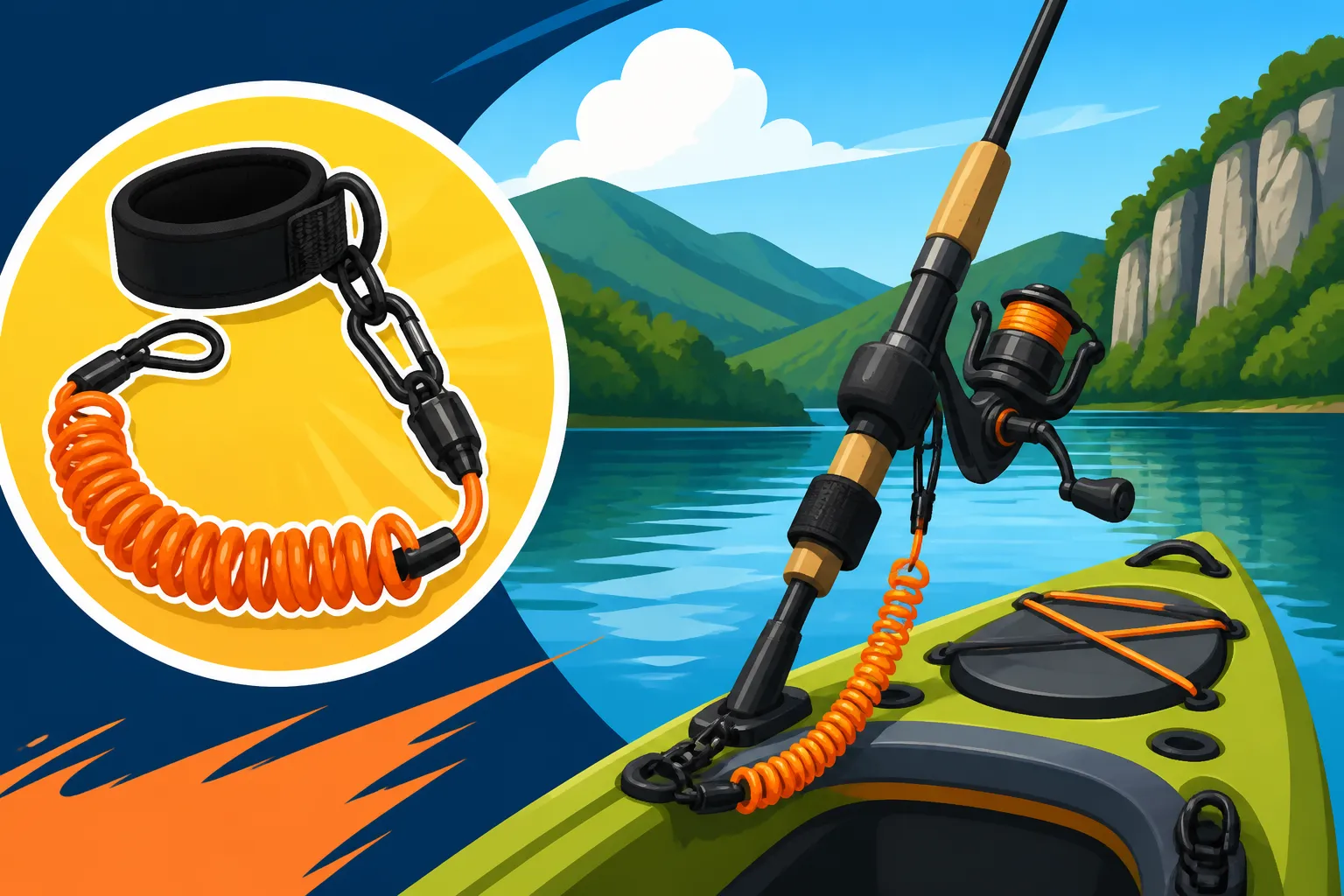
Best rod leash for kayak fishing
There’s nothing quite like the freedom of paddling out onto a serene West Virginia lake or navigating a winding river in your kayak, feeling that connection to the water. But for any seasoned kayak angler, the chilling thought of watching your prized fishing rod—or even just your favorite budget setup—slip silently into the murky depths is a real, gut-wrenching fear. This guide is all about banishing that fear by diving deep into the world of rod leashes, ensuring your valuable gear stays right where it belongs: with you.
Why You Absolutely Need a Rod Leash for Kayak Fishing in West Virginia
Let's be honest, we've all had those close calls. A sudden bump, an unexpected wave, a moment of distraction while unhooking a feisty smallmouth, and splash! The sound of a rod hitting the water is enough to make any angler's heart leap into their throat. In West Virginia, where our rivers can have surprising currents and our lakes can get choppy with boat traffic, a rod leash isn't just a convenience; it's practically a necessity.
The Heartbreak of a Lost Rod in Our Rivers and Lakes
Imagine you're targeting muskie on the Little Kanawha River, a powerful fish that demands your full attention, and your backup rod gets knocked overboard by a stray paddle stroke. Or you're wading through the shallows of Summersville Lake, stepping out of your kayak for a moment, and a gust of wind catches your boat and tumbles your rod into deeper water. The monetary loss is one thing – good rods and reels aren't cheap – but the emotional blow of losing a trusted piece of gear can be just as significant. It can derail an entire day, or even a whole trip. Losing a rod in the swift currents of the New River, especially near some of its famous rapids, usually means it's gone for good, swept downstream and out of reach before you can even react.
Beyond the actual loss, there's the frustration of having to replace gear unexpectedly, often cutting into funds you might have saved for that dream fishing trip or a new piece of sonar. Many anglers learn this lesson the hard way, and it’s a lesson no one enjoys. A simple, inexpensive rod leash could save you from that headache and heartbreak, letting you focus on the fish, not on keeping your rod tethered by sheer willpower.
Safety and Convenience on the Water
Think about it: when you're in a kayak, space is at a premium. Rods can feel awkward, especially when you're trying to cast, paddle, or simply reach for something in your crate. A leash not only prevents a lost rod but also contributes to overall safety and convenience. It keeps your rods from sliding around the deck, becoming a tripping hazard if you need to quickly adjust your position or stand up.
Furthermore, a well-placed rod leash can prevent your gear from getting tangled with other equipment or lines, making for a smoother fishing experience. When you're wrestling a big fish or navigating tight spots, the last thing you want is a rod getting in the way or floating off. Many leashes also allow you to clip your rod out of the way, keeping it secure but easily accessible when you need it. This means less fumbling and more time with your lure in the water. Plus, for those longer paddles across large bodies of water like Tygart Lake or Bluestone Lake, knowing your rods are secure gives you peace of mind. Investing in a good rod leash is a small price to pay for that added layer of security and convenience, allowing you to truly enjoy your time on the water. You can find a vast selection of these simple yet essential items on platforms like Amazon or at specialty retailers like Bass Pro Shops.
Types of Rod Leashes: Finding Your Perfect Match
Just like there are different kayaks for different waters – from nimble river runners to stable lake platforms – there are various types of rod leashes, each with its own benefits. Choosing the right one depends on your fishing style, the type of water you're on, and how you prefer your gear to be managed.
Coiled Leashes: Stretch, Snug, and Secure
Coiled leashes are probably what most people picture when they think of a rod leash. They look a lot like an old-school telephone cord, designed to stretch out when needed and then retract to a compact size. This elastic quality is their biggest selling point, offering a nice balance between security and freedom of movement. Many coiled leashes are brightly colored, which is a huge plus if you accidentally drop your rod overboard; it makes spotting it in the water much easier, especially in stained West Virginia rivers.
The main advantage here is their compact nature. When not stretched, they stay relatively small and out of the way, reducing the chance of snagging on other gear or creating clutter on your kayak deck. They're excellent for keeping your rod close without feeling overly tethered. However, they do have some drawbacks. The coiling action, while convenient, can sometimes lead to tangles, especially if you have multiple rods or other gear in a confined space. Also, the stretch can sometimes feel a bit "springy," meaning your rod might bounce a little if it's knocked. They are generally best suited for shorter rods or situations where you don't need excessive reach, perhaps when Kayak Fishing Techniques for West Virginia Rivers are focused on casting from a seated position. Look for models with durable, corrosion-resistant hardware, especially if you're frequently fishing.
Webbing or Strap Leashes: Fixed Length and Reliable
In contrast to the springy nature of coiled leashes, webbing or strap leashes offer a fixed length and often a more robust, no-nonsense approach to securing your rod. These are typically made from strong nylon webbing, similar to what you might find on backpack straps, and feature buckles or clips at each end. Their primary advantage is their strength and simplicity. There's no stretch or recoil, which means your rod is secured at a specific distance from your kayak. This can be ideal for longer rods or for anglers who prefer a consistent tether without any give.
Webbing leashes are incredibly strong and resistant to tangling in the same way coiled leashes might. They're often favored by anglers who fish in challenging conditions or want absolute certainty that their rod isn't going anywhere. You can often adjust the length of a webbing leash, allowing for customization to your specific rod and kayak setup. However, their fixed length can also be a drawback. If the leash is too long, it might allow the rod to drift too far from the kayak, potentially getting caught on submerged structure or other lines. If it's too short, it might restrict your casting motion. They can also be a bit bulkier than coiled leenses when not in use. Despite this, their sheer reliability makes them a popular choice, especially for those looking for Best Muskie Gear for West Virginia Rivers where a lost rod could mean losing a once-in-a-lifetime fish.
Hybrid Leashes and Quick-Release Options
Beyond the two main categories, the market offers a variety of hybrid designs and leashes with specialized features, particularly quick-release mechanisms. Hybrid leashes might combine a short coiled section for flexibility with a webbing section for strength, aiming to get the best of both worlds. These can be excellent for specific setups where you want a bit of give but also a very secure connection.
Quick-release options are another popular feature, and for good reason. Imagine your rod gets snagged on a submerged log in a swift current while you're fighting a fish. A standard leash might pull your kayak into danger or risk breaking the rod if you can't free it quickly. A quick-release buckle allows you to instantly detach the rod, letting you recover your lure or save your kayak from being pulled into a precarious situation. This feature adds a layer of safety, especially when you're fishing in dynamic environments like those found on the Gauley River or the Cheat River. While the idea of a quick release might seem counterintuitive to "security," it's about intelligent security – knowing when to cut ties for a greater good. Many such leashes can be found from various outdoor and fishing brands, readily available at retailers like Bass Pro Shops or through online platforms like Amazon, offering great value for kayak anglers across West Virginia.
What to Look For in a Quality Rod Leash for West Virginia Kayak Fishing
Selecting the right rod leash isn't just about picking the first one you see; it's about understanding the nuances that make a leash effective and durable in real-world fishing scenarios. Our West Virginia waters can be tough on gear, from the scorching summer sun on the lakes to the icy bite of winter trout streams.
Material Durability and Hardware
The longevity of your rod leash hinges directly on the materials it’s made from. For the leash itself, look for strong, UV-resistant materials. Nylon webbing is a common and reliable choice, offering excellent tensile strength. For coiled leashes, marine-grade bungee cord is essential; it should resist degradation from sunlight and exposure to water, whether it's the tannin-stained rivers or clear mountain streams. Cheap elastic can quickly lose its stretch and integrity, becoming useless after just a season.
The hardware is equally, if not more, critical. Avoid flimsy plastic clips that can become brittle in cold weather or snap under pressure. Instead, seek out leashes with stainless steel or high-quality brass clips, carabiners, or buckles. These materials offer superior corrosion resistance, which is vital even in freshwater. While our lakes and rivers aren't saltwater, repeated exposure to moisture, dirt, and varying temperatures can still cause inferior metals to rust and fail. Look for heavy-duty stitching on webbing leashes and securely crimped ends on coiled ones. The points where the leash attaches to its hardware are often the weakest links, so examine them closely. A robust clip that securely attaches to your rod or kayak is paramount.
Length, Tension, and Attachment Points
The ideal length and tension of a rod leash are highly personal and depend on your kayak, your fishing style, and the length of your rod.
- Length: A leash that's too short will restrict your casting or your ability to handle a fish, while one that's too long might allow your rod to float away or snag on underwater obstacles. Measure the distance from where you typically secure your rod on your kayak to where you hold it while fishing. You want enough slack for comfortable casting, setting the hook, and battling a fish, but not so much that the rod becomes a hazard. Many anglers find a leash that extends comfortably to about arm's length, or a little more, to be ideal. For longer rods, like those you might use for Muskie Fishing in West Virginia, you'll definitely want a leash that provides ample reach without undue tension.
- Tension: For coiled leashes, the tension should be enough to gently pull the rod back towards its attachment point if you let go, but not so strong that it interferes with your casting or causes the rod to "fight" you. A good leash will keep your rod secure without being a constant tug-of-war.
- Attachment Points: Consider how the leash attaches to both your rod and your kayak.
- To the rod: Some leashes loop directly onto the rod butt or around the reel seat. Others might have a small strap that cinches around the rod handle. Ensure the attachment method won't damage your rod's finish or interfere with the reel. A secure but non-abrasive connection is key.
- To the kayak: Most kayaks come with pad eyes or have gear tracks where you can easily clip a leash. If not, consider adding a small pad eye or D-ring near your seat or where you store your rods. The attachment point should be easily accessible but out of the way of paddle strokes and other gear. Think about your kayak's layout when choosing Best Kayaks for West Virginia Fishing and how a leash will integrate into your fishing setup.
Visibility and Buoyancy
While the primary purpose of a rod leash is to prevent loss, good design can add layers of protection.
- Visibility: Many coiled leashes come in bright, fluorescent colors like neon green, orange, or yellow. This isn't just a style choice; it's a practical feature. If your rod does somehow manage to detach or if you capsize, a brightly colored leash attached to the rod can make it much easier to spot floating on the water, especially in low light or choppy conditions. It could be the difference between recovering your gear and saying goodbye to it forever.
- Buoyancy: Some rods are naturally buoyant and will float, at least for a while. Others will sink like a stone. While a rod leash's main job isn't to make your rod float, it's worth considering if the leash itself adds any buoyancy or, more realistically, if it prevents the rod from going to the bottom. A leash acts as a retrieval line. If your rod is prone to sinking, even a tether will only help if you can quickly grab it before it gets pulled under completely. For rods that do sink, a leash gives you a fighting chance to retrieve them before they settle on the bottom. If you're concerned about a particularly heavy rod and reel combo, consider adding a small, dedicated rod float in addition to your leash.
Setting Up Your Rod Leash for Maximum Effectiveness
A rod leash is only as good as its setup. Simply clipping it on isn't always enough. Thoughtful placement and secure attachment methods are crucial to ensuring it performs as intended and doesn't become a hindrance to your fishing.
Best Practices for Attachment to Your Rod
Attaching the leash to your rod properly is the first critical step. You want a connection that is secure, won't damage the rod, and doesn't interfere with its function.
- Rod Butt or Handle: The most common and often best place to attach a leash is to the rod butt or handle, ideally below the reel. Many rod butts have a small loop or a robust end cap that a carabiner or clip can attach to directly. If not, you can create a secure loop with some heavy-duty cord, ensuring it’s tightly bound and won't slip off. The advantage of attaching here is that it keeps the leash away from your line, reel handle, and guides, minimizing tangles and interference with casting or retrieving. It also puts the stress on the strongest part of the rod.
- Reel Seat: Some anglers prefer to loop a leash around the reel seat, just above the reel foot. This is generally acceptable, but ensure the material is soft and won't scratch the reel or the rod blank over time. Again, the goal is security without damage. Avoid attaching to the reel handle itself or any moving parts, as this can impede operation or even lead to damage.
- Avoid the Blank: Never attach a leash directly to the rod blank (the main shaft of the rod). This can put uneven pressure on the blank, especially if the rod gets pulled hard, potentially leading to cracks or breakage. The blank is designed to flex under fish, not under a constant or sudden tug from a leash.
When securing the leash, ensure any knots are tight and won't come undone. If using a quick-release buckle, double-check that it’s fully engaged before you hit the water. This meticulous approach is part of keeping your Best Fishing Rods for West Virginia Rivers safe.
Attaching to Your Kayak: Strategic Placement
Where you attach the leash to your kayak is just as important as how you attach it to your rod. Strategic placement ensures the leash is effective, doesn't get in your way, and is easily accessible.
- Pad Eyes or D-Rings: Most fishing kayaks come equipped with several pad eyes or D-rings. These are excellent, purpose-built attachment points. Choose one that offers the best compromise between keeping the rod close and allowing enough freedom of movement for casting and maneuvering. For instance, a pad eye located near your seat or slightly behind it is often ideal for active fishing rods.
- Gear Tracks: If your kayak has gear tracks, you can add a track-mounted D-ring or carabiner mount. This allows for adjustable placement, so you can fine-tune the leash's position based on the rods you're using or the fishing situation. This flexibility is a huge plus for adapting your setup.
- Seat Frame or Handles: In a pinch, you can often loop a leash around a sturdy part of your kayak's seat frame or an existing grab handle. Just ensure these points are strong enough to handle a sudden tug and won't cause the leash to impede paddling or access to other gear.
- Keep it Clear: Whatever attachment point you choose, make sure the leash won't tangle with your paddle, anchor line, Best Trolling Motor for a Fishing Kayak if you have one, or your fishing line. A tangled leash is a frustrating leash, and a safety hazard. Always test the setup dry before launching: sit in your kayak, perform casting motions, and simulate reeling to ensure the leash offers the right balance of security and unrestricted movement. This applies whether you're fishing for bass in Summersville Lake or trout in the Elk River.
Multiple Rods, Multiple Leashes: A System Approach
Many kayak anglers don't just bring one rod; they might have a bass rod, a crappie rod, and a specialized walleye setup. Juggling multiple rods, especially with leashes, requires a bit of planning to avoid a spaghetti mess of lines and cords.
- Individual Leashes are Key: While it might seem tempting to try and link multiple rods to a single leash, this usually ends in chaos. It's almost always better to have an individual leash for each rod you have deployed or actively in use. This provides maximum security for each rod and prevents one mishap from turning into a multi-rod catastrophe.
- Color-Coding or Different Leash Types: If you use different types of rods or target different species, you might consider color-coding your leashes. For example, a bright yellow coiled leash for your trout rod and a dark webbing leash for your muskie rod could help you quickly identify and grab the right setup without fumbling.
- Stowing Unused Rods: When a rod isn't in active use, place it securely in a horizontal rod holder or a vertical rod tube. Even when stowed, it’s a good idea to keep a leash attached, just in case. A sudden flip or rogue wave can dislodge even seemingly secure rods. Think about how you’d manage your Best Tackle for West Virginia Smallmouth Bass alongside your Best Gear for West Virginia Trout Fishing. Having a dedicated system, where each rod has its own leash and storage spot, vastly improves your efficiency and reduces the risk of loss or damage.
Here's a quick comparison of the two primary rod leash types to help you decide:
| Feature | Coiled Leash | Webbing/Strap Leash |
|---|---|---|
| Flexibility | High (stretches and retracts) | Low (fixed length, minimal or no stretch) |
| Compactness | Very compact when retracted | Can be bulkier, depends on length and material |
| Strength | Good, but relies on bungee quality | Very high, especially with reinforced nylon |
| Tangle Risk | Moderate (can coil around itself or other gear) | Low (straightforward design) |
| Adjustability | Generally fixed length, some adjustable clips | Often adjustable length via buckles |
| Visibility | Often brightly colored | Varies, can be subtle or bright |
| Best For | Shorter rods, calmer waters, easy grab-and-go | Longer rods, rougher conditions, maximum security |
| Feel | Dynamic, a bit of "spring" | Static, very secure, no give |
Disclaimer
This article is for general informational purposes only and does not constitute professional advice. Laws, prices and regulations vary by location and change over time. Consult a qualified professional for guidance on your specific situation.