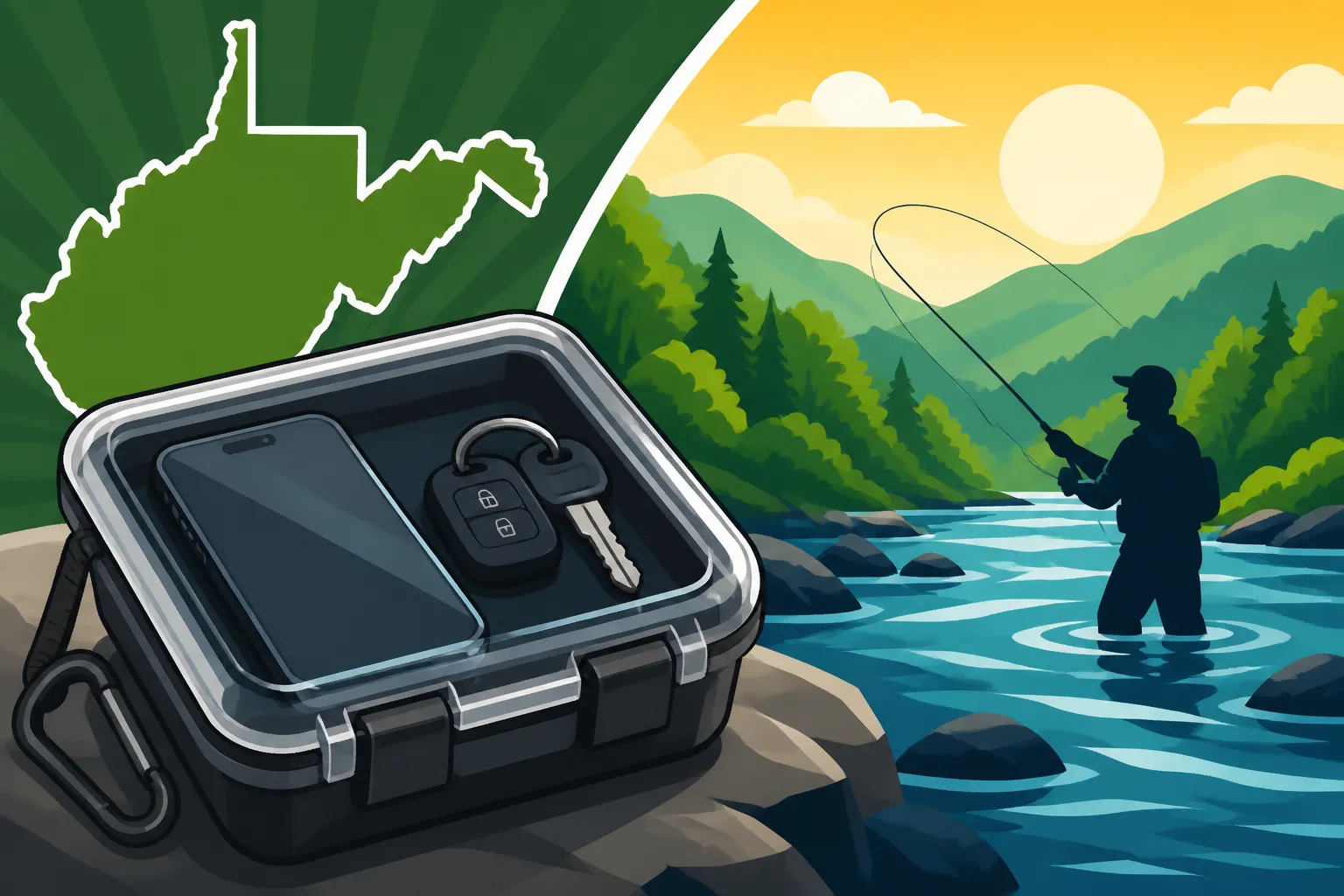
Best dry box for phone and keys on the water
There's nothing quite like that heart-stopping moment when your phone or car keys almost take an unexpected dip into the cool waters of the New River or disappear into the murky depths of Summersville Lake. We've all been there, fumbling with essentials while trying to reel in a bass or navigate a tricky current. This guide is here to help you banish that fear forever by showing you how to choose the absolute best dry box to keep your phone, keys, and other vital small items safe, secure, and perfectly dry on all your West Virginia fishing adventures.
Why a Dry Box Is Absolutely Essential for West Virginia Anglers
Let's face it, fishing in West Virginia is an adventure. Whether you're wading a swift mountain trout stream, navigating the currents of the Ohio River in a jon boat, or paddling a kayak through the serene coves of a lake, water is an ever-present element. And where there's water, there's a risk to your electronics and other valuables. That gut-wrenching feeling when your expensive smartphone slips from your pocket, or your electronic car fob takes an unplanned swim, is something no angler wants to experience.
Think about it: a sudden downpour can drench everything in an open boat in seconds. A rogue wave from a passing pleasure craft on Bluestone Lake could swamp your kayak. Even a simple misstep while clambering over slippery rocks on the Elk River can send your wallet plummeting into the current. A reliable dry box isn't just a convenience; it's a critical piece of gear that protects your investments and ensures you can get home safely and easily after a long day on the water. It’s about peace of mind, knowing that even if the unexpected happens – and it often does when you're out fishing – your most important items are sealed away, safe and sound.
The Real Risks of Water Damage to Your Essentials
It’s not just about replacing a phone, though that’s certainly a costly headache. Many modern car keys have electronic fobs that are incredibly susceptible to water damage, rendering your vehicle inaccessible or at least a major hassle to start. Your driver's license, credit cards, cash, and even important medical information or medications can be ruined or lost permanently. And what about your Printing or Carrying a Digital Fishing License in West Virginia? If your phone gets soaked and won't turn on, you could be in a tricky situation if a DNR officer asks to see your license. A dry box mitigates all these risks, making sure you stay connected, mobile, and compliant.
Beyond Phones and Keys: What Else Needs Protection?
While phones and keys are usually top of mind, a good dry box can safeguard a surprising number of other small but crucial items. Consider spare batteries for your headlamp if you're Night Fishing Techniques for West Virginia Lakes, a small first-aid kit, a compact camera to capture that trophy muskie, or even a GPS device. For fly anglers, a small, fully waterproof box can protect delicate dry flies or specific nymph patterns that would be ruined by moisture. The versatility of a dry box means you can tailor its contents to your specific trip and needs, ensuring everything you cherish or depend on remains untouched by water.
Decoding Dry Box Features: What Really Matters for Anglers
Choosing the right dry box can feel overwhelming with all the options out there. But for West Virginia anglers, a few key features stand out as absolutely essential. It’s not just about a watertight seal; it’s about durability, accessibility, and how it fits into your specific fishing style, whether you're tackling Best Kayaks for West Virginia Fishing or simply bank fishing a local pond.
Understanding Waterproofing Standards: IP Ratings Explained
When you look at dry boxes, you'll often see an "IP rating," like IP67 or IP68. This isn't just jargon; it’s a crucial indicator of how much water protection a device offers.
- IP (Ingress Protection) Rating: The "IP" stands for Ingress Protection. The first digit refers to protection against solids (like dust), and the second digit refers to protection against liquids (water). For anglers, the second digit is what truly matters.
- Common Ratings:
- IPX4 (Splash-proof): Can withstand splashes from any direction. Good for light rain or accidental splashes, but not immersion.
- IPX7 (Submersible up to 1 meter for 30 minutes): This is where it gets serious for anglers. If you drop your box in the water, it should be fine for a reasonable amount of time.
- IPX8 (Submersible beyond 1 meter): The exact depth and duration vary by manufacturer but means it's built for continuous immersion. This is the gold standard for ultimate peace of mind.
For serious fishing, especially if you're in a kayak, canoe, or a small boat on a river, you absolutely want a box with an IPX7 or IPX8 rating. Anything less and you're just tempting fate if it goes overboard. When browsing options on Amazon or at Bass Pro Shops, always check that IP rating!
Construction Materials and Durability
A dry box needs to be tough, capable of taking a beating from being jostled in a boat, dropped on rocky shorelines, or scraped against gear.
- Hard-Shell Cases: Most dedicated dry boxes are made from rugged, impact-resistant plastic, often ABS or polypropylene. These materials are incredibly durable, resisting cracks and punctures even under rough conditions. Look for thick walls and reinforced corners. Brands like Pelican and Plano are well-known for their robust hard cases.
- Latches: The quality of the latches is paramount. Cheap, flimsy latches can break easily or fail to create a secure seal. Look for heavy-duty, double-action, or two-stage latches that require a deliberate effort to open and close, ensuring they won't pop open accidentally.
- O-Ring Gaskets: The seal itself is usually a rubber O-ring gasket. A good O-ring should be thick, pliable, and properly seated in a channel around the lid. This is what provides the true waterproof barrier. Over time, these can dry out or get damaged, so easy replacement or maintenance is a plus.
Size, Capacity, and Internal Organization
Think about what you really need to keep dry. A small box might fit just your phone and keys, while a larger one could hold a wallet, first-aid kit, and even a compact camera.
- Minimalist (Phone & Keys): If you just need to protect essentials, a compact box saves space. This is great for a quick trip or when you're trying to pack light for wading a stream.
- Everyday Carry (Phone, Keys, Wallet, etc.): A slightly larger box might offer enough room for your daily valuables, plus maybe a small power bank or an extra battery.
- Internal Organization: Some dry boxes come with foam inserts (which you can cut to customize for specific items), while others might have mesh pockets or dividers in the lid. This helps prevent items from rattling around and potentially getting damaged inside the box itself. For instance, keeping your car key fob from banging against your phone screen.
Buoyancy and Attachment Points
These often-overlooked features can save you a lot of grief.
- Buoyancy: Does the box float if it falls in the water? Many smaller, empty dry boxes will float. However, once loaded with a heavy smartphone, car keys, and other items, some might sink. If you're fishing rivers where currents can quickly sweep away a dropped item, a buoyant dry box is a non-negotiable feature. Some brands design their boxes to be inherently buoyant even when full.
- Attachment Points: Look for sturdy loops or D-rings on the exterior of the box. These allow you to secure it with a lanyard, carabiner, or strap to your person, kayak, or boat. This is especially important for Kayak Fishing Techniques for West Virginia Rivers where capsizing is always a possibility. A secured dry box means it won't just float away; it'll stay with you.
| Feature | Description | Why it Matters for WV Anglers |
|---|---|---|
| IP Rating | Specifies water resistance (e.g., IPX7, IPX8 for immersion). | Essential for accidental drops, capsizes, or heavy rain, especially on rivers. |
| Construction | Material (ABS plastic, polypropylene), latch quality, O-ring gasket. | Durability against impacts, rocks, gear; reliable long-term waterproof seal. |
| Size/Capacity | Internal dimensions for holding phone, keys, wallet, first-aid, etc. | Fits your specific carry needs, prevents overstuffing or unnecessary bulk. |
| Internal Org. | Foam inserts, dividers, mesh pockets. | Protects delicate items from rattling; easy to find what you need. |
| Buoyancy | Ability to float when fully loaded. | Prevents loss in deep or fast-moving water if dropped. |
| Attachment Pts. | External loops/D-rings for lanyards, straps. | Secures the box to your boat, kayak, or person, preventing it from drifting away. |
Finding Your Perfect Fit: Types of Dry Boxes for Every Angler
Just like there are different types of fishing, there are different types of dry boxes designed to meet various needs. Your ideal choice will depend on your fishing style, the amount of gear you carry, and the level of protection you seek.
Small, Hard-Shell Watertight Cases: The Essential Protector
These are your classic, rugged dry boxes, often made by companies like Pelican, Plano, or OtterBox. They typically feature a hard plastic shell, robust latches, and a strong O-ring seal. They come in various sizes, from compact models designed for just a phone and keys to larger versions that can hold a wallet, GPS, and other small essentials.
Best Use Cases:
- Wading Anglers: If you're Fly Fishing for Trout in West Virginia and constantly in the water, a small, clipped-on hard case is ideal for your phone and car fob. It won't get crushed, and if you slip, your essentials are safe.
- Kayak and Canoe Anglers: Perfect for securing to the inside of your Best Kayak for the New River or stowing in a dry storage hatch. Their rigid structure protects against impacts if your boat takes a knock or flips.
- Bank Fishing: Even if you're just sitting on the bank, a sudden downpour can soak everything. A hard case offers reliable protection.
These cases are usually very buoyant, especially the smaller ones, and often include a lanyard attachment point. You can often find a great selection of these on Amazon, with various sizes and colors to choose from, making it easy to find one that fits your personal gear.
Larger Utility Dry Boxes: For More Than Just Essentials
Stepping up in size, these hard-shell boxes offer more internal volume for anglers who need to carry a broader range of items. While still offering excellent waterproof protection, their larger size might make them less suitable for personal carry and more for stowing in a boat or larger kayak.
Best Use Cases:
- Boat Anglers: If you're on a larger jon boat or bass boat on a lake like Summersville, these can hold not only your phone and keys but also a camera, extra reels, first-aid supplies, or even small tackle boxes.
- Overnight Trips: For multi-day floats down the Greenbrier or New River, a larger dry box can be invaluable for protecting electronics, food, and other items from both water and physical damage.
- Valuable Gear: Anglers carrying expensive gear like specialized Best Fish Finders for West Virginia Lakes or delicate camera equipment often opt for these, sometimes lining them with custom-cut foam for added protection.
While robust, always remember the West Virginia Boating Laws for Anglers and ensure anything stored in a larger dry box is secured within your vessel, especially on moving waters where items can shift or be thrown overboard in choppy conditions. You can find many options at Bass Pro Shops, which often stock a range of sizes that cater to different boating and fishing setups.
Soft-Sided Dry Bags and Backpacks: Flexible Protection for Bulkier Items
While not strictly "dry boxes" in the hard-shell sense, soft-sided dry bags offer a different kind of protection, typically for larger or more awkwardly shaped items. These are made from waterproof fabrics (like PVC or TPU) and seal by rolling down the top and buckling it.
Best Use Cases:
- Clothing and Sleeping Bags: Great for keeping extra layers, a towel, or a sleeping bag dry on longer trips.
- Bulkier Electronics: A larger tablet or even a drone for aerial shots of your fishing spot could go in a dry bag, though they lack the rigid impact protection of a hard case.
- Kayak and Canoe Storage: Many kayak anglers use dry bags to store gear inside their hulls or strapped to the deck, especially if they are doing longer paddles. Check out Best Dry Bag for Kayak Fishing for more specific information on these.
It's crucial to understand that while dry bags are waterproof, they don't offer the same impact protection as a hard-shell dry box. Your phone might stay dry, but it could still get crushed if something heavy falls on it. For small, critical electronics and keys, a hard-shell dry box usually provides superior protection against both water and physical damage.
Smart Strategies for Using and Maintaining Your Dry Box Effectively
Having the best dry box won't do you any good if you don't use it correctly or neglect its maintenance. A little preparation and care can ensure your essentials remain safe for years of West Virginia fishing adventures.
The All-Important "Sink Test"
Before you ever trust your precious phone and keys to a new dry box, give it a proper test run. It’s a simple step that can save you a world of heartbreak:
- Place a paper towel inside: A simple paper towel is the best indicator of a leak, as it will show even the slightest hint of moisture.
- Seal the box securely: Make sure all latches are firmly closed and the lid is properly seated on the O-ring.
- Submerge it: Dunk the closed dry box into a sink or bucket of water. Hold it underwater for at least 30 minutes, turning it occasionally to expose all seams.
- Check for leaks: After 30 minutes, remove the box, dry its exterior thoroughly, and then open it. If the paper towel is bone dry, you're good to go! If there's any moisture, double-check the O-ring for debris or damage, re-latch, and test again. If it still leaks, it might be defective.
This simple test is especially important if you're planning on taking your dry box on a trip where it might face significant immersion, like a whitewater float on the Gauley or a day out in a small boat on the Ohio River.
Proper Sealing and Routine Maintenance
A dry box is only as good as its seal. Make sure you always take a moment to ensure it's properly closed.
- Check the O-ring: Before each trip, quickly inspect the O-ring gasket for any cracks, nicks, or embedded debris (like sand, grit, or stray fishing line). Even a tiny piece of grit can compromise the seal.
- Lubricate the O-ring: Periodically, apply a thin coat of silicone grease (often sold for underwater camera housings or plumbing) to the O-ring. This keeps it pliable and helps maintain a tight seal, prolonging its life.
- Clean Latches and Hinges: Keep the latches and hinges free of dirt and salt (if you're near brackish water, though not common in WV). A little lubrication here can also ensure smooth operation.
- Avoid Over-stuffing: Don't try to cram too much into your dry box, as this can prevent the lid from closing properly and stress the latches, compromising the seal.
Secure Placement and Attachment
Just because your dry box floats doesn't mean you want it floating away without you!
- Tether It: Always use the attachment points to secure your dry box. A sturdy carabiner to a D-ring on your Life Jacket Requirements for West Virginia Boaters or a kayak's gear strap can prevent accidental loss.
- Accessible But Safe: Position your dry box where it's easily accessible but not in a place where it can be easily knocked overboard or impede your fishing. For a kayak, that might be bungeed to the deck within reach. For a boat, perhaps clipped to a seat pedestal or stored in a console.
- Avoid Direct Sunlight (if possible): While dry boxes are durable, prolonged exposure to direct, intense sunlight can heat up the interior significantly, potentially affecting electronics. If possible, keep it in the shade or under a cover.
By following these simple practices, your dry box will become an indispensable, reliable part of your West Virginia fishing gear, giving you one less thing to worry about so you can focus on the tug on your line!
Disclaimer
This article is for general informational purposes only and does not constitute professional advice. Laws, prices and regulations vary by location and change over time. Consult a qualified professional for guidance on your specific situation.