What a hybrid striped bass is a cross between
Ever heard of a "wiper" or a "sunshine bass" and wondered what exactly you were catching? It can be pretty confusing to distinguish all the striped bass variants out there, especially when you're out on a West Virginia lake and battling a powerful fish that just doesn't quite look like a pure striped bass or a white bass. Understanding the genetic makeup of these unique, powerful fish is key to appreciating their unique place in our waters and how best to target them. This guide will deep dive into the fascinating world of hybrid striped bass, explaining precisely what they are a cross between, why they exist, and what makes them such a popular species for anglers across the Mountain State.
The Genetic Blend: Unpacking the Parent Species of Hybrid Striped Bass
When we talk about a "hybrid," we're usually referring to a mix of two distinct things, and in the world of fish, it's no different. Hybrid striped bass are truly a marvel of modern fisheries management, engineered to combine the best traits of two different but closely related species. It's not a natural occurrence in the wild, but rather a deliberate crossbreeding project designed to enhance sport fishing opportunities and provide robust fish for specific aquatic environments.
The Mighty Striped Bass Parent (Morone saxatilis)
One half of the hybrid equation comes from the formidable striped bass, scientifically known as Morone saxatilis. These are the giants of the family, renowned for their incredible size, powerful fights, and migratory habits in coastal areas. In landlocked environments like many of West Virginia's larger reservoirs, striped bass can still grow quite large, offering trophy angling opportunities. They have a sleek, elongated body with seven or eight prominent, continuous dark stripes running horizontally from behind their gills to their tail. Their bodies are typically more streamlined compared to their hybrid offspring.
Pure striped bass are often found schooling, chasing baitfish in open water, and are known for their strong endurance during a fight. They are a highly sought-after game fish due to their size and the challenge they present to anglers. Their aggressive feeding habits and ability to tolerate a wide range of temperatures make them suitable for stocking in various reservoirs, including some in West Virginia where they thrive, though natural reproduction in these environments is rare.
The Agile White Bass Parent (Morone chrysops)
The other vital ingredient in the hybrid striped bass formula is the white bass, Morone chrysops. Don't let their smaller stature fool you; white bass are feisty, schooling fish that provide incredible action on light tackle. They are much smaller than striped bass, typically weighing a pound or two, but they make up for it with sheer numbers and aggressive feeding frenzies. White bass are characterized by a deeper body shape than striped bass, and their stripes, usually fewer in number (four or five), are often faint or broken, especially towards the tail. They tend to have a single, distinct stripe that runs all the way to their tail.
White bass are native to many freshwater systems, including several rivers and lakes in West Virginia. They are known for their strong spring spawning runs up tributary streams, creating fantastic fishing opportunities as they concentrate in large numbers. While they don't reach the immense size of striped bass, their abundance and willingness to strike a variety of lures make them a favorite among many anglers, particularly those looking for fast action and delicious table fare.
The Science Behind the Cross
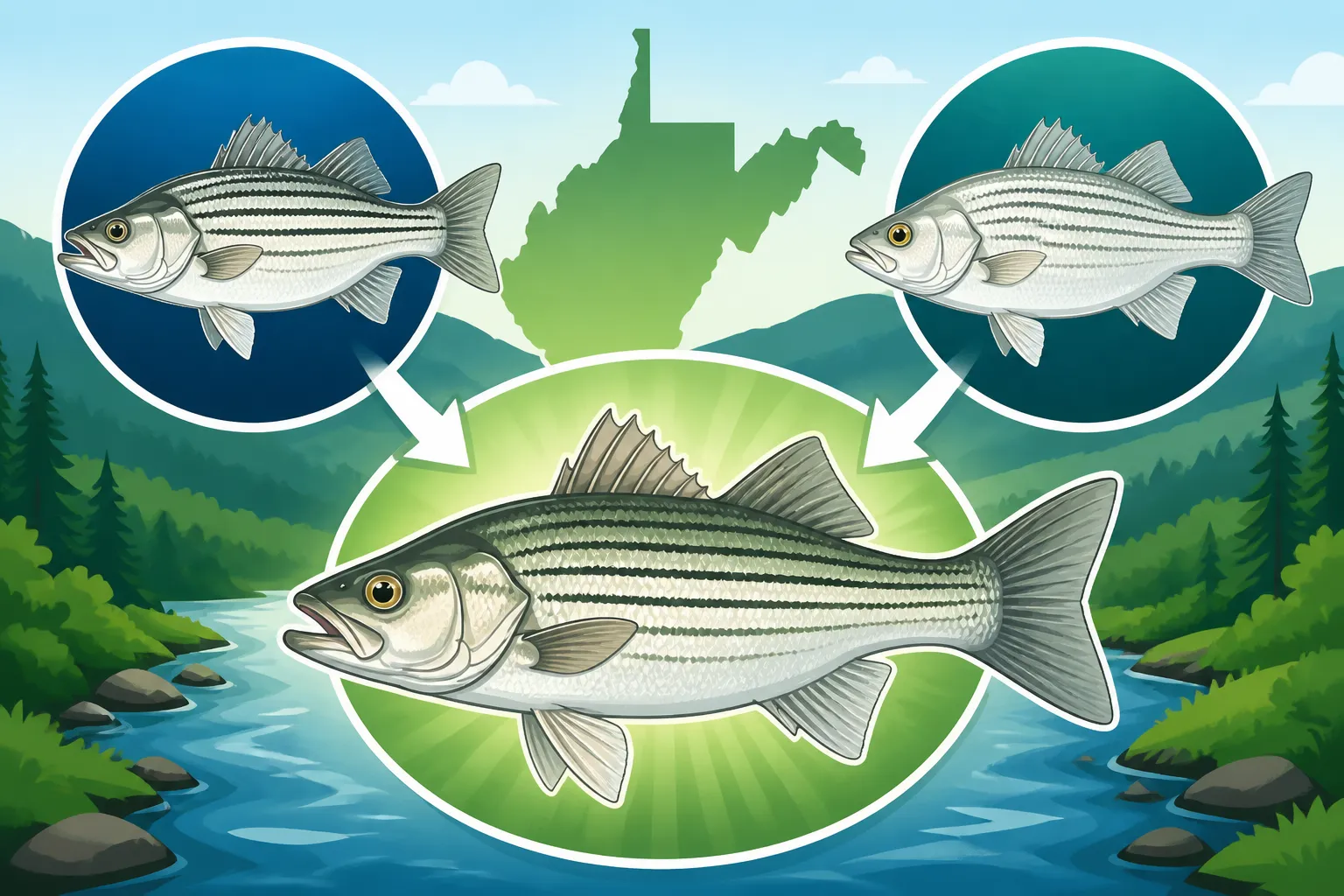
So, to directly answer the question: a hybrid striped bass is a cross between a female striped bass (Morone saxatilis) and a male white bass (Morone chrysops). This specific cross is often referred to as a "wiper." There's also another, less common cross known as a "sunshine bass," which is the result of crossing a female white bass with a male striped bass. While both are hybrids, the wiper (female striper x male white bass) is generally preferred by fishery managers for stocking due to its slightly faster growth rate and better survival in certain environments.
The creation of these hybrids is done in hatcheries under carefully controlled conditions. Fishery biologists select broodstock (parent fish) from healthy populations, extract their eggs and milt, and then artificially fertilize them. The resulting fry are then raised in ponds until they reach a suitable size for stocking into lakes and reservoirs. This method ensures a consistent supply of robust fish that carry the desired traits. The genetic material from both parents combines to create an offspring that is genetically distinct but retains characteristics from both sides of its family tree.
Why Fishery Managers Create Hybrid Striped Bass
You might wonder why we'd bother creating a hybrid when both parent species offer excellent fishing. The truth is, hybrid striped bass were developed to address specific challenges and enhance recreational fishing in ways that purebred species couldn't always achieve. It's a testament to thoughtful fisheries management, aiming to provide a better, more sustainable fishing experience.
Enhanced Growth Rates and Hardiness
One of the primary reasons for creating hybrid striped bass is their impressive growth rate and overall hardiness. They exhibit what's known as "hybrid vigor," meaning they often grow faster and are more robust than either of their parent species when stocked in certain conditions. This rapid growth means they reach a catchable size quicker, providing more immediate returns for stocking programs. Furthermore, hybrids tend to be more tolerant of a wider range of environmental conditions, including warmer water temperatures and fluctuating oxygen levels, compared to pure striped bass. This makes them ideal for stocking in reservoirs that might be marginal for pure striped bass but still offer plenty of forage.
Their hardiness also translates to better survival rates after stocking, ensuring that the investment in hatchery production yields more fish for anglers. They're often less susceptible to certain diseases that might affect one parent species, further contributing to their resilience. This robustness is a huge benefit for West Virginia's diverse waterways, some of which experience significant temperature swings throughout the seasons.
Increased Angler Opportunity
For anglers, hybrid striped bass offer an exhilarating fishing experience. They combine the powerful fight and schooling behavior of striped bass with the aggressive, readily catchable nature of white bass. This means anglers can often find large schools of hybrids actively feeding, leading to fast-paced, action-packed days on the water. Their willingness to strike a variety of lures, from topwater plugs to jigs and spoons, makes them accessible to anglers using different techniques. Many anglers enjoy chasing hybrids because they pull hard, making for an exciting battle on the end of the line.
The ability to successfully stock these fish in a wider range of water bodies, including those where pure striped bass might struggle to thrive or reproduce naturally, opens up more fishing opportunities across West Virginia. This diversification helps distribute angling pressure and introduces a exciting game fish to new areas, drawing more people to enjoy the state's incredible fishing resources. You can find a wide variety of specific lures for hybrid striped bass on Amazon, including popular crankbaits and jigs.
Stocking Programs in West Virginia
West Virginia's Division of Natural Resources (WVDNR) regularly stocks hybrid striped bass in several of the state's larger reservoirs, recognizing their value as a sport fish. These stocking efforts are carefully planned to maintain healthy populations and provide consistent angling opportunities. Unlike many native species, hybrid striped bass rarely reproduce naturally in the lakes where they are stocked, meaning populations are sustained through ongoing hatchery programs. This gives fisheries managers precise control over their numbers and distribution.
Lakes like Summersville Lake and Sutton Lake are prime examples where you can find thriving populations of hybrid striped bass, thanks to these dedicated stocking programs. These impoundments offer the expansive open water and abundant baitfish that hybrids need to grow large and provide exciting fishing. Striped Bass Hybrid Stocking in West Virginia details more about where these fish are introduced. When exploring new waters, consulting the WVDNR's stocking schedules can give you a heads-up on where to find the freshest populations.
Identifying Hybrid Striped Bass in West Virginia Waters
Telling the difference between a hybrid striped bass and its parent species can sometimes be tricky, especially when you're caught up in the excitement of a bite. However, knowing the key identifiers can help you accurately identify your catch, which is important for understanding regulations and simply knowing what you've landed.
Key Physical Characteristics
Hybrid striped bass generally display a blend of features from both parents, but with some distinctive traits that help them stand out. Here are some key characteristics to look for:
- Body Shape: Hybrids typically have a deeper, more robust body compared to the more elongated, streamlined pure striped bass. They're not as deep-bodied as a white bass, but they're definitely bulkier than a striper of similar length.
- Striping Pattern: This is often the most reliable visual cue. While pure striped bass have solid, unbroken lines running from gill to tail, hybrid striped bass will usually have broken or interrupted lateral lines. Some lines might be solid, but many will be clearly fragmented or irregular, especially below the lateral line. You might also notice that the stripes are more numerous or pronounced than on a white bass.
- Teeth Patches on Tongue: If you can safely examine the fish's mouth, check the patches of teeth on its tongue. Both striped bass and hybrids will have two distinct patches of teeth. A pure white bass, however, will typically have only one patch. This can be a definitive identifier if you're still unsure after looking at the stripes.
- Mouth and Head: Hybrids often have a more rounded, robust head than a pure striped bass, and their mouth is typically terminal (opens at the very front of the snout).
Distinguishing from Parent Species
Let's put it into a table to make the differences crystal clear. This can be a lifesaver when you're trying to figure out if you've got a "wiper" or something else entirely.
| Characteristic | Hybrid Striped Bass (Wiper) | Striped Bass (Morone saxatilis) | White Bass (Morone chrysops) |
|---|---|---|---|
| Parentage | Female Striped Bass x Male White Bass | N/A (Pure Species) | N/A (Pure Species) |
| Body Shape | Deeper, more robust than striper | More elongated, streamlined | Deeper-bodied, more compressed |
| Lateral Striping | Often broken, interrupted, or uneven | Solid, continuous, unbroken | Faint, sometimes broken, one stripe usually reaches tail |
| Teeth Patches on Tongue | Two distinct patches | Two distinct patches | One patch |
| Maximum Size | Generally 5-20 lbs (can be larger) | Can exceed 50 lbs (in freshwater) | Typically 1-3 lbs |
| General Coloration | Silvery with darker stripes | Silvery-white with prominent stripes | Silvery with lighter, fewer stripes |
This table should give you a quick reference point when you're trying to identify your catch. Remember, the broken stripes are usually the biggest giveaway for a hybrid.
Common Names and Misnomers
Hybrid striped bass go by several nicknames, which can sometimes add to the confusion. The most common term you'll hear, especially in West Virginia, is "wiper." This name is derived from "white bass" and "striper." Less commonly, if the cross is a female white bass and a male striped bass, it might be called a "sunshine bass." However, "wiper" is the predominant term for the hybrid striped bass most often stocked.
Sometimes, anglers might mistakenly call a hybrid a pure "striper" or a very large "white bass." While the resemblance is strong, understanding the unique combination of traits, particularly the stripe pattern, is key. Keep in mind that West Virginia has specific West Virginia Bag and Possession Limits by Species, and while hybrids often fall under general aggregate limits, knowing what you've caught can help you comply with regulations.
Fishing for Hybrids: Tips and Top Spots in the Mountain State
Once you understand what a hybrid striped bass is, the next logical step is to go out and try to catch one! These fish are incredible sport, offering a blend of power and aggression that makes for memorable outings. West Virginia has some fantastic locations where you can test your skills against these hatchery-born fighters.
Preferred Habitats and Behavior
Hybrid striped bass thrive in large, open-water reservoirs where they have plenty of room to roam and an abundant forage base, primarily shad and alewives. They are pelagic fish, meaning they typically inhabit the open water column, often suspending over deep water. However, they will frequently move into shallower areas, especially points, humps, and submerged structure, to ambush baitfish.
One of the most exciting aspects of fishing for hybrids is their schooling behavior. They often hunt in large packs, driving schools of baitfish to the surface, creating explosive "topwater boils" or "feeding frenzies" where fish can be seen actively crashing the surface. When you spot this kind of action, it's usually a sure sign that hybrids are present and aggressively feeding. They're also known to congregate around dam tailwaters, especially during periods of generation, where disoriented baitfish provide an easy meal. What fish species thrive in warm reservoir water like these are often prime spots for hybrids.
Effective Lures and Techniques
Since hybrids are aggressive feeders, a variety of lures and techniques can be effective. Matching the hatch, or imitating the baitfish they are feeding on, is often the most successful strategy.
- Casting and Retrieving: Spoons, such as Kastmasters or Little Cleos, are incredibly effective, especially when hybrids are schooled up or suspended. Heavy jigging spoons dropped into schools located with your fish finder can also elicit strong strikes.
- Topwater Baits: When hybrids are busting on the surface, nothing beats a topwater plug like a Zara Spook or Pop-R. The visual strike is absolutely electrifying.
- Crankbaits and Swimbaits: Medium-diving crankbaits that mimic shad are excellent for trolling or casting along points and submerged humps. Larger soft plastic swimbaits, retrieved steadily, can also be deadly.
- Live Bait: If artificials aren't working, live shad or alewives, presented on a free-line or under a float, are almost irresistible to hybrids. Shiners or large minnows can also be effective.
- Trolling: Covering water by trolling crankbaits or umbrella rigs can be a great way to locate scattered schools of hybrids, especially in deeper water.
For anglers looking to gear up, a medium-heavy spinning or baitcasting rod with a fast action, paired with a reel spooled with 15-20 lb braided line and a fluorocarbon leader, is a versatile setup. You can find quality rods and reels for hybrid fishing on Amazon, often at competitive prices. Best Techniques for Striped Bass Hybrids dives deeper into specific strategies.
Prime West Virginia Hybrid Hotspots
West Virginia boasts several fantastic locations for targeting hybrid striped bass, thanks to the WVDNR's stocking efforts. These lakes offer the perfect combination of expansive water, forage, and structure to hold healthy populations:
- Summersville Lake: Located in Nicholas County, Summersville Lake is arguably West Virginia's premier hybrid striped bass fishery. Its deep, clear waters and abundant forage make it a perfect habitat. Anglers here often find success casting spoons or topwater baits when fish are actively feeding, or trolling open water. For more details, check out Summersville Lake Fishing Guide.
- Sutton Lake: This Braxton County reservoir is another top-notch hybrid destination. Similar to Summersville, Sutton offers large areas of open water where hybrids roam. During warmer months, look for schooling activity. Sutton Lake Fishing will give you even more insight into this great spot.
- Tygart Lake: Situated in Taylor and Barbour Counties, Tygart Lake also receives hybrid stockings and can provide excellent action. Its varied topography with submerged timber and points makes it an interesting challenge. You'll often find anglers trying to locate schools over deep channels.
- Bluestone Lake: In Summers County, Bluestone Lake offers diverse fishing opportunities, including a good population of hybrid striped bass. The tailwaters below the dam can be particularly productive when water is being released, as hybrids key in on stunned baitfish. Check out Bluestone Lake Fishing Guide for more information.
Always remember that fishing success can vary greatly depending on the season, weather, and current water conditions. Keeping an eye on local fishing reports and connecting with bait shops near these lakes can provide invaluable, up-to-the-minute information.
Disclaimer
This article is for general informational purposes only and does not constitute professional advice. Laws, prices and regulations vary by location and change over time. Consult a qualified professional for guidance on your specific situation.