What fish species thrive in cold tailwaters
There's a unique challenge, and often a deep frustration, that comes with fishing West Virginia's cold tailwaters. These aren't your typical mountain streams or warm lakes; they're dynamic environments shaped by dam releases, offering incredible angling opportunities but demanding a very specific approach. This guide is here to shed light on exactly which fish species don't just survive but truly thrive in these chilly, oxygen-rich waters, helping you understand where to focus your efforts for a rewarding day on the water.
Understanding West Virginia's Cold Tailwaters
Tailwaters are special places in the angling world. They're the stretches of river directly below a dam, and in West Virginia, they often present some of our most productive and challenging fisheries. The key to their unique character lies in how they're managed and the consistent, cold conditions they maintain, even when ambient temperatures soar.
What Makes a Tailwater "Cold"?
When we talk about "cold tailwaters," we're usually referring to dams that release water from the bottom of their reservoirs, rather than over the top spillways. Think about it: a deep lake or reservoir acts like a giant refrigerator. The surface warms up in the summer sun, but down deep, it stays consistently cold. When water is drawn from these deeper layers and released into the river below the dam, that water temperature remains remarkably stable and cold, often in the 40s or 50s Fahrenheit, year-round. This is vastly different from a natural freestone stream that heats up significantly in the summer and can become too warm for many cold-water species.
This consistent coolness is a double-edged sword for fish. On one hand, it provides a stable thermal refuge. On the other, it often means colder water in winter too, which can slow down the metabolism of some species. The flow rates in tailwaters are also typically regulated by dam operations, meaning water levels can fluctuate dramatically and quickly. This constant change presents a challenge for fish trying to hold position, but also brings a steady supply of food and highly oxygenated water, which is crucial for cold-water species. It's a truly dynamic, almost artificial, yet incredibly vibrant ecosystem.
The Unique Ecosystem of Tailwaters
Beyond just temperature, the consistent flow and high oxygen content of tailwaters create a distinct ecosystem. The rushing water scours the bottom, often leaving behind rocky substrates that are ideal for certain aquatic insects to cling to. These insects, such as caddisflies, mayflies, and stoneflies, form the base of the food chain, providing a year-round buffet for hungry fish. Unlike many natural streams where insect hatches are highly seasonal, the stable environment of a tailwater can allow for more consistent insect production.
The sheer volume and force of the water can also impact the types of vegetation that can take root, often favoring tougher, more resilient plant life or leaving areas barren. This means fish often rely on natural riverbed structure – boulders, ledges, and deep pools – for cover and ambush points. Furthermore, the turbidity of tailwaters can vary greatly depending on dam releases and weather events, influencing visibility for both fish and anglers. All these factors combine to create a prime habitat for fish that are built to handle strong currents, crave cold, oxygen-rich water, and can capitalize on the abundant insect and baitfish life.
Prime Game Fish Species Thriving in Cold Tailwaters
When you head to a West Virginia tailwater, you're primarily going there with one group of fish in mind, but it's good to know who else might be lurking in the depths. The consistent cold water dictates who can not only survive but truly flourish here.
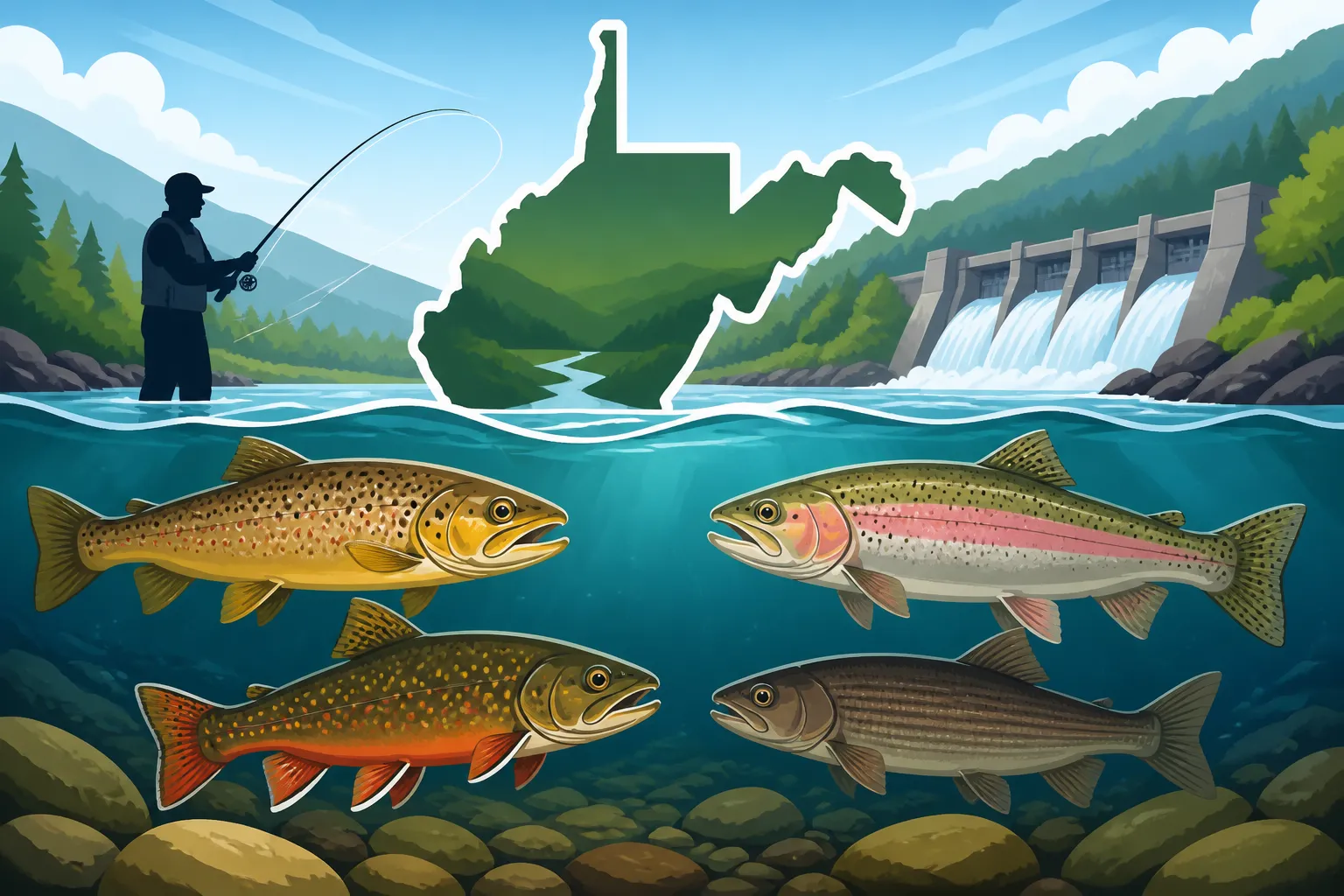
The Reign of Trout: Rainbow, Brown, and Brook
It’s no secret that trout are the kings and queens of cold, clean water, and West Virginia’s tailwaters are no exception. These waterways provide the ideal conditions for these beautiful, hard-fighting fish to grow large and healthy.
Rainbow Trout
Rainbow trout are undoubtedly the most common species you'll encounter in many of West Virginia's cold tailwaters. They are regularly stocked by the state's DNR, especially in easily accessible stretches below dams. What makes rainbows so perfect for tailwaters is their adaptability and their preference for swift, oxygenated water. They are opportunistic feeders, eager to strike at a variety of baits, lures, and flies, making them a favorite target for many anglers. You'll find them holding in runs, riffles, and the deeper pools where currents bring them a steady supply of food. Their vibrant colors and acrobatic fights are legendary. Understanding where and when Rainbow Trout Stocking in West Virginia occurs can be a game-changer for your fishing success, as freshly stocked fish are often quite active.
Brown Trout
While perhaps not as numerous as stocked rainbows in some tailwaters, brown trout often represent the true trophy potential in these systems. These fish are typically more elusive, warier, and often grow to impressive sizes by preying on smaller fish and larger aquatic insects. Brown trout are known for their ability to become "holdovers," meaning they survive and thrive year after year, sometimes even reproducing naturally in sections of the tailwater that offer suitable spawning habitat. They prefer to lurk in deeper, darker pockets, under cut banks, or near submerged structure, ambushing prey that drifts by. Targeting these larger, more intelligent fish often requires a more refined approach and understanding Brown Trout Habits in West Virginia Streams. When you hook into a big brown in a strong tailwater current, you'll know you've met a true adversary.
Brook Trout
Our native state fish, the brook trout, is less commonly associated with the main stem of large tailwaters, but they absolutely thrive in the cold, pristine feeder streams that flow into these larger systems, or sometimes in the uppermost, wildest sections of the tailwater itself where conditions mimic a natural mountain stream. Brook trout require the coldest, cleanest water to survive and reproduce. While they don't grow as large as rainbows or browns, their vibrant colors and wild beauty make them a prized catch. If you venture into the smaller tributaries that feed a tailwater, especially those protected by thick canopy or higher elevations, you might just find these gems. Understanding the Brook Trout Native Range in West Virginia can guide you to these special, more secluded spots where they truly flourish.
Beyond Trout: Other Cold-Water Inhabitants
While trout steal the spotlight in West Virginia's cold tailwaters, they're not the only fish enjoying these chilly conditions. A healthy tailwater ecosystem supports a diverse range of species, some of which are important forage for the trout, and others that provide unique angling opportunities.
Whitefish and Other Bottom Dwellers
In some of West Virginia's deeper, colder tailwaters, particularly those with strong, consistent flows, you might occasionally encounter species like whitefish. These fish are highly adapted to cold, clear water and typically feed on insects and small invertebrates found on the river bottom. While not a primary target for most anglers, their presence is a good indicator of excellent water quality and a robust cold-water ecosystem. You're more likely to catch them incidentally while nymphing for trout with small, bottom-bouncing flies. Beyond game fish, the abundance of small baitfish like various dace and sculpins is critical. These smaller, bottom-dwelling fish species are a vital food source for larger trout, especially the brown trout looking for a substantial meal. Their presence signifies a healthy, functioning cold-water food web.
Smallmouth Bass (Seasonal)
Now, this one comes with a big caveat! While smallmouth bass are known for their love of rocky rivers and strong currents, they are generally considered a warm-water species compared to trout. However, in some West Virginia tailwaters, particularly those where the cold-water influence lessens further downstream or during the warmer months, you can find a healthy population of smallmouth. They often move into the upper tailwater sections from downstream during late spring and summer as the water temperatures become more agreeable for them, but they will retreat to warmer zones as fall and winter set in. It's a seasonal window, but a fun one for those who enjoy the aggressive strikes of a smallmouth. You'll find them around current breaks, eddies, and rocky structures. Don't expect to find them actively feeding when the water is consistently in the 40s or low 50s, but they are definitely a species to consider in the right conditions and location within a tailwater system.
Strategies for Targeting Cold Tailwater Species
Fishing cold tailwaters isn't like fishing a farm pond. The unique environment demands specific tactics, presentation, and often, a bit of patience. Understanding how to approach these waters can vastly improve your success.
Adapting Your Approach for Trout
Trout in tailwaters are often well-fed and can be picky, but their consistent environment also means you can often "crack the code" if you pay attention to the details.
Fly Fishing: Nymphing, Streamers, and Dry Flies
For many, fly fishing is the quintessential method for tailwater trout, and for good reason. The abundant insect life provides a constant food source that can be imitated with flies. Nymphing is often the most productive technique year-round, as most of a trout's diet consists of aquatic insects drifting subsurface. Using a multi-nymph rig, sometimes with split shot to get deep in heavy current, is incredibly effective. Fly Fishing for Trout in West Virginia provides a deeper dive into these techniques. When flows are stable and light conditions are right, streamer fishing can be deadly, especially for larger brown trout looking for a big meal like a sculpin or a baitfish. Big browns often respond aggressively to a well-presented streamer stripped through deep pools or along current seams. And yes, dry fly opportunities do exist, particularly during significant insect hatches, but they are often more sporadic and shorter-lived than on natural freestone streams due to the variable flows. When a hatch is on, however, the dry fly action can be incredible.
Spinning Gear: Lures and Bait
Don't have a fly rod? No problem! Spinning gear is incredibly effective in West Virginia's tailwaters too, especially for the regularly stocked rainbow trout. Small inline spinners, like those from Panther Martin or Mepps, are fantastic for covering water and triggering aggressive strikes. Small spoons, such as Kastmasters or Little Cleos, can also be very productive, especially in deeper pools where their fluttering action can attract attention. For more finicky fish, small jigs tipped with a grub or scented plastic can be irresistible. Many anglers also find success with live bait, like small worms, or prepared baits like PowerBait, drifted naturally along the bottom. The key with all these methods is often a natural drift and making sure your offering gets down to where the fish are holding in the current. Remember, these fish are often holding tight to the bottom in strong current to conserve energy.
Gear Considerations for Cold Tailwater Angling
Beyond the rods and reels, specific gear can make or break your tailwater experience, ensuring comfort, safety, and effectiveness. You might find a lot of these essential items on Amazon.
Waders and Layering: Necessity for Comfort and Safety
Let's be realistic: if you're fishing cold tailwaters, you're going to get cold without the right attire. Quality waders are non-negotiable. Whether you opt for breathable chest waders for versatility or neoprene waders for extra warmth in the coldest months, ensure they fit well and are leak-free. Layering underneath is crucial. Start with a moisture-wicking base layer, add insulating fleece or down, and top it with your waders. Good wading boots with sturdy soles (felt or rubber, depending on regulations and personal preference for grip) are also essential for navigating slippery, rocky riverbeds. A wading staff can provide critical stability in strong currents, preventing an accidental dunk that can quickly turn dangerous in cold water. Staying warm and dry directly correlates to how long and effectively you can fish.
Proper Line and Leaders: Dealing with Clear, Cold Water
The water in many tailwaters is often remarkably clear, especially when flows are stable. This means fish can be spooky, and your presentation needs to be subtle. For fly fishing, a long leader and a fine tippet are essential, often in the 5X or 6X range, sometimes even finer if the fish are particularly wary. Fluorocarbon tippet is an excellent choice due to its low visibility underwater. For spinning anglers, a good quality monofilament or fluorocarbon line, or a braided line with a fluorocarbon leader, is recommended. Matching your line strength to the conditions and the size of fish you expect is important; you need enough strength to handle strong currents and fighting fish, but thin enough to be discreet.
Specialized Tackle: Heavy Jigs, Sinking Lines for Deep Water
Because tailwaters can be deep and have strong currents, you often need heavier tackle than you might use in smaller streams. For fly anglers, having sinking lines or sink-tip lines can be incredibly valuable for getting streamers or heavy nymph rigs down to the strike zone quickly. For spin anglers, having a variety of jig weights is key, ranging from lighter 1/16 oz for slower pockets to 1/4 oz or even 3/8 oz for punching through heavy current to reach fish holding on the bottom. Weight-forward spinners or heavier spoons are also good options. Don't be afraid to experiment with adding split shot to your line to ensure your bait or lure gets to the fish. A good tackle box setup, with plenty of room for different weights and lure sizes, is critical for adapting to varying conditions on the fly.
Key West Virginia Tailwaters and Their Species
West Virginia is blessed with several significant tailwater fisheries, each with its own character and prime species. Knowing which ones excel for cold-water species can help you plan your next adventure.
Notable Trout Tailwaters
While many rivers have sections below dams, some are particularly renowned for their cold-water fish populations, especially trout. These are the places that often come to mind when anglers think of tailwater fishing in our state.
Elk River Tailwater
The Elk River below Sutton Dam is arguably one of West Virginia's most famous trout tailwaters. This section of the river maintains consistently cold temperatures throughout the year, creating an exceptional environment for trout, particularly brown and rainbow trout. It's known for its strong currents, deep pools, and extensive runs, offering diverse fishing opportunities. Anglers here often employ nymphing techniques with heavy rigs to get down to the fish in the powerful flows, but streamer fishing can also be highly productive, especially for larger brown trout. The Elk River tailwater requires careful navigation due to its strong currents, but the rewards can be significant, with anglers regularly reporting impressive catches. Check out our Elk River Trout Fishing guide for more detailed information on this legendary fishery.
Cranberry River
While not a conventional tailwater in the sense of a massive dam and reservoir, the Cranberry River has a unique flow regulation system that mimics some tailwater characteristics, maintaining cold, pristine conditions for much of its lower sections. It's a special regulation stream, primarily managed for trout, with specific catch-and-release sections and fly-fishing-only zones. This river is a gem for wild brook trout in its headwaters and healthy populations of brown and rainbow trout throughout its regulated sections. The consistent cold flow, particularly in the catch-and-release area, allows for incredible insect diversity and large, wary trout. It demands a technical approach, often favoring fly anglers using delicate presentations. You can learn more in our detailed article Cranberry River Fly Fishing.
Tygart Lake Tailwater
The Tygart Lake Tailwater, below the Tygart Dam near Grafton, is another significant cold-water fishery in West Virginia. While its trout population might not be as legendary as the Elk, it receives regular stockings and offers good opportunities for rainbow trout, especially in the cooler months. The tailwater here is characterized by a mix of rapids, runs, and deeper pools, providing varied habitat. Anglers often find success with both spinning gear and fly fishing, particularly during the spring and fall. Like all tailwaters, flow regimes can vary, so it's always wise to check current conditions before heading out. While trout are the primary draw, you might also encounter other species like smallmouth bass further downstream during warmer periods, creating a diverse angling experience.
Understanding Tailwater Flow Schedules
Perhaps the single most critical piece of information for fishing a West Virginia tailwater is understanding the dam's release schedule. Unlike natural rivers, where water levels are dictated by rainfall and natural runoff, tailwaters are controlled environments. The dam operators determine when and how much water is released, and these changes can profoundly impact fishing conditions.
How Dam Releases Affect Fishing
A sudden increase in flow can make wading impossible and blow out prime fishing spots, while a decrease can leave fish stranded or concentrated in predictable areas. High, fast water might mean fish hold tighter to the bottom or seek refuge in eddies and slack water. Lower, slower flows might spread them out more and make them more susceptible to sight fishing. Checking the generation schedule for the specific dam you plan to fish is paramount. Many dams have online resources or hotlines that provide this information. Planning your trip around stable flows, or anticipating changes, can mean the difference between a frustrating day of constantly moving and a productive day of consistent action. It's a key part of the puzzle that often differentiates successful tailwater anglers from those who struggle.
Here's a quick comparison of the main trout species found in West Virginia's cold tailwaters:
| Feature | Rainbow Trout | Brown Trout | Brook Trout |
|---|---|---|---|
| Typical Size | Stocked: 8-15 inches; Holdovers: up to 20+ inches | Stocked: 8-15 inches; Holdovers: 15-30+ inches | 6-12 inches |
| Cold Water Req. | High | High | Very High (especially for reproduction) |
| Diet | Insects, small crustaceans, baitfish, prepared baits | Insects, baitfish, crawfish, amphibians | Insects, small crustaceans |
| Habitat | Runs, riffles, pools, current seams | Deeper pools, undercut banks, woody debris, structure | Small, cold headwater streams, upper tailwater sections |
| Behavior | Aggressive, often jump; take varied offerings | Wary, opportunistic predators; often nocturnal | Aggressive for their size; less wary than large browns |
| Stocking Status | Regularly stocked in many tailwaters | Often stocked; strong holdover potential | Native, mostly wild in cold tributaries |
This article is for general informational purposes only and does not constitute professional advice. Laws, prices and regulations vary by location and change over time. Consult a qualified professional for guidance on your specific situation.