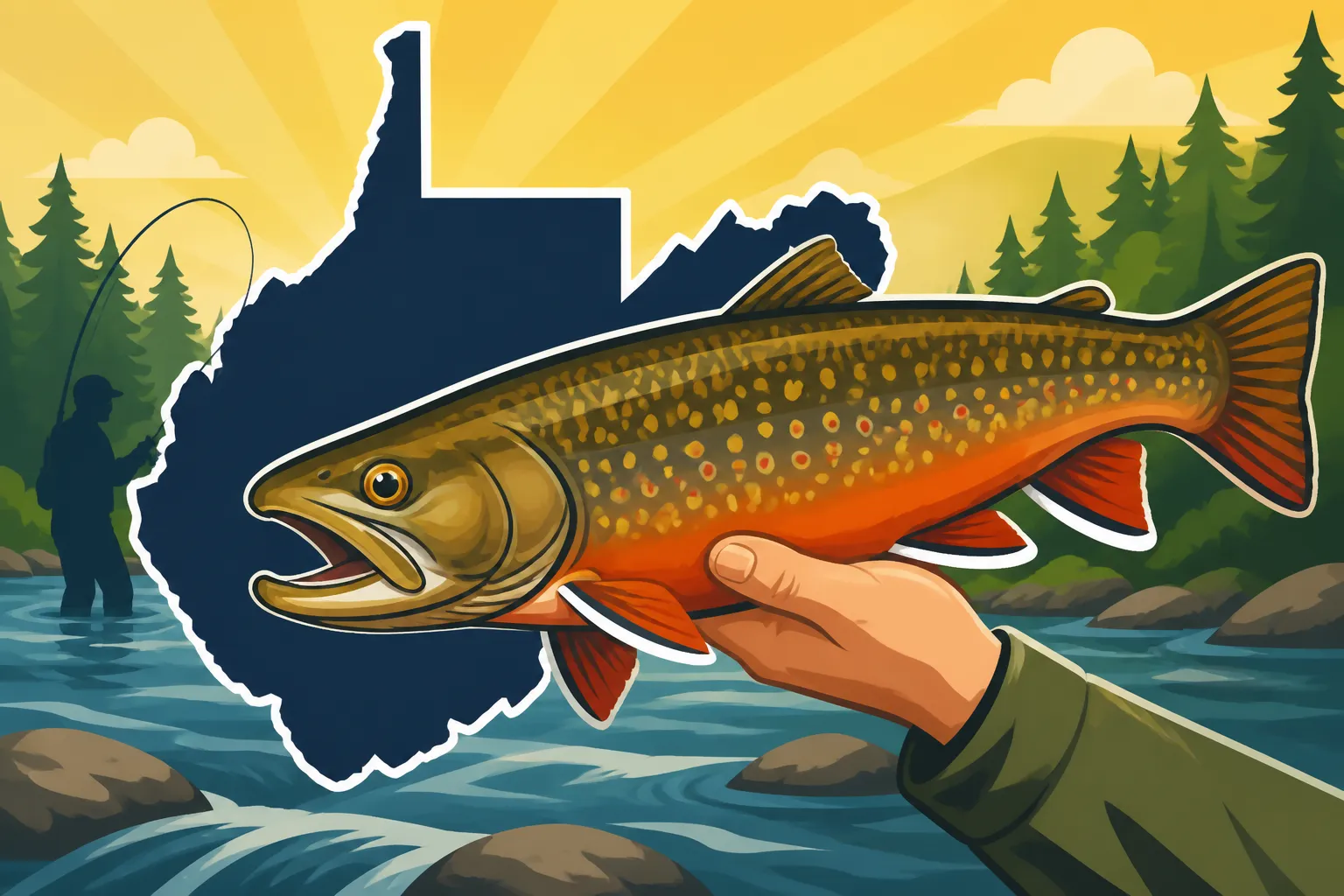
West Virginia state record brook trout weight
Every angler who's ever waded into the crisp, clear waters of a West Virginia mountain stream dreams of it: the flash of vibrant colors, the powerful tug on the line, and the realization that you've hooked a true trophy. But when it comes to the native brook trout, landing a truly monumental specimen is more than just luck—it's a testament to patience, skill, and a deep understanding of these elusive fish. This guide dives deep into the celebrated West Virginia state record brook trout, exploring its significance, the unique challenges of pursuing these beautiful native fish, and how you might just land a personal best in the Mountain State.
The Elusive State Record Brook Trout
The state record for any fish species in West Virginia represents the pinnacle of angling achievement, a moment etched in the annals of local fishing lore. For the brook trout, a species deeply intertwined with the wild spirit of our mountains, that record is particularly special. It speaks to the health of our most pristine waters and the resilience of a truly iconic fish.
What is the West Virginia State Record Brook Trout Weight?
While precise figures and historical details can be elusive and change over time, the West Virginia state record brook trout stands as a remarkable achievement, a fish that defied the typical size expectations for its species. This isn't your average stocked rainbow; catching a brook trout of record proportions in our wild streams is a monumental feat. It highlights that even in waters where brook trout tend to be smaller, tucked away in remote headwater streams, nature can sometimes produce an absolute leviathan. This record isn't just about a number; it's a story of a truly exceptional fish found in equally exceptional conditions.
The sheer difficulty in finding a brook trout of record size speaks volumes about the challenge. These aren't fish that grow quickly or easily. They thrive in very specific, often harsh environments, and reaching such a size indicates a lifetime of evading predators, finding abundant food in lean conditions, and surviving in some of the wildest parts of West Virginia.
Why Brook Trout Records are So Rare and Special
Unlike some other trout species that are regularly stocked and can grow quite large in nutrient-rich lakes or tailwaters, native brook trout in West Virginia typically inhabit small, cold mountain streams. Their growth is often limited by the available food sources and the confined nature of their habitat. Because of this, most wild brook trout you encounter will be on the smaller side, though no less beautiful or feisty. This inherent characteristic makes any brook trout exceeding a certain size a true rarity, and a state record brook trout is in a league of its own.
Think about it: while you might catch several healthy brown or rainbow trout on a good day from a larger river, finding even a single brook trout over, say, 12 inches, is often the highlight of a trip. A record-setting fish would have to have lived for many years, navigating natural challenges and outwitting countless anglers, all while growing to an extraordinary size for its species. This makes the record a testament not only to the angler's skill but also to the pristine conditions of the water it called home. It's a reminder of what our wild places are capable of producing when left undisturbed.
Understanding West Virginia's Native Brook Trout
To truly appreciate the significance of the state record brook trout, it helps to understand this incredible species itself. West Virginia's native brook trout are not just any fish; they are a vital part of our ecological heritage and a source of immense pride for local anglers.
The Brook Trout: West Virginia's State Fish
The brook trout, Salvelinus fontinalis, holds a special place in the heart of West Virginia, recognized proudly as our official state fish. This designation isn't just symbolic; it reflects the deep historical and ecological connection this species has with our mountainous landscape. These fish are true indicators of healthy, high-quality aquatic ecosystems. They demand cold, clean, and well-oxygenated water, often found in the pristine headwater streams nestled high in the Appalachians. If you find thriving populations of native brook trout, you can be sure the water quality is excellent.
Their beauty is unmistakable: a dark, olive-green back mottled with worm-like patterns, vibrant red spots encircled by blue halos along their flanks, and striking white leading edges on their lower fins. Anglers often refer to them affectionately as "brookies" or "speckled trout." They're a relatively small species, typically ranging from 6 to 10 inches in West Virginia's wild streams, which makes a record-setting catch all the more astonishing. For a deeper dive into these remarkable fish, check out Brook Trout: West Virginia's Native and State Fish.
They prefer complex stream habitats with plenty of cover from fallen logs, undercut banks, and large rocks, which provide both shelter from predators and ambush points for their prey. Their presence signals a healthy forest canopy that keeps water temperatures cool and a watershed free from excessive pollution and siltation. Protecting these small, wild streams is crucial not just for the brook trout, but for the overall health of our state's natural resources.
Factors Influencing Brook Trout Growth and Size
Several key factors play a critical role in how large a brook trout can grow, especially in a wild, native environment like West Virginia. Foremost among these is food availability. In many high-elevation streams, food sources—primarily aquatic insects, small terrestrial insects that fall into the water, and occasionally small baitfish—can be sparse. A brook trout needs a consistent, abundant diet to reach and maintain a large size, which is a rare commodity in these typically low-nutrient waters.
Another crucial factor is water temperature and quality. Brook trout thrive in cold water, ideally below 68°F (20°C). Streams that remain consistently cold throughout the year, even during hot summers, offer the best conditions for growth and survival. Conversely, even short periods of elevated water temperatures can stress these fish, limiting their growth potential and sometimes even proving fatal. Native trout species found in West Virginia often inhabit these fragile environments. Lastly, genetics and fishing pressure also play a role. Some individual brook trout may simply have the genetic predisposition to grow larger, given the right conditions. Low fishing pressure in remote, hard-to-access areas also allows fish to live longer, increasing their chances of reaching a trophy size. It's a delicate balance of nature and opportunity that allows a few exceptional individuals to become true giants of their species.
Chasing Your Own Trophy Brook Trout
The dream of catching a trophy brook trout, perhaps even challenging the state record, is a powerful motivator for many West Virginia anglers. While the record fish itself is a once-in-a-lifetime anomaly, landing a personal best or a genuinely large native brookie is absolutely within reach if you know where to look and how to approach these sensitive fish.
Where the Big Ones Hide: Prime Brook Trout Habitat
If you're looking for larger-than-average brook trout, you'll need to seek out environments that offer a little more than the typical tiny mountain run-off. Often, the biggest brook trout are found in the more remote, less-fished headwater streams within the expansive Monongahela National Forest. These streams, though still small, may have deeper pools, more consistent flows, and slightly richer food sources than their higher-elevation cousins. They are often nestled in areas that require a bit of a hike, deterring casual anglers and allowing the fish to grow with less pressure. Check out our guide to Best Trout Streams in West Virginia for some ideas.
Specific types of water within these streams are key. Look for areas with significant structural diversity: deep plunge pools at the base of small waterfalls, large boulders that create strong current breaks, and lengthy undercut banks that offer secure hiding spots. These areas not only provide refuge from predators but also act as prime ambush points where a larger brook trout can efficiently feed. Rivers like the upper reaches of the Shavers Fork, discussed in Shavers Fork Brook Trout Fishing, or the pristine waters of the Cranberry River, a favorite for fly anglers as detailed in Cranberry River Fly Fishing, are prime examples of places where conditions might align for a truly memorable brook trout encounter. Remember, these fish are wild, wary, and wise, so approaching these spots with stealth is paramount.
Gear and Techniques for Trophy Brook Trout
Successfully targeting trophy brook trout in West Virginia's often tight, overgrown streams requires a specific approach and light tackle. Forget your heavy bass rods; precision and finesse are the names of the game. An ultralight spinning rod (4-6 foot range) paired with a small, lightweight reel spooled with 2-4 pound monofilament or fluorocarbon line is often ideal. This setup allows for delicate presentations of small spinners (like Panther Martins or Mepps), tiny spoons, or even just a natural worm or hellgrammite. When using artificials, presentation is key—a natural drift without drag is much more effective than a clumsy cast.
For the purist, fly fishing is an incredibly rewarding method for brook trout. A lightweight fly rod (2-4 weight, 6-8 feet long) is perfect. Small dry flies (like Elk Hair Caddis, Adams, or Royal Wulff) imitating terrestrial insects that fall into the water, or tiny nymphs (such as Pheasant Tails or Hare's Ears) drifted naturally under a small indicator, are highly effective. Stealth is your best friend when fly fishing for brookies; low light conditions, a quiet approach, and casting from a distance will greatly increase your chances. For more on this, our Fly Fishing for Trout in West Virginia guide can offer deeper insights. You'll also want to make sure your Best Gear for West Virginia Trout Fishing is appropriate for these sensitive environments, perhaps even picking up some of it from a retailer like Amazon, which often carries specialized ultralight gear. Don't forget quality Best Waders for West Virginia Trout Streams and wading boots for navigating slippery streambeds.
When you do hook into a nice brook trout, handle it with extreme care, especially if you plan to release it. These fish are delicate, and prolonged exposure to air or rough handling can severely impact their survival. A soft, rubberized net can be invaluable for a quick, safe landing.
Regulations and Conservation
Understanding and respecting fishing regulations, particularly for sensitive species like native brook trout, is not just about avoiding a ticket; it's about ensuring these precious resources remain for future generations.
Special Regulations for Native Trout Waters
West Virginia is home to a number of incredible wild and native trout waters, many of which are specifically managed to protect the delicate brook trout populations. It's absolutely crucial that before you head out, you consult the current West Virginia fishing regulations summary, available from the DNR, or check online. Our comprehensive guide to West Virginia Fishing Regulations Explained is an excellent starting point, but always verify the latest information. Many of these prime brook trout streams, especially in national forest areas, operate under "Special Regulation Waters" rules.
These special regulations can vary significantly but often include requirements like catch-and-release only, limits to artificial lures or flies with single, barbless hooks, or specific season dates that differ from general trout waters. The intent behind these rules is to minimize pressure on the wild fish, allow them to reproduce successfully, and ensure they can grow to their full potential without being overharvested. Violating these rules isn't just illegal; it directly harms the very populations we cherish. You'll find a detailed breakdown of these important areas in Special Regulation Waters in West Virginia, highlighting specific streams and their unique guidelines. Always carry a copy of the regulations or have them easily accessible on your phone, even if you purchase your license online via WVhunt.com.
The Importance of Catch and Release
For native brook trout, catch and release isn't just a suggestion; it's a critical conservation practice that directly impacts the health and future of these populations. As discussed, these fish are slow-growing and incredibly sensitive to environmental changes and fishing pressure. Every large, mature brook trout that is safely released has the potential to spawn, contributing its genes to the next generation, and helping maintain the genetic diversity and vigor of the wild population. This is especially true for trophy-sized fish, which are likely older and have proven their resilience.
When practicing catch and release, minimize handling as much as possible. Try to keep the fish in the water, unhooking it gently with pliers or forceps. If you must remove it for a quick photo, do so quickly, supporting its body horizontally, and return it to the water immediately. Avoid touching the gills or squeezing its body. Allow the fish to recover in the water until it swims away strongly on its own. For more detailed tips on how to give these fish the best chance of survival, take a look at our guide on West Virginia Catch and Release Rules for Trout. By embracing responsible angling practices, we all contribute to the long-term health of West Virginia's native brook trout fisheries, ensuring that the dream of catching a magnificent, record-worthy fish remains a possibility for generations to come.
Disclaimer
This article is for general informational purposes only and does not constitute professional advice. Laws, prices and regulations vary by location and change over time. Consult a qualified professional for guidance on your specific situation.