West Virginia boat title vs registration difference
It can be incredibly confusing trying to figure out all the ins and outs of boat ownership in West Virginia, especially when terms like "title" and "registration" get thrown around as if they're interchangeable. Trust me, many an angler has been left scratching their head, wondering if they've got all their ducks in a row with the West Virginia Division of Natural Resources (WV DNR). This guide is here to clear up that common confusion, walking you through the distinct differences between a boat title and registration so you can hit the water with peace of mind.
Understanding Your Boat's Title in West Virginia
Let's start with the boat title. Think of it just like the title for your car or even your house. It’s a fundamental document that proves legal ownership. Without a title, you don’t officially own the boat in the eyes of the law, and that can lead to some serious headaches down the line if you ever try to sell it, insure it, or even just prove it’s yours.
What Exactly is a Boat Title?
A West Virginia boat title is a certificate issued by the WV DNR that names the legal owner of a vessel. It contains critical information about the boat, such as its hull identification number (HIN), make, model, year, and length, along with the owner's details. This document is your undeniable proof that you bought the boat legally and that it belongs to you. It's not something you carry around with you on the water like a fishing license; it's a secure, permanent record of ownership that should be kept in a safe place, like a fireproof safe or safety deposit box.
The title essentially transfers from one owner to another during a sale. When you purchase a new boat from a dealership, they'll often handle the initial titling process for you. If you buy a used boat from a private seller, it's absolutely crucial that the seller provides you with a properly endorsed title. If they don't, you could find yourself in a very difficult situation trying to prove ownership later, especially if the previous owner isn't cooperative or is nowhere to be found. Always double-check that the HIN on the title matches the one physically on the boat!
When Do You Need a Boat Title?
In West Virginia, you generally need to title any motorized vessel, as well as sailboats 14 feet or longer. This includes everything from your speedy bass boat that you use for Summersville Lake Bass Fishing to that trusty jon boat for exploring shallow rivers. Non-motorized vessels under 14 feet, like canoes or most kayaks, are typically exempt from titling, although they might still need to be registered depending on their use.
You'll need to go through the titling process in several scenarios:
- Purchasing a New Boat: Whether it's from a dealer or a private party, securing a title in your name is the first step in establishing legal ownership.
- Bringing a Boat from Out-of-State: If you're moving to West Virginia and bringing your boat with you, you'll need to apply for a West Virginia title.
- Transfer of Ownership: This is perhaps the most common reason. Anytime a boat changes hands, a new title must be issued to the new owner. This is where many people get tripped up; they might think a bill of sale is enough, but it’s not for official ownership.
- Major Modifications: Sometimes, if you make significant alterations to the hull or engine configuration that change the boat's classification, a new title or an updated one might be required.
- Inheritance: If you inherit a boat, you'll need to transfer the title into your name, often with additional paperwork like a death certificate or probate documents.
Neglecting to title your boat properly can cause a world of hurt. You won't be able to register it, meaning you can't legally operate it. And imagine trying to get insurance without proof of ownership!
Deciphering West Virginia Boat Registration
Now, let's talk about registration. If the title is about who owns the boat, the registration is about the boat's permission to operate on West Virginia's waterways. Think of it like the license plate and annual stickers on your car – they show that your vehicle is legally permitted on the roads.
The Purpose of Boat Registration
West Virginia boat registration serves several important purposes. First, it creates a unique identification for your vessel, allowing the WV DNR to track boats and their owners. This is vital for law enforcement, emergency services, and even for locating a lost or stolen boat. Each registered boat is assigned a unique registration number, which must be clearly displayed on the bow of the vessel, typically with a Class B registration sticker.
Second, registration fees contribute to the conservation efforts and recreational services provided by the state. These funds help maintain boat ramps, stock fish in lakes and rivers, and generally improve boating and fishing access across West Virginia. So, when you pay your registration fee, you're actually investing back into the very waterways you enjoy for Walleye Fishing in West Virginia or Smallmouth Bass Fishing in West Virginia.
Third, it helps ensure that all boaters are aware of and adhere to the state's boating laws and safety regulations. For instance, understanding West Virginia Boating Laws for Anglers is crucial for everyone on the water. Registration acts as a gateway to ensuring compliance and promoting responsible boating.
Renewal and Display Requirements
Most boat registrations in West Virginia are valid for three years, expiring on March 31st of the third year. This means you can't just set it and forget it! It's your responsibility to remember to renew your registration before it expires to avoid any penalties. You can easily check When Does a West Virginia Boat Registration Expire? to keep track.
Once registered, you'll receive a registration card and decals. The registration number, consisting of "WV" followed by a series of numbers and letters, must be painted or permanently affixed to both sides of the forward half of the boat. The numbers need to be block letters, at least three inches high, and in a contrasting color to the hull. The validation decals, which show the current registration period, must be displayed on each side of the bow, within six inches of and directly in line with the registration number. You must also carry your registration card on board the vessel whenever it is in operation.
What about those smaller vessels? Well, Are Kayaks Required to Be Registered in West Virginia? is a common question. Generally, any motorized vessel and any sailboat 14 feet or longer, even if non-motorized, must be registered. However, paddle-powered boats like canoes, kayaks, and stand-up paddleboards that are not motorized are typically exempt from registration. Always double-check the latest WV DNR regulations, as rules can occasionally change!
Key Differences and Why They Matter
Now that we've dug into each concept, let's lay out the distinct differences side-by-side. This is where a lot of the confusion really gets cleared up, and you’ll see why understanding both is non-negotiable for any serious West Virginia boater.
Ownership vs. Operating Privilege
This is the core distinction:
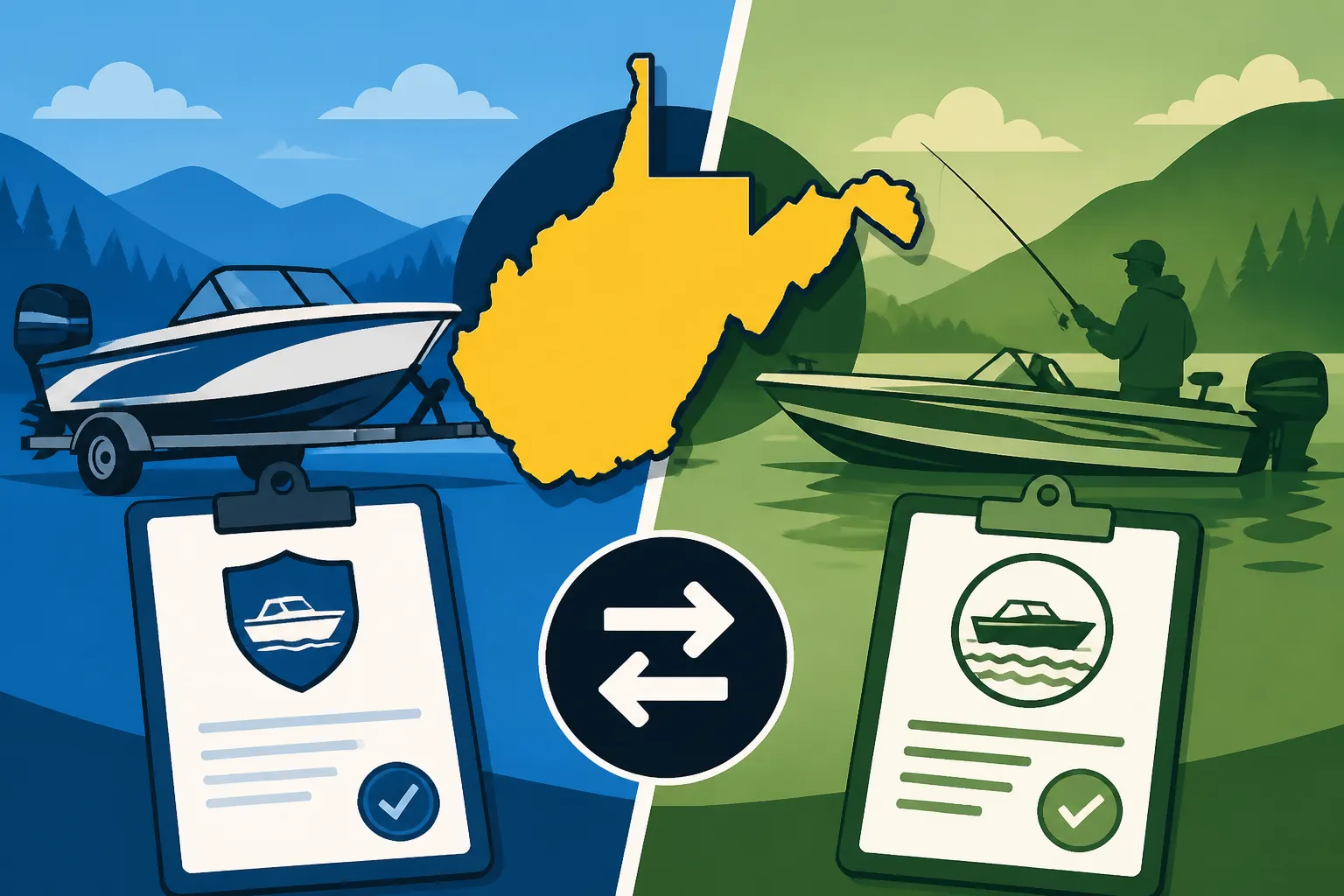
- Boat Title = Proof of Ownership. It's about who legally owns the boat. It’s a one-time issuance (unless you transfer ownership) and doesn't expire in the same way a registration does. It's the document you'd show if someone challenged your right to the vessel.
- Boat Registration = Operating Privilege. It's about having state permission to use the boat on public waters. It has an expiration date and requires renewal. It’s the document (and decals) that law enforcement will check if they pull you over on the water.
Think of it this way: You might own a car (have the title in your name), but if your registration tags are expired, you can't legally drive it on the road. The same principle applies to boats in West Virginia. You can legally own a boat, but if it's not registered, you can't operate it on the water.
Here’s a quick table to summarize the main points:
| Feature | Boat Title in West Virginia | Boat Registration in West Virginia |
|---|---|---|
| Purpose | Proves legal ownership | Grants permission to operate on public waters |
| Issued By | West Virginia Division of Natural Resources (WV DNR) | West Virginia Division of Natural Resources (WV DNR) |
| Document | Certificate of Title | Registration Card & Decals |
| When Needed | Purchase, transfer of ownership, out-of-state boat | Before operating on public waters |
| Validity | Permanent (until ownership transfer) | Typically three years |
| Display | Kept in a safe place (not on the boat) | Registration number on bow, decals on bow, card on board |
| Exemptions | Most non-motorized vessels under 14 feet | Most non-motorized vessels without a motor |
Legal Consequences of Non-Compliance
Operating a boat without proper title or registration in West Virginia can lead to some significant penalties. If you're stopped by a WV DNR officer and your boat isn't registered, or you don't have your current registration card on board, you could face fines. These fines can add up quickly, not to mention the inconvenience of potentially having to return to shore or being delayed. For repeat offenders, the penalties can become even more severe.
Furthermore, if you're involved in an accident and your boat isn't properly registered, it could complicate insurance claims and legal liabilities. Imagine the stress of an incident on the water, only to find out your paperwork isn't in order. It's an avoidable hassle that no one wants. That's why understanding West Virginia Boat Registration Requirements is so critical.
And what about safety? While not directly tied to titling or registration, being prepared on the water goes hand-in-hand with legal compliance. Always make sure you have enough Life Jacket Requirements for West Virginia Boaters for everyone on board, and consider carrying a marine-specific first aid kit, readily available from retailers like Amazon.
Navigating the Process: Tips for Anglers
Getting your boat titled and registered doesn't have to be a daunting task, but it does require attention to detail. Having all your paperwork in order before you head to the WV DNR office (or online) will save you a lot of time and frustration.
Where to Title and Register Your Boat
The West Virginia Division of Natural Resources is the agency responsible for both titling and registering vessels. You can usually start the process either by mail, online through their WVhunt portal, or by visiting a regional WV DNR office or an authorized agent.
For a new title and registration, you’ll typically need:
- Application Form: The official WV DNR vessel titling and registration application.
- Proof of Ownership: This could be a manufacturer's statement of origin (MSO) for a new boat, or a properly endorsed title from the previous owner for a used boat. If you don't have a title for a used boat (e.g., if it's an older model from a state that didn't require titling), you might need a notarized bill of sale and potentially other documents to establish ownership.
- Proof of Sales Tax Payment: If applicable, you'll need proof that you paid sales tax on the purchase price of the boat.
- Photo ID: For verification purposes.
- Fees: Be prepared to pay the necessary titling and registration fees. The fees vary depending on the length of your boat.
Many boaters find the WVhunt.com website convenient for handling their paperwork. Just like you can learn How to buy a West Virginia fishing license online, you can often manage boat renewals and sometimes initial registrations there. It’s always a good idea to call ahead or check the WV DNR website for the most current requirements and forms before you go.
Essential Documents and Common Pitfalls
Keeping all your documents organized is key. I've heard too many stories of anglers getting ready for a big fishing trip on the New River, only to realize their boat registration is expired or they can't find their registration card. Here are a few tips:
- Keep Your Title Safe: As mentioned, the title is proof of ownership. Keep it in a secure location, separate from your boat. You don't need it on the water, and losing it can be a major pain to replace.
- Carry Your Registration Card: Always have your current registration card on board your boat when you're operating it. A waterproof dry bag, easily found on Amazon, is an excellent investment for keeping this and other important items like your phone or car keys safe and dry.
- Check Expiration Dates: Mark your calendar or set a reminder for your registration renewal. Those three years fly by quicker than you think!
- Understand Reciprocity: If you plan on fishing boundary waters like the Ohio River, be aware of specific reciprocity agreements. For example, Ohio River Fishing Rules for West Virginia Anglers might have nuances regarding licenses and registration that differ from strictly West Virginia waters.
- Boater Education: While not directly a titling/registration issue, remember that certain age groups are required to have a West Virginia Boater Education Certificate Requirement to operate motorized vessels. Being informed makes you a safer, more responsible boater overall.
Don't let the paperwork overshadow the joy of fishing in the Mountain State. Taking the time to understand the difference between your West Virginia boat title and registration now will ensure smooth sailing (and fishing!) for years to come.
Disclaimer
The information provided in this guide is for general informational purposes only and does not constitute legal advice. While we strive to keep the information up-to-date and accurate, boating laws and regulations in West Virginia can change. Always consult the official West Virginia Division of Natural Resources (WV DNR) website or contact them directly for the most current and specific requirements regarding boat titling, registration, and operation.