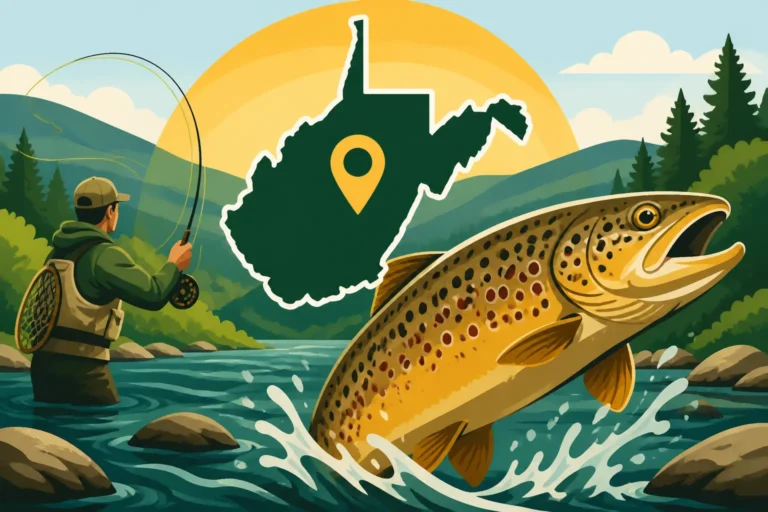
Golden Rainbow Trout Origin and Genetics
Have you ever been fishing in West Virginia and seen a flash of brilliant, almost fluorescent gold beneath the water? It's a truly unforgettable sight, often sparking a mix of awe and a little bit of confusion. Many anglers wonder if they've stumbled upon some mythical creature, or perhaps an albino rainbow trout. The truth is, that dazzling fish is likely a Golden Rainbow Trout, a unique and highly sought-after species with a fascinating origin story right here in our beloved Mountain State. This guide will dive deep into the fascinating world of Golden Rainbow Trout, exploring their unique genetics, how they came to be, and why they've become such a beloved part of West Virginia's angling culture.
What Exactly Is a Golden Rainbow Trout?
Let's clear up some common misconceptions right off the bat. When people see a Golden Rainbow Trout for the first time, their minds often jump to conclusions: "Is it an albino?" or "Is it some kind of crazy hybrid?" It's easy to understand why, given their striking appearance, but the reality is even more interesting and specific to West Virginia. These aren't just unusually colored fish; they are a distinct variant that brings a unique flash to our waters.
Dispelling the Myths: Not an Albino, Not a Hybrid
One of the most frequent questions I hear on the riverbank is whether a golden rainbow is an albino. Albinism in fish, just like in other animals, is characterized by a complete lack of pigmentation, often resulting in pure white or very pale skin and pink or red eyes due to visible blood vessels. Golden Rainbow Trout, however, are far from albino. They possess a vibrant, rich yellow-orange pigment that makes them truly glow underwater, and their eyes are typically dark, just like a regular rainbow trout. This isn't an absence of color; it's a specific presence of a different color. They also aren't a hybrid, meaning they haven't been cross-bred with another species like a brown trout or brook trout. They are, genetically speaking, 100% rainbow trout, but with a special twist. Think of them as a specific "color morph" within the rainbow trout family.
The Distinctive Appearance: More Than Just Color
While their brilliant golden hue is undoubtedly their most defining characteristic, there's more to their look than just that. Unlike the iridescent silvery sides and pink lateral stripe of a standard rainbow trout, Golden Rainbows lack that typical "rainbow" coloration. Instead, their bodies are a uniform, intense golden-yellow, often with a darker olive-gold or brown tone on their backs, gradually fading to a lighter, sometimes almost white, belly. They typically have fewer, or sometimes no, black spots compared to their traditionally colored counterparts, which further emphasizes their unique appearance. It's this unmistakable sheen that makes them stand out so dramatically, especially in clear mountain streams or lakes where they catch the sunlight. This distinctive look is precisely why they're so sought after during events like the West Virginia Gold Rush Golden Rainbow Trout Event Rules, making them a true prize for any angler.
The Mysterious Origin: A Natural Mutation Story
The story of the Golden Rainbow Trout is a testament to the wonders of nature and the careful work of fisheries biologists. It didn't happen overnight, and it certainly wasn't a deliberate genetic modification from the start. This unique fish owes its existence to a single, spontaneous event that occurred many decades ago, shaping a legacy that continues to delight anglers today.
The West Virginia Connection: A Single Fish, a Big Legacy
The tale begins right here in West Virginia, specifically at the Petersburg State Fish Hatchery. Back in the early 1950s, hatchery personnel discovered a single, unusual rainbow trout among a batch of otherwise normal fish. This particular trout exhibited an odd yellowish coloration, a complete deviation from the norm. Instead of dismissing it as an anomaly, the astute hatchery managers recognized its potential. This was not a scientific experiment gone wild; it was a fortunate, natural genetic mutation that presented an exciting opportunity. That one fish, an accidental marvel, became the progenitor of every Golden Rainbow Trout that now swims in our state's waters. It's a proud West Virginia heritage, showing how even a single unusual discovery can lead to something truly special for the angling community.
How the Mutation Was Isolated and Cultivated
Once this unique golden-colored rainbow trout was identified, the real work began. The goal was to propagate this genetic trait, not just for a single fish, but for an entire line. This involved a meticulous process of selective breeding. The original golden fish was carefully bred with other rainbow trout, and then, crucially, the offspring that displayed the desired golden coloration were identified and bred among themselves. Over successive generations, by continually selecting and breeding only the golden variants, the West Virginia Division of Natural Resources (WVDNR) hatchery staff successfully stabilized the genetic trait responsible for the golden color. This careful cultivation process, spanning many years, ensured that the golden characteristic was consistently passed down, creating the thriving population we enjoy today. It's a classic example of responsible aquaculture transforming a natural anomaly into a sustainable recreational resource, much like how specialized knowledge is cultivated through careful research, or how you might search for specific Best Gear for West Virginia Trout Fishing from a wide selection on a platform like Amazon.
Diving Deeper into the Genetics
To truly understand the Golden Rainbow Trout, we need to peel back the layers and look at the genetic code that makes them so unique. It’s not magic, but rather a fascinating example of how a small change in DNA can lead to such a dramatic visual difference. Understanding this helps us appreciate that while they look very different, they are still fundamentally rainbow trout.
The Melanin Factor: Why They're Golden
At the heart of the Golden Rainbow Trout's unique coloration is a genetic mutation that affects the production of melanin. Melanin is the pigment responsible for dark colors – blacks, browns, and grays – in most animals, including fish. In a typical rainbow trout, melanin helps create their darker backs, spots, and the silvery sheen on their sides. In the Golden Rainbow Trout, this specific mutation causes a significant reduction or alteration in melanin production. Instead of the typical dark pigments, their bodies produce an excess of a yellow-orange pigment called pteridine. This overproduction of pteridine, coupled with the reduced melanin, results in that stunning golden hue. It’s not that they lack pigment entirely (like an albino), but rather that their genetic makeup directs their bodies to produce a different type and amount of pigment. This is also why their eyes are dark; the mutation primarily affects the body's coloration, not necessarily all pigment cells throughout the entire organism. For anglers keen on identifying different species, knowing these distinctions is as crucial as understanding the subtle differences detailed in a Trout Species Identification Guide for West Virginia.
Breeding Programs and Genetic Stability
The successful propagation of the Golden Rainbow Trout relies heavily on dedicated breeding programs. After isolating the initial mutation, the WVDNR hatcheries established a specific broodstock of Golden Rainbow Trout. These fish are carefully managed to ensure the genetic trait for the golden color remains strong and consistent through each generation. This isn't a one-time fix; it's an ongoing effort. Hatchery staff continuously monitor the broodstock to prevent genetic drift and maintain the desired coloration and vigor. They ensure that the fish bred for stocking are healthy, robust, and carry that distinctive golden gene. This careful genetic management is vital for continuing the tradition of stocking these popular fish throughout West Virginia, and it’s why you can consistently find them year after year, adding a vibrant splash to our trout fishing opportunities. This contrasts with the broader strategies for Rainbow Trout Stocking in West Virginia, which often focus on sheer numbers and growth rates for general angling success.
How Golden Rainbow Trout Differ from Regular Rainbows
While they share the same species name, the genetic difference that gives Golden Rainbow Trout their striking color also comes with some subtle, and sometimes not-so-subtle, distinctions in their behavior and survival compared to their traditionally colored counterparts. These differences are important for anglers to understand, not just for the thrill of the catch, but also for conservation.
Behavioral Traits: Are They Different Swimmers?
Anecdotal evidence from anglers and observations from hatchery staff suggest that Golden Rainbow Trout might exhibit slightly different behaviors than standard rainbows, largely due to their unique coloration. Their bright gold makes them incredibly visible, particularly in clear water. This increased visibility can make them more conspicuous to predators, both avian (like eagles and ospreys) and aquatic (like larger fish or otters). As a result, some believe Golden Rainbow Trout might be a bit more wary or prone to seeking cover compared to a camouflaged standard rainbow. However, once hooked, they put up a spirited fight characteristic of any rainbow trout, making them an exciting catch. Their feeding habits generally mirror those of regular rainbows, responding well to a variety of baits, lures, and Fly Fishing for Trout in West Virginia patterns. Ultimately, while their color might make them stand out, their fundamental instincts as a rainbow trout remain largely the same.
Survival Rates and Predation Challenges
The most significant difference stemming from their golden hue is arguably their survival rate in the wild. As mentioned, their lack of natural camouflage makes them much easier targets for predators. A bright golden fish swimming in a green or rocky stream bed is a beacon, signaling its presence to anything looking for an easy meal. Because of this increased vulnerability, Golden Rainbow Trout are primarily stocked in "put-and-take" fisheries, where they are intended to be caught shortly after stocking. They are not expected to establish self-sustaining populations in most wild settings. This isn't to say they can't survive for extended periods, but their odds are considerably lower than a wild-spawned or even a regularly stocked rainbow trout that blends in better. This reality shapes the West Virginia Trout Season and Stocking Rules around them, emphasizing their role in providing a unique and exciting angling experience, rather than contributing to long-term wild populations. When pursuing these beautiful fish, it's always a good idea to consider West Virginia Catch and Release Rules for Trout to ensure careful handling, especially if you're hoping to snap a quick photo before releasing them.
The Angler's Perspective: Why They're So Sought After
For many anglers, the Golden Rainbow Trout isn't just another fish; it's a trophy, a conversation starter, and a true highlight of a fishing trip. Their distinctive appearance and the specific way they're managed within West Virginia's fisheries program contribute to their mystique and desirability.
The Thrill of the Catch: A Visual Spectacle
There’s an undeniable thrill that comes with hooking a Golden Rainbow Trout. As soon as you see that flash of gold beneath the surface, your heart skips a beat. It’s an instant recognition of something truly special and rare. Many anglers consider it a bucket-list fish, a vibrant addition to their angling memories and photo albums. Unlike catching a common species, landing a Golden Rainbow feels like winning a small lottery – a moment of pure, golden serendipity. This visual appeal is deliberately leveraged during events like the annual Gold Rush, where the WVDNR heavily stocks these vibrant fish, creating an almost treasure hunt-like atmosphere that draws anglers from all over. It’s this combination of rarity, beauty, and the sheer visual spectacle that cements their place as one of the most exciting catches in West Virginia waters. Finding the right bait or lure to attract these eye-catching fish is often a topic of discussion among anglers, and many find success with a range of options that can be found at local tackle shops or online retailers like Amazon, which offers a vast selection.
The Role in West Virginia's Stocking Program
Golden Rainbow Trout play a very specific and celebrated role in West Virginia's extensive trout stocking program. They are strategically stocked in various lakes and streams across the state, often coinciding with special events or during peak fishing seasons, such as spring and fall. Their bright color makes them easy targets, which, while reducing their long-term survival in the wild, greatly enhances the catch rate for anglers. This makes them incredibly popular for family fishing outings and for introducing new anglers to the sport, as the chance of catching something so visually impressive significantly boosts enthusiasm. The WVDNR uses the Golden Rainbow as a unique attraction, providing an added incentive for residents and non-residents alike to purchase fishing licenses, such as the ones described in the West Virginia Fishing License Guide for 2026, and participate in the state’s rich angling traditions. They are a "fun" fish, stocked to ensure a memorable and often successful experience for those who pursue them, adding an extra layer of excitement to our already fantastic trout fishing.
Golden Rainbow vs. Traditional Rainbow: A Quick Comparison
To really appreciate the Golden Rainbow, it helps to see how it stacks up against its more common cousin, the traditional rainbow trout. While they share fundamental biological similarities, their unique genetic twist creates notable differences.
| Feature | Golden Rainbow Trout | Traditional Rainbow Trout |
|---|---|---|
| Appearance | Vibrant golden-yellow/orange, darker back, light belly. Few to no black spots. | Silvery sides, pink/red lateral stripe, dark spots on back, sides, and fins. |
| Genetic Basis | Natural genetic mutation affecting melanin production, increasing pteridine. | Standard genetic code for species, balanced melanin/pteridine. |
| Origin | First observed as a single mutation at Petersburg Hatchery, WV (1950s). | Native to Pacific drainages of North America and Asia; widely introduced globally. |
| Camouflage | Low; highly visible against natural backgrounds. | High; blends well with varied aquatic environments. |
| Survival in Wild | Lower, due to increased predation from high visibility. | Higher, generally better adapted for wild survival. |
| Primary Role in WV | "Put-and-take" fisheries, special events, angler attraction. | Stocked for recreational angling, some wild populations. |
| Behavior | May be more wary due to visibility, similar fighting spirit. | Typical rainbow trout behavior. |
Conservation and Future Outlook
Even though Golden Rainbow Trout are primarily stocked for recreational purposes and have a lower natural survival rate, their continued existence and management are still important aspects of West Virginia's fisheries conservation efforts. Responsible practices ensure these unique fish can continue to be enjoyed by generations of anglers.
Maintaining Genetic Diversity
While Golden Rainbow Trout are selectively bred for their color, careful management is crucial to maintain overall genetic health within the hatchery broodstock. Relying too heavily on a small gene pool can lead to issues like inbreeding depression, where fish become less robust, more susceptible to disease, or exhibit slower growth rates. Hatchery programs, therefore, often employ strategies to ensure sufficient genetic diversity is maintained within their breeding lines. This might involve occasionally introducing new, healthy standard rainbow trout genetics into the broodstock and then carefully selecting for the golden trait in subsequent generations. This thoughtful approach helps ensure the long-term viability and health of the Golden Rainbow population, allowing us to enjoy their vibrant presence in our waters for years to come.
The Environmental Impact of Stocking
The stocking of Golden Rainbow Trout, like any introduced species, is done with careful consideration of its potential environmental impact. Because these fish are designed for "put-and-take" fisheries and are less likely to establish wild, reproducing populations, their ecological footprint is generally considered low. They are typically released into waters that are regularly stocked with other trout species, where they assimilate into the existing recreational fishery. The WVDNR constantly evaluates stocking locations and practices to ensure that these beautiful fish enhance the angling experience without negatively impacting native fish populations or the delicate balance of aquatic ecosystems. It’s a delicate dance between providing exciting recreational opportunities and upholding the principles of sound environmental stewardship, ensuring that our beautiful West Virginia waters remain healthy and vibrant for all species, as outlined in the West Virginia Fishing Regulations Explained and other similar guidelines.
Ultimately, the Golden Rainbow Trout is a unique and cherished part of West Virginia's angling landscape, a testament to a natural anomaly nurtured into a beloved tradition. Its dazzling color makes every catch a memorable one, adding a touch of gold to the wild and wonderful experience of fishing in our state.
Disclaimer
This article is for general informational purposes only and does not constitute professional advice. Laws, prices and regulations vary by location and change over time. Consult a qualified professional for guidance on your specific situation.