How to catch trout in a beaver pond stream
Many anglers dream of finding those secluded, untouched fishing spots where the water teems with eager trout, far from the crowds. But in reality, uncovering such gems often feels like chasing a mythical creature, leaving you frustrated with overfished waters or hard-to-access areas. This guide is here to tell you that these hidden havens exist in West Virginia, specifically in the often-overlooked world of beaver pond streams, and we'll walk you through exactly how to find them and catch their resident trout.
Why Beaver Ponds Are Unsung Trout Havens in West Virginia
Beaver ponds often get a bad rap, sometimes seen as messy disturbances in a pristine landscape. But for those of us who chase trout, especially wild and native brook trout in the Mountain State, these dynamic ecosystems are nothing short of incredible. They create unique habitats that can be absolute magnets for trout, offering everything a fish could want – and then some.
The Ecosystem Engineers: How Beavers Create Ideal Trout Habitat
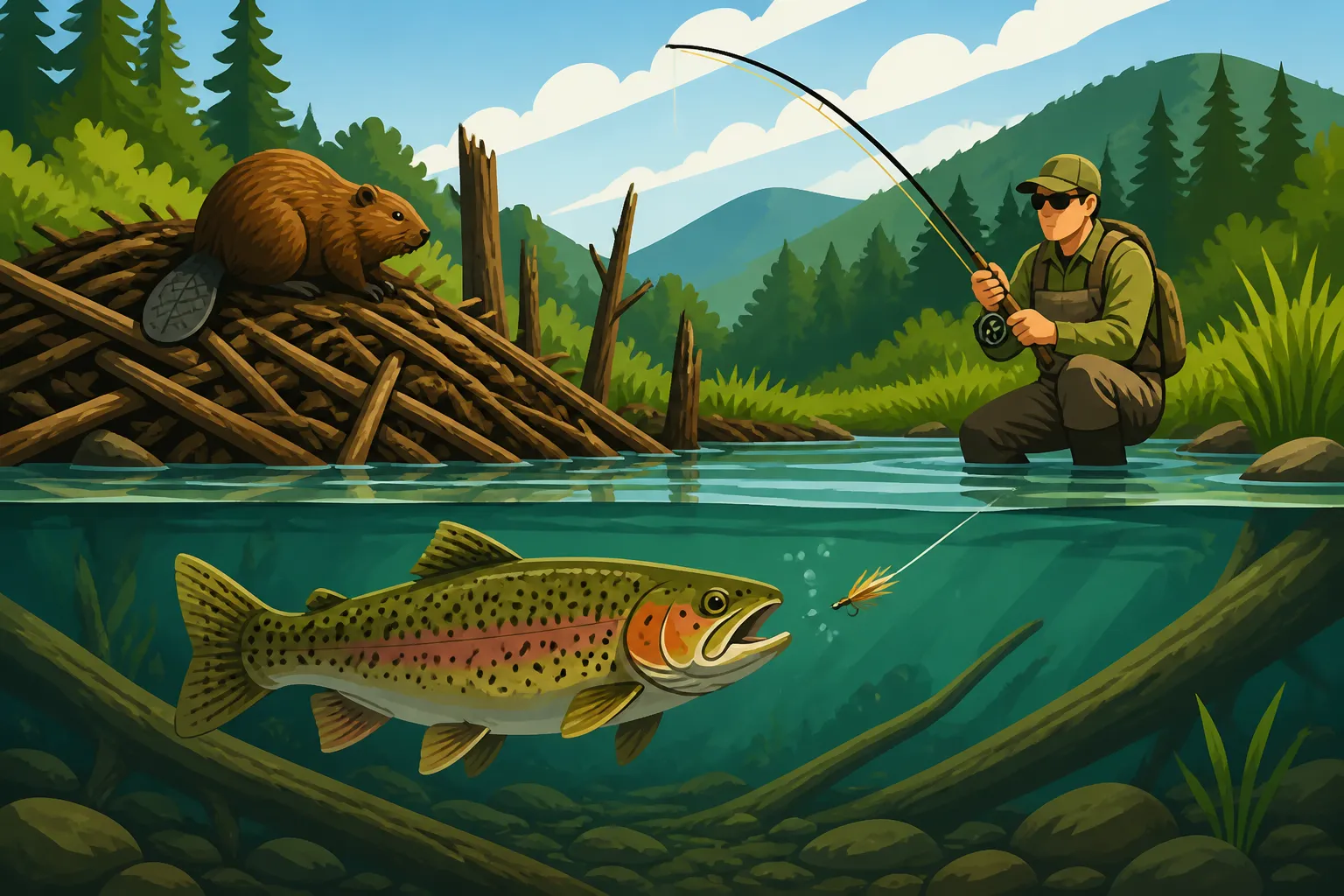
You see, beavers aren't just damming up streams for fun; they're ecosystem engineers, drastically altering the landscape in ways that profoundly benefit trout. When beavers build their dams, they slow down fast-flowing mountain streams, creating deeper, stiller pools upstream. These pools are vital. They provide refuge from predators, especially large birds of prey or otters, and they offer a break from the relentless current that smaller trout can struggle against.
Beyond just depth, these ponds create more diverse habitat. The flooded timber and submerged branches become intricate underwater structures, perfect hiding places for trout. Think of it like an underwater apartment complex: plenty of rooms to dart into when danger lurks. These calmer, deeper sections also tend to retain cooler water temperatures in summer, which is absolutely crucial for trout survival when the surrounding stream might be getting too warm. We often hear about the importance of cool, oxygenated water for trout, and beaver ponds, in their own unique way, contribute to this by creating pockets of thermal refuge. They also tend to filter out sediment, leading to clearer water downstream over time, which can enhance overall stream health.
A Buffet for Trout: Abundant Food Sources
One of the biggest advantages beaver ponds offer for trout is a veritable smorgasbord of food. The slower moving water and increased organic matter in these ponds support a much richer invertebrate community than a fast, shallow riffle. Larval insects like dragonflies, damselflies, and various aquatic worms thrive in the pond's silty bottoms and among the submerged vegetation. These are prime food sources for growing trout.
But it’s not just aquatic insects. The pond's edges, often rich with vegetation, attract terrestrial insects like grasshoppers, beetles, and ants, which frequently fall into the water. When you're fishing a beaver pond, you're tapping into an environment where trout don't have to work as hard to find a meal; it's practically delivered to their doorstep. This abundance of food means the trout in these ponds can often grow larger and be more robust than their counterparts in the main stem of the stream, making them a truly rewarding target for anglers.
Locating and Accessing West Virginia's Hidden Beaver Pond Gems
Finding beaver ponds isn't always as simple as looking at a road map. They're often tucked away in less-traveled areas, adding to their allure but also their challenge. However, with a bit of detective work and respect for the land, you can uncover these fantastic fishing opportunities in West Virginia.
Satellite Sleuthing and Topographic Map Treasures
The best way to start your beaver pond quest in West Virginia is from the comfort of your home, using modern technology combined with old-school map reading. Satellite imagery, readily available through various online mapping tools, is your secret weapon. Look for small streams, especially in less developed, forested areas, and scan for tell-tale signs: wider, darker sections of water where the stream visibly backs up, often with areas of flooded timber or distinct crescent-shaped dams visible. You're essentially looking for where the stream "fattens" up.
Once you spot potential ponds, cross-reference with topographic maps. These maps will show elevation changes, access roads (or lack thereof), and trails. Areas with gentler slopes near streams are often prime candidates for beaver activity, as beavers prefer less steep terrain for their construction projects. Pay close attention to public lands, like sections of the Monongahela National Forest or various Wildlife Management Areas, as these offer legal access without needing permission from private landowners. These tools can help you narrow down your search before you even put on your wading boots, giving you a much better chance of success.
Ethical Access and Respectful Exploration
Once you've identified a promising beaver pond, accessing it is the next step. This often means a hike, sometimes a significant one, into the wilderness. Always be mindful of land ownership. If a pond appears to be on private property, you absolutely must seek permission from the landowner before stepping foot on it. Trespassing is not only illegal but also harms the reputation of all anglers, potentially leading to restricted access for everyone in the future.
When you're on public land, practice Leave No Trace principles. Carry out everything you carry in, including any fishing line scraps or snack wrappers. Beaver ponds, by their nature, are fragile ecosystems. Avoid disturbing the dam itself or the surrounding bank more than necessary. The goal is to leave the area exactly as you found it, preserving its wild beauty and fishing potential for future generations. Also, be prepared for what you might encounter; these areas are often remote, so let someone know your plans, carry appropriate safety gear, and be ready for rough terrain. Learning about Wading Techniques for West Virginia Trout Streams can be incredibly helpful here, as stream crossings and muddy banks are common.
Essential Gear and Stealthy Techniques for Beaver Pond Trout
Fishing beaver ponds effectively requires a slight adjustment from your typical stream or lake approach. The tight quarters, varied water depths, and often spooky wild trout mean a more precise, subtle strategy usually pays off. You don't need a ton of specialized gear, but the right setup will make all the difference.
The Right Rod, Reel, and Line for Tight Quarters
When it comes to gear for beaver pond trout, think light and versatile. For fly anglers, a short, sensitive fly rod – perhaps a 6 to 7.5-foot, 2 to 4-weight rod – is ideal. The shorter length makes casting in brushy, overgrown areas much easier, preventing constant snags on overhead branches. Pair this with a matching floating line. For those who prefer spinning gear, an ultralight spinning rod in the 5 to 6-foot range, spooled with 4-pound test monofilament or fluorocarbon, is perfect. The light line is less visible to wary trout, and the rod provides the sensitivity needed to detect subtle bites.
You can find a wide range of these ultralight rods and reels on Amazon, often in budget-friendly combos that are perfect for this type of close-quarters fishing. Consider a reel with a smooth drag system, as even small trout can put up a surprisingly good fight in these confined spaces. Remember, these fish aren't always big, but they're often scrappy and require finesse to land.
Lures, Flies, and Baits: Matching the Hatch (or the Buffet)
The beauty of beaver ponds is their diverse food sources, meaning you have options for what to present to the trout. For fly anglers, a selection of terrestrial patterns (like small foam hoppers, ants, or beetles) is excellent, as are general attractor patterns such as a Royal Wulff or an Elk Hair Caddis on the surface. Subsurface, small nymph patterns like a Hare's Ear or Pheasant Tail, often fished under a strike indicator, can be incredibly effective when trout are feeding deeper. Don't forget streamer patterns like a small Woolly Bugger; these can entice aggressive strikes, especially from larger fish. For more specific patterns, you can learn How to fish a wooly bugger for trout.
Spinning anglers should focus on small, inline spinners (like Panther Martins or Mepps, typically in sizes #0 or #1), tiny spoons, or micro jigs. Colors that imitate natural forage, such as black, brown, or olive, are often successful. Live bait, if permitted in the specific stream (always check West Virginia Fishing Regulations Explained first!), like garden worms or small minnows, can also be highly effective, fished under a bobber or on a light bottom rig. The key is small presentations that mimic the natural food sources abundant in these ponds.
Here's a quick reference table for common beaver pond presentations:
| Presentation Type | Recommended Lures/Flies/Baits | Best Conditions | Tips for Success |
|---|---|---|---|
| Dry Flies | Elk Hair Caddis, Royal Wulff, Foam Hopper, Ant | Warmer weather, active surface feeding | Cast near structure, let drift naturally |
| Nymphs | Hare's Ear, Pheasant Tail, Copper John | Deeper water, cooler temperatures, no surface activity | Fish under an indicator, vary depth |
| Streamers | Woolly Bugger (olive, black), Sculpzilla | Aggressive fish, after rain, searching for bigger trout | Strip erratically, target submerged wood |
| Spinners | Mepps #0-#1, Panther Martin #0-#1 | All conditions, especially for active fish | Steady retrieve, vary speed, cast into pockets |
| Micro Jigs | Marabou jigs, grub jigs | Deeper holes, slow retrieve, vertical jigging | Use light line, feel for subtle taps |
| Natural Bait | Worms, small minnows (check regulations) | All conditions, when fish are finicky | Fished under a bobber or on light bottom rig |
Stealth, Presentation, and Working the Water
The most crucial technique for beaver pond fishing in West Virginia is stealth. These fish, especially native brook trout, can be incredibly wary. Approach the water slowly, keeping a low profile. Avoid heavy footsteps on the bank that can send vibrations through the water. Long casts aren't usually necessary; instead, focus on accurate, gentle presentations to specific targets.
Work the water thoroughly. Start by casting to the edges, near any visible structure like fallen trees, beaver lodges, or undercut banks. These are prime ambush points. Then, gradually work your way towards the deeper middle sections of the pond. Don't be afraid to let your fly or lure sit for a moment after it lands, mimicking an insect falling into the water. Sometimes, a subtle twitch is all it takes. Be patient, observe the water for rises or movement, and move slowly and deliberately from one promising spot to the next.
Conservation and Ethics: Preserving West Virginia's Beaver Pond Fisheries
The wild nature of beaver pond trout fishing comes with a significant responsibility: preserving these unique environments and the fish within them. Because these areas are often remote and hold populations of native and wild trout, our actions as anglers have a direct impact on their sustainability.
Catch and Release: Protecting Native and Wild Trout Populations
Many beaver ponds, especially those in high-elevation mountain streams, are home to native brook trout. These fish are often smaller, but they are incredibly special – direct descendants of the trout that have inhabited these waters for millennia. Unlike stocked trout, which are raised in hatcheries (you can read more about West Virginia Trout Season and Stocking Rules for those fish), wild trout populations rely entirely on natural reproduction.
For this reason, practicing catch and release is highly recommended, and often essential, when fishing beaver ponds. If you do choose to keep a fish where regulations allow, keep only what you truly intend to eat and never exceed West Virginia Bag and Possession Limits by Species. When releasing fish, handle them gently with wet hands, minimize their time out of water, and revive them carefully before letting them swim off. Using barbless hooks can also significantly reduce stress and injury to the fish, improving their chances of survival. Our choices can ensure that these amazing wild trout continue to thrive for years to come.
Leave No Trace: Maintaining the Wilderness Aesthetic
The allure of beaver pond fishing is deeply tied to its wilderness feel. There's something magical about being in a secluded spot, surrounded by nature, with only the sounds of the stream and the rustle of leaves. To maintain this experience, adhering strictly to "Leave No Trace" principles is paramount. This means packing out everything you pack in – even biodegradable items like apple cores or orange peels, which can take a long time to decompose and can attract wildlife.
Avoid disturbing vegetation or trampling banks unnecessarily. If you see litter left by others, consider taking a small bag to pack it out. This collective effort ensures that the next angler, hiker, or wildlife enthusiast who discovers these spots finds them just as pristine and beautiful as you did. These places are treasures, and it's up to us to protect them. Investing in a good, small dry bag (you can find many suitable options on Amazon) is a great idea to keep your trash separate and prevent anything from accidentally falling out.
Respecting Wildlife and the Beaver's Work
When you venture into beaver pond country, you're entering the home of many wild creatures. Always be aware of your surroundings and respectful of wildlife. This means observing animals from a distance, avoiding disturbing their natural behaviors, and keeping any pets on a leash and under control. Beavers themselves are fascinating creatures, and their engineering feats are what create these unique fishing spots. It's crucial not to damage their dams, lodges, or food caches. These structures are vital to the ecosystem they create and to the beavers' survival.
Understanding the role of the beaver and appreciating the wildness of these areas contributes not only to a more ethical fishing experience but also to a deeper connection with the natural world. Fishing in a beaver pond stream is more than just catching trout; it's about experiencing a vibrant, dynamic ecosystem that thrives thanks to one of nature's most diligent architects.
Disclaimer
This article is for general informational purposes only and does not constitute professional advice. Laws, prices and regulations vary by location and change over time. Consult a qualified professional for guidance on your specific situation.