Best technique for sight fishing carp
Many anglers across West Virginia experience a unique blend of excitement and frustration when they spot large carp cruising or feeding in our rivers and lakes. You see them, often right under your nose, but getting them to bite can feel like an impossible puzzle. This comprehensive guide is dedicated to unlocking the rewarding challenge of sight fishing for carp in the Mountain State, offering proven techniques to help you effectively locate, approach, and ultimately land these powerful and often underestimated fish.
Understanding West Virginia Carp: Habits and Habitats for Sight Fishing Success
Carp are incredibly adaptable fish, thriving in a wide variety of West Virginia's aquatic environments. However, sight fishing for them isn't just about stumbling upon a group of fish; it's about understanding their routines, their preferred hangouts, and how they react to their surroundings. Cracking this code is the first step to consistent success.
Where to Spot Carp in West Virginia Waters
When you're out looking for carp, think shallow, warm, and often somewhat turbid water. These aren't the fish that hang out in cold, oxygen-rich rapids (though they'll often be nearby in calmer sections!). Instead, focus your efforts on the calmer sections of our larger rivers, the vast backwaters of major impoundments, and even some of our smaller ponds and creeks.
In the mighty Ohio River, for example, carp will often be found in the slow-moving backwaters, oxbows, and shallow flats away from the main channel's current. Look for areas where feeder creeks enter the river, bringing in nutrients and warmer water. Similarly, on the Kanawha River, you'll find them in slow pools, eddies, and shallower bays. Lakes like Summersville Lake and Bluestone Lake, especially in their shallower coves and feeder arms, can hold significant numbers of carp, particularly during warmer months. You're looking for subtle signs: patches of discolored water or "mudding" where carp are rooting around on the bottom, a slight bulge or wake on the surface, or sometimes even the unmistakable sight of a golden-brown dorsal fin or tail breaking the water. Remember, carp love to forage in areas rich with submerged vegetation or soft bottoms where they can dig for insects, crustaceans, and plant matter.
Carp Behavior: Reading the Signs for a Stealthy Approach
Reading carp behavior is paramount to sight fishing success. These fish are notoriously wary, and their responses to perceived threats are often subtle yet immediate. When a carp is "mudding," its head is down, its tail is often up, and it's actively feeding on the bottom, stirring up sediment. This is often a good time to present a bait, as their focus is on feeding.
Conversely, a carp that is slowly cruising or "sunbathing" near the surface might be harder to entice, as they're often more alert and less focused on eating. Spawning season, typically in late spring to early summer when water temperatures climb, can be a chaotic time with carp splashing and rolling in very shallow water. While exciting to witness, they're often less interested in feeding during this period. The most critical thing to understand is their awareness zone. A carp's senses are finely tuned to detect danger. A shadow passing over them, a sudden vibration on the bank, or a loud splash will often send them bolting. Your goal is to approach quietly, stay low, and present your offering outside their immediate "dinner plate" zone without alerting them. The difference between success and a spooked fish often comes down to the quietest step or the softest cast.
Essential Gear for West Virginia Sight Fishing Carp
Just like any specialized form of angling, having the right tools for sight fishing carp can make all the difference. While carp can be caught on a wide range of tackle, focusing on specific setups for this stealthy approach will significantly improve your chances and enjoyment. You want gear that combines sensitivity for subtle takes with enough backbone to handle a powerful, hard-fighting fish.
Rods, Reels, and Line for the Fight
For conventional anglers targeting carp, a medium-heavy action spinning rod, typically 7 to 9 feet in length, is an excellent choice. This length provides good casting distance and leverage for fighting strong fish, while the medium-heavy action offers a balance of sensitivity and power. Pair this with a reliable spinning reel that has a smooth, strong drag system and ample line capacity. Remember, carp make powerful runs, and you need a drag that won't hesitate or stick.
When it comes to line, you'll want something robust yet stealthy. A monofilament line in the 10-20 lb test range is a versatile choice, offering good knot strength and some stretch to absorb powerful surges. Fluorocarbon leaders, typically 8-10 feet long and in the 6-12 lb test range, are almost invisible underwater and provide excellent abrasion resistance, which is crucial when fishing around rocks or submerged timber. Many anglers find great deals on quality fishing lines and reels on platforms like Amazon, making it easy to stock up. For the fly angler pursuing carp, a 7-9 weight fly rod is ideal. This weight class provides the necessary power to cast larger, wind-resistant flies and subdue strong carp. A large arbor fly reel with a smooth drag and plenty of backing is essential. A weight-forward floating line will handle most sight fishing scenarios, allowing for delicate presentations.
Stealth and Presentation: Terminal Tackle and Optics
Your choice of terminal tackle is critical for a natural, enticing presentation. For conventional setups, strong, sharp hooks are non-negotiable. Circle hooks in sizes 4 to 8 are popular for carp because they tend to hook in the corner of the fish's mouth, minimizing harm and making release easier. Wide gap hooks are also effective, especially when baiting with corn or dough balls. The key is sharp points for quick penetration.
When it comes to baits, consistency is often found in simplicity: canned corn, small pieces of bread, or homemade dough balls are highly effective. For fly fishing, think about what carp naturally eat: small nymphs, crayfish patterns, tiny worm imitations, and even specialized "bread flies" that mimic floating bread. Always try to match the size of your offering to the natural food source or what the carp are accustomed to seeing. One piece of gear that is absolutely non-negotiable for sight fishing is a good pair of polarized sunglasses. These are your eyes underwater, cutting through the glare and allowing you to spot fish, discern structure, and watch your bait or fly. Without them, you're essentially fishing blind. You can find excellent polarized sunglasses, often with different lens colors optimized for various light conditions, on Amazon. Finally, comfortable and sturdy wading boots with good grip are a lifesaver, especially if you're stalking the banks of slippery rivers or wading into shallow lake coves to get a better angle.
The Art of the Approach: Techniques for Successful Sight Fishing
Catching a carp you can see is a deeply satisfying experience, but it demands patience, precision, and a truly stealthy approach. It's less about brute force and more about finesse and understanding the fish's psychology. This is where the challenge and the fun truly lie.
Mastering the Stealthy Stalk and Cast
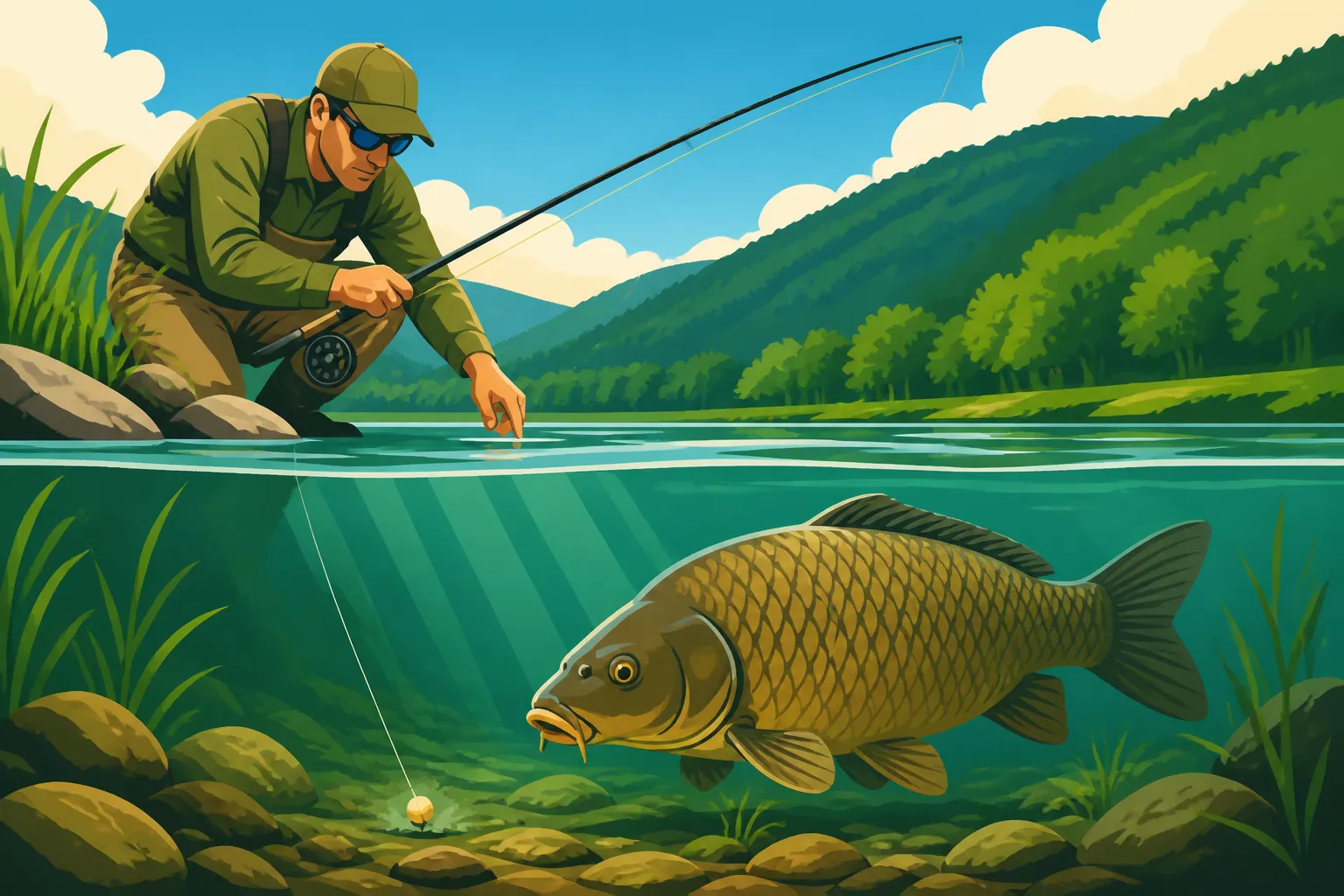
The moment you spot a carp, your heart might race, but your movements must slow down. Approach the water's edge slowly, deliberately, using any available cover like trees, bushes, or tall grass to break up your silhouette. Stay low, perhaps even crawling on hands and knees if the bank is open. Avoid casting your shadow over the water where the fish are; a sudden shadow is a universal danger signal for carp.
Once you're in position, the cast itself needs to be soft and accurate. A loud splash will send carp scattering faster than almost anything else. For conventional anglers, a gentle lob or sidearm cast is often best. For fly anglers, a delicate presentation is paramount. You generally want to lead the fish slightly. If a carp is cruising, cast your bait or fly a few feet ahead of its path, allowing it to sink or drift naturally into the fish's strike zone. If the carp is stationary or actively mudding, cast beyond it and gently retrieve or drift your offering back to it. The goal is for the bait or fly to appear as a natural, unthreatening food item. Never, and I mean never, cast directly on top of a carp unless you want to watch it vanish in a blur of muddy water. You can find more tips on different techniques in guides like How to Catch Carp on the Fly in West Virginia.
Fighting and Landing Your West Virginia Carp
Once a carp takes your bait or fly, be ready for a fight! These are incredibly strong fish, often described as "freshwater tractors." The initial run can be powerful and sustained, so let your drag do its job. Don't try to horse a big carp in, especially on lighter tackle; you'll likely snap your line or pull the hook. Maintain constant, steady pressure, keeping your rod tip up to absorb shocks.
Carp are notorious for heading straight for any available cover—submerged logs, thick weeds, or rocky snags. Your job is to try and steer them away from these hazards without overpowering them. This is where a good, smooth drag really shines. You might have to give line during their runs and then regain it when they pause. The fight can be prolonged, testing your patience and tackle. When the fish finally tires and comes to the surface, have a large, soft landing net ready. A net designed for larger fish, even a Best Landing Net for Muskie size, can be beneficial to comfortably scoop up a big carp. Be gentle with them; these are magnificent creatures. If you plan to release them (which is highly recommended, especially for the larger ones), minimize their time out of the water, handle them with wet hands, and support their body weight properly.
Advanced Tips and Local Considerations for West Virginia Carp Anglers
To truly elevate your carp sight fishing game in West Virginia, you need to consider the subtle nuances of environmental factors and understand how to apply responsible angling practices. These insights can turn a frustrating day into a memorable success story on the water.
Environmental Factors and Timing
Carp sight fishing thrives on specific conditions. Sunny, calm days are often the best, as the sun penetrates the water, making it much easier to spot fish and observe their behavior. Overcast conditions reduce visibility, making the "sight" aspect of this fishing method much harder. Warmer water temperatures, typically from late spring through early fall, are prime times, as carp are more active and feed more aggressively in the shallower, visible areas.
The time of day also plays a significant role. Mid-morning to late afternoon, when the sun is highest, is generally when you'll have the best visibility. However, carp can also be found in the shallows during early morning or late evening, though spotting them might be more challenging without the aid of direct sunlight. After a heavy rain, when the rivers are muddy and high, sight fishing becomes nearly impossible. Wait for the water to begin clearing and dropping before heading out. Keep an eye on local conditions for West Virginia Fishing Seasons by Month to align your efforts with prime carp activity.
Local Hotspots and Responsible Angling
West Virginia offers a fantastic variety of waters for carp angling. Beyond the major rivers like the Ohio and Kanawha, don't overlook smaller tributaries and lake coves. Access points along the New River Gorge Fishing Guide can also offer carp opportunities in the slower, wider pools, particularly where agricultural runoff might create nutrient-rich areas. Smaller, lesser-known ponds and creeks throughout the state, often found in wildlife management areas or even state parks, can also harbor surprisingly large carp. Local knowledge is invaluable here, so keep an eye out for tell-tale signs of carp activity wherever you go. You might even find opportunities near popular spots like Summersville Lake Fishing Guide or Bluestone Lake Fishing Guide.
As a responsible angler, practicing catch and release, particularly for larger carp, helps maintain healthy fish populations. Carp are often misunderstood, but they are incredibly strong and important components of our aquatic ecosystems. Always handle fish gently, use a soft, large net, and release them quickly and safely. It's also vital to leave no trace: pack out all your trash, including discarded fishing line. Being a good steward of West Virginia's natural resources ensures these challenging and rewarding fishing opportunities will be available for generations to come.
| Bait/Fly Type | Best Conditions / When to Use It | Presentation Tip |
|---|---|---|
| Canned Corn | All-around reliable, especially when carp are feeding on bottom or in clear water. | Small handful scattered as chum (where allowed), then 2-3 kernels on a small hook, free-lined or with minimal weight. |
| Dough Balls / Paste | Good for muddy bottoms or when carp are less selective. Can be scented. | Mold firmly around a small, strong hook. Allow it to sink slowly near the fish. |
| Bread Crust / Flakes | Excellent for surface-feeding carp or very wary fish in clear, calm water. | Toss small, soft pieces gently upstream and allow them to drift naturally to the fish. |
| Crayfish Imitation | When carp are actively rooting in rocky or gravelly areas for crustaceans. | Cast beyond the fish and slowly "crawl" the imitation along the bottom with subtle twitches. |
| Worm / Nymph Flies | Cooler water temperatures, or when carp appear less aggressive but still feeding. | Dead drift presentation with occasional subtle twitches to mimic natural movement. |
Disclaimer
This article is for general informational purposes only and does not constitute professional advice. Laws, prices and regulations vary by location and change over time. Consult a qualified professional for guidance on your specific situation.