How thick ice needs to be to fish safely in West Virginia
Oh, the lure of those hardwater days in West Virginia! There's something truly magical about venturing out onto a frozen lake or pond, drilling a hole, and waiting for that telltale tug on your line. But let's be real, that excitement is always tempered by a very real, very serious question that whispers in the back of every ice angler's mind: "Is it safe out here?" You're not alone in wondering just how much ice you need under your boots to fish without constant worry. This guide is dedicated to demystifying ice safety, helping you understand the critical factors, and giving you the confidence to enjoy West Virginia's winter fishing safely.
Understanding the Basics of Ice Safety
Ice fishing might look serene, but it demands respect and a solid understanding of safety principles. It's not just about how cold it's been; there's a lot more to ice strength than meets the eye (or the auger). For us West Virginia anglers, where temperatures can swing wildly, being extra vigilant is non-negotiable.
The "Rule of Thumb" for Safe Ice Thickness
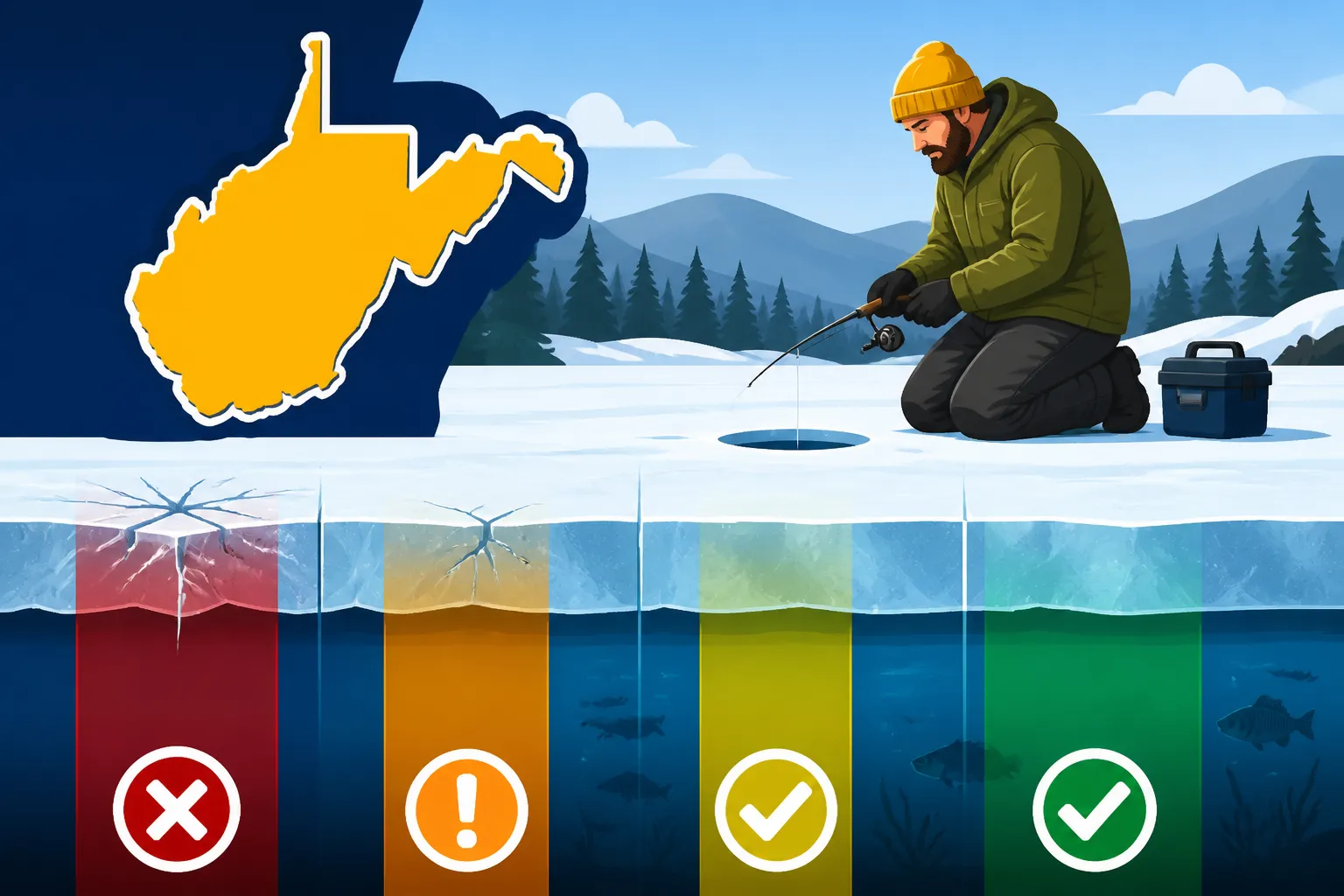
When you start talking about ice safety, the phrase "four inches for sure" often gets tossed around. This "rule of thumb" suggests that four inches of clear, solid new ice is generally the bare minimum for a single person walking on foot to spread out their weight and engage in ice fishing. It's a starting point, a basic benchmark that most ice safety guidelines adhere to. Think of it as the green light for individual foot traffic, maybe pulling a sled with your gear. However, it’s absolutely critical to understand that this is a minimum, and it applies to the best-case scenario: clear, hard, newly formed ice.
As soon as you add more people, or heavy equipment like an ice fishing shanty or a power auger, those minimums climb quickly. For a small group of anglers, say two or three folks setting up a couple of tip-ups, you're looking at needing closer to five to six inches of strong, consistent ice. Why the increase? Because every person and every piece of gear adds weight and stress to the ice sheet. A sudden shift, a concentrated load, or even just the subtle vibrations of movement can expose weak spots you might not have noticed if you were alone. It's like walking on a pane of glass – one person might be fine, but a few dancing on it is a recipe for disaster.
Factors That Influence Ice Strength Beyond Thickness
While thickness is your primary concern, it's far from the only variable in the ice safety equation. Imagine a beautiful, clear winter day where the lake looks like a solid sheet of glass. You measure four inches near the shore and think you're good to go. But what if that lake has a hidden spring, a strong current, or a recent layer of insulating snow? These elements can drastically alter the ice's integrity, creating pockets of danger even on what appears to be uniformly thick ice. For us in West Virginia, with our often-dynamic weather and varied waterways, understanding these nuances is especially important.
For instance, snow cover can be a real double-edged sword. A fresh blanket of snow might make the ice look pristine, but it actually insulates the ice, slowing down the freezing process underneath and potentially creating slushy layers. It also hides cracks and thin spots, making it harder to visually assess the ice. Then there are temperature fluctuations. A week of solid sub-freezing temps might build good ice, but a sudden thaw followed by a refreeze can create layered, weaker ice. This kind of ice might be thick on paper, but structurally compromised, almost like plywood where the layers aren't properly bonded.
Furthermore, water movement is a huge factor. Lakes with natural springs, river inlets, or outlets will always have weaker ice, regardless of how cold it's been. The constant flow prevents the ice from forming uniformly and can erode it from underneath. Even a small stream feeding into a pond can create a dangerous thin spot where you least expect it. Always approach these areas with extreme caution. Local anglers often share insights on these problem areas, so tuning into the local fishing community can be invaluable. This local knowledge, combined with your own careful assessment, is your best defense against unexpected hazards.
Measuring Ice Thickness and Assessing Conditions
Alright, you've heard the general rules, but how do you actually know if the ice is thick enough? This isn't a "guess and go" situation. Measuring the ice isn't just a recommendation; it's a non-negotiable step before you ever commit your full weight to the frozen surface. It’s an essential part of any safe ice fishing trip in West Virginia.
Essential Tools for Ice Measurement
To accurately and safely check ice thickness, you need a few key pieces of equipment. First and foremost, an ice auger is critical. Whether it's a hand-cranked manual auger or a powerful gas, propane, or electric model, it allows you to drill through the ice quickly and cleanly to get a measurement. Paired with this, a simple tape measure that extends easily into the hole will give you the precise depth. For early season ice, or just for probing ahead as you walk, a spud bar (also known as an ice chisel) is invaluable. This heavy, chisel-tipped bar lets you test the ice with a sharp downward thrust, identifying thin spots without putting your full weight on them. If the spud bar punches through easily, you know to back off.
Beyond just measuring tools, don't forget personal safety gear. This includes ice picks worn around your neck – they are your best friend if you do break through, giving you something to grip and pull yourself out. A throw rope is also vital, allowing you to help someone else or be helped from a distance. A whistle can help you signal for help. You can find reliable ice augers, spud bars, and comprehensive safety equipment, including those crucial ice picks and throw ropes, on platforms like Amazon, making it easy to prepare before your first ice outing. Don't skimp on these items; they are literally life-savers.
Step-by-Step Guide to Safely Checking Ice
Alright, you're at your favorite West Virginia winter fishing spot, tools in hand. Here's how you actually go about safely checking the ice:
- Start at the Shore: Never just walk out onto the middle of the ice. Begin by checking the ice thickness right at the edge of the lake or pond. This initial check gives you a baseline and helps ensure the entry point is safe. Use your spud bar to tap the ice ahead of you. If it takes several hard swings to break through, you're likely dealing with decent ice. If it breaks with one or two taps, that’s a red flag – stay off!
- Drill Your First Hole: Once you've confirmed the ice near the shore is safe (at least 3-4 inches), carefully move out a few feet and drill your first actual test hole with your auger. Measure the ice immediately. Don't assume the thickness you found at the very edge extends far out.
- Check as You Go: This is perhaps the most crucial step. As you venture further out, continue to check the ice every 10-15 feet, or whenever you notice a change in the ice's appearance. Use your spud bar to tap ahead, listening for a solid thud rather than a hollow sound or a quick break. If you drill a hole and find the ice is only 3 inches thick, stop immediately, mark the spot, and slowly retreat the way you came, checking the ice behind you. No fish is worth risking your safety over thin ice.
- Look for Clues: Pay attention to any visual cues. Dark spots on the ice often indicate open water or extremely thin ice. Areas around submerged logs, docks, or rocky points can heat up faster and melt ice from below. Snow drifts can hide thin spots or insulate the ice, making it weaker than surrounding areas. Always be skeptical and verify with your tools.
Recognizing Different Types of Ice and Their Strength
Not all ice is created equal, and knowing the difference can be critical for your safety. Simply measuring the thickness isn't enough; you need to understand the quality of that ice. Different formation processes lead to varying strengths, and being able to identify these types will significantly enhance your ice safety in West Virginia.
The gold standard for ice fishing is blue ice, also known as clear ice. This forms when water freezes slowly and uniformly, usually under calm, very cold conditions without significant snow or wind. It's dense, strong, and translucent, often appearing dark because you can see through it to the water below. Four inches of clear, blue ice is generally considered safe for individual foot travel. This is the ice you want to see.
Then there's white ice or milky ice. This forms when ice freezes quickly, often incorporating air bubbles, or when slush freezes. It's opaque and looks, well, white or milky. It's considerably weaker than clear ice, sometimes by as much as 50%. So, if you're measuring six inches of white ice, it might only have the strength of three inches of clear blue ice. It's crucial to be more conservative with white ice and demand greater thickness before trusting it. Finally, snow ice is the weakest of all. This forms when heavy snow falls on thin ice, pushes it down, and the slush on top then freezes. It's porous, brittle, and highly unreliable. Avoid venturing onto areas with significant snow ice, even if it measures several inches thick, as it offers very little structural integrity.
Sometimes you'll encounter layered ice, which can be a mix of these types due to freeze-thaw cycles or snowfalls followed by refreezing. This is particularly dangerous because a thick layer of weak snow ice might sit atop a thinner layer of clear ice, giving a false sense of security in thickness, but having severe weak points. Always prioritize clear, blue ice, and be highly suspicious of anything else.
Specific Ice Thickness Recommendations for West Virginia Anglers
When it comes to putting your weight on frozen water, generalized statements often fall short. We need specific guidelines, especially for West Virginia's diverse winter conditions. These aren't just numbers; they're the result of years of experience and safety protocols designed to keep us out of harm's way. Remember, these are minimums for good, clear, new ice. Always add a buffer if the ice quality is questionable.
General Guidelines for Foot Travel
For any angler heading out onto the ice in West Virginia, foot travel is the most common method. Here’s a breakdown of recommended minimums for clear, solid ice:
- 4 inches: This is the absolute minimum for a single angler walking on foot. Even at this thickness, you should be extremely cautious, checking with a spud bar every few steps. This is suitable for basic ice fishing with minimal gear.
- 5-6 inches: This thickness provides a much safer margin for a small group of anglers or for setting up a portable ice fishing shelter. When fishing with others, always spread out your weight. Don't congregate in one small area, especially if you have a number of holes drilled close together.
- 7-8 inches: If you plan on using a snowmobile or an ATV to get to your favorite ice fishing spot, you'll need at least this much ice, and preferably more. These vehicles concentrate a significant amount of weight in a small footprint, and speed can create waves under the ice that can weaken it. This thickness should also be considered if you plan on bringing out a larger, more permanent ice shanty that will be on the ice for an extended period.
It's tempting to push these limits, especially if the fish are biting, but remember that ice conditions can change rapidly. What was safe in the morning might be less so by afternoon, especially on sunny days or during a warm spell. Always err on the side of caution. If you're ever in doubt, stay off the ice. There will always be another day to fish.
Here's a handy table summarizing these recommendations for clear, solid ice:
| Activity | Minimum Safe Ice Thickness (inches) | Comments |
|---|---|---|
| Foot travel (single person) | 4 | Clear, solid new ice. Always check as you go. |
| Small group (2-3 people) | 5-6 | Spread out. Good for portable ice shanties. |
| Snowmobile/ATV | 7-8 | Requires consistent, strong ice. Avoid slushy areas and rapid movement. |
| Small car/truck | 10-12 | Highly discouraged. Very risky. Check with extreme caution and local regulations. |
| Medium truck/heavy equipment | 14-16+ | Absolutely not for recreational ice fishing. Professional use only, under controlled conditions. |
Special Considerations for Vehicles and Equipment
Driving vehicles onto the ice is a whole different ballgame compared to walking. While tempting for convenience, it introduces a significantly higher risk factor. In West Virginia, where many of our lakes are smaller and subject to more variable conditions, driving a vehicle onto the ice is rarely recommended for recreational anglers and can be extremely dangerous if the conditions aren't absolutely perfect.
For those considering a snowmobile or ATV, as mentioned, you need a minimum of 7-8 inches of good, solid ice. Even then, you should drive slowly, avoid sudden stops or turns, and avoid crossing areas of unknown ice quality. The sheer weight and momentum of these machines can be enough to breach compromised ice. The safest approach is often to park your vehicle on solid ground and walk out, pulling your gear on a sled. This way, if something goes wrong, you're not also losing a valuable vehicle.
When it comes to driving a full-sized car or truck onto the ice, most official West Virginia fishing guidelines and seasoned ice anglers will tell you it's best to avoid it entirely. If you absolutely must, you're looking at needing a minimum of 10-12 inches of consistent, clear ice. This is an enormous amount of ice to find uniformly across a body of water, and it's almost unheard of in many parts of West Virginia. The risk of breaking through, losing your vehicle, and endangering your life simply isn't worth the convenience. Always remember that ice varies wildly, and an area that held a car last year might not be safe this year. Prioritize life over convenience.
Always Prioritize Safety and Local Knowledge
No matter how much ice you measure, or what the general guidelines say, the number one rule of ice fishing is to always prioritize safety. Every year, tragic accidents occur because anglers underestimate the power of freezing and thawing, or overestimate the ice's strength. Your vigilance and common sense are your most important tools out on the ice.
This means not taking unnecessary risks. If you feel uneasy, turn back. If conditions change—say, the temperature rises sharply, or slush starts forming—it’s time to pack up. No fish is worth risking your life for, or the lives of those who might have to rescue you. In fact, many West Virginia anglers rely heavily on local knowledge. Chat with folks at the bait shop, check online forums, or call the local DNR office for the latest conditions and advisories for specific bodies of water. These local insights can provide invaluable real-time information that a simple ice auger measurement alone might miss. Many West Virginia anglers share real-time ice conditions in local fishing groups or forums, sometimes even linking to useful gear found on platforms like Amazon that helped them get out safely. Remember, the fish will always be there, but you might not be if you take chances.
What to Do If the Ice Breaks (Prevention & Response)
Even with the utmost caution, accidents can happen. Ice is unpredictable, and sometimes, despite all your measurements and checks, you might find yourself in a dangerous situation. Knowing what to do if you or someone else breaks through the ice is just as important as knowing how to prevent it. Preparedness is key for any angler in West Virginia who ventures onto the frozen waters.
Basic Ice Safety Gear You Should Always Carry
Prevention starts with preparation. There are a few critical pieces of gear that no ice angler should ever be without. These aren't optional extras; they are essential safety equipment that could literally save your life or someone else's.
First, ice picks (also called ice claws or safety spikes) are paramount. These are two short, pointed handles connected by a cord, typically worn around your neck and tucked inside your jacket. If you fall through, you can use these picks to get a grip on the ice edge and pull yourself out. Trying to get a purchase on slick, wet ice with bare hands is incredibly difficult, if not impossible. Second, a throw rope is a must-have. This is a sturdy rope, often brightly colored, with a buoyant bag on one end. If someone else breaks through, you can toss them the bag from a safe distance, allowing them to grab the rope and be pulled to safety. Never try to run to a person who has fallen through; you'll likely just fall in yourself.
Beyond these, consider a flotation suit or a personal flotation device (PFD) worn under your outerwear. These provide buoyancy and thermal protection, greatly increasing your survival time in frigid water. A simple whistle can also be invaluable for signaling for help if you're in distress and too cold or disoriented to shout effectively. Think of it this way: you wouldn't get in a boat without a life jacket, so why would you go on ice without similar precautions? Stock up on essential safety gear, readily available on platforms like Amazon, to ensure you're prepared for unexpected situations.
Emergency Response Steps
If the unthinkable happens and you or someone else breaks through the ice, every second counts. Panic is your biggest enemy. Knowing these steps can make all the difference:
-
If You Fall Through:
- Don't panic! Your clothing will trap air, giving you a few moments of buoyancy.
- Turn towards the direction you came from. That's typically where the ice was strongest.
- Reach out onto the unbroken ice with your arms and use your ice picks to get a grip. Kick your feet vigorously to help propel yourself horizontally onto the ice. Try to get as much of your body on the ice as possible, spreading your weight.
- Roll away from the hole once you're out. Don't stand up immediately; continue to roll or crawl on your stomach until you're well away from the weak ice.
- Seek immediate medical attention. Even if you feel fine, hypothermia can set in quickly. Get into dry, warm clothes as soon as possible.
-
If Someone Else Falls Through:
- Do NOT run towards them! This could cause you to fall in as well.
- Stay low and extend a rescue device: a throw rope, a long branch, an ice fishing pole, or even an article of clothing. Whatever you use, make sure you're lying flat to distribute your weight.
- Communicate calmly. Tell them to stay calm, face the direction they came from, and use their ice picks if they have them.
- Call for help. Shout for others nearby, and if possible, have someone call 911 or emergency services immediately.
- Once they're out, help them roll or crawl to safety, then get them warmed up with dry clothes and shelter. Again, immediate medical attention for hypothermia is crucial.
Always, always tell someone where you're going and when you expect to return when you go ice fishing in West Virginia. This simple step ensures that if you don't check in, someone will know to look for you and can alert authorities to your last known location. It's a small precaution that can have monumental consequences.
Disclaimer
This article is for general informational purposes only and does not constitute professional advice. Laws, prices and regulations vary by location and change over time. Consult a qualified professional for guidance on your specific situation.