Fly Fishing for Trout in West Virginia
Fly fishing for trout in West Virginia can feel like stepping into a beautiful, yet incredibly complex, outdoor puzzle. You've heard the whispers of pristine mountain streams, the promise of vibrant brookies, browns, and rainbows, and perhaps you've even invested in some shiny new gear. But getting out there, facing down swift currents, deciphering hatches, and actually hooking those elusive fish? That's where the real challenge and occasional frustration sets in. This comprehensive guide is here to unravel that mystery, offering practical advice and seasoned insights to transform your West Virginia trout fishing dreams into a rewarding reality.
Understanding West Virginia's Trout Species and Waters
West Virginia is truly a gem for trout anglers, boasting a diverse range of species and an incredible variety of waters, from tiny headwater trickles to expansive tailwaters. Knowing what fish you're targeting and the characteristics of their habitat is the first step to successful fly fishing.
The Trout Trio: Brook, Brown, and Rainbow
Each trout species found in West Virginia has its own personality, preferred habitat, and feeding habits, which directly influences how you approach them with a fly rod.
- Brook Trout: West Virginia's Native and State Fish: The native brook trout, or "brookie," is a jewel of the Appalachian Mountains. These fish are typically smaller, but their vibrant colors and pristine habitat make them highly sought after. You'll find them in the coldest, cleanest headwater streams, often requiring some serious bushwhacking to reach. They are less wary than their cousins and often eager to strike a well-presented dry fly, especially in the tight pockets and plunge pools of small creeks. Because they are often found in remote, high-gradient streams, their populations are more self-sustaining. However, they are sensitive to temperature changes and pollution, making their wild populations a good indicator of stream health.
- Brown Trout: The Wary, Wild Survivors: Brown trout are the masters of survival in West Virginia. Originally introduced from Europe, they've established strong wild populations in many of our rivers and larger streams, particularly those with good cover like undercut banks, fallen trees, and boulder fields. They can grow to impressive sizes, offering a truly challenging target for fly anglers. Browns are notorious for being wary and opportunistic feeders, meaning they'll eat everything from tiny nymphs to large streamers. You often need a stealthier approach and more precise presentation to fool a seasoned brown trout, especially during daylight hours. They thrive in slightly warmer waters than brookies and can tolerate a wider range of conditions.
- Rainbow Trout: The Stocked Stream Staple: Rainbow trout are the most commonly stocked trout in West Virginia, making them accessible to a wide range of anglers. These fish are known for their strong fights and willingness to take a variety of flies. While wild rainbows exist in some colder rivers, the majority you'll encounter will be hatchery-raised. This means they often congregate in readily accessible, stocked waters and may initially be less selective about their food. However, as they become "holdovers," they adapt quickly to natural food sources and become much more challenging to catch. They are a fantastic species for beginners to practice on, but don't underestimate the challenge of catching a large, educated holdover rainbow.
Types of Trout Water in West Virginia
West Virginia offers a fascinating tapestry of aquatic environments, each demanding a slightly different fly fishing approach. It's not just about the fish; it's about the water they call home.
- Mountain Freestone Streams: These are the quintessential West Virginia trout waters – crystal-clear, cold, and tumbling over rocks and bedrock. Think places like those you'd find in the Monongahela National Forest. They rely on rainfall and snowmelt, so their levels can fluctuate dramatically. Access often requires hiking, and the fishing can be highly rewarding, especially for native brook trout. You'll encounter a mix of riffles, runs, and small plunge pools. Fly selection here often leans towards attractor patterns and terrestrial imitations, especially in summer. Mastering wading techniques for West Virginia trout streams is crucial in these swift, rocky environments.
- Tailwaters: Below many of West Virginia's major dams, you'll find tailwater fisheries. These rivers, like sections of the Elk River tailwater, offer incredibly stable water temperatures and nutrient-rich environments, leading to prolific insect hatches and often supporting large, healthy trout. The consistent cold water provides excellent conditions year-round, making them prime spots even when other streams are too warm. However, fishing tailwaters often involves dealing with fluctuating generation schedules, which can change water levels and current speeds rapidly. These waters typically favor nymphing techniques, especially during periods of high flow, and can produce some of the largest trout in the state.
- Stocked Lakes and Ponds: The West Virginia Division of Natural Resources (WVDNR) regularly stocks numerous lakes and ponds across the state, making them excellent options, particularly for family outings or when river conditions aren't ideal. These waters offer easier access and often hold a high density of rainbow trout. While they might not provide the wilderness feel of a mountain stream, they are perfect for honing casting skills and guaranteeing some action. Fly fishing here often involves stillwater techniques like stripping streamers, presenting nymphs under an indicator, or even dry flies during a hatch. They are particularly popular during the early spring and fall stocking periods.
Essential Fly Fishing Gear for Mountain State Trout
Embarking on a fly fishing adventure in West Virginia requires the right tools for the job. Having suitable gear not only makes the experience more enjoyable but also increases your chances of success. It’s an investment, but one that pays dividends in memorable moments on the water.
Rods, Reels, and Lines for West Virginia Waters
Matching your rod, reel, and line to the water you're fishing and the size of trout you expect to encounter is fundamental. There's no single "best" setup, but rather a versatile approach.
- Fly Rod Selection: For the majority of West Virginia trout fishing, a 7'6" to 9' fly rod in a 3 to 5-weight range will cover most situations. For those tiny, brushy mountain streams where native brook trout reside, a shorter, lighter 2 or 3-weight rod around 6 to 7.5 feet is ideal. It allows for delicate presentations in tight quarters and makes even small fish feel like titans. If you're targeting larger brown trout or fishing bigger rivers with streamers, a 9-foot 5 or 6-weight rod gives you more backbone to cast heavier flies and handle bigger fish. For a truly versatile option, many anglers find a 9-foot 4-weight or 5-weight to be a fantastic all-around choice. You can find excellent options from brands like Orvis, Redington, and Sage, or even more budget-friendly rods from Cabela's or your local fly shop.
- Matching Reels and Lines: The reel's primary job in trout fishing is to hold your line and provide a smooth drag for bigger fish – it's less about cranking in fish quickly like a spinning reel. A quality, lightweight reel that balances your rod is key. For lines, a weight-forward floating line (WF) is the workhorse for most dry fly and nymph fishing. If you plan to throw larger streamers in deeper, faster water, a sink-tip line or even a full sinking line might be beneficial to get your fly down quickly. Always make sure your line weight matches your rod's recommended weight for optimal casting performance. Sometimes, finding specific line types or a new reel is easiest online, and many anglers turn to retailers like Amazon for competitive pricing and selection.
- Leaders and Tippet for Stealth: This is where many anglers overlook crucial details. Your leader is the clear, tapered section of line connecting your fly line to your tippet, and your tippet is the final, thinnest segment where your fly is tied. The goal is stealth. For dry fly fishing, you want longer leaders (9-12 feet) with a delicate taper to help present your fly naturally. Tippet size, denoted by a "X" rating, directly relates to its diameter and breaking strength. For small flies and spooky trout, you might go as fine as 6X or 7X tippet. For larger flies and more aggressive fish, 4X or 5X is common. A good rule of thumb for matching fly size to tippet is to divide the fly size by three to get a starting tippet "X" rating (e.g., a size 12 fly ÷ 3 = 4X tippet). Remember to check out a guide on tippet size for stocked trout for specific recommendations when fishing those popular, often pressured, waters.
Waders, Boots, and Essential Accessories
Staying comfortable and safe on the water is just as important as your rod and reel. The unpredictable nature of West Virginia's weather and terrain demands durable, functional apparel and smart accessories.
- Waders and Wading Boots: West Virginia's streams and rivers are often cold, even in summer, and accessing prime spots usually means getting in the water. High-quality breathable chest waders are essential. Look for durable materials that can withstand brush and rocks, and comfortable shoulder straps. Neoprene socks or integrated booties are common. Pair these with sturdy wading boots that provide excellent ankle support and grip. Felt soles used to be the standard, but many anglers now opt for rubber soles with studs for better traction on slippery rocks, especially when considering the ecological impact of felt potentially transferring invasive species. For a deeper dive, read up on the best waders for West Virginia trout streams.
- Beyond the Basics: Accessories That Matter: Beyond your core gear, a few accessories can significantly enhance your experience. A good landing net, ideally rubber-meshed to protect fish during catch and release, is vital. Pliers or hemostats for hook removal, nippers for cutting line, and a sturdy wading staff for stability in swift currents are non-negotiable safety items, especially on rocky rivers like the Elk. A dependable vest, pack, or sling bag keeps your fly boxes, tippet spools, and other small items organized and easily accessible. Don't forget polarized sunglasses to cut glare and help you spot fish or subsurface structure, and a wide-brimmed hat for sun protection. These little things, often overlooked, make a huge difference in comfort and efficiency on the water.
Mastering Fly Casting and Presentation Techniques
Casting a fly rod isn't about brute force; it's about grace, rhythm, and precision. Once you get the basics down, the real artistry comes in how you present your fly to the fish. It's often said that fly fishing is 90% presentation, and West Virginia's wary trout certainly put that adage to the test.
The Art of the Cast: Foundational Techniques
A good cast places your fly accurately and delicately. Practicing these techniques off the water will pay huge dividends when you're facing real fish.
- The Overhead Cast: Your Bread and Butter: This is the foundational cast for most fly fishing situations. It involves smoothly accelerating the rod backward, pausing to let the line extend behind you (the backcast), and then accelerating it forward, pausing again to let the line unroll to your target (the forward cast). The key is the "pause" at the end of the backcast and forward cast, which allows the line to fully unroll. Think of it as painting a straight line in the air with the tip of your rod. Common mistakes include rushing the cast (not pausing enough), using too much arm and not enough wrist/forearm, and "tailing loops" where the line tangles because of an abrupt stop. Consistent practice in an open field, focusing on a smooth, controlled motion, will build the muscle memory you need.
- Roll Cast: The Savior in Tight Spaces: West Virginia's mountain streams are often choked with rhododendron and laurel, making an overhead cast impossible. This is where the roll cast shines. Without a backcast, you use the water's surface tension to load the rod. Position the line downstream, lift the rod tip creating a D-loop behind you, and then powerfully yet smoothly roll the rod forward, unrolling the line directly to your target. It's an indispensable tool for fishing those tight pockets under overhanging branches or when wading deep. Mastering this cast means you can fish spots others might overlook, significantly increasing your opportunities.
- Mending: Controlling Your Drift: Once your fly hits the water, the current immediately starts pulling on your line, creating "drag" and making your fly move unnaturally. Mending is the technique of repositioning your fly line on the water to achieve a natural, drag-free drift. If the current is pulling your line faster than your fly, you throw an "upstream mend," flipping a loop of line upstream. If it's pulling slower, you throw a "downstream mend." Proper mending is crucial, especially when nymphing, where a natural drift is paramount. It’s a subtle art that takes practice but is the key to fooling selective trout.
Fly Presentation: Making it Look Natural
Even a perfect cast is useless without a natural presentation. Trout are highly sensitive to how a fly behaves on the water.
- Drag-Free Drift: The Holy Grail: Trout, especially wild ones, are incredibly adept at identifying a fly that isn't moving naturally. They live in a world of currents, and any unnatural drag on your line will pull your fly in a way that screams "fake!" Achieving a drag-free drift means your fly moves at the exact same speed as the surrounding current, mimicking a natural insect. This requires precise casting to land your line in a way that minimizes cross-currents and constant, subtle mending as your fly floats downstream. This is particularly vital when dry fly fishing or nymphing, and it's what separates a good fly angler from a great one.
- Reading the Currents and Seams: Water is rarely uniform. It flows at different speeds, creating distinct "seams" where faster and slower currents meet. Trout often position themselves in the slower water of these seams, waiting for food to be delivered by the faster current. Understanding how currents interact and where these seams form is crucial for effective presentation. Look for foam lines, subtle changes in surface texture, or obstructions like rocks and logs that create current breaks. Casting your fly just above these seams and allowing it to drift naturally into the holding lie is often the recipe for success. Learning to read the water and finding trout hotspots is an invaluable skill that develops with time on the river.
- False Casting and Accuracy: False casting is the act of casting the line back and forth in the air without letting it touch the water. It serves several purposes: drying your dry fly, repositioning your cast, or extending your line. While it's a critical tool, excessive false casting can spook fish, especially in clear, shallow waters. The goal is to make as few false casts as possible to achieve accuracy. Practice hitting specific targets, whether it's a lily pad in a pond or a small pocket near a submerged rock in a stream. The ability to drop your fly exactly where you want it, with minimal disturbance, is a hallmark of an experienced fly angler.
Seasonal Strategies for West Virginia Trout Streams
The Mountain State offers trout fishing opportunities year-round, but success often hinges on adapting your approach to the changing seasons. Each season brings its own set of challenges and rewards, dictating everything from fly selection to optimal fishing times.
Spring: The Time of High Water and Hatch Fever
Spring in West Virginia is a dynamic and exciting time for trout fishing, marked by melting snow, spring rains, and the emergence of prolific insect hatches.
- Navigating High and Cold Water: Early spring often brings higher, colder water levels due to snowmelt and increased rainfall. While this can make wading challenging and murky conditions possible, it also provides excellent cover for large trout. During these periods, focus on slower-moving eddies, bankside slack water, and the softer seams behind large obstacles. Trout will conserve energy in these areas and won't chase flies far. Larger, weighted nymphs and streamers that get down quickly are often the most effective. Pay close attention to the West Virginia Trout Stocking Hotline and Schedule as spring is when most major stockings occur.
- Emerging Insects and Match-the-Hatch: As water temperatures begin to rise, spring unleashes a bounty of aquatic insect hatches. Caddisflies, Quill Gordons, Hendricksons, and Sulphurs are just some of the prominent mayflies that can trigger frenzied feeding activity. This is prime "match-the-hatch" time. Observing what insects are flying, drifting, or hatching on the water's surface is crucial. Carry a variety of dry flies, emergers, and nymphs that imitate these insects. When the trout are actively feeding on a specific hatch, presenting a perfect imitation can lead to incredible dry fly action. However, be prepared for days when the hatch is sporadic or the fish are still focused subsurface.
- The Post-Stocking Blitz: West Virginia's spring stocking program is a highlight for many anglers. Right after a fresh stocking, trout can be less wary and more willing to strike a wide array of flies, including attractor patterns like brightly colored San Juan Worms, Squirmy Wormies, or various egg patterns. While some purists shy away from this type of fishing, it's a fantastic opportunity for beginners to catch fish and build confidence. As these stocked fish become "holdovers," they quickly adapt to natural food sources and become much more challenging to catch, demanding more refined techniques and specific fly patterns.
Summer: Low Flows, Terrestrials, and Early Morning Magic
Summer brings warmer weather, generally lower and clearer water levels, and a shift in the trout's diet. It's a time for finesse and focusing on specific windows of opportunity.
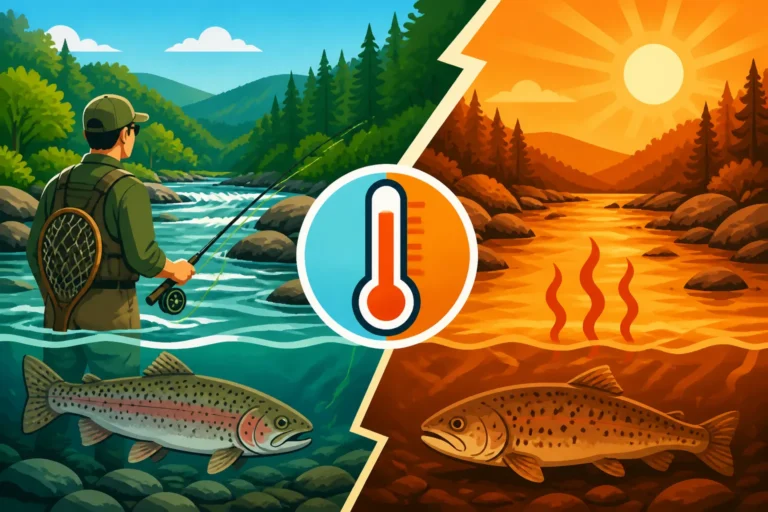
- Warm Water Concerns and Oxygen Levels: As summer progresses, water temperatures can become a significant concern for trout. Cold water holds more oxygen, which trout need to thrive. When stream temperatures exceed 68-70°F, trout become stressed, and catch-and-release mortality rates increase dramatically. During these periods, it's best to either fish very early in the morning before the sun heats the water or seek out higher elevation, spring-fed streams or deep tailwaters where water remains consistently cold. Always carry a stream thermometer and prioritize the fish's health. Consider a comprehensive guide to West Virginia Fishing Season Dates and Closures for details on specific stream closures.
- Terrestrial Takeover: Ants, Beetles, and Hoppers: With lower water and lush streamside vegetation, summer sees a surge in terrestrial insects. Ants, beetles, grasshoppers, and crickets often accidentally fall into the water, becoming an easy meal for opportunistic trout. This means dry fly fishing with imitations of these bugs can be incredibly effective. Casting a foam hopper pattern near grassy banks or dropping a tiny ant imitation under an overhanging branch can entice aggressive strikes. This is a wonderfully visual way to fish, often leading to exciting surface action.
- Early Morning and Late Evening Bites: During the heat of summer, trout are most active during the cooler parts of the day. Early mornings, just as the sun hits the water, and late evenings, as shadows lengthen and insects become active, are prime feeding windows. Midday can be slow and stressful for the fish. Focusing your efforts during these "golden hours" will yield the best results. During the day, trout will retreat to deeper, cooler pockets, shaded areas, or under heavy cover, becoming much harder to entice. This is when a deep nymph rig or carefully presented streamer might be your best bet.
Fall and Winter: Fewer Crowds and Big Fish Potential
As the leaves change and temperatures drop, West Virginia's trout streams transform, offering solitude and the potential for trophy-sized fish, especially brown trout.
- Brown Trout Spawning and Aggression: Fall is the spawning season for brown trout. While it's critical to avoid disturbing spawning redds (gravel beds where eggs are laid), browns become incredibly aggressive and territorial during this time. They'll often strike large streamers, articulated flies, or even egg patterns out of pure aggression, rather than hunger. Targeting pre-spawn fish or those holding in deeper pools just outside of active redds can be highly productive. This is often the best time to pursue truly large brown trout in rivers like the Cranberry River.
- Cooling Waters and Streamer Fishing: As water temperatures cool down, trout become more active and less lethargic than in summer. Streamer fishing can be incredibly effective in the fall, imitating baitfish that trout are looking to gorge on before winter. Casting large, flashy patterns like Woolly Buggers, Clouser Minnows, or Sculpin imitations into deep pools, undercut banks, and current seams can trigger powerful strikes. The cooler temperatures also mean that stocked trout from fall stockings are more active and cooperative.
- Winter Solitude and Nymphing Dominance: Winter fly fishing in West Virginia is not for the faint of heart, but it offers incredible solitude and a unique challenge. Water temperatures are at their lowest, and trout are lethargic, conserving energy. They'll hold in the deepest, slowest pools and often won't move far for a meal. This makes nymphing the dominant technique. Small, subtle nymphs like midges, tiny stoneflies, or Blue-Winged Olives fished deep under an indicator, or with Euro Nymphing techniques, are often the only way to entice a bite. Dressing warmly in layers, including waterproof outer layers and warm gloves, is crucial for staying comfortable and safe during these chilly expeditions. For specific winter opportunities, check for information on Ice Fishing in West Virginia if you're interested in alternative winter tactics.
Reading the Water and Finding Trout Hotspots
One of the most elusive skills in fly fishing isn't about casting distance or perfect fly selection, but the ability to "read the water." This means understanding where trout hold, why they hold there, and how the current delivers food to them. It’s a skill developed over countless hours on the stream, but there are definitely patterns to recognize.
Understanding Trout Behavior in Currents
Trout are constantly making decisions about where to spend their energy. Their primary goals are to feed and to stay safe, and current plays a huge role in both.
- Energy Conservation and Feeding Lanes: Trout are masters of energy conservation. They will always position themselves in a place where they can expend minimal energy against the current while still having easy access to food being carried downstream. This often means they’re sitting in softer water, just out of the main current, waiting for insects to drift by in the faster "feeding lane." Learning to identify these spots – behind rocks, in the slower water near undercut banks, or in the tailout of a pool – is fundamental. Your job as an angler is to present your fly naturally into that feeding lane, allowing it to drift right into the trout's strike zone without effort from the fish.
- Structure and Cover: Trout are not just looking for food; they're also looking for safety from predators (like eagles, herons, and us!). This means they'll gravitate towards structure and cover – anything that offers them a place to hide. Fallen logs, large boulders, undercut banks, deep pools, and even overhanging vegetation all provide sanctuary. When you see such features, you should immediately think, "Trout might be here." These are prime spots to focus your casting and carefully present your flies. Often, the largest, most territorial trout will claim the best pieces of structure.
- Oxygen and Temperature Preferences: Trout are cold-water fish and require well-oxygenated water to thrive. This is why you often find them in riffles (shallow, turbulent water that mixes oxygen in) or in spring-fed sections of streams, even during warmer months. During summer heat, they will seek out colder, deeper pools or areas where cold groundwater seeps into the stream. Conversely, in winter, they might prefer slightly slower, deeper sections where the water temperature is more stable and they don't have to fight as much current. Knowing these preferences helps you narrow down potential holding lies based on current conditions.
Prime Holding Lies and How to Approach Them
Every section of a stream or river holds potential, but some spots are consistently more productive than others. Learning to identify these "prime lies" is key.
- Riffles, Runs, and Pools: These are the three fundamental types of water you'll encounter.
- Riffles are shallow, turbulent sections where water tumbles over rocks, oxygenating the water and dislodging insects. Trout will often feed at the very tail of a riffle or in the deeper pockets within it.
- Runs are deeper, smoother sections of moving water. Trout will often hold along the edges of runs, especially where they meet slower water, or behind submerged obstacles.
- Pools are deep, slow-moving sections. Trout will congregate in pools, especially during bright sun or cold weather, finding safety in depth. The "head" (where the water enters) and "tail" (where the water exits) of a pool are often the most productive sections. The tailout of a pool, where the current picks up again, is a classic trout feeding zone.
- Eddies and Current Seams: Eddies are areas of swirling or slow-moving water, often found behind large rocks, logs, or points of land. These are prime resting and feeding spots. Current seams, as mentioned before, are the dividing lines between fast and slow water. Trout will often sit right on the edge of these seams, darting into the faster water to grab food and then retreating to the slower current. Presenting your fly right down these seams with a drag-free drift is incredibly effective. This is particularly true on larger rivers such as the New River, where the sheer volume of water creates complex currents.
- Undercut Banks and Logjams: These are goldmines for trout. Undercut banks provide overhead cover and a deep, cool sanctuary. Logjams offer incredible hiding spots and create complex current breaks. Trout, especially larger browns, love these areas. Approaching them requires stealth – you want to cast your fly as close to the cover as possible without spooking the fish. Often, you'll need to use a roll cast or a very short, accurate overhead cast to get your fly into these tight spots. Remember that these areas can also snag flies easily, so be prepared to lose a few in exchange for the chance at a trophy fish.
Popular Fly Fishing Destinations in West Virginia
West Virginia is blessed with an abundance of trout waters, each offering a unique fly fishing experience. From wild native brook trout streams to renowned tailwaters, there’s a spot for every angler.
Premier Trout Streams and Rivers
Certain waterways stand out as top-tier destinations for fly anglers seeking West Virginia trout.
- The Elk River Tailwater: Widely considered one of West Virginia’s premier trout fisheries, the Elk River Tailwater below Sutton Dam is famous for its consistent cold water and large brown and rainbow trout. This tailwater benefits from stable water temperatures and nutrient-rich flows, supporting prolific insect life. Anglers often find success here with nymphing techniques, especially with midges and various mayfly imitations. Streamer fishing can also be highly productive for targeting the large resident brown trout, particularly during cooler months. It's a challenging but incredibly rewarding river, often requiring anglers to adapt to changing water levels dictated by dam releases. For more detailed information, consider checking out the Elk River Trout Fishing guide.
- Cranberry River: Located within the Monongahela National Forest, the Cranberry River is a wild and scenic gem, often managed under special regulations, including sections designated for catch-and-release fly fishing only. This river is renowned for its population of wild brown and rainbow trout, and even some native brook trout in its headwaters. Its remote nature requires some effort to access, often involving long drives on forest roads or even hiking. The rewards, however, are unparalleled—beautiful scenery, fewer crowds, and robust, healthy fish. Dry flies, nymphs, and streamers all have their place on the Cranberry, depending on the season and water conditions.
- Williams River: Another fantastic fishery within the Monongahela National Forest, the Williams River offers a diverse trout experience. It receives regular stockings of rainbow and brown trout, but also boasts healthy populations of wild and holdover fish. The river has a mix of accessible sections and more remote stretches, allowing for different fishing styles. It's known for strong insect hatches, making it a great spot for dry fly fishing during spring and fall. Like many mountain rivers, its water levels can fluctuate, so checking conditions before you go is always a good idea.
High-Elevation and Wilderness Opportunities
For those seeking solitude and a true wilderness experience, West Virginia offers pristine high-elevation streams that are home to native brook trout.
- Shavers Fork: Nestled in the Allegheny Mountains, Shavers Fork is a legendary stream known for its native brook trout. While some sections are stocked, many tributaries and upper reaches offer fantastic opportunities for targeting pure wild brookies. The fishing here is often about stealth, delicate presentations, and navigating dense streamside vegetation. Small dry flies, traditional wet flies, and small nymph patterns are usually the most effective. It's a place where the journey is as much a part of the experience as the fishing itself, embodying the spirit of chasing Shavers Fork Brook Trout Fishing.
- Dry Fork of the Cheat River: The Dry Fork of the Cheat River and its tributaries, particularly in the Dolly Sods Wilderness area, provide exceptional opportunities for wild brook trout and even some wild brown trout. These streams are characterized by their clear, cold water and remote settings. Expect to do some hiking to reach the best spots, but you'll be rewarded with unpressured fish and stunning natural beauty. Fishing here often involves short, accurate casts to tight pockets and careful wading. Small, bushy dry flies like a Royal Wulff or a Stimulator can be incredibly effective, especially on summer afternoons.
- Other Hidden Gems: Beyond these well-known spots, West Virginia has countless smaller, unnamed or lesser-known high-elevation streams throughout the Monongahela National Forest that hold native brook trout. Discovering these hidden gems often requires consulting topographic maps, bushwhacking, and a good sense of adventure. These tiny creeks often hold surprisingly vibrant fish, eager to strike a simple dry fly. The satisfaction of finding and fishing such a pristine, wild stream is immense. Always be sure to consult the West Virginia Fishing Regulations Explained for any specific rules pertaining to wild trout streams or special regulation waters.
| River/Type | Primary Species | Key Techniques | Best Seasons | Accessibility | Notable Features |
|---|---|---|---|---|---|
| Elk River Tailwater | Brown, Rainbow | Nymphing, Streamers | Year-round | Moderate | Consistent cold water, large fish |
| Cranberry River | Brown, Rainbow, Brook | Dry Fly, Nymphing, Streamers | Spring, Fall | Difficult | Catch-and-release sections, wild trout |
| Williams River | Brown, Rainbow, (some Brook) | Dry Fly, Nymphing | Spring, Fall | Moderate | Good hatches, diverse sections |
| Shavers Fork | Brook, Brown | Dry Fly, Nymphing | Spring, Summer | Difficult | Native brook trout, wilderness feel |
| Dry Fork Cheat | Brook, Brown | Dry Fly, Nymphing | Spring, Summer | Difficult | Dolly Sods access, remote |
Conservation and Ethics for West Virginia Fly Anglers
As fly anglers, we have a unique connection to the natural environment, and with that comes a responsibility to protect and preserve it. Practicing responsible angling ensures that West Virginia's trout fisheries remain vibrant for generations to come.
Practicing Catch and Release Safely
While it's always exciting to land a fish, the true joy of fly fishing often lies in the interaction and then releasing the fish unharmed.
- Minimizing Stress and Handling Time: Trout are delicate creatures, and excessive handling can cause significant stress. When you land a fish, try to keep it in the water as much as possible. If you must handle it, wet your hands thoroughly beforehand. Avoid squeezing the fish, especially around its gills or belly. The goal is to minimize its time out of the water to just a few seconds for a quick photo, if desired, before gently releasing it.
- Proper Hook Removal: Barbless hooks are highly recommended for trout fishing, as they are much easier to remove and cause less damage to the fish. If you're using barbed hooks, consider crimping down the barb with pliers. Use forceps or hemostats to quickly and carefully remove the hook. If a fish is "gut-hooked" (swallowed the hook deeply), it's often best to simply cut the line as close to the hook as possible, as attempting to remove it will likely cause more harm than good.
- Reviving and Releasing: After a fight, a trout may be exhausted. Hold the fish gently in the current, facing upstream, allowing water to flow over its gills. Support its belly and tail until it regains its strength and can swim away on its own. Never just toss a tired fish back into the current, as it may be swept away or become easy prey. This careful approach to West Virginia Catch and Release Rules for Trout is vital for maintaining healthy populations.
Protecting the Environment and Our Fisheries
Our impact on the environment extends beyond just the fish we catch. Every angler has a role in protecting the overall health of West Virginia's waterways.
- "Leave No Trace" Principles: The golden rule of outdoor ethics is "leave no trace." This means packing out everything you pack in, including all trash, discarded fishing line, and food scraps. Avoid disturbing wildlife, plants, and natural features. When camping, use established campsites, and when wading, be mindful of disturbing stream beds, especially during spawning seasons when redds (trout egg nests) are present.
- Preventing the Spread of Invasive Species: Invasive species can decimate native ecosystems. One common way they spread is by "hitchhiking" on fishing gear, boats, and waders. Always "Clean, Drain, Dry" your gear after each outing. Clean off all mud, plant matter, and debris. Drain all water from kayaks, boats, and waders. Allow your gear to thoroughly dry, ideally for 48 hours, before moving to a new waterway. This simple practice can prevent the spread of harmful organisms that can destroy valuable fisheries.
- Respecting Regulations and Other Anglers: Familiarize yourself with all local and state fishing regulations, including bag limits, size restrictions, and special regulations for specific waters. The West Virginia Fishing Regulations Summary is an essential read for every angler. Also, show courtesy to other anglers on the water. Give them ample space, don't crowd their fishing spots, and maintain a friendly demeanor. We're all out there to enjoy the beauty of West Virginia.
Troubleshooting Common Fly Fishing Challenges
Even the most experienced fly anglers face challenges on the water. From tangled lines to selective trout, setbacks are a part of the game. Learning to troubleshoot these common issues can turn a frustrating day into a successful one.
Dealing with Wind and Obstacles
West Virginia's diverse terrain often means dealing with gusty winds and tight, brushy streams, making casting a real test of patience.
- Casting in the Wind: Wind is a fly angler's nemesis. When casting into a headwind, try to make lower, tighter loops to cut through the air resistance. A sidearm cast can also help keep your line below the strongest gusts. With a tailwind, you might need to adjust your timing, allowing the wind to help carry your line. The key is to keep your loops tight and powerful. Sometimes, a slightly heavier fly line or a heavier fly can help punch through the wind. Remember, retailers like Amazon offer specialized fly lines designed for windy conditions, which can be a valuable addition to your arsenal.
- Navigating Brush and Overhangs: Many of West Virginia's most productive trout streams are lined with dense rhododendron, laurel, and overhanging trees. This creates tight casting lanes and plenty of opportunities for snagged flies. Develop your roll cast and various short-game casts (like bow-and-arrow casts or Belgian casts) to place your fly accurately without getting tangled. Learn to "reach cast" to position your line around obstacles on the water. Sometimes, a careful back-cast that stays low to the water or a simple "dap" (dropping the fly directly onto the water from above) is the most effective approach in these challenging spots.
- Untangling Knots and Backlashes: Few things are more frustrating than a tangled leader or a bird's nest in your fly line. Patience is key. Take a deep breath, and systematically work through the knot. Carrying a pair of sharp nippers or small scissors is essential for cutting hopelessly tangled sections of tippet. A common cause of tangles is hurried or aggressive casting; slowing down and focusing on smooth casting mechanics can prevent many of these headaches before they start.
Selective Trout and Changing Conditions
Trout can be notoriously picky, and conditions on the water are rarely constant. Adapting to these variables is a cornerstone of successful fly fishing.
- When Trout Get Picky (Match the Hatch): Sometimes trout will seem to ignore every fly you throw. This often means they're "keying in" on a specific insect. Observe the water carefully: Are there insects hatching? Are small bugs drifting in the film? What color and size are they? This is when a deep understanding of Fly Patterns for West Virginia Trout Streams comes into play. You might need to adjust your fly size, color, or even the exact profile of your fly to perfectly imitate what the trout are eating. Sometimes, a subtle change in tippet size (going lighter) or presentation (a truly drag-free drift) can make all the difference. Don't be afraid to experiment!
- Adjusting to Water Levels and Clarity: West Virginia's mountain streams can change dramatically after a rain event. High, murky water demands different tactics than low, clear conditions. In high water, trout will move to the slower edges and backwaters, and larger, darker, or more brightly colored flies that create a strong silhouette (like a black Woolly Bugger or a San Juan Worm) are often best. In low, clear water, stealth and finesse are paramount. Use longer, finer leaders and tippets, and present smaller, more natural-looking flies with extreme care. Your approach angle and how much disturbance you make while wading become even more critical.
- Dealing with "Skunk Days": Let's be real: sometimes, despite all your best efforts, the trout just aren't biting. It happens to everyone, even the pros. These "skunk days" can be disheartening, but they're also part of the learning process. Instead of getting frustrated, use them as an opportunity to practice casting, explore new water, or simply enjoy the peace and beauty of West Virginia. Analyze what might have gone wrong, read up on new techniques, and come back another day with fresh eyes and renewed determination. Every time you step on the water, you learn something new, even if you don't land a fish.
Disclaimer
The information provided in this guide is for general informational purposes only. While we strive to offer accurate and up-to-date content, fishing regulations, conditions, and best practices can change. Always consult the most current West Virginia Division of Natural Resources fishing regulations before heading out on the water. Fishing inherently involves risks, and safety should always be your top priority.